
Dograh Blog
Voice AI insights from the Dograh team
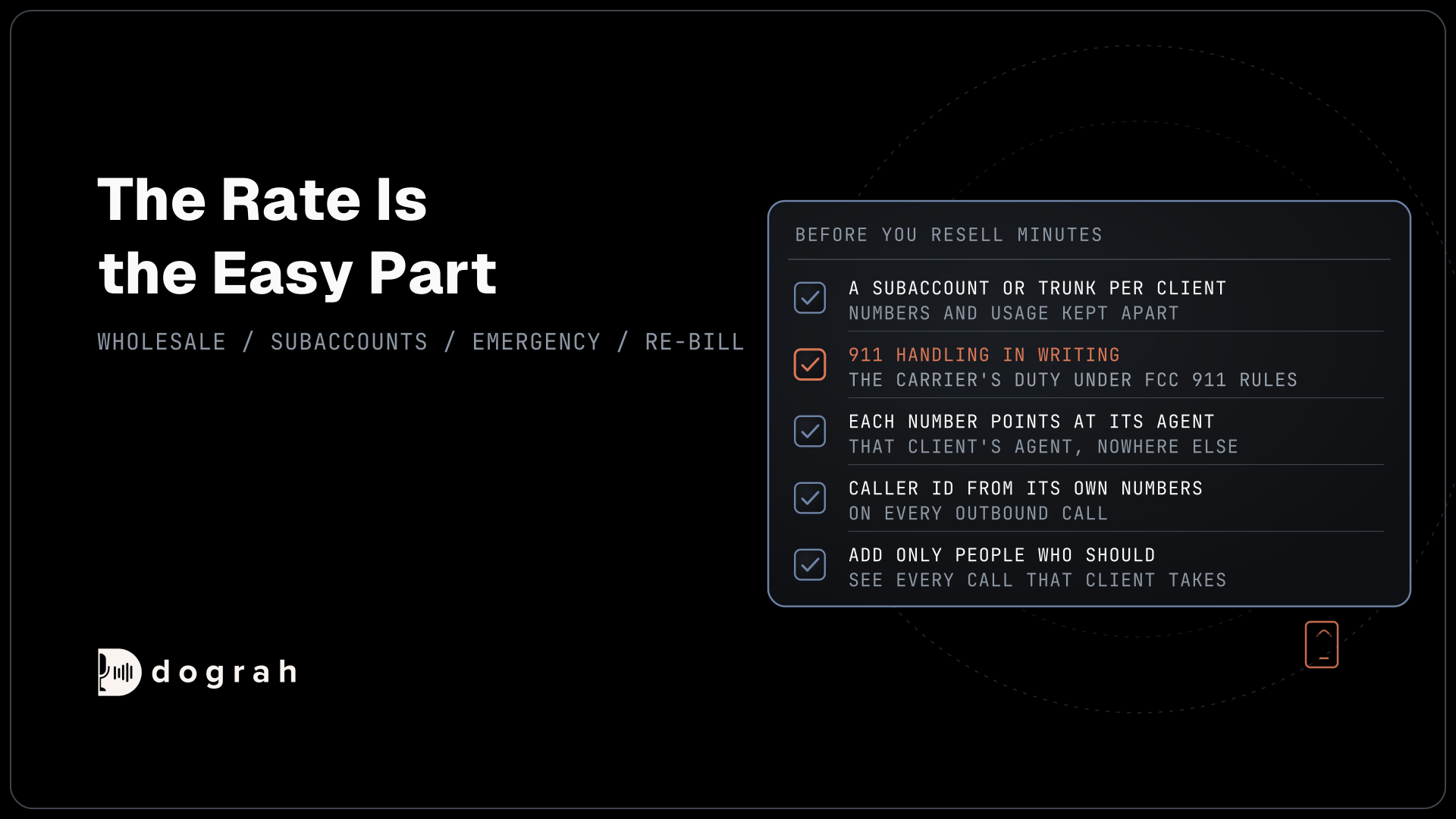
Wholesale and Reseller SIP Trunks for Voice AI Agencies
How voice AI agencies buy SIP trunk minutes in bulk, split them per client with carrier subaccounts or managed accounts, route each client's numbers to its own agent and re-bill each client for its share.
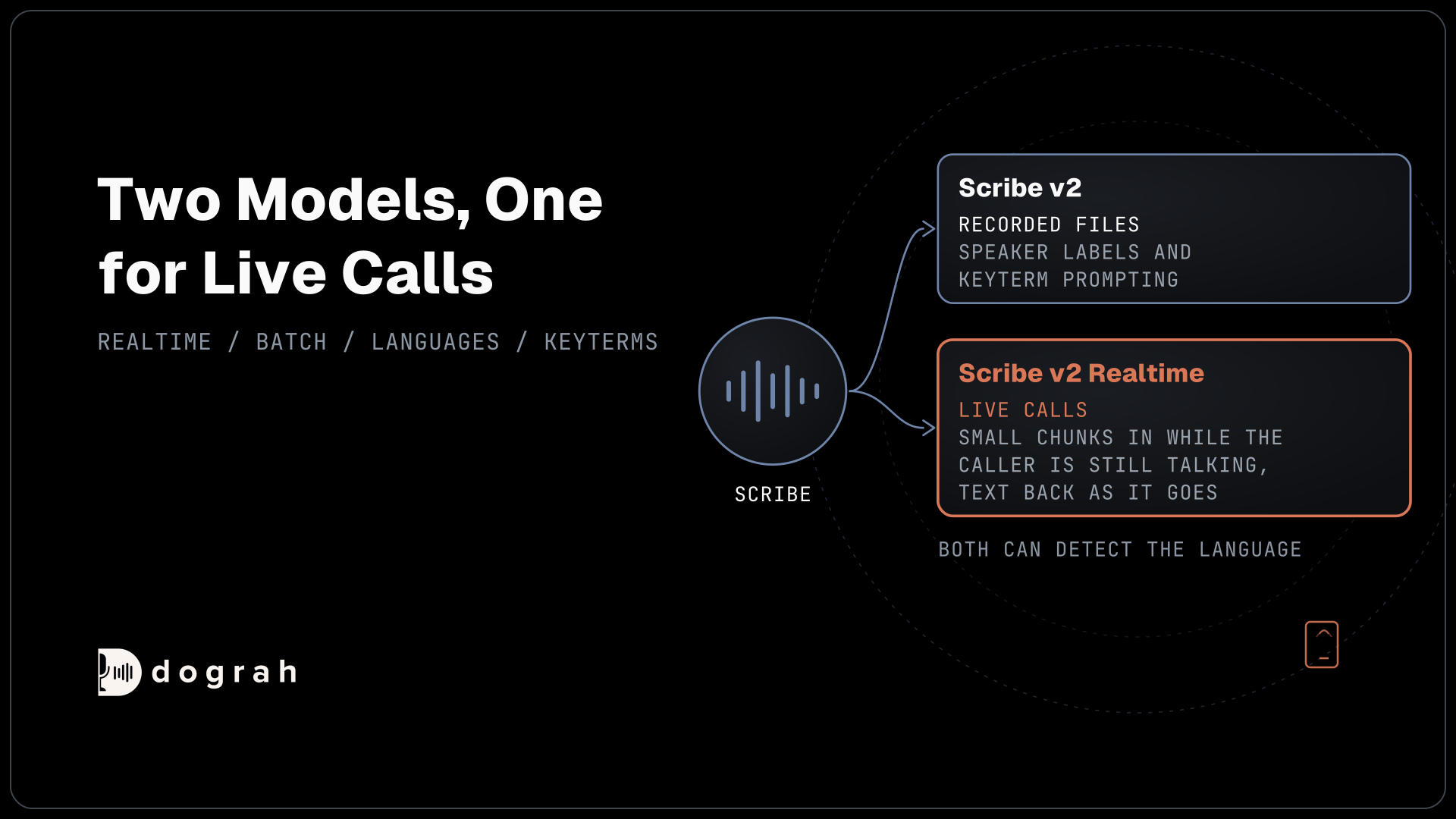
ElevenLabs Scribe Speech-to-Text for Voice Agents on Phone Calls
ElevenLabs Scribe for voice agents, covering the batch and realtime models, how Scribe v2 Realtime handles 8 kHz phone audio, its latency, accuracy, languages and price, how it compares with Deepgram, and how it runs in Dograh.
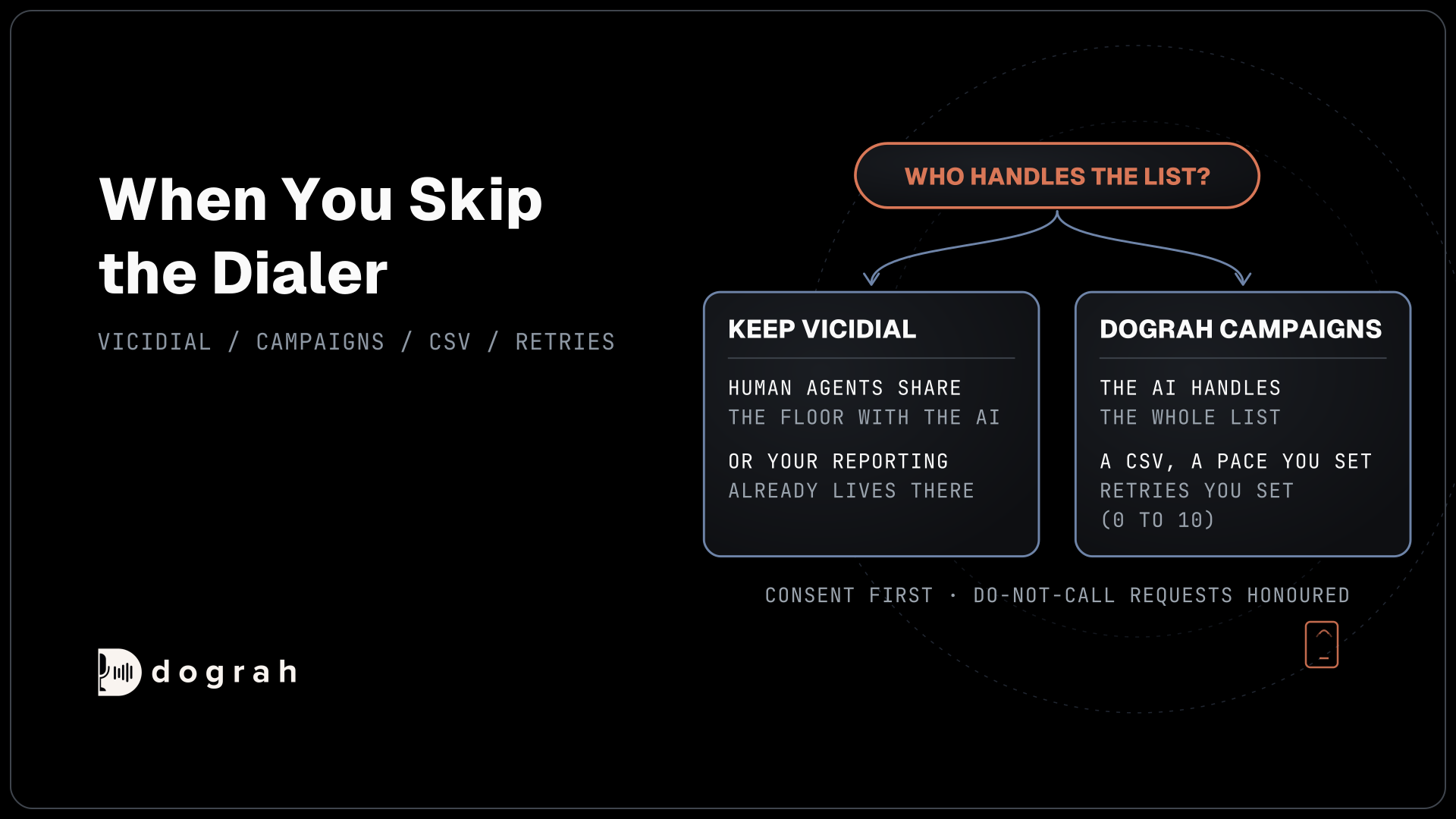
Open-Source Predictive Dialer With an AI Agent: The Handoff
How an open-source predictive dialer and an AI voice agent split the work, with VICIdial pacing the calls and Dograh taking the answered ones over Asterisk ARI and writing outcomes and do-not-call requests back, plus the two-second abandoned-call rule.
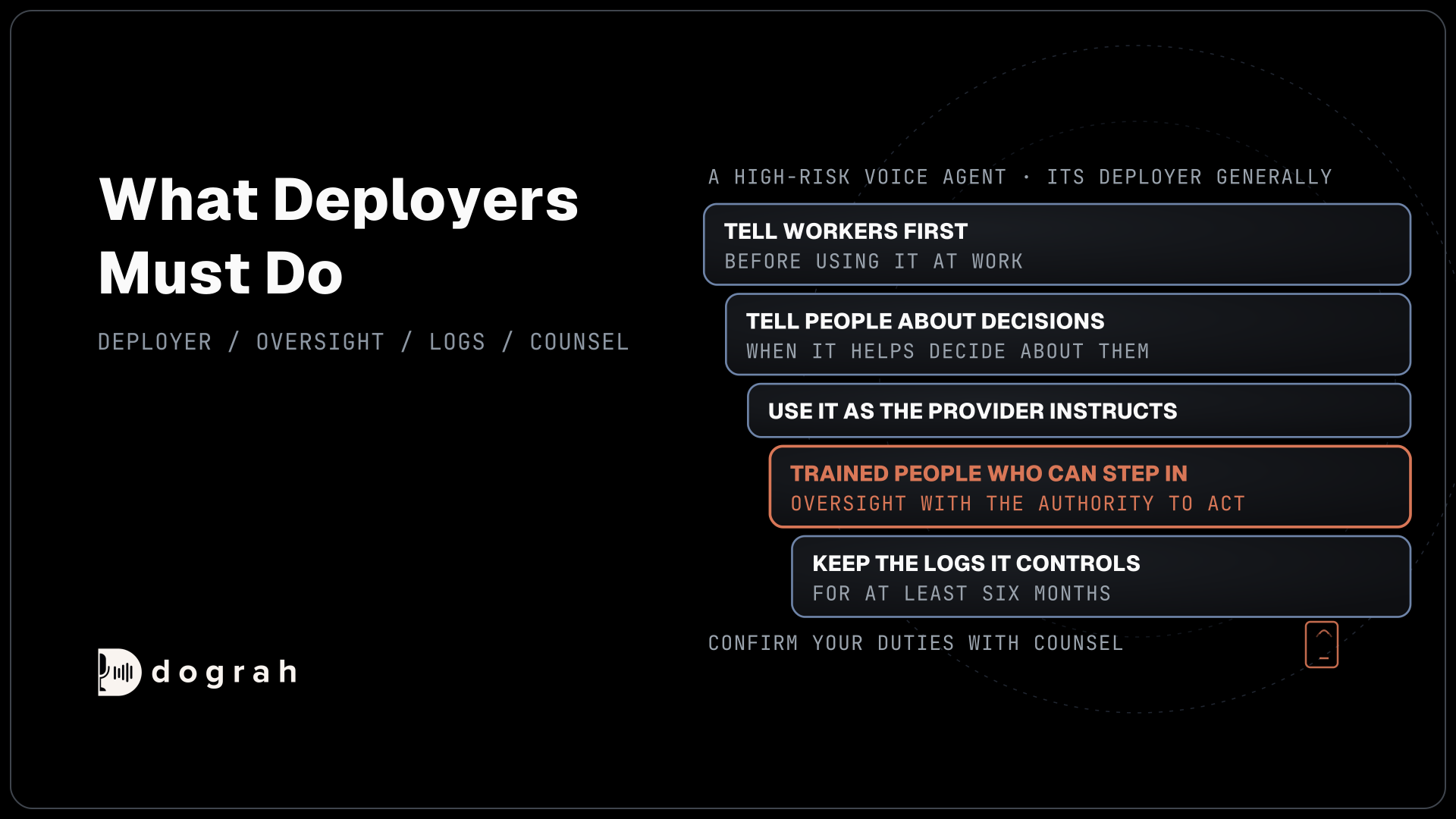
EU AI Act High-Risk Rules for Voice Agents in 2026
Which voice-agent uses fall on the EU AI Act's high-risk list, from credit and insurance calls to hiring screens and emergency lines, which usually do not, the narrow way out and what deployers must do from 2 December 2027.
EU AI Act Risk Categories Explained for Voice AI in 2026
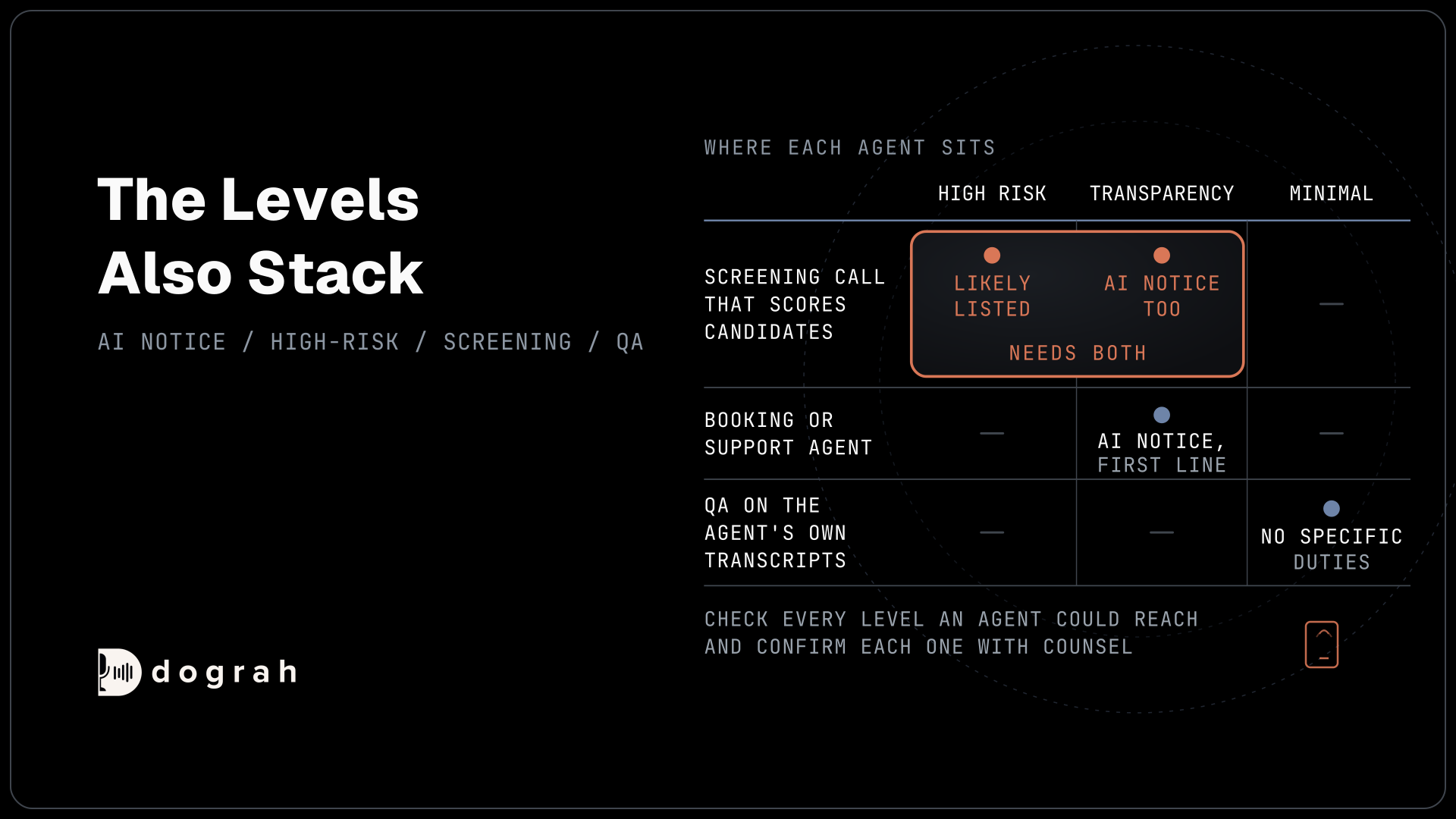
The EU AI Act's four risk levels for voice AI are banned, high-risk, transparency and minimal risk. Each gets a phone-agent example, plus the call-centre emotion rule and the AI notice every voice agent needs.
Securing Tool Calls and Webhooks in Voice Agents: What to Check
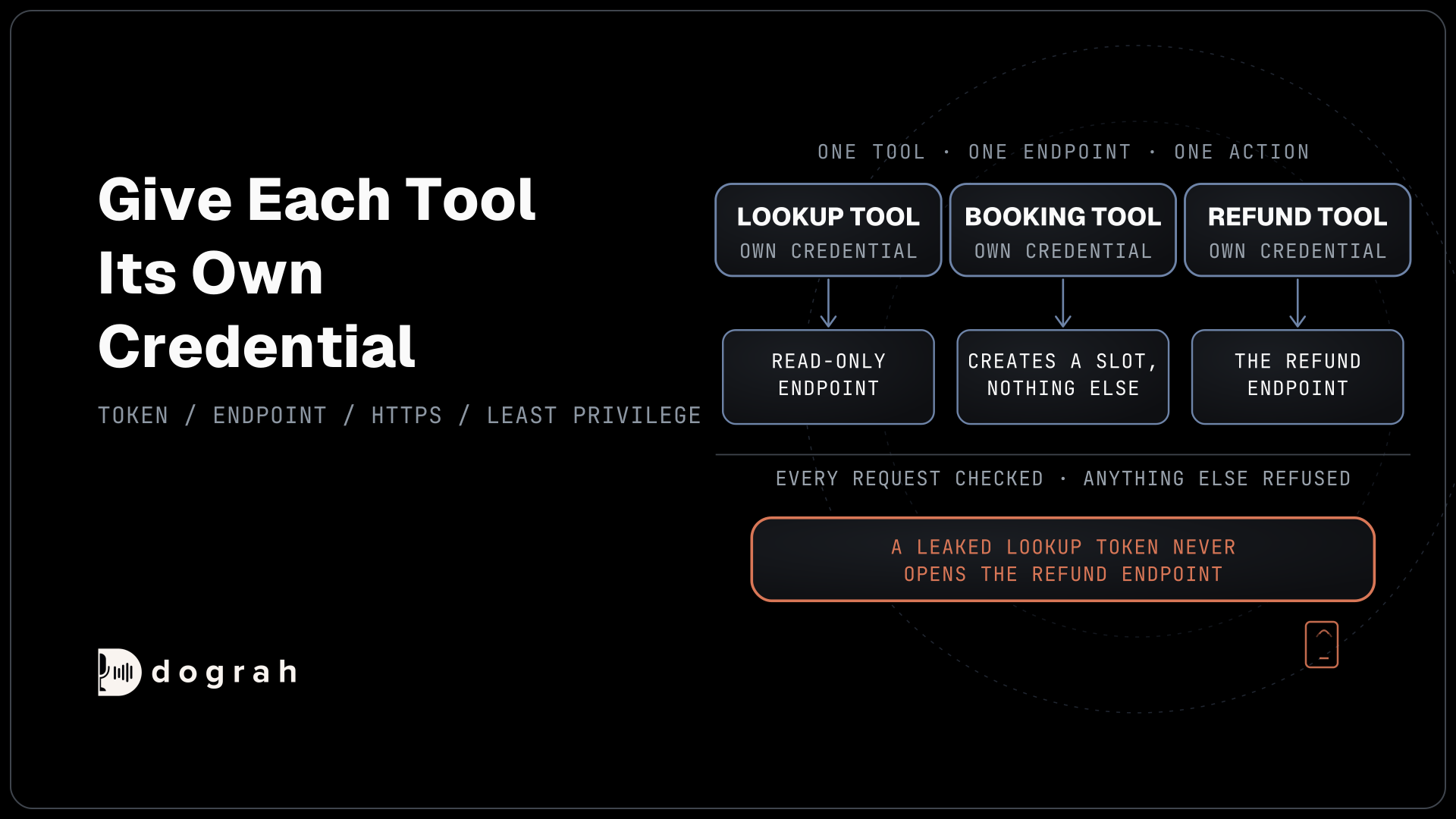
How to secure the HTTP requests a voice agent makes mid-call and the webhook it sends after, with a stored credential on every request, one narrow job per endpoint, a timeout that fails closed, safe webhook receivers and the log line to keep.
Running Voice AI on Your Own GPUs: Sizing, Serving and the Monthly Bill
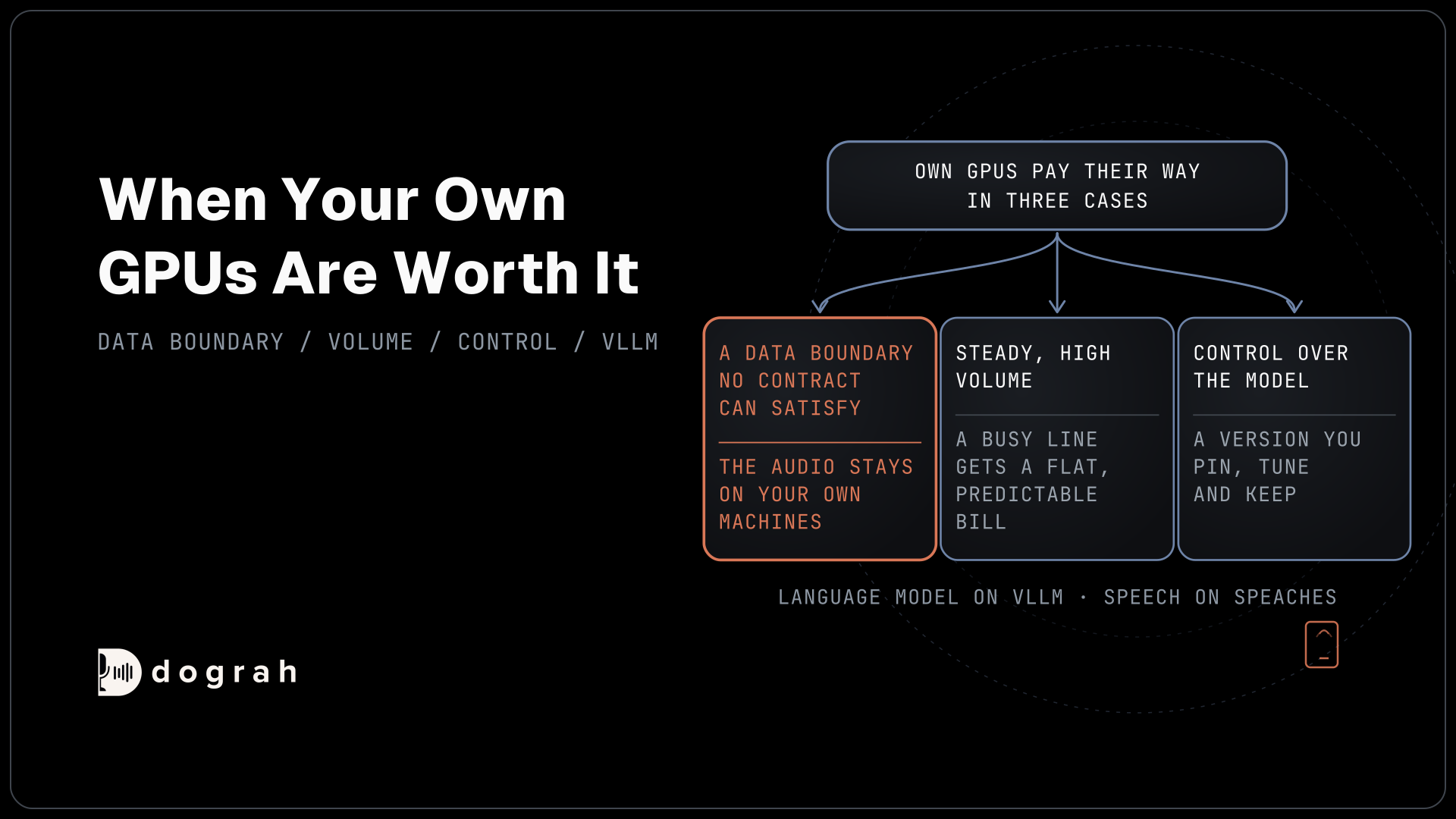
How to run a voice agent's models on your own GPUs, covering memory per model, serving the language model with vLLM and speech with Speaches, how many calls a card carries, and what an always-on GPU costs each month.
Pipecat Flows Explained: Nodes, Functions and a Working Example
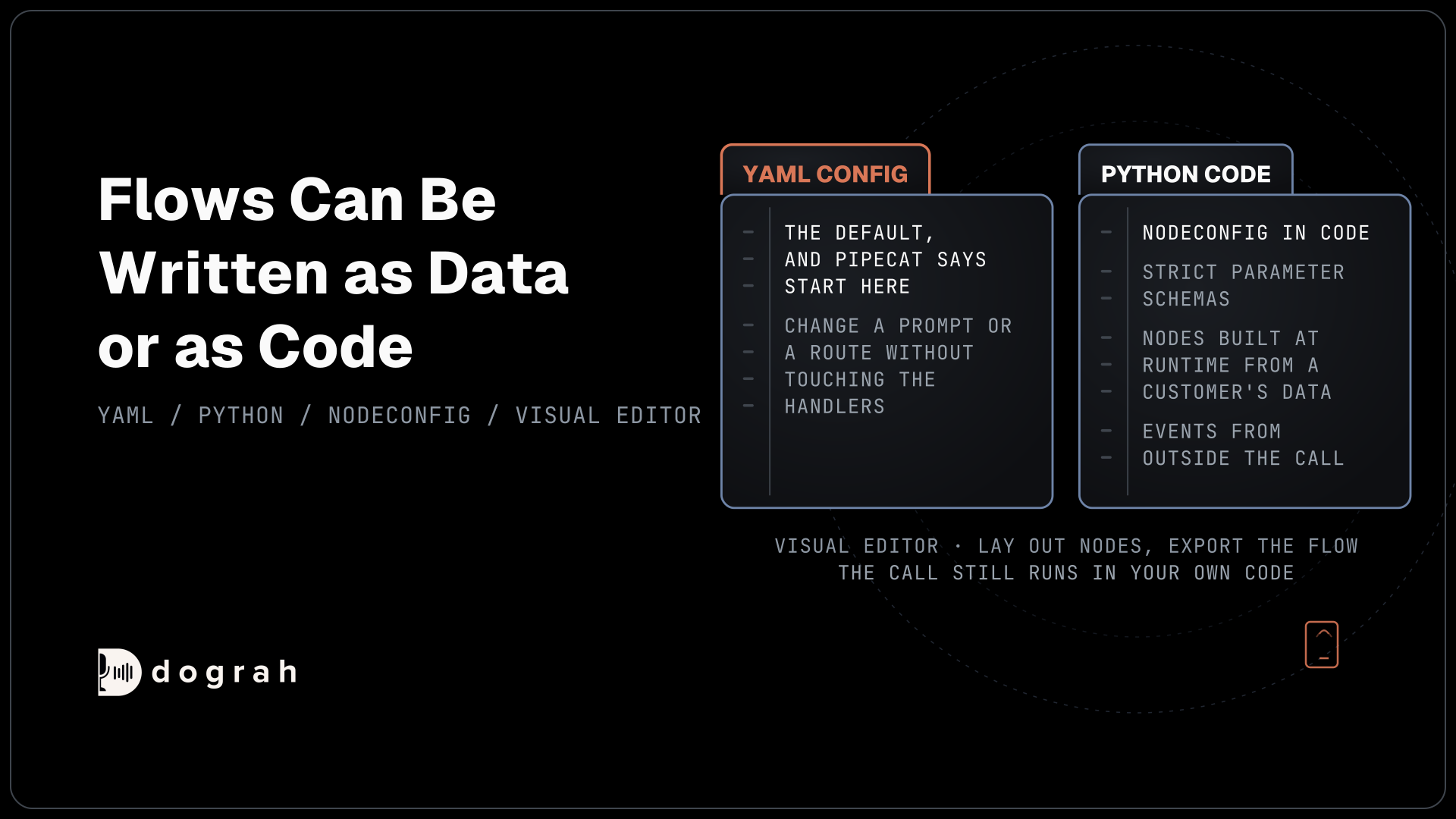
How Pipecat Flows splits a voice agent call into nodes and functions, with a small YAML and Python example, the cascade-only limit, and how a visual workflow builder such as Dograh's maps to the same idea.
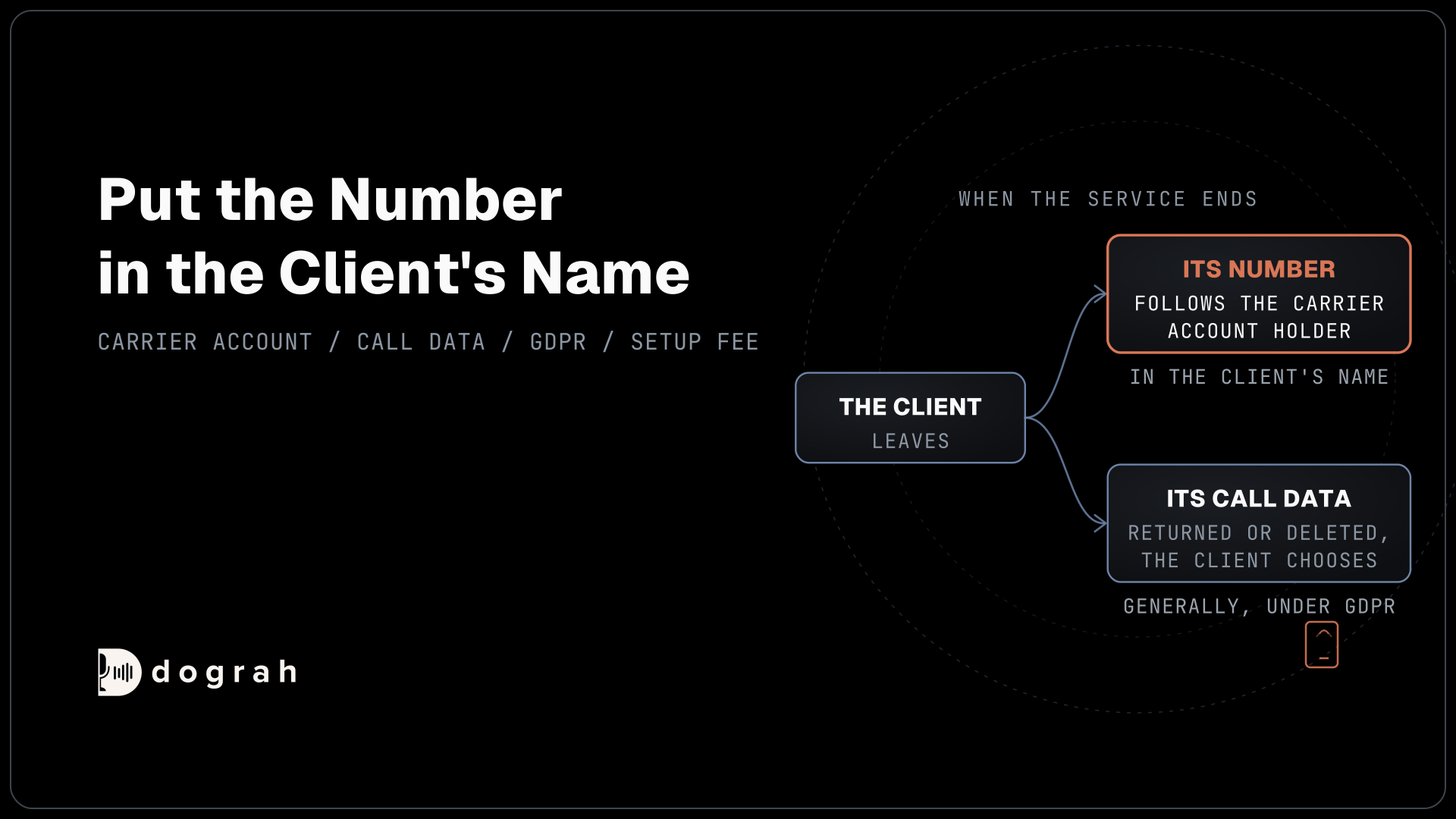
White-Label AI Receptionist for Agencies: Numbers, Data and Price
A white-label AI receptionist for agencies: what callers hear and what the client sees, running it under your own brand or one Dograh Cloud team per client, who holds the numbers and call data, and how to price it.
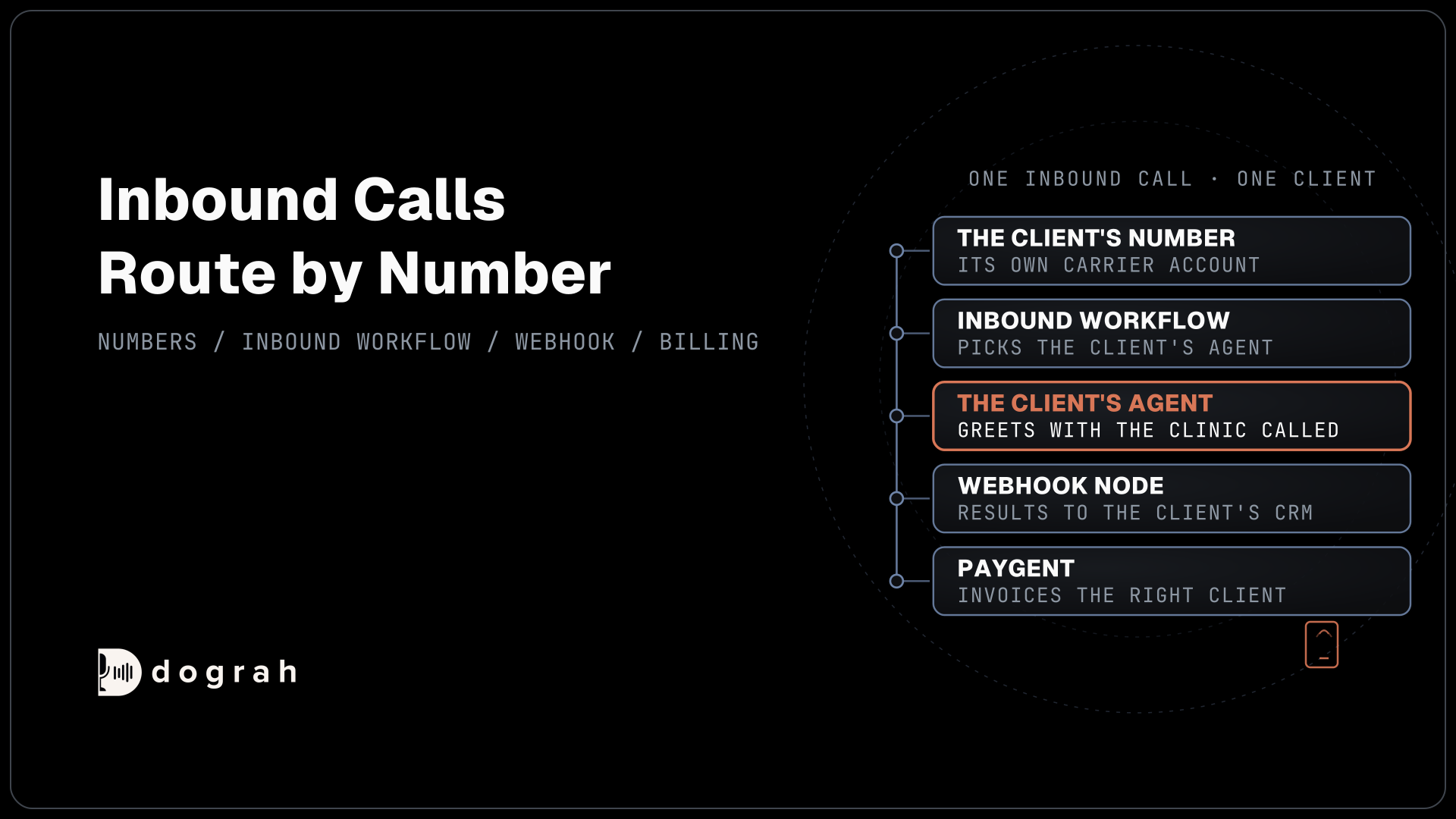
Managing Multiple Clients on One Voice AI Platform
Managing multiple clients on one voice AI platform: one organization per client or one for all, and how to keep each client's numbers, prompts, knowledge files, model keys, reports and billing apart on Dograh Cloud or self-hosted.
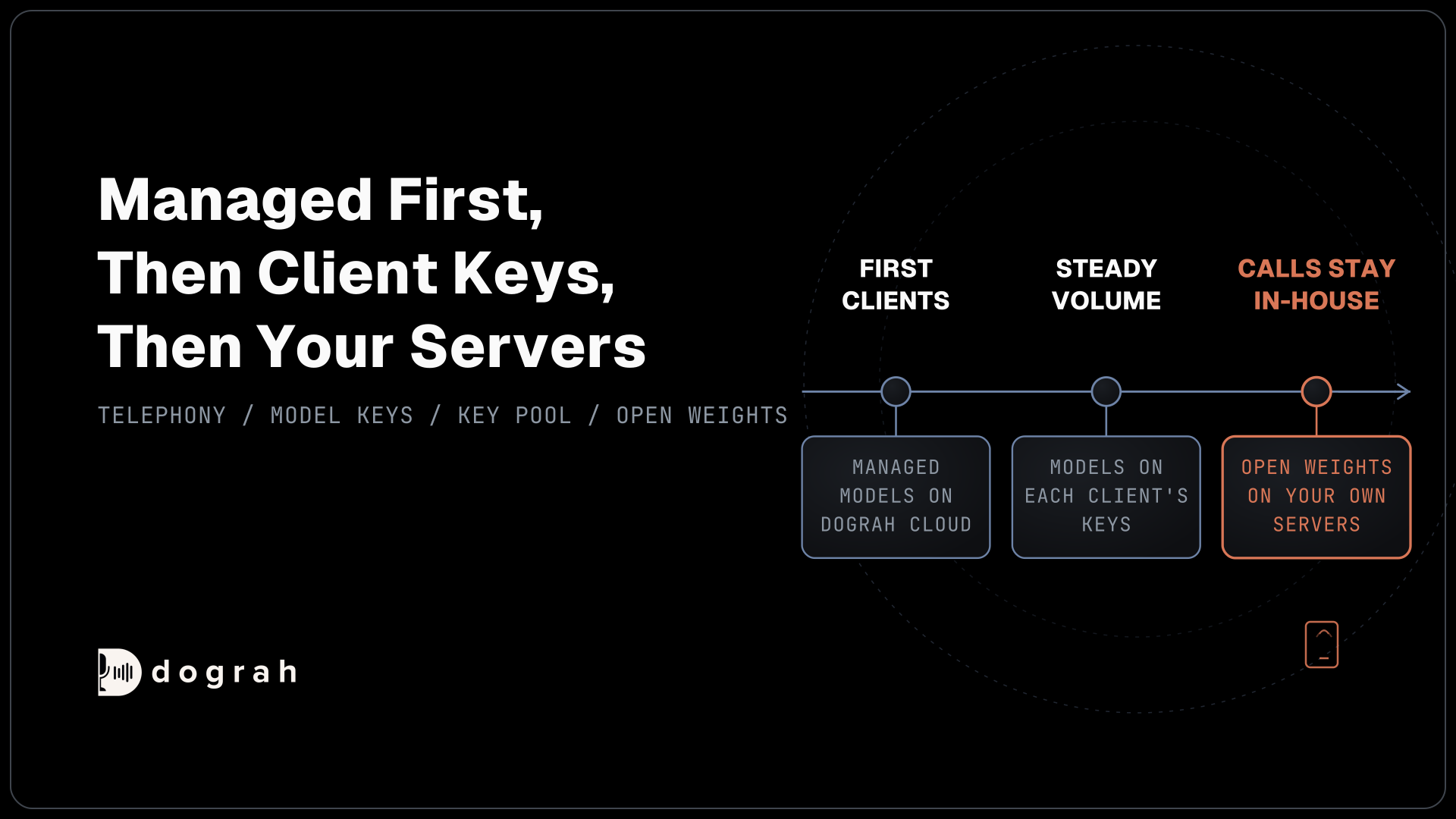
Voice AI Agency Tech Stack: Telephony, Models and Platform
The voice AI agency tech stack layer by layer: carriers and SIP trunks, speech-to-text, the language model, the voice and the platform, with model costs per minute kept apart from the platform and one example stack per budget.
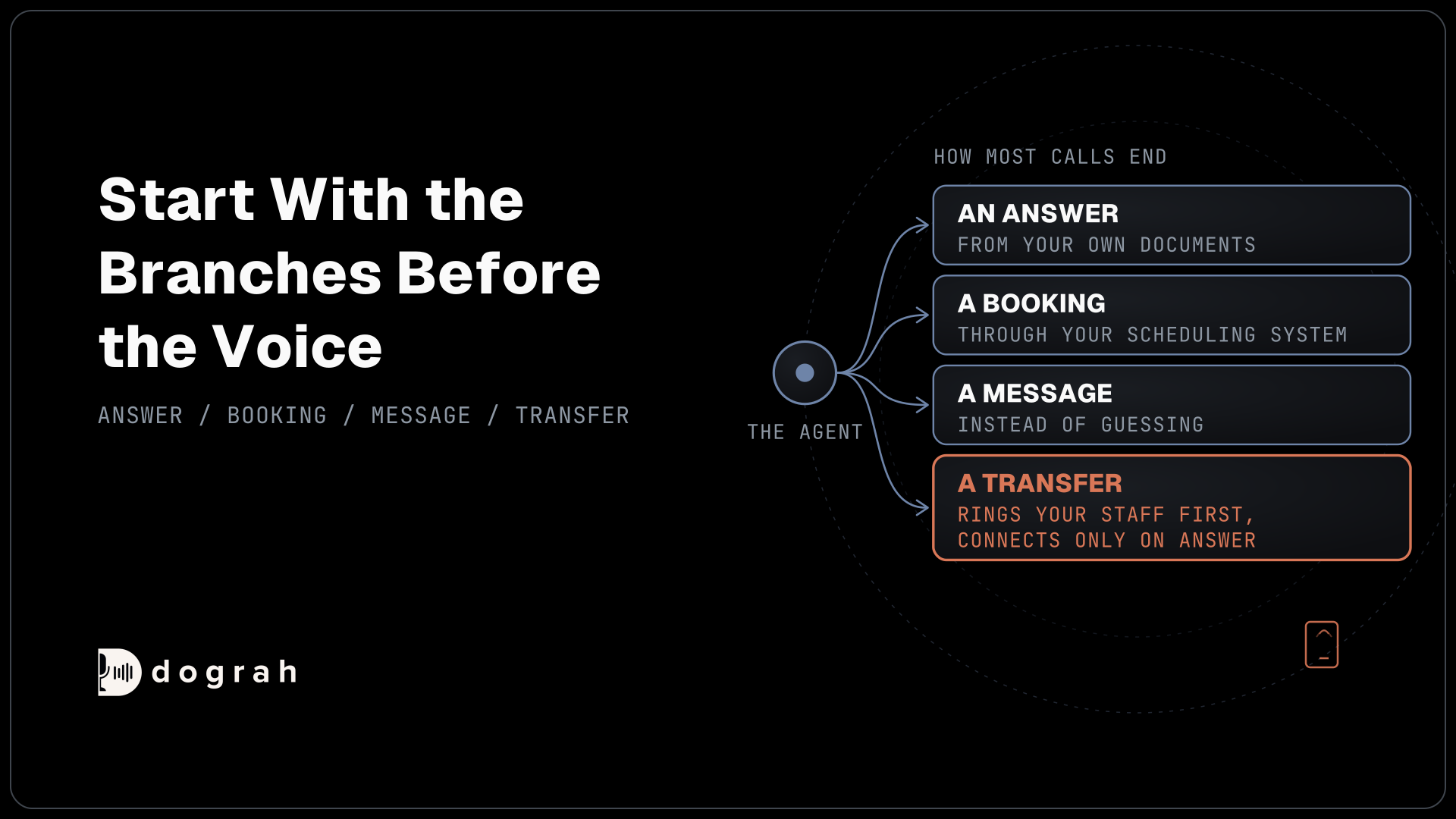
AI Answering Service for Business: How a Voice Agent Takes Calls
How an AI answering service for business handles one call: the greeting, answers from your documents, booking through your scheduling system, the transfer to a person, and the branch where nobody picks up.
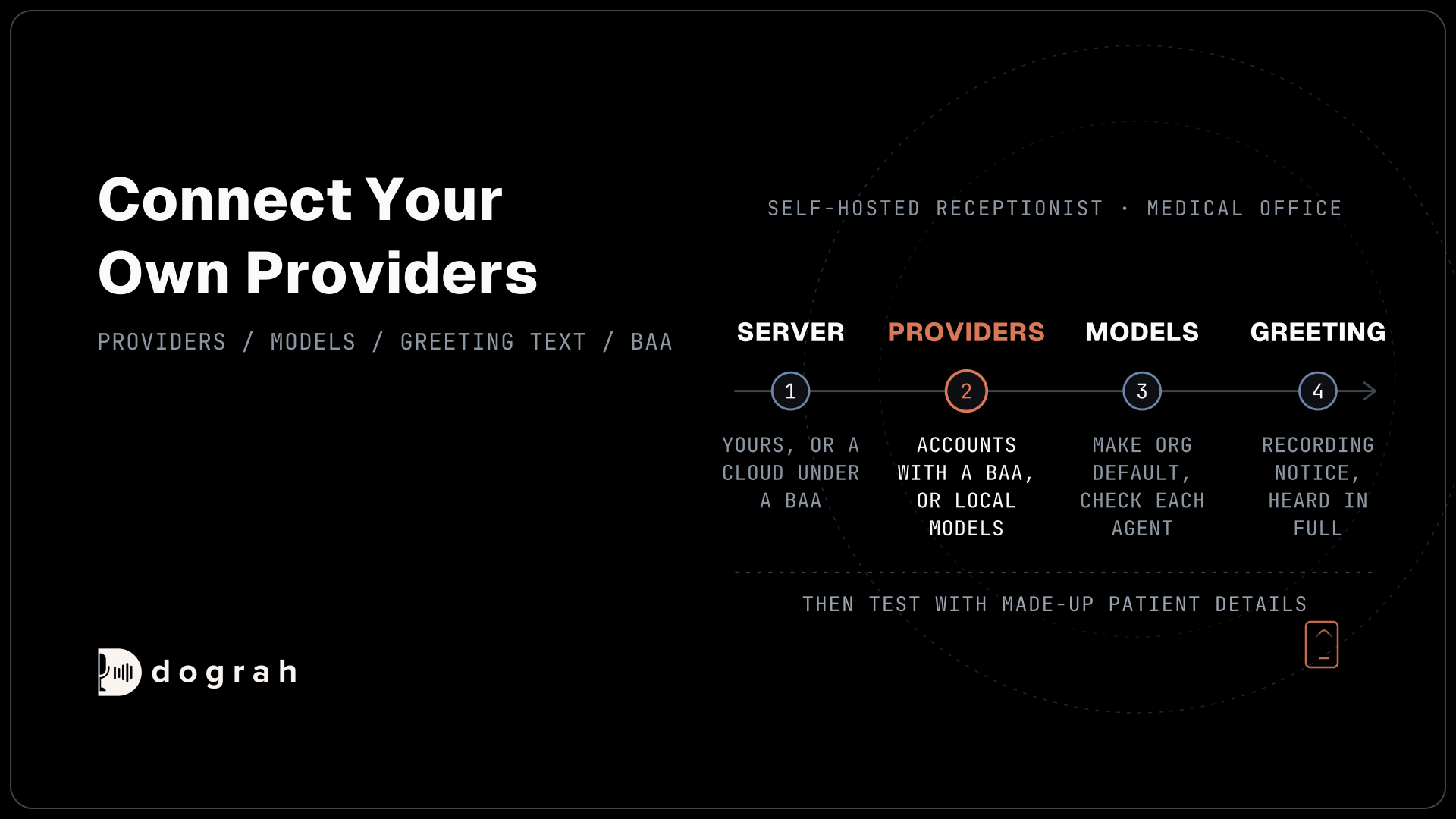
HIPAA-Compliant AI Receptionist for Medical Offices
Which companies behind an AI receptionist need a business associate agreement with a medical office, how booking and messages can stay on the practice's own systems, and how to set up a self-hosted receptionist.
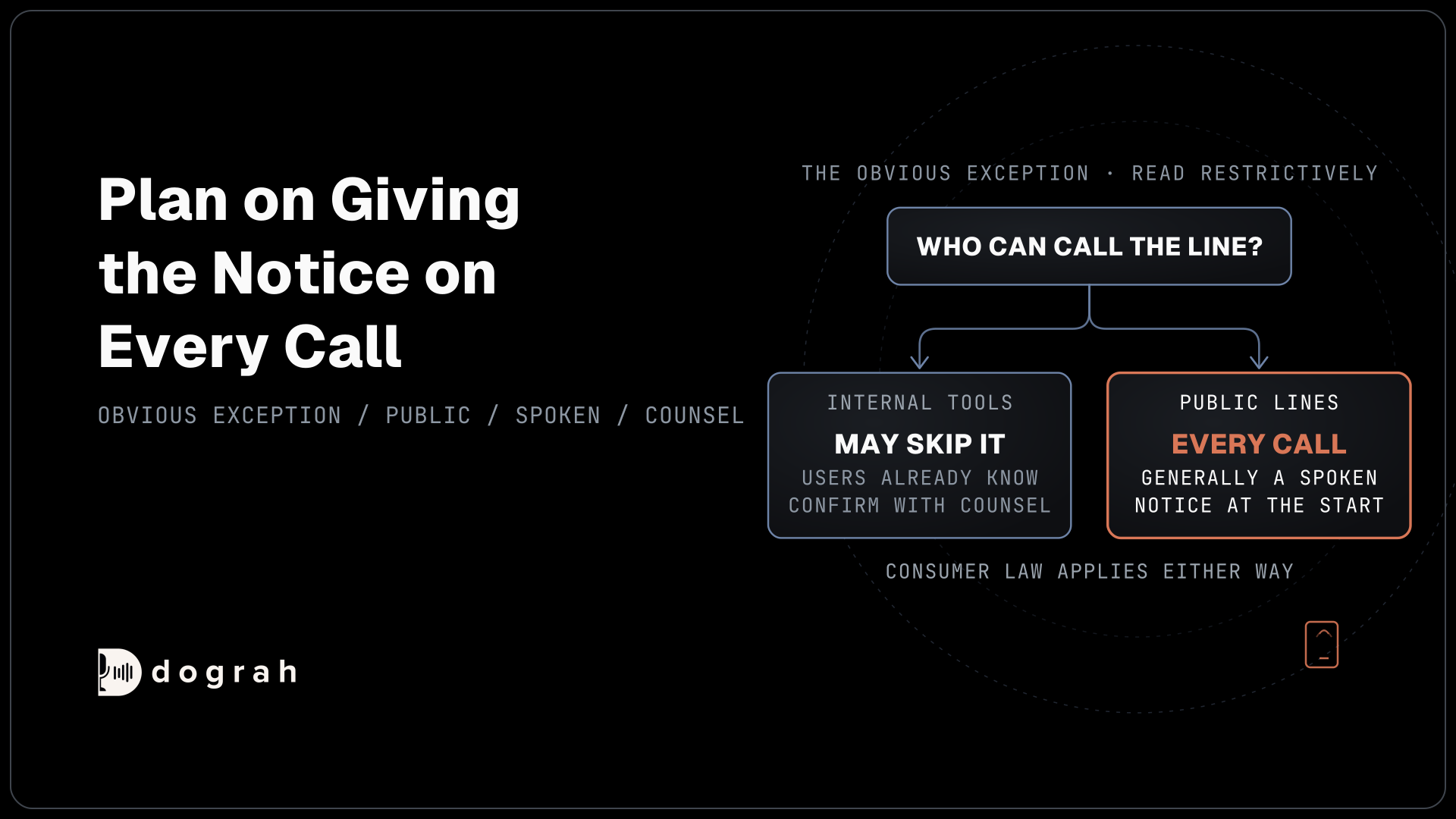
EU AI Act Article 50: What a Voice Agent Must Tell Callers
Article 50 of the EU AI Act in plain words for phone agents: tell callers they are talking to an AI at the start of the call, what the Commission's guidelines ask on the phone, when the obvious exception fails, four sample opening lines and how to make the notice play in full.
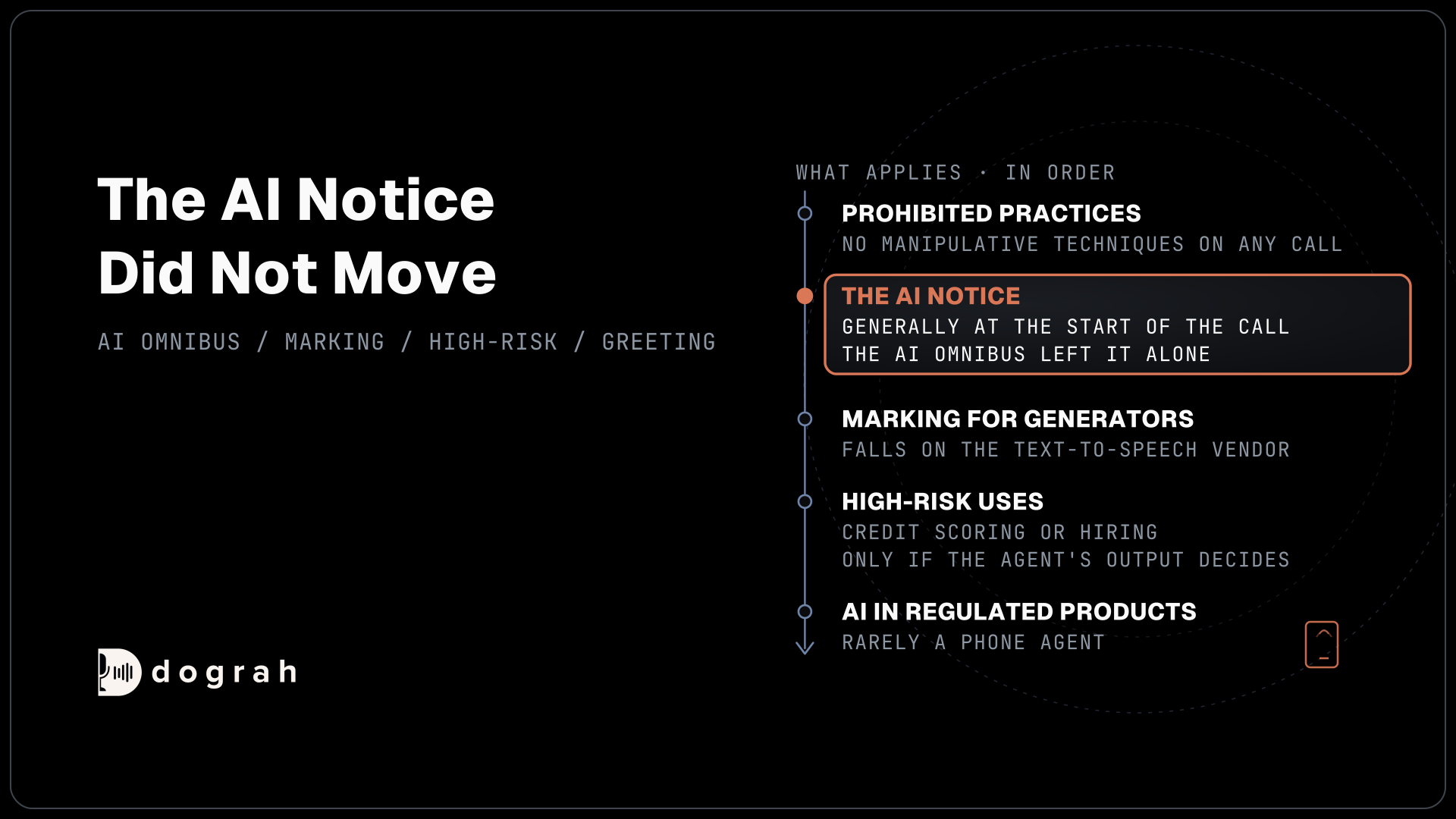
EU AI Act Timeline: What Applies From August 2026
Every EU AI Act application date in one table, from the 2025 bans to the 2030 public-authority deadline, what the AI Omnibus moved, and what the 2 August 2026 AI notice means for a phone agent.
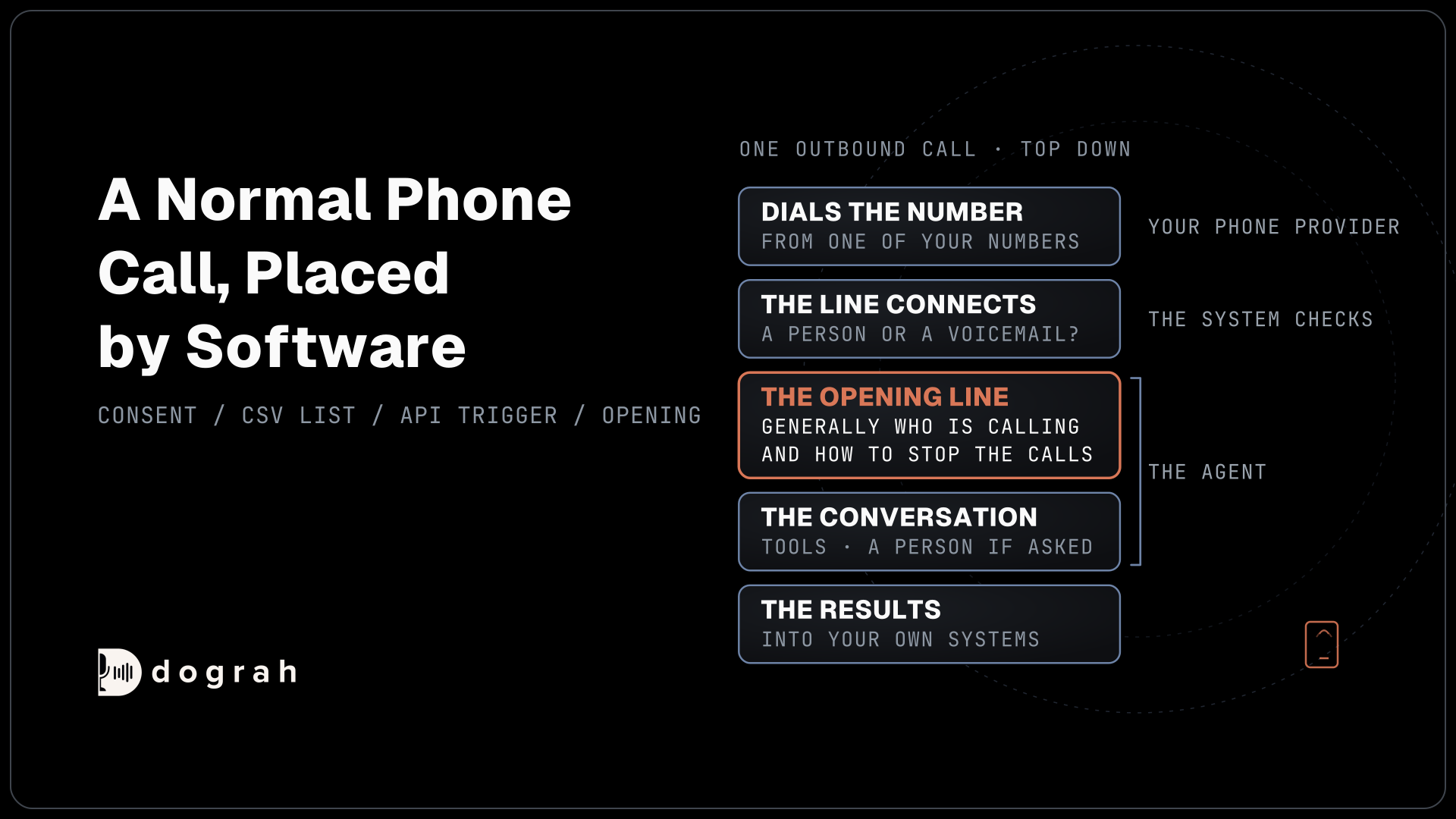
Can AI Voice Agents Make Outbound Calls? Yes, With Consent First
Yes, AI voice agents can make outbound calls. What it takes: consent before the first dial, a campaign from a CSV list or a single call started from your own system, an opening that names the business, and where outbound calls break.
AI Cold Calling Bots: How They Work and Where They Fail
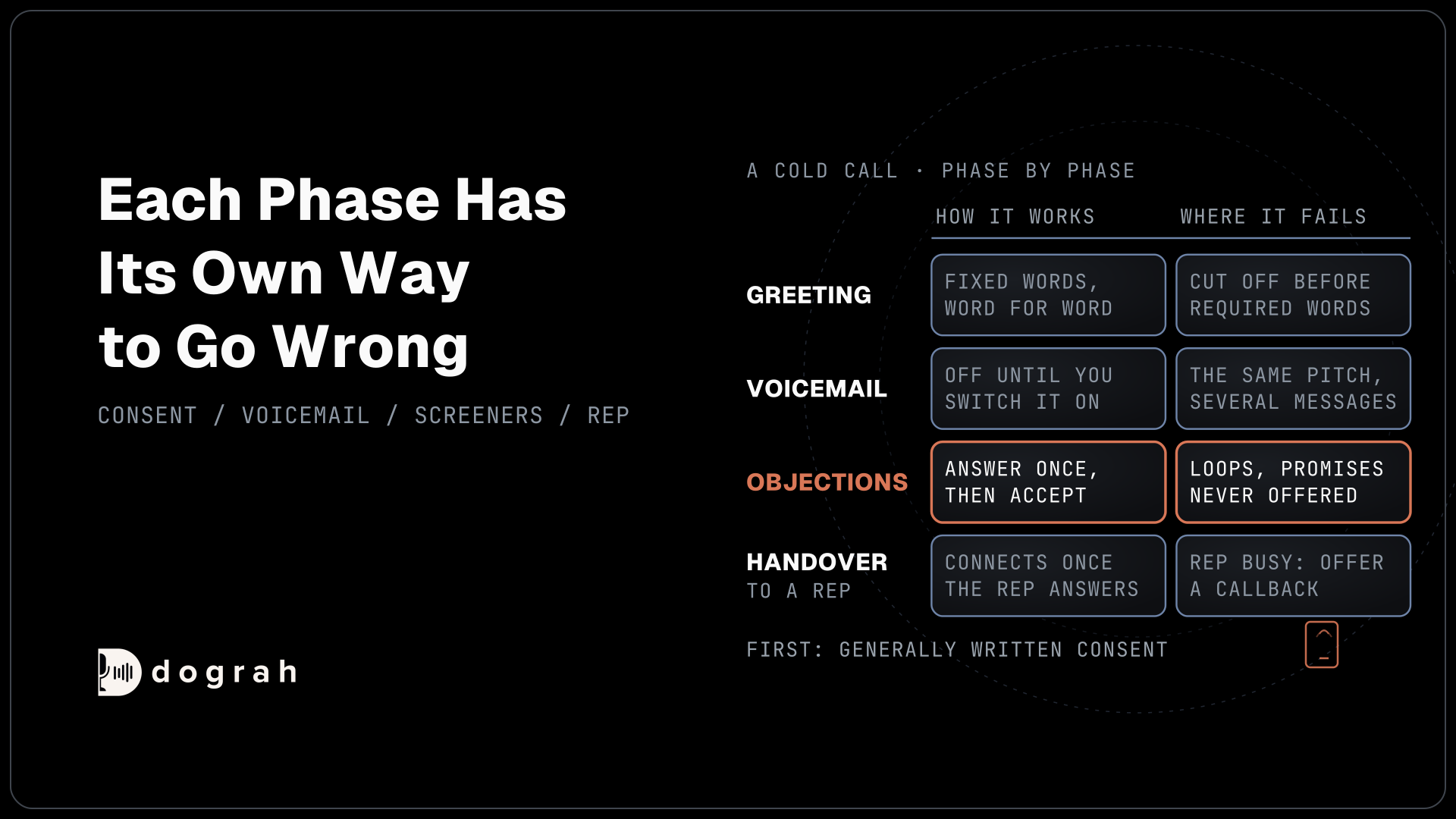
How an AI cold calling bot handles each phase of a call, from the greeting and the person-or-machine check to voicemail, call screeners, objections, opt-outs and the handover to a rep, where each phase breaks, and the consent rules that apply before any call.
STIR/SHAKEN and Caller ID: Why AI Calls Get Marked as Spam
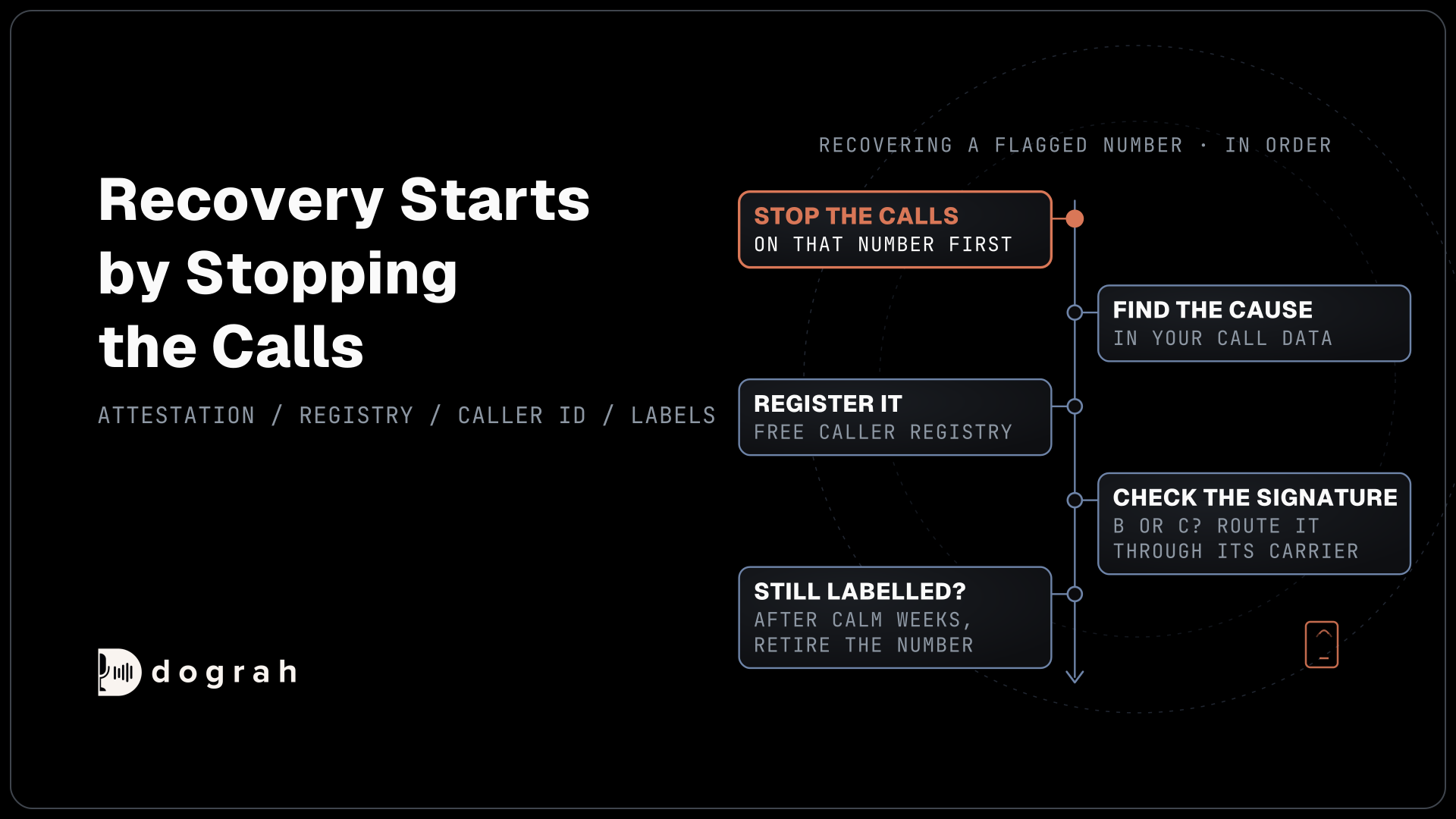
Why AI calls get labelled Spam Likely: what STIR/SHAKEN attestation levels A, B and C mean, why platform calls with outside numbers get B, why signed calls still get labelled, the Free Caller Registry, branded caller ID, how Dograh picks caller IDs and how to recover a flagged number.
API Key Safety for Voice AI: BYOK, Rotation and Service Keys
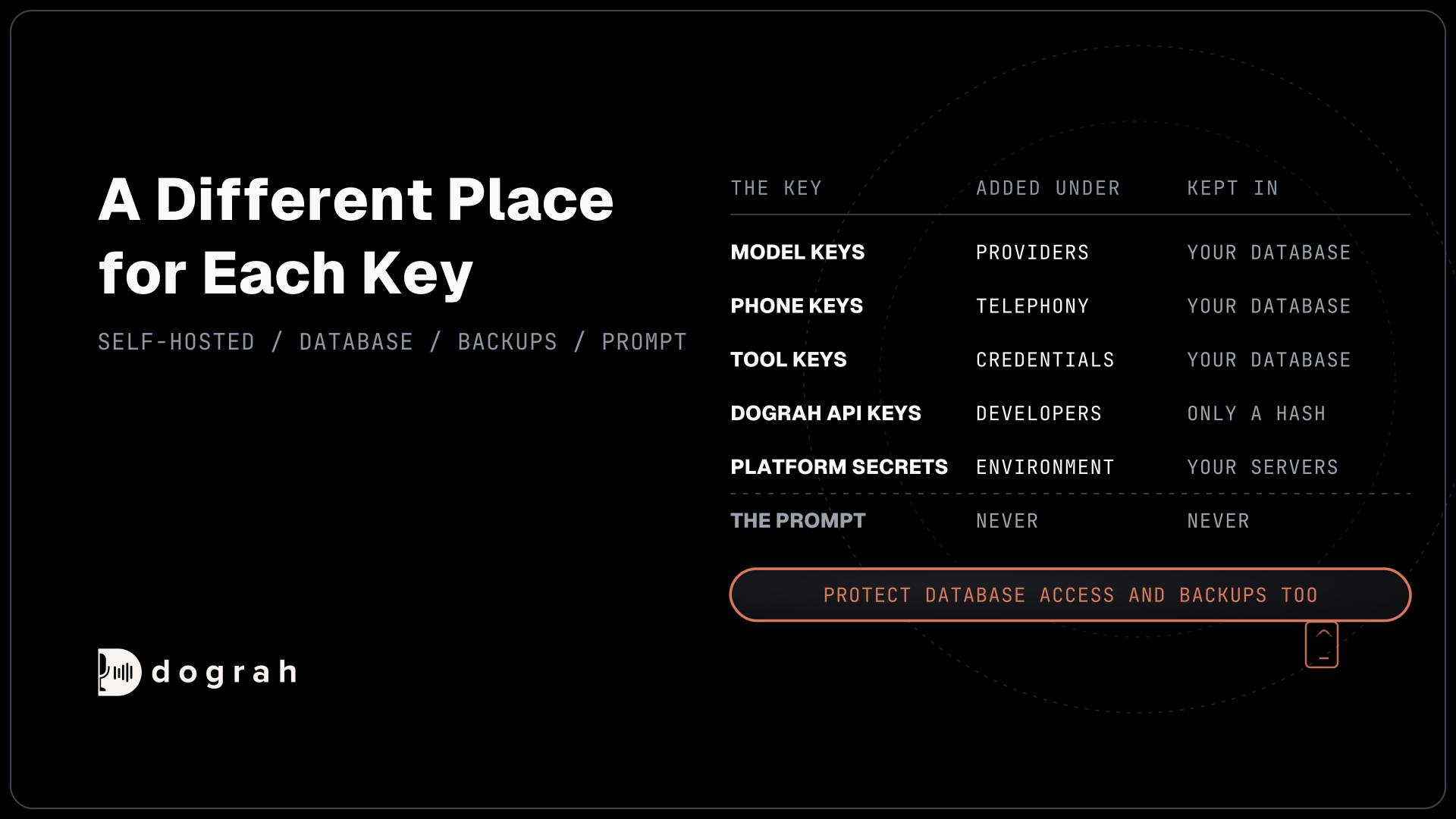
API key safety for voice AI: where model, telephony and Dograh keys live in a self-hosted stack, how to rotate each kind without dropping calls, how service keys work, and what to do after a leak.
Speechify API for Voice Agents: What It Can and Can't Do
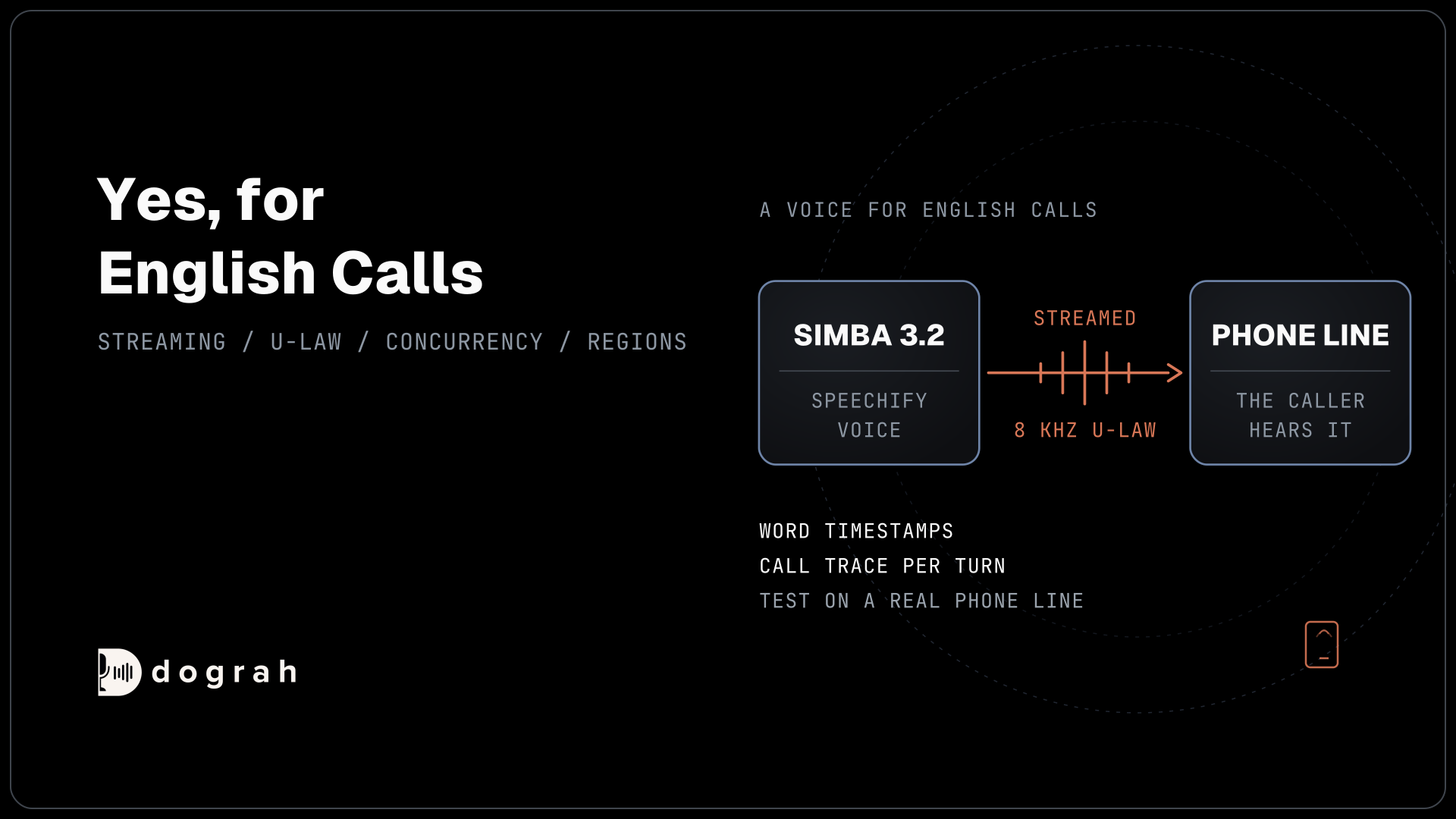
Does Speechify's API hold up on a live phone call? Its voices, streaming, phone audio formats, speed and limits, checked against Speechify's docs, and how Dograh runs Simba 3.2 and 3.0.
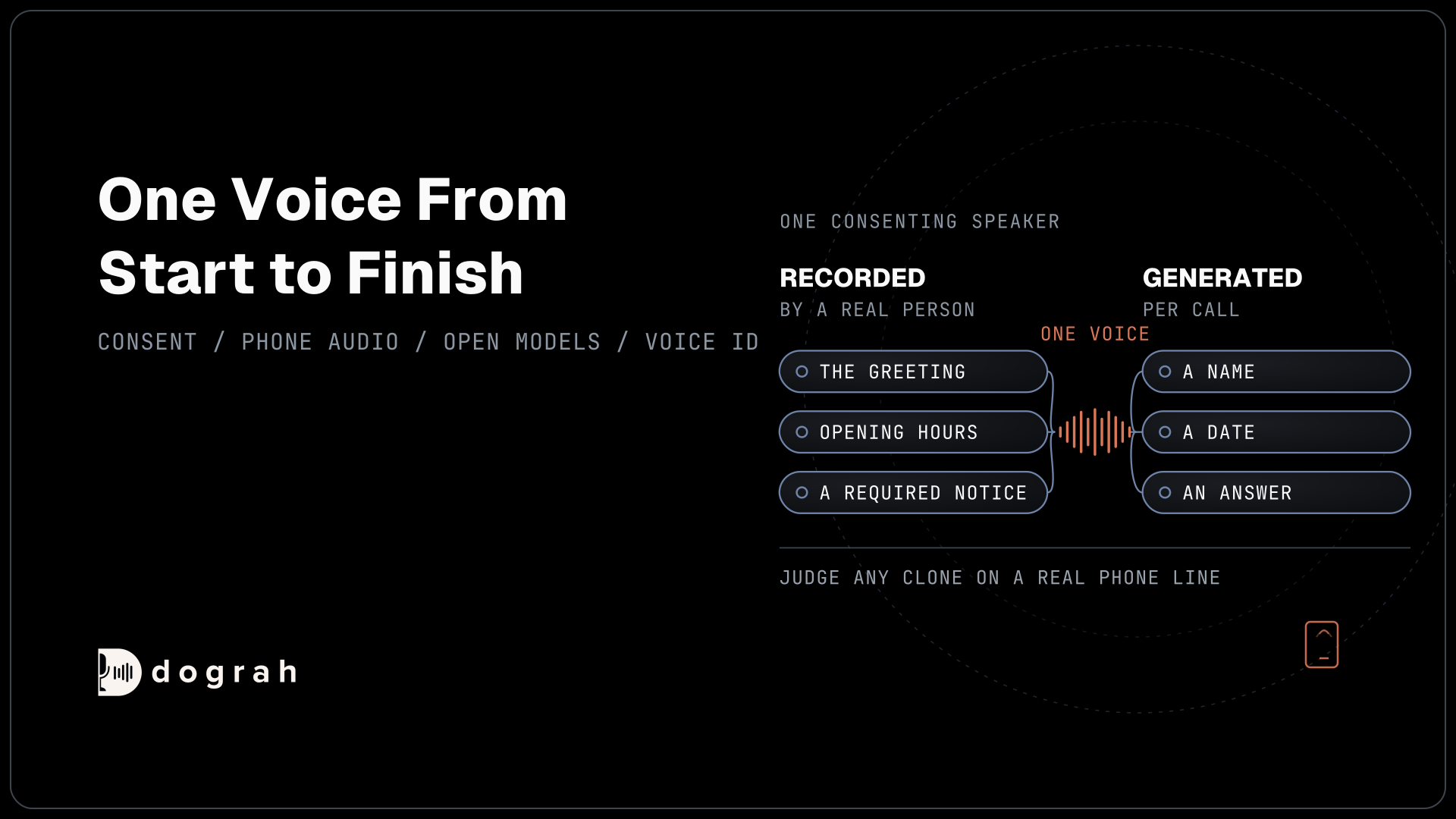
Voice Cloning for AI Voice Agents: The Complete Guide
When a cloned voice helps a phone agent and when it backfires, what the person you clone has to agree to, how to judge a clone on phone audio, and which open models can clone.
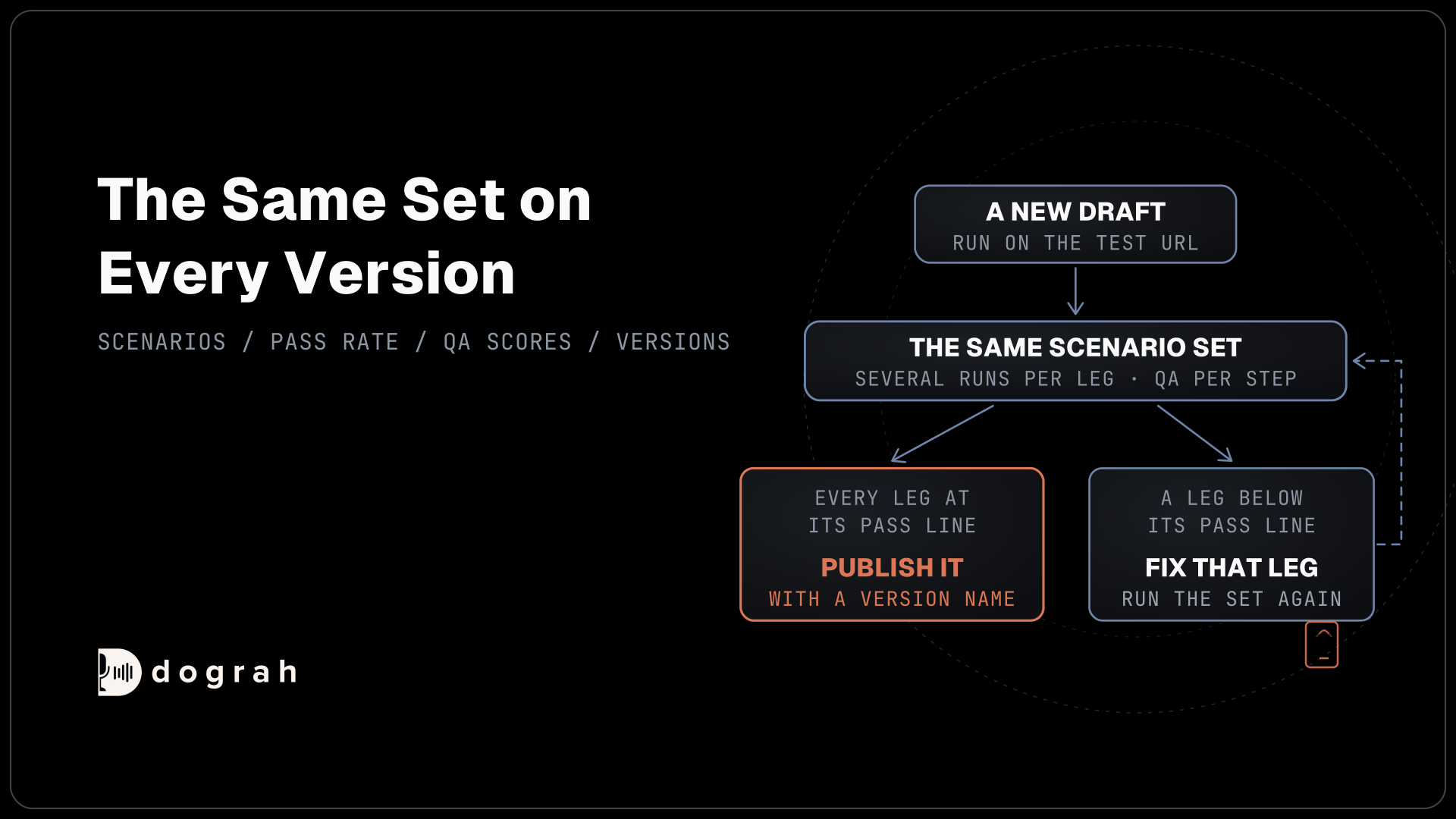
Voice Agent Testing and Evaluation: How to Benchmark Before Launch
How to know a voice agent is ready with numbers: a fixed scenario set, several runs per leg, per-step QA scores and the same tests on every new version.
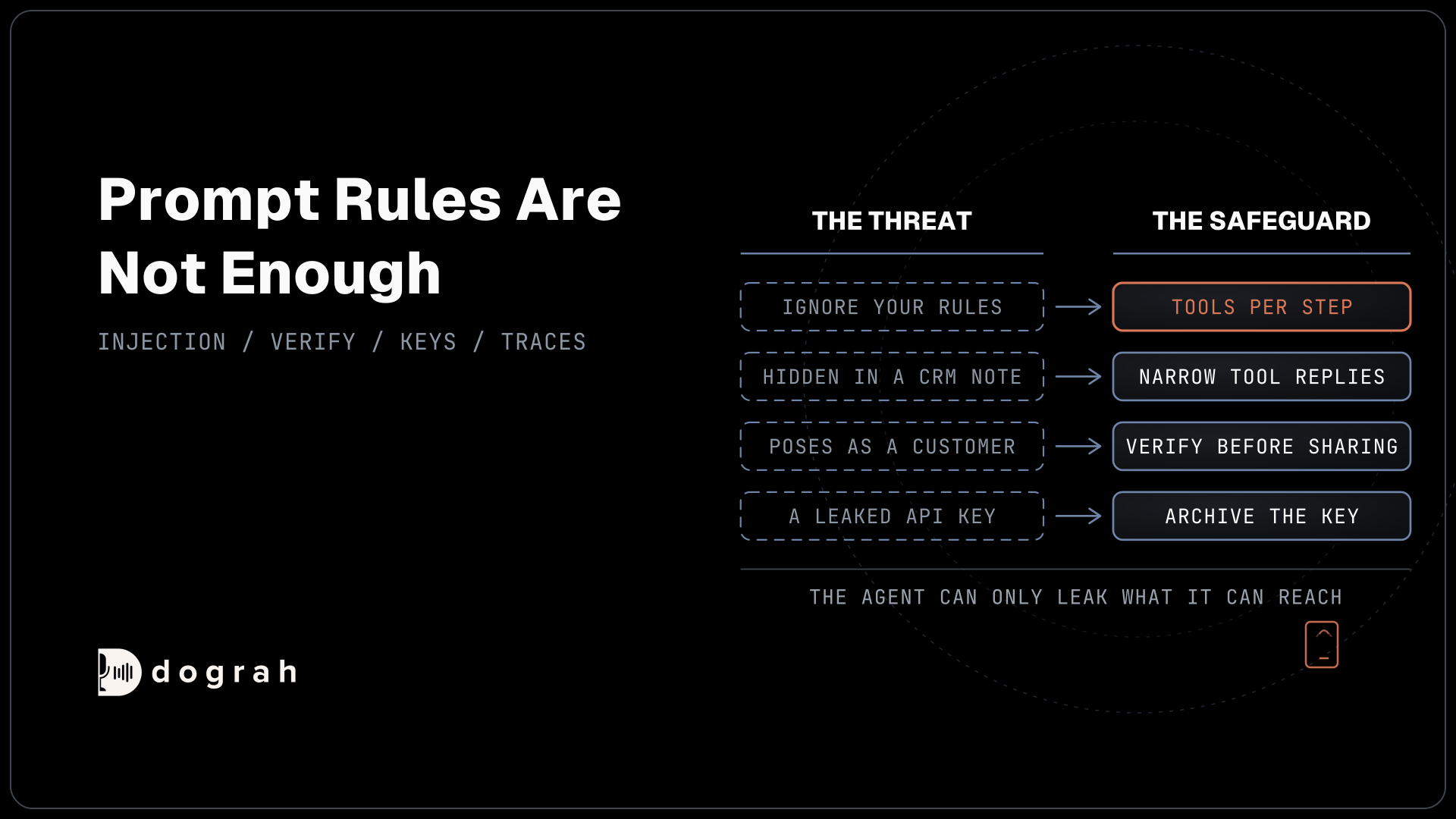
Voice AI Security: Threats and Safeguards for Phone Agents
What callers try to make an AI phone agent do, from prompt tricks to posing as someone else, and the safeguards that stop each one.
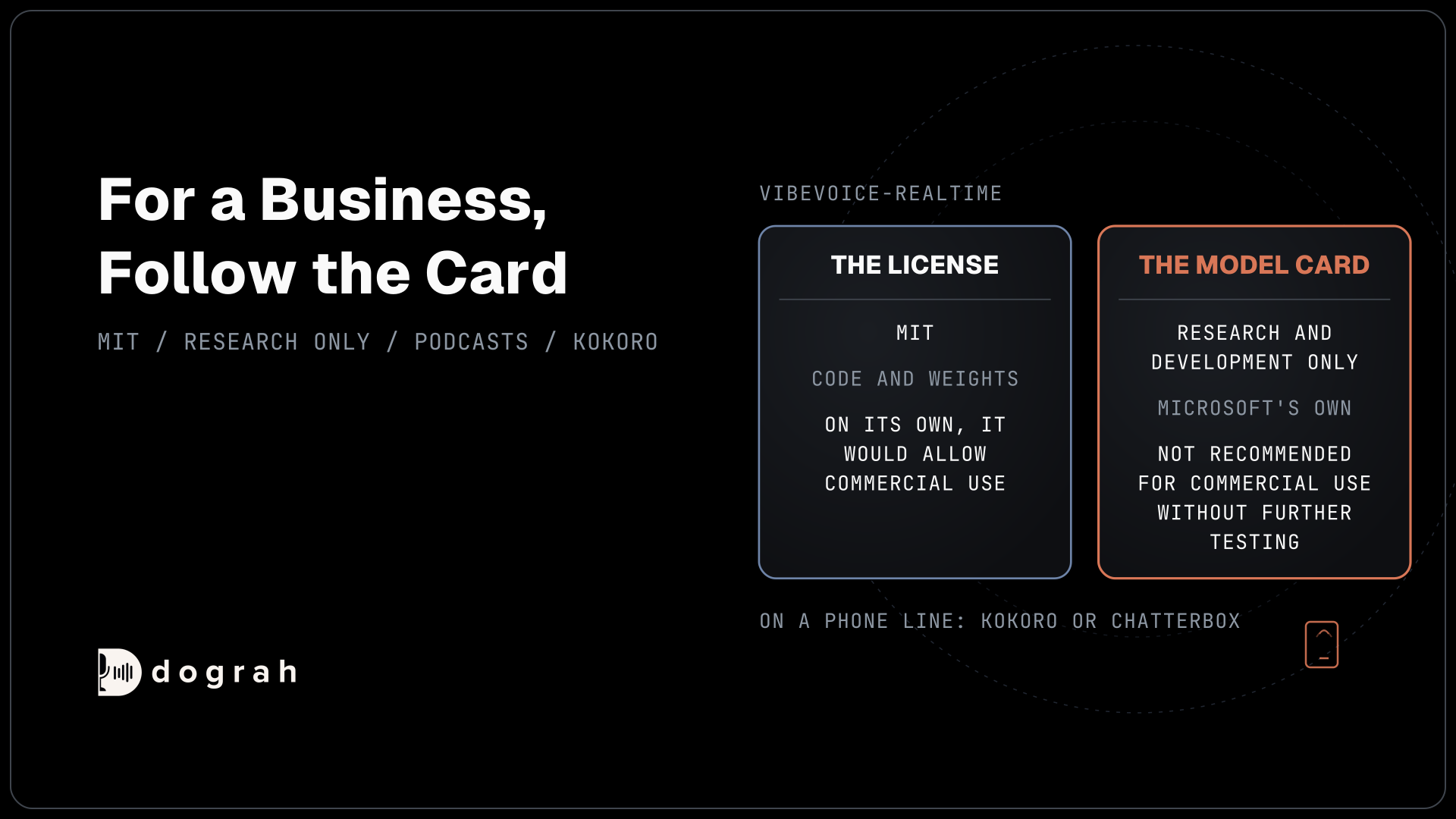
VibeVoice for Voice Agents: Long-Form Voice, Not a Phone Line
What Microsoft's VibeVoice models are built for, what their license and Microsoft's own card say about commercial use, how the realtime model fits a live call and what to run instead.
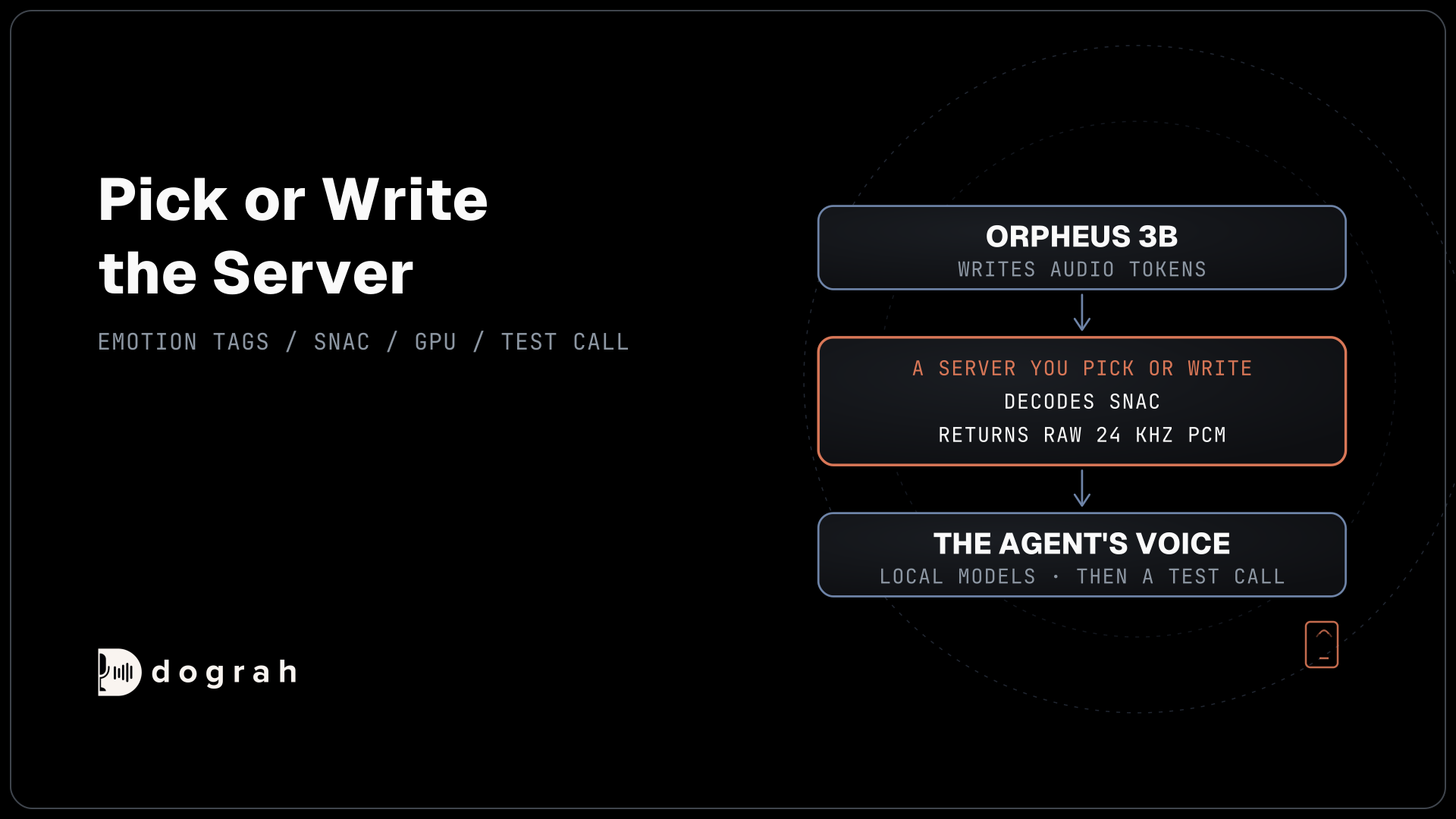
Orpheus TTS for Voice Agents: What Emotion Tags Cost in Speed
What Orpheus 3B's emotion tags do on a call, how it scored in our benchmark, what a 3B voice costs to serve, its license and how it runs behind Dograh.
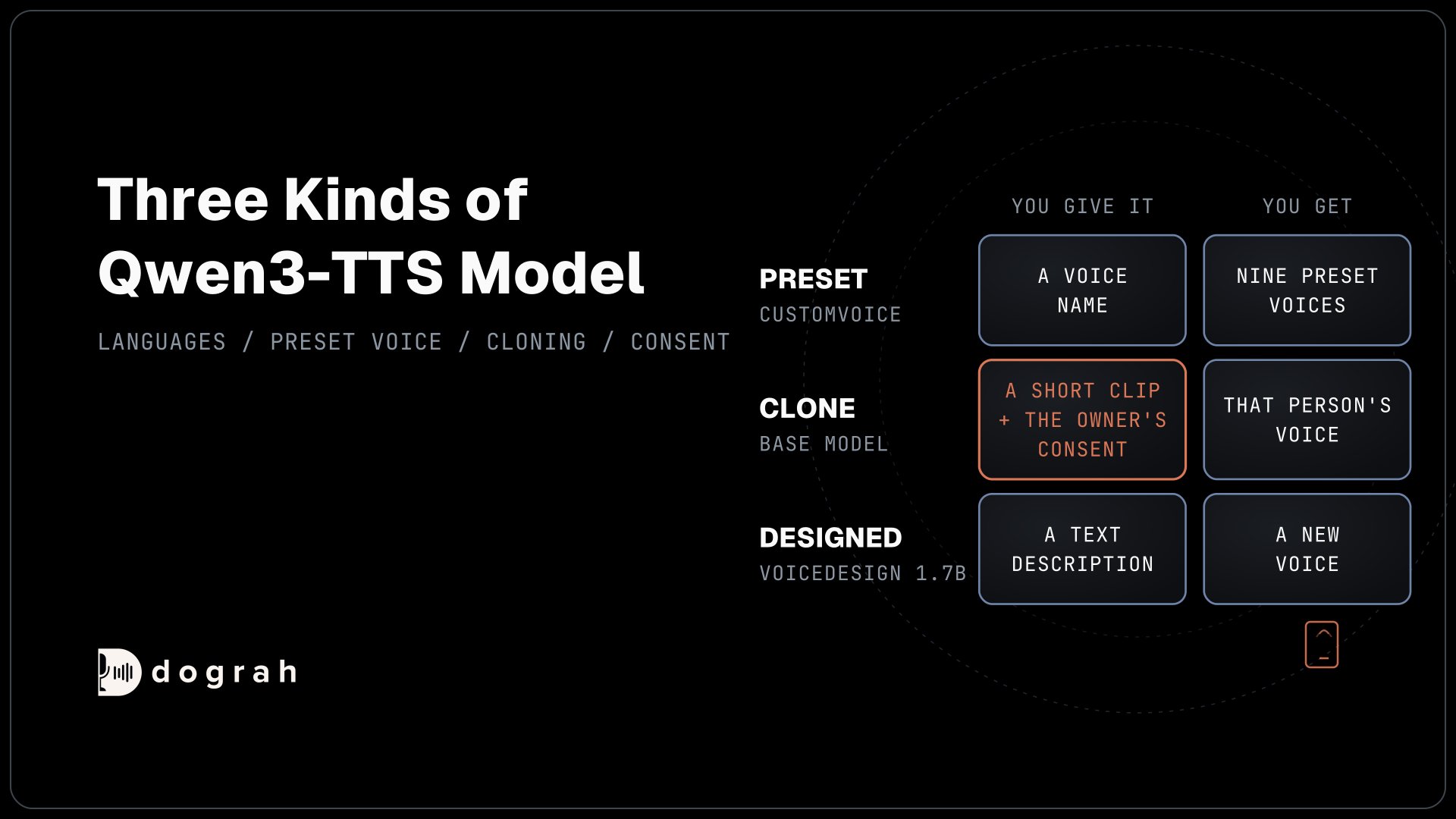
Qwen3-TTS for Voice Agents: Ten Languages, Tested in English
What Qwen3-TTS offers a voice agent: ten languages, preset voices and three-second cloning, our English benchmark result, how to serve it and how it runs behind Dograh.
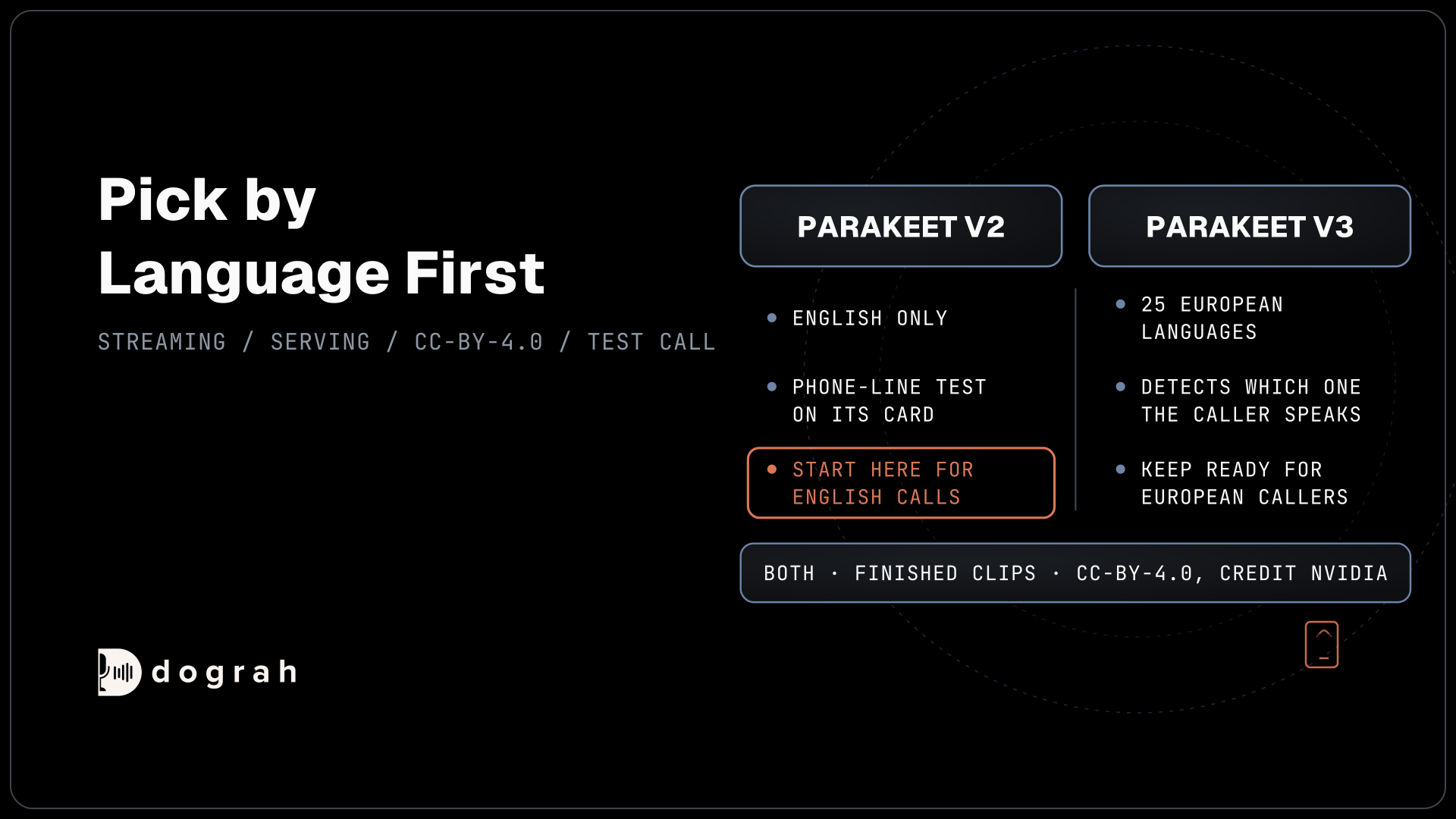
Nvidia Parakeet for Voice Agents: v2 or v3 Beside Your LLM
Nvidia Parakeet TDT 0.6B for phone agents: why it fits beside your language model on one GPU, v2 for English against v3 for 25 languages, what streaming means for each, serving it for Dograh, and CC-BY-4.0.
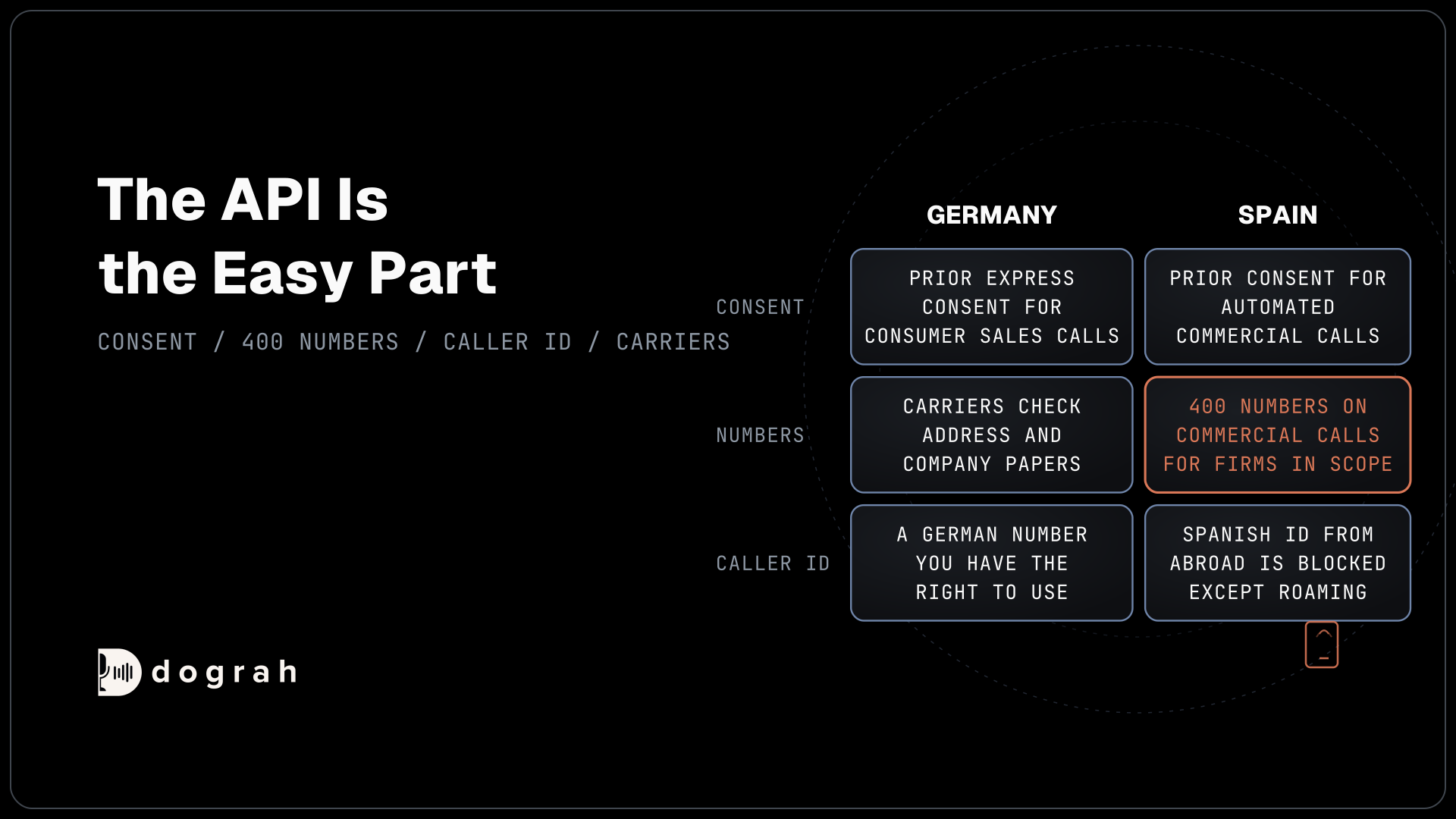
Outbound Calling API for Germany and Spain: Consent and Caller ID
What it takes to place AI calls to German and Spanish numbers: consent under UWG and Ley 11/2022, Spain's 400 numbers, caller ID rules and what each carrier asks for.
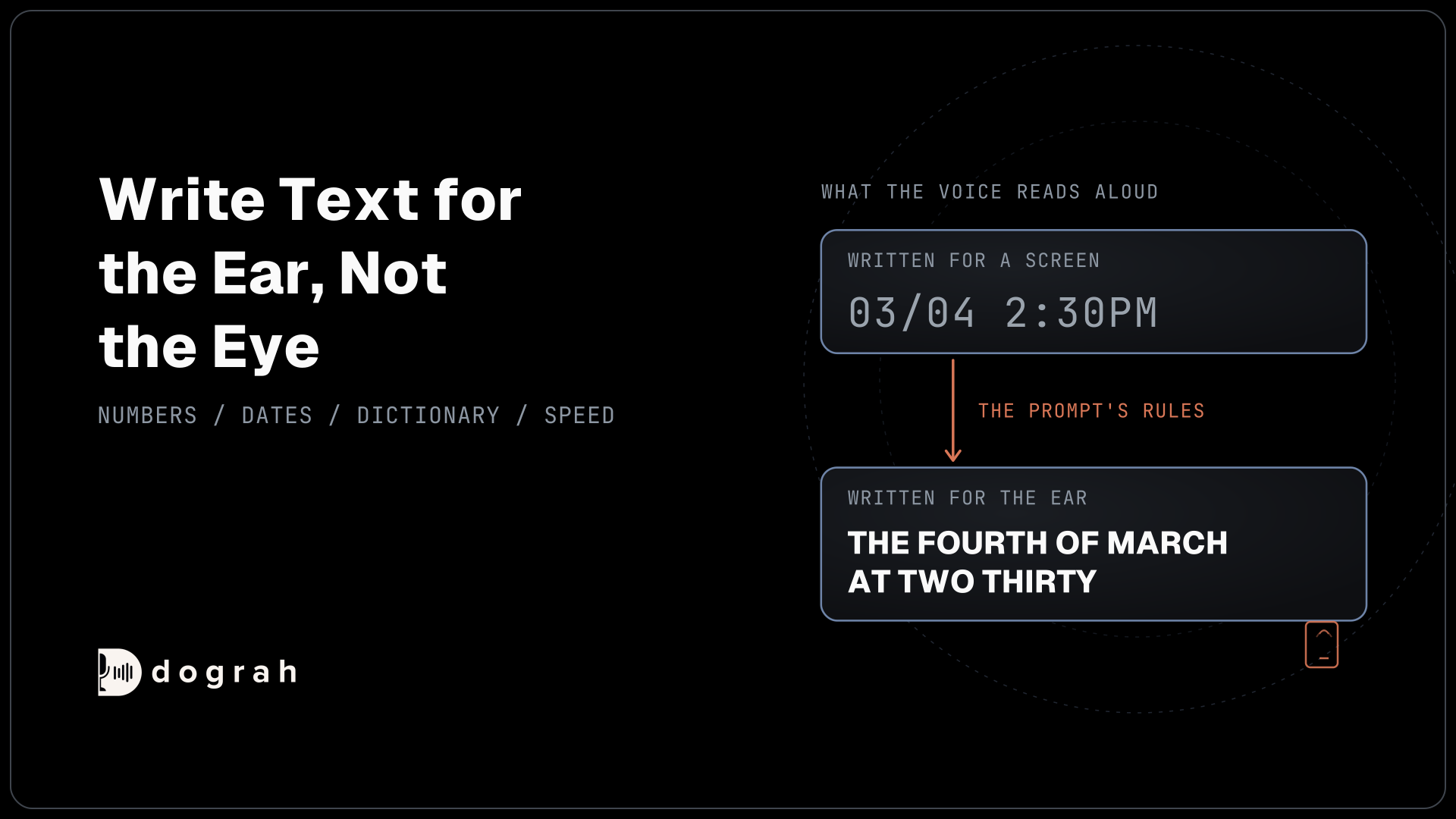
How to Reduce Robotic TTS in Voice Agents: Fix the Words First
Why voice agents sound robotic and how to fix it: write text for the ear, spell hard names the way they sound, set the speed, pick the voice and test it on a real phone call.
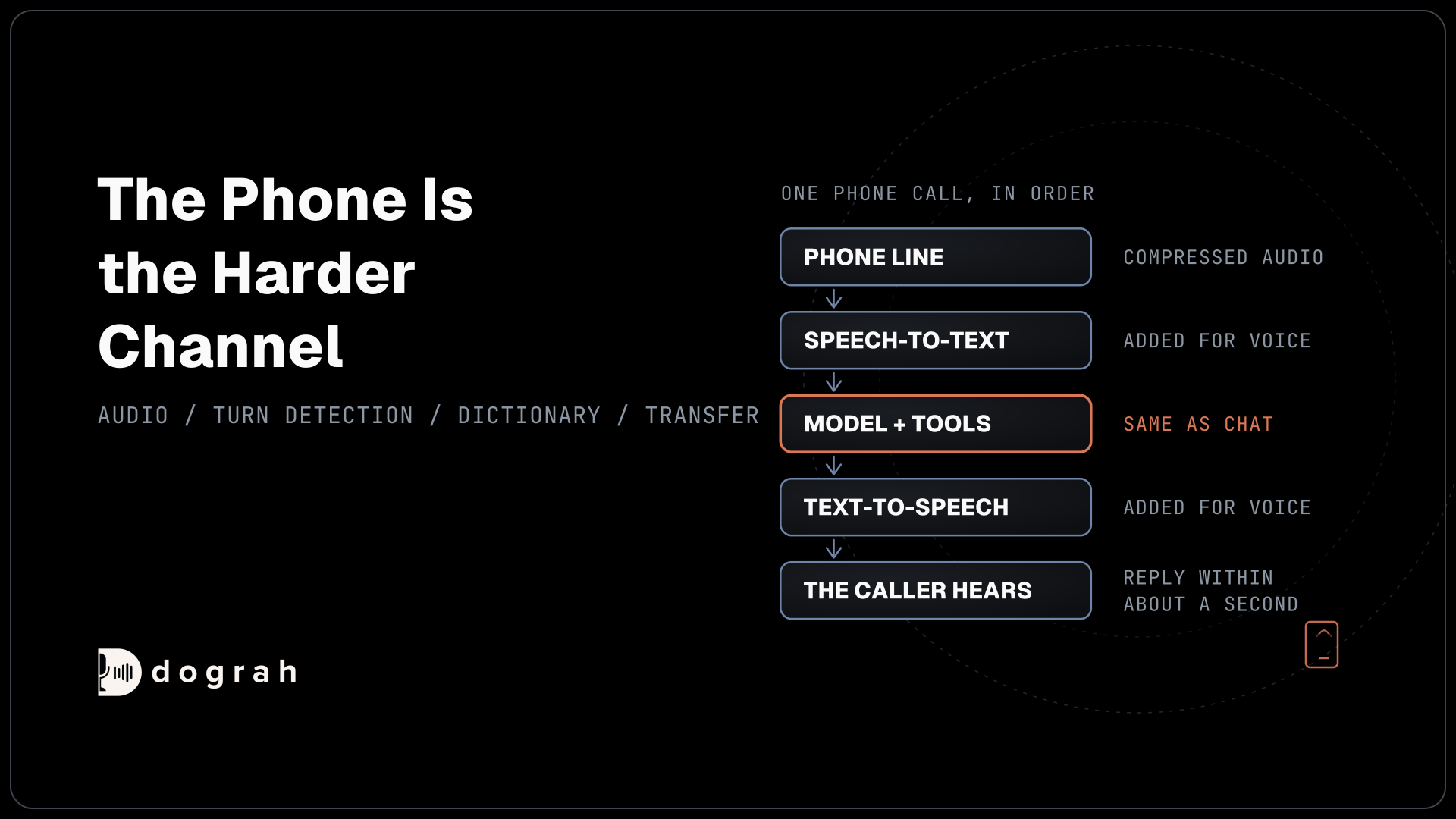
The Ultimate Guide to Conversational AI: What Changes on a Phone Call
What conversational AI is, what chat and voice agents share, and what changes when the conversation moves to a phone call: audio, timing, interruptions, short answers, handover and calling rules.
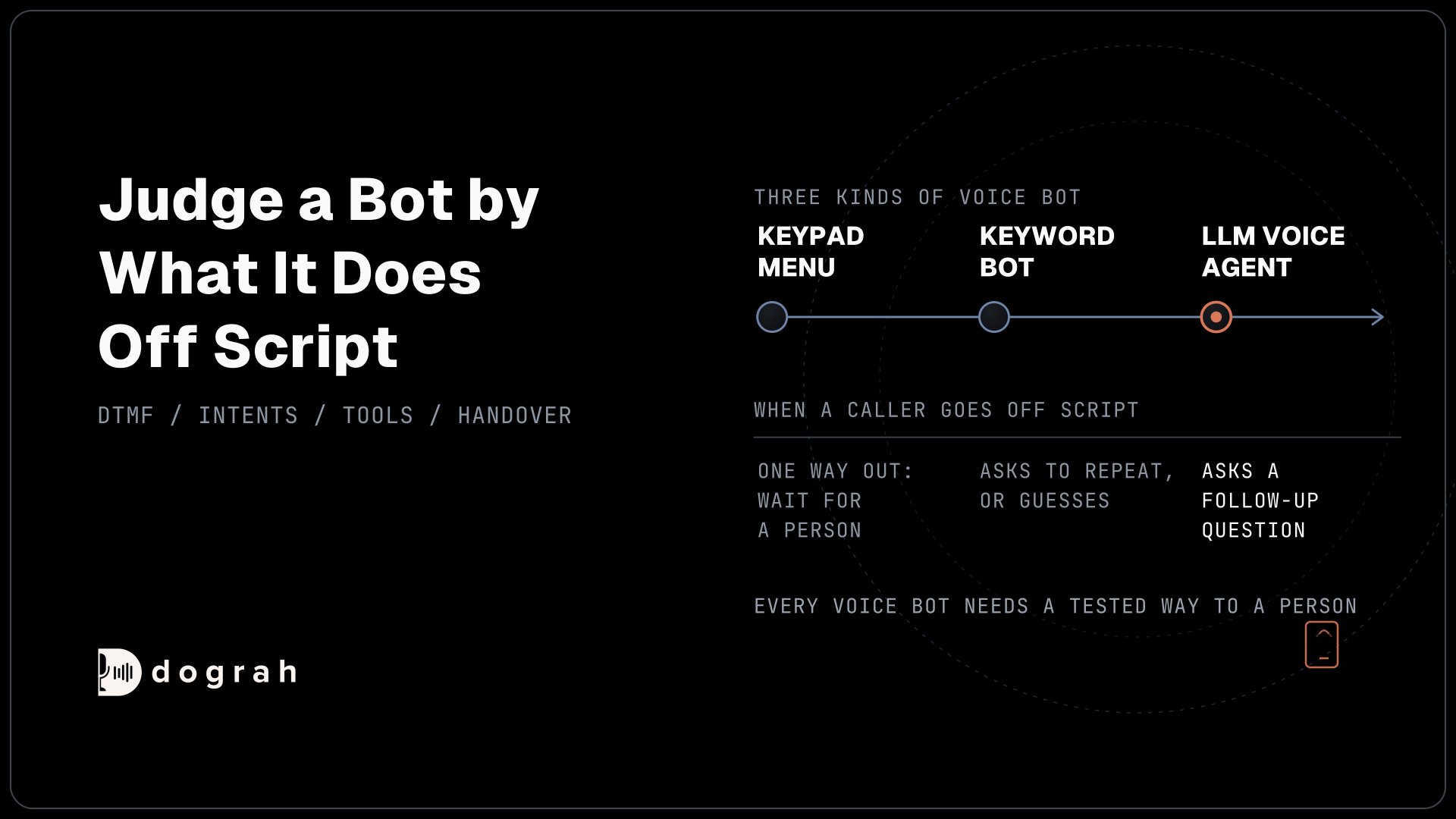
The Ultimate Guide to Voice Bots: From Keypad Menus to AI Agents
What a voice bot is, how keypad menu bots, keyword bots and LLM voice agents differ, how a modern voice bot is built, where it can answer calls, and where voice bots still go wrong.
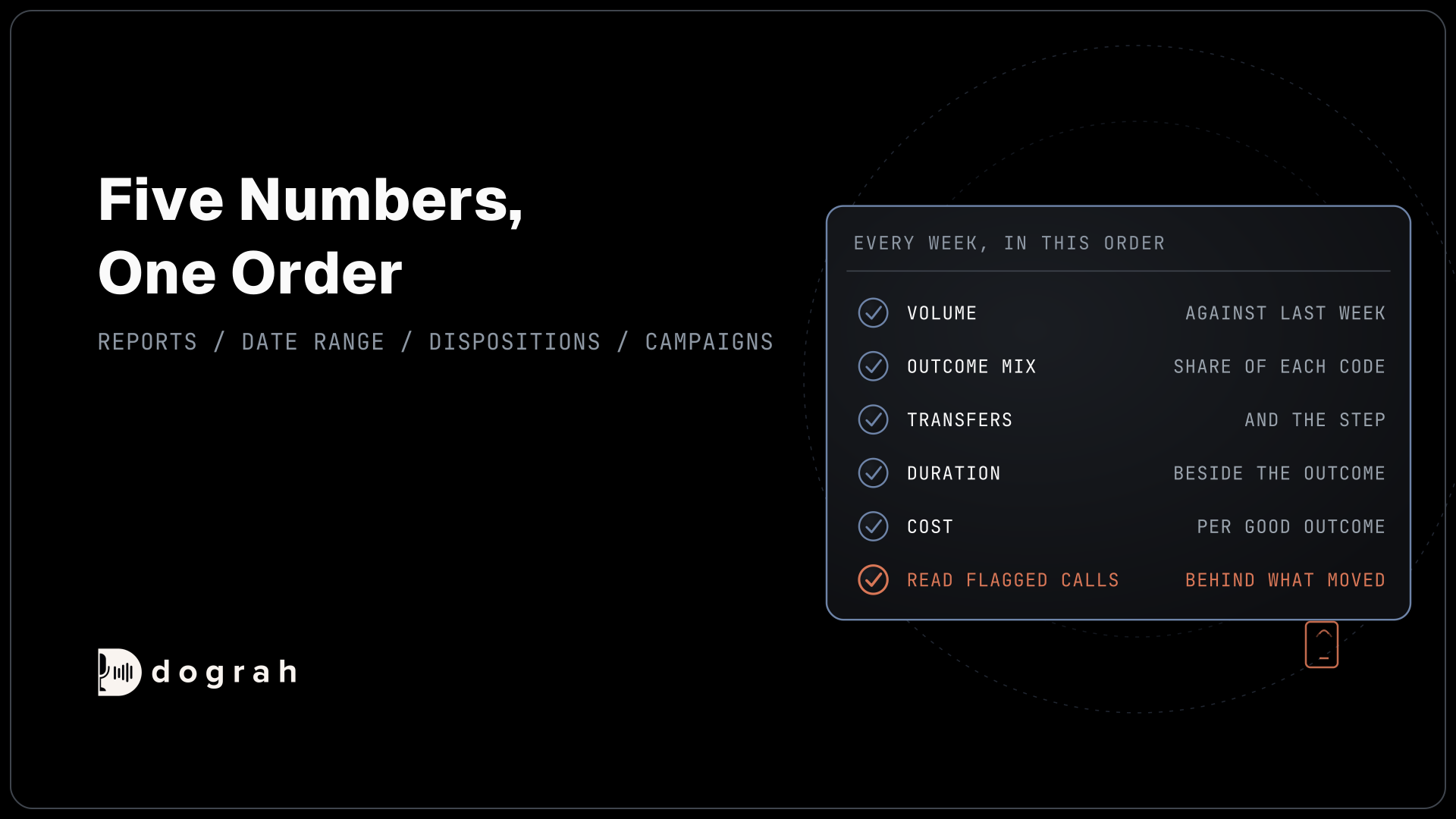
The Ultimate Guide to Voice Agent Analytics: A Weekly Review
A weekly voice agent analytics routine: call volume, outcome mix, transfers, duration read beside the outcome, cost and a sample of flagged calls, with where each number lives in Dograh and how to build weekly numbers from daily reports.
How to Scale to Thousands of Simultaneous Calls With Voice Agents
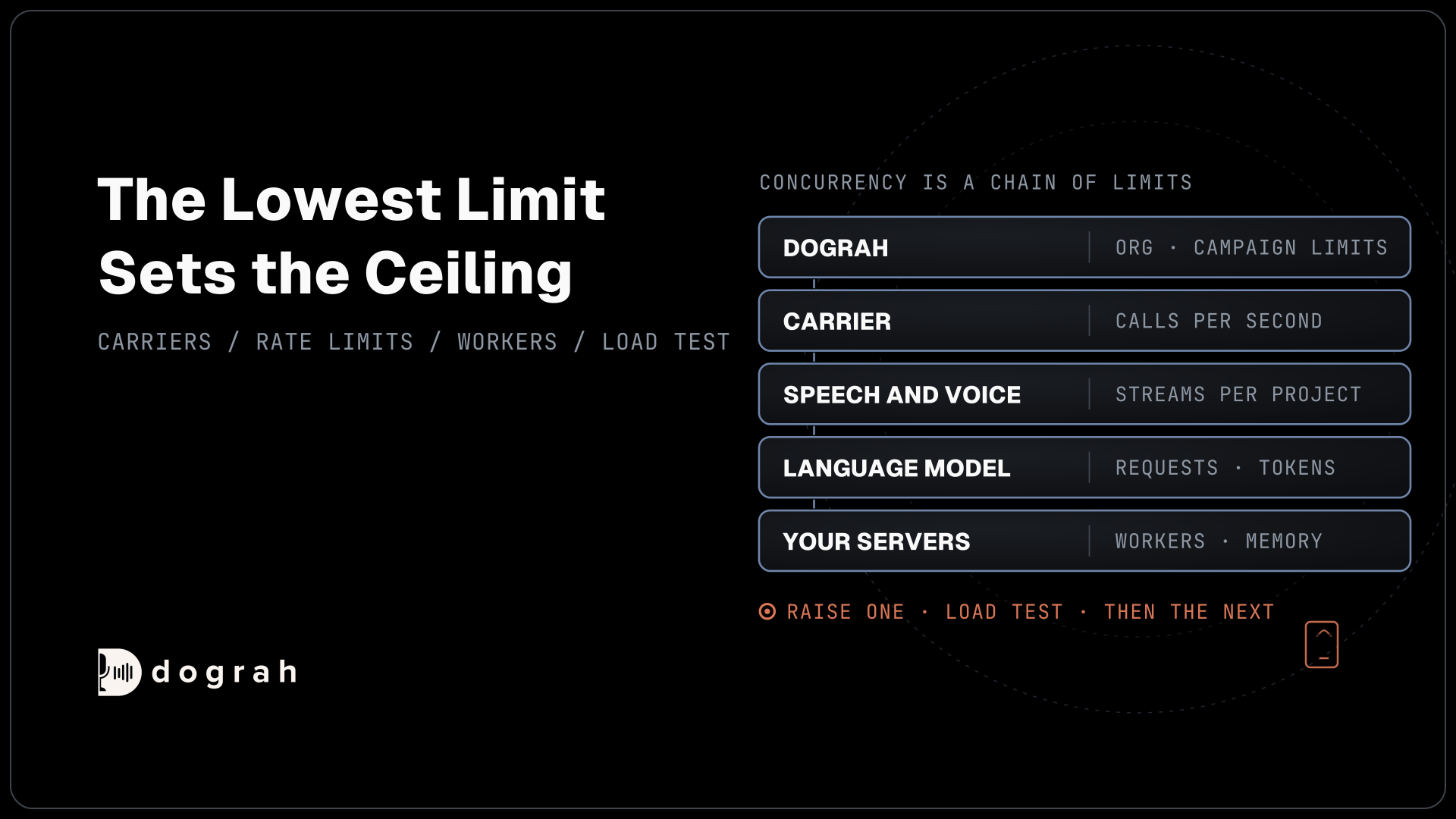
Scaling a voice agent to thousands of simultaneous calls means raising a chain of limits in order: the platform and campaign limits, the carrier's calls per second, speech and model provider rate limits, and your servers, each proven with a load test.
Post-Call Analysis: Turning Transcripts Into Product Insight
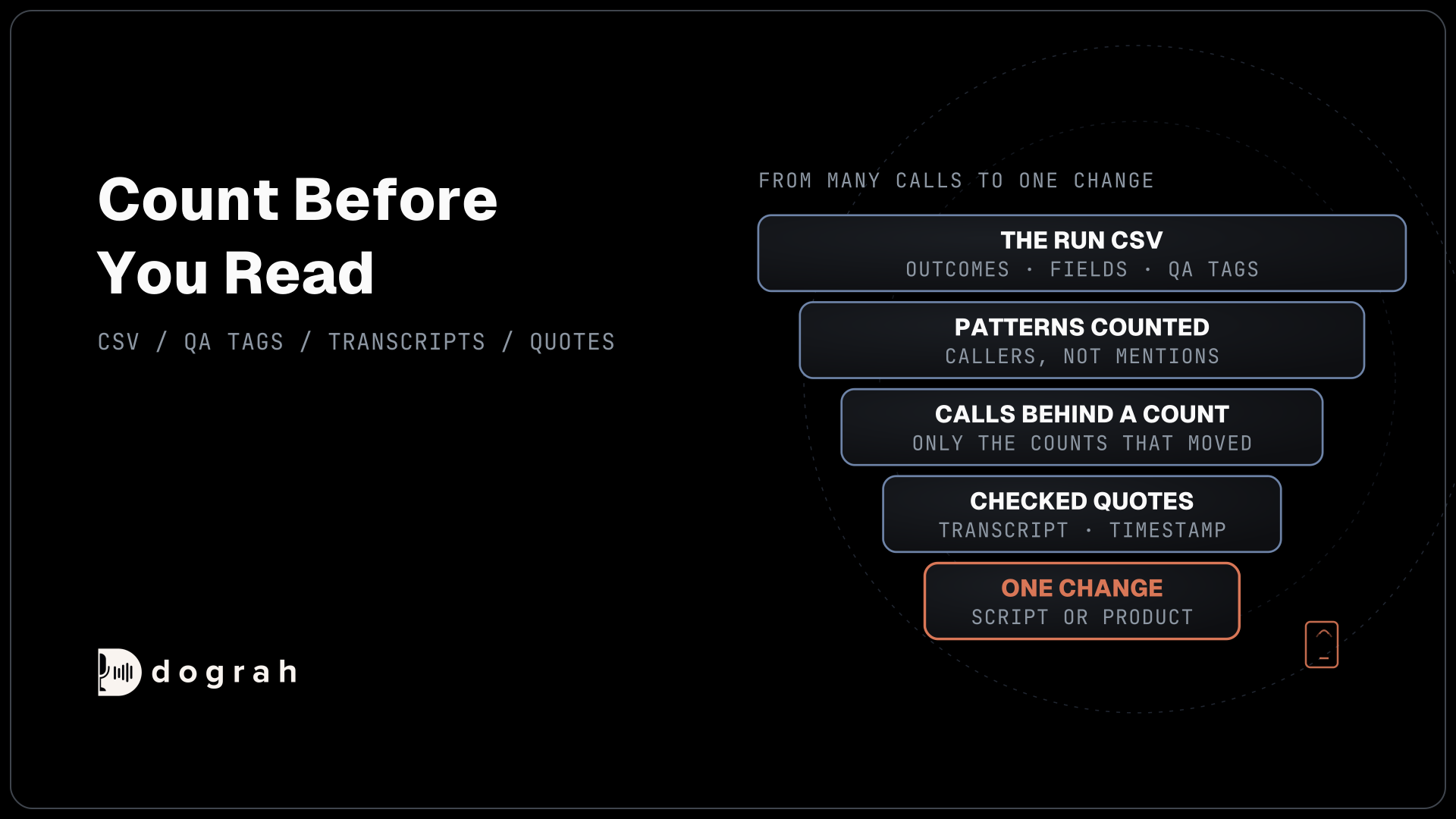
How to go from voice agent calls to script and product changes: export outcome codes, extracted fields, QA tags and transcript links, count the patterns across calls, read the transcripts behind them and check each theme before acting.
Observability for Voice AI: Metrics That Predict Call Quality
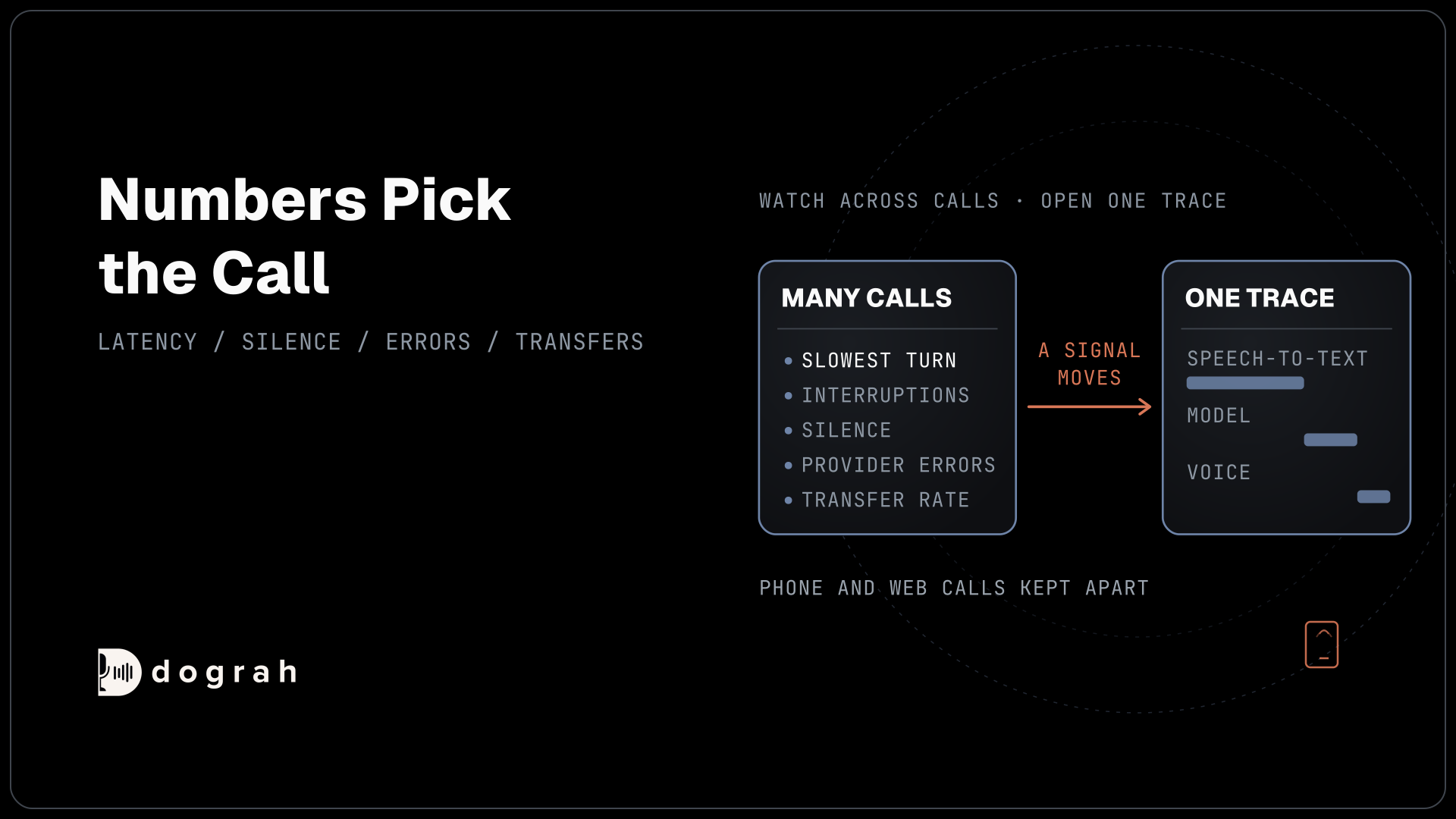
Which signals to watch across many voice agent calls to spot bad ones early: latency per layer as median and slowest turn, interruptions, silence, provider errors and transfer-rate changes, and where each lands in Dograh.
STT and TTS Concurrency Limits: When Several API Keys Help
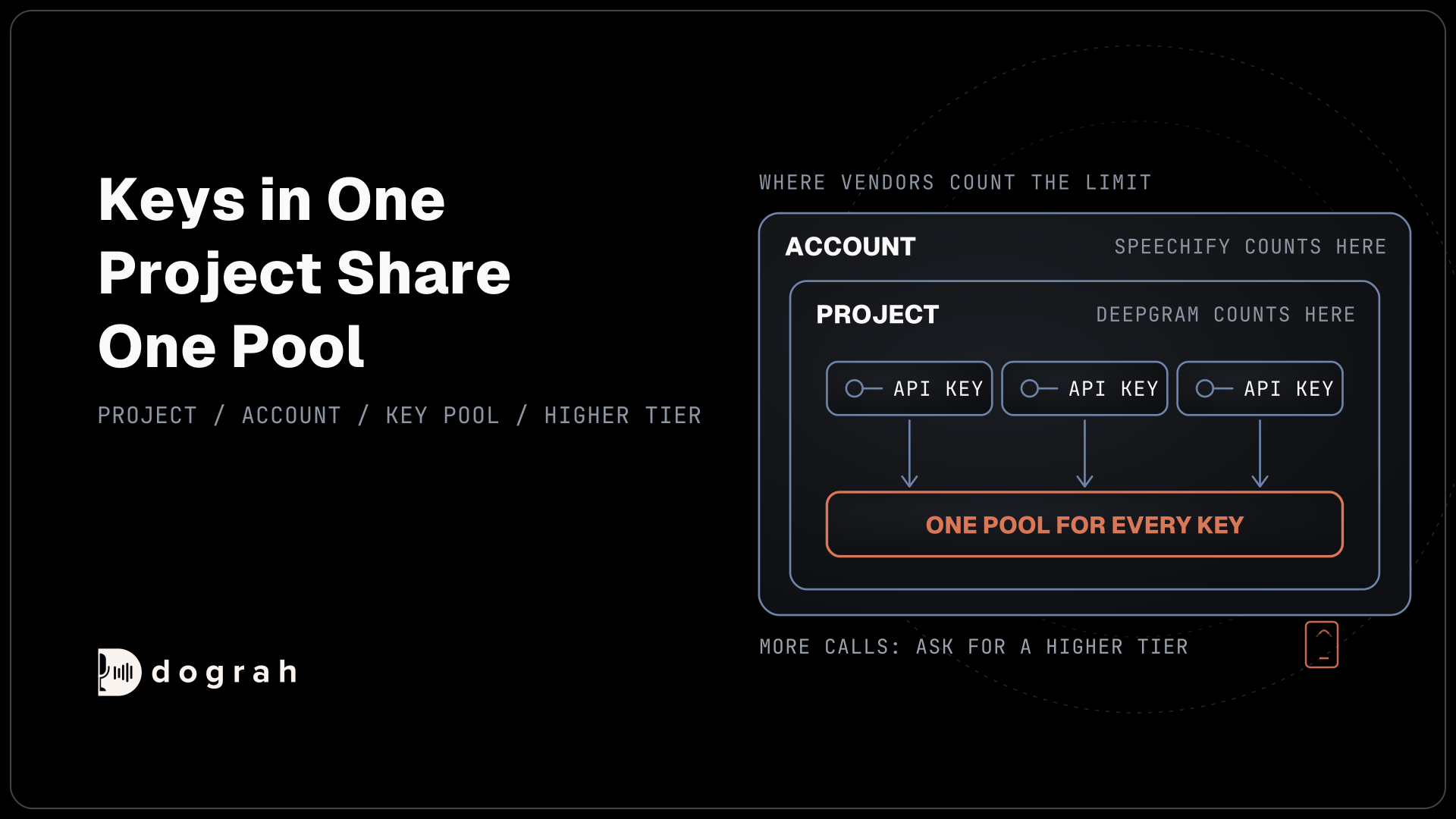
Where speech-to-text and text-to-speech vendors count concurrency, what several API keys on one Dograh connection do, when separate keys add capacity, how to turn a limit into a call count, and when to ask the vendor instead.
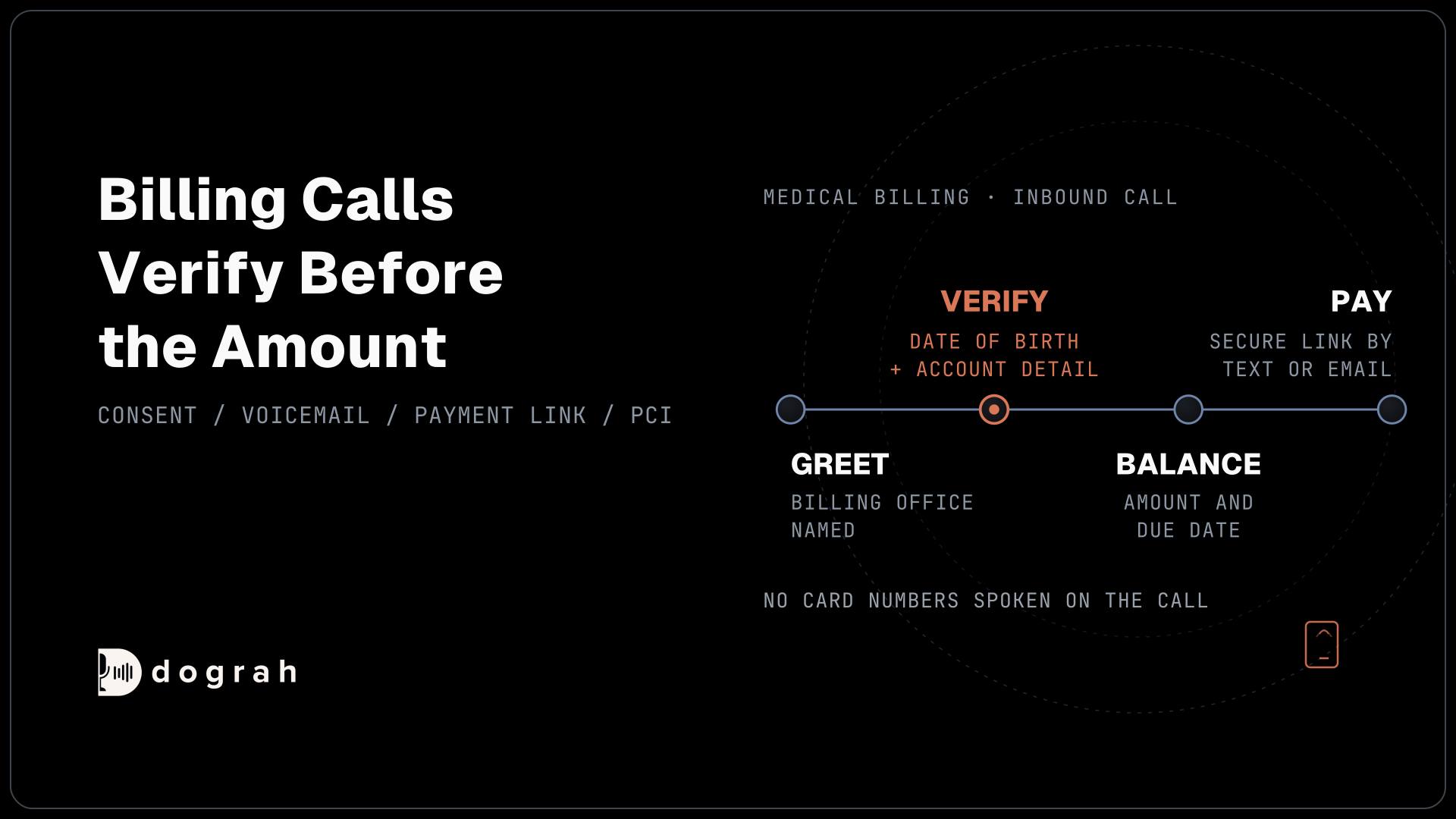
HIPAA-Compliant Voice AI for Medical Billing Calls
How to run patient billing and balance calls with a voice agent under HIPAA and the TCPA: verify the patient before any amount is spoken, get consent for outbound balance calls, keep voicemails plain and take payment by link or payment line, never by voice.
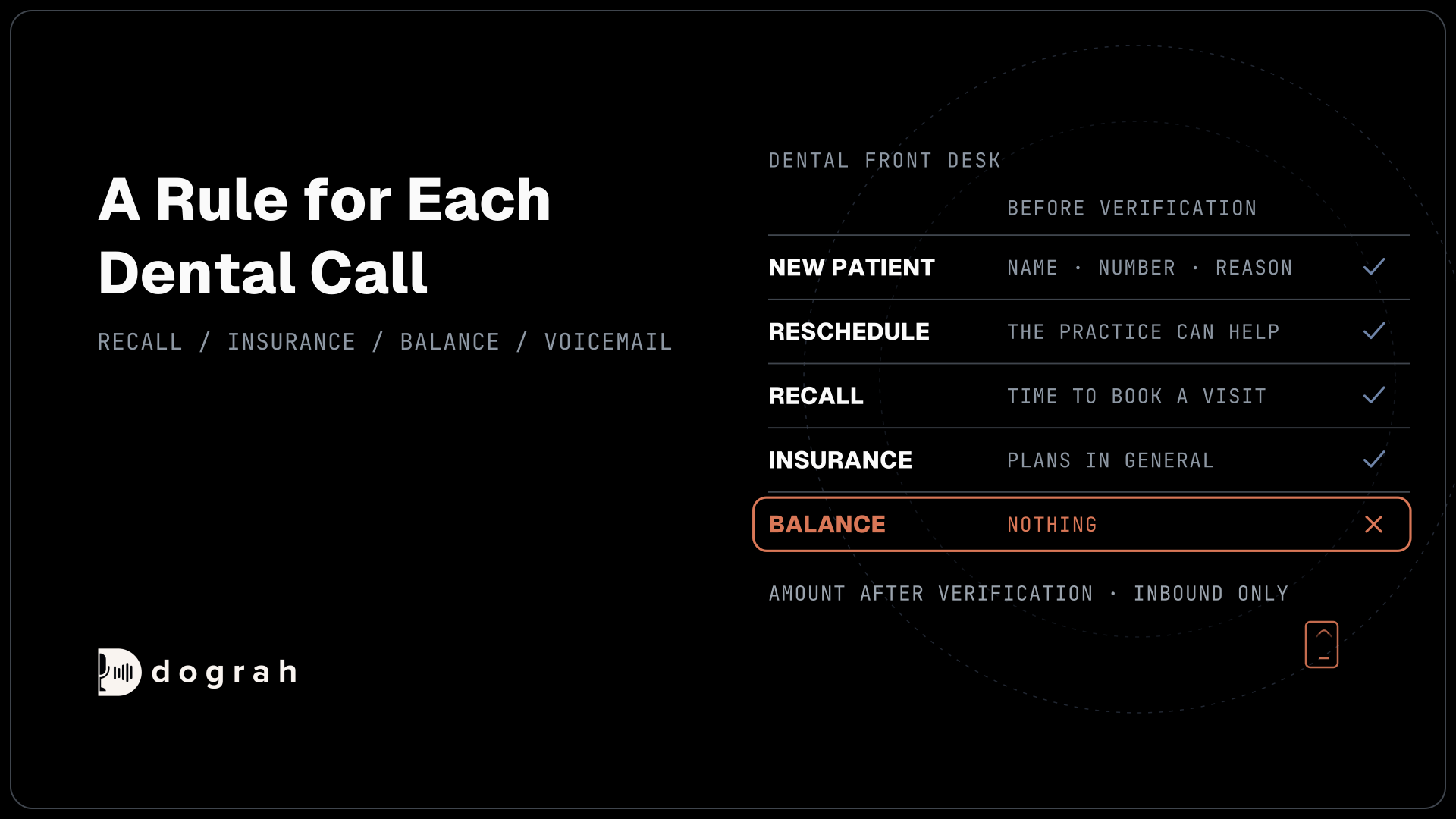
HIPAA-Compliant Voice AI for Dental Clinics: Front Desk Privacy
How a dental practice runs reception, recall and balance calls with a voice agent under HIPAA: what each call type may say before and after verification, where recall calls turn into marketing, and how a small practice keeps every copy of a call on one server.
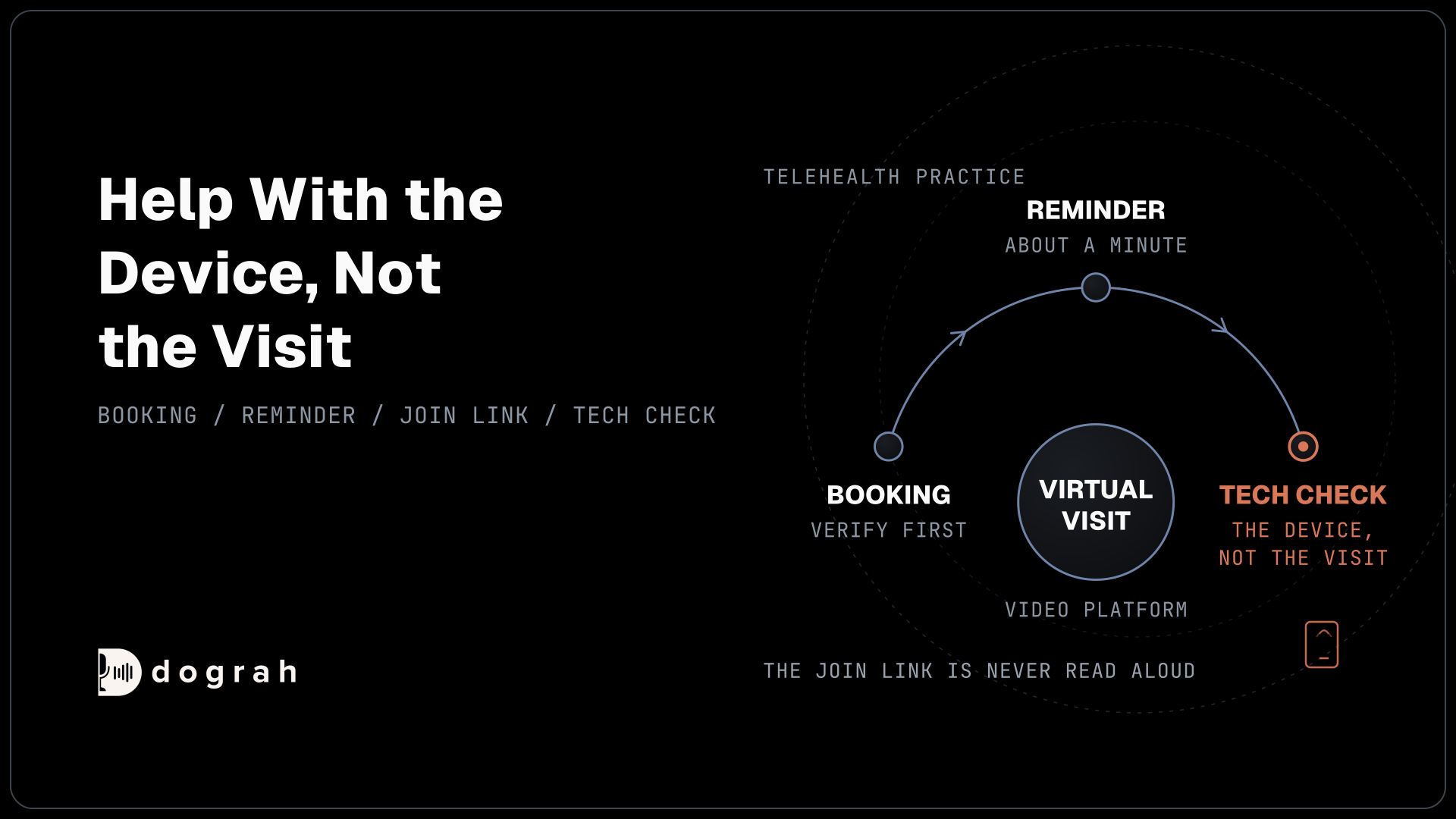
HIPAA-Compliant Voice AI for Telehealth: The Calls Around the Visit
How to run telehealth booking, reminder and tech-check calls with a voice agent under HIPAA: what each call may say before and after verification, how the join link stays off the call, where each copy is stored and who else hears the call.
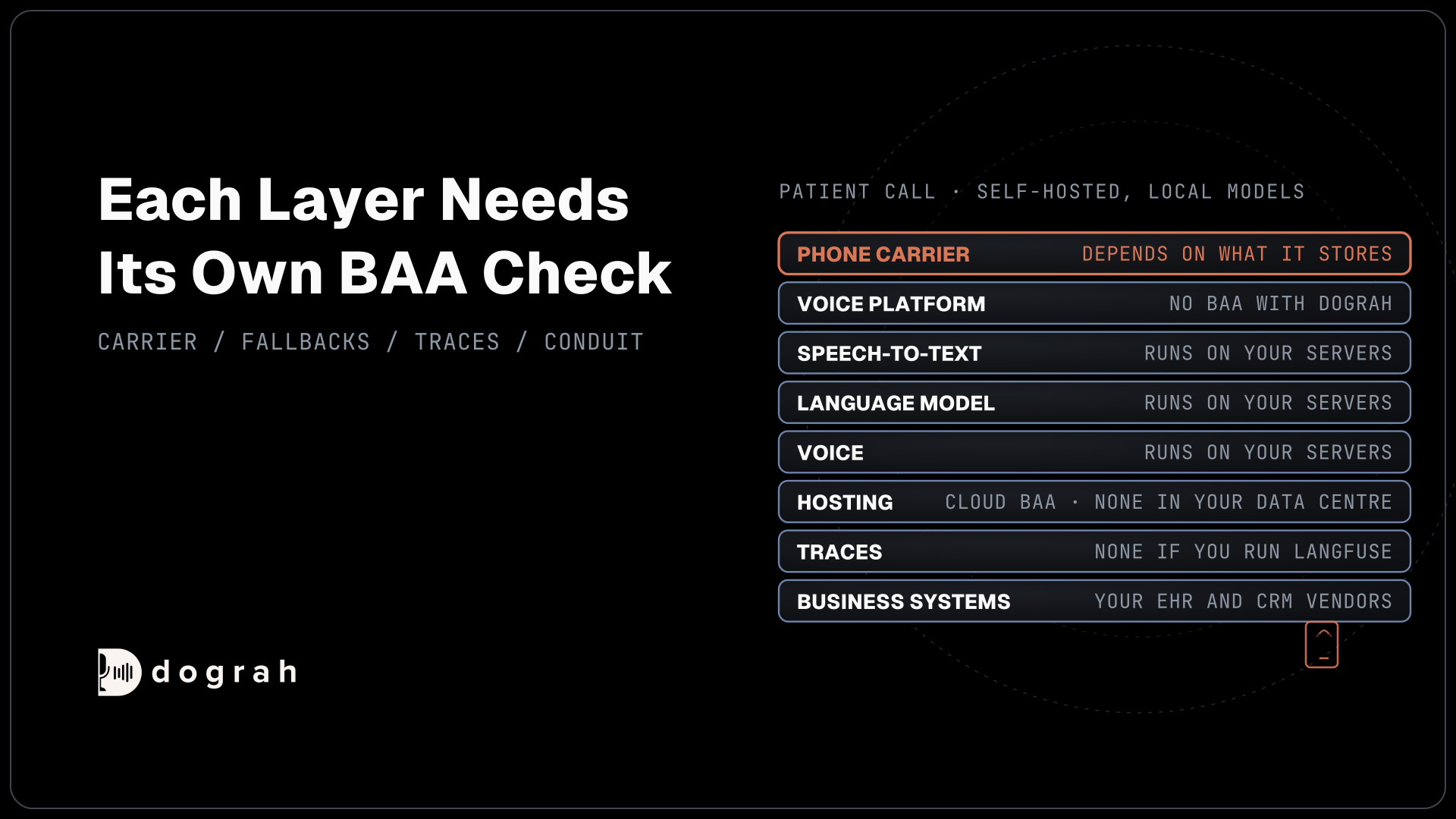
Which Parts of a Voice AI Stack Need a BAA
A layer-by-layer guide to business associate agreements for healthcare voice AI: the carrier, the platform, speech, language and voice models, hosting, traces and tools, across hosted and self-hosted setups.
Verifying Patient Identity Before a Voice Agent Shares PHI
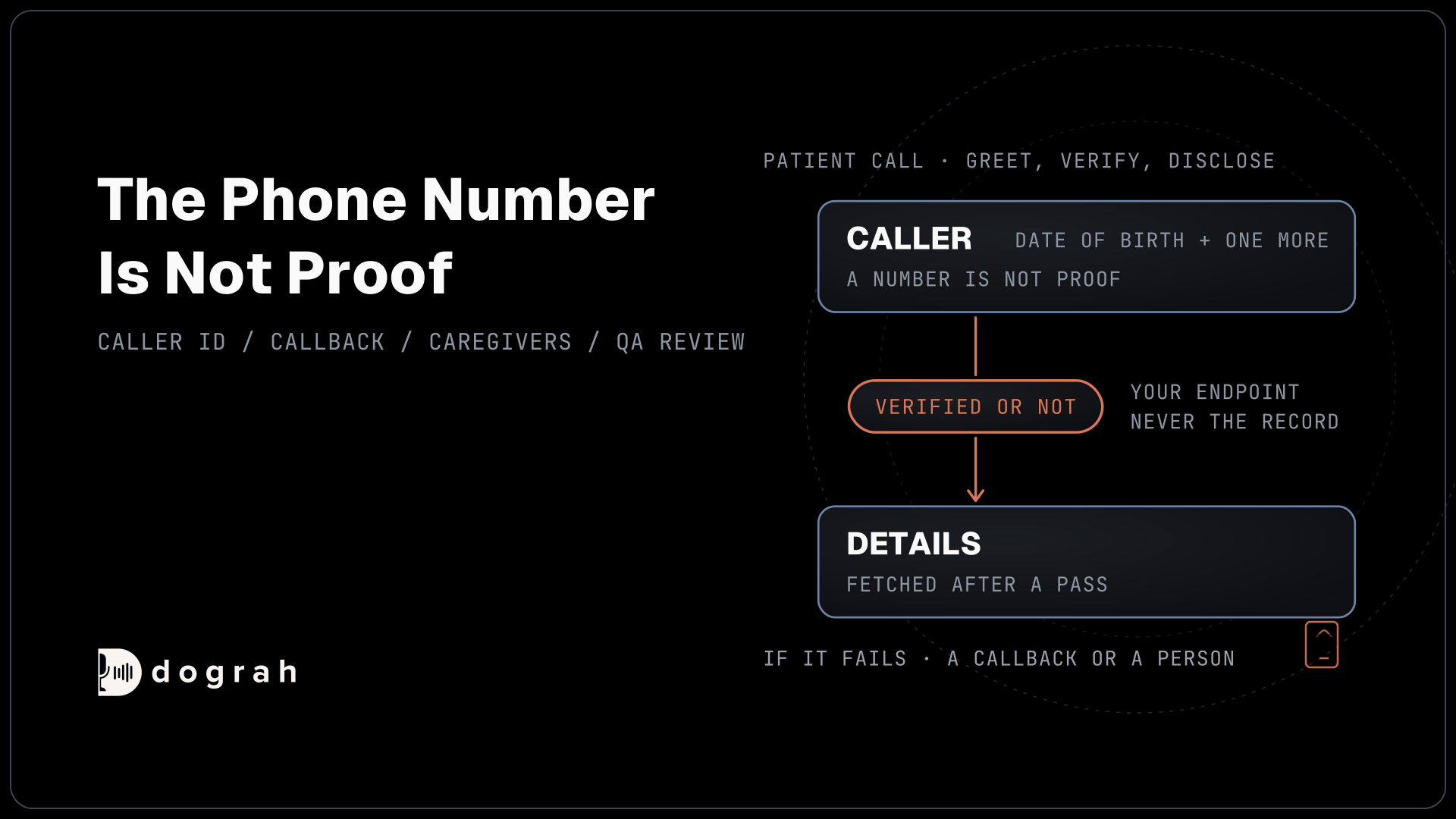
How to build patient identity verification into a healthcare voice agent: keep the record out of the agent, check answers against your own system, and handle failed checks and family callers.
Patient Consent for Automated Healthcare Calls
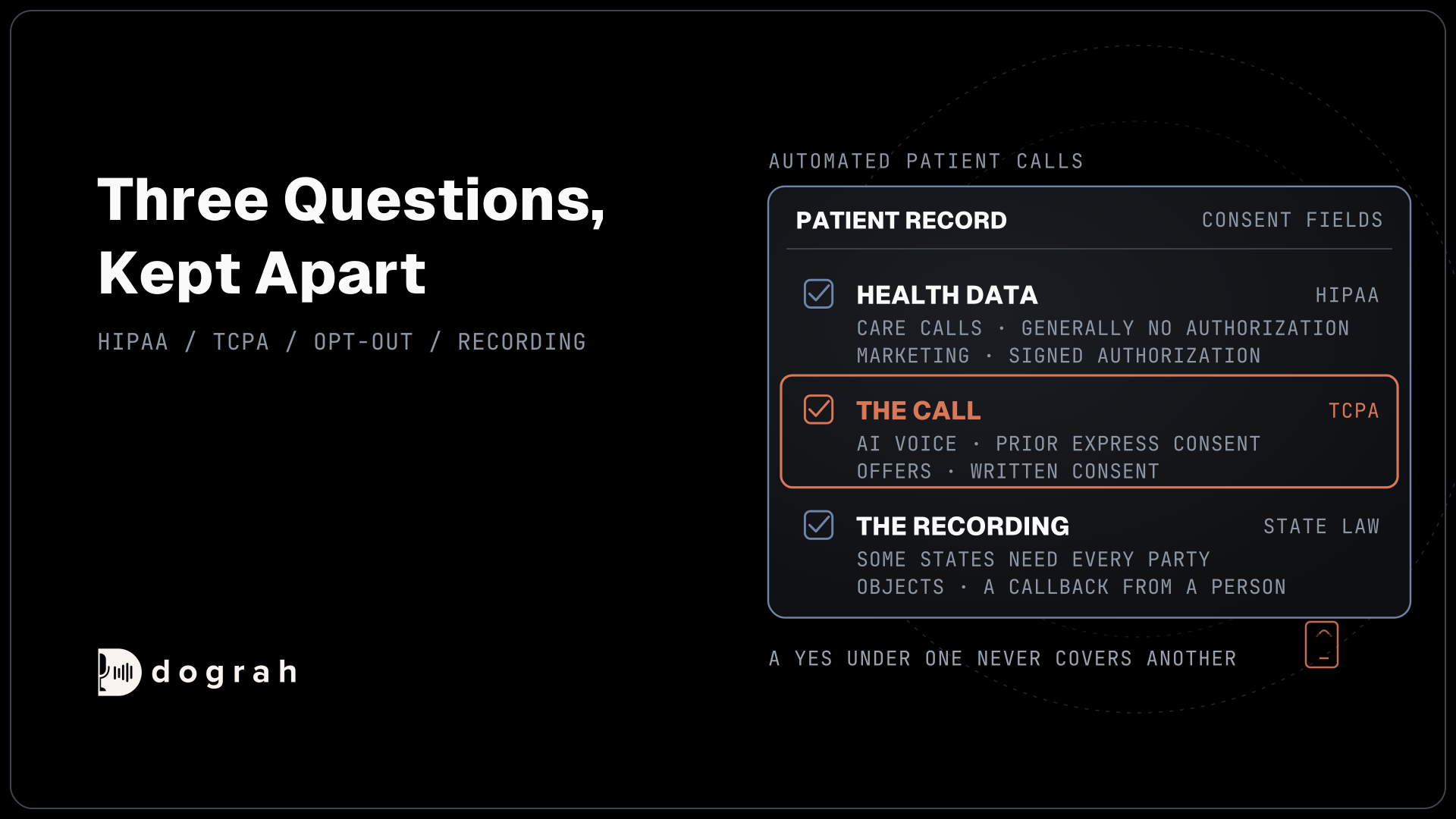
The consent rules for automated and AI-voice patient calls: HIPAA authorization, TCPA consent and the healthcare exemption, recording consent, opt-outs, and how to build each limit into a voice agent.
What Counts as PHI on a Voice Agent Call
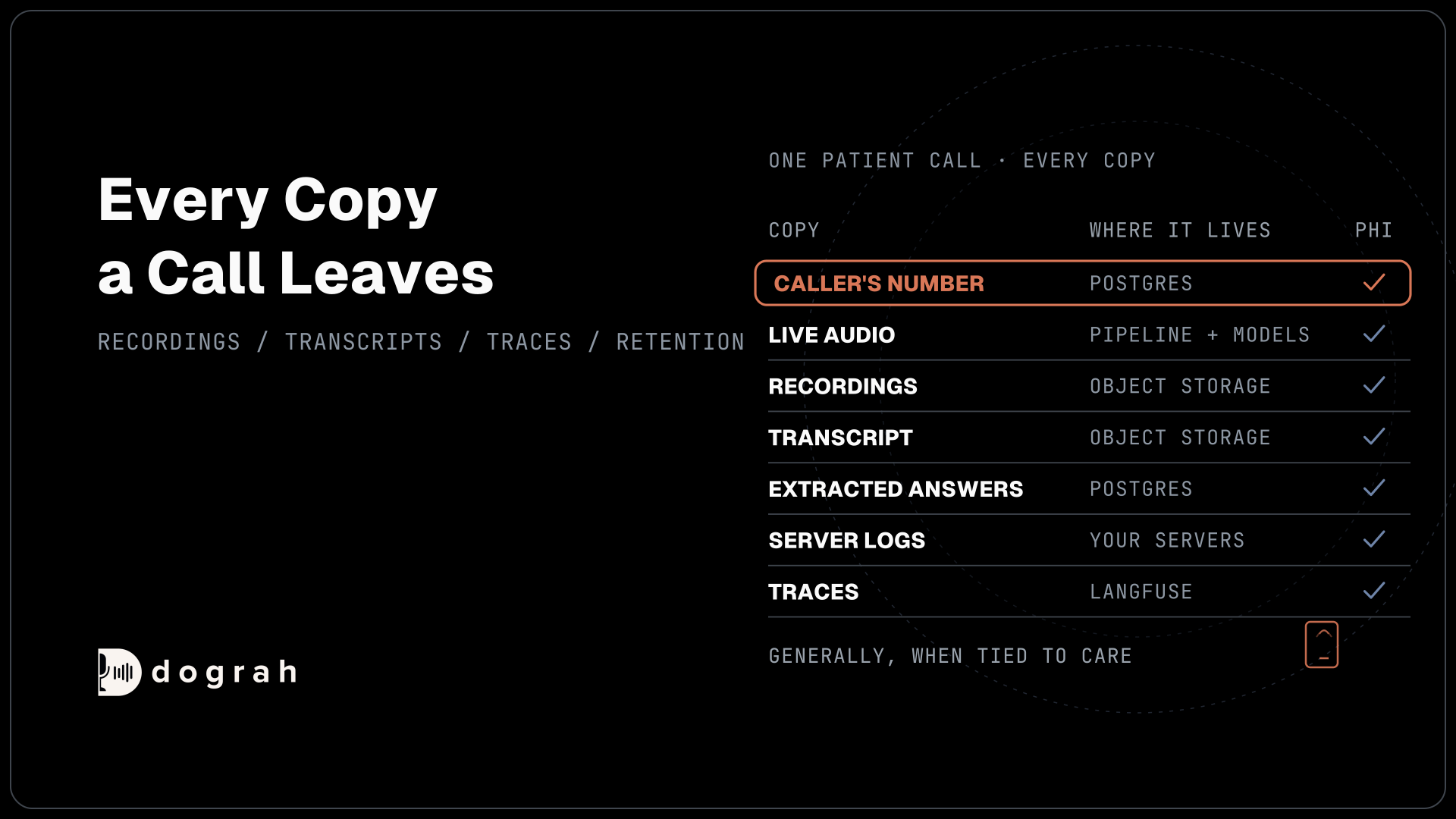
Which parts of a voice agent call count as PHI, from the live audio and the caller's number to recordings, transcripts, logs and traces, and where each copy lives in a self-hosted install.
HIPAA-Compliant Voice AI: What Self-Hosting Changes
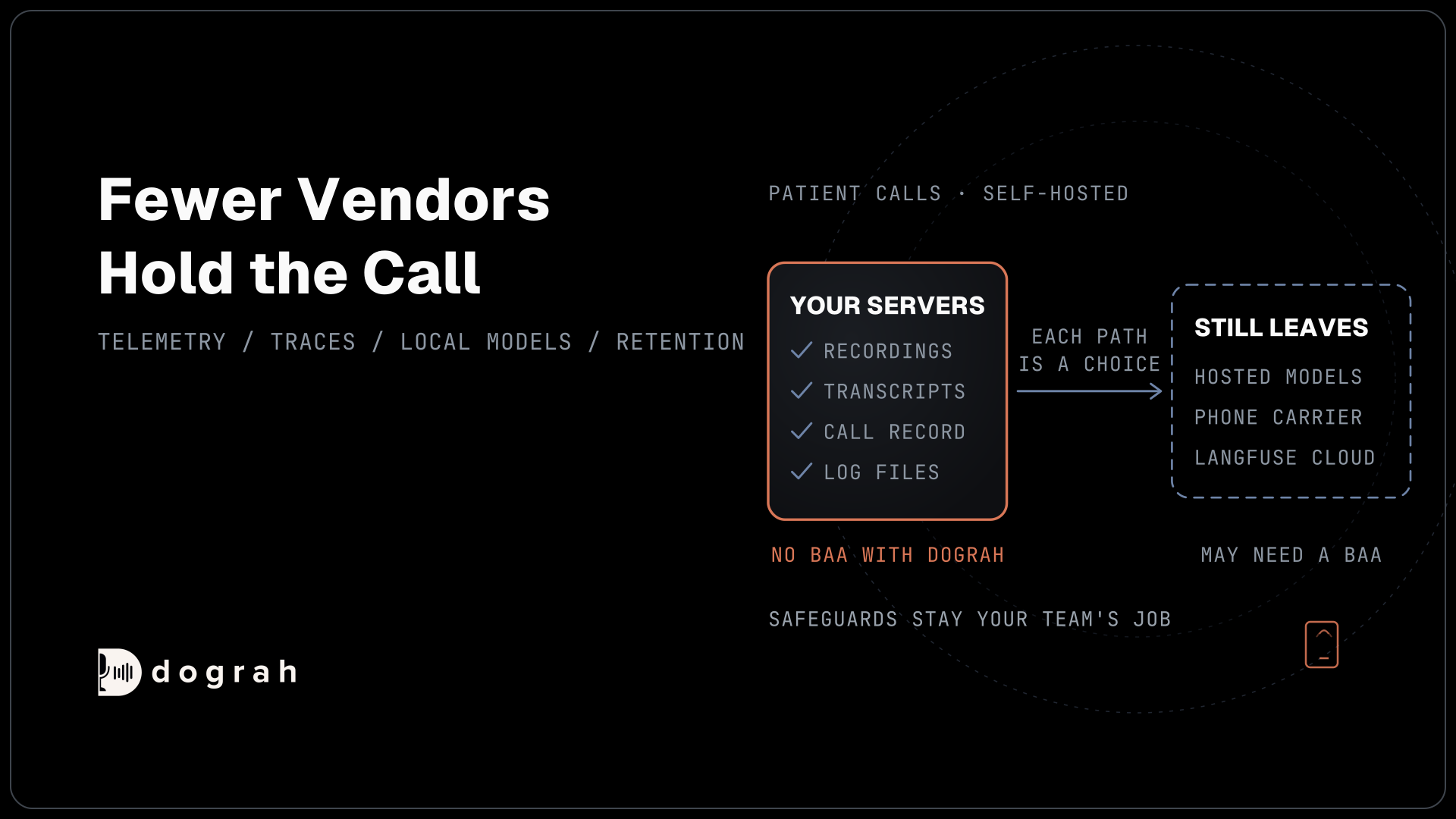
What self-hosting changes for HIPAA-compliant voice AI: which call data stays on your servers, which vendors still hear the call and need a BAA, and which safeguards stay with your team.
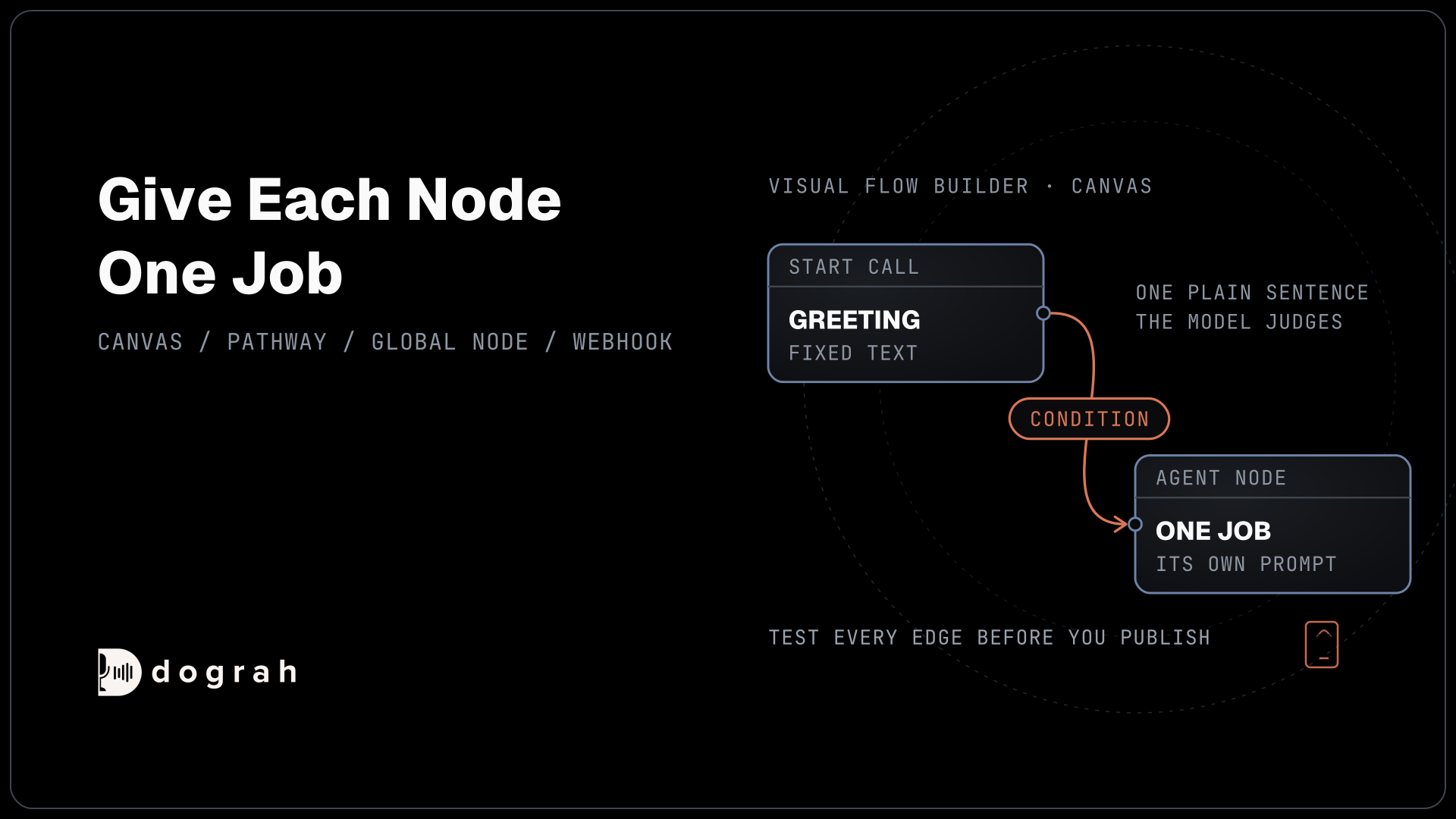
Designing Conversation Flows With a Visual Drag-and-Drop Builder
How a visual drag-and-drop builder turns a phone call into nodes, edges, conditions and variables, with every node type, pathway field and variable rule shown in Dograh's workflow builder.
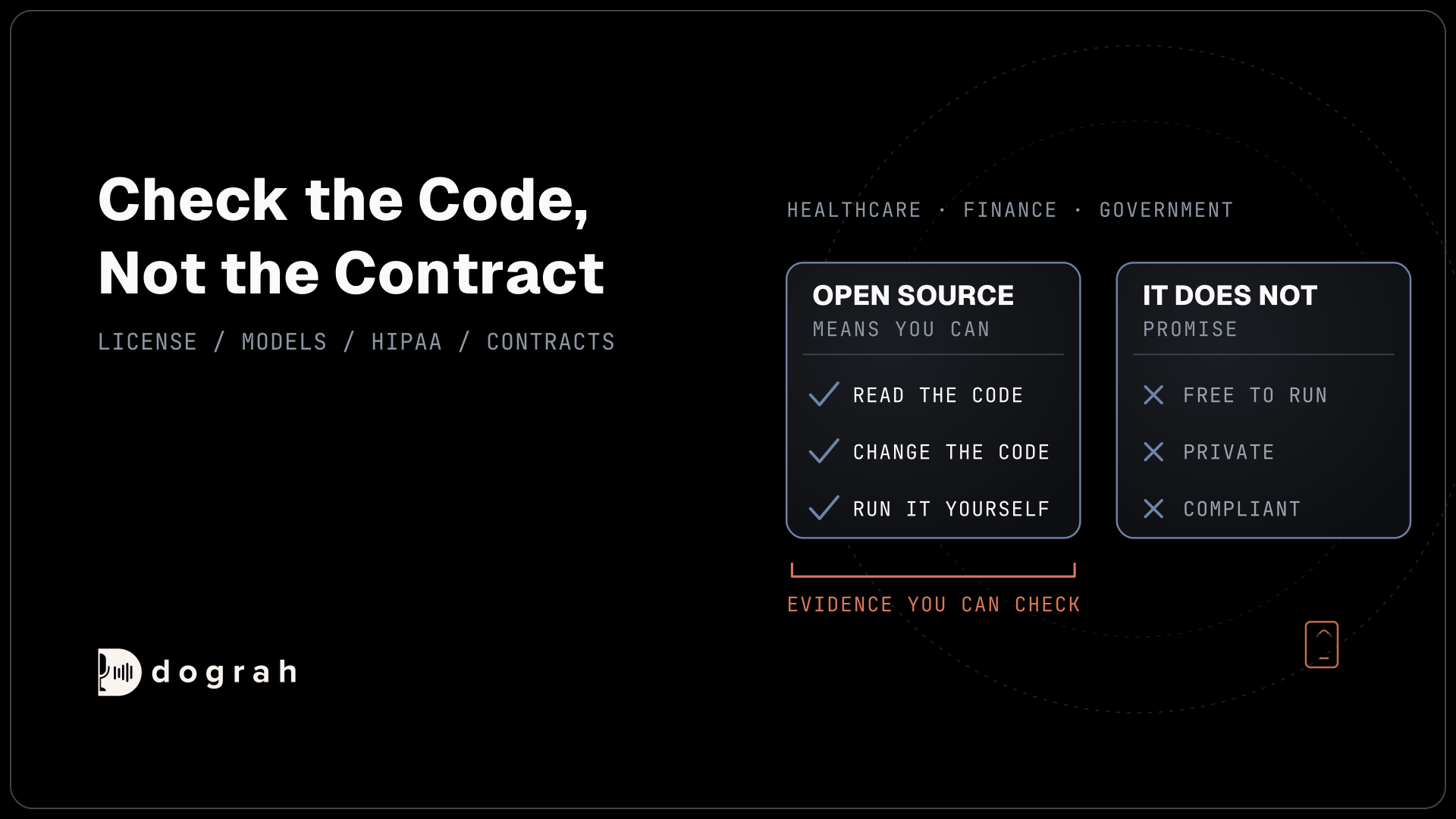
What Is Open-Source Voice AI? Why Regulated Teams Pick It
A short explainer for healthcare, finance and government buyers: what open-source voice AI means, what it does not promise, why regulated teams care, and the questions to ask any voice AI vendor.
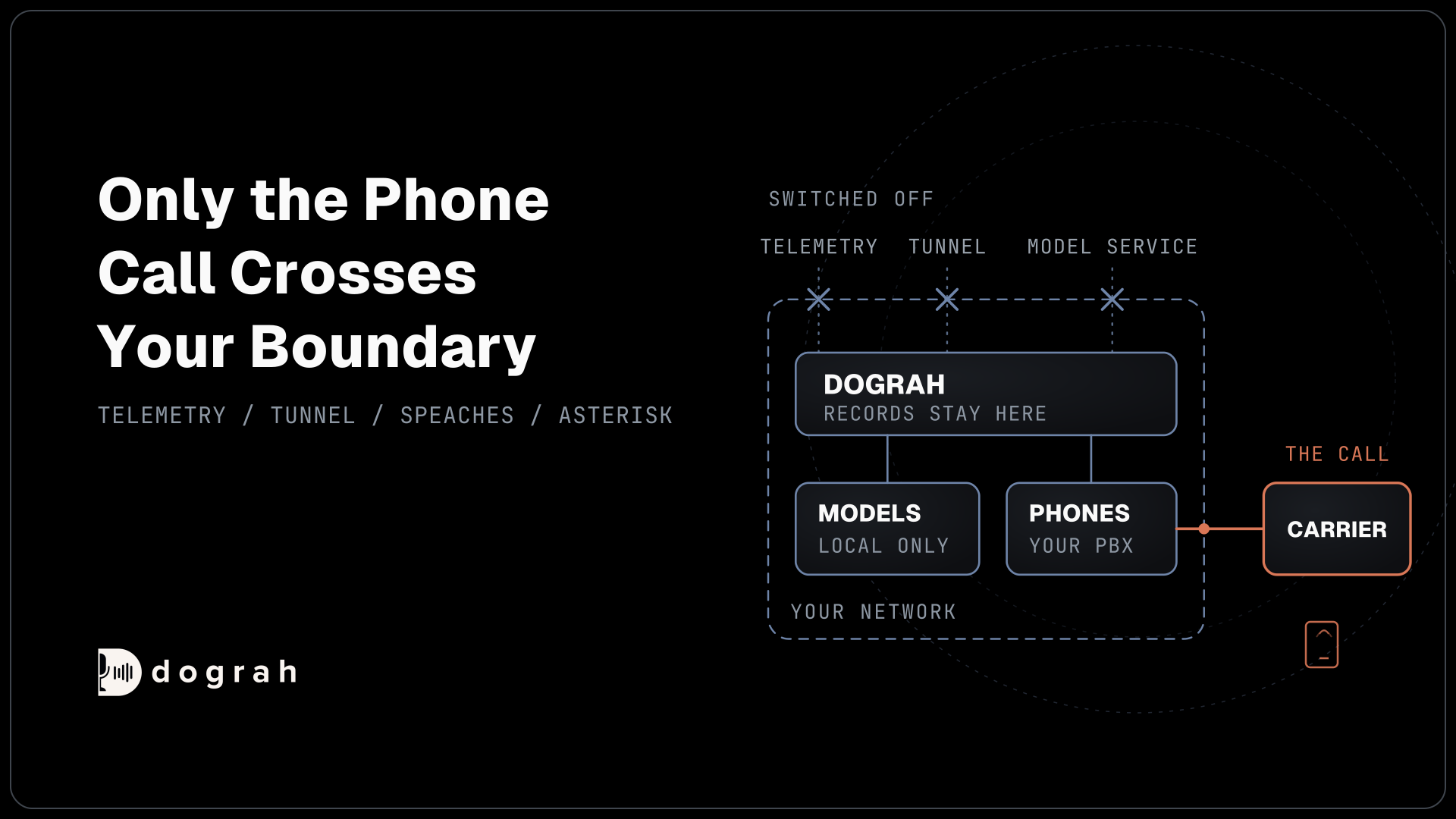
Air-Gapped Voice Agents: AI Calling With Zero Data Egress
What stays inside and what still needs the network when you run a voice agent air-gapped: every connection a default Dograh install makes and how to switch it off, local models, the carrier at your own PBX, and records.
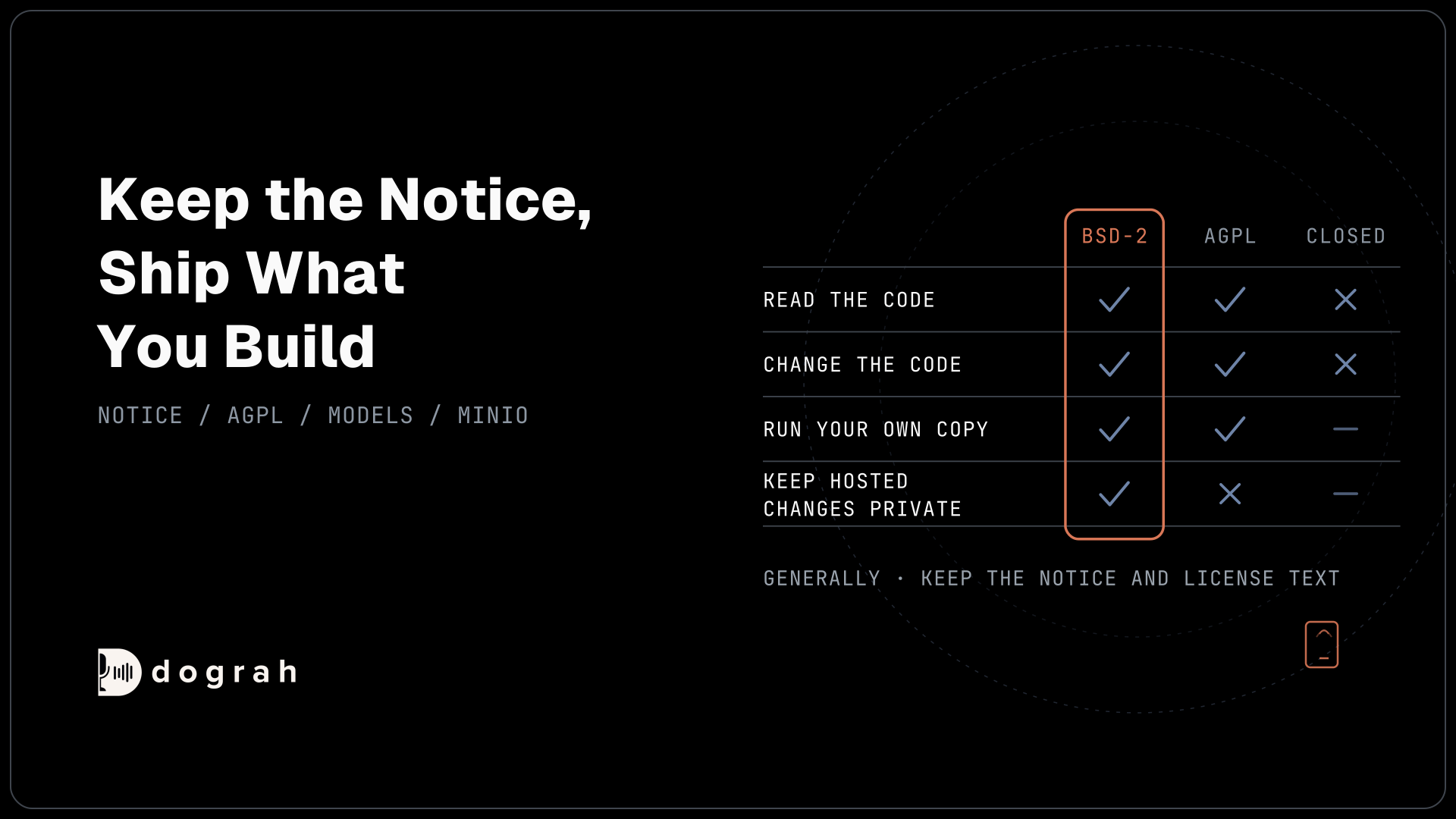
BSD-Licensed Voice AI: What You Can Build, Sell and Rebrand
A plain explanation of the BSD 2-Clause license for voice AI: what it says, what it lets you do with Dograh, how it compares with the AGPL and closed licenses, and what it does not cover.
Knowledge-Base Grounding: How a Voice Agent Answers From Files
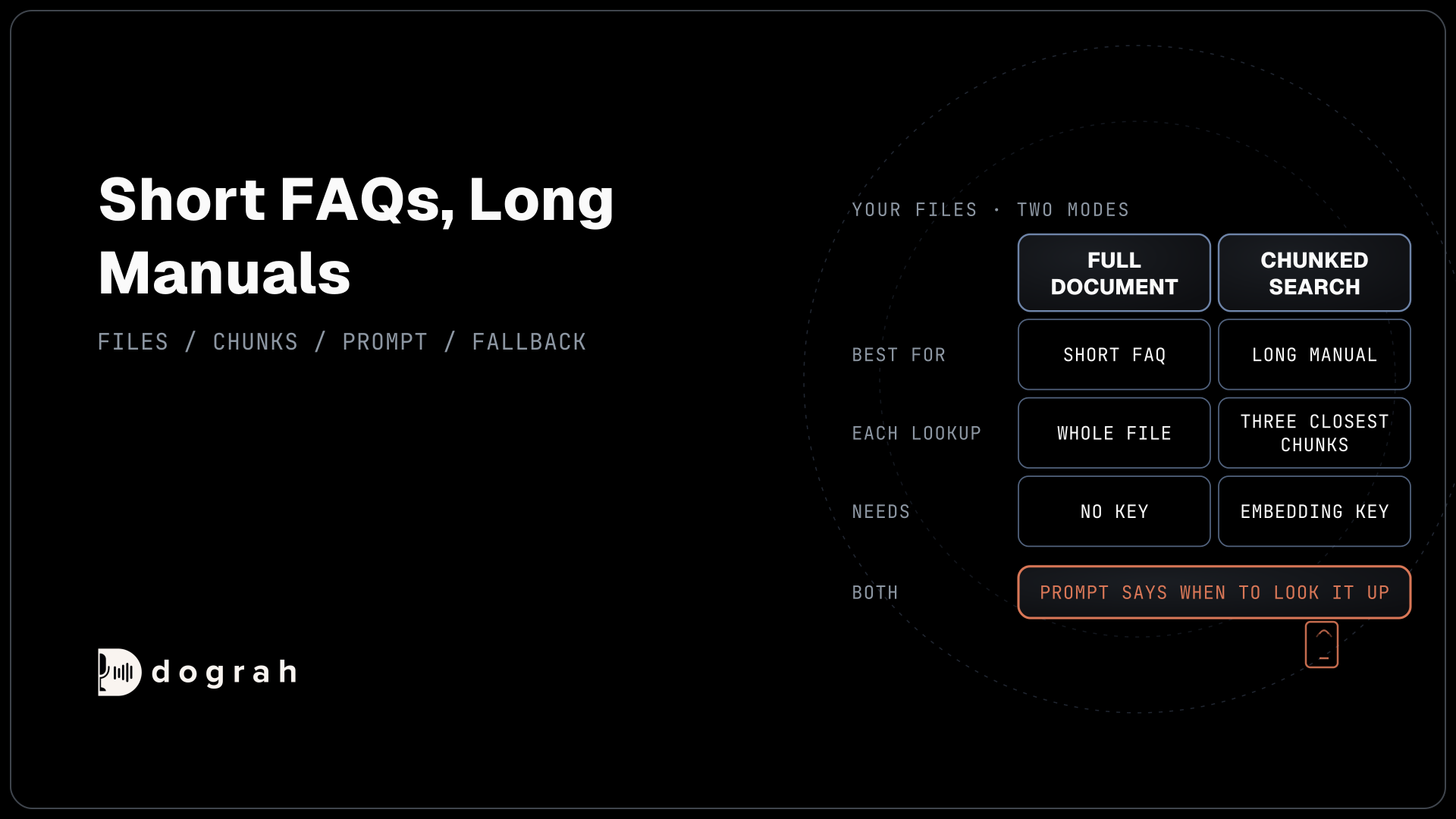
How knowledge-base grounding works in a Dograh voice agent: how retrieval finds an answer, which file types and modes to use, how to keep answers to your documents and how to test with real caller questions.
Voicemail Detection: How Agents Tell a Person From a Machine
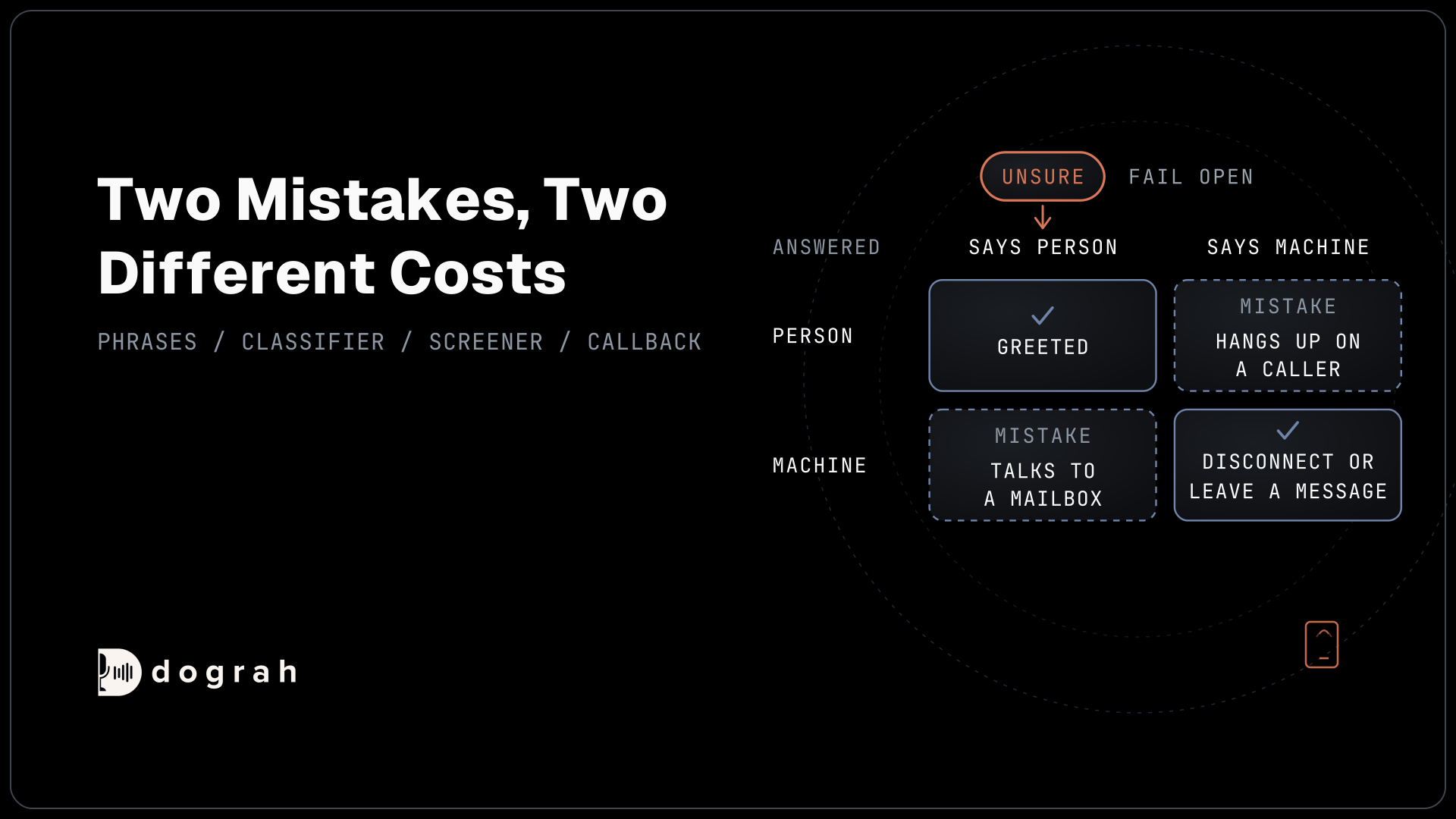
What voicemail detection (answering machine detection) is, how timing rules, transcript phrases and language models tell a person from a machine, the two ways it goes wrong, and how to set voicemail, screening and phone-menu handling in Dograh.
Telephony 101 for Voice AI: Numbers, Carriers and SIP Trunks
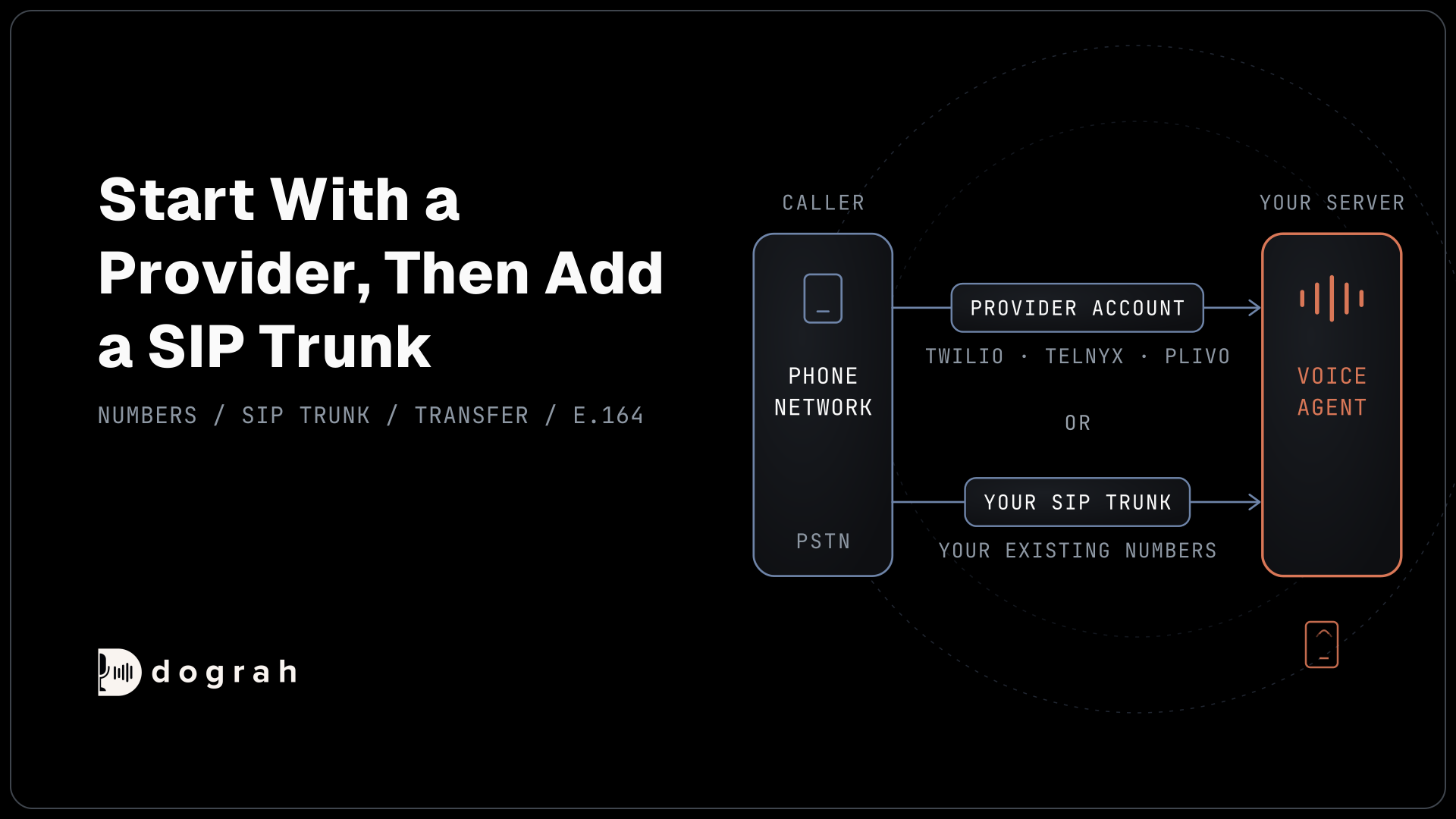
A beginner's guide to the phone side of a voice agent: what a telephony provider does, a provider account versus your own SIP trunk, what Twilio, Telnyx and Plivo charge, which providers connect to Dograh and which of them can transfer a call to a person.
Using a Custom Dictionary for Industry Jargon and Names in Voice AI
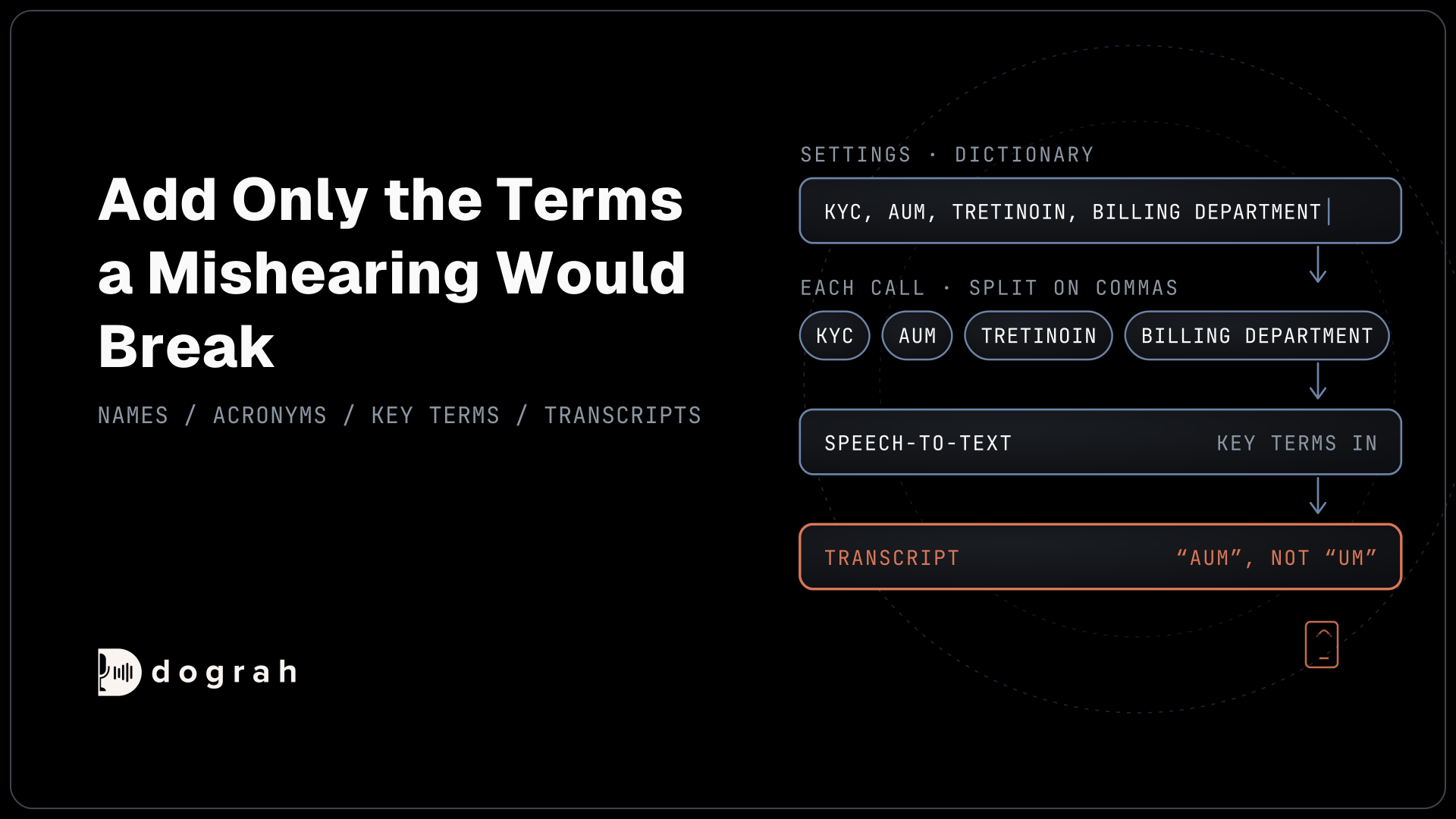
How a custom dictionary helps a voice agent's speech-to-text hear brand names, people's names and industry terms, what to put in the list and what to leave out, which providers use Dograh's Dictionary, and how to test a change on real calls.
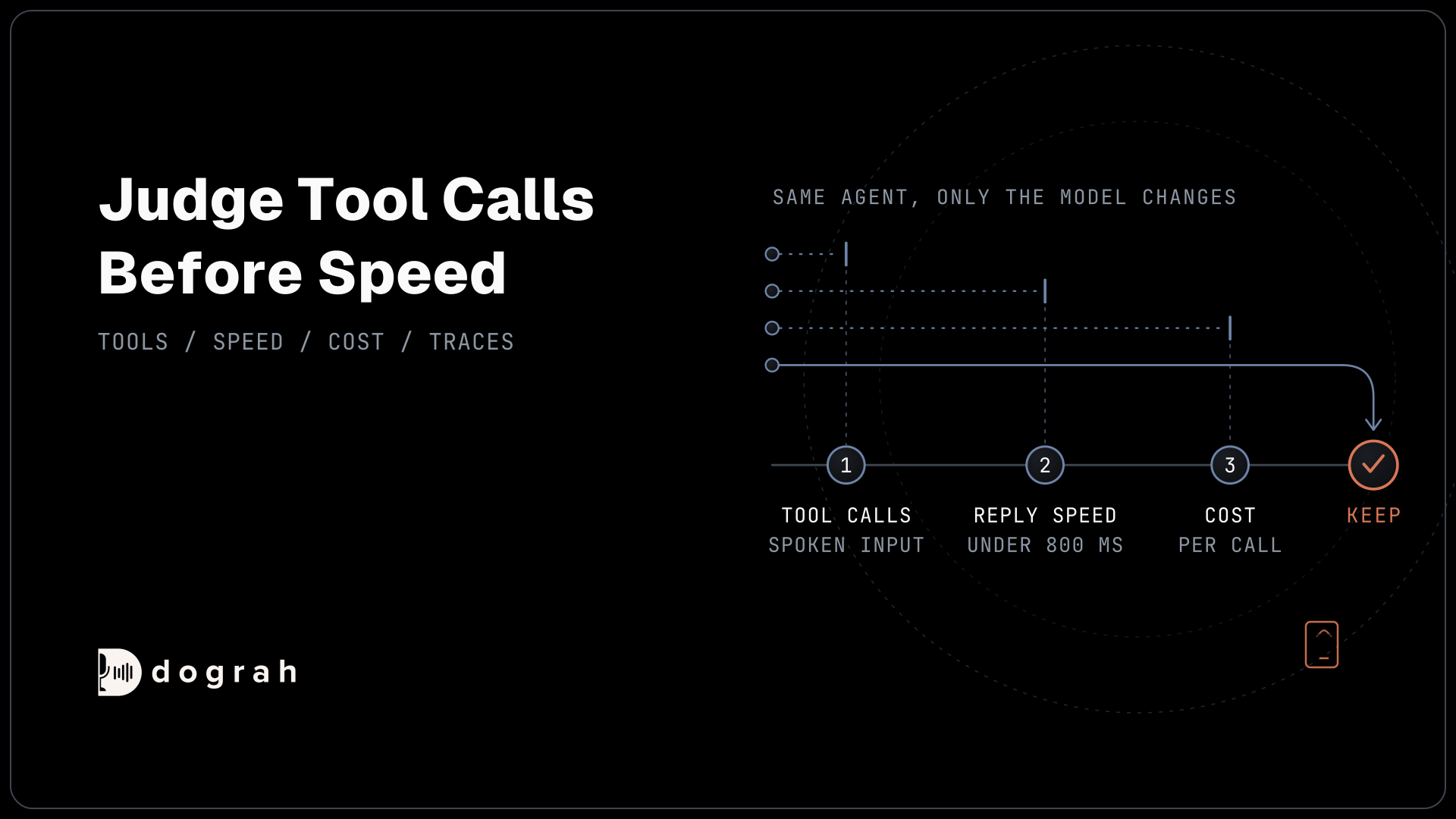
How to Choose an LLM for Voice Agents: Test the Tool Calls First
How to choose a language model for a voice agent: test tool calls made from spoken input first, then reply speed on a real phone call, then cost per call, and decide between hosted models and open weights, with the models Dograh can run.
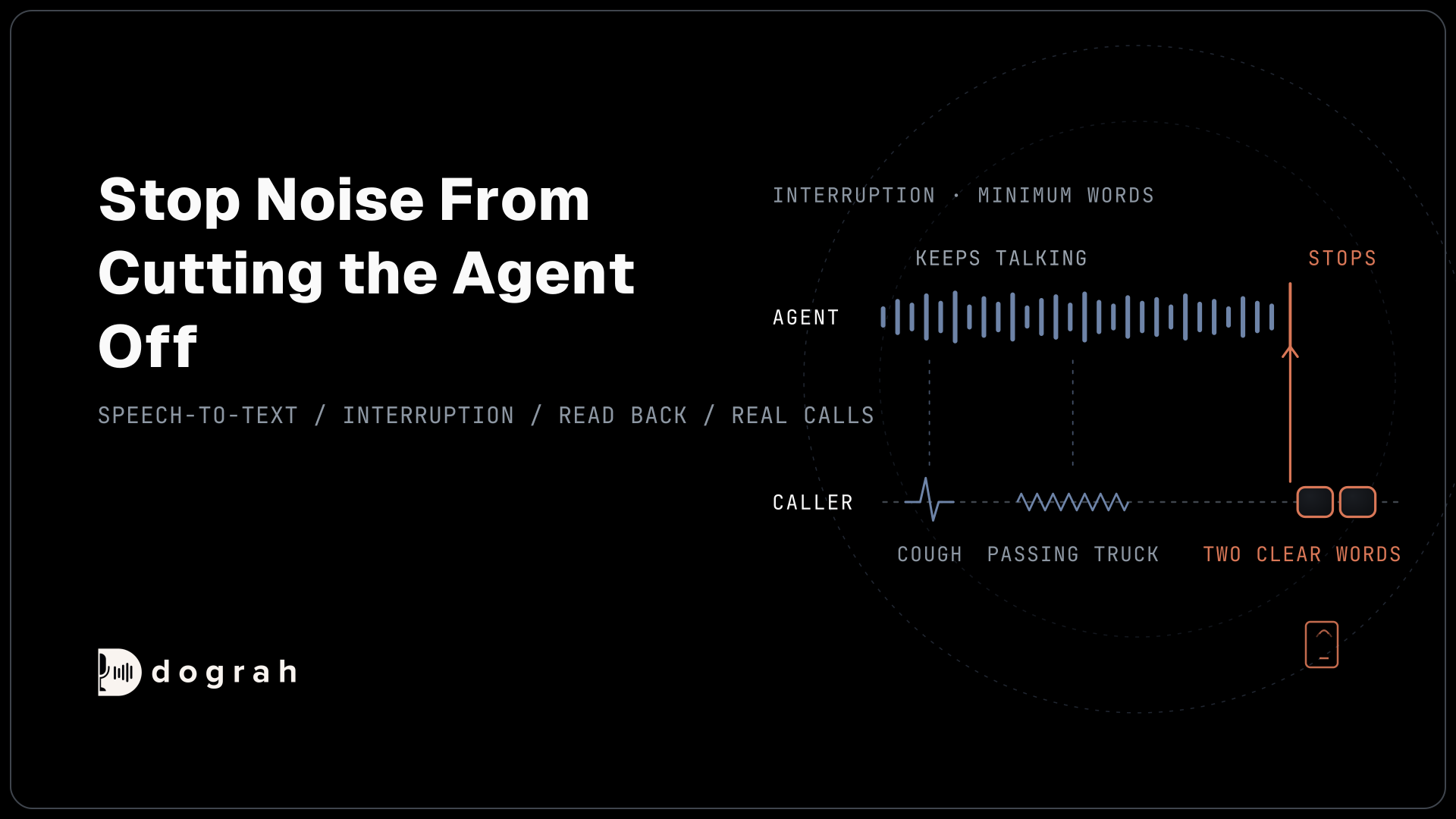
How AI Voice Agents Handle Accents and Background Noise
Why accents and background noise still break voice agents, and the fixes in order: speech-to-text chosen on your own callers' audio, a short dictionary, interruption settings that ignore noise, prompt rules for misheard words, and testing on real phone calls.
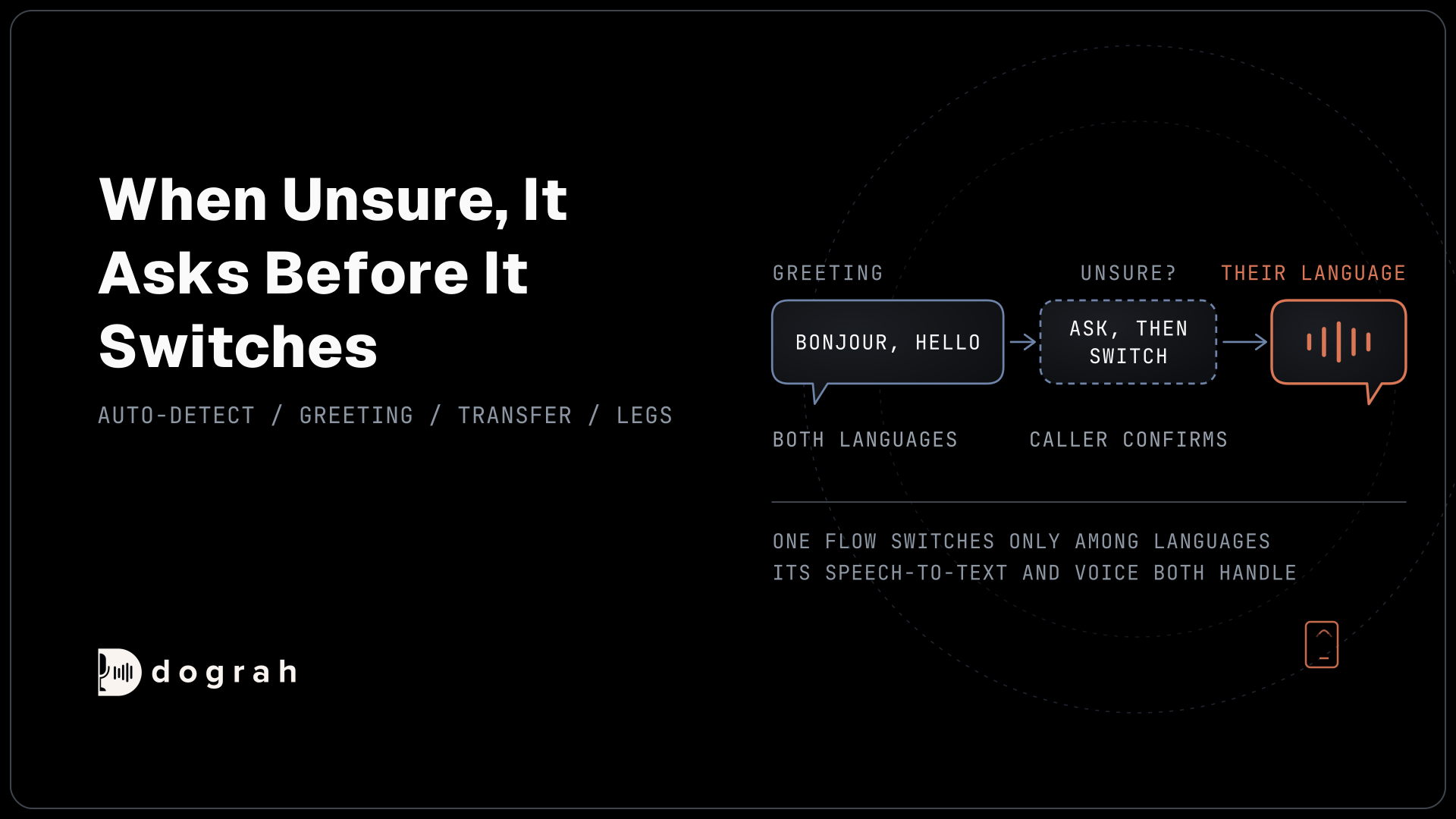
Multilingual Voice Agents: Serving Callers in Their Own Language
How a multilingual voice agent detects and switches language mid-call, which speech-to-text options switch and which stay fixed, why one voice must speak every language, what the agent should do when it is unsure, and how to test each language.
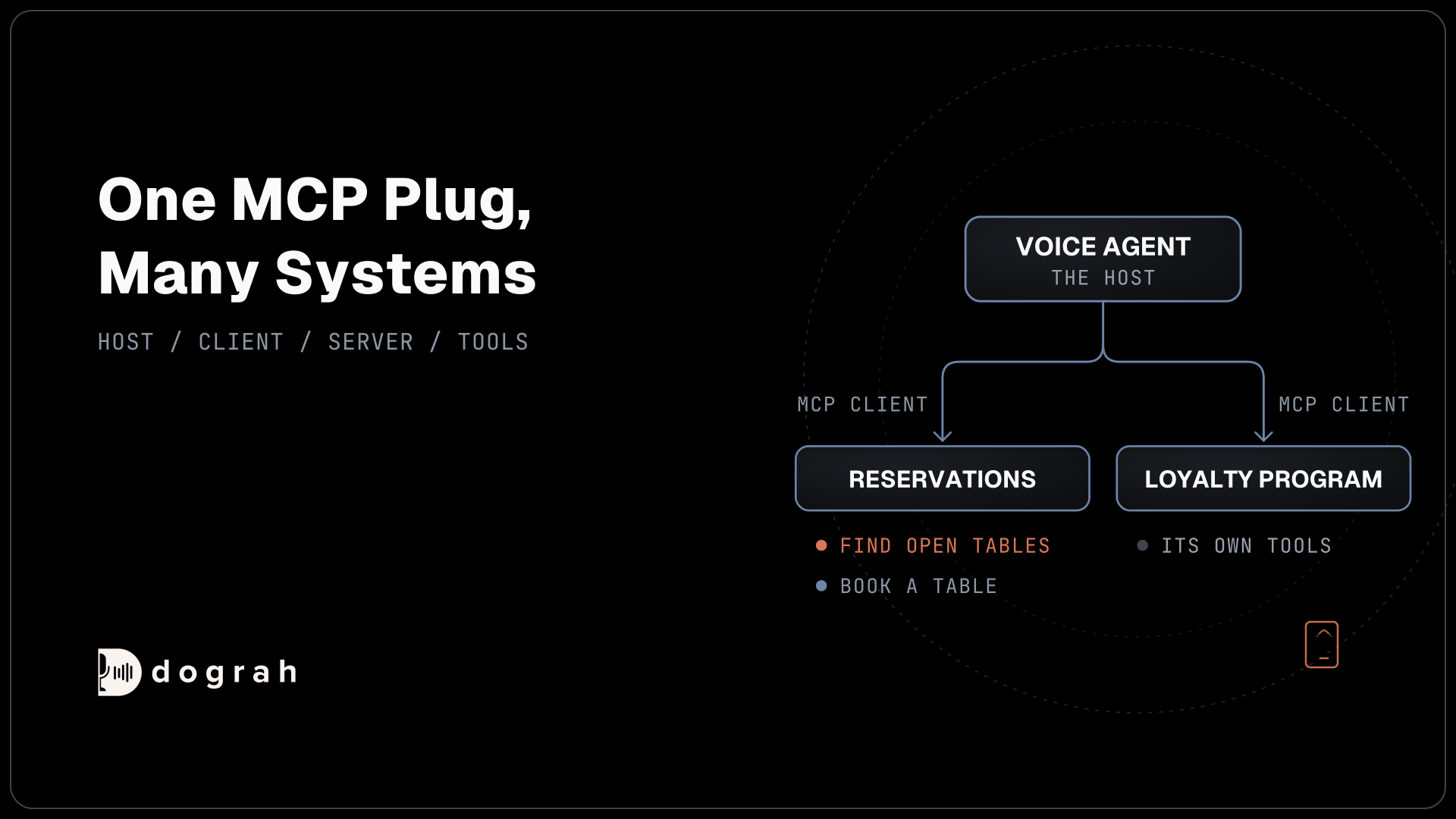
What Is MCP and How It Connects Voice Agents to Your Tools
What the Model Context Protocol is, in plain words: hosts, clients and servers, tools and resources, how MCP compares with a plain HTTP API tool, which agents can use a server, and how a voice agent uses one during a call.
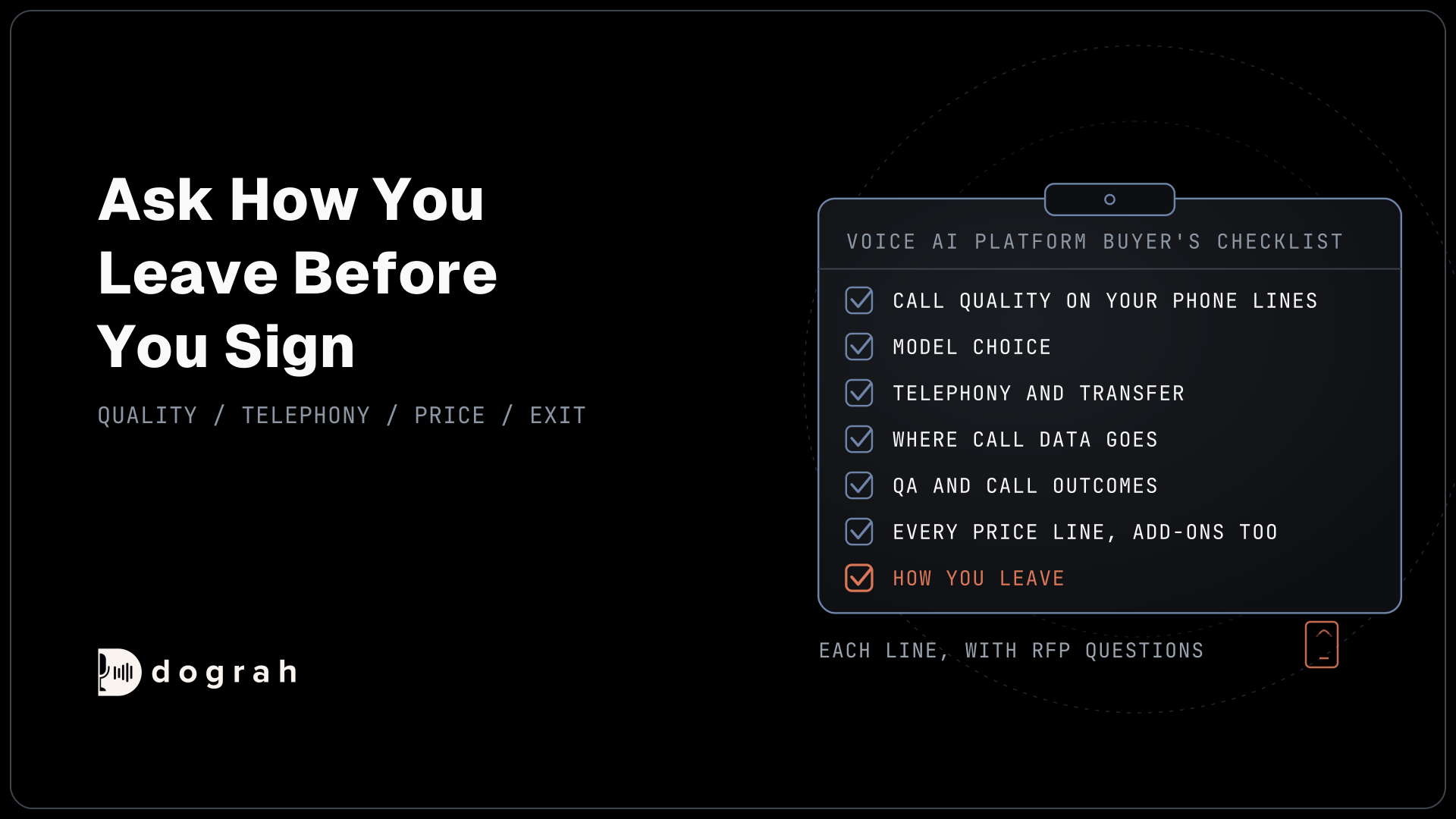
Voice AI Platform Buyer's Checklist, With RFP Questions
A buyer's checklist for evaluating voice AI platforms: test on your own calls over real phone lines, then check models, carriers and transfer, system access, data location, QA, concurrency, every price line and how you leave, with an RFP question list you can copy.
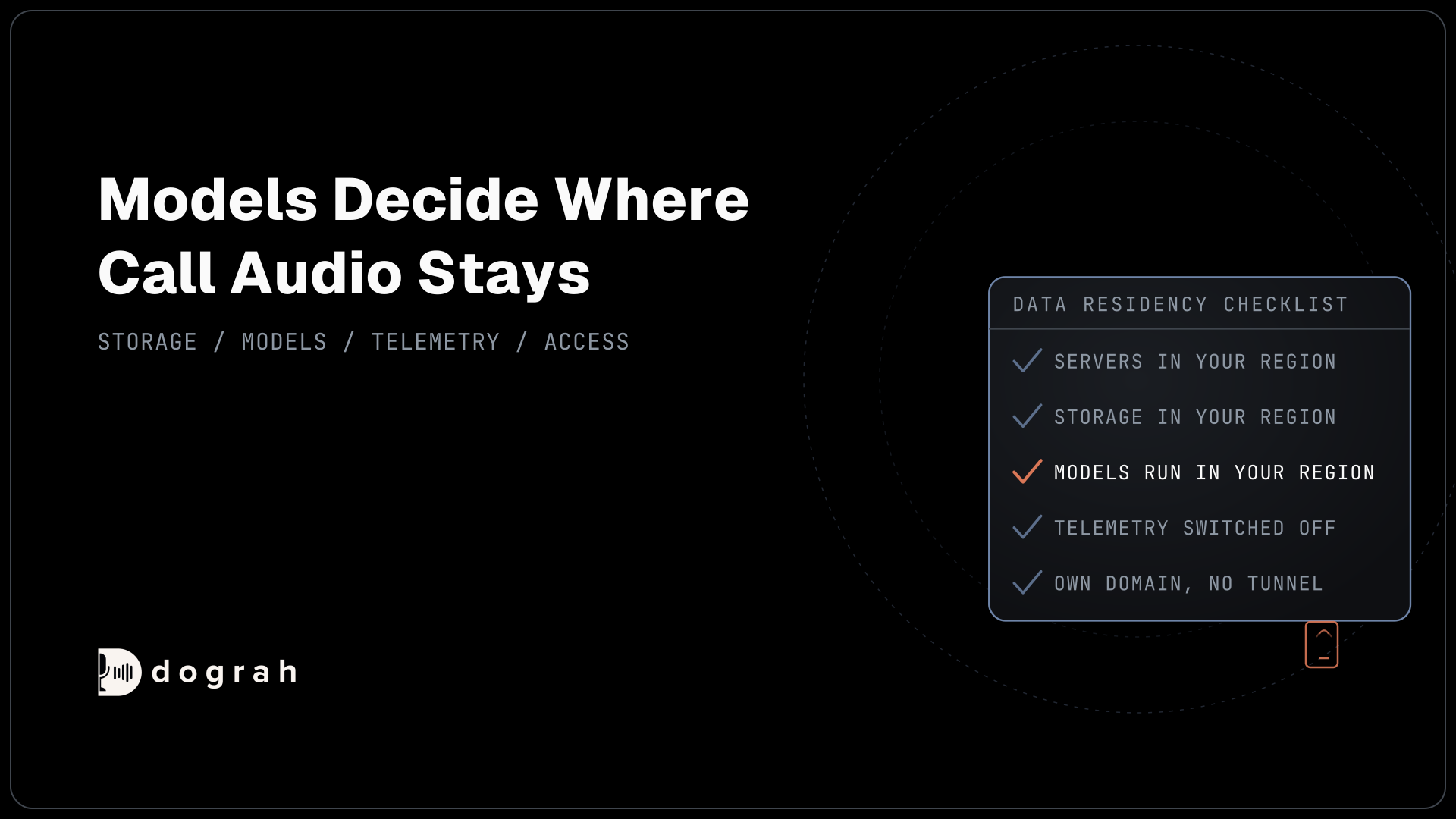
Data Residency for Voice AI: A Buyer's Checklist of Every Setting
A buyer's checklist for data residency in voice AI: every place a call's data goes, from servers and models to the phone carrier, telemetry, the quickstart tunnel, tracing, tools and remote access, with the setting that keeps each one in your region.
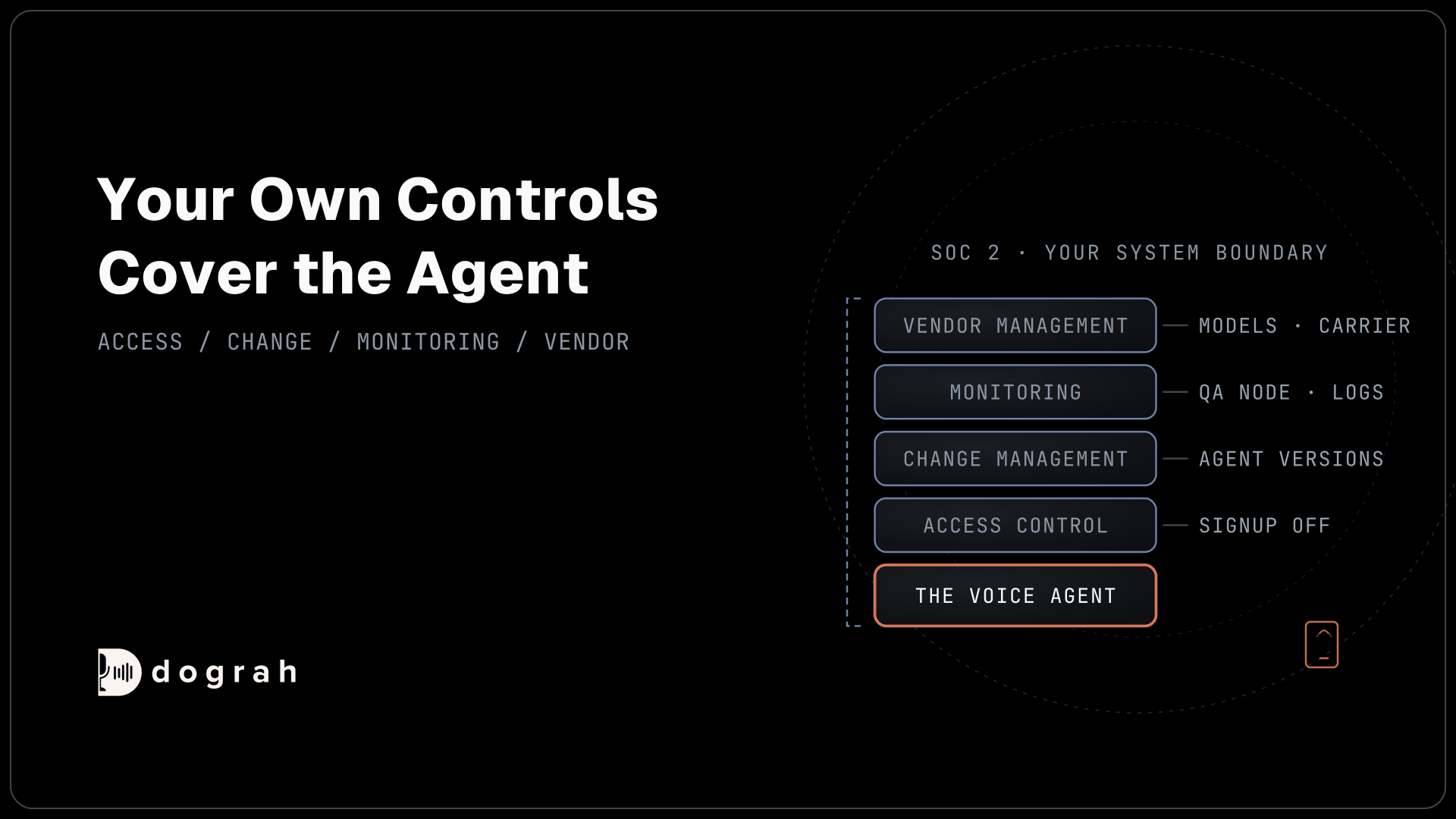
How to Pass a SOC 2 Review With a Self-Hosted Voice Agent
How a self-hosted voice agent fits a SOC 2 review: why it sits inside your own system boundary, where its call data lives, the defaults to close before an audit, the change evidence it keeps, and which outside vendors still need review.
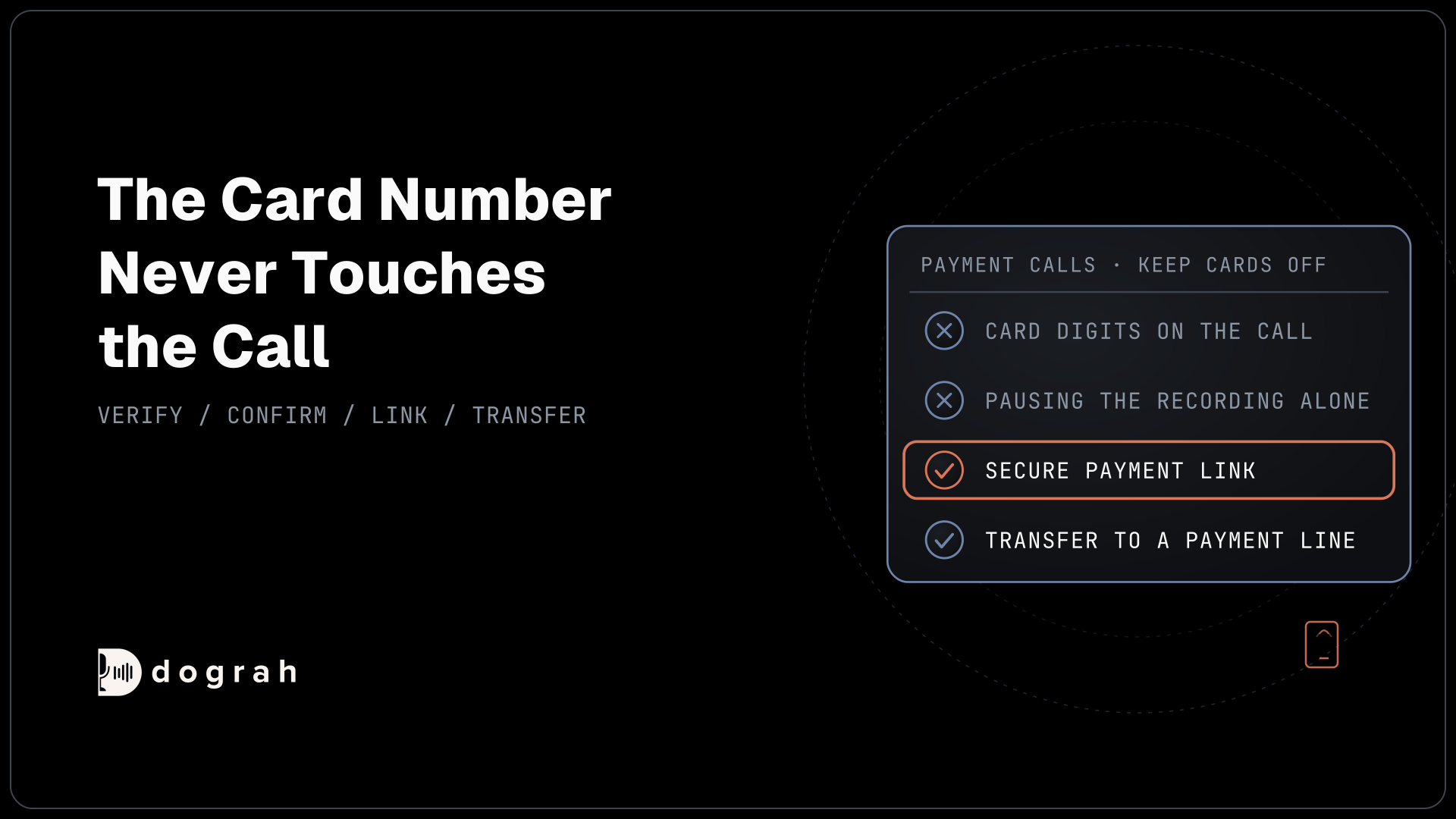
Handling Payment-Sensitive (PCI) Calls in a Voice Agent Safely
How to handle payment-sensitive calls in an AI voice agent: where a spoken card number ends up, what PCI DSS says about card data in recordings, why pausing the recording falls short, and two designs that keep card data off the call.
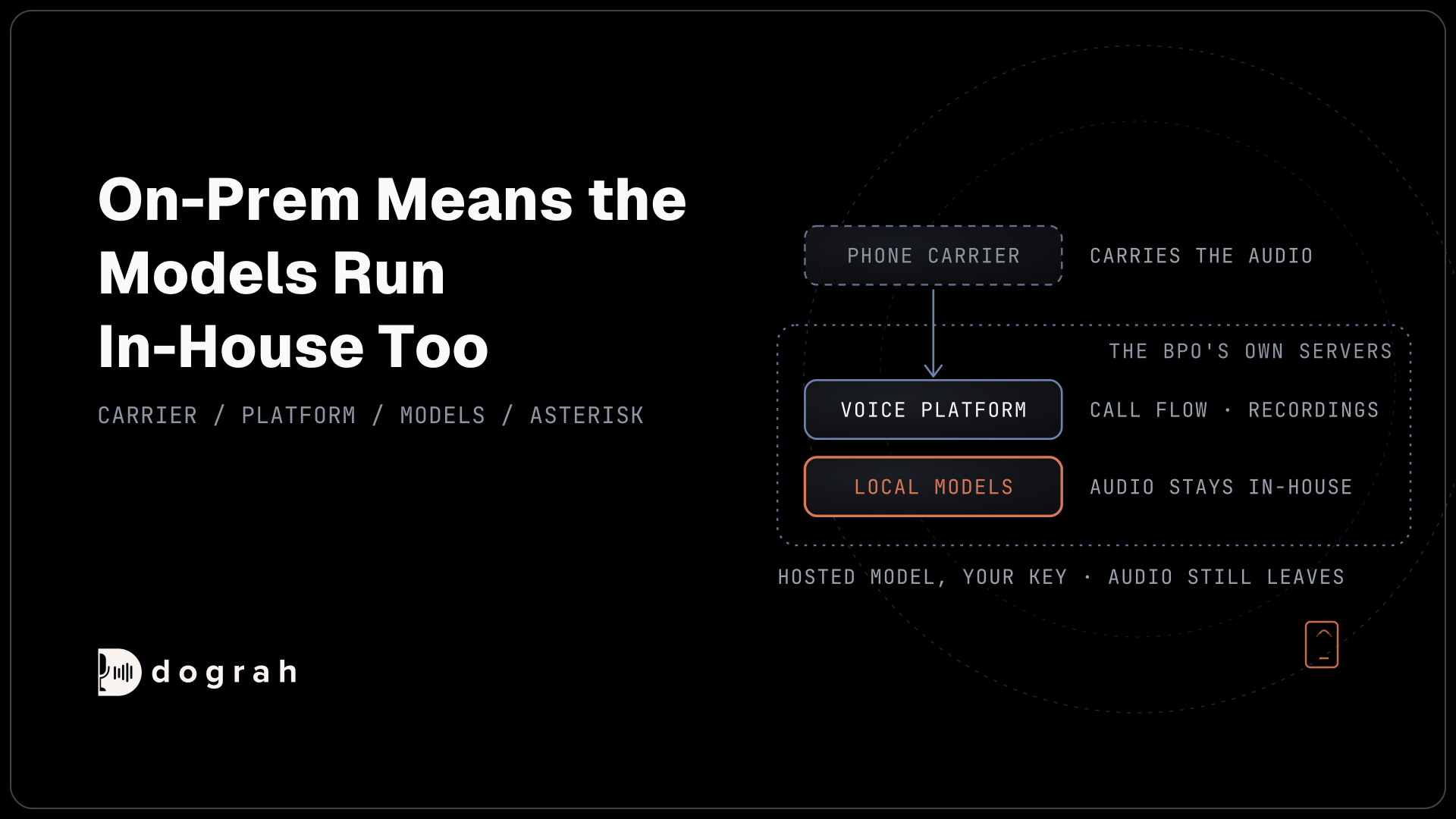
On-Prem Voice AI for BPOs: Keep Each Client's Calls In-House
What on-prem voice AI means for a BPO: every place a client's call goes, why client contracts decide it, the platform and model layers, sizing servers for many programs, the phone path with transfers, and what the BPO takes on.
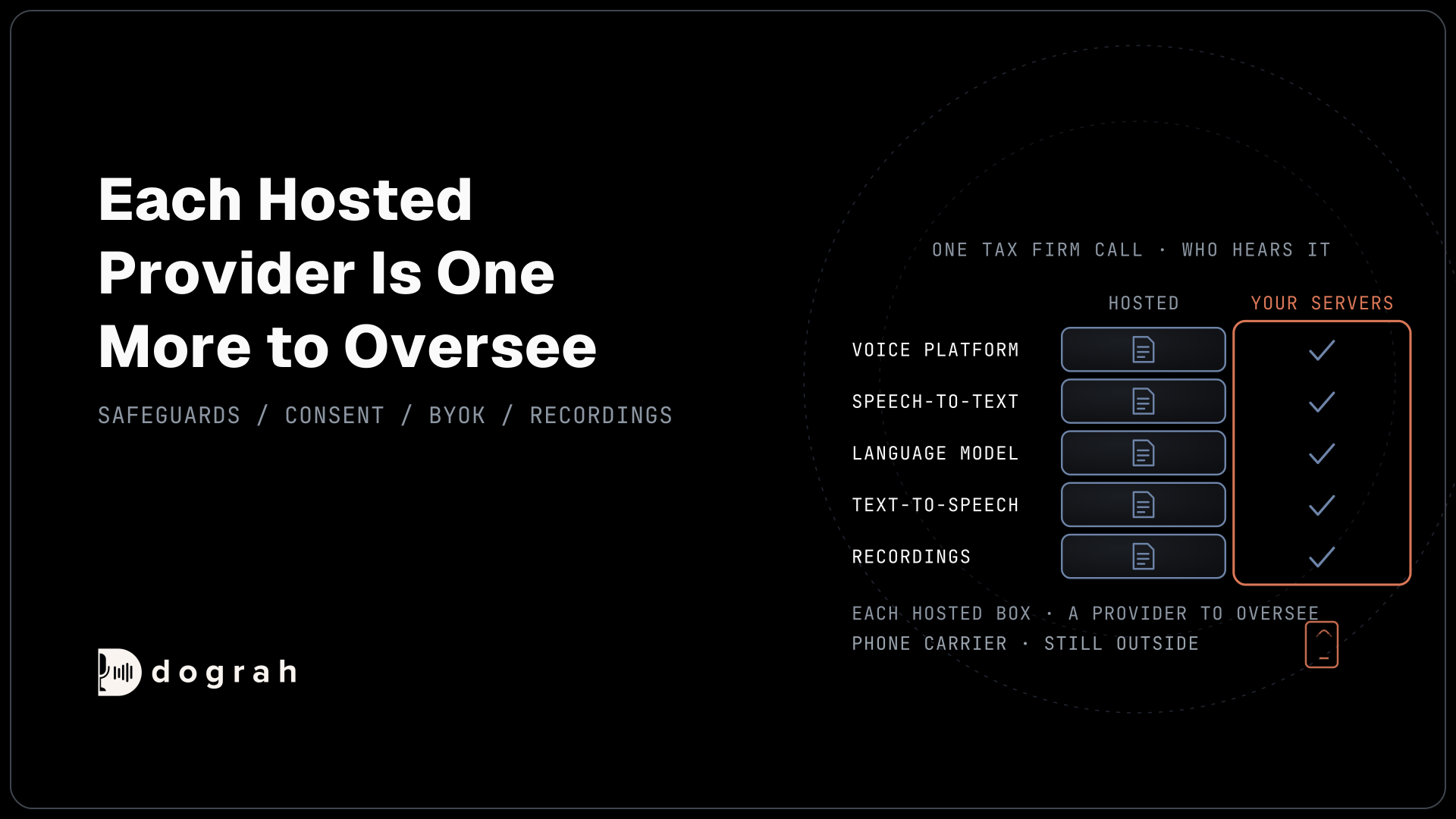
On-Prem Voice AI for Accounting Firms: Count Who Hears the Call
Where a tax firm's voice agent calls go and what each place means under the FTC Safeguards Rule and IRC 7216: hosted providers the firm must oversee, consent for providers outside the US, what full on-prem takes with self-hosted Dograh and open-weight models, and when it is not worth it.
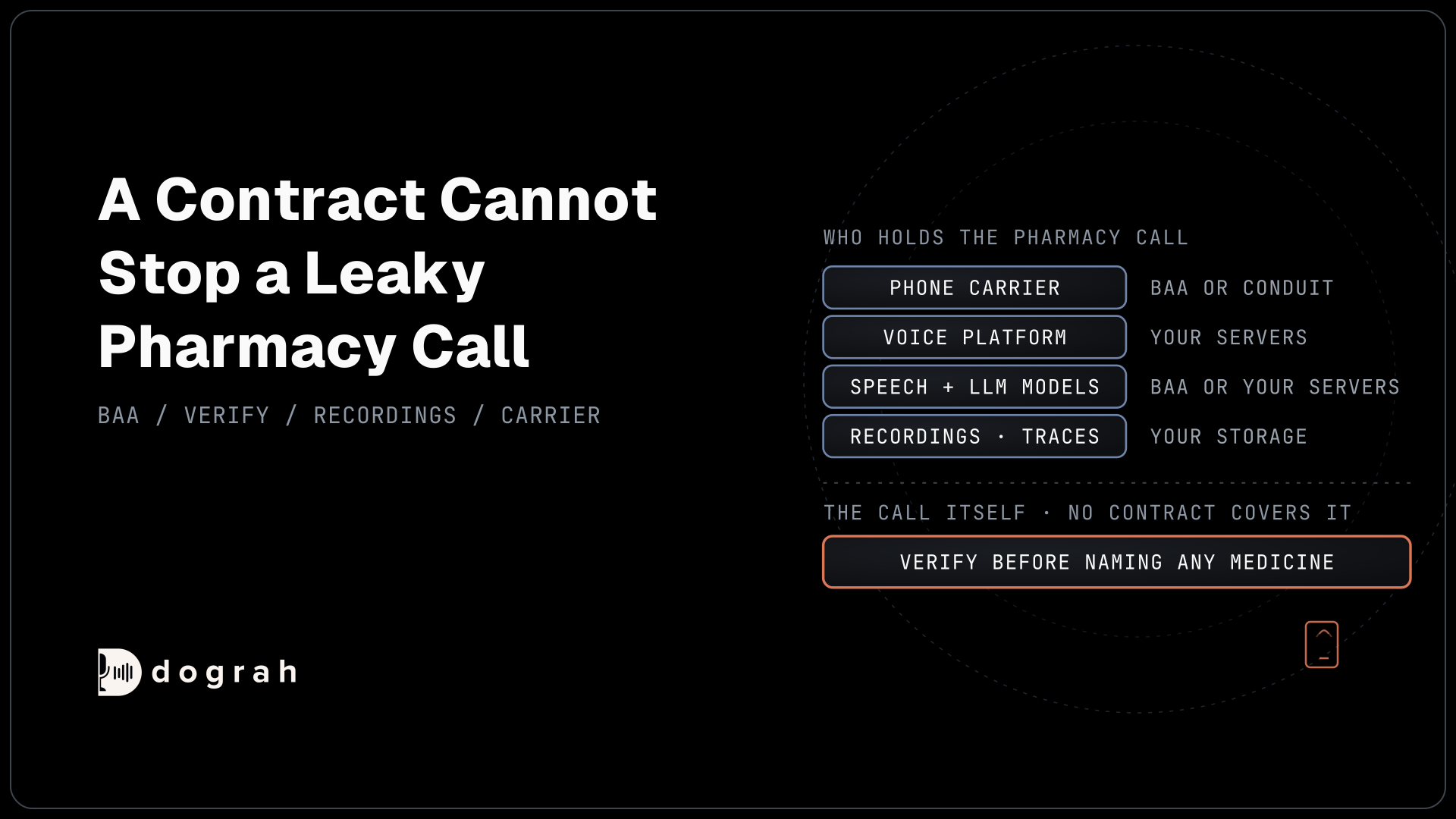
HIPAA-Compliant Voice AI for Pharmacy: The BAA Is Half the Job
What HIPAA asks of a pharmacy voice agent: which vendors on a call are business associates and need a BAA, three ways to set the agent up, why a BAA does not stop a medicine being named before verification, and where recordings, transcripts and traces live.
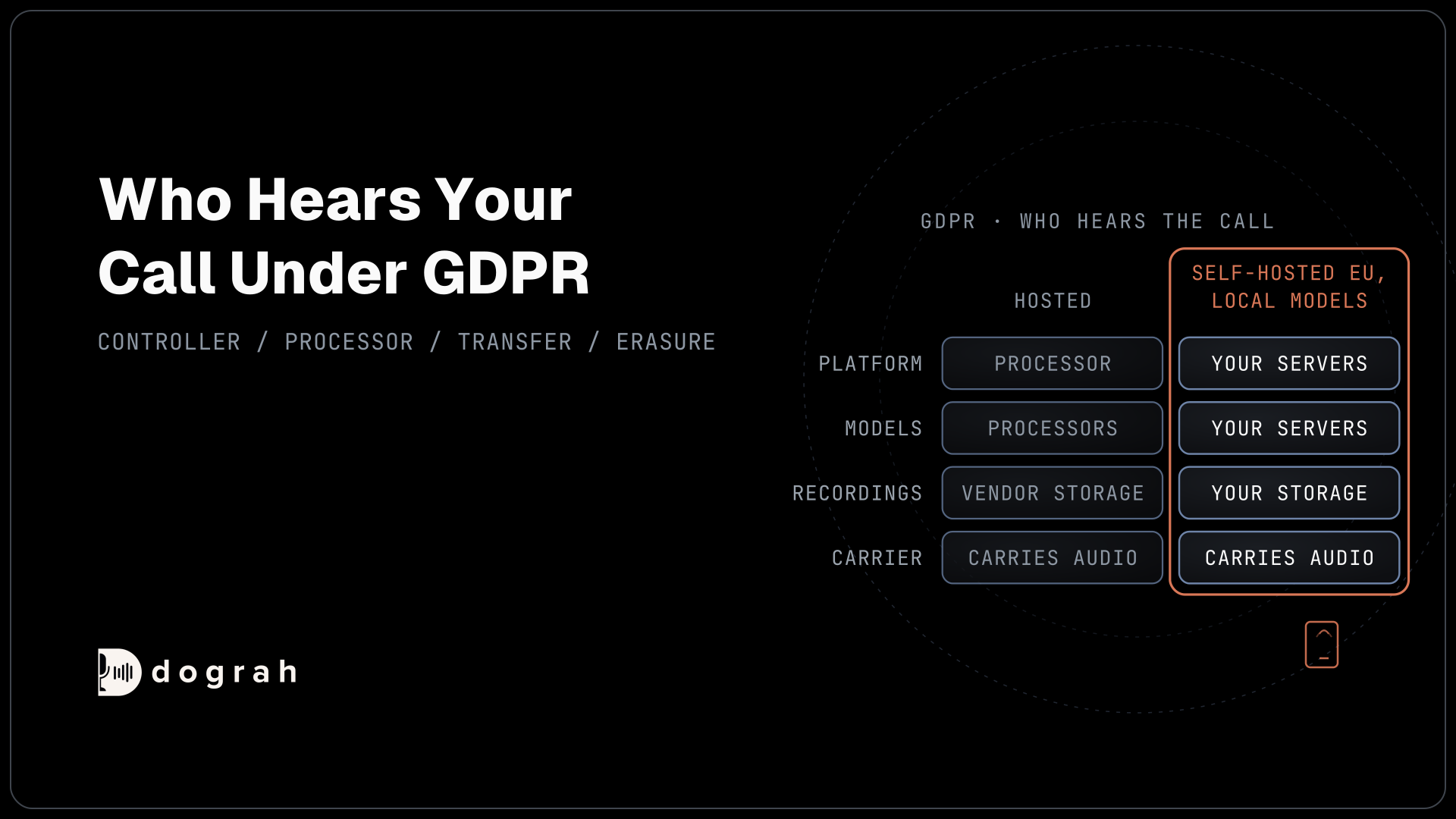
GDPR and Voice AI: Keeping Call Data Inside Your Borders
How the GDPR applies to AI voice agents: voice as personal data, the controller and every processor that hears the call, transfers and remote access, what self-hosting in the EU with open-weight models keeps in-region, and AI disclosure under the AI Act.
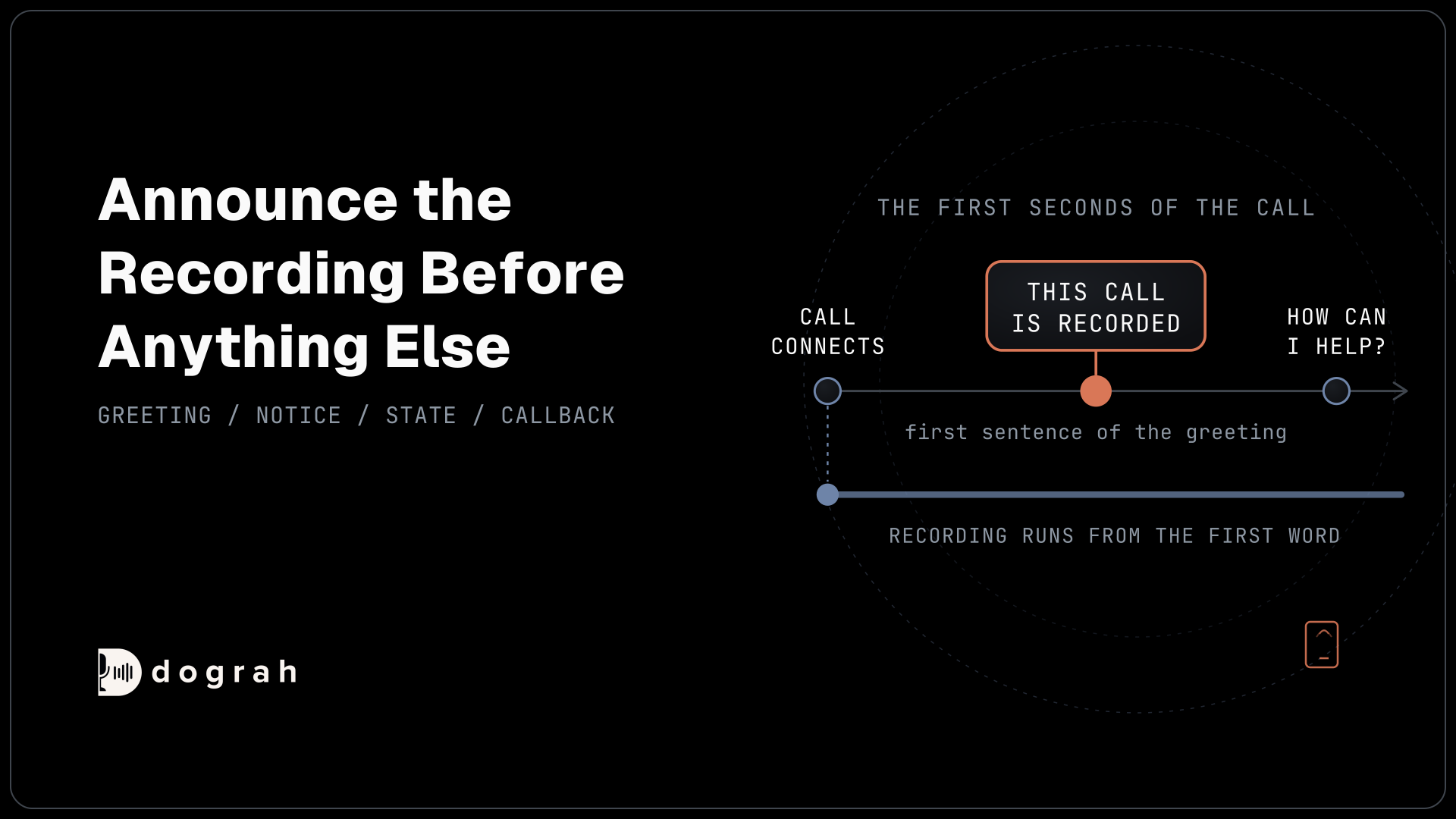
Call-Recording Consent Laws and How to Configure Your Agent
Call-recording consent laws quoted from the statutes (federal, California, Florida, Illinois and Washington), and how to configure a voice agent: a fixed recording notice at the start of the greeting, what to do when a caller talks over it or says no, and interstate calls.
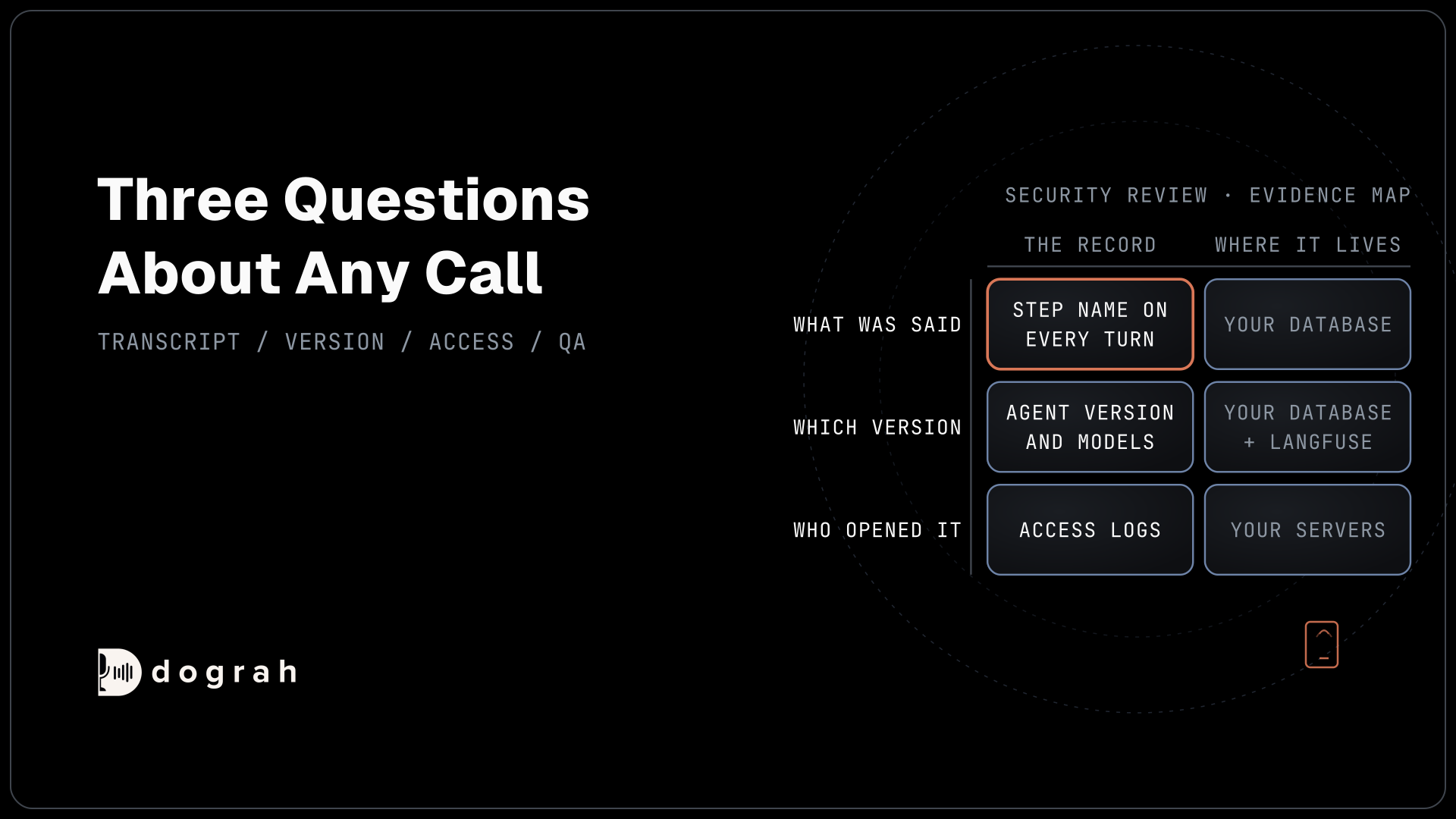
Building an Auditable Voice AI Stack for Security Reviews
How to build a voice AI stack a security reviewer can audit: step-tagged transcripts, tool calls, the agent version and model settings behind every call, access logs for who opened the records, and QA sampling, mapped to NIST SP 800-53.
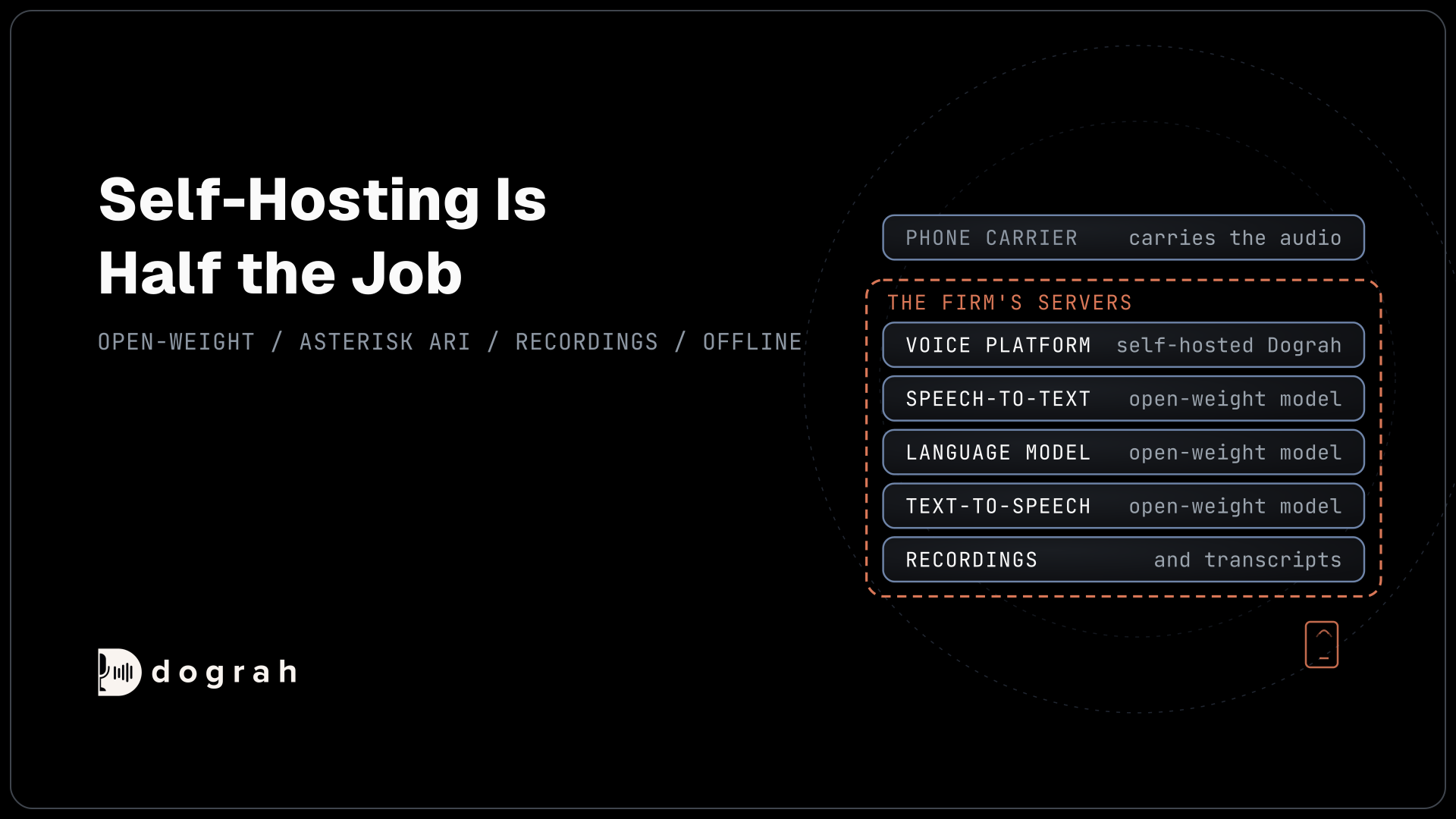
On-Prem Voice AI for Law Firms: Every Place an Intake Call Goes
What a law firm has to run on its own servers so a privileged intake call reaches no outside company: the voice platform, speech and language models, recordings and transcripts, and the phone path, plus when on-prem is not worth it.
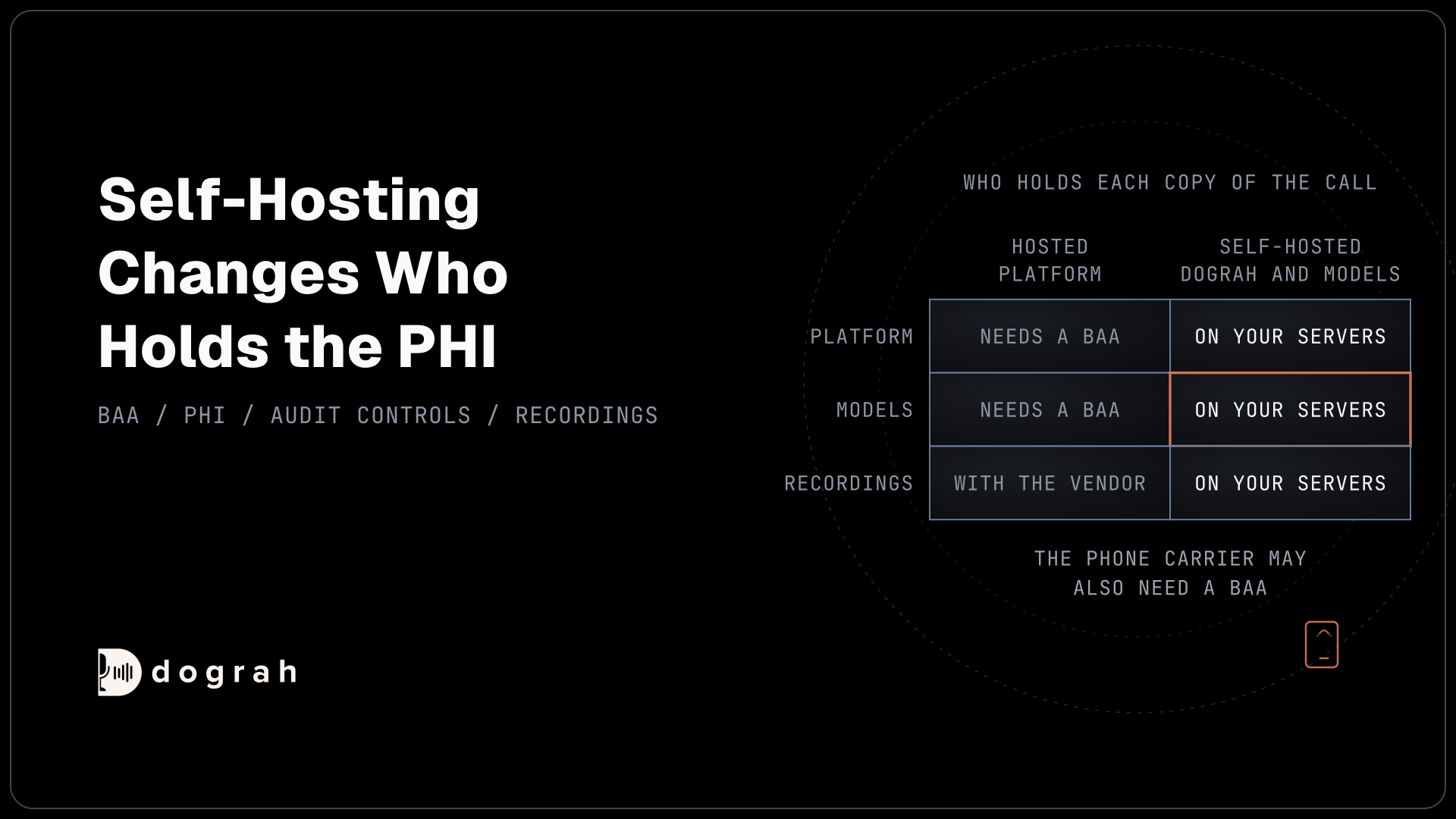
HIPAA-Compliant Voice AI for Hospitals: Count the Vendors That Hear the Call
What HIPAA asks of a hospital voice agent: where PHI lands on a call, which vendors need a BAA, the minimum necessary rule, access controls and audit logs, and what self-hosting changes in the chain.
On-Prem Voice AI for Logistics: When Your Own Servers Earn Their Keep
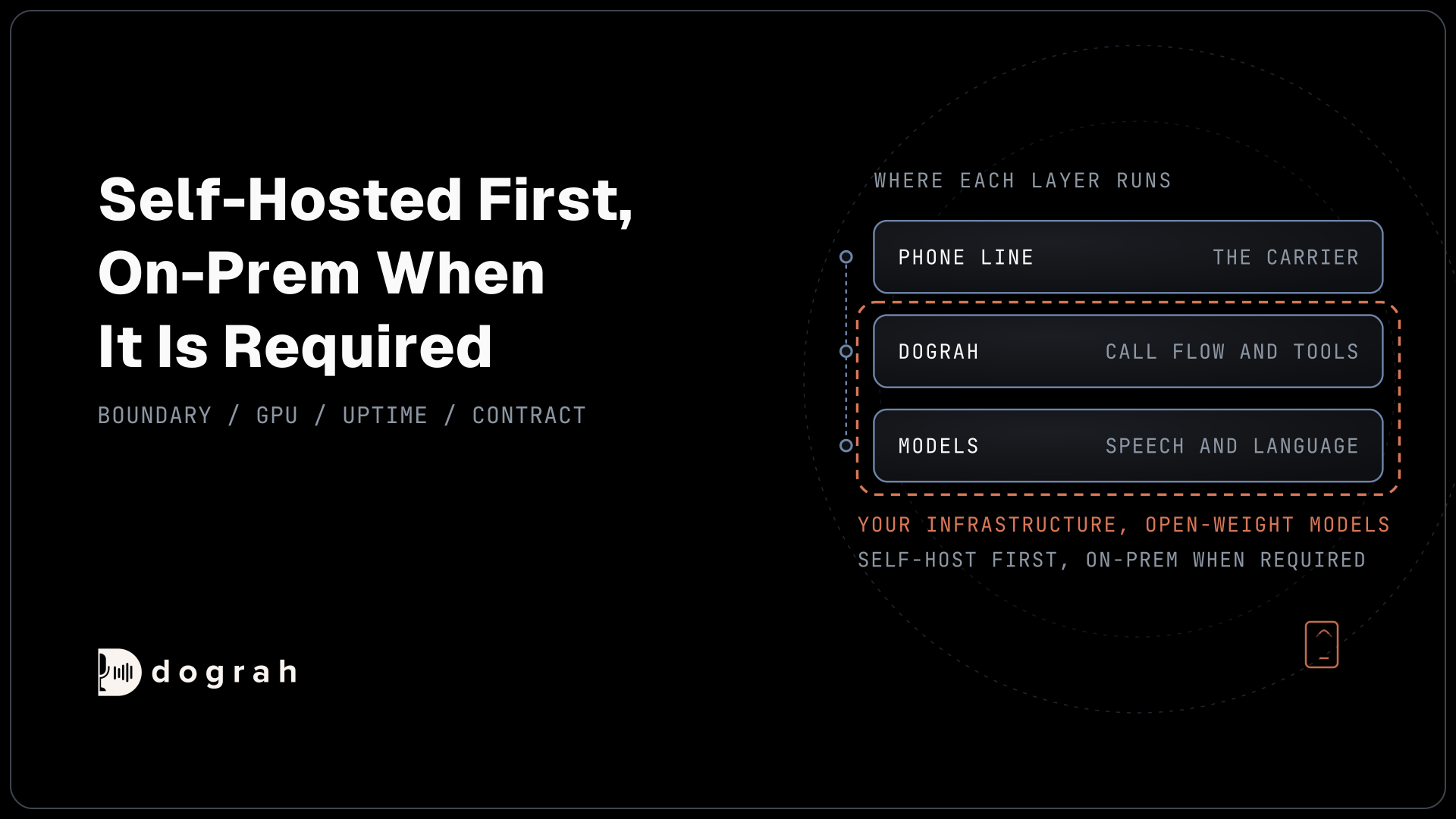
What on-prem voice AI means for a logistics operation: which call data is at stake, the GPU and server sizing, who owns uptime, and when on-prem beats self-hosting in your own cloud.
Open-Source Alternative to Retell AI: On-Prem Is Not Open Source
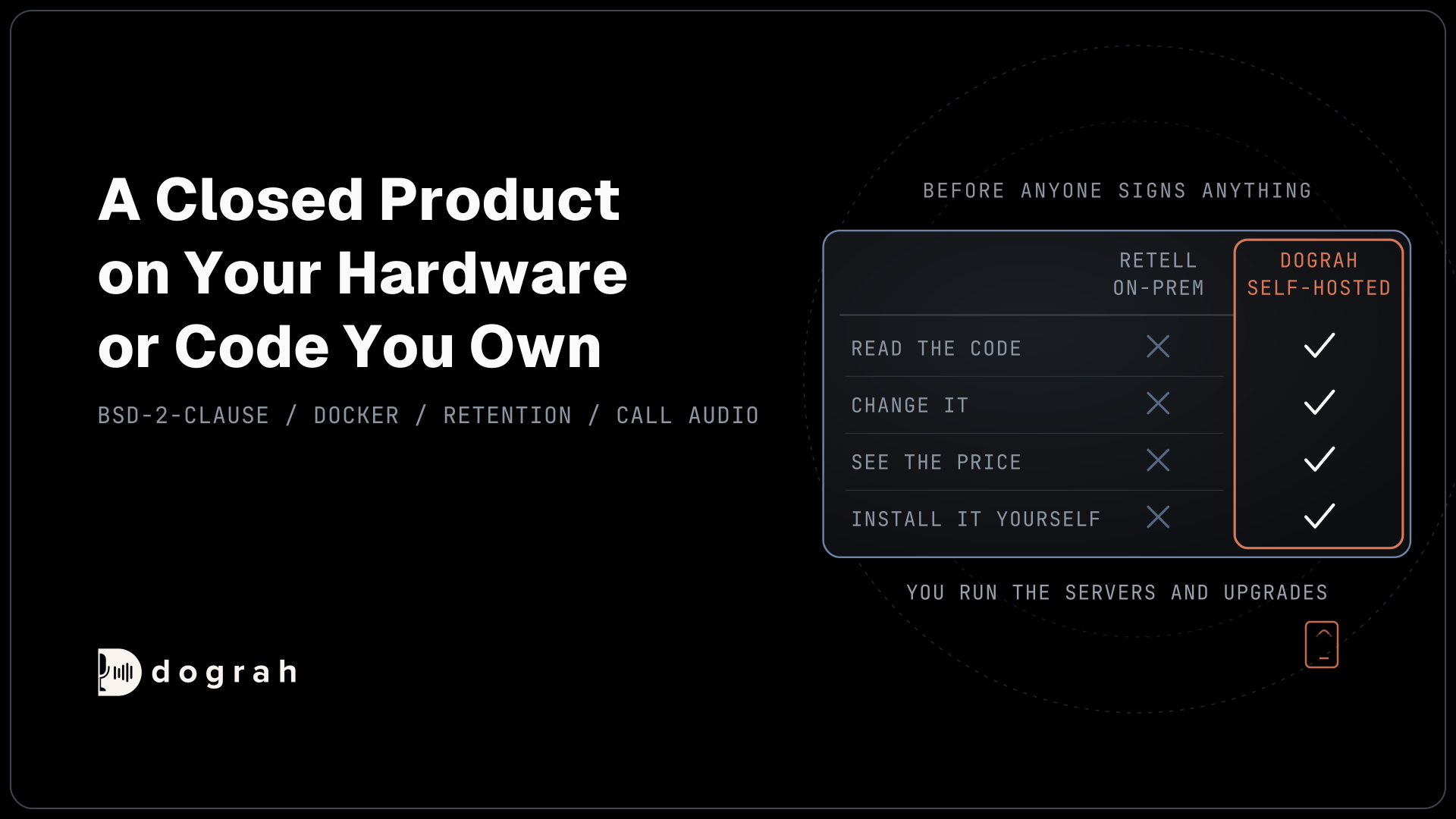
Retell now sells on-prem through Enterprise sales. What an open-source alternative you can self-host today changes for your code, call data, region and bill.
How the Voice AI Pipeline Works: STT to LLM to TTS, Step by Step
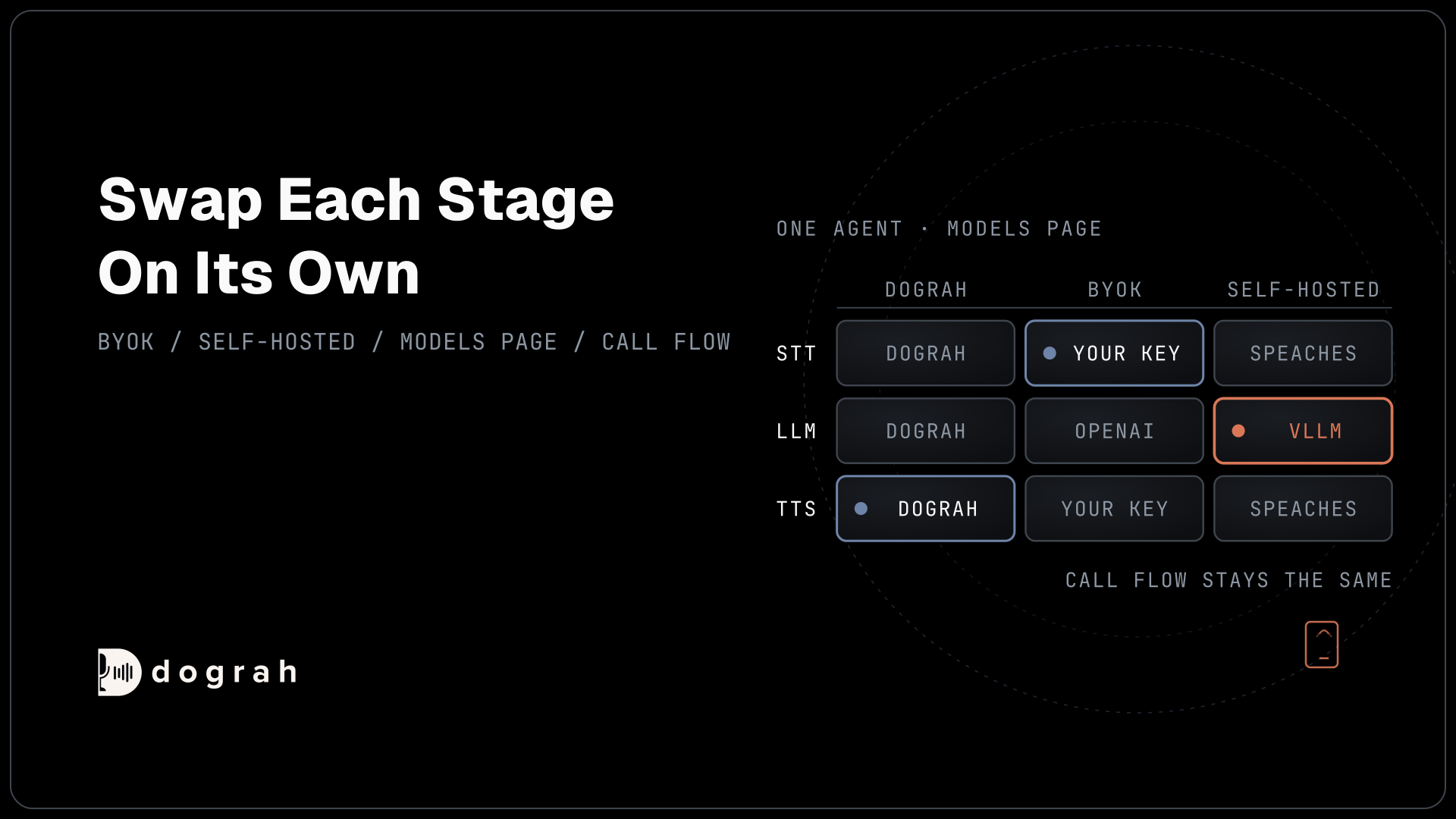
Follow one caller's sentence through speech-to-text, the language model and text-to-speech, with where the time goes at each stage and what breaks between them.
What Is an Orchestration Layer in Voice AI? Every Job It Runs
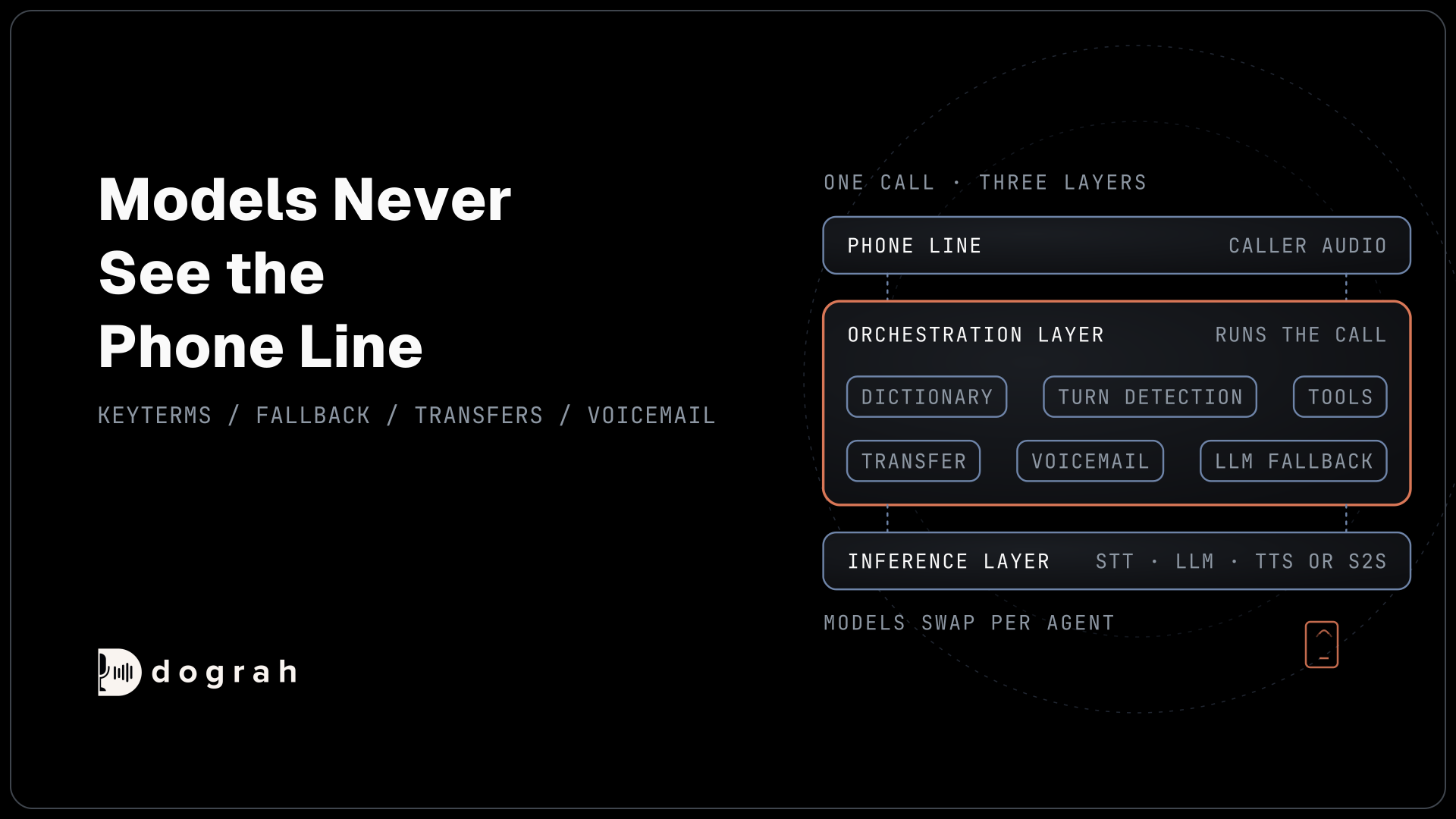
What a voice AI orchestration layer does on a live call, from custom dictionaries and turn detection to transfers, voicemail and speech-to-speech models.
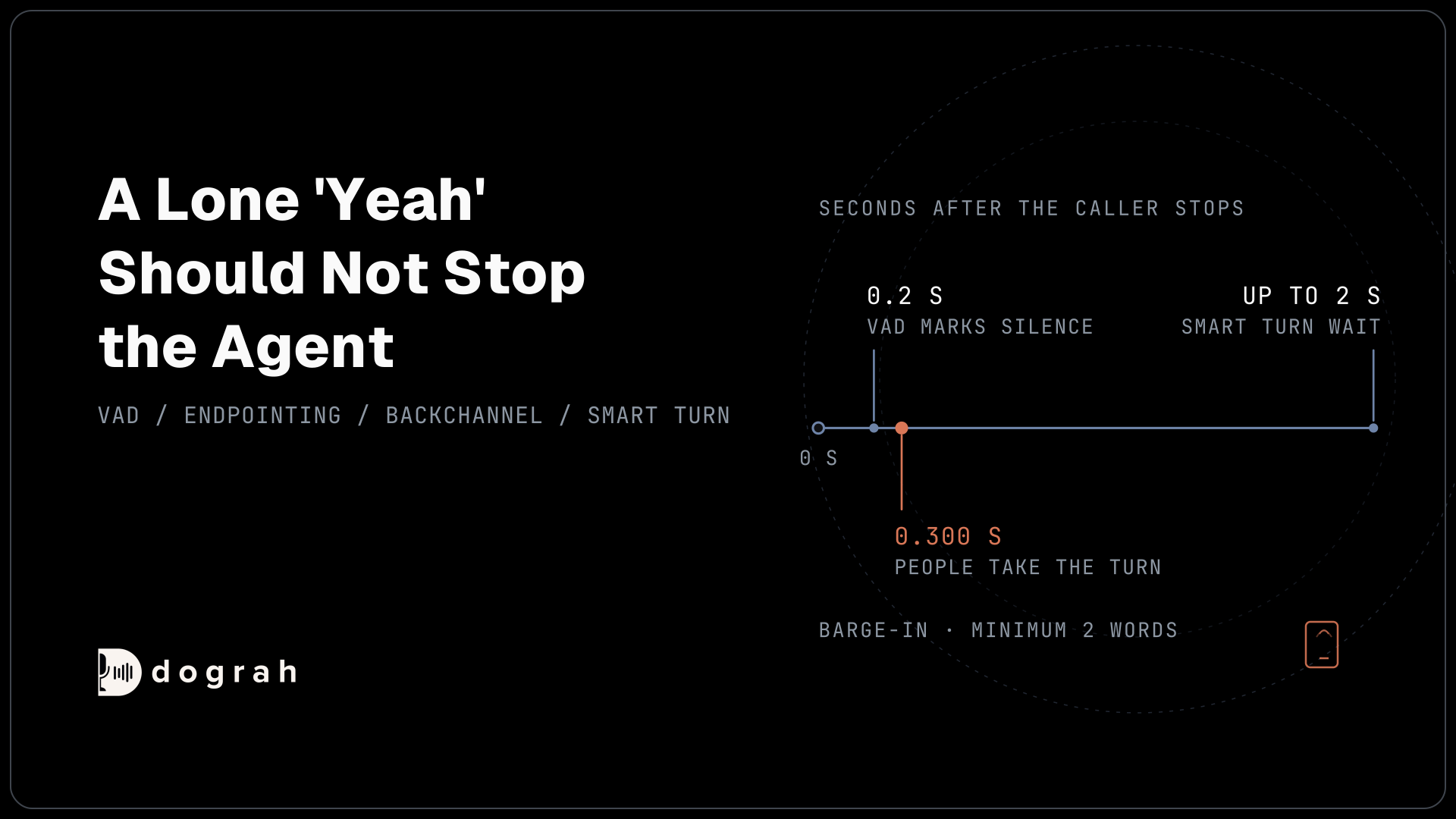
Barge-In, Endpointing, and Turn-Taking: Voice UX Fundamentals
How a voice agent decides the caller is done, when to stop talking, and which sounds to ignore, with the settings that control each decision.
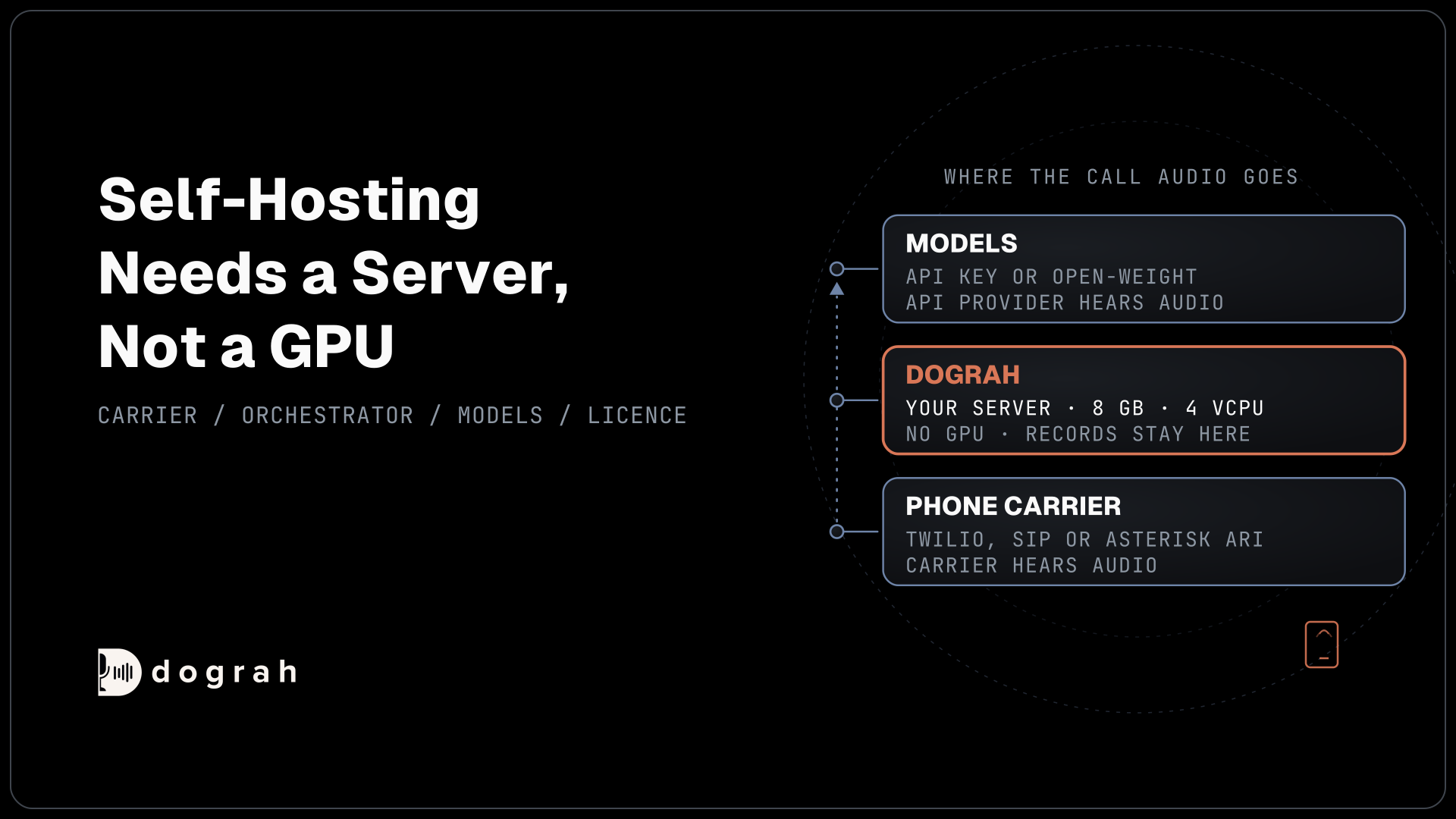
Open-Source Alternative to Vapi: What Self-Hosting Really Changes
For developers who want the code: what running an open-source Vapi alternative on your own servers changes for data, cost, operations and licence.
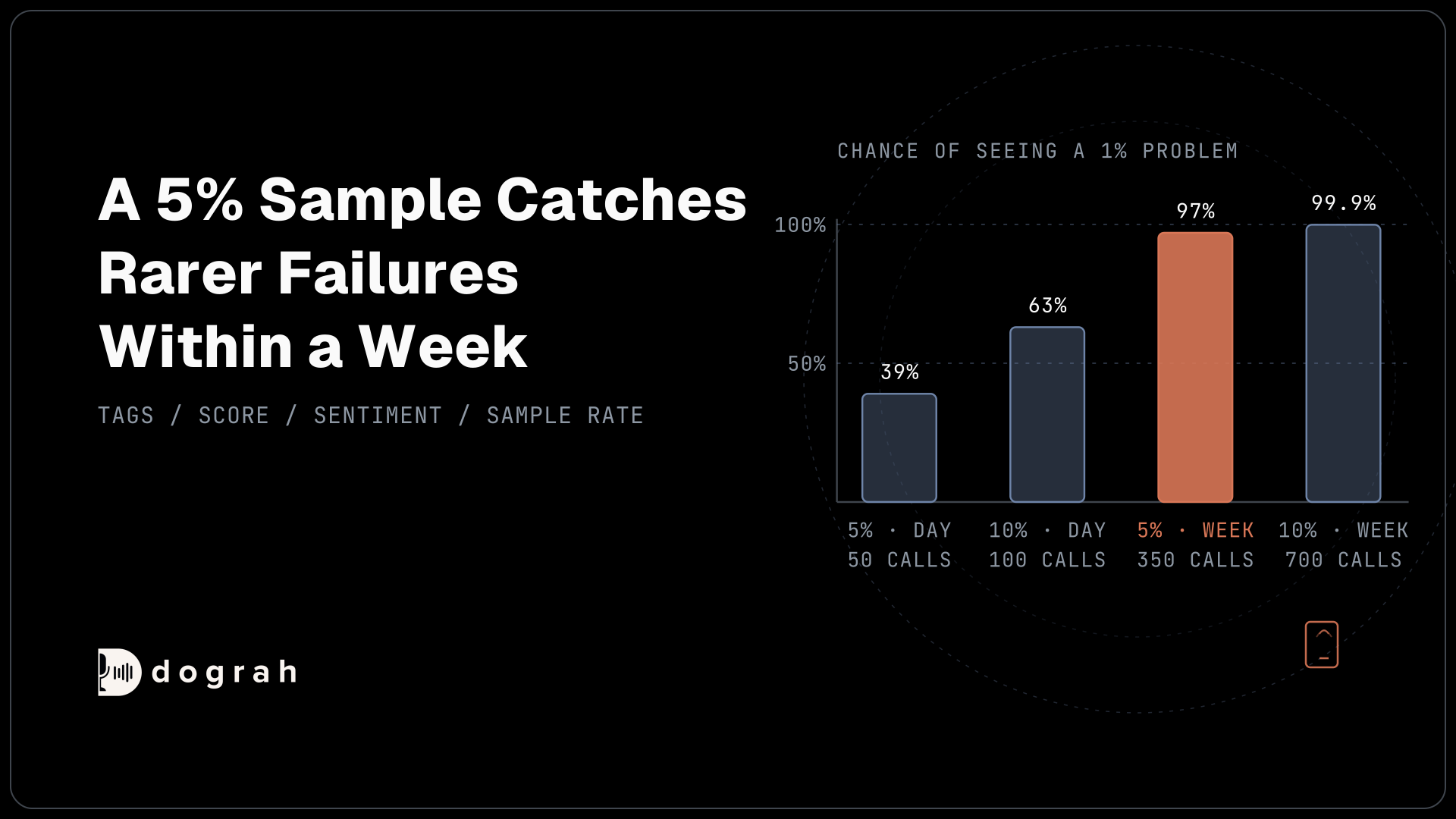
Automated QA for Voice Agents: Grade the Agent, Not the Caller
What Dograh's QA node checks after each call, and why a 5-10% sample of live calls is enough to find common failures within days.
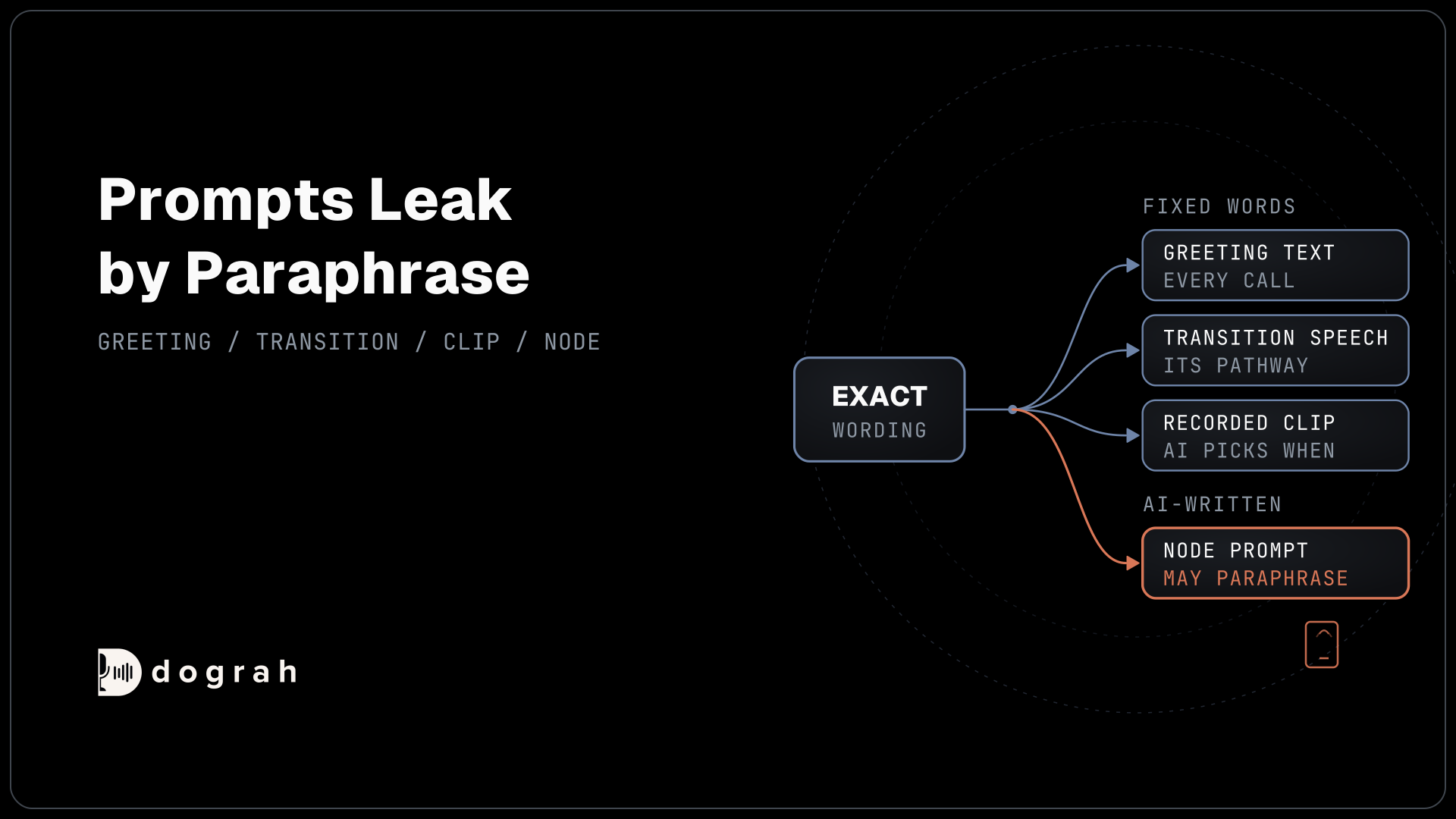
Prompt and Flow Design Patterns for Reliable Voice Agents: Split by Guarantee
Where to split a voice agent's call into nodes, where exact wording comes from, and how to prove each leg holds up over repeated runs.

Speech Latency: The Sub-800ms Playbook for Voice AI in 2026
Production voice AI runs at 1.4s median latency. Sub-800ms is the bar. Learn which component to fix first and how to colocate your stack.