
HIPAA-compliant voice AI for telehealth treats the booking, reminder and tech-check calls around each virtual visit as protected health information. The agent names only the practice before it verifies the patient, keeps the join link and visit details behind that check, and stores recordings and transcripts where the provider controls access.
Key Takeaways
- The calls around a virtual visit hold names, reasons and schedules, so they're PHI.
- A browser tech check skips the phone carrier but still reaches the models.
- Recordings, transcripts and logs from each call need your own retention schedule.
The video platform gets the security review, yet the calls around a virtual visit carry patient details too. We cover what booking, reminder and tech-check calls may say, where each copy is stored and who else hears the call, using Dograh as the example. It builds on our guide to voice AI in healthcare.
The calls around a virtual visit carry PHI
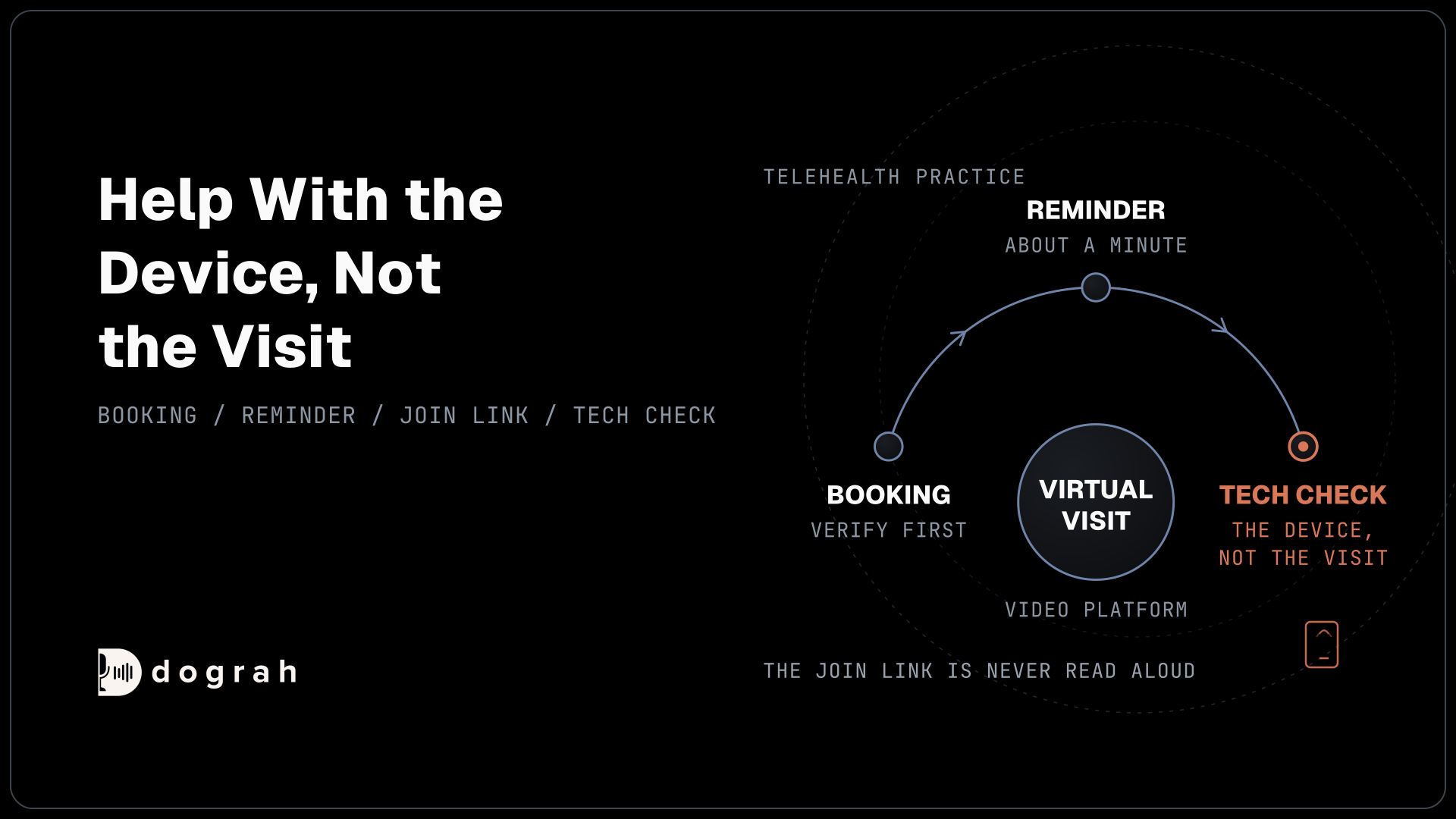
The video platform is not the only telehealth system that holds patient information. A booking call ties a patient's name to a clinician and a time. A reminder confirms that a visit exists, and a tech-check call can give away why the patient is being seen if the agent reads the visit type aloud. Under the Health Insurance Portability and Accountability Act (HIPAA), all of it is protected health information (PHI), whether it is spoken or saved.
The phone is staying part of care as well. The Consolidated Appropriations Act, 2026 extends Medicare's telehealth flexibilities, audio-only visits included, through December 31, 2027. Patients who see their clinician by phone will keep calling the same line to book, confirm and reschedule.
The support channel around a visit is a target too. In February 2026, an unknown party reached the service tickets on Hims & Hers' third-party customer service platform, as Healthcare Dive reported. Its annual filing said some treatment information may have been exposed for customers who contacted support through that platform. A voice agent on your booking line is the same kind of channel.
AI voice agents for telehealth covers how each of these calls runs.
Booking and reminder calls: what each may say
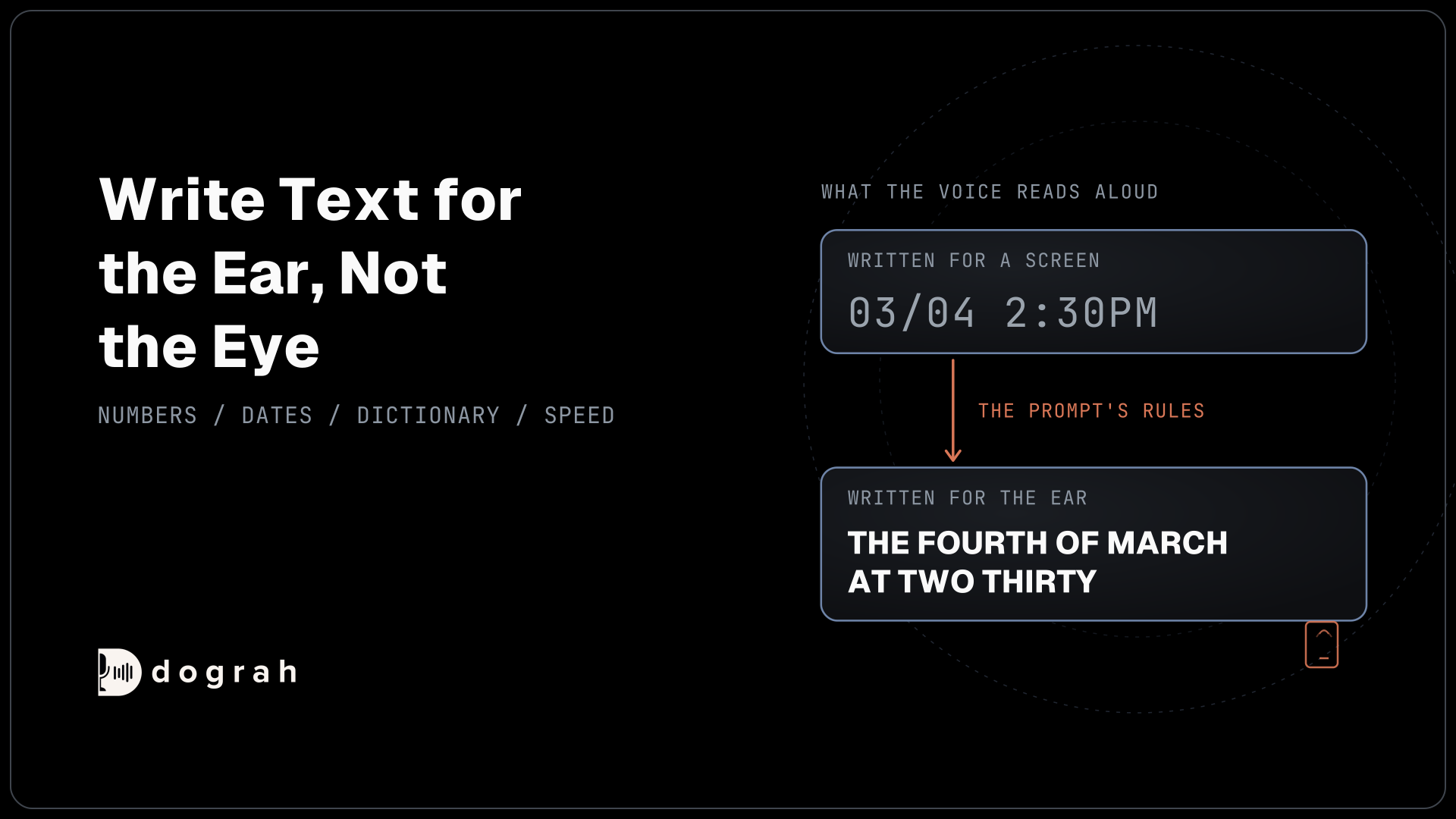
Every telehealth call runs greet, verify, then disclose, and the greeting is the riskiest line because it plays before anyone is checked. Write the Greeting Text on the Start Call node to name the practice and nothing else. A clinician's name can be as revealing as a diagnosis. If the greeting also carries a notice, such as a recording notice, switch off Allow Greeting Interruption on the same node. It is on by default, so a caller who talks over the opening can cut the notice short.
Next, the agent checks who it is speaking with. It asks for a date of birth plus one more item on file, and an HTTP API tool sends the answers to your endpoint, which replies verified or not. A short message plays when the tool starts, while the request runs, so the patient is never left in silence. Only after a pass does a second tool return the visit time and the clinician. Verifying patient identity before a voice agent shares PHI covers that endpoint and the failure path.
Keep the join link off the call. It goes out from your telehealth or messaging system when the visit is booked. If a patient asks for it again during the call, the agent calls an HTTP API tool that asks your messaging provider to resend it, and nobody reads a web address aloud.
Reminder calls to mobiles can rest on the healthcare exemption in the Federal Communications Commission's calling rule under the Telephone Consumer Protection Act (TCPA), but only within its limits. The call lasts about a minute, a patient gets at most one a day and three a week, and copays or balances never come up. Patient consent for automated healthcare calls goes through every condition.
If your service runs a substance use disorder program covered by 42 CFR Part 2, tell the agent never to discuss substance use treatment at all. Any question about it goes to staff.

Open Source Alternative to Vapi / Retell
Self-hosted voice agent platform — no per-minute fees
dograh-hq/dograh
Star on GitHub
Tech checks: help with the device, not the visit
A tech-check call makes sure the patient can join, and it should never turn into a talk about the visit. The agent asks which device and browser the patient will use, whether the browser asked for camera and microphone access, and whether the clinic's test page loaded. Each answer is recorded as an extracted field, written as the patient stated it, so staff can see who needs help before the visit starts.
Where this call sits under the exemption is less clear than for a reminder. A device check reads best as preparation for a booked visit. The safer design keeps tech checks to inbound calls, or to outbound calls the patient agreed to receive. That reading depends on your consent records, so confirm it with counsel before you start an outbound tech-check campaign.
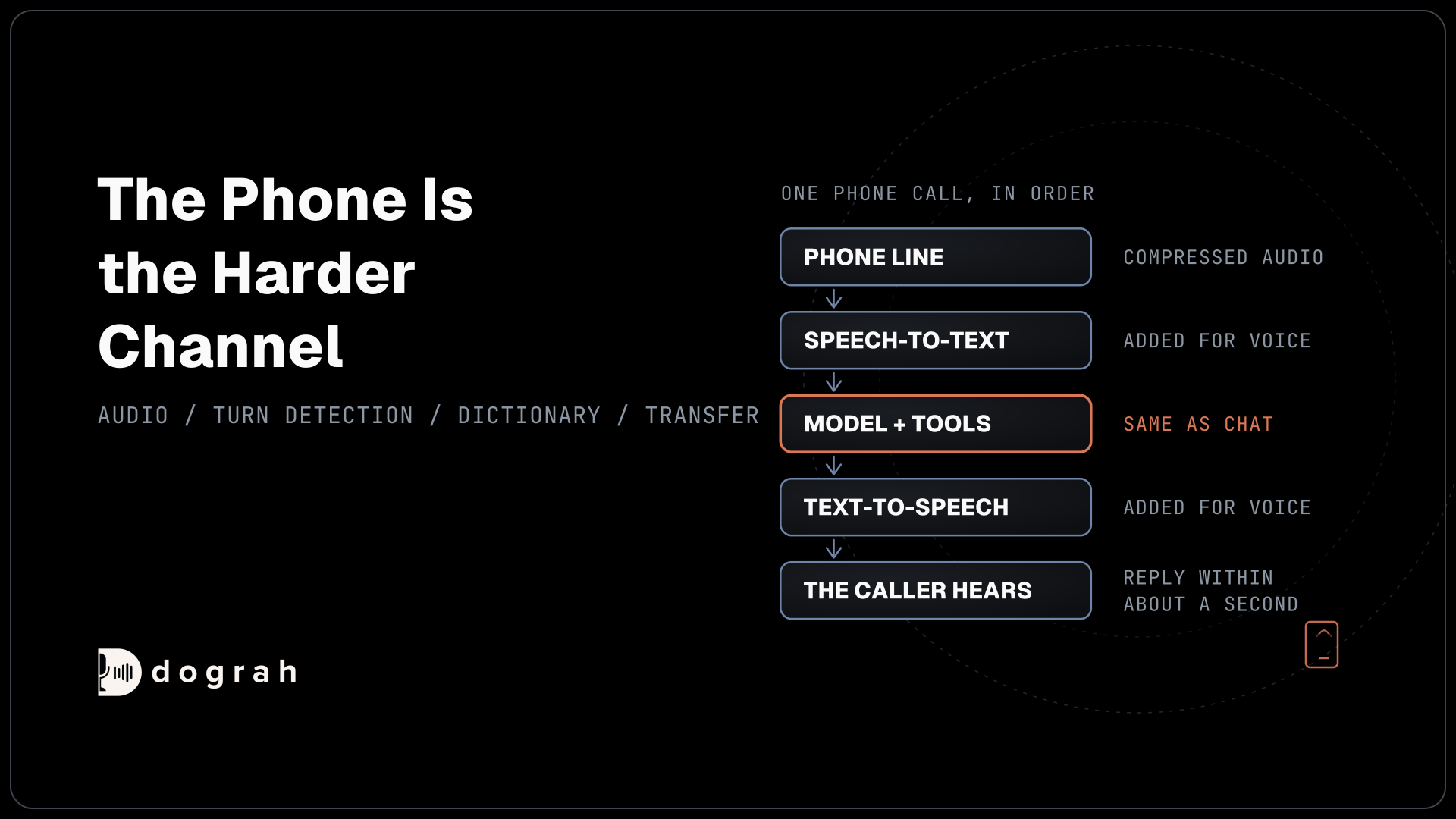
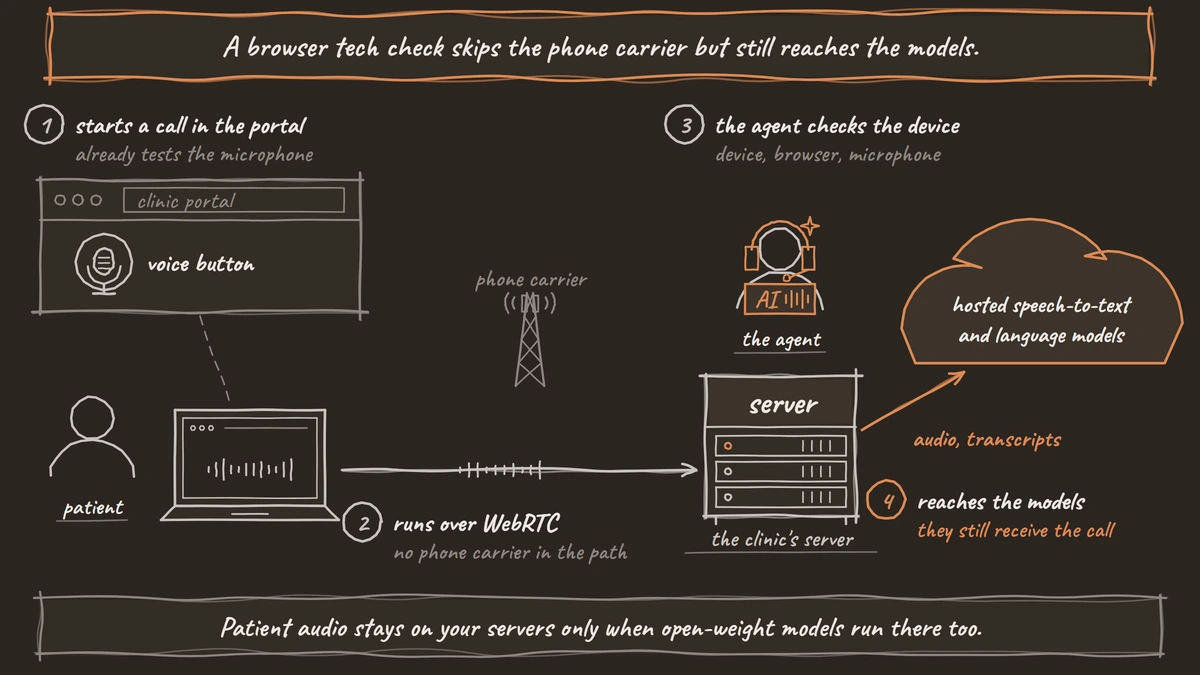
A browser call can do part of the check for you. Dograh's voice widget runs a live voice call inside a web page, so a patient who starts it from your portal is already testing the microphone in that browser. The call runs over WebRTC, with no phone carrier in the path. When a web caller needs a person, the agent writes a callback request to your system, since Transfer Call is for phone calls.
Where each telehealth call is stored
A self-hosted install keeps every saved copy of a telehealth call in storage you run. Each call leaves three recordings and a transcript in object storage, plus a call record in your Postgres database with the pre-call data, the phone numbers and the extracted fields. What counts as PHI on a voice agent call maps each copy to its location. Providers who want that storage under their own control can read about self-hosted voice agents for telehealth providers and how they verify patients first.
Two telehealth details change what lands there. Data passed in when a call starts is stored with the call record, even fields no prompt uses, so pass a patient reference into reminder calls and never the visit type or the join link. Dograh's server logs also record every tool call's inputs at the INFO level that Docker sets. A tool that asks your messaging provider to resend a join link should send a visit reference, so the link itself never reaches a log file.
Recordings, transcripts and logs stay for as long as your retention schedule says. Set that schedule on your storage, and when a patient asks for deletion, remove the call's record and files through your own process on the database and storage.
Join the Dograh Community
Dograh is an OSS alternative to Vapi. Join our Slack community for queries, releases, best practices & community interactions.
Who hears the call besides your team
Every outside company on the call is one more party to check for a business associate agreement (BAA). Run Dograh on your own servers and no BAA with Dograh is needed, because the platform never receives your call data. For the phone carrier, the answer follows what it stores, and Twilio is one of many that offer a BAA. A web call from your portal leaves the carrier out. If your servers sit in a cloud account, that cloud provider needs a BAA too.
The models are the bigger question. Dograh handles the call flow, tools and telephony for a visit call, while the speech and language models are picked separately. A hosted provider receives the audio, transcripts and tool results its service needs. Your own keys make the provider contract yours, yet the audio still reaches that provider, so patient audio stays on your servers only when open-weight models run there too.
Before the first visit call, turn telemetry off. A self-hosted install reports anonymous usage data by default until ENABLE_TELEMETRY=false is set and POSTHOG_API_KEY is removed. For the budget, self-hosting carries no per-minute platform fee, while the servers, model keys and phone minutes behind each visit call still cost money. Dograh Cloud charges a 1¢-a-minute platform fee.
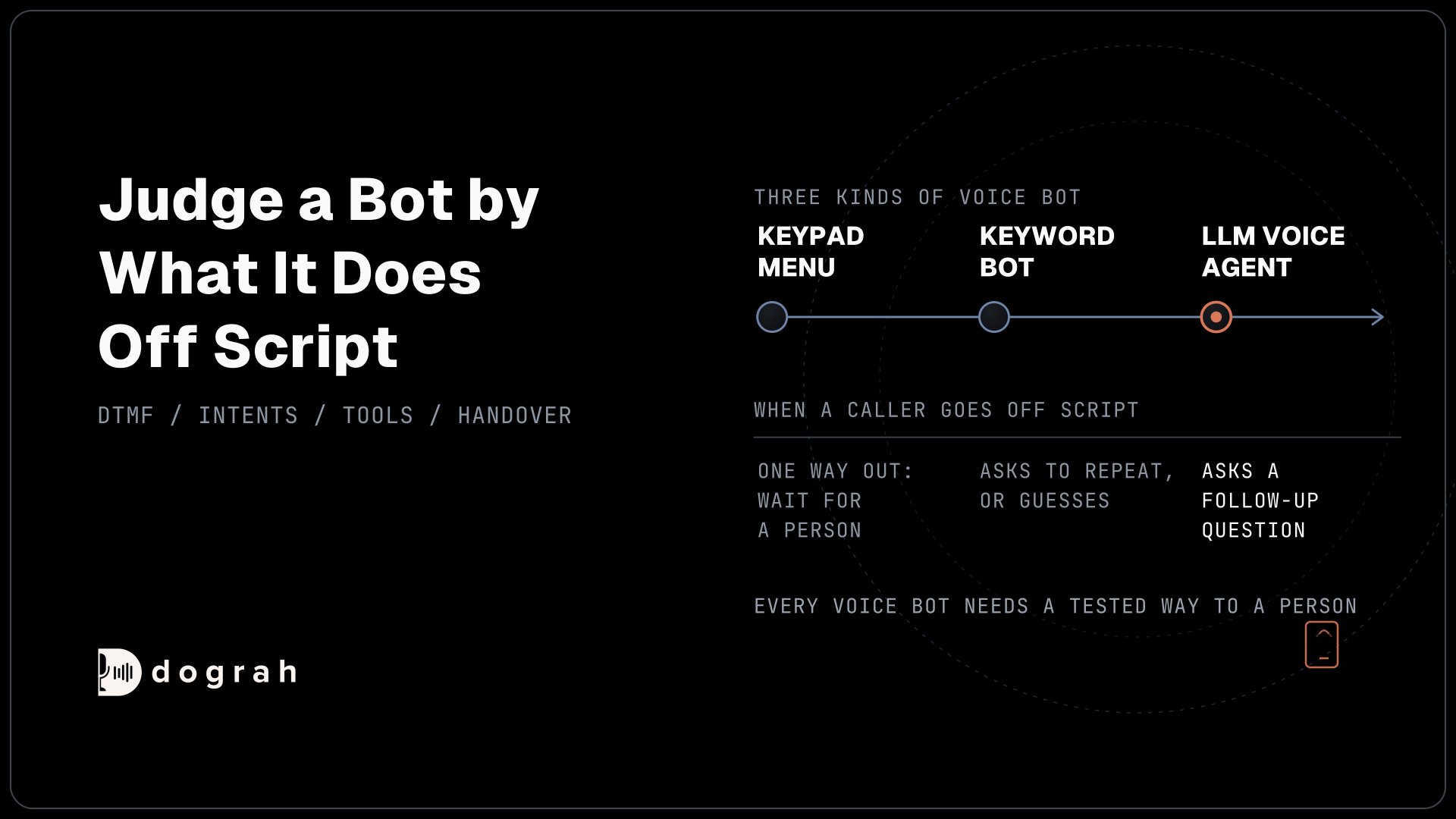
Transfers add listeners. Transfer Call works on Twilio, Telnyx, Plivo, Cloudonix and Asterisk ARI. The nurse line is dialed first, and the patient joins once a nurse picks up. On Twilio, the agent can speak a short introduction to both sides before joining them, and whoever in a ring group answers hears it, so keep it to the patient's first name and the topic. For emergencies, put a fixed line on a pathway's Transition Speech: "If this is a medical emergency, please call 911 now." Test that pathway with many phrasings before go-live.
Build the verify endpoint first. Every call here depends on it, and you can prove it on a test call before any patient hears the agent.
Glossary
- Audio-only visit
- A telehealth visit held by phone with no video. Medicare's flexibilities keep paying for some of them through December 31, 2027, so the phone line around telehealth keeps carrying PHI.
- Join link
- The web address a patient opens to enter a virtual visit, often tied to that one visit. It goes out from the clinic's own system by text or email and is never read aloud on a call.
- Web call
- A voice call that runs in the patient's browser over WebRTC instead of the phone network. It leaves the phone carrier out of the path, but a hosted model still hears the audio.
- 42 CFR Part 2
- The federal rule that protects records from covered substance use disorder programs more tightly than HIPAA does. A telehealth agent for such a program should stay off that topic and pass questions to staff.