
Dograh is an open-source alternative to Retell AI: a BSD-2-Clause voice agent platform anyone can self-host with Docker today. Retell sells on-prem only through Enterprise sales, as closed code with no published price or install package. Self-hosting Dograh keeps call records on your servers. The audio stays in too only when you also host the AI models.
Key Takeaways
- Retell sells on-prem through Enterprise sales; its platform code stays closed.
- Self-hosted Dograh with model APIs needs 8 GB RAM, 4 vCPUs, no GPU.
- Call audio stays on your servers only when you host the models too.
This post is part of our guide to Retell AI alternatives. The guide compares hosted and open-source options side by side. This post is for teams that want the code itself, and it explains what open source gives you now that Retell also sells on-prem.
On-prem is not open source
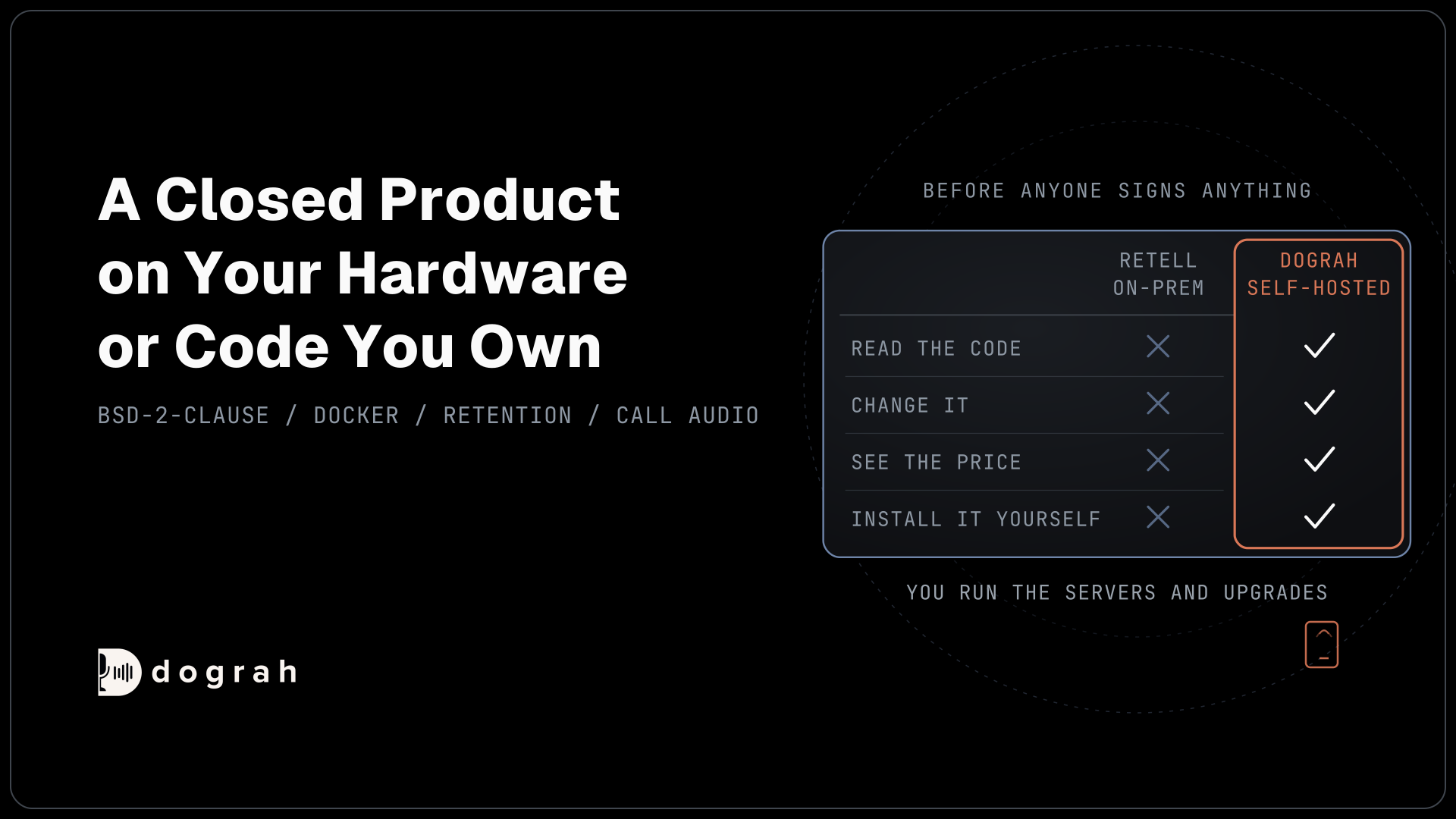
Retell now sells a way to run its platform inside your own infrastructure, so the real choice is between a closed product on your hardware and code you own.
Retell's enterprise security overview lists on-premises, VPC and air-gapped setups. The route in is an Enterprise sales conversation. Retell's pricing page does not mention on-prem, and Retell publishes no price or install details for it. The code stays closed in every setup: Retell's public GitHub holds SDKs and demo apps, with no platform code.
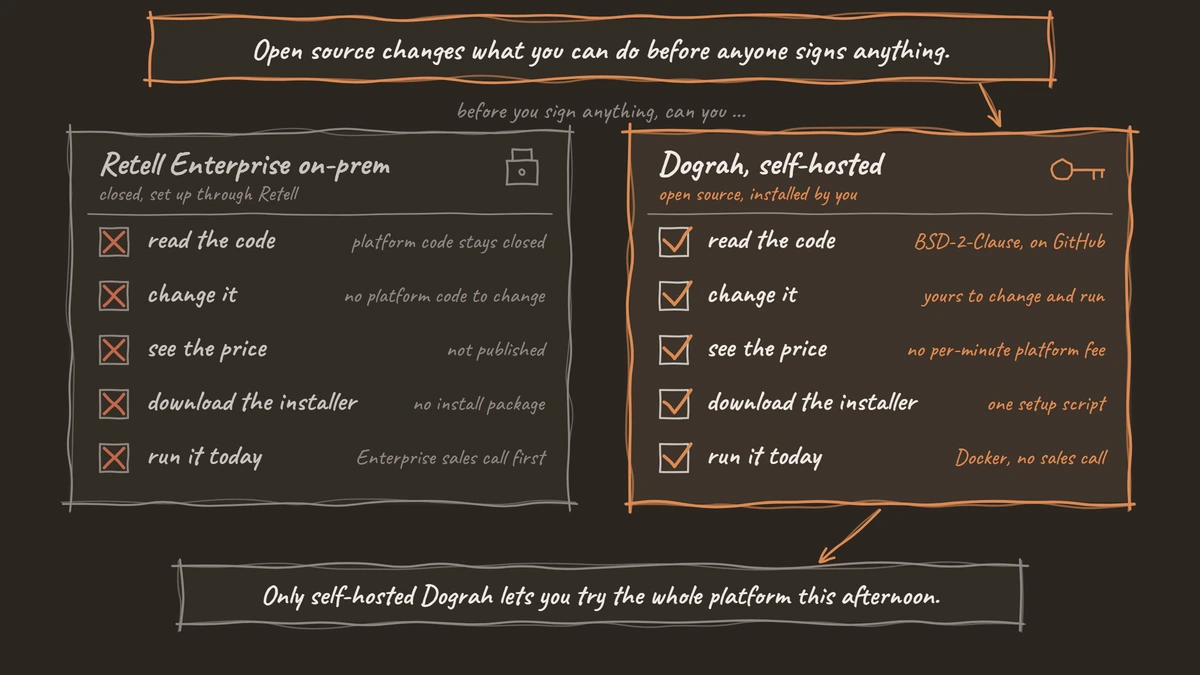
Open source changes what you can do before anyone signs anything. Dograh, an open-source, self-hostable voice agent platform, is released under BSD-2-Clause and has more than 5,800 GitHub stars. You can read the code, check what it does with a call, change it and run it on your own servers today. Nobody at Dograh has to approve the install.
Pipecat and LiveKit Agents are open source too, but they are frameworks: you write the agent in code and build the product around it. Dograh runs on a fork of Pipecat and ships that product, with a visual workflow builder, telephony, call transfer and QA included. Our post on the Open-Source Alternative to Vapi walks through that framework-versus-platform split in detail.
The table compares the four ways to run the two products. The feature-by-feature comparison lives in Dograh vs Retell AI.
| Option | Source code | Where it runs | Platform cost | What you get, and what's missing |
|---|---|---|---|---|
| Dograh, self-hosted | Open, BSD-2-Clause | Your own servers or on-prem, installed by you | No per-minute platform fee. You pay for servers, models and phone | The full platform, with a visual builder, telephony, call transfer and QA, and every call record in your own database. But you run the uptime, backups, certificates and upgrades yourself, with community support and no vendor SLA |
| Dograh Cloud | The same open code | Dograh's cloud | 1 cent a minute, plus models and phone | The same platform with no servers to run. But call records sit on Dograh's servers, as they would with any hosted platform |
| Retell, pay as you go | Closed | Retell's cloud on AWS | $0.055 a minute for Retell's voice engine (no separate speech-to-text charge listed), plus model, voice and phone | A hosted console, 20 concurrent calls included and a BAA at no extra fee. But it stores full call data by default and keeps it indefinitely unless you set a retention period, and it does not operate services in the EU |
| Retell Enterprise on-prem | Closed | Your infrastructure, set up through Retell | Not published | Retell's platform inside your network, with VPC and air-gapped options. But there is no public price or install package, and you cannot read or change the code |
Only the Dograh rows let you try the whole platform this afternoon. The two Retell rows differ in where the servers sit, and in both the code stays out of reach.
What you can run today without a sales call
A self-hosted Dograh install needs one ordinary server and one setup script.
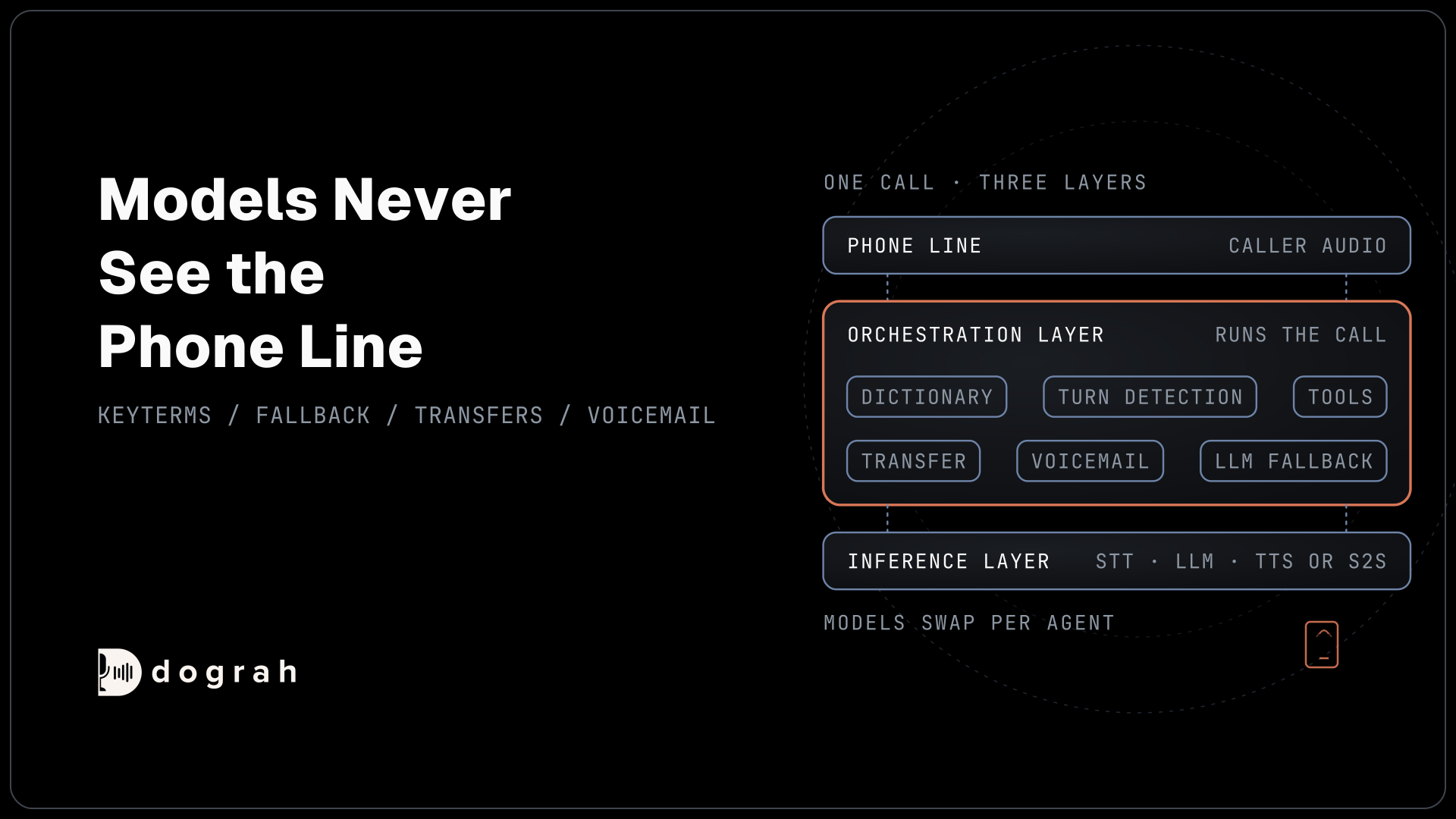
Dograh is the orchestration layer: it runs the call flow, tools and telephony, and the speech and language models are a separate layer you choose. That split is why the server can be small. A remote install needs at least 8 GB of RAM and 4 vCPUs, and with model APIs it needs no GPU.
The command below downloads Dograh's setup_remote.sh script, makes it executable and runs it with sudo on a fresh server:
curl -o setup_remote.sh https://raw.githubusercontent.com/dograh-hq/dograh/main/scripts/setup_remote.sh && chmod +x setup_remote.sh && sudo ./setup_remote.sh
What this does: It sets Dograh up with Docker Compose, including nginx for HTTPS and a TURN relay for browser audio. On a server with a public IP, the script also starts the stack, so you can open the dashboard and build a first agent.
Upgrades run on your schedule. On a server set up with the script, update_remote.sh moves you to a new release, then ./remote_up.sh restarts the stack. Until you run them, nothing changes under a live campaign. The Docker deployment guide lists the ports to open and the other install options, including a local setup for a laptop.

Open Source Alternative to Vapi / Retell
Self-hosted voice agent platform — no per-minute fees
dograh-hq/dograh
Star on GitHub
What changes when the platform is yours
Owning the platform moves several defaults from the vendor's settings page to yours.
Start with storage. Retell lets you choose how much it keeps, from everything down to basic call attributes, and set a retention period per agent. Its default is to store everything, recordings and transcripts included, and to keep data indefinitely until you change that. On self-hosted Dograh, call state, transcripts, recordings and logs go to your own PostgreSQL database and your MinIO or S3-compatible storage. Retention is whatever your own backup and deletion policy says.
Region follows the same pattern. Retell runs on AWS and states GDPR compliance, and it says it does not currently operate services within the European Union. Self-hosted Dograh runs in whichever data centre or cloud region you install it in. For a team with a data residency rule, that is often the deciding line. On Dograh Cloud, the records sit on Dograh's servers instead.
Then the bill. Retell lists no separate platform fee, but every minute carries a $0.055 voice engine charge, which appears to cover speech-to-text since Retell lists no separate charge for it, and the AI model, the voice and the phone line are billed on top. Retell includes 20 concurrent calls and charges $8 a month for each extra one. Self-hosted Dograh has no per-minute platform fee, and concurrency becomes capacity you provision on your own servers. Retell AI Pricing Explained works through the full Retell bill for three example businesses.
Where the call audio goes
Call records stay on your servers once you self-host. The audio stays in too only when you also host the AI models; with API keys it reaches the model provider, and the phone carrier carries the call either way.
Retell gives you two ways to own part of the path. You can bring your own SIP trunk at no extra charge, so the carrier contract stays yours. You can also run your own language model through Retell's custom LLM option: your server receives the live transcript and streams back what the agent should say. Retell still handles the call itself, including telephony, transcription, turn-taking and speech synthesis, so the audio passes through Retell in both cases. On its standard agents, Retell bills the model itself.
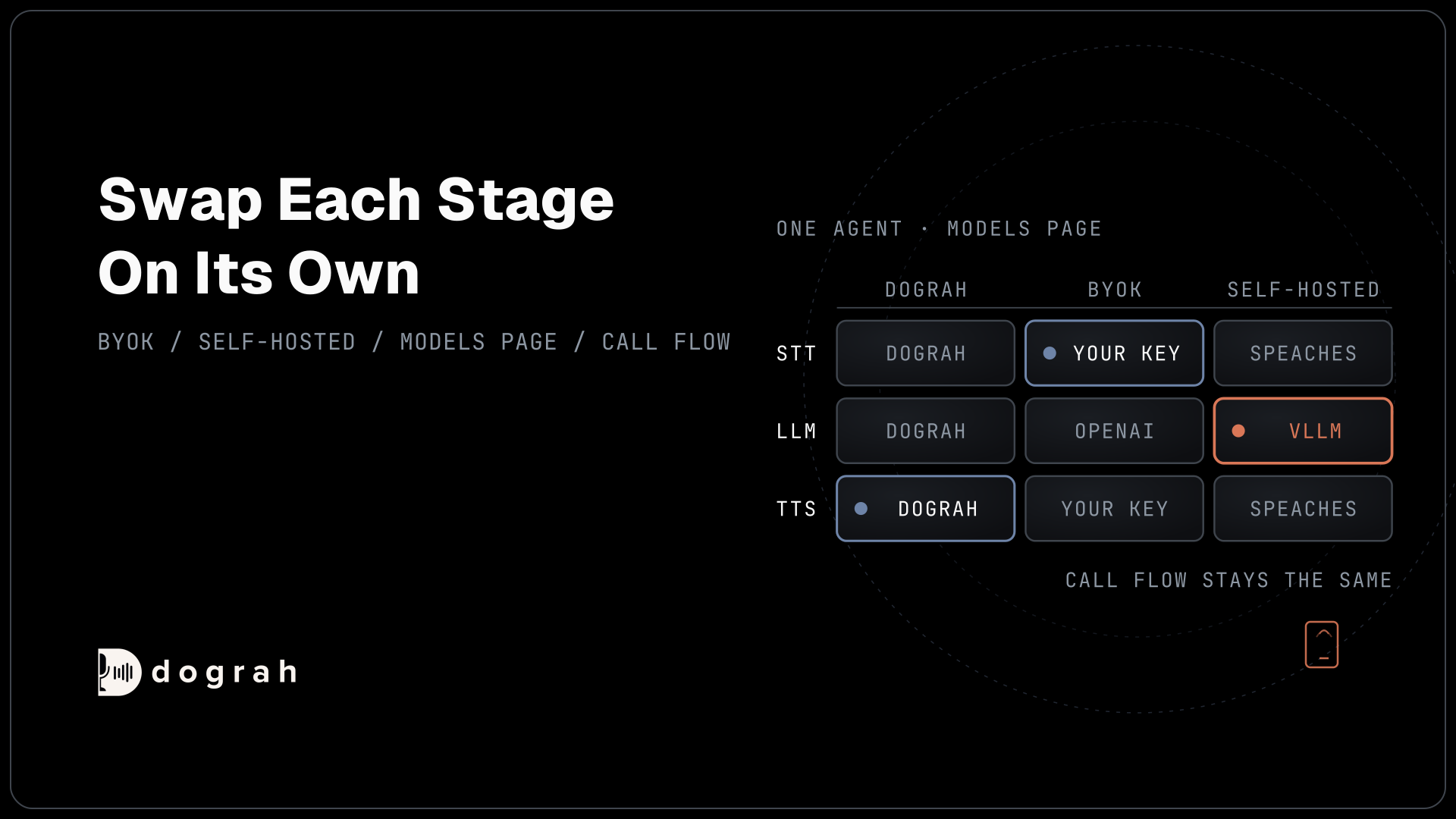
Dograh gives you three ways to fill the model layer: Dograh's own models, any supported provider through your own API key, or open-weight models you host. With the first two, the audio goes to that provider. Your own key changes who holds the contract, and the data path stays where it was. The third keeps the audio on your servers, and it brings a GPU onto your bill. Our guide to running voice AI on local, self-hosted models covers which models fit on which card.
The phone carrier is its own hop. A call over the public phone network reaches the carrier before it reaches your servers. Before you call any stack local, list every outside party the audio touches: carrier, speech-to-text, language model and voice.
Join the Dograh Community
Dograh is an OSS alternative to Vapi. Join our Slack community for queries, releases, best practices & community interactions.
What self-hosting still costs
Open source removes the licence and the platform fee, while the servers, the models, the phone minutes and the people stay.
The server is the small part. Model usage is billed by each provider you bring, or becomes GPU hours if you host the models. Phone minutes go to your carrier in every setup. The larger cost is a person who owns uptime, backups, certificates and upgrades. Self-hosted, you choose when to upgrade, with community support on Slack and SLAs available on Dograh Enterprise. Dograh publishes no compliance certification or BAA of its own, so the compliance work on a self-hosted install is yours.
That trade does not suit every team. If you need a signed BAA without running any servers, Retell signs one at no extra fee. If nobody on the team can look after a server, or you are running a short pilot, a hosted platform is the better fit for now, and you can move later.
Glossary
- Orchestration layer
- The software that runs a voice agent's call: the flow, turn-taking, tool calls and phone connection. Dograh is this layer; the speech and language models plug into it.
- Open-weight model
- A model whose weights you can download and run on your own hardware. Running one on your own servers keeps call audio off a provider's machines.
- Air-gapped setup
- A setup with no outbound network connection at all, not even for licensing or usage reports. It is the strictest form of on-prem.
- Custom LLM
- Retell's option for running your own language model server. Your server gets the live transcript and returns reply text, while Retell keeps handling the call audio.
If you want the code and someone on your team can look after a small server, install Dograh and connect the model keys you already use. Then rebuild one Retell agent and test it on a real phone call before you move any numbers. When you are ready to move live traffic, How to Migrate From Retell AI to Open-Source Voice AI covers the move step by step.