
On-prem voice AI for accounting firms runs the voice agent platform, speech-to-text, language model, voice and call storage on servers the firm controls. Under the FTC Safeguards Rule, each hosted company that hears a client call is generally a service provider to oversee. On-prem shortens that list; hosted providers under contract can meet the rule too.
Key Takeaways
- Each hosted company that hears a call is generally a Safeguards service provider.
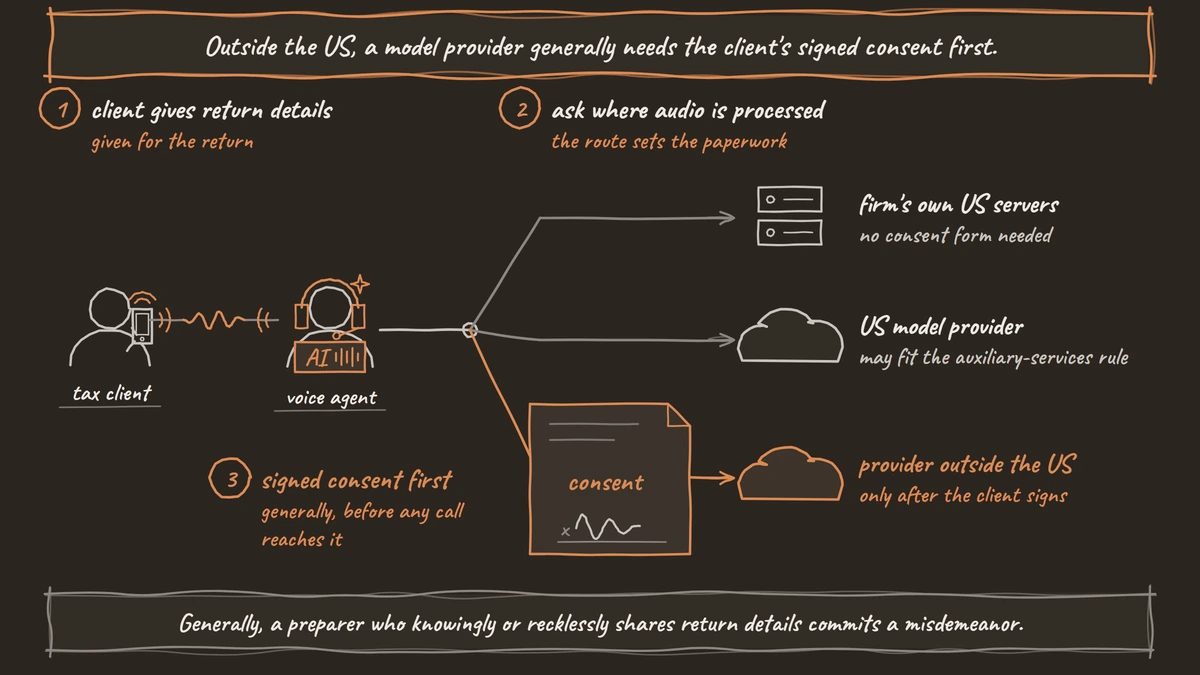
- Providers outside the US generally need the client's signed 7216 consent first.
- On-prem is a choice that shortens the list of providers to oversee.
This post is part of our guide to AI voice agents for tax and accounting firms. The guide's section "Where the calls run: IRC 7216 and the Safeguards Rule" ends on one line: "So on-prem is a choice that shortens the list of providers the firm has to oversee." This post counts every place a call goes and what running it in-house takes with Dograh, an open-source, self-hostable voice agent platform.
Every place a tax firm's call goes
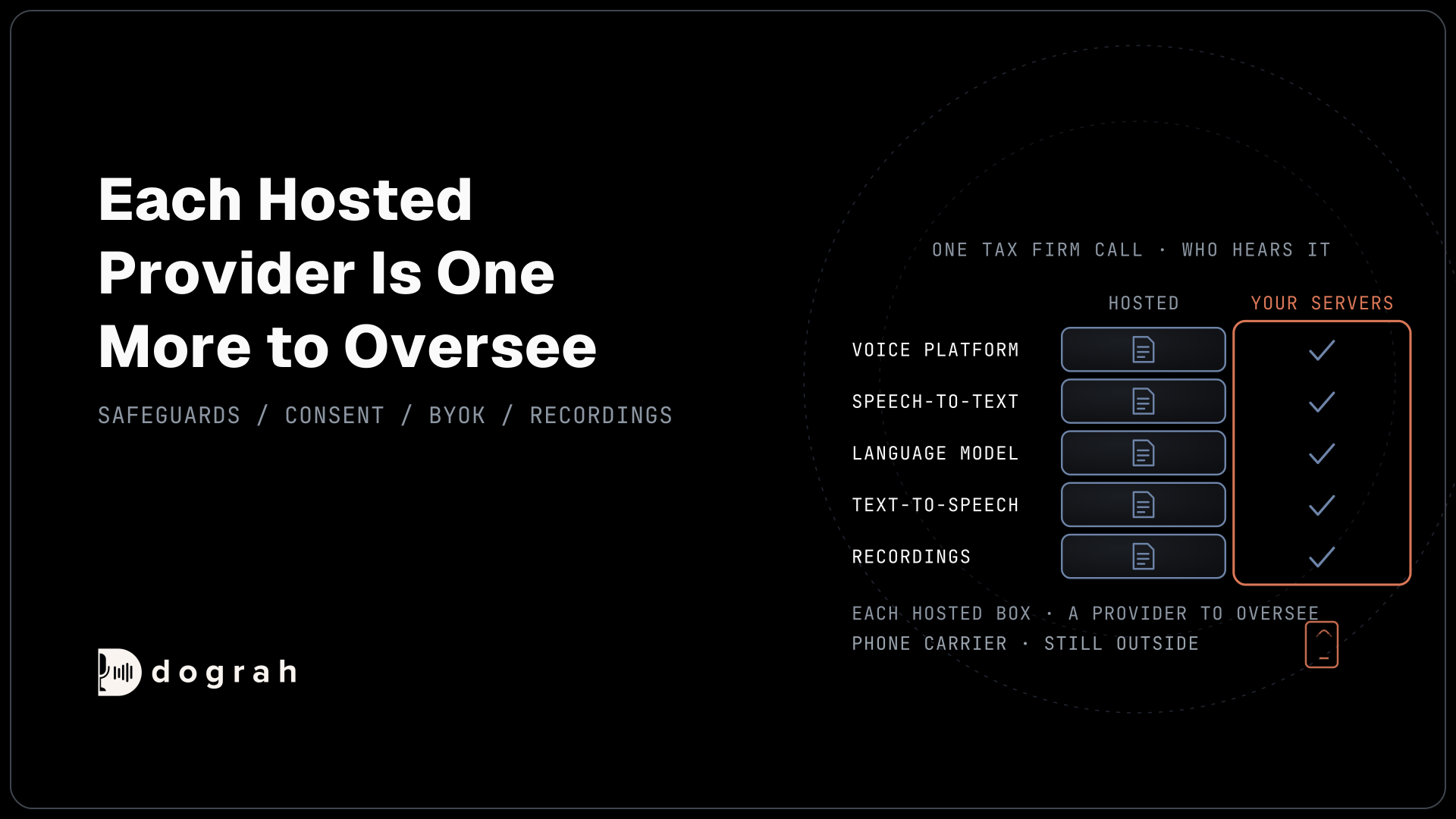
In a hosted setup, a single client call's audio and its records can pass through the voice agent platform, the speech-to-text provider, the language model, the text-to-speech provider, the phone carrier and the storage that keeps recordings and transcripts.
Each of those hears or keeps tax return information. Under the 7216 regulations, even a client's name, address or identifying number given for a return counts. A booking call already carries some, and a status call carries more. Wherever the calls run, one rule stays fixed: the agent never gives tax advice; any question about the caller's own return goes to a preparer.
Dograh is the orchestration layer: it runs the call flow, tools and telephony, and the speech and language models are a separate layer you choose. Self-hosting Dograh takes the platform off the list. Using a hosted model through your own key (BYOK) moves the contract, not the data, because the audio still reaches the provider. The call audio stays in-house only when the speech and language models run on your own servers too. Our post on why voice data needs to stay local explains what a recording exposes.
What the Safeguards Rule asks of each provider
The FTC Safeguards Rule treats a tax firm as a financial institution. The rule's definitions say: "An accountant or other tax preparation service that is in the business of completing income tax returns is a financial institution". A service provider is "any person or entity that receives, maintains, processes, or otherwise is permitted access to customer information through its provision of services directly to a financial institution that is subject to this part."
The rule's requirements then tell the firm to "Oversee service providers": pick ones "capable of maintaining appropriate safeguards", require them "by contract to implement and maintain such safeguards", and keep "Periodically assessing your service providers based on the risk they present".
The FTC's guide to the rule puts the weight plainly: "If your company brings in a service provider to implement and supervise your program, the buck still stops with you." IRS Publication 4557 gives preparers the same advice.
Read together, these duties can generally be met with hosted providers under contract, as long as the firm picks capable ones and keeps checking them. That is the big difference from a law firm, where a privilege waiver cannot be fixed by contract, as our post on on-prem voice AI for law firms explains. Each provider taken off the list is one less contract and one less yearly review. This is general information, not legal advice; confirm your position with counsel.
IRC 7216 and providers outside the US
Section 7216 of the Internal Revenue Code makes it a misdemeanor for a preparer who "knowingly or recklessly" discloses "any information furnished to him for, or in connection with, the preparation of any such return".
Under 26 CFR 301.7216-1, a "tax return preparer" includes "Any person who is engaged in the business of providing auxiliary services in connection with the preparation of tax returns". Under 301.7216-2(d)(1), a firm may pass return information to another preparer "located in the United States" for auxiliary services. The consent rules in 301.7216-3 add: "If a tax return preparer to whom the tax return information is to be disclosed is located outside of the United States, the taxpayer's consent under § 301.7216-3 prior to any disclosure is required."
Read together, a hosted model provider whose servers or staff sit outside the US generally needs the client's signed consent before any call reaches it, while a US provider may fit the auxiliary-services rule. Ask each provider where it processes audio. Models on the firm's own US servers avoid the question. Confirm your position with counsel.

Open Source Alternative to Vapi / Retell
Self-hosted voice agent platform — no per-minute fees
dograh-hq/dograh
Star on GitHub
What runs on the firm's own servers
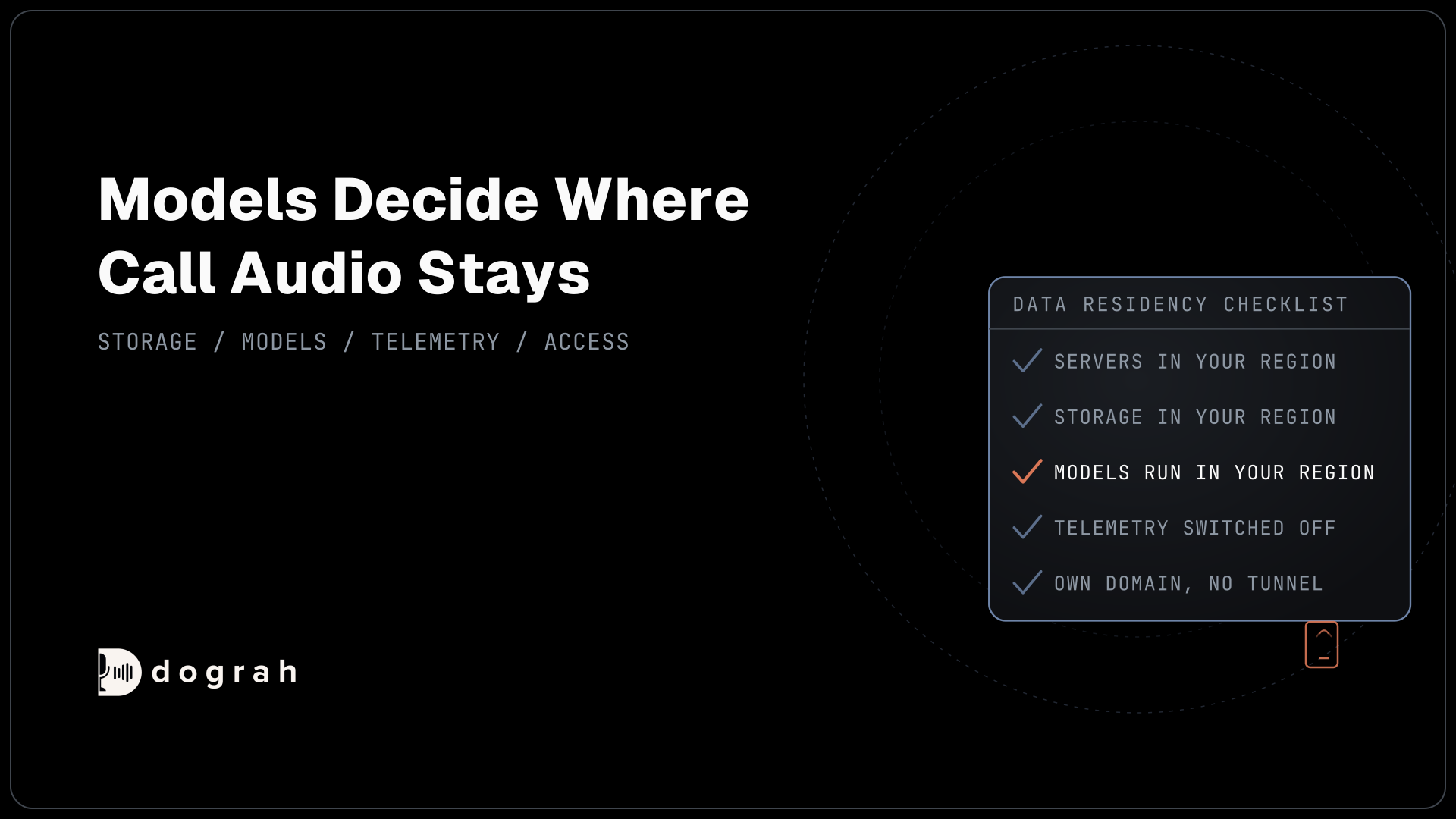
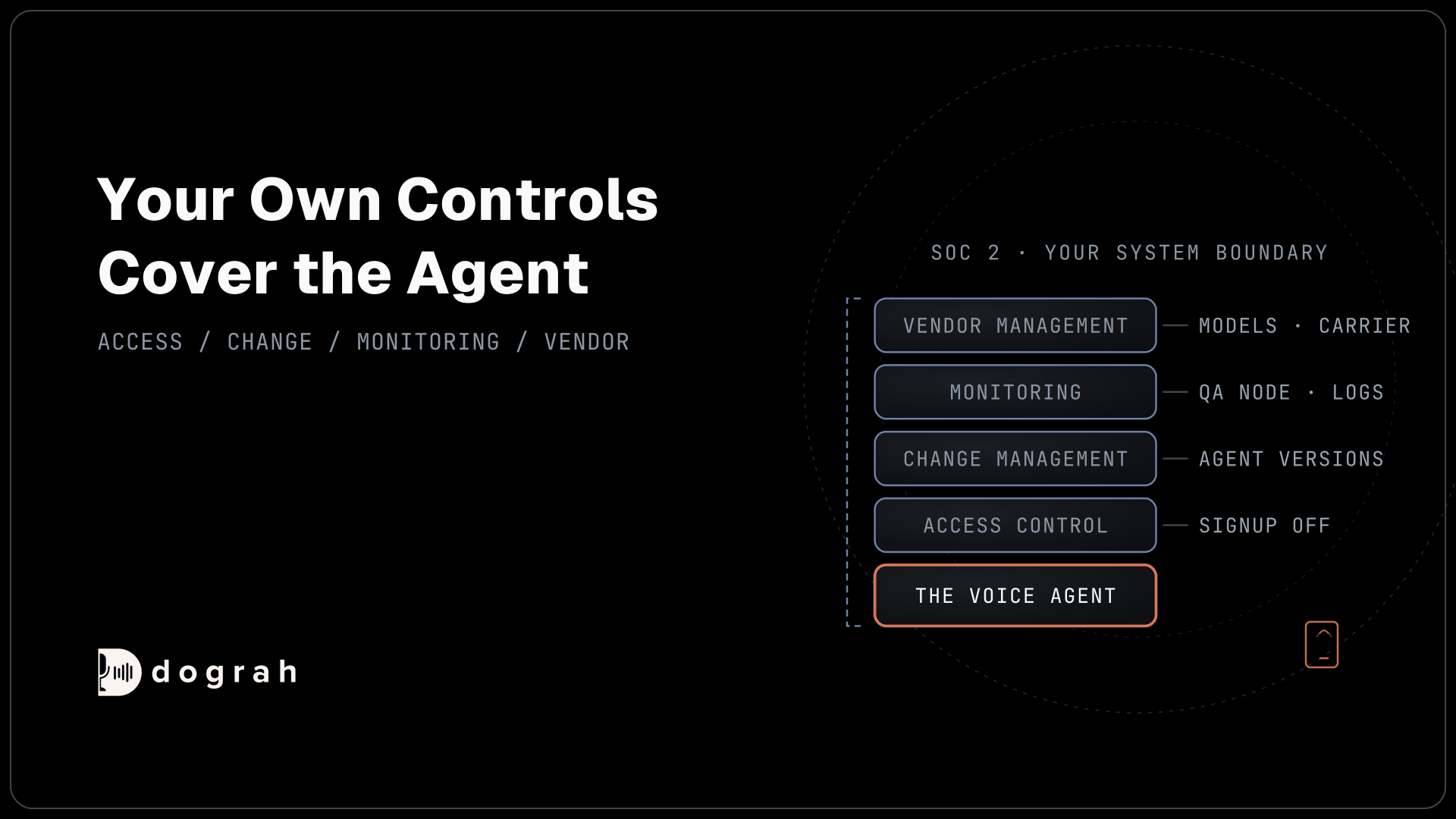
Full on-prem means two layers on the firm's hardware. Dograh installs with Docker Compose and keeps the call flow, tools, recordings and transcripts on the firm's servers. Because you self-host Dograh inside your existing compliance perimeter, you don't need a separate vendor review for Dograh. The speech and language model providers you choose may still need their own review, unless those models run on your servers too.
Dograh starts every account on its own managed models. To keep call audio away from Dograh, open Models, switch the Organization default to BYOK with your own speech and language providers (or local models), and check that no agent has its own model override.
The stack we recommend is Qwen3.8 27B as the language model, quantized to 4 bits, with Parakeet TDT 0.6B v2 for speech-to-text. A 4-bit 27B model at 64K context leaves about 4.2 GiB on a 24 GB card, and Parakeet needs roughly 2 GB, so both fit on one card. For the voice, Magpie TTS gives fixed voices under NVIDIA's own open model licence, which makes it open weights rather than open source. Chatterbox, under MIT, can clone a voice. Our guide to running voice AI on local, self-hosted models compares the options.
The phone side still needs a carrier to reach the public network. Asterisk ARI connects Dograh to a phone system the firm runs itself. Transfer Call works on Twilio, Telnyx and Asterisk ARI. It passes no summary by default; on Twilio it can play a short spoken introduction to both people. Write the details to your system with an HTTP API tool before the transfer. So a firm on its own Asterisk lines can still hand a call to a preparer.
Self-hosted Dograh runs 10 concurrent calls by default, adjustable with DEFAULT_ORG_CONCURRENCY_LIMIT. Set ENABLE_TELEMETRY=false, and remove POSTHOG_API_KEY from the api service in docker-compose.yaml (or set it to an empty value).
Recordings, transcripts and the firm's own controls
On-prem moves the security work to the firm, and the Safeguards Rule already asks for most of it. The rule tells the firm to "Protect by encryption all customer information held or transmitted by you both in transit over external networks and at rest" and to "Implement multi-factor authentication for any individual accessing any information system". On-prem, that covers every server in the call path.
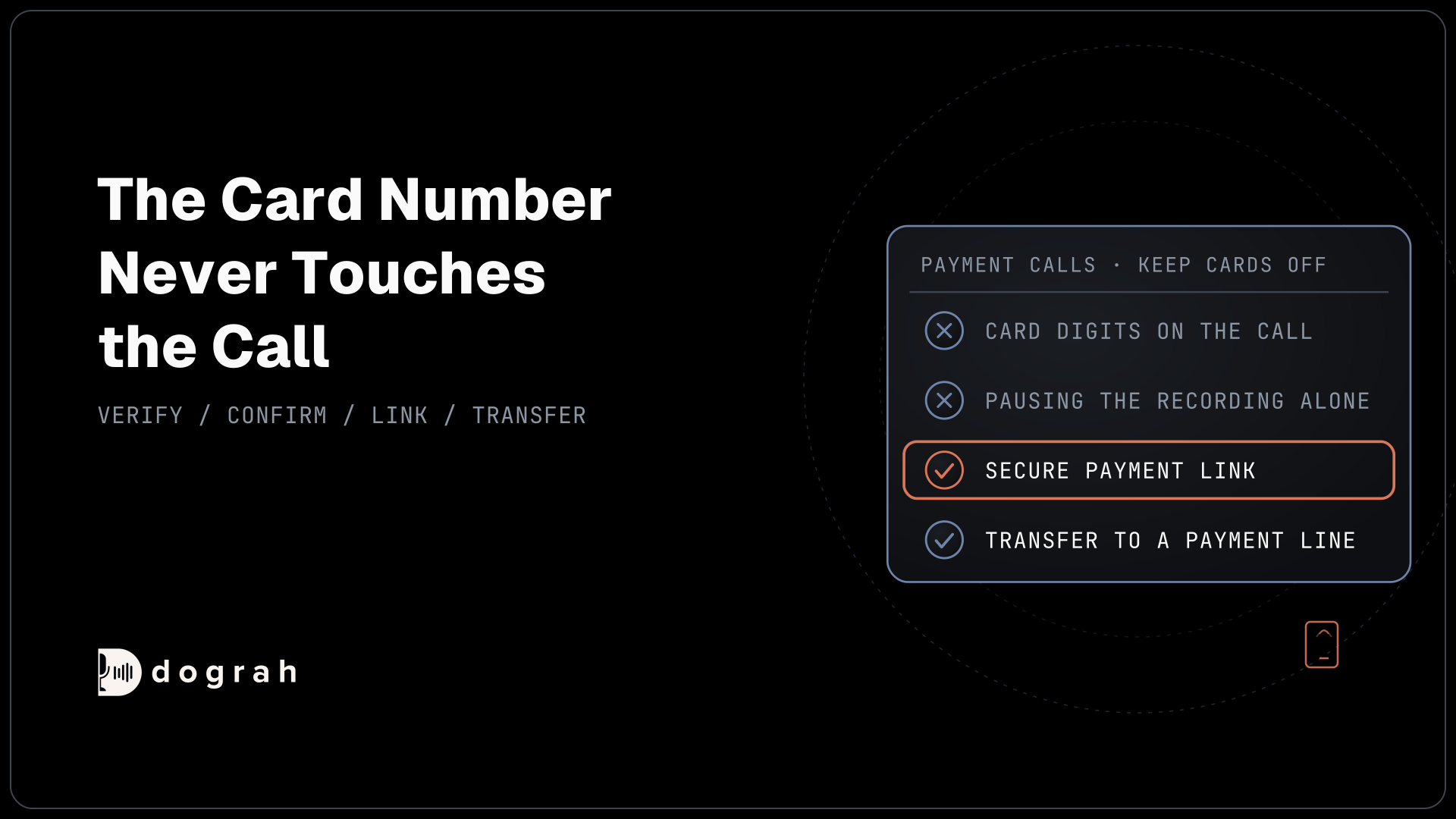
Recordings and transcripts keep whatever is said, so the call never asks for a full account, card or Social Security number; use a short check such as the last four digits, and send payment links by text or email from your own system. Dograh has no retention setting and deletes nothing automatically, so the firm deletes recordings and transcripts from its own storage under its own policy. Recording can be switched off only for the whole server, with ENABLE_CALL_RECORDING_UPLOAD, and transcripts are still saved.
Join the Dograh Community
Dograh is an OSS alternative to Vapi. Join our Slack community for queries, releases, best practices & community interactions.
When on-prem is not worth it
On-prem suits a firm whose calls read return details aloud and that already runs servers. It is a poor first step for a small firm with no one to patch them and manage access.
A firm that starts with booking calls, which carry little beyond a name and a time, can run them on Dograh Cloud, which handles the security work for you, under a reviewed contract. Calls that read status, missing forms or due dates can move to a self-hosted install once the firm is ready. The status calls in AI voice agents for tax-season call overflow test that line.
Self-hosted Dograh has no per-minute platform fee (servers, model keys and phone minutes still cost); Dograh Cloud has a 1¢-a-minute platform fee.
Glossary
- Service provider (Safeguards Rule)
- Under 16 CFR 314.2, any person or entity that receives, maintains, processes or is permitted access to customer information by serving a financial institution. A hosted voice platform or model provider on a tax firm's calls is generally one.
- Auxiliary services
- Under the IRC 7216 regulations, services connected with preparing returns that make the provider a tax return preparer. A firm may share return information with one located in the United States without the client's consent; one outside the US generally needs it.
- Tax return information
- Information a client or a third party gives a preparer for a return, down to name, address and identifying number. Nearly every call a tax firm's voice agent handles carries some.
- Open weights
- A model whose weights you can download and run on your own servers, whatever its licence. Running open-weight speech and language models in-house is what takes the model providers off a firm's list.