
AI voice agents for logistics and delivery are phone agents that confirm delivery windows, answer tracking questions, chase failed deliveries, call drivers and run carrier check calls, reading and writing the transportation management system during the call. They work best on calls where a decision is needed, with consent captured at order and the shipment data kept under your control.
Key Takeaways
- A text covers a notice. A call is for when a decision is needed.
- Consent captured at order is generally a safer basis than the carrier exemption.
- Self-hosting Dograh and the models keeps shipment data on your servers.
Every parcel is a potential phone call, and every one of those calls touches an address, a tracking number or a driver's phone. This guide covers each call a voice agent can take in logistics and delivery, and starts with the data those calls run on.
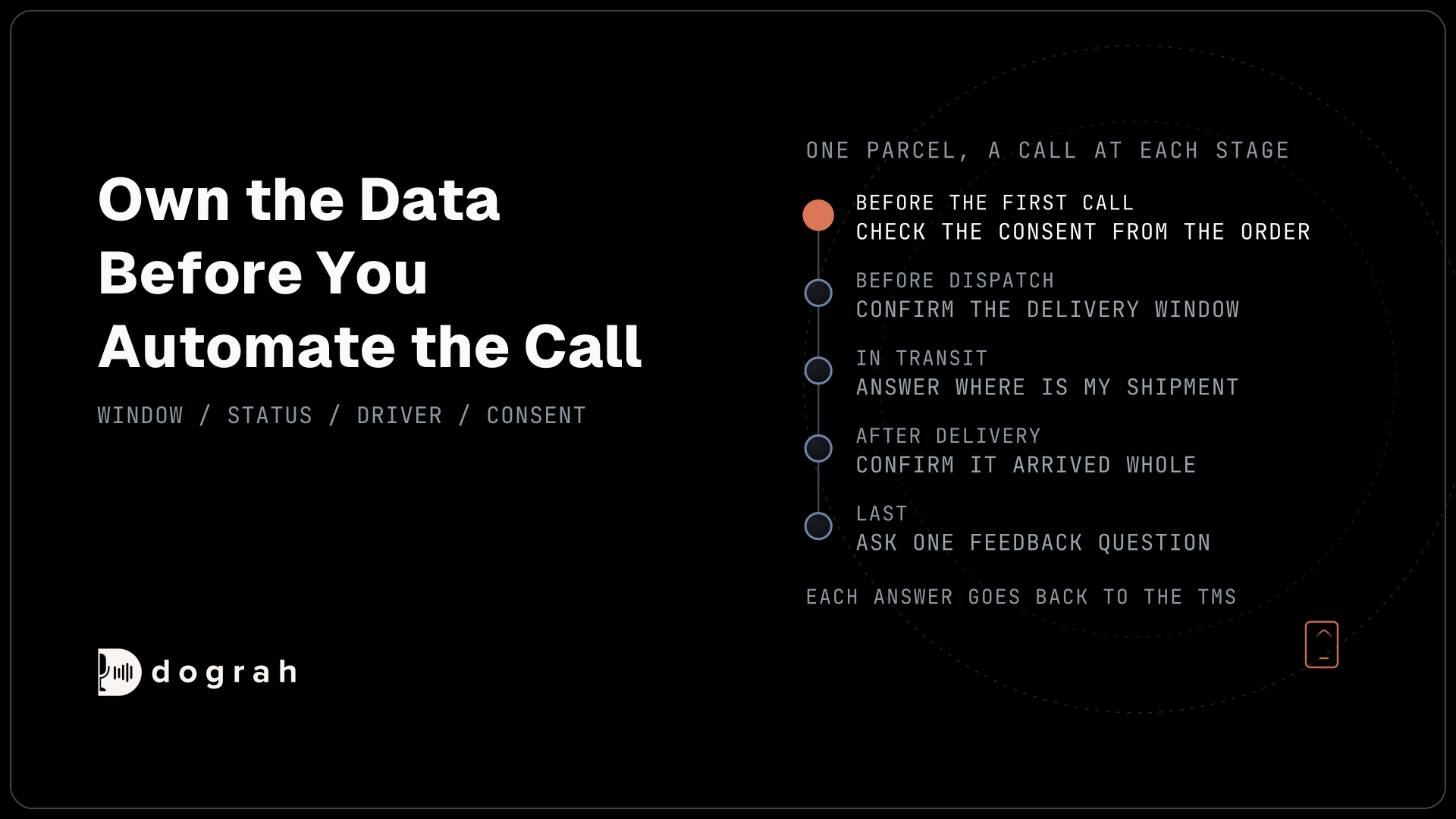
Own the data before you automate the call
The volume of delivery conversations is now too large for people alone, which is why the question of who holds the data behind them matters first. The Pitney Bowes Parcel Shipping Index puts US parcel volume at 23.1 billion in 2025, up 3.3% on the year, with Amazon Logistics the largest carrier by volume at 6.9 billion parcels and 31 billion forecast by 2031. Each of those shipments can generate a status question, a missed attempt or a reschedule.
A delivery call touches more sensitive data than most support calls. It reads the delivery address and the gate code. It reads the tracking number and the consignee's phone number. On the freight side it reads the driver's mobile number and, in a load booking, the rate. The transportation management system (TMS) is the system of record for all of it, and the voice agent is only as trustworthy as its connection to that system.
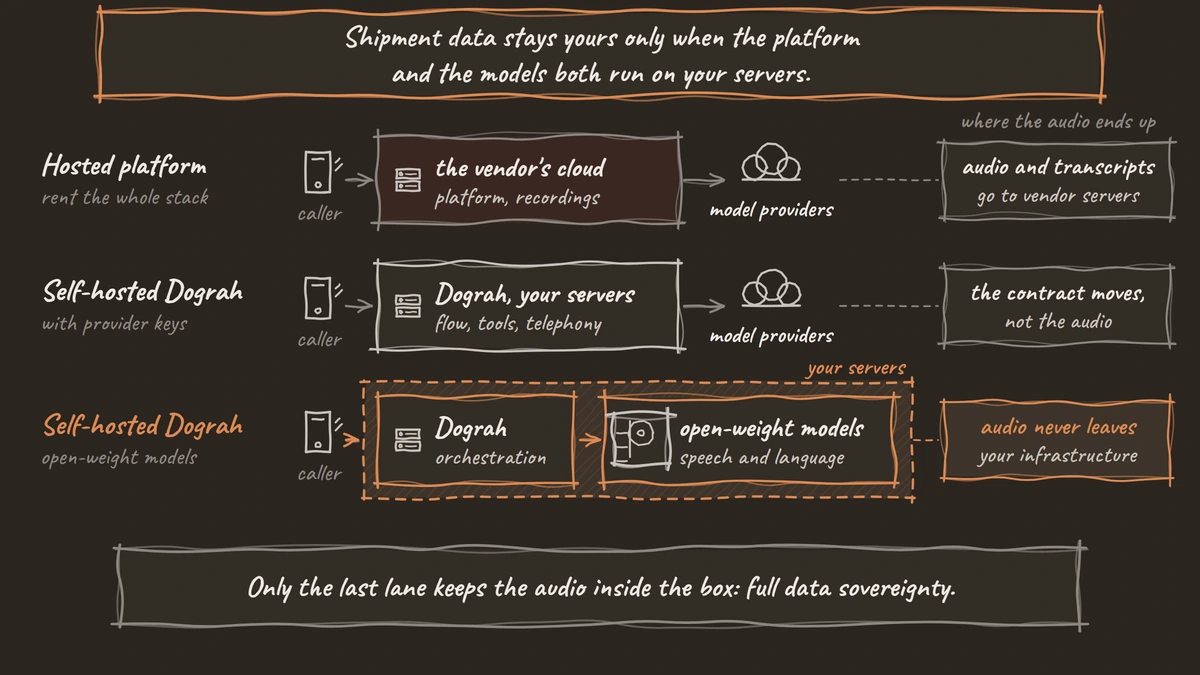
Some teams rent the whole stack: the phone platform, the speech models and the call recordings all sit with a vendor. The platform is configured rather than built, which saves time, and the audio, transcripts and every TMS lookup travel through servers the operator does not control. For a 3PL whose contracts promise customers that shipment data stays inside the company, that is a hard conversation at renewal time.
Dograh, an open-source, self-hostable voice agent platform, takes the other route. Dograh is the orchestration layer: it runs the call flow, tools and telephony, and the speech and language models are a separate layer you choose. An HTTP API tool reads the shipment from your TMS during the call. A webhook writes the outcome back after the call. Our guide to Integrating Voice Agents With Your Stack covers both mechanics in detail, so the clusters below link rather than re-teach them.
One condition applies to every "the data stays with us" sentence in this guide. Shipment data never leaves your infrastructure only when you self-host Dograh and run open-weight speech and language models on your own servers too. Bringing your own key to a hosted model moves the contract, not the audio. Our page on self-hosted voice AI for logistics and delivery operations shows what that setup looks like for shippers, 3PLs and carriers.
When to call and when to text
Most delivery messages should never be a phone call, and a voice agent program that ignores this annoys the people it is meant to help. In EZ Texting's 2026 Consumer Texting Behavior Report, a survey of 959 US mobile owners run by an SMS vendor, 56% said they prefer a text for delivery confirmations, and text edged phone as the preferred way to contact a business, 46% to 43%.
So the rule we apply across every cluster is simple. A notice with no decision attached goes as a text from your own delivery or order system, and no call is placed. The call is reserved for the moment a decision or an answer is needed: a new delivery window, a corrected address, wait or cancel on a backorder, a safe place for the parcel.
Some calls should not be a voice agent at all, even when a decision is needed. Anything that commits money the business has not pre-approved, anything that could damage a carrier relationship, and any dispute about a claim goes to a person. The agent collects the facts, writes them to the system and hands over. In Dograh the AI picks the path through the flow from written conditions, so a money decision is checked by your own system through an HTTP API tool before the agent says yes.
The agent also verifies before it discloses, on every call type below. A phone number finds the shipment record. It does not prove who is calling. The agent confirms an approved detail such as the order number or the postcode before it names an address or a delivery date.
Voice agents by business type: couriers, freight and the build-or-buy choice
The calls look different depending on whether you move parcels or trucks, so the guide splits by business type first. Couriers and last-mile fleets live with missed deliveries, wrong addresses, busy windows and cash-on-delivery refusals, and our post on AI voice agents for courier and last-mile delivery maps each of those problems to the call that fixes it. Brokers and carriers live with check calls, load booking requests and invoice follow-up, covered in AI voice agents for freight and trucking.
Freight is where production use is furthest along, at the very top of the market. C.H. Robinson reported in its January 2026 release that two AI agents now handle 95% of the follow-up calls when a scheduled less-than-truckload (LTL) freight pickup is missed, finding out why and rebooking it, and that they can make 100 calls and 100 decisions at the same time. HappyRobot, a closed logistics voice AI vendor, has agents in production at eight of the ten largest US brokers, according to the company's own figures as reported by Forkast. Those tools are built and priced for that tier.
Everyone below that tier has a different problem. A 40-truck carrier or a regional 3PL cannot fund an enterprise contract, and it cannot hand its rate conversations to a vendor either. That is the gap an open-source platform fills. Our tutorial on how to build a voice agent for logistics walks through an order-status agent step by step, and the roundup of the best AI voice agents for logistics compares seven platforms on the four questions that matter: open source, self-hosting, on-prem and cost.

Open Source Alternative to Vapi / Retell
Self-hosted voice agent platform — no per-minute fees
dograh-hq/dograh
Star on GitHub
Customer calls before the delivery
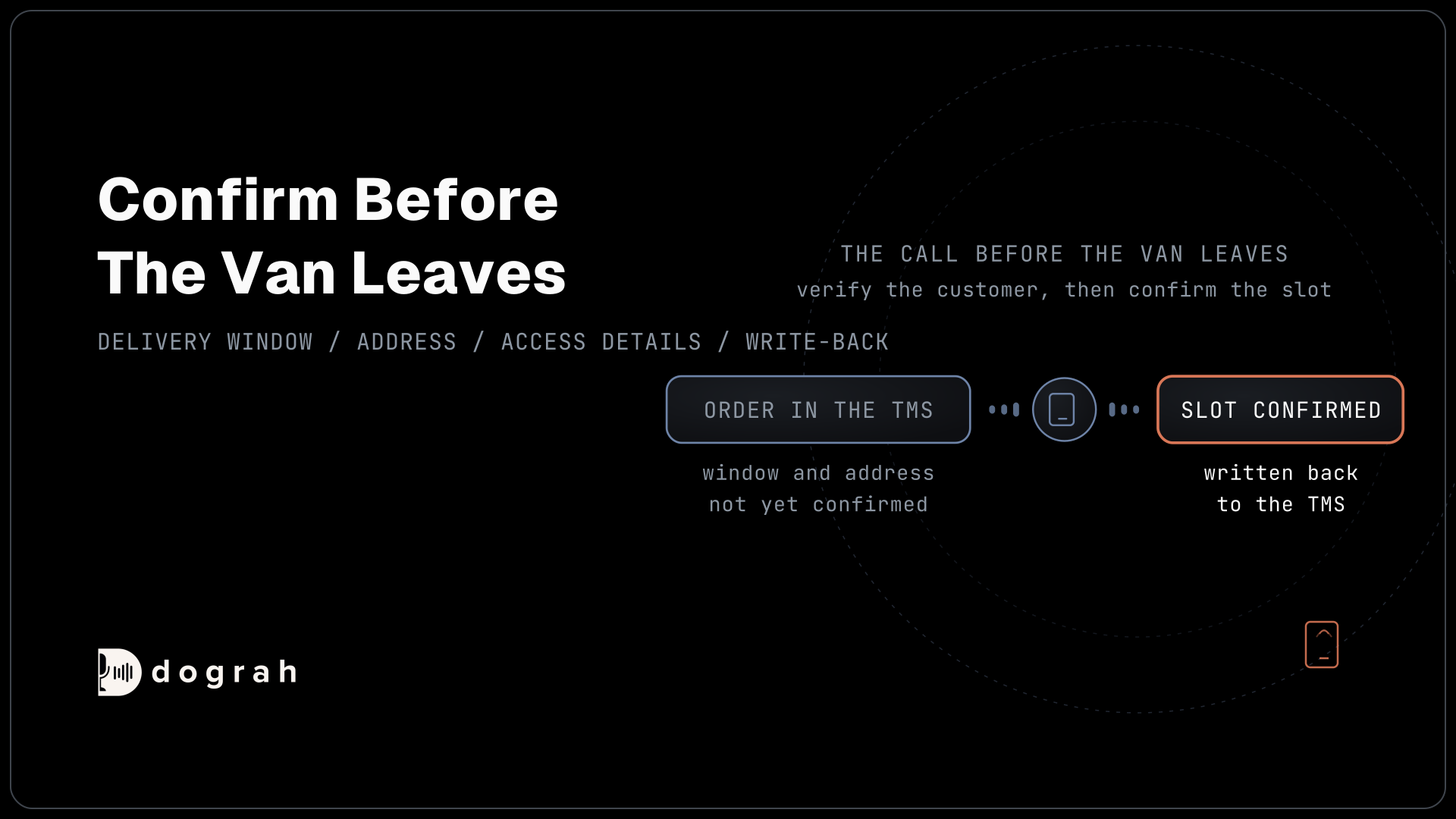
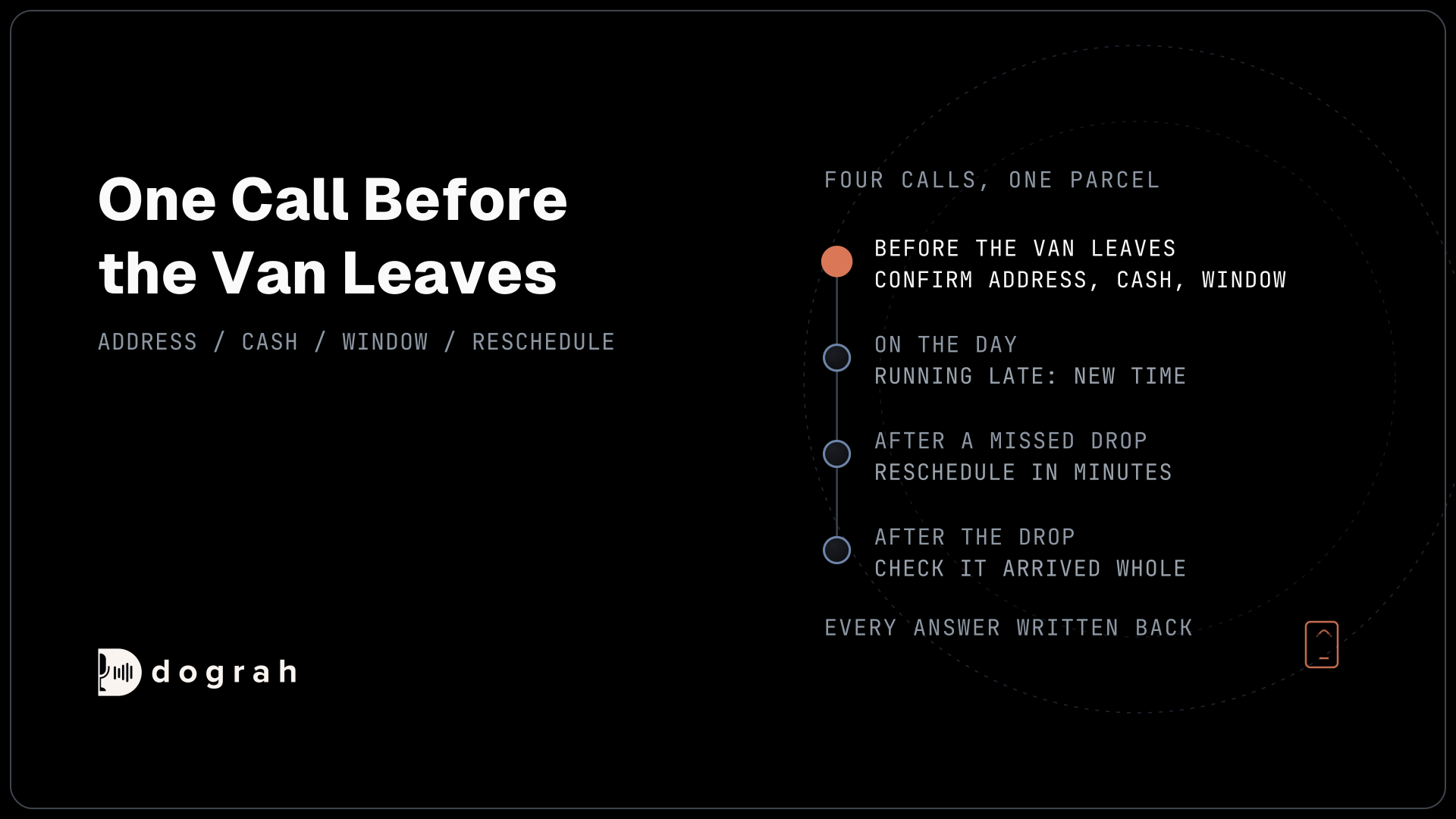
Two calls happen before a van is loaded, and both exist because a text cannot resolve them. The first is the delivery coordination call. The agent reads the order from the TMS through an HTTP API tool, confirms the delivery window, checks the address and captures access details such as a gate code or a loading-dock instruction. The confirmed slot goes back to the TMS by webhook, so dispatch plans from the same record the customer agreed to. Our post on AI voice agents for delivery coordination covers the flow, including the consent check that runs in the trigger before any outbound call is placed.
The second is the backorder and delivery-date update. When an item is backordered or its date moves, the customer has a decision to make: wait, change the order or cancel. The agent presents the revised date, records the answer as the customer stated it, and the webhook carries it to the order system. The post on AI voice agents for backorder and delivery-date updates explains why US sellers have a legal reason to make that offer, and keeps the rule text in its FAQs.
Both calls start from an event in your own system, not from a schedule. The order system or TMS decides that a call is needed and starts it through the API Trigger, with the order details passed as initial context so the agent's first sentence is the reason for calling. Pre-Call Data Fetch can refresh those details when the call starts.
Customer calls during the delivery
The calls in transit are the highest volume and the most tempting to automate badly, so each has its own post. Inbound "where is my shipment" calls go to an order status line that answers from live tracking data. The agent verifies the caller, reads the tracking, PRO or bill-of-lading number from the TMS or visibility platform through an HTTP API tool, and uses the tool's Messages setting to say something useful during the lookup. Exceptions go to a person after the agent has written the lookup to the TMS, so the person sees it on screen. That is AI voice agents for order status in logistics. Retailers taking the same call on the shop side should read AI Voice Agents for Order Status and Updates in E-commerce instead.
Outbound delay and exception alerts run the other direction. When tracking shows a delay, the tracking system starts a call through the API Trigger, the agent gives the new arrival time and offers a reschedule or a safe-place option. Because that call carries a decision, it needs consent captured at order, and the post on AI voice agents for delivery delay and exception alerts puts the consent check in the trigger logic.
Nights and weekends get their own line. An after-hours logistics agent answers status and rescheduling questions from live data overnight and captures urgent issues for the morning team by webhook, covered in AI voice agents for after-hours logistics support. And when the attempt has already failed, the call after it is a race against the clock. Our published post on the AI Voice Agent for Failed Delivery Rescheduling explains the two-hour rule and why most delivery voice agents dial blind.
Customer calls after the delivery
Four calls happen after the parcel has arrived, and each feeds a different system. The proof-of-delivery confirmation call checks that the package arrived and in good condition, records the answers as extracted variables and pushes them to the system by webhook. It is not evidence for a card dispute; its job is to catch damage and missing items early. Read AI voice agents for proof-of-delivery confirmation.
A "damaged" answer opens the claims flow. The claims intake call takes the tracking number and what is damaged or missing, then sends a message with a secure upload link for photos through an HTTP API tool, because documents are never collected inside the call. Any replacement below a value threshold is checked by your own claims system, never decided by the agent. That is AI voice agents for damaged and lost shipment claims.
Returns need a pickup window. The returns system stays the system of record, the carrier slot is read and booked through an HTTP API tool, and when no window fits the agent offers only the drop-off options your system lists. See AI voice agents for return pickup scheduling.
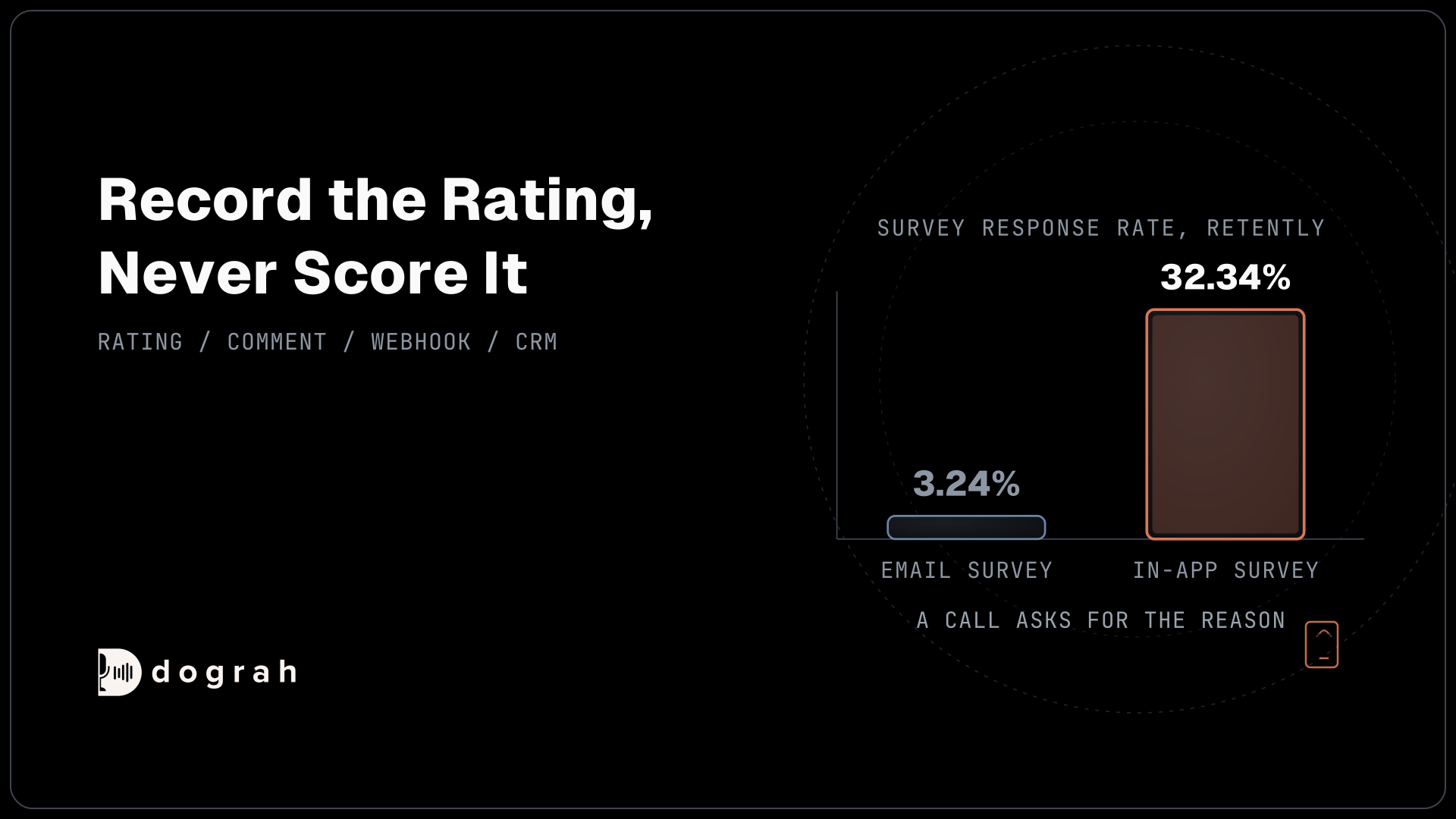
The feedback call comes last: a short survey with one rating and one open question, timed from the proof of delivery. The agent records the rating as stated and never computes a score. The post on AI voice agents for delivery feedback and CSAT surveys explains the timing and the carrier-versus-retailer blame split.
Join the Dograh Community
Dograh is an OSS alternative to Vapi. Join our Slack community for queries, releases, best practices & community interactions.
Calls to drivers
Calls to drivers follow different rules from calls to customers, because the person answering may be behind the wheel. A dispatch callback about a delay, a route change or an arrival time has to work hands-free: under a minute, yes-or-no questions, read-backs, and never a request to look at a screen. The agent is triggered from a stop event in the telematics, such as a geofence arrival, rather than mid-route, and it offers a callback when the driver has stopped. Dograh's settings help here: a lower maximum call duration, a shorter idle timeout, Smart Turn Analyzer for turn detection, a dictionary for depot and route names, and answer supervision for unanswered calls. The design is in AI voice agents for driver and dispatch callbacks, which also covers the hands-free rules that vary by jurisdiction.
The other driver call happens before hiring. A recruitment screening agent asks applicants about licence type, availability, area and experience, and books an interview for the ones who qualify. It tells applicants that an AI is screening, keeps the records, and never makes the hiring decision itself. State rules on AI in hiring are in the FAQs of AI voice agents for delivery driver recruitment screening.
These calls are where logistics is heading. Gartner predicted in its May 2025 release that by 2030 half of cross-functional supply chain management solutions will use intelligent agents that act on decisions on their own. The driver's phone is where many of those decisions will be spoken.
Freight calls between brokers and carriers
The check call is the most repetitive call in freight, and it is the one brokers automate first. The broker wants the truck's location, its arrival time and any problem with the load, and the carrier wants to stop being asked. The right design reads before it calls. The broker's TMS checks whether a geofence event is missing and, only then, starts a call through the API Trigger with the load details in the initial context. Once connected, Pre-Call Data Fetch can refresh the latest load data. The agent confirms the load or PRO number, records the carrier's stated location and ETA as extracted variables, and flags any conflict with GPS for a person rather than overwriting it. The full design is in AI voice agents for carrier check-calls and load updates.
Freight is also where the own-your-data argument bites hardest. A load booking call carries a rate. A broker that routes those conversations through a vendor's cloud is sharing its margins with that vendor's servers, whatever the contract says. Self-hosting keeps the recordings and transcripts of rate conversations on the broker's own machines.
Consent before any outbound delivery call
Every outbound call in this guide runs into one US statute, so this guide states it once and the clusters link here. 47 U.S.C. 227(b)(1)(A) makes it unlawful "to make any call (other than a call made for emergency purposes or made with the prior express consent of the called party) using any automatic telephone dialing system or an artificial or prerecorded voice" to a mobile number. The full text is on Cornell's Legal Information Institute. The Federal Communications Commission (FCC) treats an AI-generated voice as an artificial voice under that rule.
There is an exemption written for this industry, the package-delivery exemption. 47 CFR 64.1200(a)(9)(i) exempts "Calls made by a package delivery company to notify a consumer about a package delivery", on strict conditions. The notice goes only to the recipient's number. It carries no marketing. It is "generally one minute or less in length". The company sends one notice per package, offers an opt-out and honours it within six business days.
Two things follow, generally. Most readers of this guide are shippers, 3PLs and retailers, so the exemption does not cover their calls at all. And a call that offers a reschedule or a safe place is a conversation, which sits outside a one-minute notice. So the safer basis in most cases is consent captured at order or sign-up, stored against the phone number and checked by the trigger before the call is placed. A spoken request to stop is recorded as a revocation and written back to the system.
This is informed commentary, not legal advice. The state rules, the FCC's ruling dates and the penalty figures are in our US post, AI voice agents for logistics and delivery in the US, and in the FAQs below. Confirm your own position with counsel before the first outbound campaign.
Country, language and where the platform runs
The last group of posts covers the three questions that change the design without changing the call. The first is country. The US post above carries the consent rules and the state calling laws. Teams outside the US will find the flow design identical and the legal sections replaced by their own rules.
The second is language. Spanish-speaking customers in the US, Mexico, Latin America and Spain hear the same order status and delay calls, with different verification wording, different handling of numbers and addresses, and a switching problem when a caller moves between Spanish and English mid-call. Dograh follows the switch when speech-to-text is set to multilingual auto-detect with English and Spanish as language hints and the prompt tells the agent to answer in the caller's language, and the safe rule when the language is unclear is to ask, then switch, or hand off. Our Spanish AI voice agents for logistics and delivery post names only the speech providers verified to support Spanish.
The third is where the platform runs. Self-hosting Dograh in your own cloud already gives data ownership for most logistics companies. On-prem is worth the servers and upkeep when the cargo is high-value, or when customers or contracts require it, for example pharma, defence or government shipments, or enterprise shippers whose security reviews demand it. No logistics regulation forces on-site data, so our post on on-prem voice AI for logistics sizes the servers and the GPU and says plainly when a hosted or self-hosted cloud setup is enough. The model side of that decision is covered in Running Voice AI on Local, Self-Hosted Models.
Start with one read-only call, usually the inbound status line, on a real phone number rather than a browser test, because the phone path changes how the speech model hears the caller. Run QA on a sample of live calls, widen the agent's authority only as the transcripts earn it, and keep the TMS as the single system of record throughout. Our post on Testing Voice Agents Before You Go Live gives the test order.
Each call above has its own deep dive:
- AI Voice Agents for Courier and Last-Mile Delivery
- AI Voice Agents for Freight and Trucking
- How to Build a Voice Agent for Logistics
- Best AI Voice Agents for Logistics
- AI Voice Agents for Delivery Coordination
- AI Voice Agents for Backorder and Delivery-Date Updates
- AI Voice Agents for Order Status in Logistics
- AI Voice Agents for Delivery Delay and Exception Alerts
- AI Voice Agents for After-Hours Logistics Support
- AI Voice Agent for Failed Delivery Rescheduling: The 2-Hour Rule
- AI Voice Agents for Proof-of-Delivery Confirmation
- AI Voice Agents for Damaged and Lost Shipment Claims
- AI Voice Agents for Return Pickup Scheduling
- AI Voice Agents for Delivery Feedback and CSAT Surveys
- AI Voice Agents for Driver and Dispatch Callbacks
- AI Voice Agents for Delivery Driver Recruitment Screening
- AI Voice Agents for Carrier Check-Calls and Load Updates
- AI Voice Agents for Logistics and Delivery (US)
- Spanish AI Voice Agents for Logistics and Delivery
- On-Prem Voice AI for Logistics
Glossary
- TMS
- The transportation management system that holds every shipment, carrier and delivery record. In this guide it is the system of record: every call reads from it and writes its outcome back to it.
- Package-delivery exemption
- The FCC rule at 47 CFR 64.1200(a)(9)(i) that lets a package delivery company place one short notification call per package without prior consent, under strict conditions.
- Pre-Call Data Fetch
- Dograh's Start Call setting that posts the caller's and the agent's numbers to your API when the call starts and loads the reply into the agent's context.
- Prior express consent
- The TCPA standard for an automated or AI-voice call to a mobile number: the person gave the number for this kind of call, for example at checkout. A marketing call needs the stricter written form.