
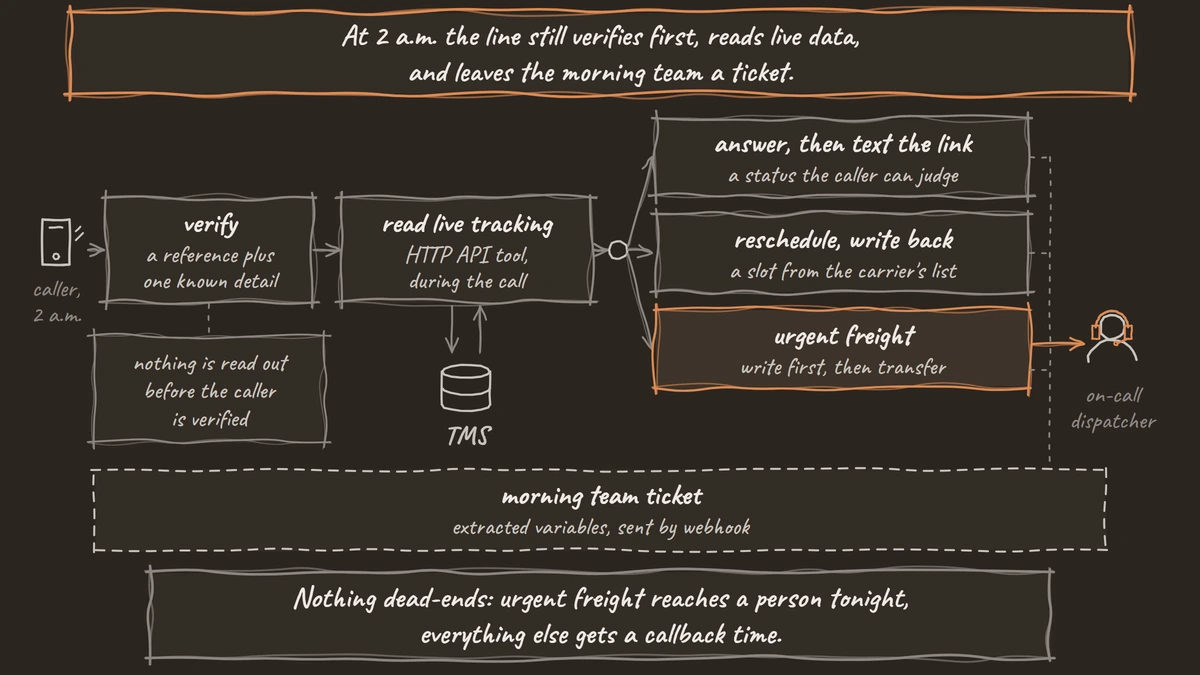
An AI voice agent for after-hours logistics support answers the overnight and weekend line when the desk is closed. It verifies the caller, reads live tracking from the transportation management system, books a reschedule from carrier data, hands urgent freight to an on-call person and leaves the morning team a ticket with every answer it recorded.
Key Takeaways
- Verify the caller before reading a single shipment detail, at any hour.
- Urgent freight goes to a person. Everything else becomes a ticket with a callback.
- The morning team gets extracted variables by webhook, not a voicemail to replay.
This post is part of our guide to AI voice agents for logistics and delivery. The guide places this call among the customer calls during the delivery, as the overnight line that answers status and rescheduling questions from live data and sends urgent issues to the morning team. In Dograh, an open-source, self-hostable voice agent platform, the overnight line is one flow that reads live tracking during the call and leaves a ticket for the morning team by webhook.
What the overnight line has to answer
The calls that arrive after the desk closes are the same calls that arrive during the day, with less patience behind them. A consignee wants to know whether tomorrow's delivery is still on. A shipper is chasing a pickup that did not scan. A driver is standing at a closed gate. A third-party logistics provider's (3PL's) customer has a freight exception that cannot wait until nine.
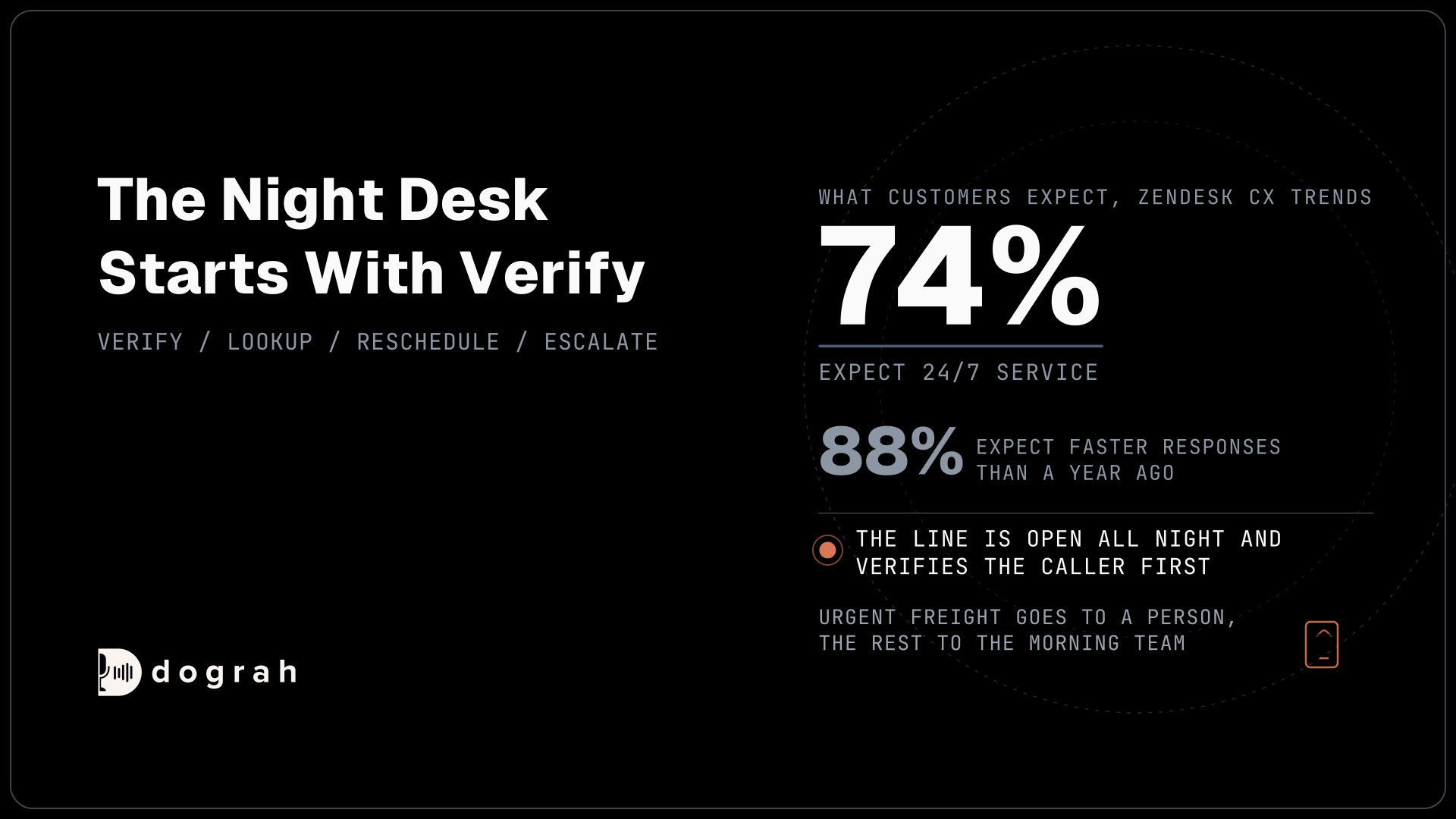
Expectations have moved. In Zendesk's CX Trends 2026 report, 74% of consumers say that because of AI they now expect customer service to be available 24/7, and 88% expect faster response times than a year ago. In Sendcloud's E-commerce Delivery Compass 2025, a survey of 1,000 UK shoppers, 85.4% expect to be told immediately when an order is delayed and 91% want a simple, direct way to reach support.
Not every one of those needs is a phone call. A tracking link with no decision attached is a text job for your delivery system, not a call. The call is for the person who still phones at 2 a.m. because they need an answer now, or because something has to change, such as a delivery window or a load that has to move tonight.
Verify first, even at 2 a.m.
The overnight agent follows the same order as the daytime one: greet, verify, then disclose. A phone number finds the record. It does not prove who is calling, and a shipment's address and contents are personal details.
When the call starts, Pre-Call Data Fetch posts the caller's number and the agent's number to your endpoint and loads the reply into the call's context. For an inbound status line that reply is the list of open shipments on that number, so the agent already knows there are two deliveries due tomorrow before it says hello. The lookup has a 10-second timeout and the call carries on without it if your endpoint is slow.
What the agent does with that knowledge is ask, not tell. It asks for the tracking or order reference and one detail the caller should know, such as the delivery postcode, and only then reads the status. The daytime version of this check is the subject of our post on AI voice agents for order status in logistics; the night version is identical, because the risk does not sleep either.
Reading live tracking data on the call
The status answer comes from your own systems, read during the call. In Dograh, the lookup is an HTTP API tool attached to the step that handles the question. The tool's description tells the AI when to call it, the request carries the verified reference, and the response from your transportation management system (TMS) or carrier API becomes the sentence the caller hears.
A carrier API can take a few seconds to answer. The tool Messages, set on the tool's own page, cover that gap: a start announcement such as "let me pull up that shipment" and delayed updates if the response is slow. Text Messages do not play on speech-to-speech models, so an agent running one uses audio variants or a cascade setup. The request-and-response pattern, including how the reply reaches the agent's next sentence, is covered in Webhook-Driven Voice Agents: Real-Time Data In and Out.
The answer should also say how fresh it is. A "last scanned 19:40 at the Memphis hub" is a better overnight answer than "in transit", because the caller can judge it, and because the agent is reading a record rather than guessing.

Open Source Alternative to Vapi / Retell
Self-hosted voice agent platform — no per-minute fees
dograh-hq/dograh
Star on GitHub
Rescheduling from carrier data overnight
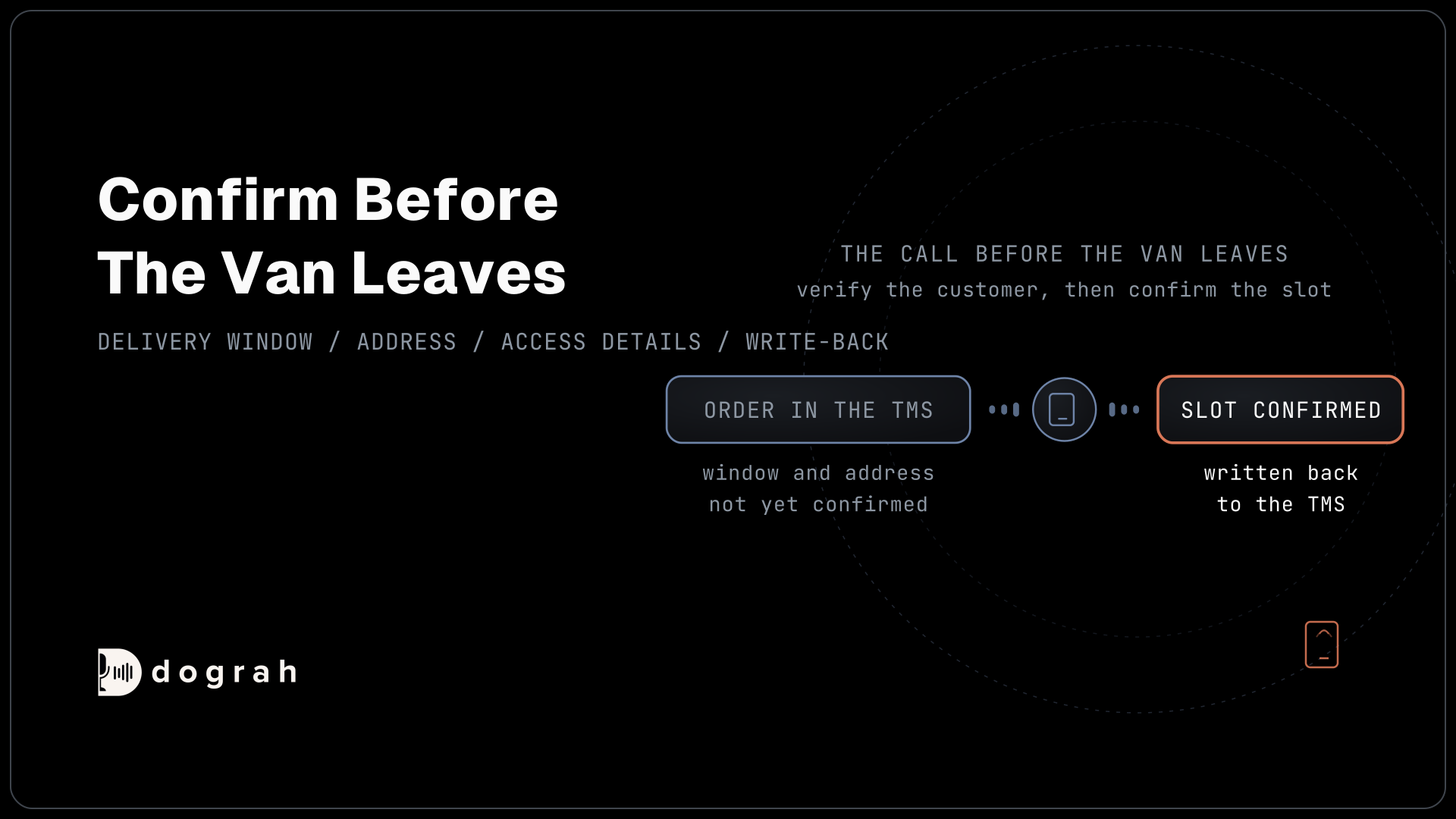
A reschedule at night is only safe when the open windows come from the system that owns them. The agent reads tomorrow's available slots from the carrier or dispatch system through the same kind of HTTP API tool, offers two, and writes the chosen one back by webhook. It records the caller's choice as the caller stated it; the transcript and recording are the exact record if anyone needs to check.
If the window the caller wants is not on the list, the agent does not invent one. It records the request as a note for the morning team and says so out loud. The published post on AI Voice Agent for Failed Delivery Rescheduling: The 2-Hour Rule covers the outbound version of this flow, including why the first attempt has to come fast; the overnight line reuses its slot pattern in the inbound direction.
One line on consent, because overnight calls sometimes end with "we will call you back at seven". That outbound callback needs consent captured at order or sign-up. Our post on AI voice agents for logistics and delivery in the US covers what that means in practice.
Urgent freight: escalate, never dead-end
An overnight agent that cannot reach a person is the thing customers fear most. In Front's State of Service Expectations survey of more than 900 logistics professionals, 72% say it is too hard to reach a person, and nearly half would leave brands that rely entirely on AI. That is the design constraint for this line: the agent is a bridge to the morning team, and for a small set of cases it is a dispatch escalation to someone right now.
Define that set in writing before the agent goes live. A reefer showing a temperature excursion, a driver reporting an accident, a load that has to move tonight to make a cutoff, a gate that will not open for a truck already on site. For those, the agent does two things in order. First it writes what it has learned, the shipment reference and the caller's own words, to the TMS or ticketing system through an HTTP API tool, so the dispatcher sees it on screen. Then it uses Transfer Call to ring the on-call number. Transfer works on Twilio only, the transfer passes no summary by itself, and the optional spoken introduction on Twilio is off by default. Test it on a real phone call, because browser test calls cannot run a transfer.
Everything outside that set gets a promised callback window, said aloud: "the dispatch team is back at seven and will call you before nine". A caller who hears a time is far more likely to hang up satisfied than one who hears "someone will be in touch".
Join the Dograh Community
Dograh is an OSS alternative to Vapi. Join our Slack community for queries, releases, best practices & community interactions.
The morning-team summary
The point of the night shift is that the day shift starts with answers instead of voicemails. Each call ends with extracted variables: who called, which reference, what the issue was, what the agent did and what it promised. The webhook node runs after the call and posts those fields to your ticketing system. A temporary failure (timeout, 5xx, 429) is retried automatically, up to five attempts. A wrong URL or credential is not, so test the endpoint before going live and make sure it answers quickly with a 2xx.
This is also where the cost argument lives, and it is a plain one. The Bureau of Labor Statistics puts the 2025 median pay for customer service representatives at $21.53 an hour across 2.67 million jobs, and projects the occupation to decline 5% from 2025 to 2035. A night desk means paying that rate for hours when calls arrive in bursts, and the agent means paying for the minutes a call actually lasts. Self-hosted Dograh has no per-minute platform fee; servers and any paid model keys still cost money.
Two small habits make the summary useful. Send the tracking link by text after the call, since in the same Front survey 49% of logistics customers prefer updates by SMS. And keep this line separate from your general after-hours answering: the receptionist-style handover, where the question is whether the on-call person picks up, is the subject of AI Voice Agents for After-Hours Coverage: When On-Call Doesn't Answer. The logistics line reads a TMS, books a slot and escalates freight. Build it as that.
Start with status lookups only, run quality assurance (QA) on every overnight call for the first two weeks (Dograh scores each step separately), then add rescheduling once the lookups are right.
Glossary
- Pre-Call Data Fetch
- The lookup Dograh runs when a call starts, posting the caller's and the agent's numbers to your endpoint and loading the reply into the call's context.
- tool Messages
- The start announcement and delayed updates an HTTP API tool speaks while it waits for a response, set on the tool's own page.
- extracted variables
- The answers the agent records from the conversation, as the caller stated them, for the webhook to carry to your systems after the call.
- dispatch escalation
- Handing an urgent freight problem to the on-call dispatcher by transfer instead of leaving it as a ticket.