
An after-hours AI voice agent answers every night call. It settles routine requests such as bookings and opening-hours questions, and takes a structured message for anything that can wait until morning. Urgent calls go to the on-call person by live transfer. Life-safety calls always need a person, and any caller can ask for one.
Key Takeaways
- Life-safety calls never end with "we'll call you back".
- Plan the moment the on-call phone rings and nobody answers.
- Call back from the business's number, inside a window you state.
This post is part of our guide to AI receptionists. The guide covers the whole front desk. This one covers the hours when nobody sits at it, and the night call that has to reach a person anyway. We build Dograh, an open-source, self-hostable voice agent platform, and this is how we would set up the night shift.
What an after-hours agent handles overnight
Most night calls are routine, and an agent can finish them instead of leaving them in a voicemail box.
An unanswered call is often a lost customer. In a 2025 survey of 1,000 US consumers by CallRail, a call-tracking company, 78% said they had abandoned a business after an unanswered call. 82% said they would call a competitor instead.
Most night calls end in one of two ways. The agent settles the call, or it takes a message for the morning. A small share has to reach a person tonight, and the next two sections deal with those.
Settling covers questions about hours and prices, plus bookings and reschedules. Dograh has no built-in calendar connector, so booking runs through an HTTP API tool that calls your calendar during the conversation, as in Booking Meetings Mid-Call With Calendly Integration. If you use Calendly, its booking API needs a paid plan and caps hosts below Enterprise at 100 bookings a day.
A message should be structured, so nobody has to replay a recording to find the address. The agent collects the caller's name, callback number, address, issue and how urgent it is. After the call, a webhook sends those fields and the call's outcome to your ticket system or CRM, as shown in our post on webhook-driven voice agents. The morning team starts with a sorted list.
The greeting should say two things up front: which business the caller has reached, and that the office is closed. Put that in the Start Call greeting text, which Dograh speaks exactly as written. Inside a conversation step the AI writes its own words, so a prompt can't promise exact wording. Sending calls to the agent only after hours is set in your phone system.
The calls that must reach a person tonight
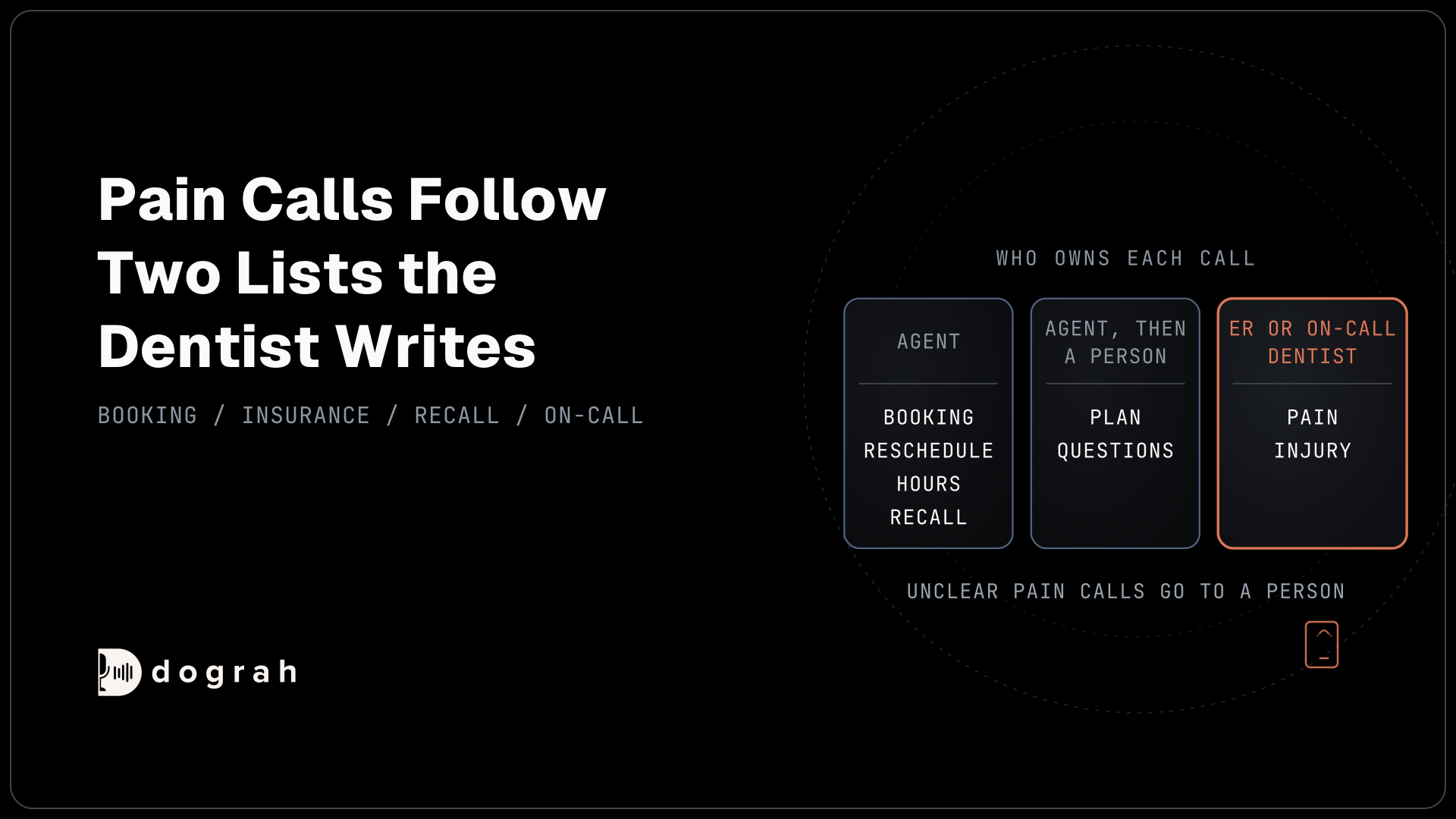
On an urgent call, the agent's job is to get the caller to a person. It does not judge the emergency itself.
Sagnik Bhattacharya, an independent HVAC consultant, argues for a hybrid where emergencies go straight to people. He puts it plainly: "A gas smell, a carbon monoxide alarm or a vulnerable person in a house with no heat must never end with 'someone will call you back tomorrow'." He also warns that "Callers who feel trapped by a machine hang up, and the one who hangs up is often the one with the real emergency."
We agree, and we build both points in as hard rules. First, a life-safety call gets the safety instruction before anything else, such as "leave the building and call emergency services", and then a transfer to the on-call person. It never gets a booking slot, and it never ends with "we'll call you back". Put that instruction in a pathway's transition speech or a pre-recorded clip, so the words can't drift. Second, any caller can ask for a person at any point, and the agent transfers.
The escalation list itself should be short and written by the owner. The agent follows it and does not decide urgency on its own. Test it with paraphrases, because a caller who says "it smells like rotten eggs" never says "gas". Home services worry about burst pipes and no heat, as in our post on restaurants and home services. For medical on-call lines, clinical triage stays with clinicians, as covered in our post on healthcare call centers. Dental pain calls have their own rules in dental reception, and insurers run 24/7 first notice of loss (FNOL) intake.
Our view for everything else on the list is simple. If the agent is unsure, or the caller's language is one it handles poorly, it transfers. If a live transfer isn't possible, it collects only the minimum and arranges a callback.

Open Source Alternative to Vapi / Retell
Self-hosted voice agent platform — no per-minute fees
dograh-hq/dograh
Star on GitHub
One urgent call when the on-call phone isn't answered
The moment that decides an after-hours setup is the transfer that nobody picks up.
Take a call at 2:10 a.m. A tenant says water is coming through the kitchen ceiling. That matches the urgent list, but it is not a life-safety call. The agent confirms the address, including the unit, and the callback number, then starts the Transfer Call tool. Transfer works on supported phone providers such as Twilio, Telnyx and Asterisk ARI. The destination can be a fixed number. It can also be mapped from details gathered on the call, or chosen by your own server at the moment of transfer, which is how you point it at tonight's rota. The caller hears music while the on-call phone rings. On Twilio you can switch on a short spoken introduction to both sides (it is off by default), so the technician hears the issue before saying hello.
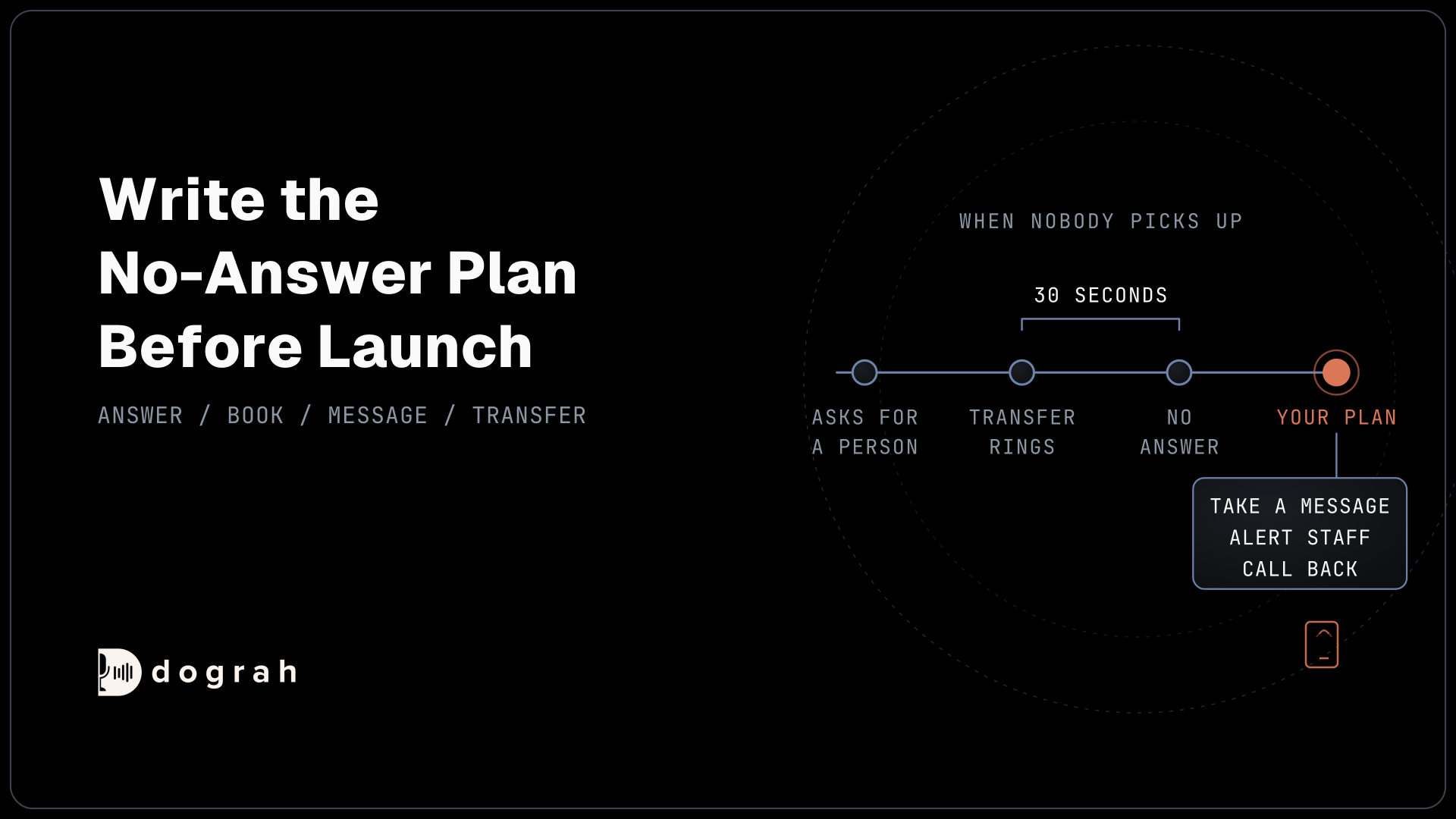
The technician is asleep. Dograh waits for the transfer timeout, 30 seconds by default and adjustable from 5 to 120. Then the transfer fails and the caller comes back to the agent. You decide what happens next: the agent resumes the conversation, disconnects, or plays a voicemail screening message.
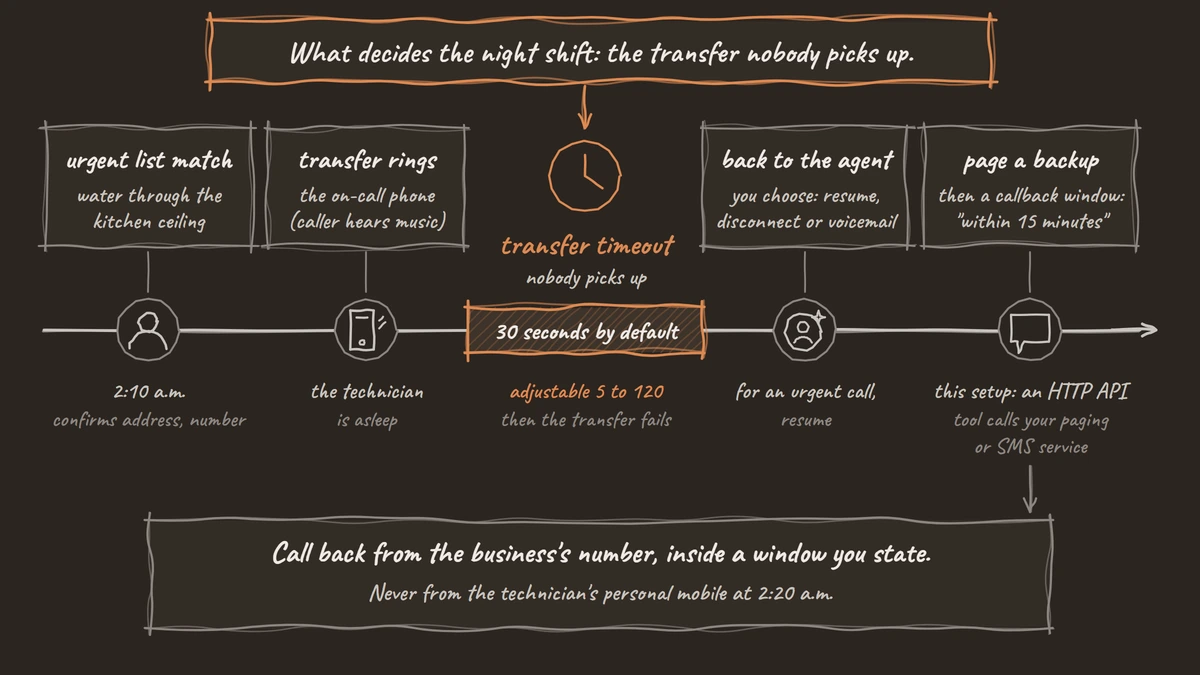
For an urgent call, resume. The agent pages a second person through an HTTP API tool that calls your SMS or paging service, since Dograh has no built-in pager. Then it gives the caller a specific window, such as "the on-call manager will call you from our main number within 15 minutes". The call ends with a custom outcome such as urgent_escalated, so the morning team sees it first.
Which number calls back matters. In Hiya's State of the Call 2026 survey of more than 12,000 consumers in six countries, 86% said they will not answer unidentified calls. Hiya sells caller ID and call-screening services. A technician's personal mobile at 2:20 a.m. is exactly that kind of call, so the callback should come from the number the caller dialled.
Keep the window short. In Jobber's home-service trends survey of 1,050 home-service business owners in December 2025, over 55% said their customers expect a response within the hour. Jobber sells software to those businesses, and these are owners describing their customers. A 15-minute window for an urgent call sits well inside it.
AI agent or human answering service: the cost at 80 calls a month
A human service brings judgement to the rare emergency. An agent costs far less and finishes routine calls itself.
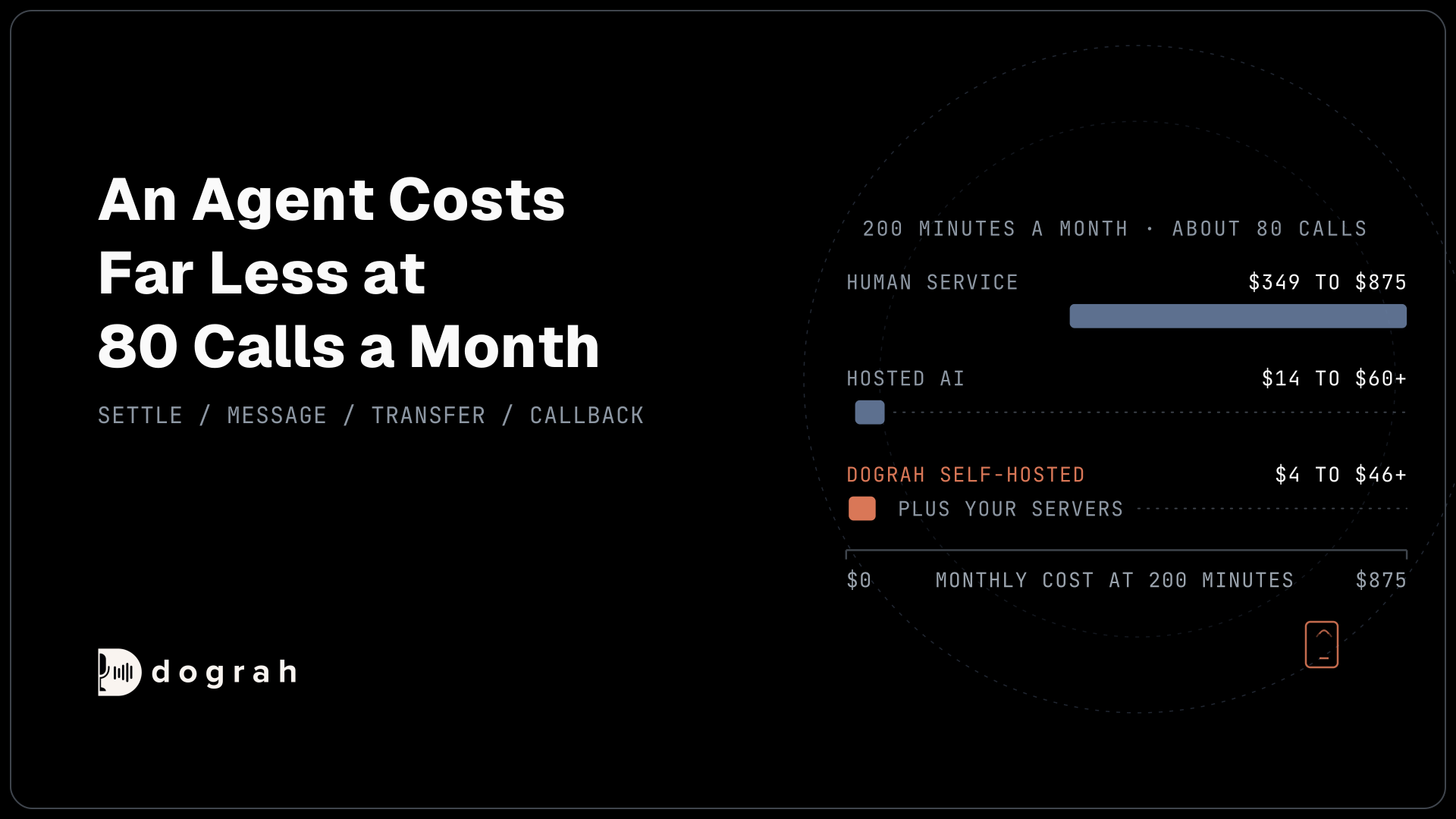
Human services bill per minute or per call, so compare them at one volume. We use 200 minutes a month, which PATLive's pricing page puts at about 80 calls. All prices below are list prices.
| Option | List price | Cost at 200 minutes (about 80 calls) |
|---|---|---|
| PATLive, human receptionists | $349 a month for 200 minutes, then $1.99 a minute | $349 |
| Ruby, human receptionists | $720 a month for 200 minutes | $720 |
| Smith.ai, human receptionists | $300 a month for 30 calls, then $11.50 a call | $875 (30 calls, plus 50 at $11.50) |
| Hosted AI voice platforms | About 5 to 7 cents a minute platform fee, models billed on top; about 7 cents to over 30 cents a minute all-in, depending on models | About $14 to over $60 |
| Dograh Cloud | 1¢ a minute platform fee, plus the same models and phone as above: about 3 cents to over 24 cents a minute all-in | About $6 to over $48 |
| Dograh open source, self-hosted | No per-minute platform fee; models and phone as above: about 2 cents to over 23 cents a minute, plus your servers | About $4 to over $46, plus your servers |
The cost column is our own arithmetic at 200 minutes. The Dograh figures are the hosted all-in range above minus its platform fee, plus Dograh's own fee.
The person still has a real edge: a good receptionist hears panic in a voice and drops the script. Hybrids are a fair choice. Some teams run the agent first with on-call people behind it. Others keep a human service for nights and use the agent for overflow and the morning paperwork.
The open-source platform has no per-minute platform fee, and model and phone costs apply either way. Self-hosting is also a choice about data. It takes the platform vendor out of the data path, and full control comes from pairing it with open-weight models you run yourself, though your phone carrier still carries the call.
Join the Dograh Community
Dograh is an OSS alternative to Vapi. Join our Slack community for queries, releases, best practices & community interactions.
Test the night shift over a real phone call
Test every escalation over a real phone call, because a browser web call cannot transfer a caller to a phone number.
Make these calls from a phone, at night, before the agent goes live:
- Describe a gas leak without the word gas, such as "the kitchen smells like rotten eggs".
- Ask for a person halfway through a booking.
- Leave the on-call phone unanswered, and check what the agent says after the timeout.
- Let the on-call phone's own voicemail pick up, and listen to what the caller hears.
- Spell an address on a noisy line, then check the ticket that reaches the morning queue.
Write the escalation list before you write a single prompt. The prompts are easy to change later. The night a gas call gets a booking slot is not.
Glossary
- Transfer timeout
- How long Dograh waits for the transfer destination to answer, 30 seconds by default and adjustable from 5 to 120. When it runs out, the transfer fails and the caller comes back to the agent.
- Escalation list
- The short, owner-written list of situations that must reach a person tonight. The agent follows it instead of judging urgency itself, and it should be tested with paraphrases callers actually use.
- Unidentified call
- A call from a number the person does not recognise. Most people let these ring out, which is why an overnight callback should come from the business's own number.
- Call disposition
- The outcome label a call ends with, such as a callback request or a custom urgent_escalated tag. Sent on after the call, it lets the morning team sort the night's calls.