
AI voice agents for payment and bill reminders call customers before or on the due date. After an approved identity check, the agent reads the amount and date from your billing system and records any promise-to-pay date as the customer stated it. Your own system sends the payment link. Once a debt is in default, collection rules take over.
Key Takeaways
- Name the amount only after the customer passes an approved check.
- Your billing system sends the payment link. No card numbers on the call.
- Default, or a third-party collector, turns a reminder into debt collection.
This post is part of our guide to AI voice agents by use case. The guide's section "Outbound service calls: reminders, surveys, renewals" describes this call as a first-party service call before or on the due date: verify, then name the amount and the date, and record any promise-to-pay date as the customer stated it. Here is that call for any business that bills, run in Dograh, an open-source, self-hostable voice agent platform.
Who gets a reminder call, and when
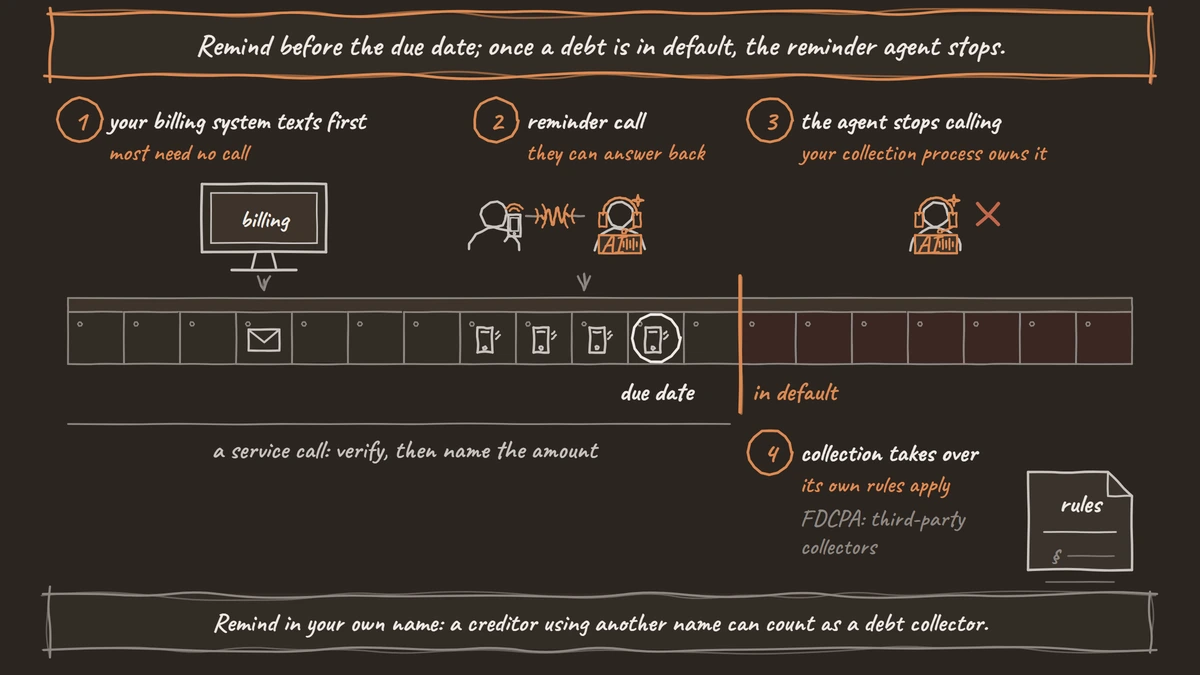
Most reminders do not need a call. Your billing system or payment provider already sends its own text or email, and Dograh sends no texts itself, so that step stays with them. The call is the second step, for accounts still unpaid a few days before the due date or on the day itself. It works where a text gets ignored, because the customer can answer back.
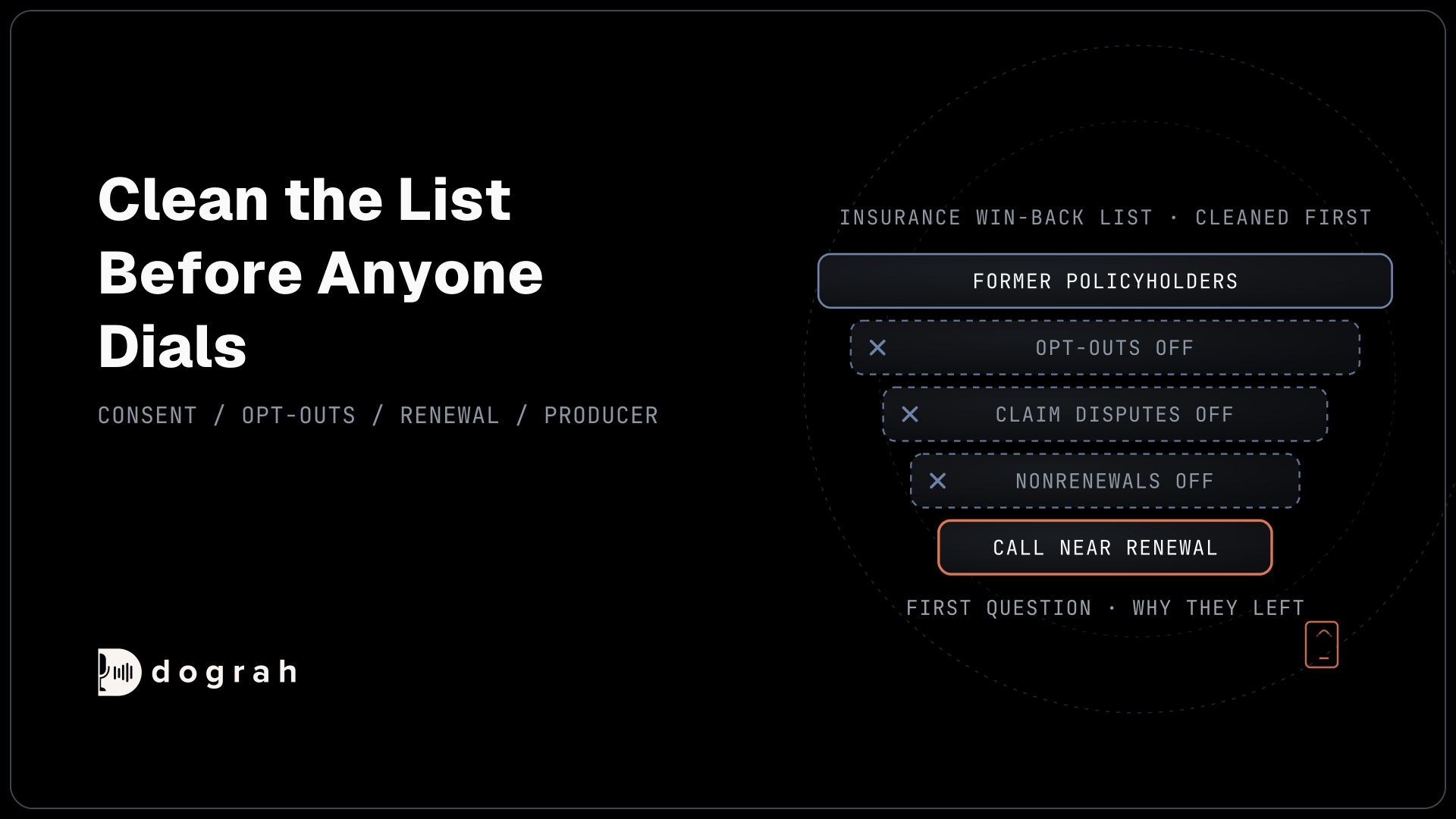
The call list comes from your billing system. Export the accounts with a balance due and consent to calls on file, minus anyone who opted out, and upload the list as a CSV to Campaigns. Each column, such as the amount or the due date, becomes a variable the agent can use after the verify step. Or start each call from your own system with the API Trigger, so your system decides who is called.
Customers pay after the list is uploaded. Pre-Call Data Fetch, set to "Outbound calls only", re-reads the balance once the customer answers, so the agent can thank someone who paid that morning instead of naming an amount. It can change what the agent says, but it never decides whether the call is placed. A running campaign's contact list cannot be edited. To stop calling someone mid-campaign, pause the campaign and start a new one from a corrected list.
Calling hours are set by weekday in one time zone per campaign (UTC by default), so split a list that spans time zones. Retries run from 0 to 10, 2 by default, and campaigns have no per-contact call cap, so your list decides how often anyone is called.
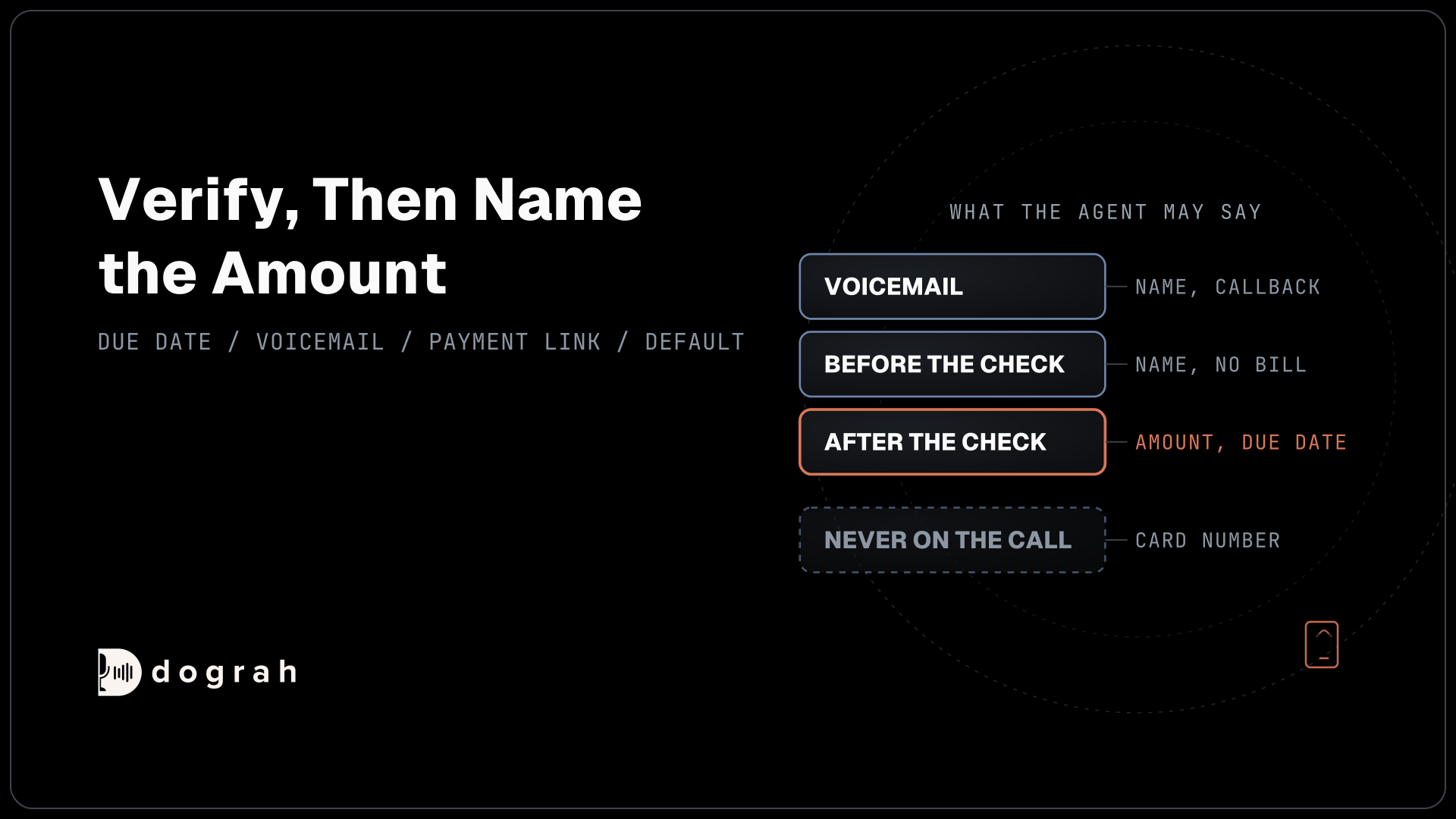
Verify, then name the amount
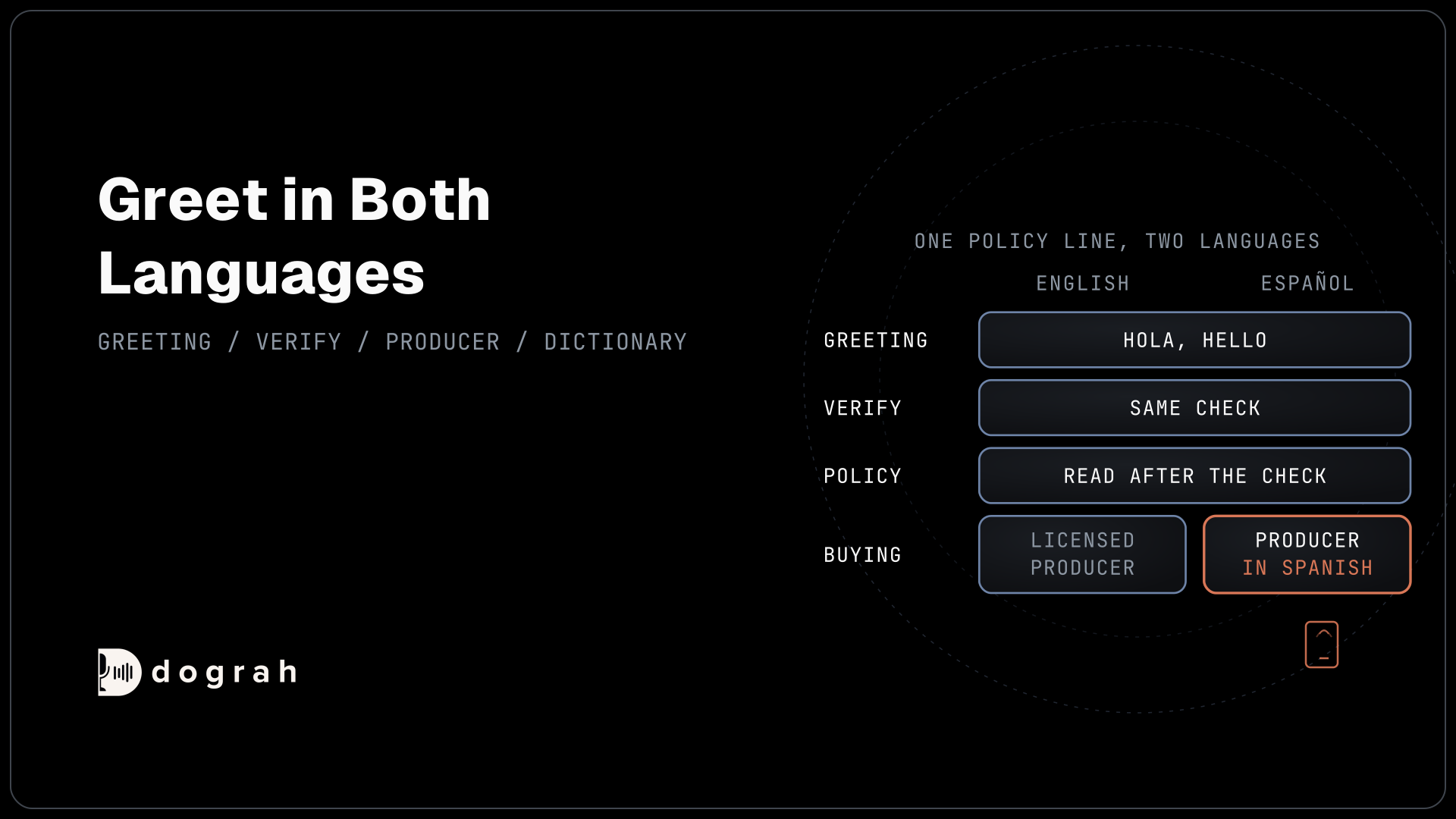
The greeting names your business exactly as it appears on the bill. A fixed greeting per contact, as text or a recorded clip, can come from the campaign file. Contacts without one hear the agent's normal greeting. Either way it plays before the verify step, so it carries the business name and the contact's name only.
Next, the agent asks for the account holder. A phone number or a name only finds the record and does not prove who is speaking. So tell the agent in the prompt to ask for an approved check, such as date of birth or the last digits of the account number. For business invoices, use the check your finance team already trusts. If the check fails, or someone else answered, tell it to leave your number and say nothing about the bill.
Plan for voicemail too. Hiya's State of the Call report, a survey of more than 12,000 consumers, found that only 14% of unrecognised calls are answered right away and 41% are left to go to voicemail. Voicemail handling is off by default. Turn it on in the agent's Settings, then under "When voicemail is detected" choose "Disconnect the call" or "Leave a message", and keep any message to the business name and a number to call back. Never put the amount in a voicemail, because anyone in the household or office can play it.

Open Source Alternative to Vapi / Retell
Self-hosted voice agent platform — no per-minute fees
dograh-hq/dograh
Star on GitHub
Promise-to-pay dates and payment links
After the amount, the agent asks whether the customer plans to pay by the due date. If they name a date, the agent records it as the customer stated it. Extraction is an AI step, so the transcript and recording stay the exact record. An HTTP API tool writes that date back to your billing system, and the next reminder waits for it.
If the customer wants to pay now, another HTTP API tool asks your billing system or payment provider to send its secure payment link by text or email. Dograh has no keypad (DTMF) tool and no feature for taking payments on a call. Recordings and transcripts keep whatever is said, so the call never asks for a full account, card or Social Security number; use a short check such as the last four digits, and send payment links by text or email from your own system. Our post on payment-sensitive (PCI) calls covers the card side in depth.
A customer who disputes the bill or asks for a payment plan should reach a person quickly. Transfer Call works on Twilio, Telnyx and Asterisk ARI. It passes no summary by default; on Twilio it can play a short spoken introduction to both people. Write the details to your system with an HTTP API tool before the transfer. If nobody answers within the 30-second default, the customer stays with the agent; tell it in the prompt to offer a callback.
Where a reminder becomes debt collection
A reminder about a bill that is not yet late is a service call. The Fair Debt Collection Practices Act (FDCPA) draws the line for consumer debts, and this section is general information, not legal advice.
The Act, at 15 U.S.C. 1692a, defines a debt as an obligation from a transaction for goods or services "primarily for personal, family, or household purposes". A debt collector is someone who collects "debts owed or due or asserted to be owed or due another". The definition also pulls in "any creditor who, in the process of collecting his own debts, uses any name other than his own".
Read together, a business reminding its own customers, in its own name, is generally outside the FDCPA, and invoices to other businesses generally fall outside its definition of debt. That is why the greeting uses the exact name on the bill. A third-party collector is inside it, and Regulation F presumes a collector complies with its call-frequency rule if it calls a person about a debt neither "More than seven times within seven consecutive days" nor within seven days after a phone conversation about it. State laws can reach further.
So once a debt is in default, the reminder agent stops calling about it, and your collection process takes over. AI Voice Agents for Debt Collection covers third-party collection, and our post on missed-payment recovery in BNPL explains the name test. Confirm your own position with counsel.
Consent and stopping the calls
A reminder call you place generally needs consent first. In its February 2024 declaratory ruling, the Federal Communications Commission (FCC) said callers "must obtain prior express consent from the called party before making a call that utilizes artificial or prerecorded voice simulated or generated through AI technology." Capture that consent when the customer signs up, and keep the record with the account.
The same ruling requires prior express written consent if the call introduces an advertisement or contains telemarketing. So a reminder that adds an offer becomes a sales call. A call about the next contract term, rather than money due now, belongs with AI voice agents for renewals and retention. Confirm your position with counsel.
Opt-outs live on your list. Dograh keeps no do-not-call list. When a caller opts out, an HTTP API tool writes it to your own list, and you remove those numbers before the next campaign upload. The do_not_call call tag records the request but never blocks a later call.
Self-hosted Dograh has no per-minute platform fee (servers, model keys and phone minutes still cost); Dograh Cloud has a 1¢-a-minute platform fee.
By industry: reminders with their own rules
Each industry adds its own rules to the reminder call. These posts cover them:
- AI Voice Agents for Rent Reminders: rent before the due date, and the lease.
- AI Voice Agents for Telecom Bill Reminders: phone and broadband bills.
- AI Voice Agents for Utility Bill Reminders and Shutoff Notices: shutoff notice rules.
- AI Voice Agents for Fee and Payment Reminders in Education: tuition and fees.
- AI Voice Agents for Benefit and Payment Reminders: government benefit programs.
- AI Voice Agents for Premium Reminders: insurance premiums.
- AI Voice Agents for Mortgage Payment Reminders: home loan payments.
- AI Voice Agents for Failed-Payment and Dunning Recovery in SaaS: failed card renewals.
- AI Voice Agents for Missed Membership Payment Reminders: gym memberships.
Join the Dograh Community
Dograh is an OSS alternative to Vapi. Join our Slack community for queries, releases, best practices & community interactions.
Glossary
- Promise-to-pay date
- The date a customer says they will pay, recorded during the call as the customer stated it and written to your billing system. The next reminder waits for it.
- Debt collector (FDCPA)
- Under 15 U.S.C. 1692a(6), someone who collects consumer debts owed to another, or a creditor using a name other than its own. A business reminding its own customers in its own name is generally outside it.
- Regulation F
- The Consumer Financial Protection Bureau's rule that puts the FDCPA into practice for debt collectors. It presumes a collector complies with its call-frequency limit at no more than seven calls about a debt in seven consecutive days.
- Pre-Call Data Fetch
- A Dograh setting at the bottom of the Start Call node that asks your system for fresh data once a call connects. On a reminder call it re-reads the balance after the customer answers, but it never decides whether the call is placed.