
AI voice agents for win-back in insurance call former policyholders, and the call is generally telemarketing, so it needs prior express written consent that names AI calls and the phone number. Take opt-outs and anyone who left over a claim off the list, call near their next renewal, ask why they left, and let a licensed producer quote.
Key Takeaways
- A win-back call generally needs prior express written consent, not service-call consent.
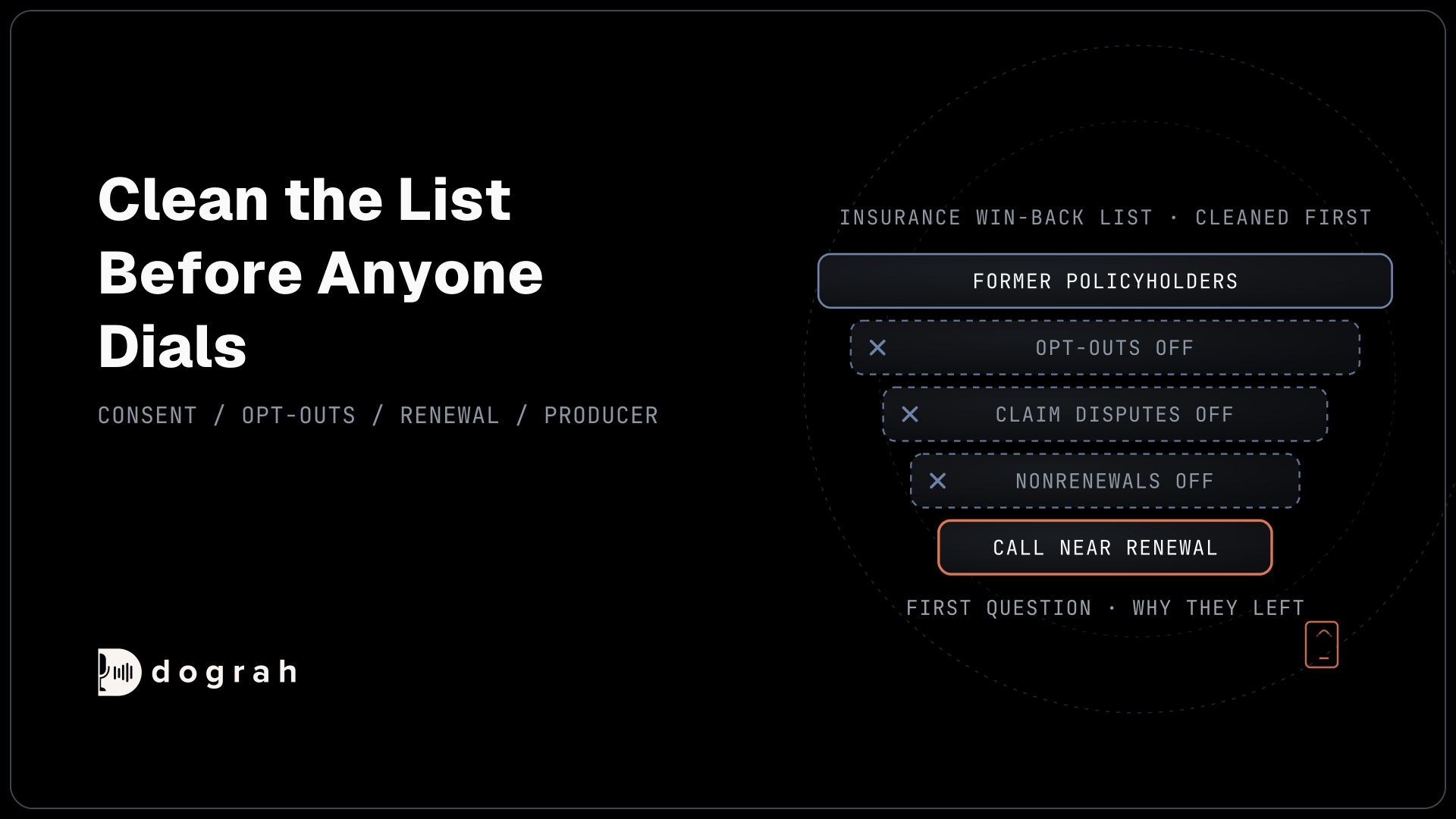
- Clean the list first: opt-outs, claim complaints and underwriting nonrenewals come off.
- The agent asks why they left, then a licensed producer quotes and binds.
This post is part of our guide to AI voice agents for insurance. The guide's section "Keeping it in force: premiums, renewals, win-back" describes this call as reaching former customers after a policy lapsed or they left, with prior express written consent and one useful question: why they left. Here is that call in full, run in Dograh, an open-source, self-hostable voice agent platform.
A win-back call is a sales call
A call that asks a former customer to come back is generally telemarketing, and that decides the consent you need before an AI voice dials them. In its February 2024 declaratory ruling, the Federal Communications Commission (FCC) confirmed that AI-generated voices count as artificial voices under the Telephone Consumer Protection Act (TCPA). For mobiles, paragraph (a)(2) of 47 CFR 64.1200 bars an artificial-voice call "that includes or introduces an advertisement or constitutes telemarketing" other than "a call made with the prior express written consent of the called party". Paragraph (a)(3) applies the same written-consent rule to residential landlines.
The written consent has a set shape. The rule defines it as "an agreement, in writing, bearing the signature of the person called that clearly authorizes the seller to deliver or cause to be delivered to the person called advertisements or telemarketing messages using an automatic telephone dialing system or an artificial or prerecorded voice", together with the number those calls may go to.
So consent given for service calls on the old policy is generally not the written kind a win-back call needs. Check what each former customer actually signed, and keep only those whose consent covers AI or prerecorded marketing calls to that number. This is general information, not legal advice; confirm your position with counsel.
Who comes off the list before anyone dials
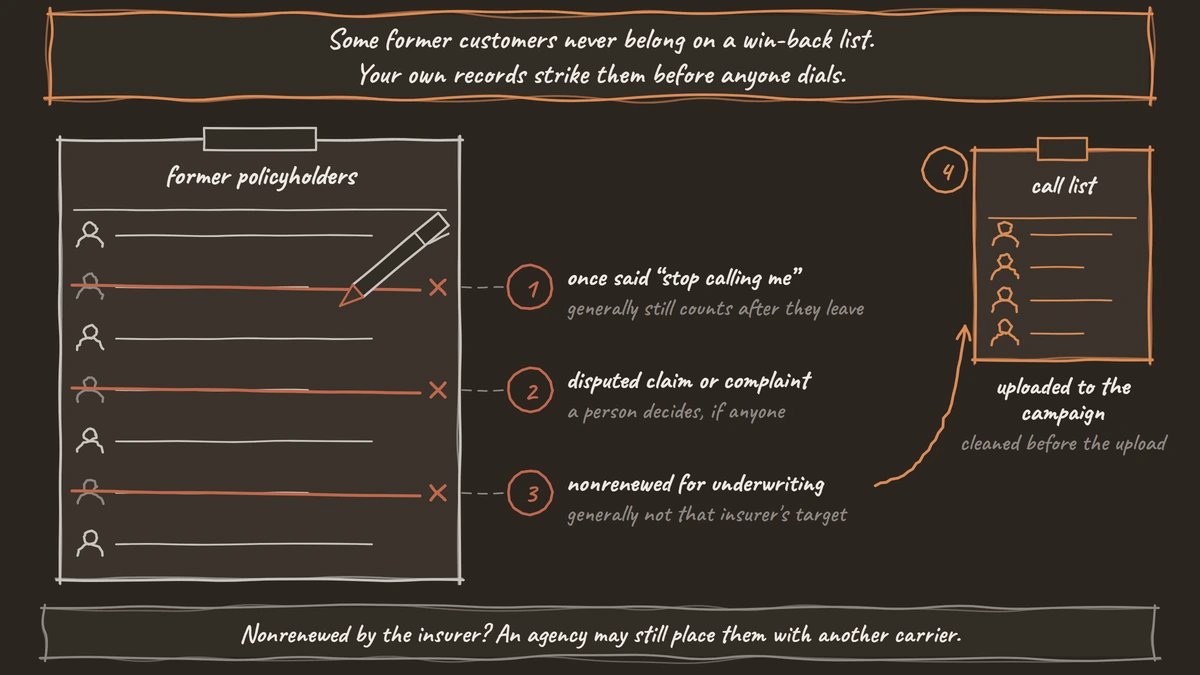
Some former customers never belong on the list, and Dograh will not filter them for you, so your own records do it before the upload. Start with opt-outs. A customer may revoke consent, "including prior express written consent", by "using any reasonable method to clearly express a desire not to receive further calls". A "stop calling me" said while they were still a policyholder generally still counts after they leave.
The FCC has gone further in an order it adopted in September 2026, which says: "Revocation requests made in response to robocalls that contain an advertisement or constitute telemarketing revoke consent to all future robocalls containing an advertisement or that constitute telemarketing from that caller." It takes effect 30 days after publication in the Federal Register, so it is adopted but not yet in effect.
Dograh keeps no do-not-call list. When a caller opts out, an HTTP API tool writes it to your own list, and you remove those numbers before the next campaign upload. The do_not_call call tag records the request but never blocks a later call.
Two more groups generally come off. People who left after a disputed claim or a complaint need a person, if anyone, never an automated sales call. A policy the insurer itself nonrenewed for underwriting reasons is generally not that insurer's win-back target, though an agency may place the customer with another carrier. UK win-back calls follow PECR instead, covered in AI voice agents for insurance in the UK.
Call near their next renewal, not the day they left
The best moment for a win-back call is when the former customer is about to face a new price, which is usually their next renewal with the carrier they moved to.
Price drives many of these decisions. In the Federal Reserve's survey of 12,934 US adults on household finances in 2025, 43% of homeowners without insurance gave "couldn't afford it" as the main reason. Someone who switched for price meets a new price at their next renewal, so your records of when they left give you a rough date to aim for.
Build each week's list from your own system, with the people whose likely renewal falls a few weeks out. Upload it to Campaigns, where calling hours run by weekday in one time zone per campaign, so split a national list by time zone. To stop calling someone mid-campaign, pause the campaign and start a new one from a corrected list. For lists that change daily, start calls from your own system with the API Trigger, so your system decides who is called. To test two openings, split the campaign between two versions of the agent. The campaign page then shows each version's share of calls and its outcomes.

Open Source Alternative to Vapi / Retell
Self-hosted voice agent platform — no per-minute fees
dograh-hq/dograh
Star on GitHub
The call: name the agency, then ask why they left
The opening line carries more weight on this call than on most, because insurance impersonation is common. The Federal Trade Commission says people reported losing nearly $1 billion to business impersonators in 2025, and in April 2026 it filed a complaint against operators it alleges impersonate the government and "large insurance carriers" to deceive people seeking health insurance.
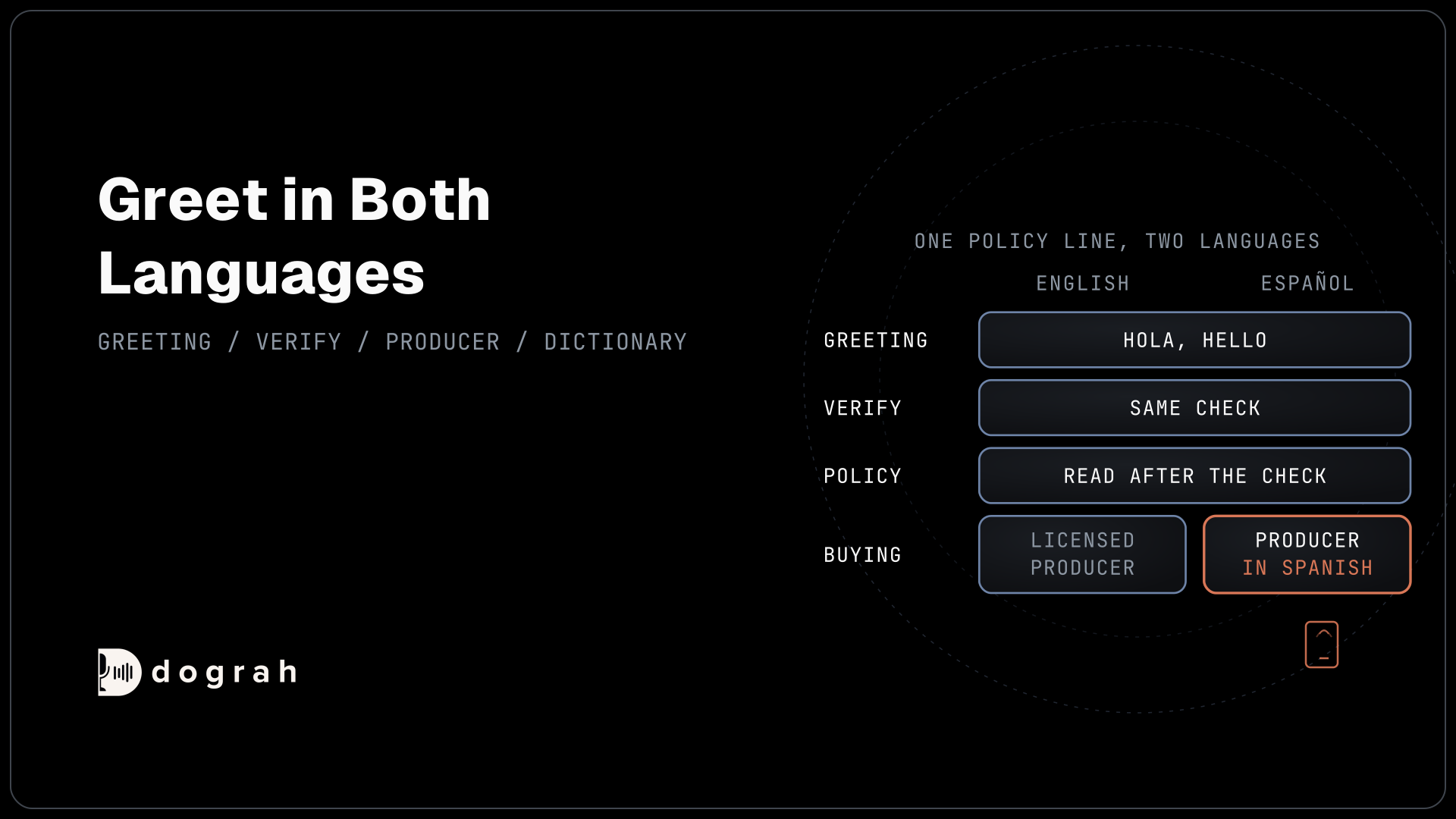
That is why the call opens with Greeting Text, the fixed line Dograh plays word for word, with the agency's or carrier's name exactly as the customer knew it. If you want to tell callers they're speaking with an automated assistant, or your location requires it by law, say that there too. A fixed greeting per contact, as text or a recorded clip, can come from the campaign file, and contacts without one hear the agent's normal greeting. Because it plays before verification, it holds the business name and the contact's name only.
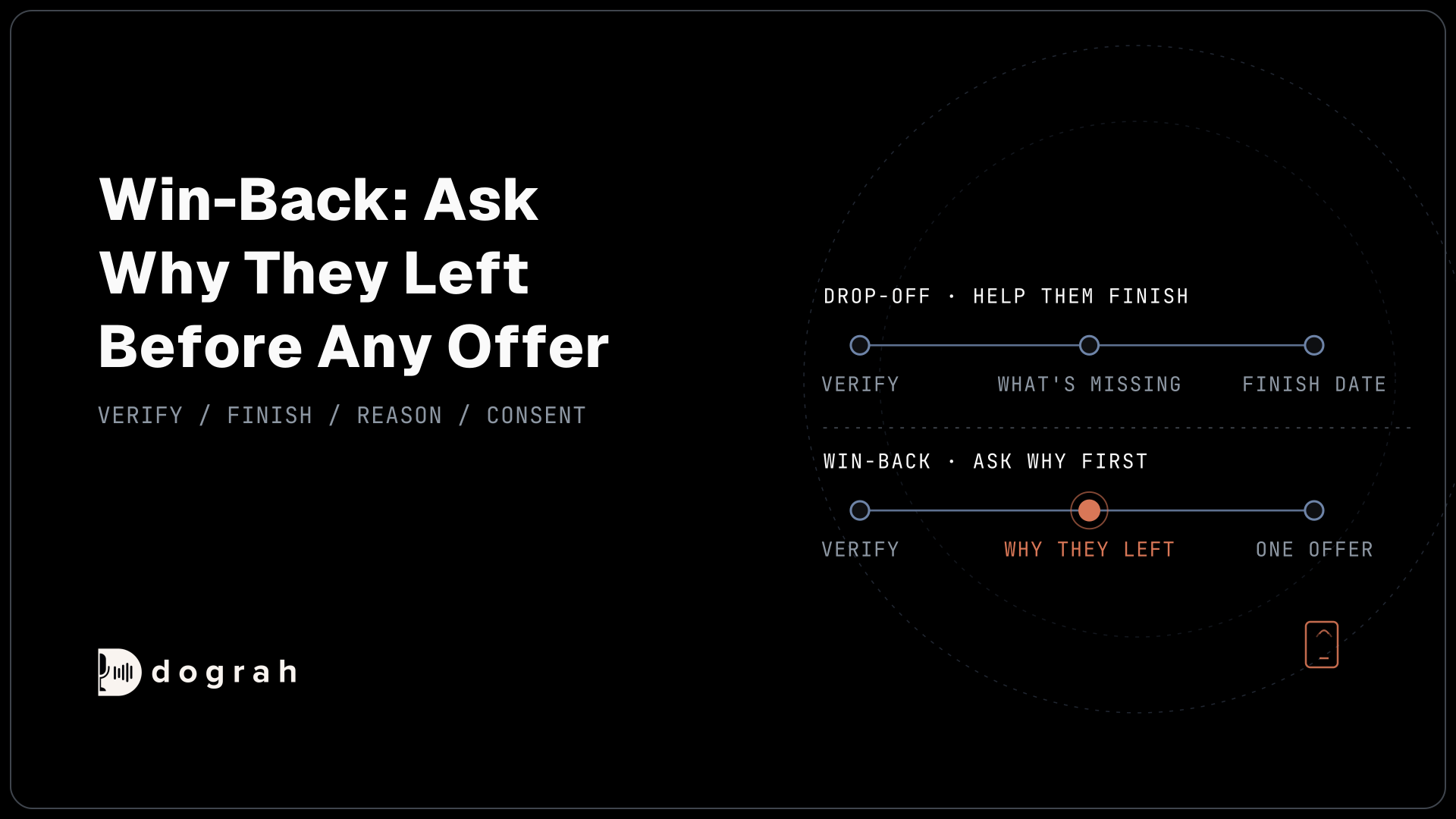
The agent asks for the person by name, then confirms identity with an approved check before it mentions the old policy. The first real question is why they left. The agent records the answer as they said it, and an HTTP API tool writes it to your agency system. Someone who left over price needs a different next step from your producers than someone who left over service or a life change.
If the policy lapsed recently and the insurer allows reinstatement, the agent reads the terms the policy system returns and never states them from memory. Recordings and transcripts keep whatever is said, so the call never asks for a full account, card or Social Security number; use a short check such as the last four digits, and send payment links by text or email from your own system.
A licensed producer quotes
Interest is where the agent stops. It never quotes a price, compares carriers or says a new policy would suit them. Selling, advising on or binding a policy generally needs a state producer licence, so the agent qualifies, reads the record and hands the caller to a licensed person; confirm your own position with counsel.
The agent offers a time with a producer, booked through an HTTP API tool against your agency calendar, or a live hand-off. Transfer Call works on Twilio, Telnyx and Asterisk ARI. It passes no summary by default; on Twilio it can play a short spoken introduction to both people. Write the details to your system with an HTTP API tool before the transfer, including why they left. If nobody answers, the caller stays with the agent; tell it in the prompt to offer a callback.
A no ends the call. Write it back to your system so the next list leaves them out. Before a policy lapses, the call belongs to AI voice agents for policy renewals.
The same consent-first shape runs through AI voice agents for win-back in telecom, and our playbook on win-back and drop-off recovery covers it across industries.
Self-hosted Dograh has no per-minute platform fee (servers, model keys and phone minutes still cost); Dograh Cloud has a 1¢-a-minute platform fee.
Join the Dograh Community
Dograh is an OSS alternative to Vapi. Join our Slack community for queries, releases, best practices & community interactions.
Glossary
- Prior express written consent
- Under 47 CFR 64.1200(f)(9), a signed written agreement that clearly authorizes marketing calls using an autodialer or an artificial or prerecorded voice to a named phone number. An AI-voice win-back call to a mobile generally needs it.
- Revocation of consent
- A customer withdrawing consent by any reasonable method, such as saying 'stop calling me'. It generally outlives the policy, so it must come off the list before any win-back campaign.
- Reinstatement
- Putting a lapsed policy back in force on the insurer's own terms. The agent reads those terms from the policy system and never states them from memory.
- Greeting Text
- The optional fixed line Dograh speaks word for word as the call connects. On a win-back call it names the agency exactly, which helps the customer tell your call from an impersonator's.