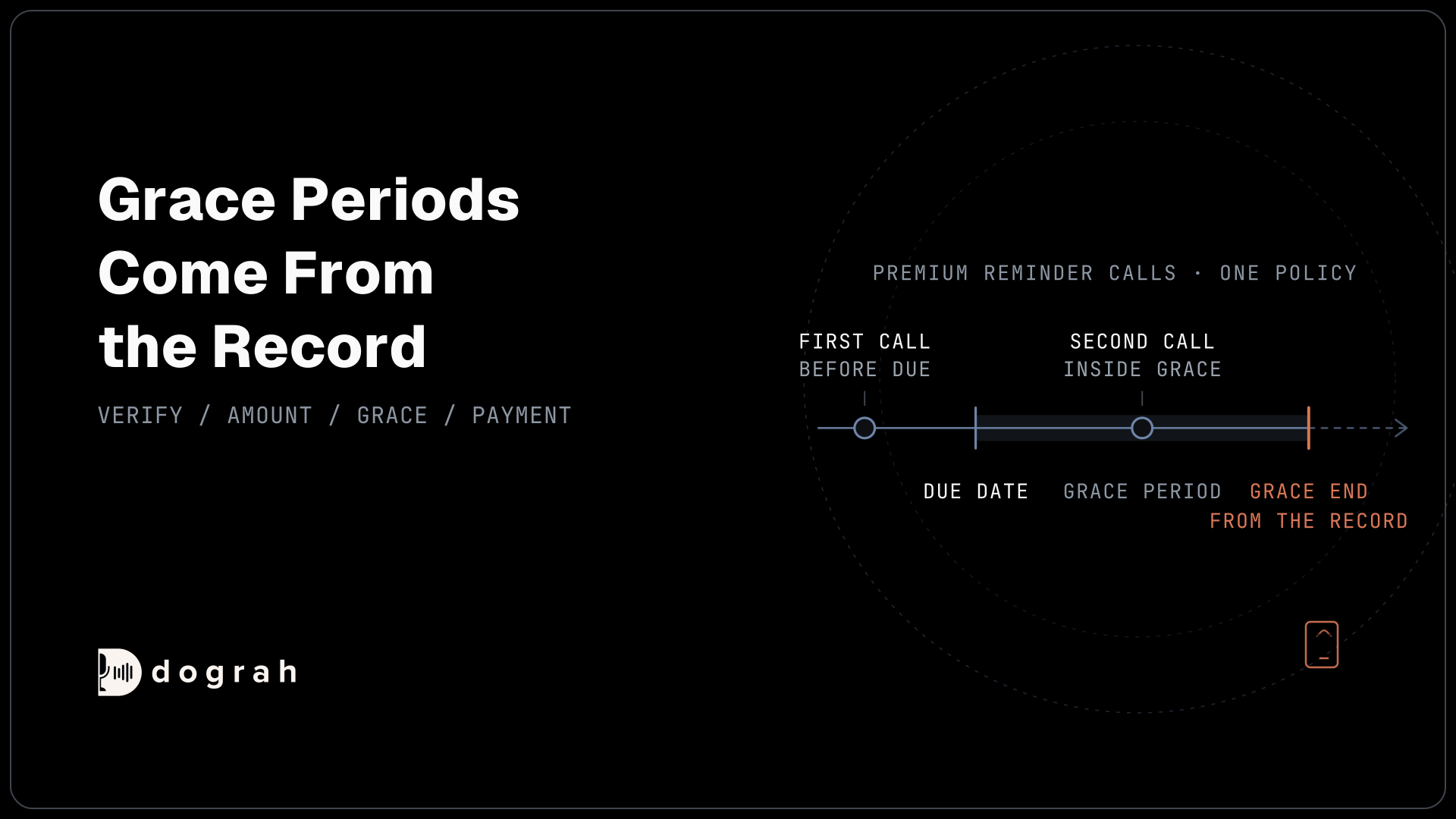

AI voice agents for premium reminders call policyholders before a premium is due and once more inside the grace period. After verifying the caller, they read the amount and grace end date from the policy system and record a promised payment date. The insurer's own system sends the payment link, and coverage questions go to a licensed person.
Key Takeaways
- Read the grace end date from the policy record, because state and line set it.
- Name the amount only after the caller passes an approved check.
- Take no card numbers on the call, and let your own system send the payment link.
This post is part of our guide to AI voice agents for insurance. The guide's section "Keeping it in force: premiums, renewals, win-back" places this call on the current term, before the due date and inside the grace period, with the amount and date read from the policy system after verification. Here is that call in full, run in Dograh, an open-source, self-hostable voice agent platform.
Why a premium reminder call is worth making
A premium reminder often reaches someone who is stretched, so the call should help with timing and never push. In the Federal Reserve's survey of 12,934 US adults on household finances in 2025, 14% of insured homeowners said they "struggle to afford the premiums". Among those earning under $50,000, nearly 30% said the same.
Let your billing system send its own notice by text or email first (Dograh sends no texts itself), so the call is the second step. It goes to policyholders whose premium is still unpaid a few days before the due date, and once more inside the grace period. Our playbook on payment and bill reminders covers the same pattern across industries.
Grace periods come from the record, not the prompt
A grace period depends on the line of insurance, the state and the policy, so the agent never states a general rule. It reads the grace end date your policy system returns.
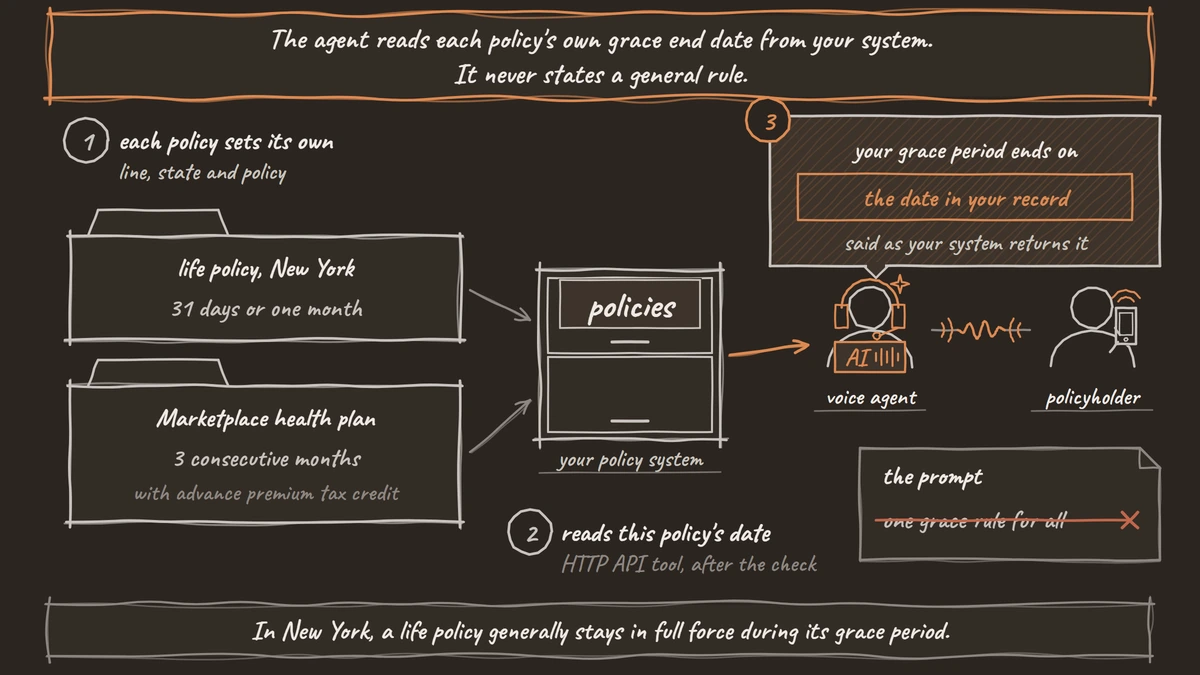
Two examples show the spread. New York's Insurance Law section 3203 gives most life policyholders "a thirty-one day grace period or of one month following any subsequent premium due date", and adds: "During such grace period, the policy shall continue in full force". For Marketplace health plans, 45 CFR 156.270 says an issuer "must provide a grace period of 3 consecutive months" for an enrollee who receives advance payments of the premium tax credit.
The same federal rule adds a written step: "If an enrollee is delinquent on premium payment, the QHP issuer must provide the enrollee with notice of such payment delinquency." That notice comes from your own system, and the call never stands in for it, so tell the agent in the prompt never to describe the call as notice. This is general information, not legal advice; confirm your position with counsel.
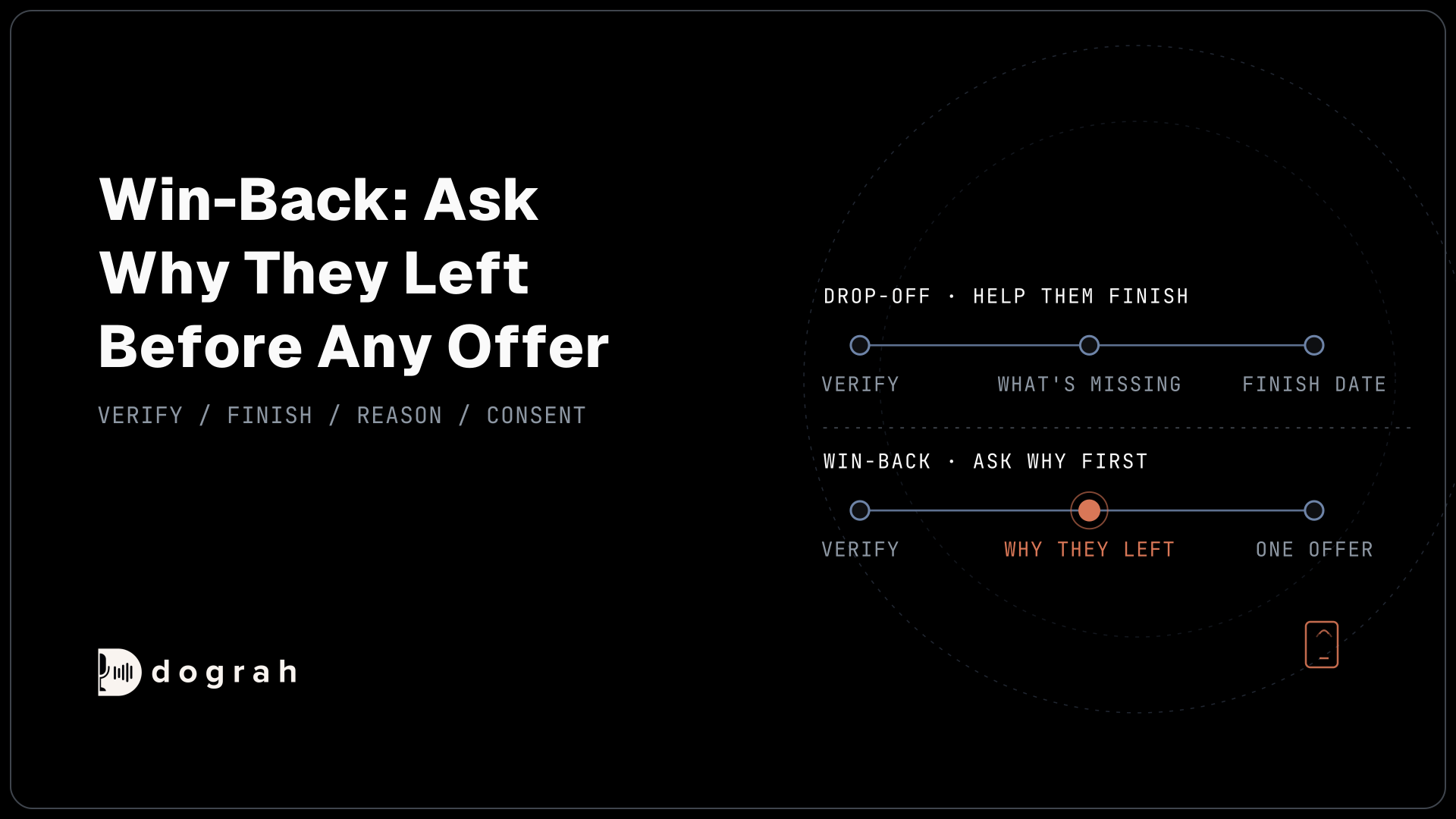
Once the grace period ends, reinstatement and former customers belong to AI voice agents for win-back in insurance.
Who gets called, and when
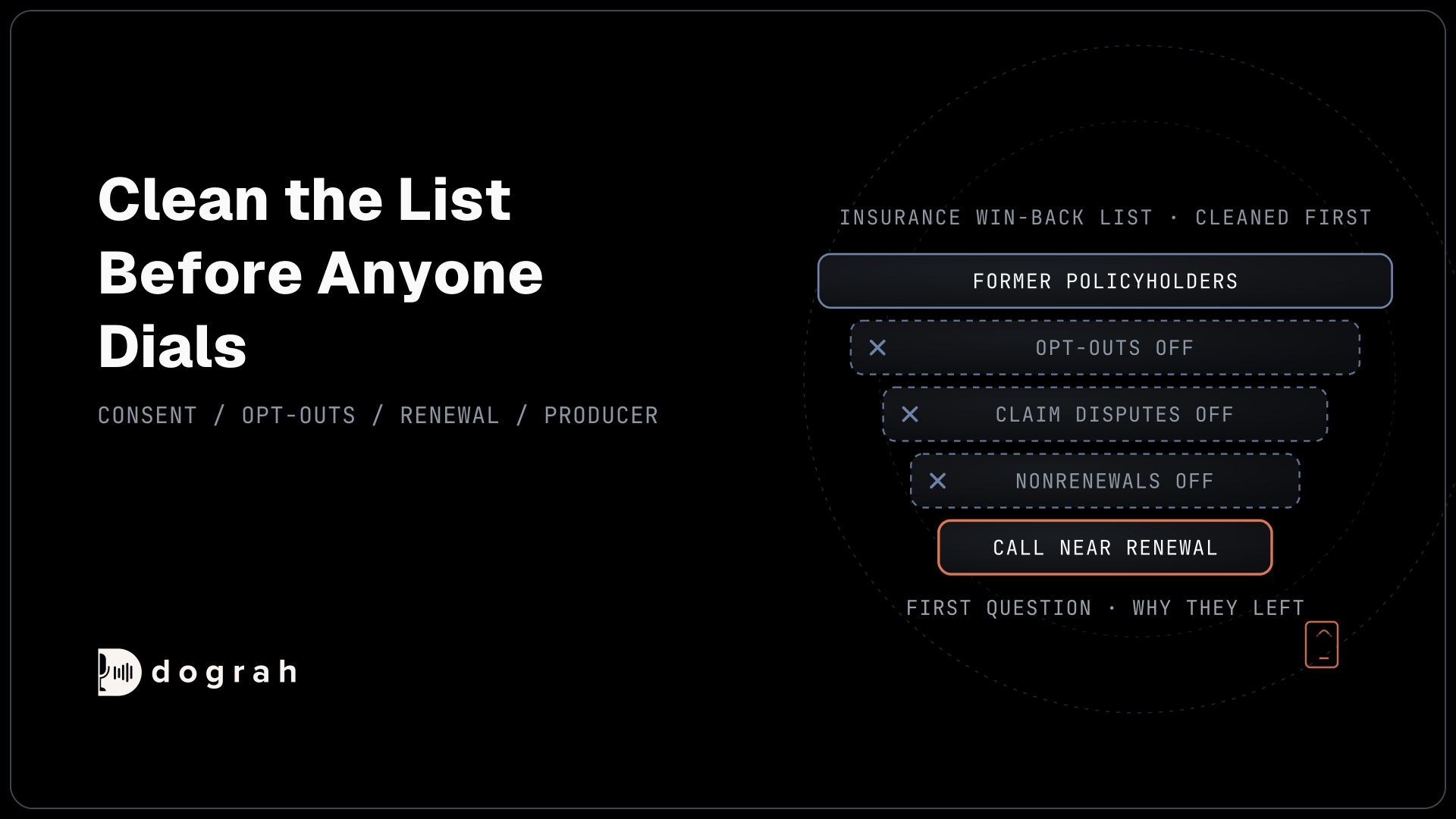
The call list comes from your billing system. Export the policyholders with a premium still open and consent to calls on file, leave out anyone who opted out, then upload the list as a CSV to Campaigns.
Consent generally comes first. In its February 2024 declaratory ruling, the Federal Communications Commission (FCC) said calls using AI-generated voices "require the prior express consent of the called party to initiate such calls absent an emergency purpose or exemption." A reminder about a premium already owed generally needs prior express consent, usually captured at sale. Add an offer, such as a second policy, and the call generally becomes telemarketing that needs prior express written consent, so the reminder never makes one. Confirm your position with counsel.
Campaigns set calling hours by weekday, in one time zone per campaign, so split a national book by time zone. Retries run from 0 to 10 (2 by default), so set them to how often you are willing to call one person. To stop calling someone mid-campaign, pause the campaign and start a new one from a corrected list. For lists that change daily, start calls from your own system with the API Trigger, so your system decides who is called.
A fixed greeting per contact, as text or a recorded clip, can come from the campaign file, and contacts without one hear the agent's normal greeting. That greeting plays before verification, so it holds the business name and the contact's name only, never the policy or the amount. To test two openings, split the campaign between two versions of the agent, and the campaign page shows each version's share of calls and its outcomes.
Voicemail handling is a switch in the agent's Settings ("Enable voicemail and screening handling"); once it is on, a detected voicemail hangs up by default ("Disconnect the call"). To leave one, choose "Leave a message" under "When voicemail is detected", and keep it to the company's name and a request to call the number on the policy documents. Never put the amount in a voicemail, because anyone in the household can play it.

Open Source Alternative to Vapi / Retell
Self-hosted voice agent platform — no per-minute fees
dograh-hq/dograh
Star on GitHub
The call: verify first, then the amount
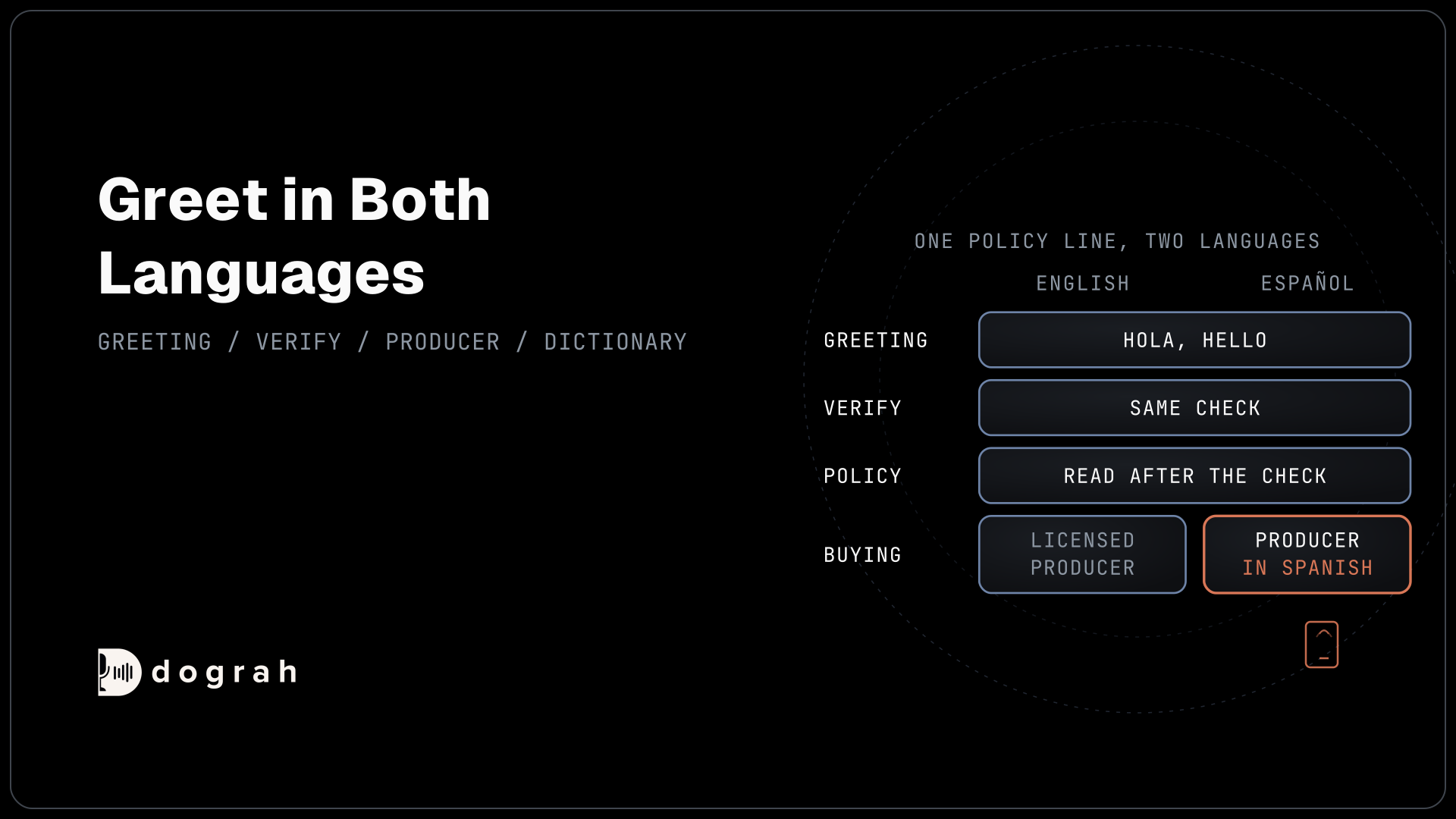
The call opens with Greeting Text, the fixed line Dograh plays word for word as the call connects. It names the insurer or agency exactly as the policy does. If you want to tell policyholders they're speaking with an automated assistant, or your location requires it by law, say that there too.
Next the agent asks for the policyholder named on the account. A phone number or a name only finds the record, but it does not prove who is speaking. So the agent asks for an approved check, such as date of birth plus the last digits of the policy number. If the check fails, or someone else answered, the agent asks them to call the number on the policy documents and says nothing about the premium.
Only after the check does an HTTP API tool read the amount, the due date and the grace end date from your billing system. Because that read happens during the call, a payment made that morning changes what the agent says, and nothing about the premium sits in the call before the check. Then the agent asks whether the policyholder plans to pay by the due date, and records any promised date as they stated it.
Another HTTP API tool writes that date to your billing system. If the policyholder wants to pay now, a third asks your system to send its secure payment link. Dograh has no feature for taking payments on a call and no keypad (DTMF) tool. Recordings and transcripts keep whatever is said, so the call never asks for a full account, card or Social Security number; use a short check such as the last four digits, and send payment links by text or email from your own system. If a policyholder starts reading out a card number anyway, tell the agent in the prompt to stop them politely and point to the link.
Hardship, opt-outs and handing over
A policyholder who wants a payment plan your rules do not allow, disputes the amount or asks to cancel goes to your billing team. One who asks to lower their cover to cut the premium is asking for advice. Selling, advising on or binding a policy generally needs a state producer licence, so the agent qualifies, reads the record and hands the caller to a licensed person; confirm your own position with counsel.
Transfer Call works on Twilio, Telnyx and Asterisk ARI. It passes no summary by default; on Twilio it can play a short spoken introduction to both people. Write the details to your system with an HTTP API tool before the transfer. If nobody answers, the caller stays with the agent; tell it in the prompt to offer a callback.
"Stop calling me" is an opt-out. Dograh keeps no do-not-call list. When a caller opts out, an HTTP API tool writes it to your own list, and you remove those numbers before the next campaign upload. The do_not_call call tag records the request but never blocks a later call.
Policyholders who call in to ask when a payment is due are served by AI voice agents for customer support in insurance. The next term, after the renewal notice, belongs to AI voice agents for policy renewals.
Self-hosted Dograh has no per-minute platform fee (servers, model keys and phone minutes still cost); Dograh Cloud has a 1¢-a-minute platform fee.
Join the Dograh Community
Dograh is an OSS alternative to Vapi. Join our Slack community for queries, releases, best practices & community interactions.
Glossary
- Grace period
- The time after a premium's due date during which the policy stays in force. Its length depends on the line of insurance, the state and the policy, so the agent reads the end date from the policy record.
- Promised payment date
- The date a policyholder says they will pay, recorded during the call as they stated it and written to the billing system. Staff and later reminders work from it.
- Prior express consent
- The consent the TCPA generally requires before an AI-voice call to a mobile, such as a premium reminder. A call that adds an offer generally needs the stricter prior express written consent.
- Approved check
- The identity question the agent asks before naming any policy detail, such as date of birth plus the last digits of the policy number. A phone number or a name only finds the record; the check shows who is speaking.