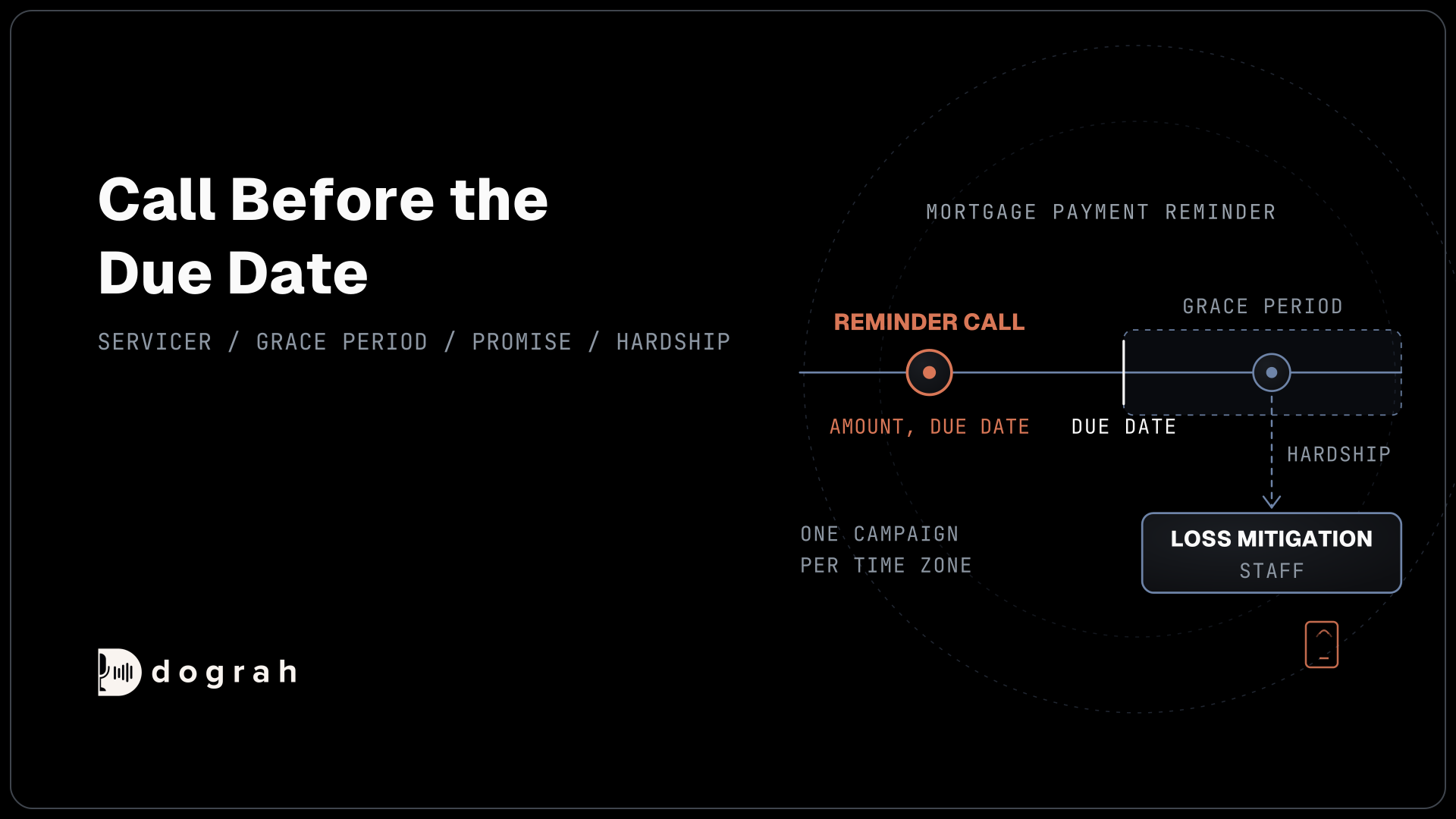

AI voice agents for mortgage payment reminders call borrowers before the due date and in the grace period. After verifying the borrower with a short check, they read the amount and due date from the servicing system and record any promise-to-pay date. The servicer's own system sends the payment link, and hardship goes to loss mitigation staff.
Key Takeaways
- Split the borrower file by time zone, with one campaign per zone.
- Verify with the last four digits, never a full account number.
- Hardship goes to loss mitigation staff, with the details written first.
This post is part of our guide to AI voice agents for mortgage and home loans. The guide's section "After closing: mortgage payment reminders" sums up this call in one line: the agent verifies, then reads the amount and due date from the servicing system. Here is that call in full, run in Dograh, an open-source, self-hostable voice agent platform.
Why servicers call before the due date
More borrowers are falling behind, and a reminder before the due date catches the ones who simply forgot. The MBA's National Delinquency Survey for the second quarter of 2026 put the delinquency rate at 4.37% of loans outstanding, up 44 basis points from a year earlier.
Borrowers also struggle to reach their servicer. The CFPB's annual complaint report for 2025 counted about 30,400 mortgage complaints, and the top issue, "Trouble during payment process", rose 8% on its monthly average for the two years before. Borrowers said they "were unable to reach servicer representatives, or that calls or emails went unreturned."
Most reminders need no call, because the servicing system already sends its own statement or text. The call is the second step, for borrowers with the payment still open a few days before the due date, or inside the grace period. The same pattern runs across industries in AI voice agents for payment and bill reminders.
One campaign per time zone
A campaign runs its calling hours in one time zone, so a servicer with borrowers across the country runs one campaign per zone.
Campaigns take their contacts from a CSV upload, and the time zone defaults to UTC. So split the export from your servicing system by the borrower's time zone, one CSV and one campaign for each, and set each campaign's weekday calling hours in that zone. Each extra column, such as the borrower's first name, becomes a variable the agent can use.
Retries run from 0 to 10, 2 by default, with a delay between 30 seconds and an hour. Campaigns have no per-borrower call cap, so your own list decides how often anyone is called, or you set retries to 0. Borrowers who pay after the upload are the usual problem. To stop calling someone mid-campaign, pause the campaign and start a new one from a corrected list. For lists that change daily, start calls from your own system with the API Trigger, so your system decides who is called.
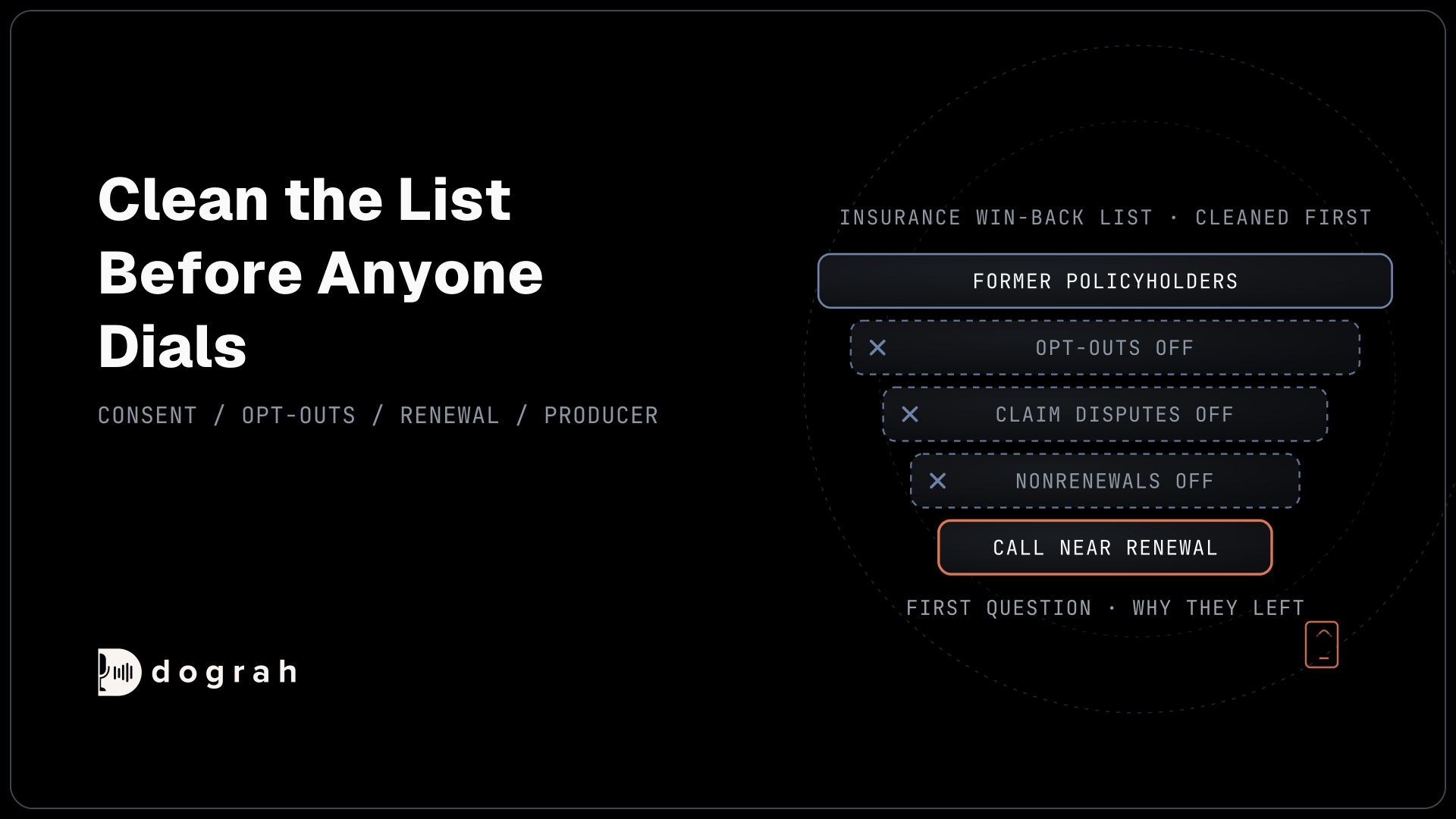
Consent generally comes first. In its February 2024 declaratory ruling, the FCC said calls using AI-generated voices "require the prior express consent of the called party to initiate such calls absent an emergency purpose or exemption." Generally, the number a borrower gave for the loan covers a reminder about that loan, and opt-outs come off the list before any call is placed. This is general information, not legal advice; confirm your position with counsel.

Open Source Alternative to Vapi / Retell
Self-hosted voice agent platform — no per-minute fees
dograh-hq/dograh
Star on GitHub
Verify, then read the amount
The call runs greet, verify, then disclose, and the amount is a loan detail. Nothing about the loan is said until the borrower passes a check.
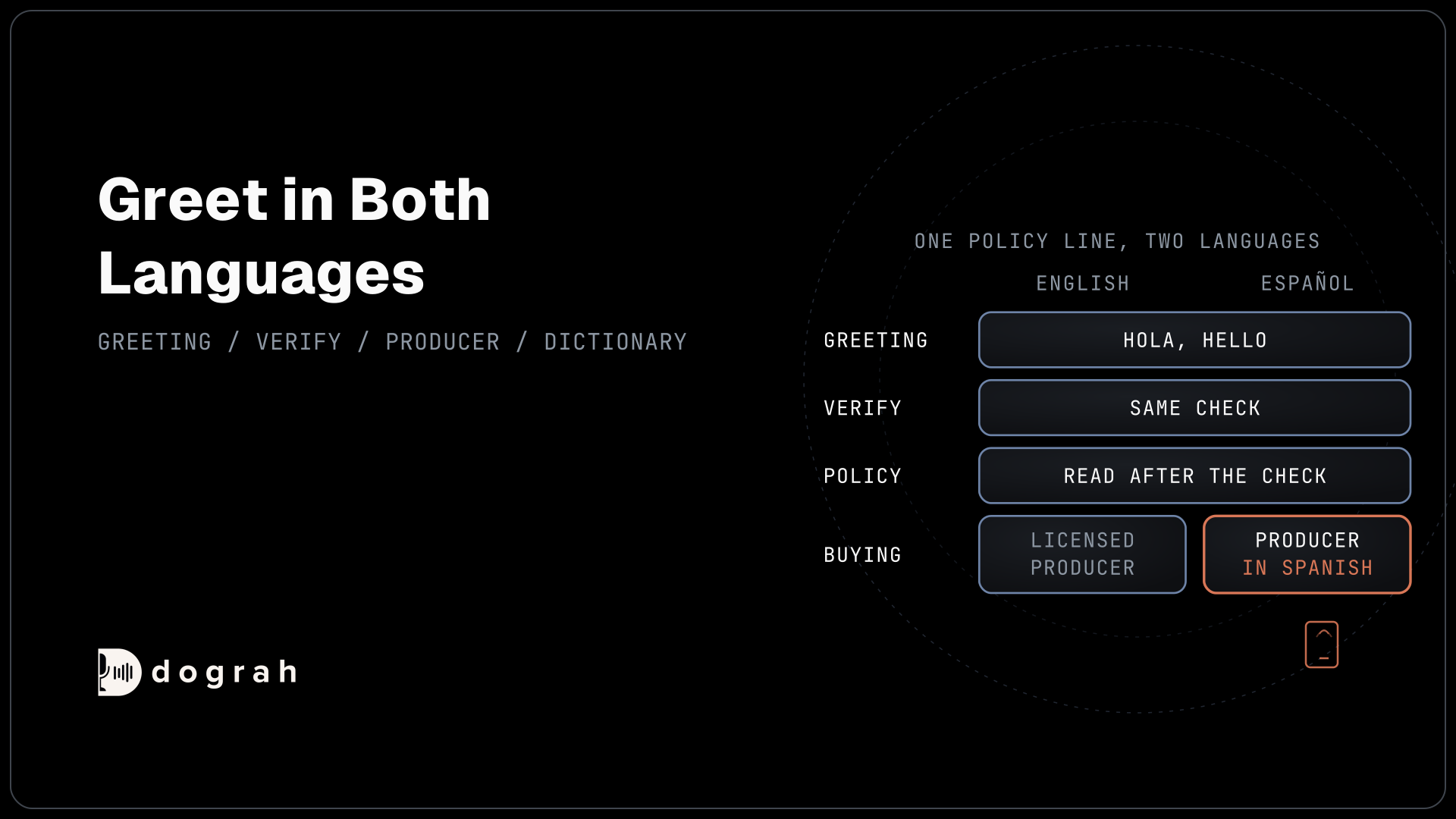
The call opens with Greeting Text, the fixed line Dograh plays word for word as the call connects. It names the servicer exactly as the borrower's statement does. A fixed greeting per contact, as text or a recorded clip, can come from the campaign file; contacts without one hear the agent's normal greeting. It plays before the borrower is verified, so it carries the servicer's name and the borrower's first name only.
Next the agent asks for an approved check, such as date of birth or the last four digits of the loan number. Recordings and transcripts keep whatever is said, so the call never asks for a full account, card or Social Security number; use a short check such as the last four digits, and send payment links by text or email from your own system. If the check fails, or someone else answered, tell the agent in the prompt to leave the servicer's number and say nothing about the loan.
Only after the check does the agent read the amount and the due date. Pre-Call Data Fetch re-reads the balance when the call connects, so a payment made that morning is already counted and the agent can change what it says. On outbound calls it runs after the person answers, and it never skips or stops the call. The agent asks whether the borrower plans to pay by the due date and records any promise-to-pay date as stated.
An HTTP API tool writes that date to the servicing system. If the borrower wants to pay now, another HTTP API tool asks the servicer's system or payment provider to send its secure payment link by text or email. Dograh has no feature for taking payments on a call and no keypad tool, so nobody reads a card number aloud; handling payment-sensitive calls in a voice agent covers why. On voicemail, the message names only the servicer and a number to call back, never the amount.
Hardship goes to a person
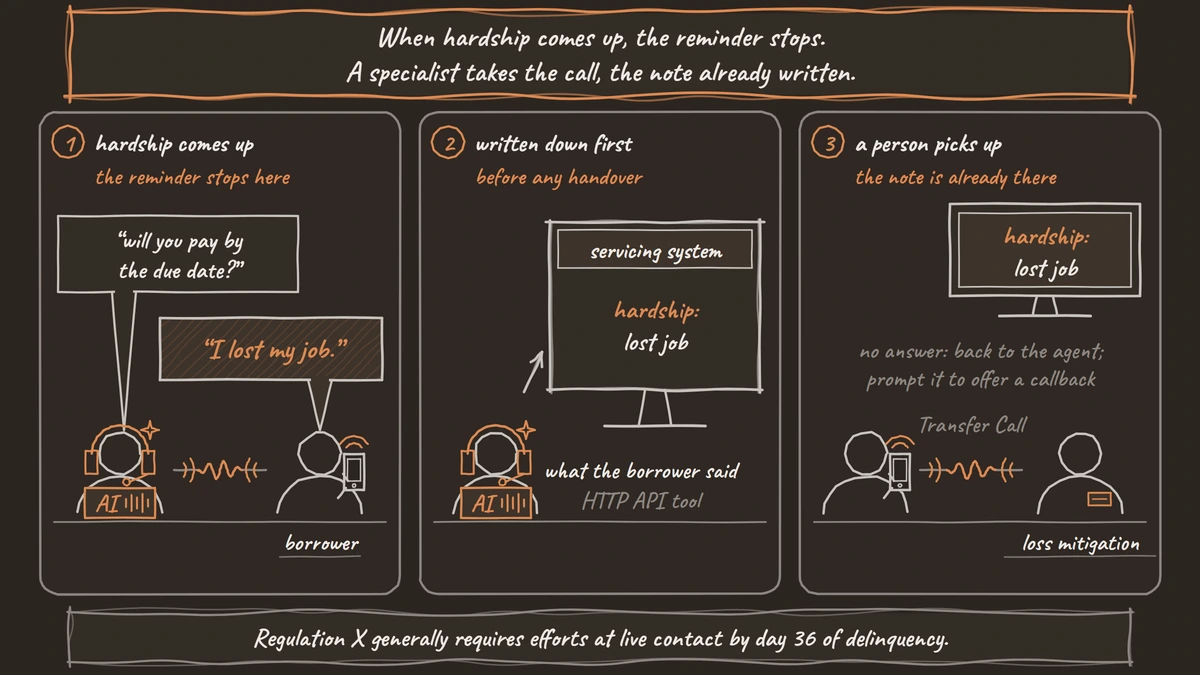
A borrower who mentions a lost job or a payment they cannot make should reach a person quickly.
Regulation X (12 CFR 1024.39) requires a servicer to "establish or make good faith efforts to establish live contact with a delinquent borrower" by the 36th day of delinquency. Whether an automated agent's call counts is a question for counsel; many servicers let the agent open the conversation and have staff own the loss-mitigation talk.
So tell the agent in the prompt to stop the reminder when hardship comes up and write what the borrower said to the servicing system through an HTTP API tool, and then offer a specialist. Transfer Call works on Twilio, Telnyx and Asterisk ARI. It passes no summary by default; on Twilio it can play a short spoken introduction to both people. Write the details to your system with an HTTP API tool before the transfer. If nobody answers within the 30-second default, the borrower stays with the agent; tell it in the prompt to offer a callback and write the request through an HTTP API tool. Web calls cannot transfer, so test this on a real phone line.
A borrower who says "stop calling me" is opting out. Dograh keeps no do-not-call list. When a caller opts out, an HTTP API tool writes it to your own list, and you remove those numbers before the next campaign upload. The do_not_call call tag records the request but never blocks a later call.
Where a reminder ends and collection begins
A reminder about a payment that is not yet late is a service call. Once a loan is seriously delinquent, the calls belong to your collections and loss mitigation teams. This section is general information, not legal advice.
The Fair Debt Collection Practices Act (FDCPA) defines a debt collector in 15 U.S.C. 1692a(6) as someone who collects "debts owed or due or asserted to be owed or due another." It excludes collection that "concerns a debt which was not in default at the time it was obtained by such person." It also pulls a creditor back in if it "uses any name other than his own which would indicate that a third person is collecting."
Read together, a servicer that took on a loan while it was current is generally outside the FDCPA for that loan, and one that acquired it already in default is generally inside. The name test is why the Greeting Text uses the exact name on the statement; our post on missed-payment recovery in BNPL explains it.
Inside the FDCPA, Regulation F presumes compliance at no more than seven calls in seven days about a debt, among other rules, and AI Voice Agents for Debt Collection covers that case. Confirm your own position with counsel.
Self-hosted Dograh has no per-minute platform fee (servers, model keys and phone minutes still cost); Dograh Cloud has a 1¢-a-minute platform fee.
Join the Dograh Community
Dograh is an OSS alternative to Vapi. Join our Slack community for queries, releases, best practices & community interactions.
Glossary
- Grace period
- The days after the due date, set by the mortgage note, before a late charge applies. The reminder agent calls before the due date and inside this window, reading dates only from the servicing system.
- Promise-to-pay date
- The date a borrower says they will pay, recorded on the call as the borrower stated it and written to the servicing system. Staff and later reminders work from it.
- Early intervention (Regulation X)
- The 12 CFR 1024.39 duty to try to reach a delinquent borrower live by the 36th day of delinquency and tell them about loss mitigation options. Whether an AI call counts is a question for counsel.
- Debt collector (FDCPA)
- Under 15 U.S.C. 1692a(6), someone who collects debts owed to another. A debt that was not in default when obtained is excluded, which is why a servicer's reminder on a current loan generally sits outside the Act.