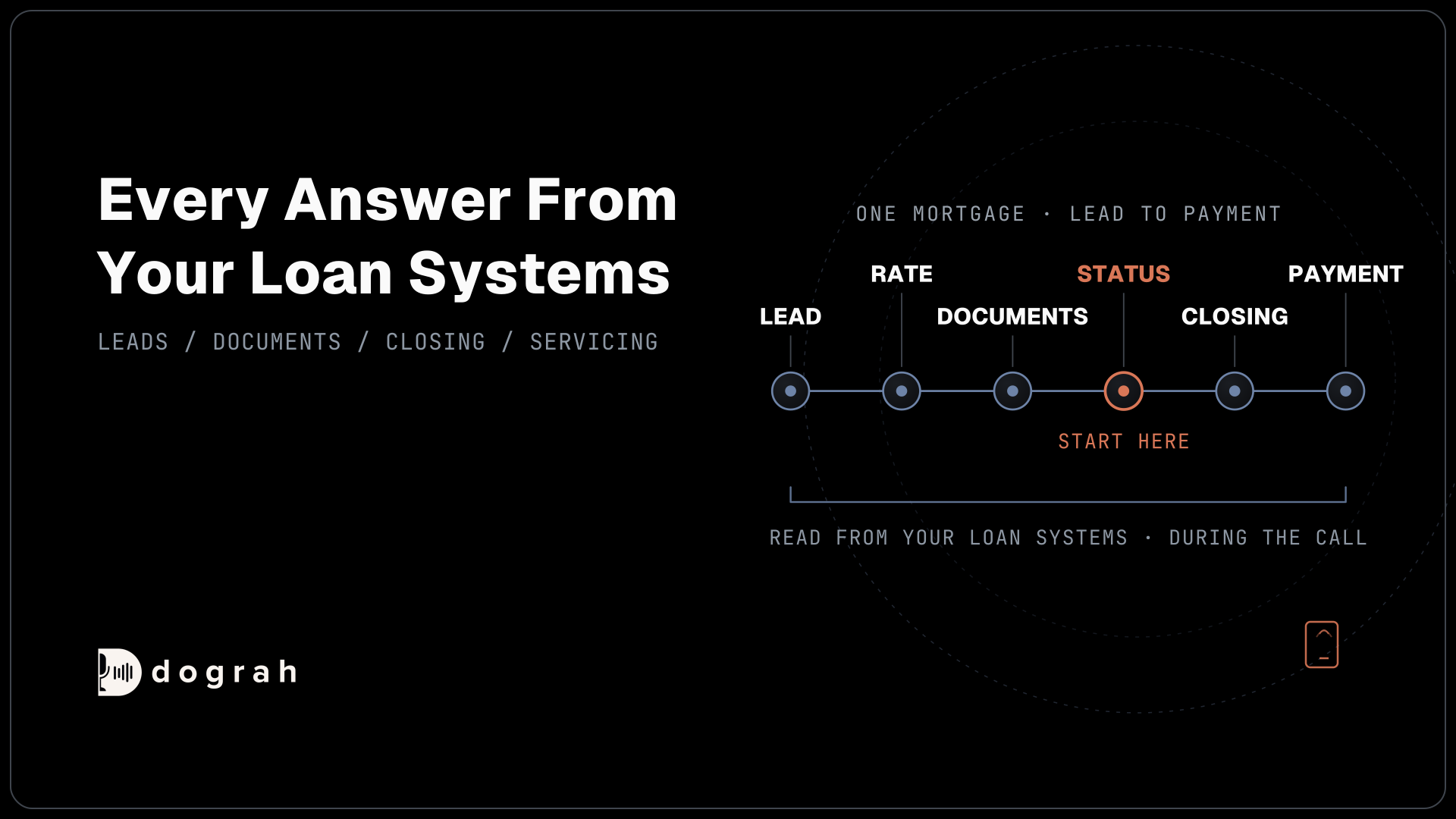

AI voice agents for mortgage and home loans answer and place routine borrower calls: new leads, rate callbacks, missing documents, status updates, closing reminders and payment reminders. After verifying the borrower, they read every fact from the loan origination or servicing system during the call. Licensed loan officers keep applications and terms, and staff keep hardship and disputes.
Key Takeaways
- Every company that hears a borrower's call is a service provider you oversee.
- The agent collects facts and books a loan officer, but never offers terms.
- Rates, balances and status come only from your systems, read during the call.
This guide follows a loan from the first lead call to the monthly payment, then sets out the rules for every call and how each one runs in Dograh, an open-source voice agent platform that reads and writes your loan origination system and servicing system during the call.
Why lenders should own the platform that hears calls
For a lender, the safest voice agent is the one with the fewest companies on the call.
The calls are worth automating. The CFPB's annual consumer complaint report for 2025 counted about 30,400 mortgage complaints. The top issue was "Trouble during payment process", and borrowers said they "were unable to reach servicer representatives, or that calls or emails went unreturned."
In J.D. Power's 2026 mortgage servicer study, a survey of 14,118 borrowers, 43% named poor customer service as the top reason to consider switching servicers, so a reachable line keeps loans on your books.
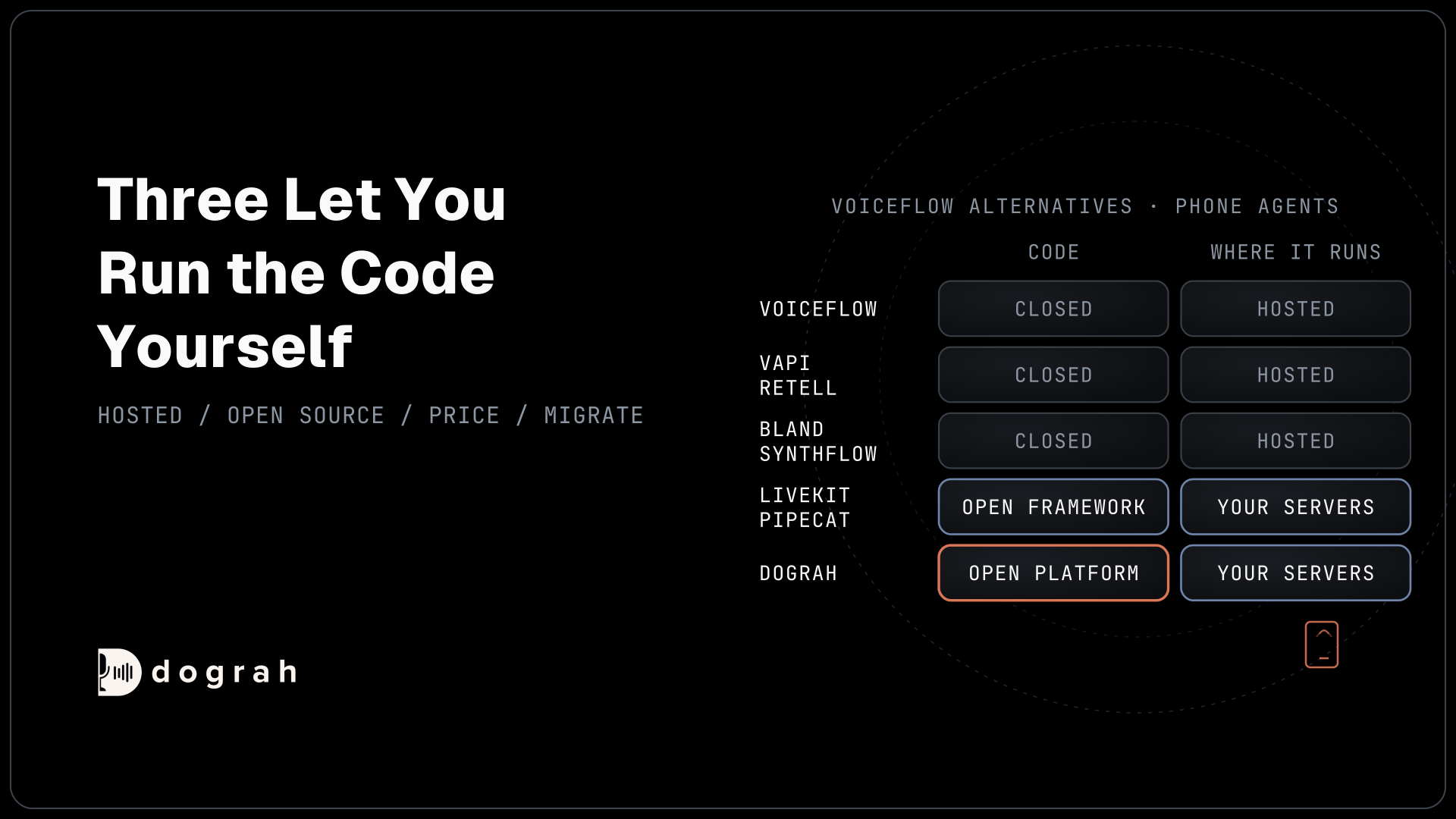
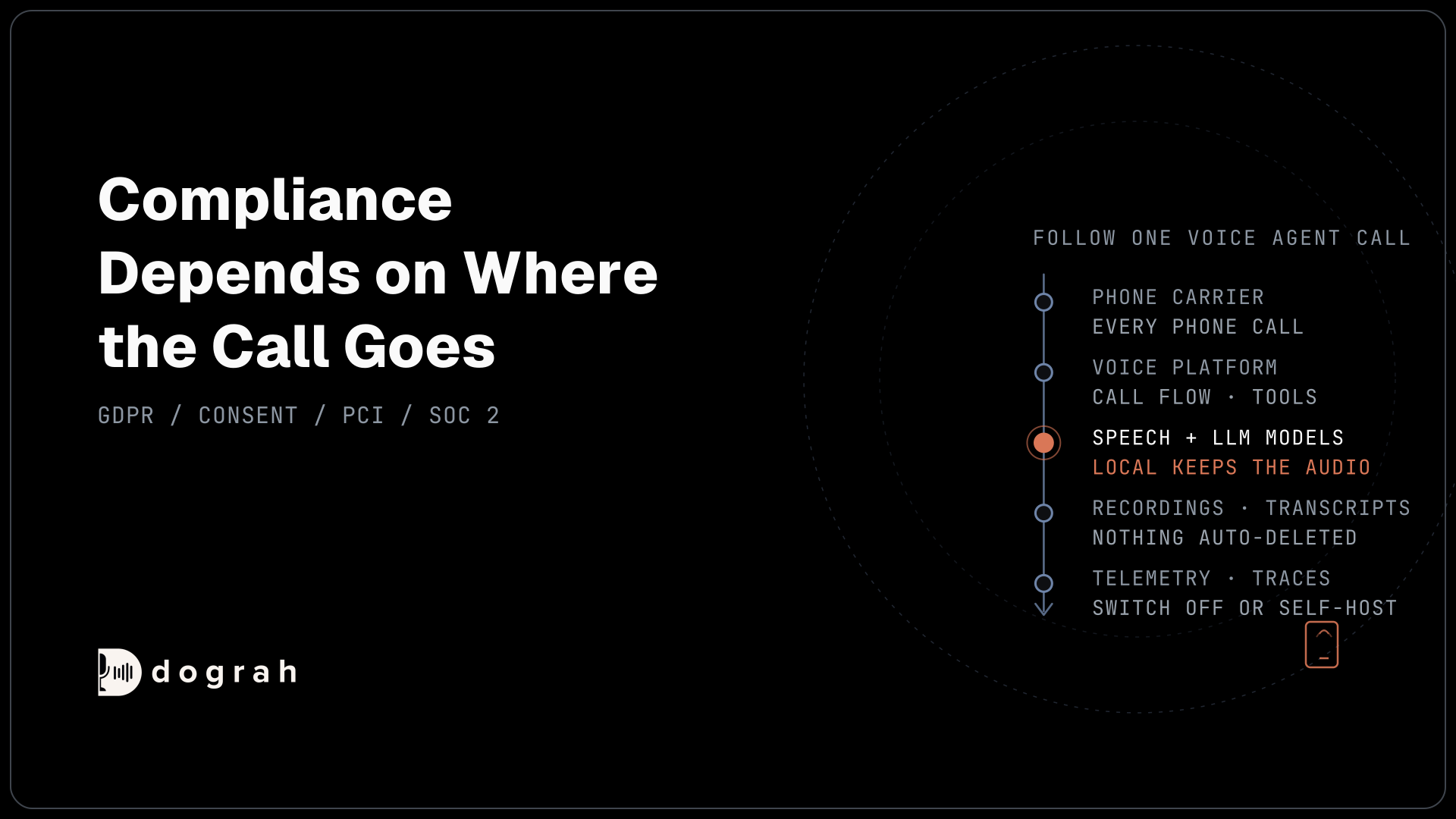
Count who hears a borrower's call on a hosted platform: the voice platform, a speech-to-text company, a language model company, a voice company and the phone carrier. For nonbank lenders and brokers, the FTC's Safeguards Rule (16 CFR 314) applies. It says "A mortgage broker is a financial institution because brokering loans is a financial activity", and any company with access to customer information through its services to the lender is a service provider.
The Safeguards Rule's duty to oversee service providers has three parts: "Taking reasonable steps to select and retain service providers that are capable of maintaining appropriate safeguards", "Requiring your service providers by contract to implement and maintain such safeguards", and "Periodically assessing your service providers based on the risk they present". Banks follow the federal banking agencies' Interagency Guidelines instead, which set similar duties for vendors. Generally, each company on that path is a service provider the lender has to oversee.
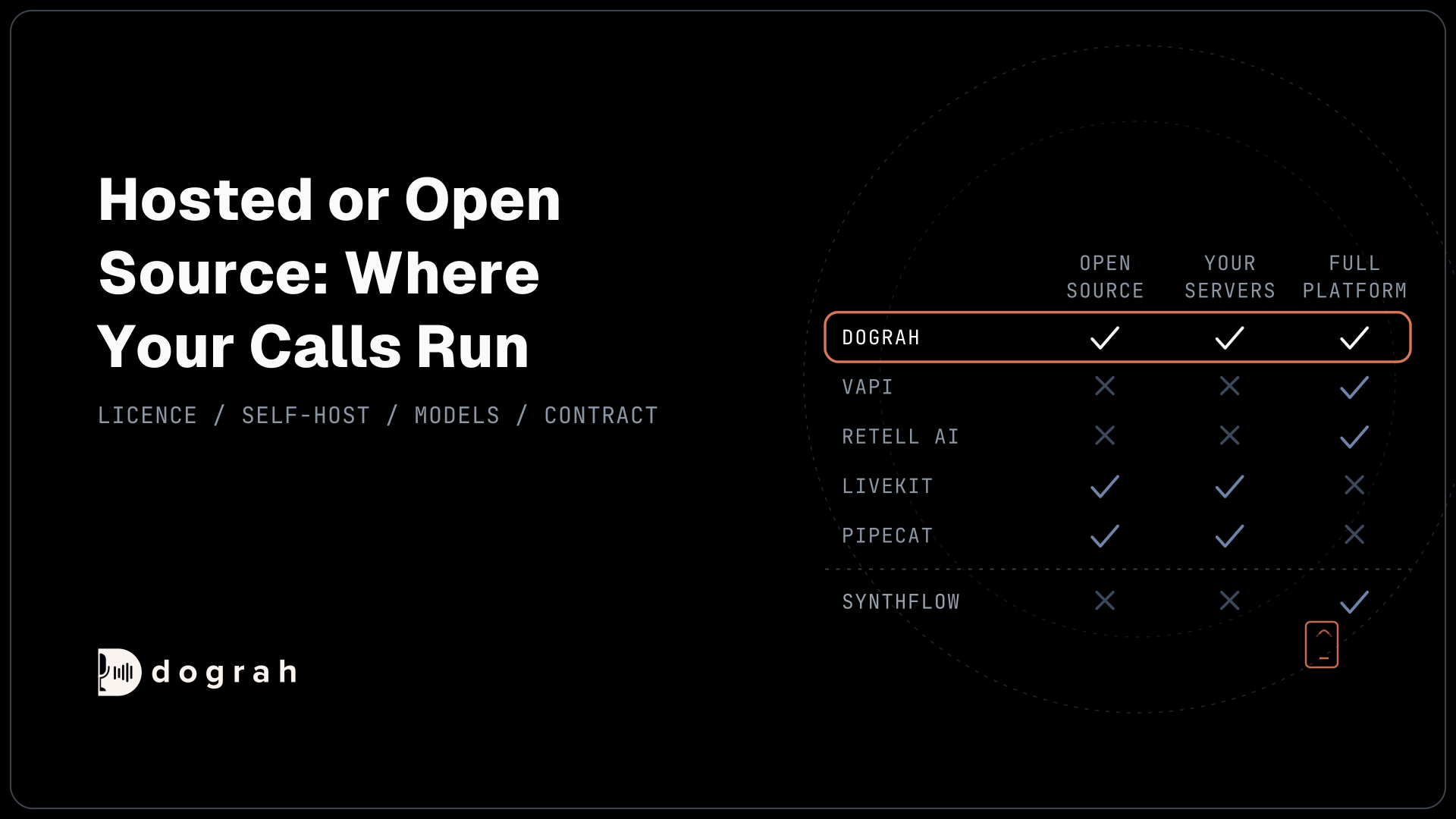
Bringing your own keys (BYOK) to a hosted platform changes whose contract covers the models, not where the audio goes. The count only drops when the platform and the models run on servers you control.
Because you self-host Dograh inside your existing compliance perimeter, you don't need a separate vendor review for Dograh; it never sees your data. Dograh starts every account on its own managed models. To keep call audio away from Dograh, open Models, switch the Organization default to BYOK with your own speech and language providers (or local models), and check that no agent has its own model override.
Dograh is the orchestration layer: it runs the call flow, tools and telephony, and the speech and language models are a separate layer you choose, such as open-weight Qwen3.8 27B for language, Parakeet TDT 0.6B v2 for speech-to-text and Magpie TTS for the voice. The call audio stays in-house only when the speech and language models run on your own servers too. Otherwise, the model providers you choose may still need their own review. The phone carrier stays on the call either way, and so does your cloud provider if the servers run in one.
In a case study reported by PYMNTS, Better.com said it moved its borrower agent off a single speech-to-speech model to separate speech, language and voice models to get "tighter compliance controls". The self-hosting guide covers the install. Usage events are sent by default; to keep those at home too, set ENABLE_TELEMETRY=false, and remove POSTHOG_API_KEY from the api service in docker-compose.yaml (or set it to an empty value).
This is our reading of the rule; confirm your position with counsel. Why On-Prem Will Win Enterprise Voice AI makes the wider case, and our page on on-prem voice AI for banks and fintechs shows the setup.
Every answer comes from your loan systems
Every call here reads from the loan origination system (LOS) or the servicing system. During the call, an HTTP API tool asks your system for what the call needs, such as a milestone or a payment amount, and the agent says only what comes back. A second tool writes back what the borrower agreed to. Each tool waits 5 seconds by default and does not retry, and its Custom Message (text or a recorded clip) plays once, just before the tool runs.
Pre-Call Data Fetch can load the loan record once the call connects, before the greeting. On outbound calls it runs after the person answers, and it waits up to 10 seconds. After the call, the Webhook node sends the outcome to your system and retries a temporary failure. To start a call when a loan reaches a milestone, your system calls the API Trigger. Dograh has no built-in LOS or servicing integration, so each of these points at your system's own API; Integrating Voice Agents With Your Stack covers the routes.
Every call runs greet, verify, then disclose. A phone number finds a loan but does not prove who is calling, so the agent asks for an approved check, such as date of birth or the last four digits of the loan number. Tell it in the prompt to say nothing about the loan until that check passes.
Some calls need a person. Transfer Call works on Twilio, Telnyx and Asterisk ARI. It passes no summary by default; on Twilio it can play a short spoken introduction to both people. Write the details to your system with an HTTP API tool before the transfer. If nobody answers, the caller stays with the agent; tell it in the prompt to offer a callback. Web calls cannot transfer, so test this on a real phone line.
Before the application: leads and rate questions
Mortgage lead qualification
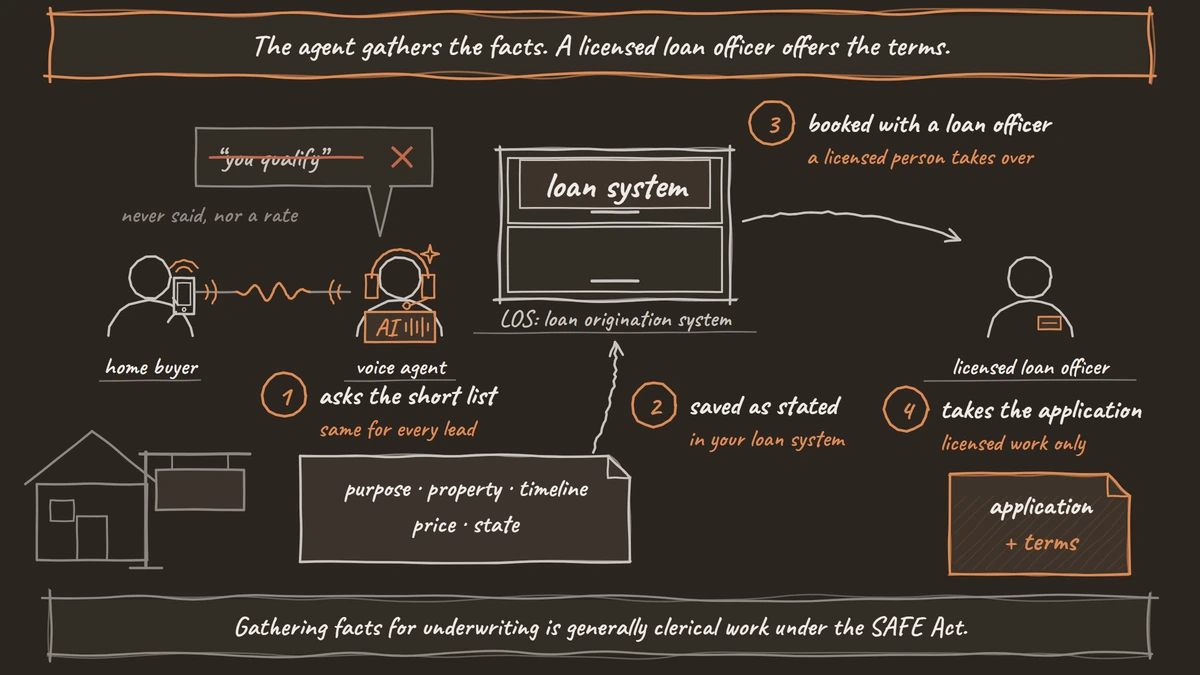
The lead call checks consent first, asks every lead the same short list of facts and hands the lead to a licensed loan officer. Consent is checked in your own list before the dial: an outbound sales call made with an AI voice generally needs the lead's prior express written consent under the Telephone Consumer Protection Act (TCPA), while a lead who calls you in is generally not a telemarketing call by your dial. The agent asks about purpose, property, timeline, price and state, records each answer as stated, and never says "you qualify" or quotes a rate. AI voice agents for mortgage lead qualification covers the consent check and the handoff.
The SAFE Act sets where the agent must stop. The SAFE Act's definition of a loan originator covers an individual who "takes a residential mortgage loan application" and "offers or negotiates terms of a residential mortgage loan for compensation or gain". It excludes "purely administrative or clerical tasks", which include "communication with a consumer to obtain information necessary for the processing or underwriting of a residential mortgage loan." Generally, collecting the facts a loan officer needs is clerical work under the SAFE Act; taking the application and offering terms is the loan officer's job. Confirm your position with counsel.
Rate and refinance callbacks
The rate call answers rate questions and rate-drop callbacks with a quote the agent fetched, or with a loan officer: after the check, an HTTP API tool asks your pricing engine for that borrower's quote. If the agent states a rate on a promotional call, Regulation Z generally expects it as an APR; the simplest design is that the agent reads only the quote your pricing engine returns, APR included, or leaves rates to the loan officer. Confirm your position with counsel. A rate-drop call to past clients is generally telemarketing too, so the consent rule above applies. AI voice agents for mortgage rate and refinance callbacks covers both directions.

Open Source Alternative to Vapi / Retell
Self-hosted voice agent platform — no per-minute fees
dograh-hq/dograh
Star on GitHub
While the loan is in process: documents and status
Loan document collection
The document call names the missing item and why it is needed, and never collects the document on the call. After the check, the agent reads the open condition from the LOS, such as a recent pay stub. Dograh has no SMS tool, so an HTTP API tool asks your system to send its secure upload link. Campaigns have no per-borrower call cap, so cap follow-ups in your own list and the chase never feels like debt collection. AI voice agents for loan document collection covers the reminder and the cap.
Application status updates
The status call reads the milestone from the LOS and never interprets it. After the check, the agent says where the loan is, such as "in underwriting", and leaves approval odds and denials to the loan officer. A real estate agent or family member hears status only when the borrower's authorization is on file in the LOS. AI voice agents for mortgage application status updates covers inbound and outbound calls.
Closing day: reminders and the wire-fraud warning
The agent offers only slots the closing calendar returns, once the LOS shows the date fits the Closing Disclosure window. Under Regulation Z, the creditor must make sure the borrower receives the Closing Disclosure "no later than three business days before consummation." The day before, the reminder says what to bring, and the loan officer or closing agent explains the figures.
Wire fraud is the risk at closing, so one line never changes: "We will never send wiring instructions by phone or email. Before you wire any money, call your closing agent at a number you already know." Play it as fixed text or a recorded clip, never as a line the model writes, and tell the agent in the prompt never to read out or confirm wiring details.
A reminder about the borrower's own closing is generally not telemarketing, and the number the borrower gave for the loan generally covers it. Confirm your position with counsel. AI voice agents for mortgage closing scheduling and reminders covers booking, the reminder and the reschedule.
Join the Dograh Community
Dograh is an OSS alternative to Vapi. Join our Slack community for queries, releases, best practices & community interactions.
After closing: mortgage payment reminders
After closing, the main call is the servicer's payment reminder. The MBA's National Delinquency Survey for the second quarter of 2026 put the delinquency rate at 4.37% of loans outstanding, up 44 basis points from a year earlier, so a reminder before the due date and in the grace period is worth placing.
The agent verifies, then reads the amount and due date from the servicing system. It records any promise-to-pay date as stated, and your system sends the payment link. A borrower who mentions hardship goes to your loss mitigation staff, with the details written first. Regulation X (12 CFR 1024.39) requires a servicer to "establish or make good faith efforts to establish live contact with a delinquent borrower" by the 36th day of delinquency. Whether an automated agent's call counts is a question for counsel; many servicers let the agent open the conversation and have staff own the loss-mitigation talk.
A servicer collecting a loan that was not in default when it took it on is generally outside the Fair Debt Collection Practices Act (FDCPA); AI Voice Agents for Debt Collection covers the in-default case.
Campaign calling hours run in one time zone, so run one campaign per zone. To stop calling someone mid-campaign, pause the campaign and start a new one from a corrected list. For lists that change daily, start calls from your own system with the API Trigger, so your system decides who is called. AI voice agents for mortgage payment reminders covers the call and the time zones.
Rules that hold on every mortgage call
Voicemail gets only the lender's name and a callback number. If you want to tell borrowers they're speaking with an automated assistant, or your location requires it by law, write it in the Greeting Text along with the lender's name.
Every caller gets the same questions. Regulation B (12 CFR 1002.4(a)) says "A creditor shall not discriminate against an applicant on a prohibited basis regarding any aspect of a credit transaction", so the agent asks every lead the same list, never asks about protected traits and sends anything off-script to a person.
Consent and opt-outs live in your systems. Dograh keeps no do-not-call list. When a caller opts out, an HTTP API tool writes it to your own list, and you remove those numbers before the next campaign upload. The do_not_call call tag records the request but never blocks a later call.
No call takes a payment or a full number. Recordings and transcripts keep whatever is said, so the call never asks for a full account, card or Social Security number; use a short check such as the last four digits, and send payment links by text or email from your own system. Self-hosted, recording can be switched off only server-wide, and transcripts are still saved.
The Complete Guide to Compliant AI Voice Agents covers these rules across industries. Confirm your position with counsel before the first borrower call.
How to choose a platform for mortgage calls
Ask where the call audio and models run, how the agent hands a borrower to a licensed loan officer, and whether every rate comes from your systems during the call, then compare pricing as volume grows.
Dograh is open source under the BSD-2-Clause licence and runs with Docker Compose on your servers. Self-hosted Dograh has no per-minute platform fee (servers, model keys and phone minutes still cost); Dograh Cloud has a 1¢-a-minute platform fee. Dograh Cloud handles the security work for you. Both run 10 concurrent calls by default, and self-hosted teams can raise that with DEFAULT_ORG_CONCURRENCY_LIMIT. Audit logs are listed on Dograh's Enterprise plan. Best AI voice agents for mortgage lenders applies these tests to the platforms lenders compare.
Which mortgage call to automate first
Start with inbound status calls: the agent only reads, after a check, and no outbound consent question arises. Then document reminders, then closing reminders with the wire line tested. Lead and rate calls follow once your consent records are clean, and payment reminders go live with your servicing team.
Test on a real phone number before launch, because most phone calls reach the agent as 8 kHz audio, while a browser test runs at 16 kHz. Once live, run quality assurance (QA) on a random 5 to 10% sample of calls. For the same calls in other industries, see AI Voice Agents by Use Case.
Each call above has its own deep dive:
- AI Voice Agents for Mortgage Lead Qualification
- AI Voice Agents for Mortgage Rate & Refinance Callbacks
- AI Voice Agents for Loan Document Collection
- AI Voice Agents for Mortgage Application Status Updates
- AI Voice Agents for Mortgage Closing Scheduling and Reminders
- AI Voice Agents for Mortgage Payment Reminders
- Best AI Voice Agents for Mortgage Lenders
Glossary
- Loan origination system (LOS)
- The lender's system of record for a loan from application to closing: borrower details, milestones, open conditions and closing dates. The status and closing calls in this guide read from it and write back to it.
- Service provider (Safeguards Rule)
- Under 16 CFR 314.2, any person or entity that gets access to customer information by providing services to a financial institution. A voice platform or model provider that hears borrower calls generally is one, so the lender has to oversee it.
- Loan originator (SAFE Act)
- Under 12 U.S.C. 5102, an individual who takes a residential mortgage loan application and offers or negotiates its terms for compensation. Clerical collection of information is excluded, which is where the voice agent generally stays.
- Closing Disclosure
- The Regulation Z form with the loan's final terms and costs, which the borrower must receive no later than three business days before consummation. The closing call books only dates that fit that window.