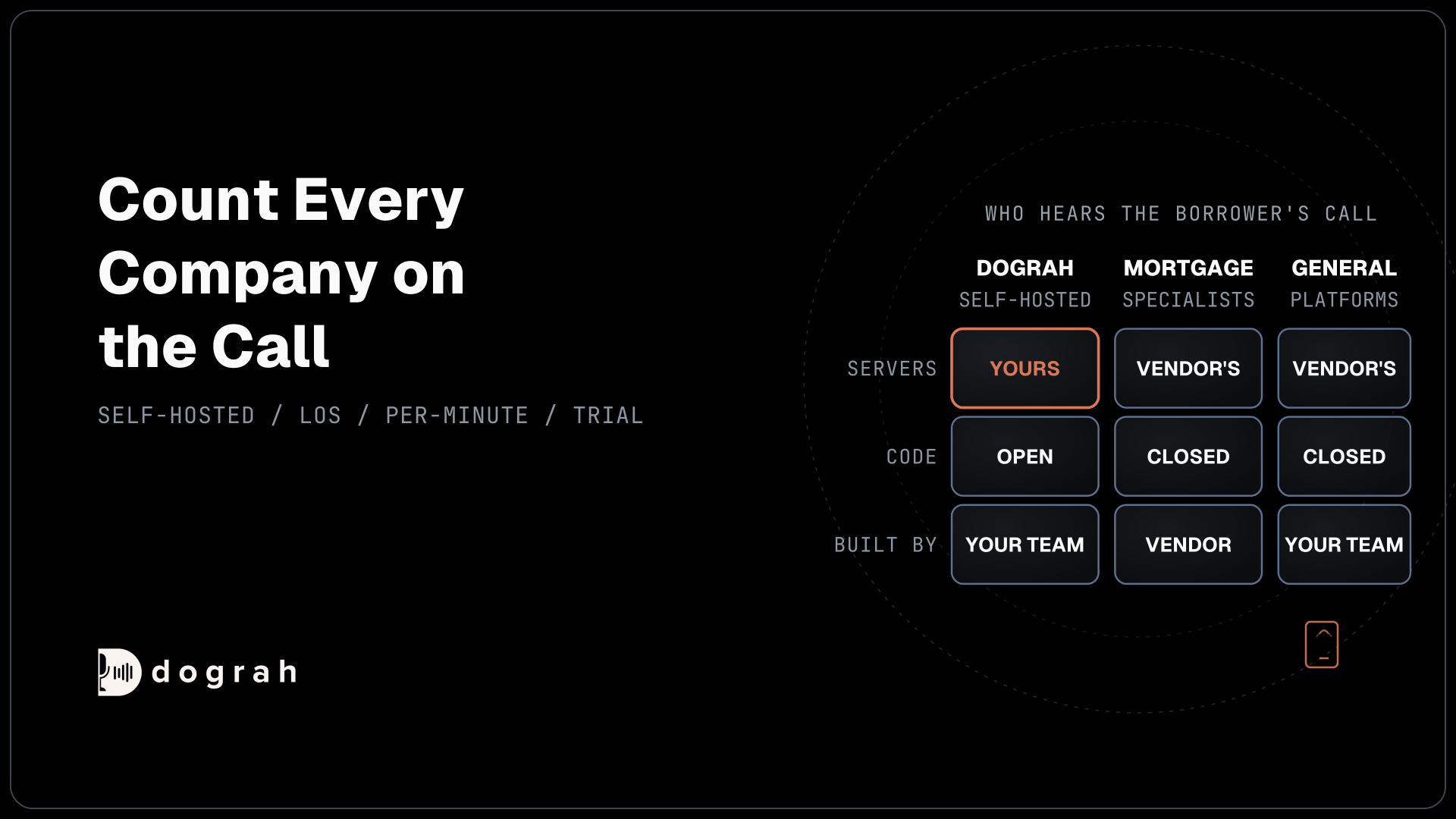

The best AI voice agents for mortgage lenders differ most in who hears the borrower's call. Dograh, an open-source, self-hostable voice agent platform, can run with local models on the lender's own servers and read the LOS during the call. Sela and Kastle are mortgage specialists, and Bland AI, Retell AI and Vapi are general platforms priced per minute.
Key Takeaways
- Count every company that hears the call, because each is a vendor you oversee.
- Dograh can run on your own servers with no per-minute platform fee.
- Specialists bring lending workflows; general platforms bring per-minute prices and your own build.
This post is part of our guide to AI voice agents for mortgage and home loans. The guide's section "How to choose a platform for mortgage calls" starts from one rule: "Choose a platform by what happens to the borrower's call, then by what it costs." Here are the platforms lenders compare, judged on six tests that matter to an originator or a servicer. First up is Dograh, an open-source, self-hostable voice agent platform.
Six tests for a mortgage voice agent platform
Mortgage calls carry loan details and money, so the tests start with control and end with price.
The first test is who hears the call. On a hosted platform, the call reaches the platform, a speech-to-text company, a language model company and a voice company, plus the phone carrier. For nonbank lenders and brokers, the FTC's Safeguards Rule requires overseeing service providers, including "Periodically assessing your service providers based on the risk they present". Generally, every company that hears or stores a borrower's call is a service provider you have to oversee, so ask where the platform runs and where the models run. Banks follow the Interagency Guidelines, with similar vendor duties. Confirm your position with counsel.
The second is the licensed handoff. Under the SAFE Act, collecting the facts a loan officer needs is generally clerical work; taking the application and offering terms is the loan officer's job. Ask how the agent hands a lead to a licensed loan officer and what the officer sees first. AI voice agents for mortgage lead qualification walks through that handoff.
The third is live data. Every milestone, balance and rate should come from your loan origination system (LOS), servicing system or pricing engine during the call.
The fourth is consent. An outbound sales call made with an AI voice generally needs the lead's prior express written consent, so the platform should check your own consent records before it dials.
The fifth is the same answers for every caller. Regulation B bars discouraging applicants on a prohibited basis, so the agent asks every lead the same questions and sends anything outside the script to a person. Confirm your position on consent and Regulation B with counsel.
The sixth is the cost model: a per-minute fee, a seat or an annual contract, and what sits on top, such as models, phone minutes and add-ons.
How the platforms compare
The table starts with Dograh, then mortgage specialists, then general platforms.
| Platform | Built for | Where calls can run | Open source | Price | What you get, and what's missing |
|---|---|---|---|---|---|
| Dograh | Any call flow, connected to your LOS and servicing system | Your own servers; Dograh Cloud; Enterprise adds on-premise or private cloud | Yes, BSD-2 | Self-hosted: no per-minute platform fee. Dograh Cloud: 1¢/min platform fee, 10 concurrent calls included | Local models keep audio in-house; HTTP API tools read and write the LOS during the call. No prebuilt LOS connector, so your team connects its API |
| Sela | Mortgage origination | Run by Sela | No | Through a demo and sales | Says it is live with 6 of the top 10 US mortgage lenders; hands off to licensed loan officers; SOC 2 Type II. Closed code |
| Kastle | Banks and lenders, origination through servicing | Run by Kastle | No | Through a demo | Servicing, collections and loss mitigation agents; compliance engine trained on FDCPA, TILA, UDAAP, RESPA and TCPA. Closed code |
| ICE | Servicers on ICE's MSP platform | Inside MSP | No | Through ICE | Servicing voice agent, announced in March 2026 and in beta. Only for MSP users |
| Thoughtly | General voice agents | Thoughtly's platform; dedicated infrastructure and data residency on Enterprise | No | Through sales on every plan | 10 concurrent calls on Flex, 100+ on Scale; TCPA and state DNC review on Scale and Enterprise. SOC 2 report on Enterprise |
| Bland AI | General voice agents | Bland's platform; on-prem or virtual private cloud (VPC) on Enterprise | No | Start $0.14/min; Build $0.12/min plus $299/month | One rate covers its models; telephony billed separately. On-prem comes with an Enterprise contract |
| Retell AI | General voice agents | Retell's cloud; dedicated server as an Enterprise add-on | No | $0.07 to $0.31/min | 20 concurrent calls free, $8 per extra call a month. Closed code in its cloud |
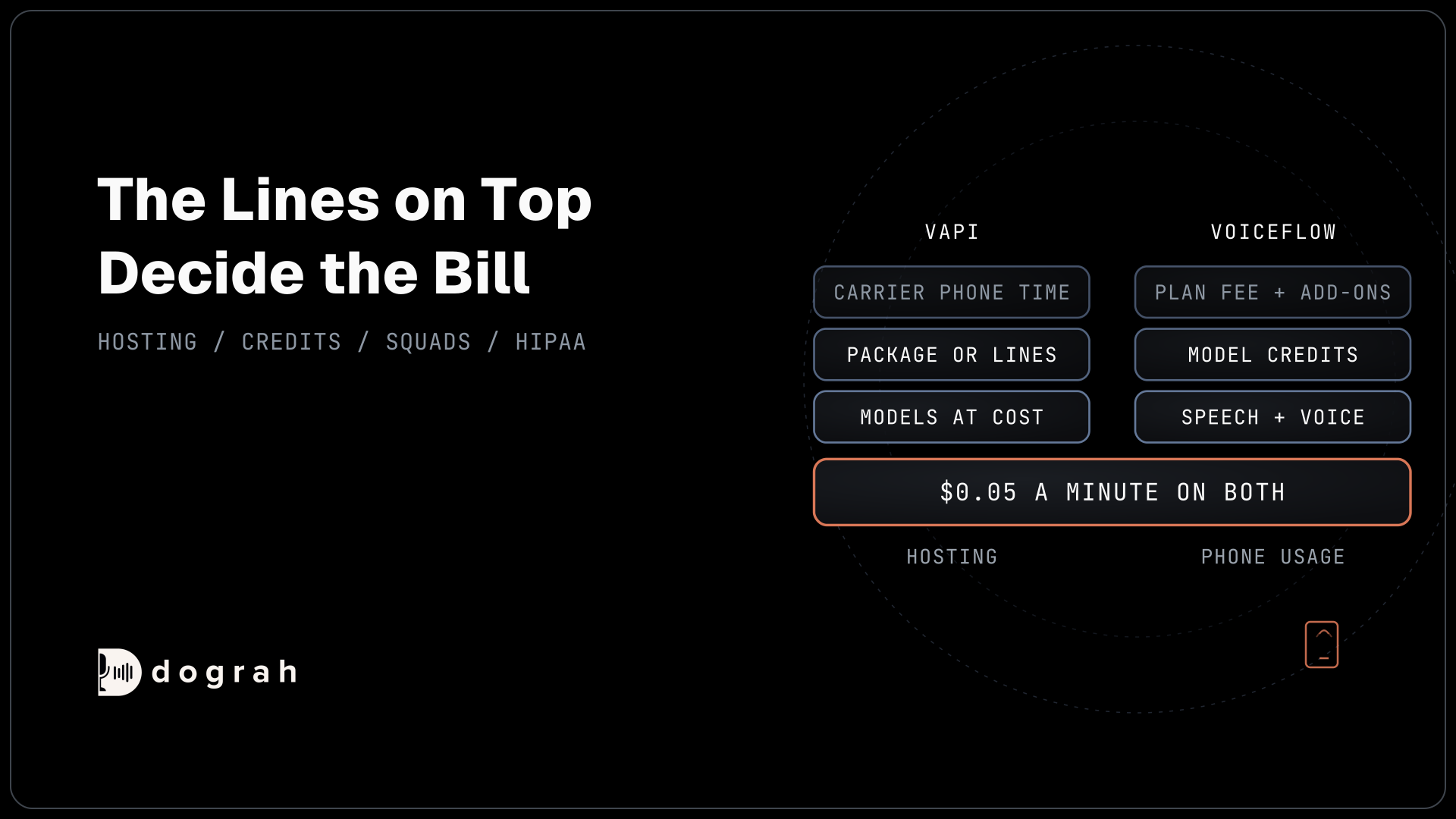
| Vapi | General voice agents | Vapi's managed platform | No | $0.05/min hosting, before models and phone | 4 concurrent calls on the base tier; HIPAA add-on $2,000/month. The fee sits on top of every model and phone cost |
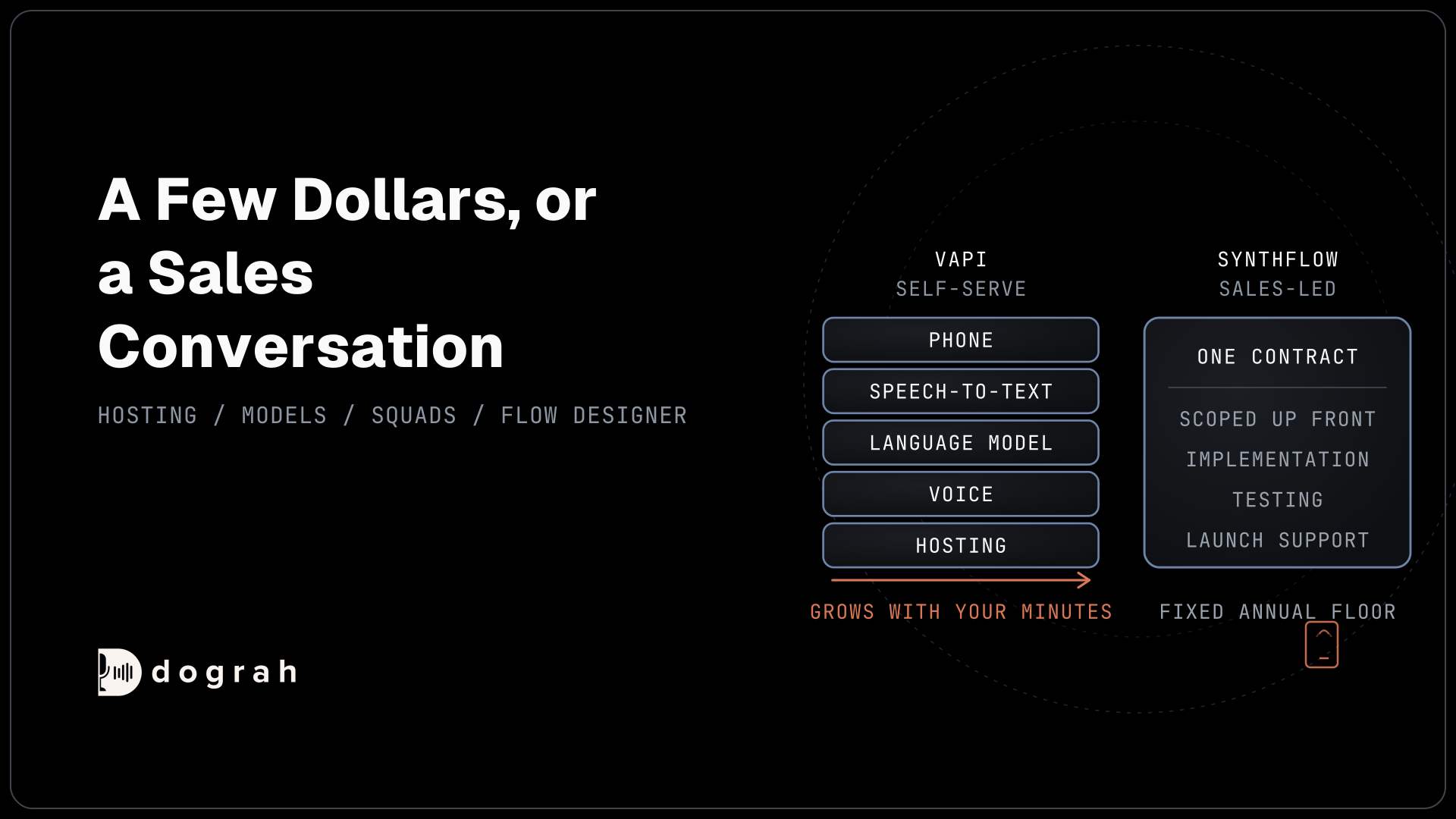
| Synthflow | General voice agents | Synthflow's own cloud, with region-based hosting in the US and EU | No | Enterprise contracts from $30,000 a year | One plan, scoped to volume, concurrency and integrations |
Dograh: open source on the lender's own servers
Against the six tests, Dograh's case rests on control. Its code is open under the BSD-2 licence, with more than 5,900 stars on GitHub, and it runs with Docker Compose on servers you choose. Because you self-host Dograh inside your existing compliance perimeter, you don't need a separate vendor review for Dograh. Dograh never sees your data. Dograh starts every account on its own managed models. To keep call audio away from Dograh, open Models, switch the Organization default to BYOK with your own speech and language providers (or local models), and check that no agent has its own model override.
Dograh is the orchestration layer: it runs the call flow, tools and telephony, and the speech and language models are a separate layer you choose. The call audio stays in-house only when the speech and language models run on your own servers too, which takes the model companies off your service provider list; otherwise, the providers you choose may still need their own review. Bring your own key to a hosted model instead and the audio still reaches that provider. The key changes whose contract covers the model, and the audio goes to the same place. The phone carrier stays on the call either way.
For live data, Pre-Call Data Fetch loads the loan record once the call connects, and HTTP API tools read milestones, balances and rate quotes during the call and write bookings and promise-to-pay dates back. The API Trigger starts a call when a loan reaches a milestone. Your own system checks consent before it starts a call, and an HTTP API tool writes opt-outs back to your list.
For the handoff, Transfer Call works on Twilio, Telnyx and Asterisk ARI. It passes no summary by default; on Twilio it can play a short spoken introduction to both people. Write the details to your system with an HTTP API tool before the transfer, so the loan officer sees the lead's answers as the call arrives. To test two openings, split the campaign between two versions of the agent; Dograh shows each version's share of calls and outcomes.
Self-hosted Dograh has no per-minute platform fee (servers, model keys and phone minutes still cost); Dograh Cloud has a 1¢-a-minute platform fee. Dograh Cloud handles the security work for you. Self-hosted, it runs 10 concurrent calls by default, adjustable with DEFAULT_ORG_CONCURRENCY_LIMIT. Dograh's pricing page lists on-premise or private-cloud deployment and audit logs on the Enterprise plan.
In practice, your team connects each system's API, since Dograh ships no prebuilt connector for an LOS such as Encompass, and your own systems send texts, take payments and hold the do-not-call list. Self-hosting puts uptime and upgrades in your team's hands.

Open Source Alternative to Vapi / Retell
Self-hosted voice agent platform — no per-minute fees
dograh-hq/dograh
Star on GitHub
Sela, Kastle and ICE: built for mortgage work
These three arrive with lending workflows already built, sold through demos and sales teams.
Sela builds voice agents for mortgage origination. It says it is live with 6 of the top 10 US mortgage lenders, and its agents hand off "to licensed loan officers when they're ready". It lists SOC 2 Type II and TCPA compliance and says it can go live in days once connected to your CRM.
Kastle covers the loan from first inquiry to servicing, with agents for loan officers, collections, compliance, servicing and loss mitigation. Its compliance engine is "Pre-trained on FDCPA, TILA, UDAAP, RESPA, and TCPA", and it says it is in production at 10 of the top 25 US servicers.
ICE, which sells the MSP servicing platform, announced a servicing voice agent in March 2026, in beta. It answers escrow and mortgage insurance questions inside MSP and transfers to a person when needed, so it fits servicers already on MSP.
General voice platforms on mortgage shortlists
These five are general voice platforms. A lender's team builds the mortgage flow on them, the same as on Dograh, but the result runs on the vendor's platform.
Thoughtly sells three plans through sales: Flex with 10 concurrent calls, Scale with 100 or more, and Enterprise. Its TCPA and state do-not-call review comes on Scale and Enterprise, and its Enterprise plan adds dedicated infrastructure and data residency.
Bland AI charges $0.14 a minute on Start with 10 concurrent calls, and $0.12 a minute plus $299 a month on Build with 50. The rate covers its models, telephony is billed separately, and on-prem or VPC deployment comes with Enterprise. Bland AI pricing explained adds up a full bill.
Retell AI charges $0.07 to $0.31 a minute and includes 20 concurrent calls free, with more at $8 per call a month. It lists SOC 2, and its BAA is self-serve on pay-as-you-go. Our breakdown of Retell AI pricing covers each part.
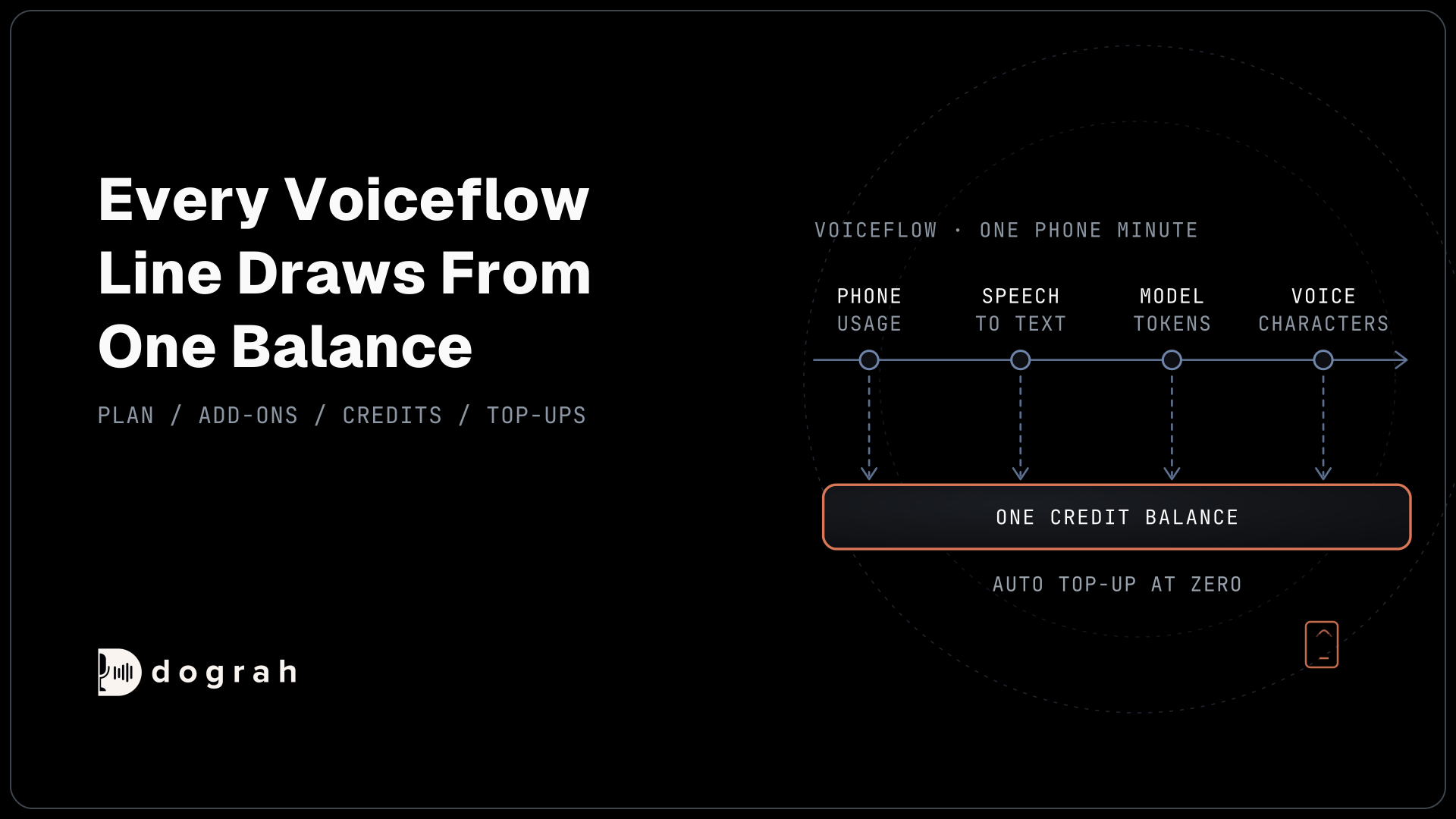
Vapi charges $0.05 a minute for hosting, with models and phone billed on top. The base tier includes 4 concurrent calls, extra lines cost $10 a month, and HIPAA handling is $2,000 a month. Vapi pricing explained works through two examples.
Synthflow sells one plan, Enterprise, with contracts from $30,000 a year, scoped to call volume, concurrency, telephony, integrations and launch support. It runs on Synthflow's own cloud, with region-based hosting in the US and EU.
Other names appear on broad shortlists too. PolyAI, Voiceflow, Leaping AI and Smallest AI are general platforms to judge on the same six tests. LiveKit and Pipecat are open-source frameworks for building voice agents in code, so your team builds the platform around them. Air AI also appears on older lists. In March 2026 it settled FTC charges that it misled small businesses with false earnings and refund claims.
What every platform must prove in a trial
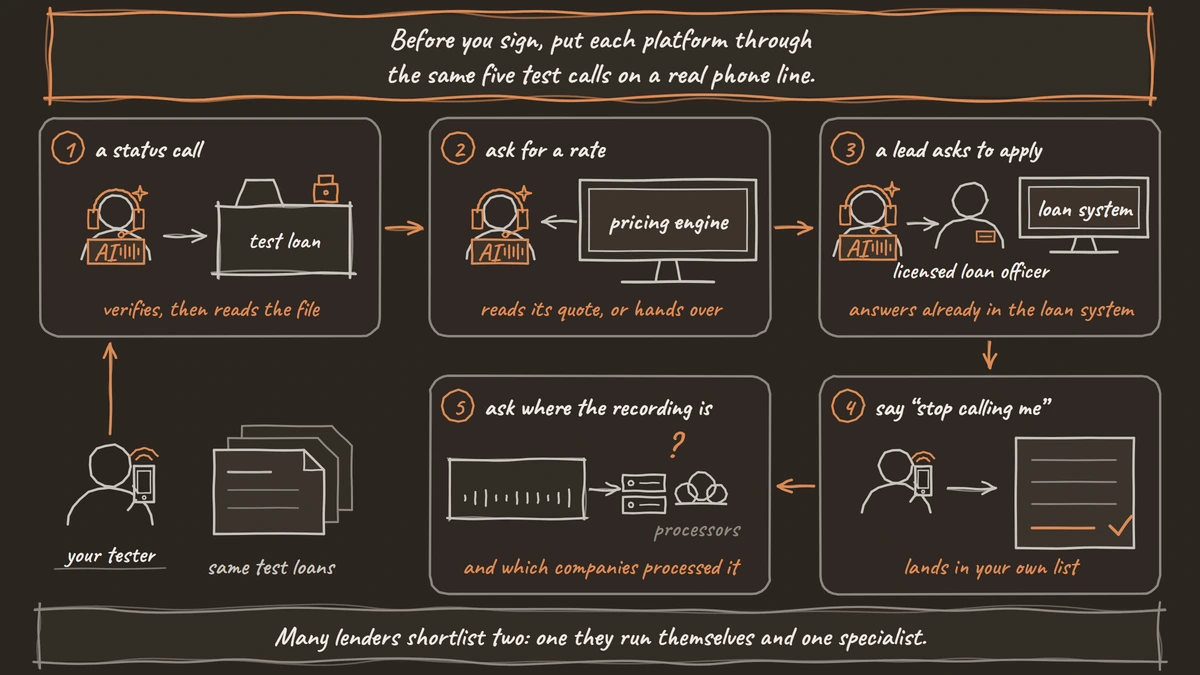
Whatever you shortlist, run the same five tests on a real phone line before signing. Put a test borrower through a status call and check that the agent verifies before it reads anything from the file. Ask for a rate and check that the agent either reads the quote your pricing engine returned or hands over to a loan officer.
Then call as a lead who wants to apply, and check the transfer reaches a licensed loan officer with the answers already in the LOS. Say "stop calling me" and confirm the opt-out lands in your own list. Finally, have the vendor show where that call's recording is stored and which companies processed the audio.
Join the Dograh Community
Dograh is an OSS alternative to Vapi. Join our Slack community for queries, releases, best practices & community interactions.
Which platform fits which lender
The right choice depends on who must not hear the call and who will build the agent.
A lender or servicer that wants borrower calls, recordings and transcripts on its own servers should start with Dograh self-hosted. It is the strongest fit for that need, because the code is open, the platform fee is zero when self-hosted, open-weight models keep the audio in-house, and the agent reads and writes your LOS during the call.
A lender that wants a vendor to arrive with origination workflows will look at Sela, and a servicer that wants servicing and loss mitigation agents will look at Kastle, or at ICE if it already runs MSP. A developer team that wants a hosted platform this month can start on Bland AI, Retell AI or Vapi and watch the per-minute fee as volume grows. Thoughtly and Synthflow sell through their sales teams.
Many lenders will shortlist two: one platform they can run themselves and one specialist. Run the five trial tests on both, with the same test loans.
Dograh's strengths line up with the tests a regulated lender weighs most: fewer companies on the call, open code your security team can read, live LOS reads and writes, and a published price. To try it, self-host Dograh from GitHub with Docker Compose, or start on Dograh Cloud with its 1¢-a-minute platform fee, and point one test number at a status call on a test loan.
Glossary
- Service provider (Safeguards Rule)
- Under 16 CFR 314.2, a company that gets access to customer information by providing services to a financial institution. A voice platform or model company that hears borrower calls generally is one, so the lender has to oversee it.
- Self-hosting
- Running the voice agent platform on servers the lender controls. With open-weight models on the same servers, call audio and transcripts stay in-house.
- Open-weight model
- A speech or language model whose weights can be downloaded and run on your own servers. It is what lets a self-hosted voice agent keep borrower audio away from outside model companies.
- Concurrency limit
- How many calls a platform runs at once. It decides how many borrowers reach the agent at a busy moment, such as a rate drop or the first of the month.