
AI voice agents for utility bill reminders call customers before a due date or a scheduled shutoff. After verifying the account holder, they state the amount and due date, plus any shutoff date from the written notice, and point to the utility's own payment channels. They never take a payment, and hardship or disputes go to a person.
Key Takeaways
- Verify the account holder before naming any amount or date.
- A voicemail names the utility and a callback number, nothing more.
- Before shutoff it is a service call; after shutoff, a collection call.
This post is part of our guide to AI voice agents for utilities and energy. In the guide's section "Outbound calls and the FCC consent line", the reminder part comes down to one line: a reminder states facts and points to the utility's own payment channels. Here is that call in full, run on Dograh, an open-source, self-hostable voice agent platform, with the account read from the utility's customer information system (CIS) during the call.
Who a utility bill reminder reaches
Many of the people on a reminder list are already struggling to pay. In February 2026, the National Energy Assistance Directors Association (NEADA) reported that about 21.5 million households are behind on their energy bills. In J.D. Power's Utilities Outlook 2026, 22% of electric customers said they could not pay their full bill in 2025.
So the reminder has two jobs. It gives the facts a customer needs to avoid a shutoff, and it opens the door to help. The FCC counts calls that tell customers they may be eligible for subsidized or low-cost services as closely related to utility service, so mentioning the utility's assistance programs fits inside the reminder.
Where the reminder sits under FCC rules
A reminder before shutoff is a service call, and the same call after shutoff is a collection call. This is general information, not legal advice.
The FCC's ruling FCC 16-88 says that before termination, a customer who gave the utility a wireless number "is deemed to have given prior express consent to be contacted by their utility company" for closely related calls, including "calls to warn about the likelihood that failure to make payment will result in service curtailment." The next sentence sets the limit: "After a customer's utility service has been terminated, however, routine debt collection calls by utilities to those customers will continue to be governed by existing rules and requirements." Once service is off, the call follows the rules our post on AI voice agents for debt collection covers.
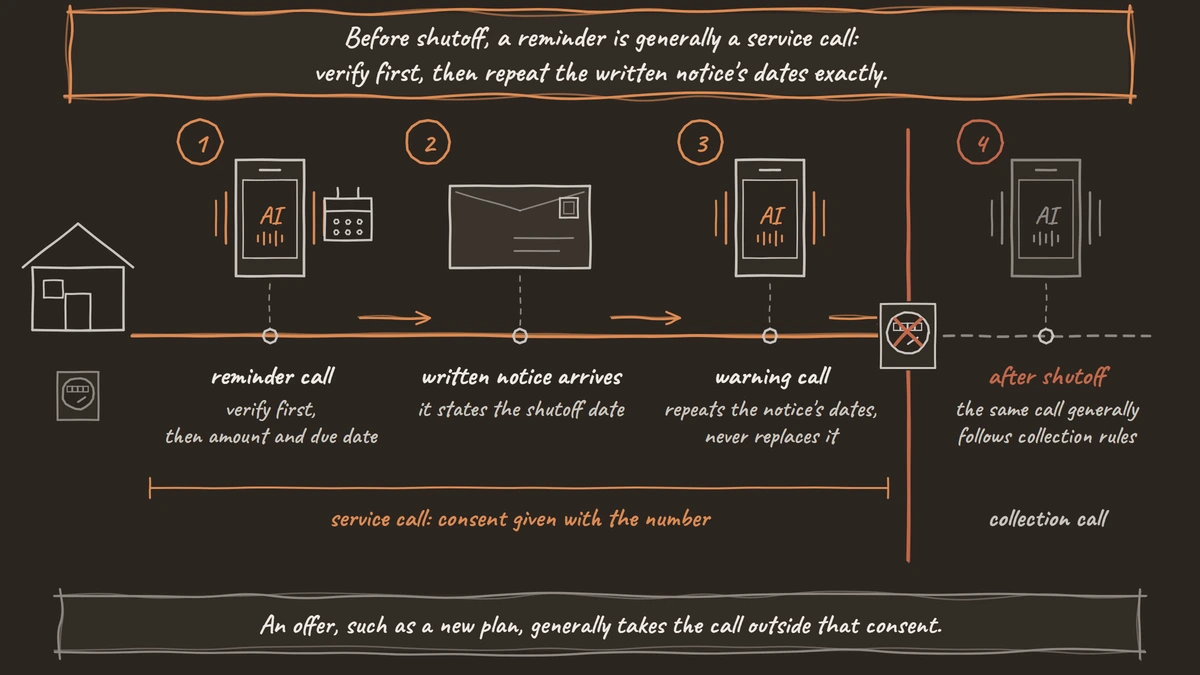
The ruling also says these service calls "are not telephone solicitations and do not constitute telemarketing." An offer, such as a new plan or a paid add-on, generally takes the call outside that consent, so the reminder carries none.
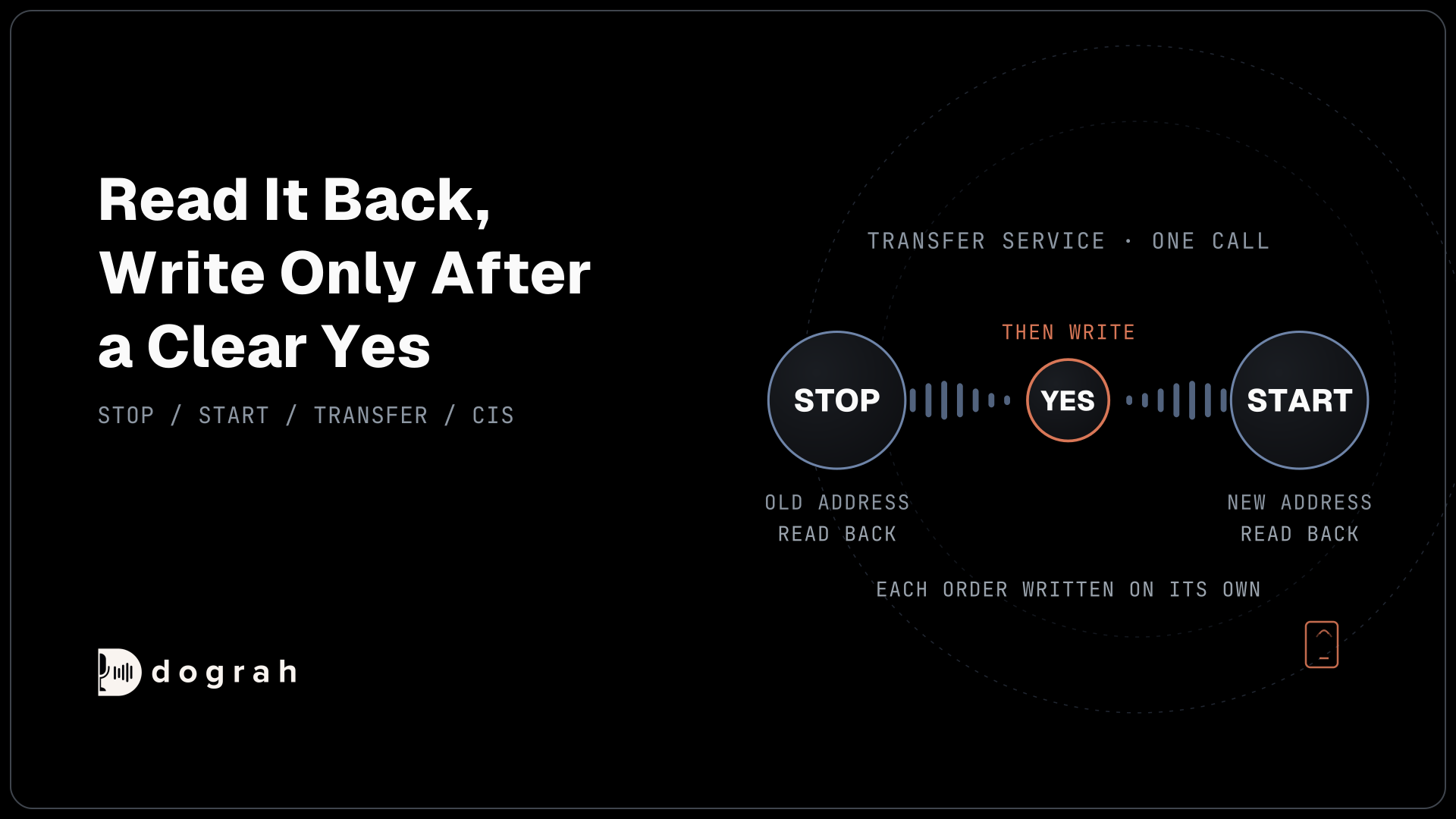
Customers "may revoke consent in any reasonable manner". Dograh keeps no do-not-call list of its own. When a customer says "stop calling me", an HTTP API tool writes that to the utility's own list during the call, and those numbers come off the next campaign upload. A contact can't be removed from a running campaign; the campaign itself can only be paused and resumed, so keep lists short and fresh. Confirm your own position with counsel before the first campaign.
The call, from greeting to payment channel
The reminder confirms who answered before it states any fact, then points to how to pay. The billing system starts each call through the API Trigger, or uploads the day's list as a Campaigns list through Dograh's API; API Triggers: Start a Voice Agent Call From Any System shows the first route.
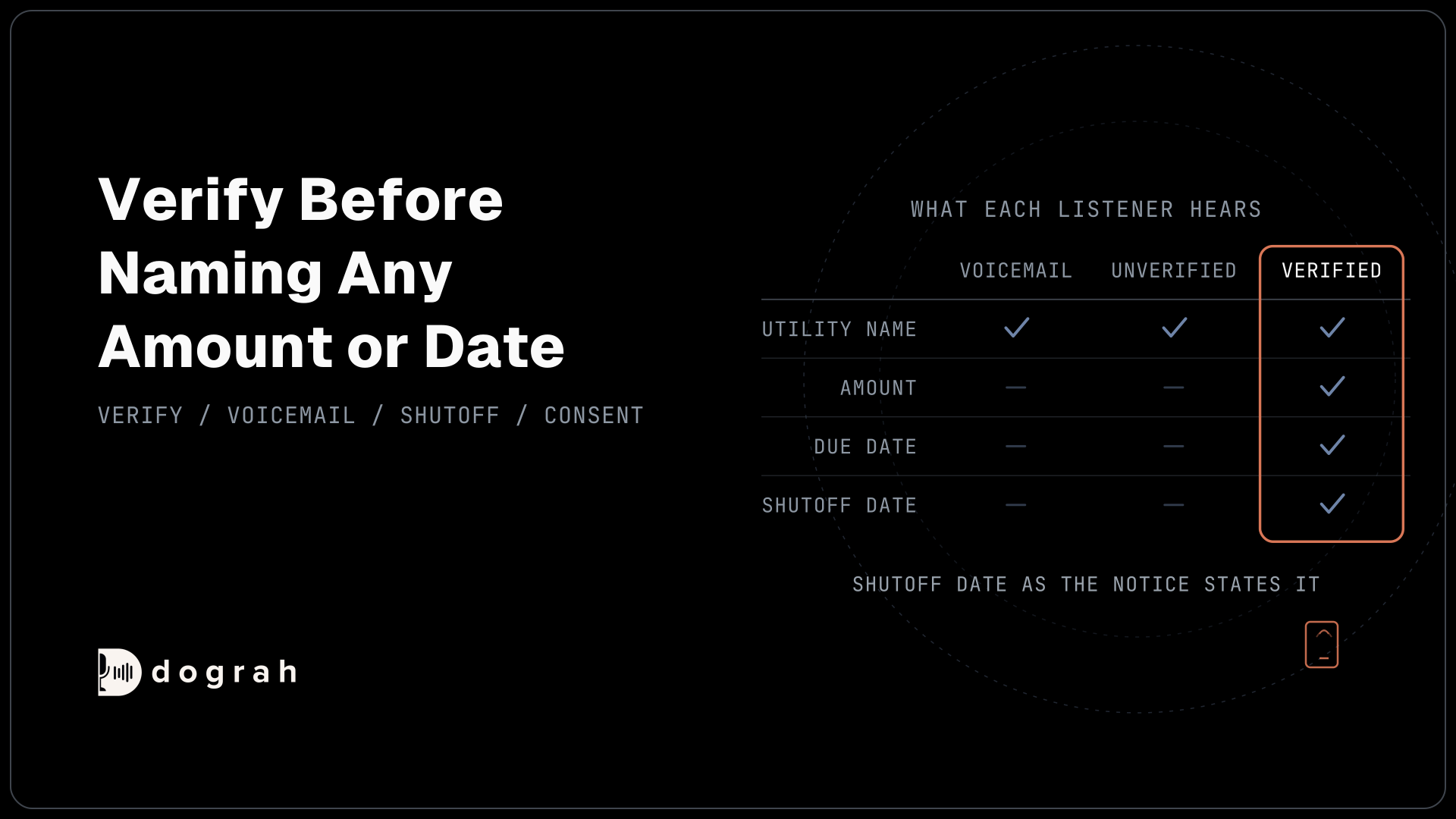
The call opens with Greeting Text, fixed words that name the utility. If you want to tell customers they're speaking with an automated assistant, or your location requires it by law, write it there too. The agent then asks for the account holder by name. That only finds the right person; it does not verify them. Before naming anything about the bill, the agent asks for an approved check, such as the last digits of the account number.
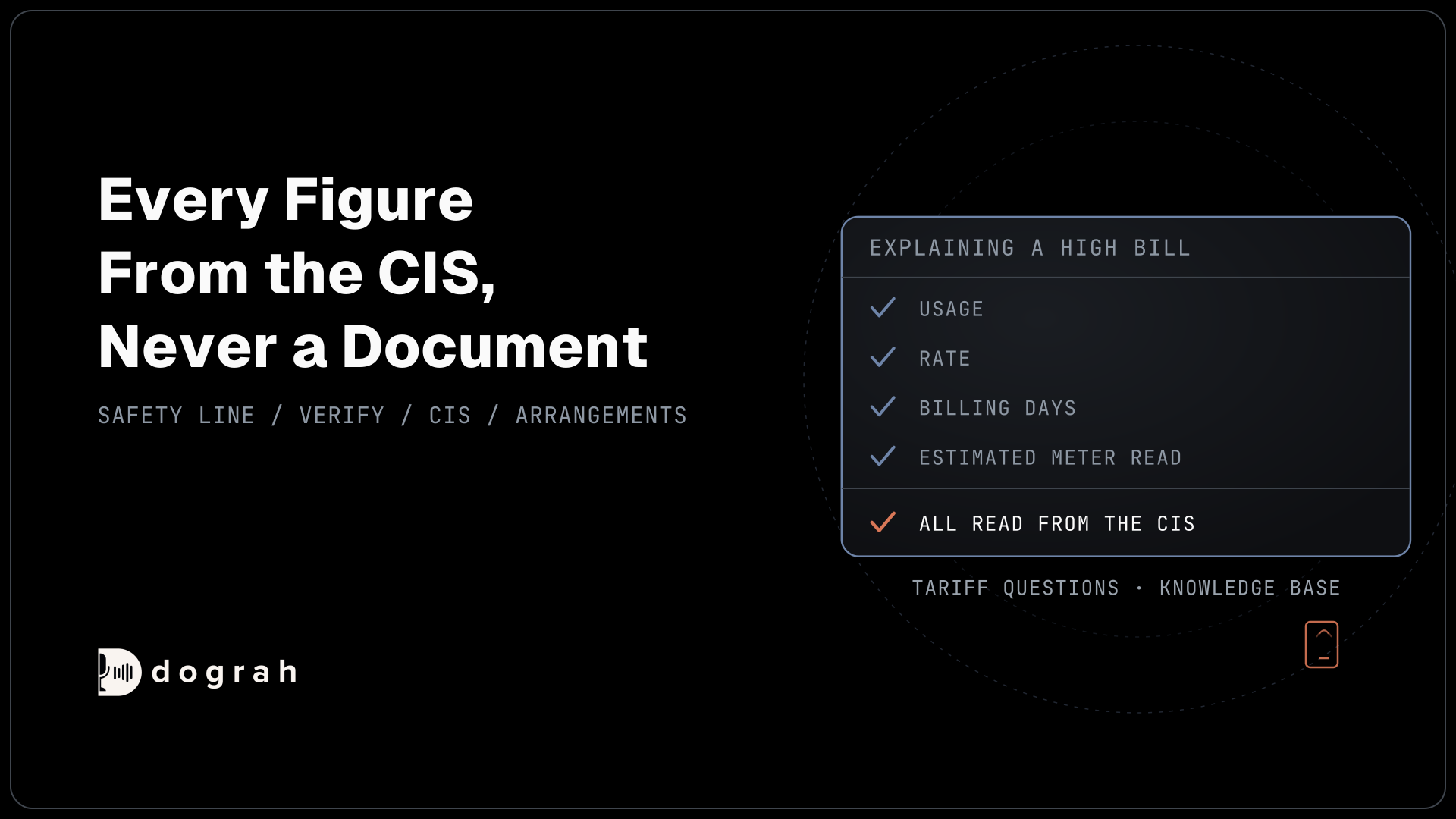
After verification, the agent states the amount and the due date. For a pre-disconnection call, it also gives the shutoff date exactly as the written pre-disconnection notice states it, because the call follows the notice the regulator requires and never replaces it. It threatens nothing beyond what the notice says.
Then it points to the utility's own payment channels. It never asks for a payment or a card number, and Dograh has no feature for taking payments on a call. If the customer wants a link, an HTTP API tool asks the utility's own system to send its secure payment link by text or email. That habit protects customers from impostors. The customer service manager at Cookeville's city utility told The UC Now that a genuine past-due call "should never ask you for a payment." Our post on AI voice agents for fraud-alert callbacks applies the same rule to banks.

Open Source Alternative to Vapi / Retell
Self-hosted voice agent platform — no per-minute fees
dograh-hq/dograh
Star on GitHub
Voicemail, retries and time zones
The campaign settings decide who hears what, and when. In the agent's Settings, "Enable voicemail and screening handling" lets you choose, under "When voicemail is detected", between "Disconnect the call" (the default) and "Leave a message". If you leave one, it names the utility and a number to call back, nothing about the amount or a shutoff, because anyone in the house may hear it.
Campaign retries run from 0 to 10, 2 by default, with a delay of 30 seconds to 1 hour between attempts. Retries never call back someone who answered. Calling hours are set by weekday in one time zone per campaign, so a utility that spans time zones runs one campaign per zone. Campaigns have no per-customer call cap, so your own list decides how often a customer is called.
Hardship, disputes and the handoff
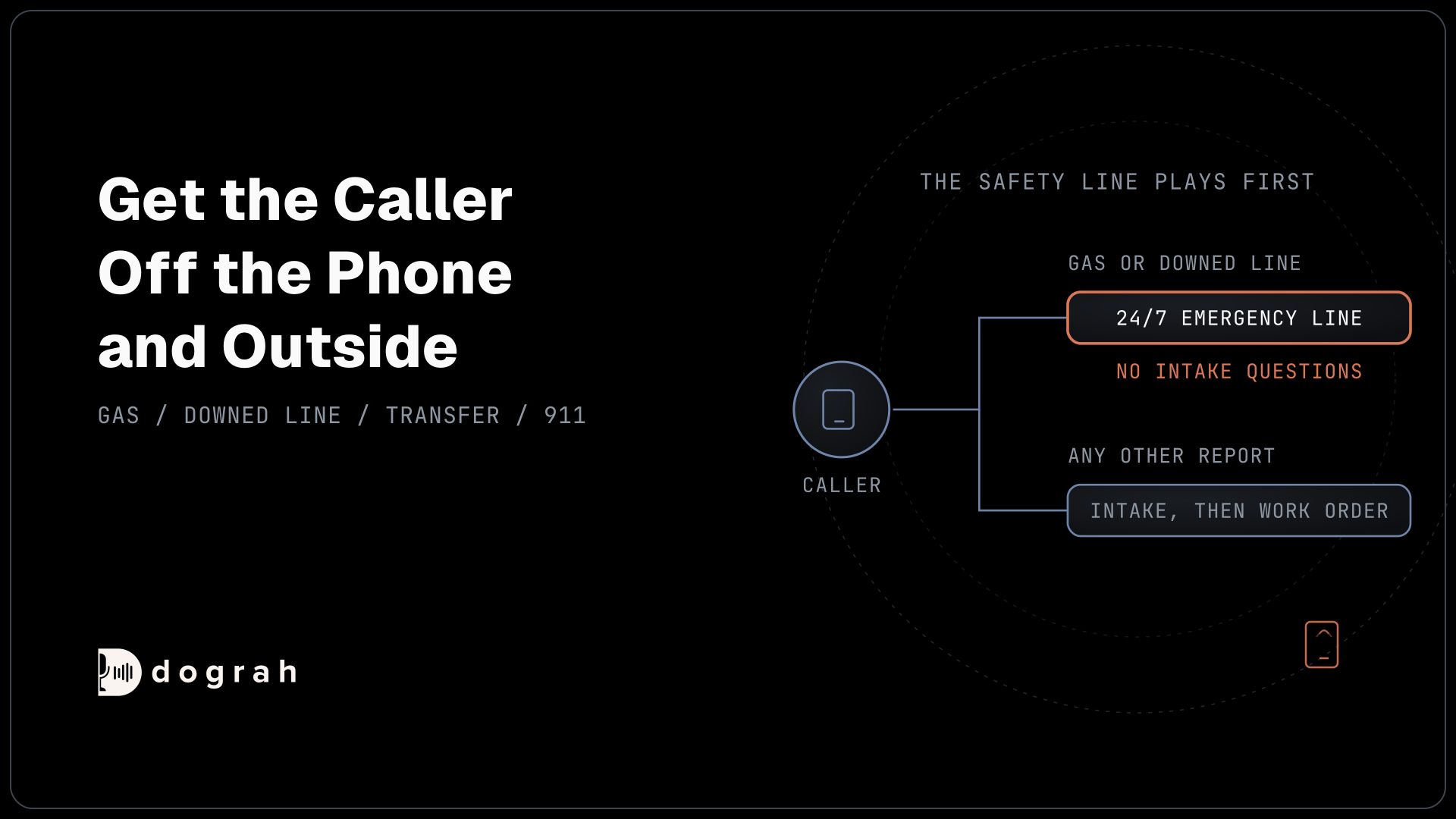
Hardship, disputed amounts, assistance-program eligibility and any request for more time go to a person. Transfer Call works on Twilio only and passes no summary, so the agent first writes the reason to the CIS with an HTTP API tool. If nobody answers within the 30-second default, the customer stays with the agent; tell it in the prompt to offer a callback and write the request through an HTTP API tool.
When the call ends, a Webhook node sends the outcome to the billing system, including whether the customer was reached and anything they asked for, and retries a temporary failure automatically. Customers who call back with questions about the bill reach the inbound line, set out in AI voice agents for utility customer support.
Join the Dograh Community
Dograh is an OSS alternative to Vapi. Join our Slack community for queries, releases, best practices & community interactions.
Where to start
Start with reminders a few days before the due date, where nothing is at stake yet, and add pre-disconnection calls once the verify step and the voicemail wording hold up. Test on a real phone line, since most phone calls reach the agent as 8 kHz audio while a browser test runs at 16 kHz, and run QA on a random 5 to 10% sample of calls.
Self-hosted Dograh has no per-minute platform fee (servers, model keys and phone minutes still cost); Dograh Cloud has a 1¢-a-minute platform fee.
Glossary
- Pre-disconnection notice
- The written notice a utility must send before cutting off service for non-payment, under its regulator's rules. A reminder call repeats its facts and dates but never replaces it.
- Service curtailment
- The FCC's term for cutting back or ending utility service. Calls that warn a customer that non-payment will lead to it are treated as closely related to the service.
- Revoke consent
- A customer telling the caller to stop calling. Under FCC 16-88 it can be done in any reasonable manner, so a spoken request on the call counts and goes onto the utility's own list.
- Calling hours
- The weekday time windows in which a Dograh campaign places calls, set in one time zone per campaign. A utility spanning time zones runs one campaign per zone.