
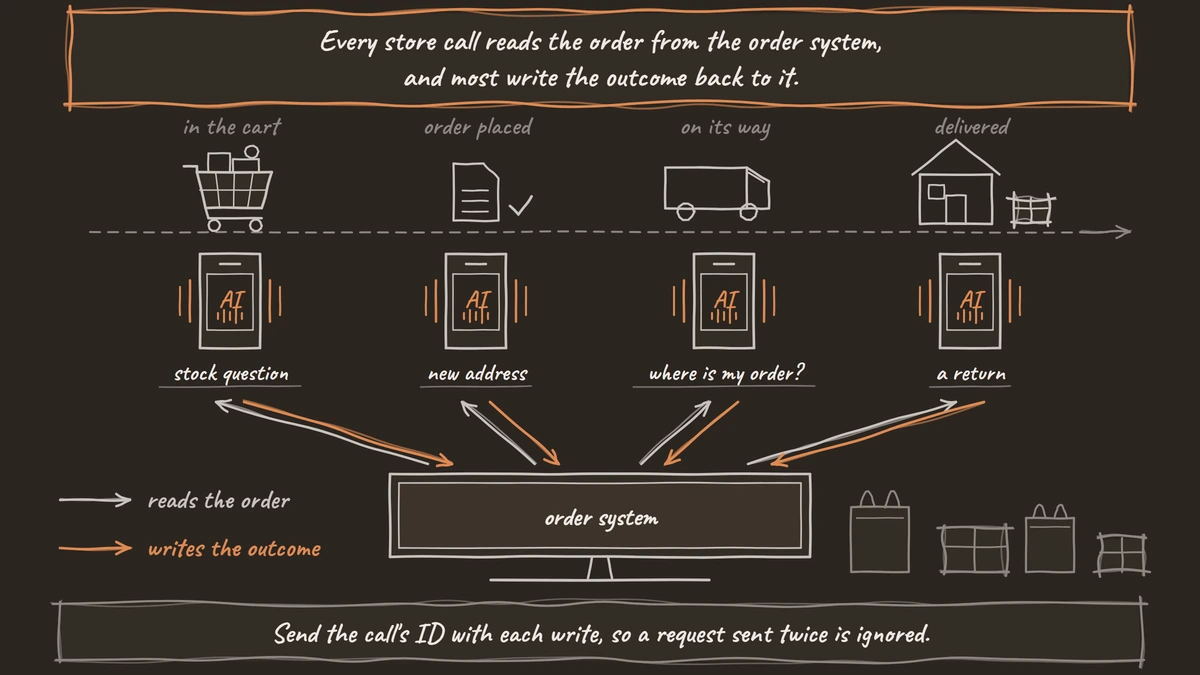
AI voice agents for e-commerce and retail answer and place a store's routine phone calls: product and policy questions, order status, returns, abandoned carts, post-purchase check-ins and CSAT surveys. During each call they read the order from the store's order management system and write the outcome back to it. They never take a card number by voice.
Key Takeaways
- Every call reads the order system first and writes the outcome back.
- Verify the caller before naming any detail of an order.
- An abandoned-cart call is a sales call and needs written consent first.
This guide follows the calls an online store gets, from the shopper still deciding to the customer with a parcel in hand, then the rules for every call and how each one runs in Dograh, an open-source voice agent platform that reads and writes your order management system during the call. You can self-host it or run it on Dograh Cloud.
What customers call an online store about
An online store's phone line carries two kinds of caller: shoppers who have not bought yet, and customers waiting on an order they already paid for. Both are worth answering, and an agent can take both, as long as every answer comes from the store's own systems.
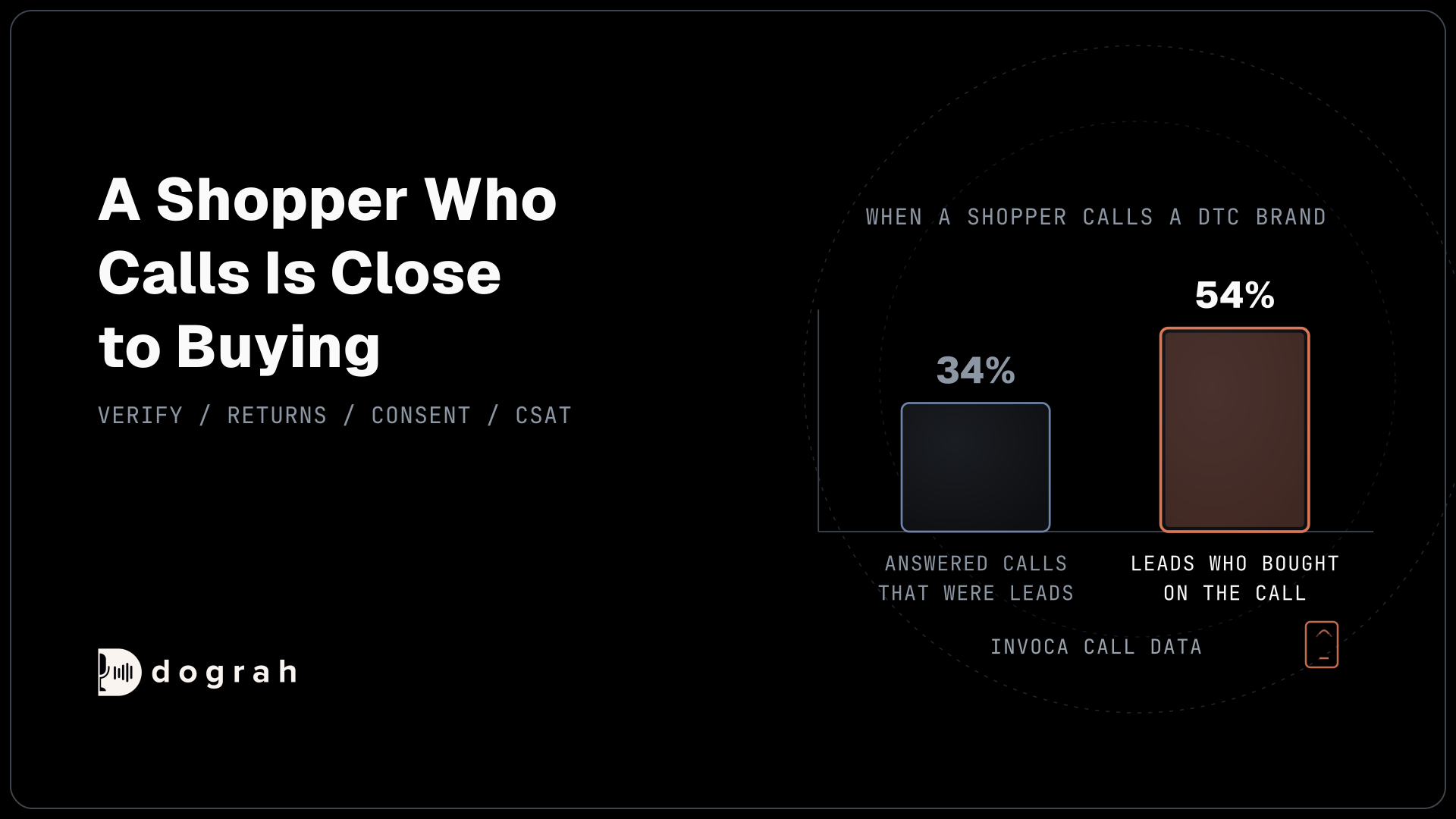
Invoca, which sells call-tracking software, studied its own call data in its DTC eCommerce Lead Conversion Benchmarks Report 2026. It found that 34% of answered calls to direct-to-consumer (DTC) brands were leads, and 54% of those leads bought on the call. A shopper who calls is close to buying. On that call the agent answers the stock, size or delivery question from your own systems and helps the sale finish, as the support section below shows.
Most calls still come after the order is placed. Narvar's 2025 State of Post-Purchase report, a survey of 3,461 US online shoppers in August 2025, found that about two in three consumers feel anxious after clicking buy, and 76% won't buy again after a poor returns experience. An agent that answers "where is my order" and "how do I return this" at any hour takes that worry off your team; those are the order-status and returns calls below.
Returns alone are a large share of that work. The National Retail Federation and Happy Returns, a UPS company that handles returns, estimated in their 2025 returns report that 19.3% of online sales would be returned in 2025, with total returns of $849.9 billion. Every return call is the same fact-collecting job, which suits an agent: it gathers the facts, and your rules decide.
Calls also come in peaks. Adobe Analytics counted $257.8 billion of US online spending from 1 November to 31 December 2025, with 25 days above $4 billion. A team sized for an ordinary week falls behind on those days, while an agent takes many calls at once, up to a limit you set before the season (see the platform section below).
The order system answers every question
Every call in this guide reads from the store's order management system (OMS) or e-commerce platform, and most write back to it. The agent keeps no copy of an order of its own.
During the call, an HTTP API tool asks the order system for an order and its status, a return decision or live stock, and the agent says only what came back. A second HTTP API tool writes the change, such as an address correction or a return request. After the call, a Webhook node sends the outcome and the transcript link to your system.
Dograh has no built-in Shopify connector; an HTTP API tool calls Shopify's API, directly or through n8n. Our guide to Integrating Voice Agents With Your Stack covers those connections.
Two details keep the order system clean. When a write could be sent twice, add the call's workflow_run_id to the tool as a Preset Parameter, and let the order system ignore a second request with the same ID. HTTP API tools also do not retry on their own: after a 5-second default timeout the agent gets an error, so tell it in the prompt to offer a callback instead of guessing.
Pre-Call Data Fetch, at the bottom of the Start Call node, can look up the caller's number as an inbound call connects. Write the prompt so the agent uses none of it until the caller is verified.
Inbound calls: support, order status and returns
Inbound calls split by what the caller needs, and each kind runs as its own flow with its own deep dive.
Customer support
The support line takes every call that is not a status check or a return, including shoppers who have not bought yet. For them, an HTTP API tool reads live stock and delivery times from the store's system, and when the shopper is ready, it asks that system to send the checkout link by text or email, or the call goes to your sales team. Policy questions, such as shipping times or warranty terms, are answered from the store's own documents in the Knowledge Base, and they need no verification. A change to an order before it ships, such as a new address, goes through an HTTP API tool, and the agent never promises a change the order system has not accepted.
Damage claims and disputes go to your team, and so does any caller who asks for a person. Transfer Call works on Twilio only and passes no summary, so the agent writes the details to your helpdesk first. AI voice agents for customer support in e-commerce sets out what the agent settles alone and what it hands over.
Order status
The "where is my order" call, the post-purchase worry from the start of this guide, reads the order's status from the system and says it plainly, after verification. AI Voice Agents for Order Status and Updates in E-commerce covers that call in both directions, including the store calling out when a delivery will miss its promised date.
Returns and RMA
A return call collects the facts and lets the store's rules decide. After verifying the caller, the agent asks what is going back and why, and an HTTP API tool sends those answers to the store's return-eligibility check. The agent reads out only its answer, such as approved or declined with a reason, then writes the return request, the return merchandise authorization (RMA), back to the system.
AI voice agents for returns and RMA covers that flow and the returns where consumer law, not store policy, decides. Once a return is approved, booking the carrier's collection is its own call, set out in AI Voice Agents for Return Pickup Scheduling.

Open Source Alternative to Vapi / Retell
Self-hosted voice agent platform — no per-minute fees
dograh-hq/dograh
Star on GitHub
The one sales call: abandoned-cart recovery
An abandoned-cart call is a sales call, so consent comes before the script. It invites a shopper to finish buying, which makes it telemarketing under US rules. Generally, a shopper can be called only with their prior express written consent, such as a checkbox at checkout, left unticked by default, that names the store, covers calls from an automated voice and says agreeing is not a condition of buying. That consent record lives in the store's own system.
With consent on file, the store's system starts one call through the API Trigger and passes in the cart. The agent names the store and mentions the cart once, then asks whether anything is stopping the shopper. Price and stock come from the store's system, and the checkout link goes out from the store's own messaging tools.
A shopper who says stop is written back to the store's list at once. Dograh keeps no do-not-call list of its own: it can tag a call as do_not_call, but that never blocks a later call, so the store removes those numbers before each upload. AI voice agents for abandoned-cart recovery covers the consent record, calling hours, retries and opt-outs.
After delivery: follow-up calls and CSAT surveys
Once the parcel arrives, two calls help: one checks that the order works, the other asks how the store did.
Post-purchase follow-up
A follow-up call checks that the order arrived and works, and it carries no offer. It suits high-value orders and products that need setting up. The agent asks whether everything arrived, answers setup questions from the manuals in the Knowledge Base, and starts the return flow if something is wrong.
A reminder to reorder a consumable is different, because it sells. It needs the same written consent as a cart call. AI voice agents for post-purchase follow-up in e-commerce keeps the service calls and that sales call apart.
CSAT surveys
A customer satisfaction (CSAT) call asks one rating and one reason, in the same words for every customer it reaches. The agent records the rating as a number and the reason as the customer stated it, and a Webhook node writes both to the order. It never guesses satisfaction from tone, and it never offers anything for a score.
If the store also asks for public reviews, it asks every respondent, whatever their rating. Asking only happy customers is review gating, which Google's review policy prohibits. AI voice agents for CSAT surveys in e-commerce covers who to call and when.
Join the Dograh Community
Dograh is an OSS alternative to Vapi. Join our Slack community for queries, releases, best practices & community interactions.
Building the agent and choosing a platform
Two posts take a store from plan to a working phone line.
Our tutorial on how to build a voice agent for e-commerce builds the returns agent above in Dograh, step by step.
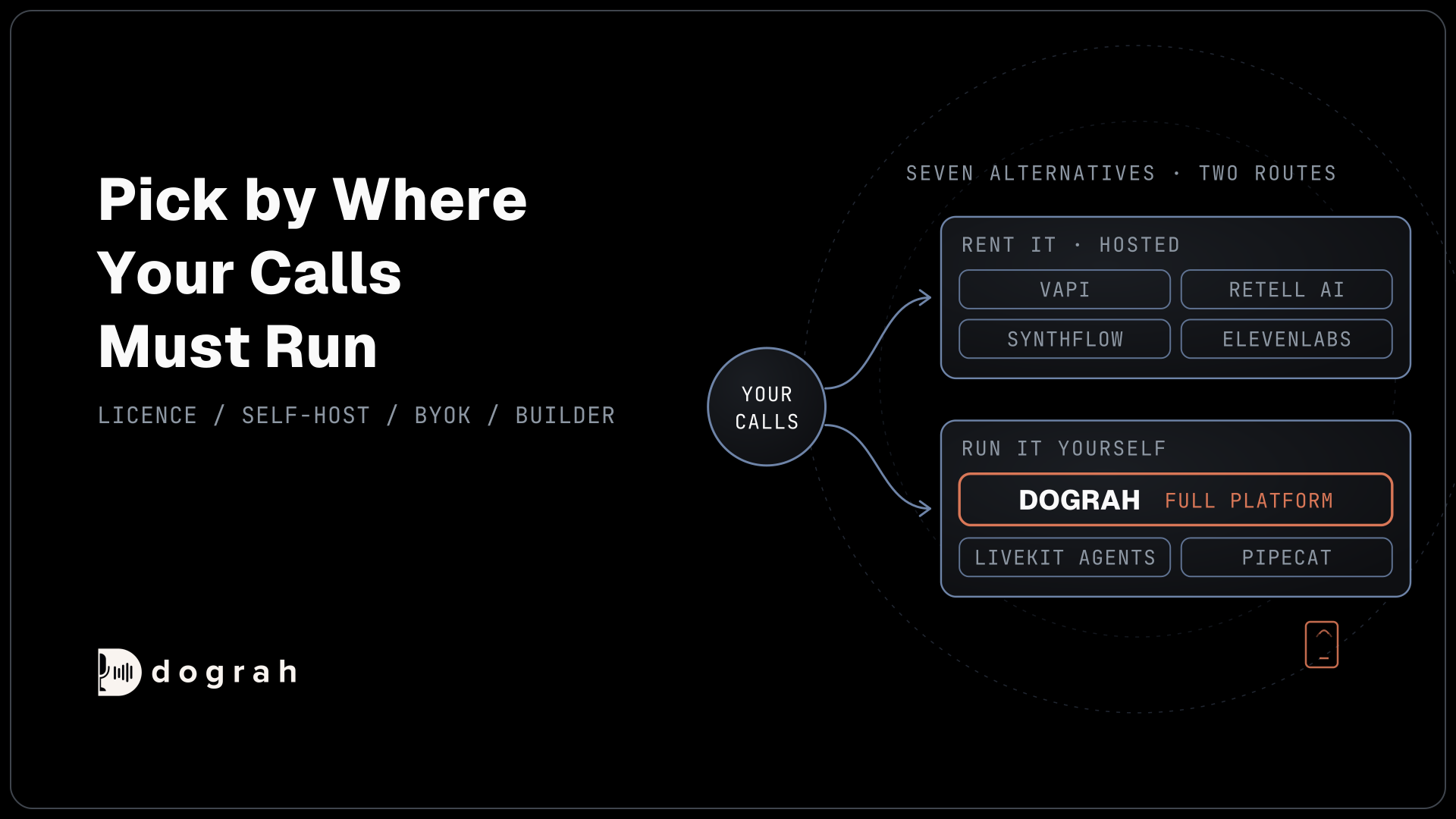
Best AI voice agents for e-commerce compares the kinds of product a store meets, from Shopify apps to open source. It judges each on whether it reads and writes the order system during the call, whether it handles outbound consent, who holds the recordings and customer data, and how the price behaves in a peak week.
Dograh is the orchestration layer; the speech and language models are a separate layer you choose. Self-hosted Dograh has no per-minute platform fee (servers, model keys and phone minutes still cost); Dograh Cloud has a 1¢-a-minute platform fee. Both handle 10 concurrent calls by default: raise it on self-hosted Dograh with DEFAULT_ORG_CONCURRENCY_LIMIT, or contact Dograh for more on Dograh Cloud. When the concurrent call limit is full, a new inbound call is turned away at once, not queued, so set it for your busiest holiday day and add an overflow at your carrier. For stores sizing calls for their busiest sale week, see our page on self-hosted voice agents for high-volume online stores.
Serving Spanish-speaking customers
A Spanish-speaking customer should be able to call in Spanish and reach a person who speaks it. In the agent's Model tab, set speech-to-text to Multilingual (Auto-detect), tick Spanish and English under Language hints (available with Dograh's own models or Deepgram Flux), and pick a voice that speaks Spanish. Greeting Text plays before Dograh can hear the caller's language, so write it in both, for example "Hola, hello". Tell the agent in its prompt to ask which language the caller prefers when it is unsure, and to switch only once the caller confirms.
Stores selling in Spain have one more rule. Spain's Ley 10/2025 on customer service generally gives customers of large companies the right to reach a person instead of only automated answering or bots, with an adaptation deadline of 28 December 2026; check with counsel whether it covers your store. Spanish AI voice agents for e-commerce covers that law and the bilingual setup.
Rules for every call
Whatever the call is about, the same rules apply.
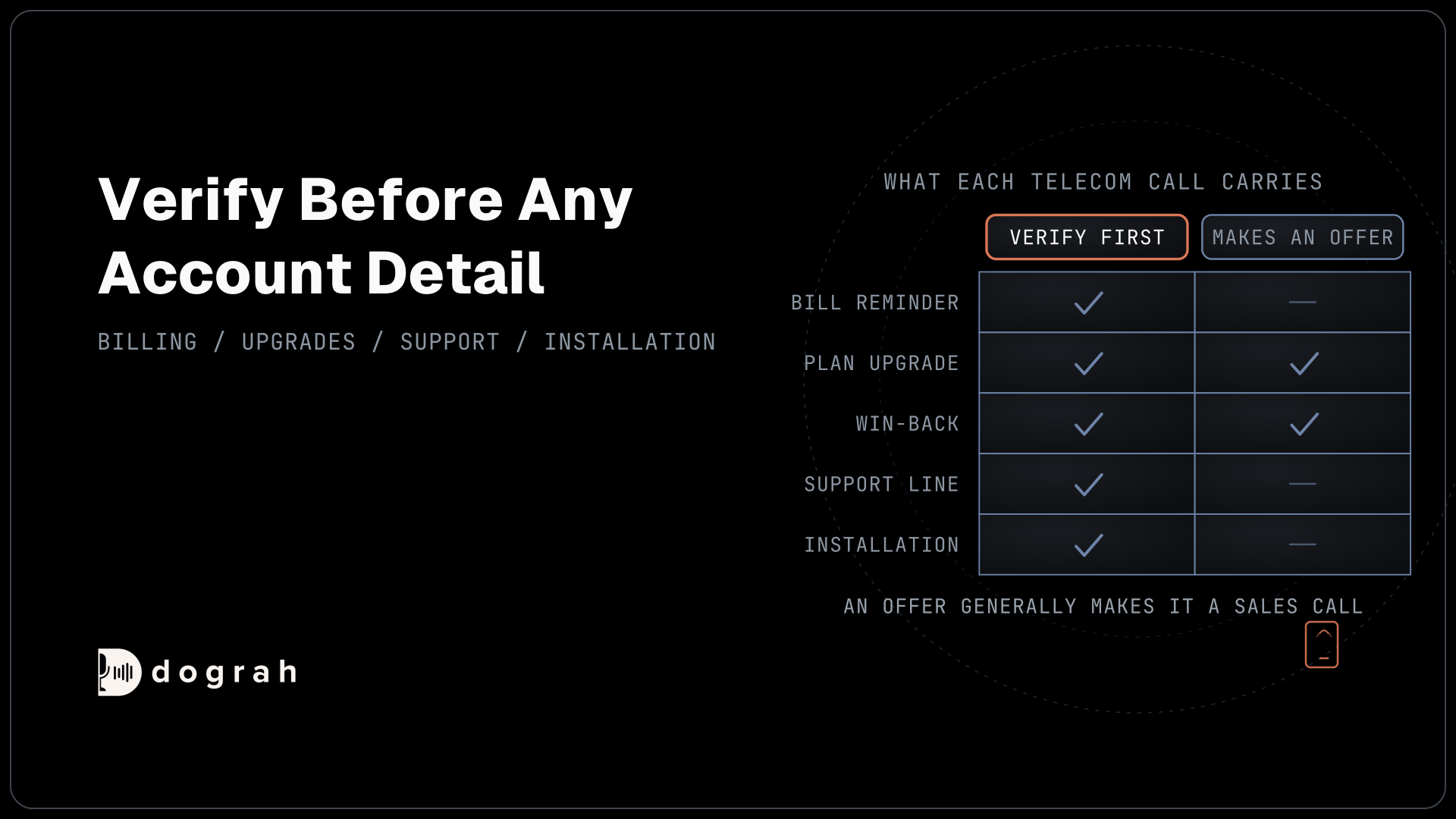
Greet, verify, then disclose. A phone number finds an order but does not prove who is calling, since a shared family phone or a reassigned number can reach the wrong person. Before the agent names an order, an address, an item or an amount, the caller passes an approved check, such as the order number and the postcode on it.
No card numbers by voice. Dograh has no keypad (DTMF) tool and no feature for taking customer payments on a call, and its transcripts keep everything said, with no redaction. So an HTTP API tool asks the store's own system or payment provider to send its secure payment link by text or email. The same goes for passwords and PINs: never ask a caller to speak one.
Consent depends on whether the call sells. This is general information, not legal advice. In the US, the Federal Communications Commission's February 2024 ruling, FCC 24-17, confirmed that AI-generated voices count as an "artificial or prerecorded voice" under the Telephone Consumer Protection Act (TCPA). The rule at 47 CFR 64.1200 covers "any telephone call that includes or introduces an advertisement or constitutes telemarketing" made with such a voice and allows it with "the prior express written consent of the called party".
Read that way, a service call with no offer, such as a status or survey call, is generally informational. Informational calls still have consent rules of their own, so confirm your position with counsel before the first outbound campaign. If you want to tell callers they're speaking with an automated assistant, or your location requires it by law, write it in the Greeting Text along with the store's name.
Which store call to hand over first
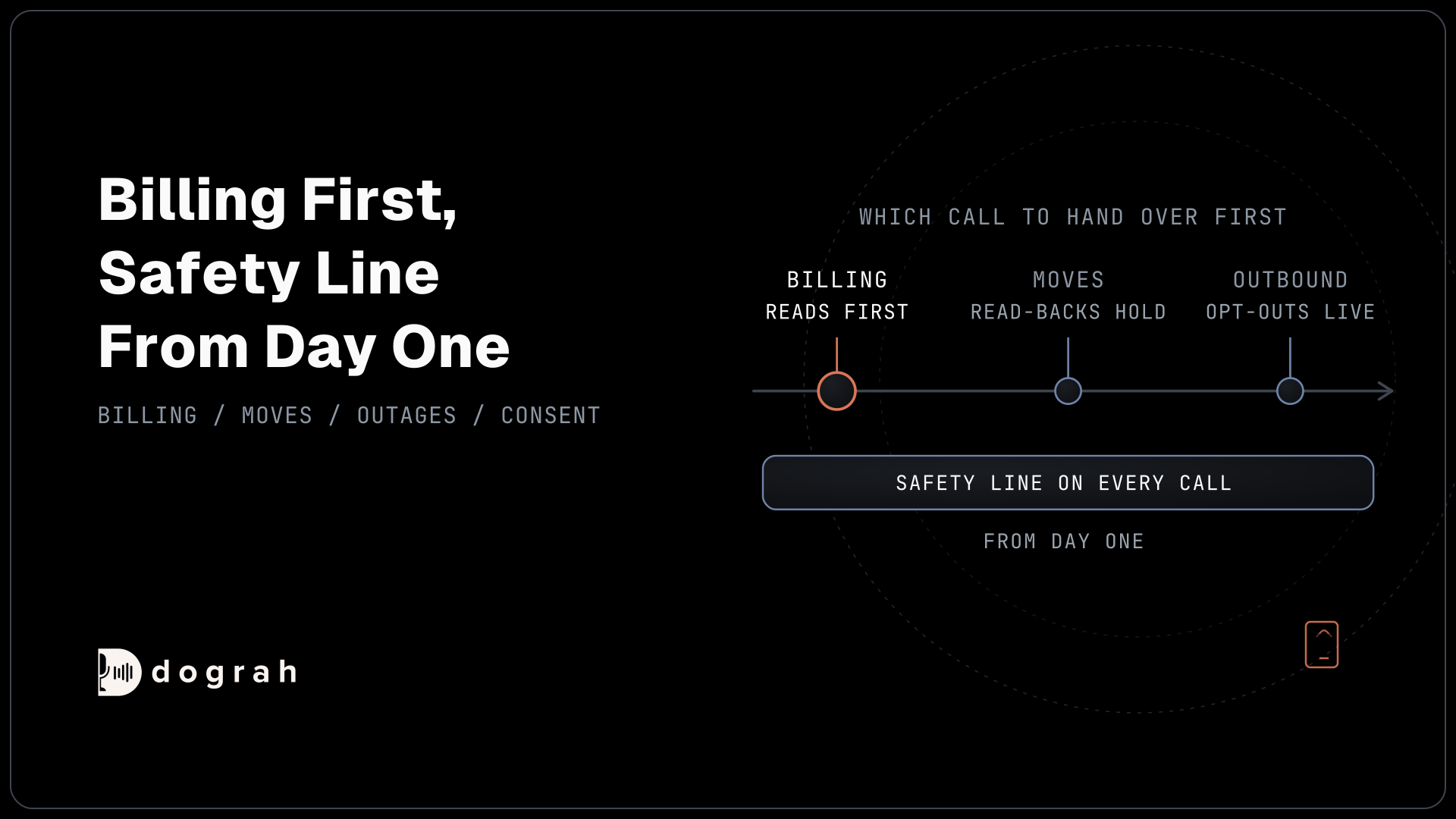
Start with inbound support for the calls that ring out today, such as evenings, weekends, lunch hours and sale days. Those calls read before they write, and they raise no outbound consent questions.
Put the agent on a real phone number before any customer hears it, and follow the order in Testing Voice Agents Before You Go Live. Once it is live, run QA on a random 5 to 10% sample of calls and fix what the transcripts show. Add returns next, then follow-up and CSAT calls. Leave cart calls for last, once the consent record sits in your own system.
Each call above has its own deep dive:
- AI Voice Agents for Customer Support in E-commerce
- AI Voice Agents for Order Status and Updates in E-commerce
- AI Voice Agents for Returns and RMA
- AI Voice Agents for Abandoned-Cart Recovery
- AI Voice Agents for Post-Purchase Follow-up in E-commerce
- AI Voice Agents for CSAT Surveys in E-commerce
- How to Build a Voice Agent for E-commerce
- Best AI Voice Agents for E-commerce
- Spanish AI Voice Agents for E-commerce
Glossary
- Concurrent call limit
- The number of calls an agent can hold at the same time. Dograh handles 10 by default, on self-hosted Dograh and Dograh Cloud alike. When the limit is full, a new inbound call is turned away, not queued, so a store sets it for its busiest sale day.
- Return merchandise authorization (RMA)
- The store's record that a return is approved, usually with a number the customer quotes on the parcel. The voice agent writes the return request; the store's own rules decide whether it becomes an RMA.
- Prior express written consent
- Under the TCPA, a signed written agreement that lets a business deliver advertisements or telemarketing using an artificial or prerecorded voice, and states that signing is not a condition of purchase. An abandoned-cart call from an AI voice agent generally needs it.
- Review gating
- Asking only satisfied customers to post a public review, or steering unhappy ones away from it. Google's review policy prohibits it, so a CSAT call that asks for reviews asks every respondent the same way.