
AI voice agents for returns and RMA take a customer's return call, verify who is calling, and collect the item and the reason. They ask the store's own eligibility check, read back only its answer (approved, exchange, store credit or declined) and write the return request to the order system. The agent never decides the return or moves money.
Key Takeaways
- The store's rules decide each return; the agent reads back the answer.
- Verify the caller before naming the order or its contents.
- Disputes and refunds outside the rules go to a person.
This post is part of our guide to AI voice agents for e-commerce and retail. The guide's section on inbound calls puts the return call in one line: it collects the facts and lets the store's rules decide. Here is that call in full, built on Dograh, an open-source, self-hostable voice agent platform, with the store's order system answering every question.
Why the return call decides the next order
A return call is often the last thing a customer remembers about a store. Narvar's 2025 State of Post-Purchase report, a survey of 3,461 US online shoppers in August 2025, found that 76% won't buy again after a poor returns experience, and 90% check the return policy before they buy.
The volume is large, and some of it tests the rules. The National Retail Federation and Happy Returns, a UPS company, estimated in their 2025 returns report that 19.3% of online sales would be returned in 2025. In the same report, 9% of all returns were judged fraudulent, and 45% of consumers said it is acceptable to "bend the rules" when returning.
Put those together and the design rule is clear. A returns line has to answer fast and give every caller the same answer for the same facts. A person under pressure bends a rule now and then; a voice agent that bends rules does it on every call.
Who decides a return
The store decides, through rules it already has. The agent's job is to collect the facts and read back what the store's rules said.
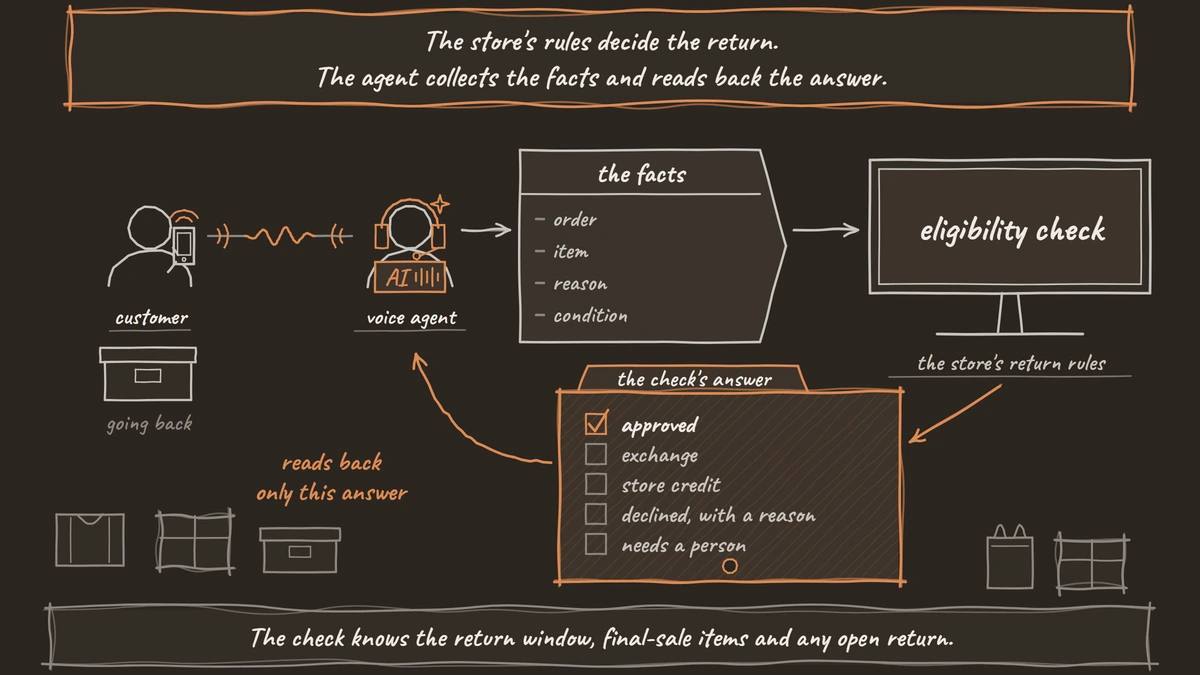
Most stores hold their return rules somewhere: a returns app, rules in the order management system (OMS), or a small service in front of Shopify or WooCommerce. That check knows the return window, the item's category, whether it was a final-sale item and whether the customer has an open return already. Dograh has no built-in Shopify connector; an HTTP API tool calls that check, directly or through n8n.
The agent never invents policy. It does not approve a return the check declined, or quote a refund amount or date the system did not return. Money stays with the store's system or a person. HTTP API tools also do not retry on their own: after a 5-second default timeout the agent gets an error, so tell it in the prompt to say the check is down and offer a callback instead of guessing.
How the call runs, from verify to RMA
The call follows the same order every time, and it ends when the return request exists in the store's system.
The Greeting Text names the store. Pre-Call Data Fetch, at the bottom of the Start Call node, can look up the caller's number as the call connects and return a short summary of recent orders. A phone number finds orders but does not prove who is calling, so tell the agent in its prompt to ask for the order number and the postcode on it before it names anything.
Once the caller is verified, the agent asks which item is going back and why. It also asks about the item's condition. It records each answer as the caller stated it. Return policy questions, such as "can I return a sale item?", are answered from the store's policy document in the Knowledge Base.
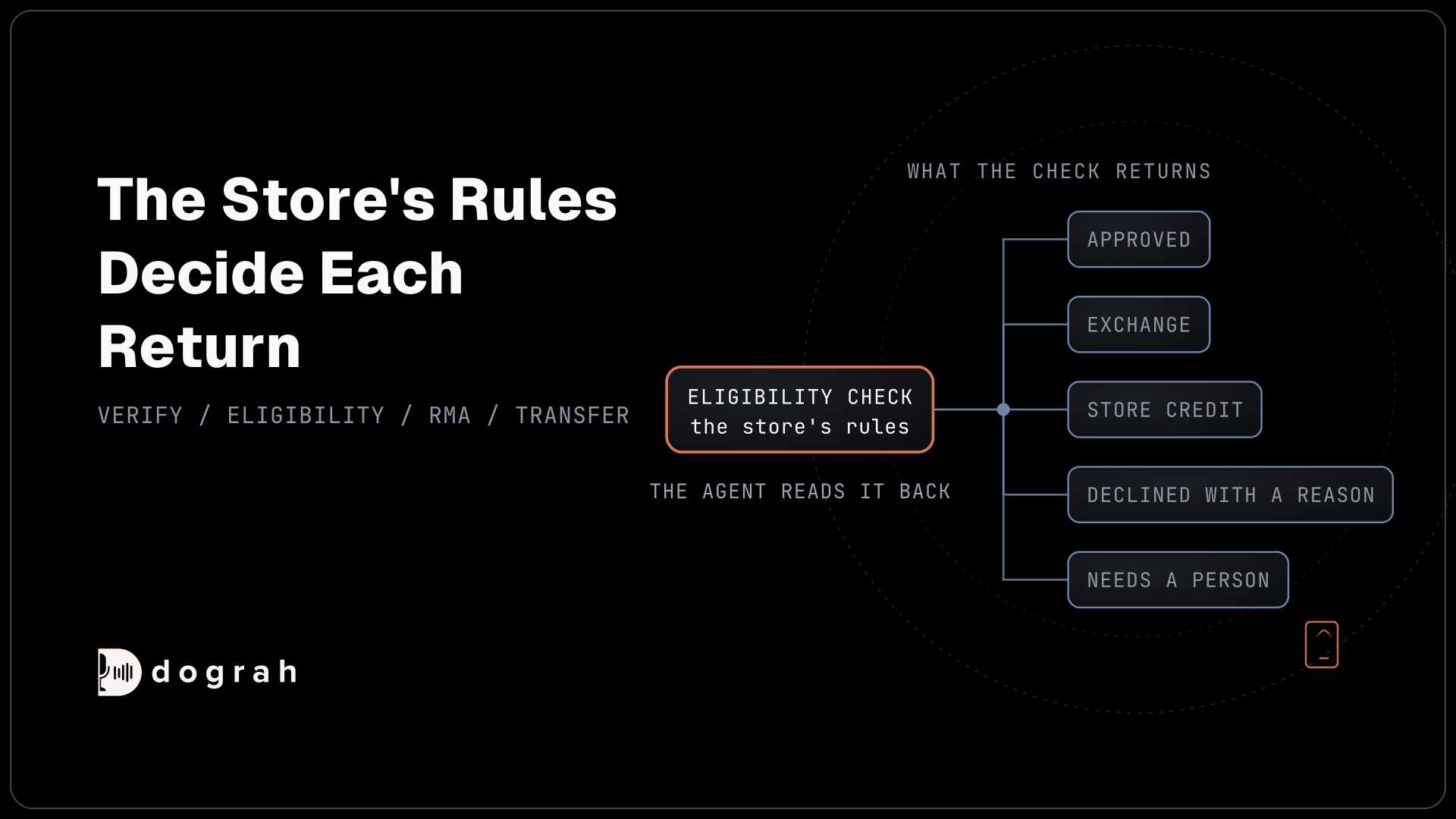
An HTTP API tool then sends the order, the item, the reason and its condition to the eligibility check. A start line in the tool's Messages, such as "Let me check that for you", covers the pause. The check returns one of a few answers: approved, exchange, store credit, declined with a reason, or needs a person. The agent reads back that answer and nothing more.
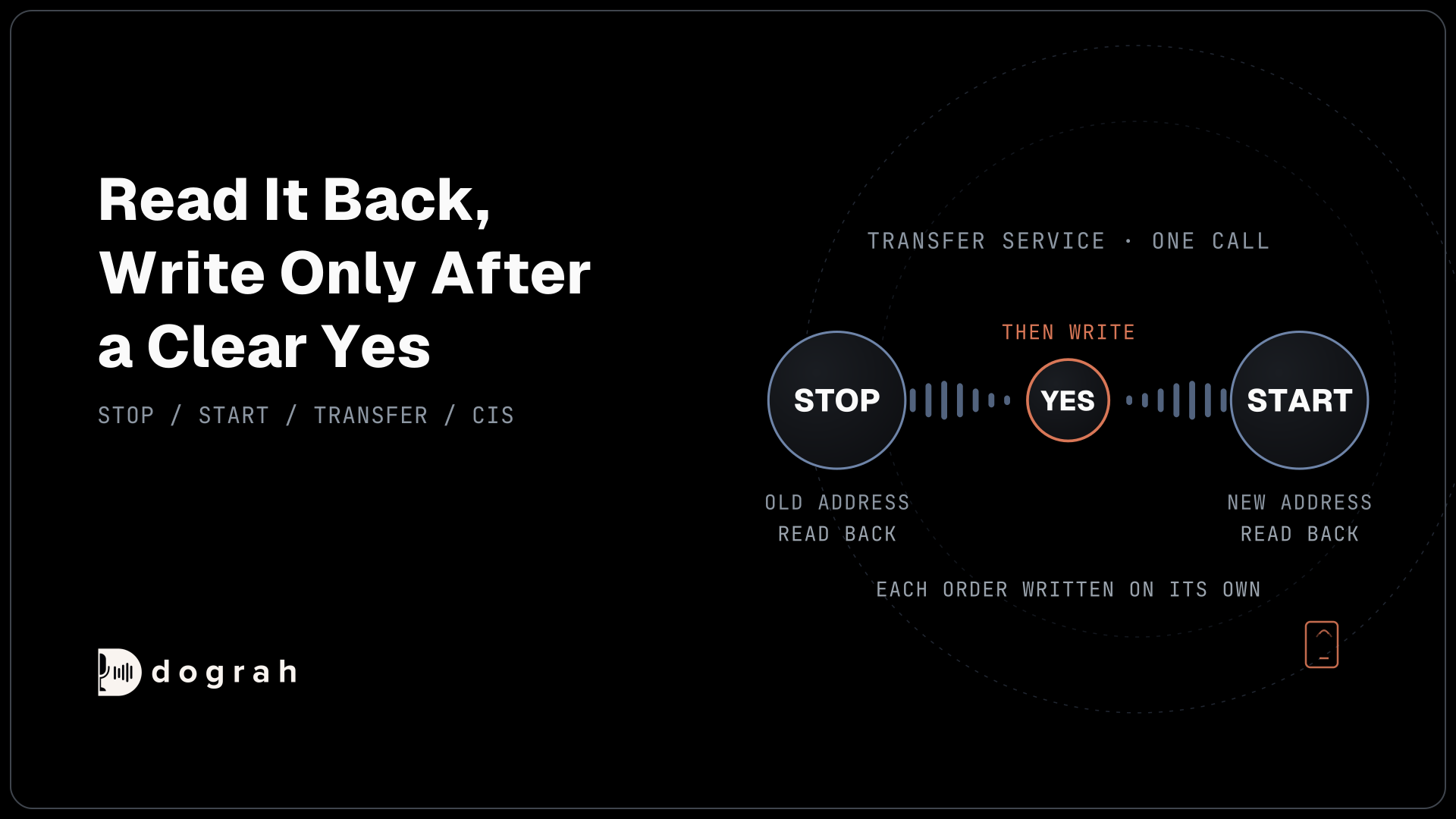
If the customer accepts, a second HTTP API tool creates the return request, the return merchandise authorization (RMA), and the system returns its number. Add a Preset Parameter named workflow_run_id with the value {{initial_context.workflow_run_id}} to that tool, so a second request with the same ID is ignored and a retried call cannot open two returns. The label and the refund timeline come from the store's own system by email or text, because Dograh sends no texts itself.
After the call, a Webhook node writes the outcome and the transcript link to the order. Our tutorial on how to build a voice agent for e-commerce builds this exact agent, step by step.

Open Source Alternative to Vapi / Retell
Self-hosted voice agent platform — no per-minute fees
dograh-hq/dograh
Star on GitHub
Where the law decides instead of the store
In some countries, part of the return decision belongs to the law, so the eligibility check has to apply the customer's market as well as the store's policy. This is general information, not legal advice.
In the EU, a shopper who buys online generally has a right of withdrawal: 14 days to withdraw from the contract without giving any reason, under the Consumer Rights Directive. The UK has a similar 14-day right for online sales. In Australia and New Zealand, a faulty product is generally covered by consumer guarantees in law, while change-of-mind returns are up to the store. In the US, a change-of-mind return generally follows the store's own published policy.
For the agent, the lesson is simple: the legal floor lives in the eligibility check, never in the prompt. The check knows the customer's country and applies whichever rule gives more. The agent reads back the result the same way either way. Confirm with counsel which rules apply in each market you sell to.
When the call goes to a person
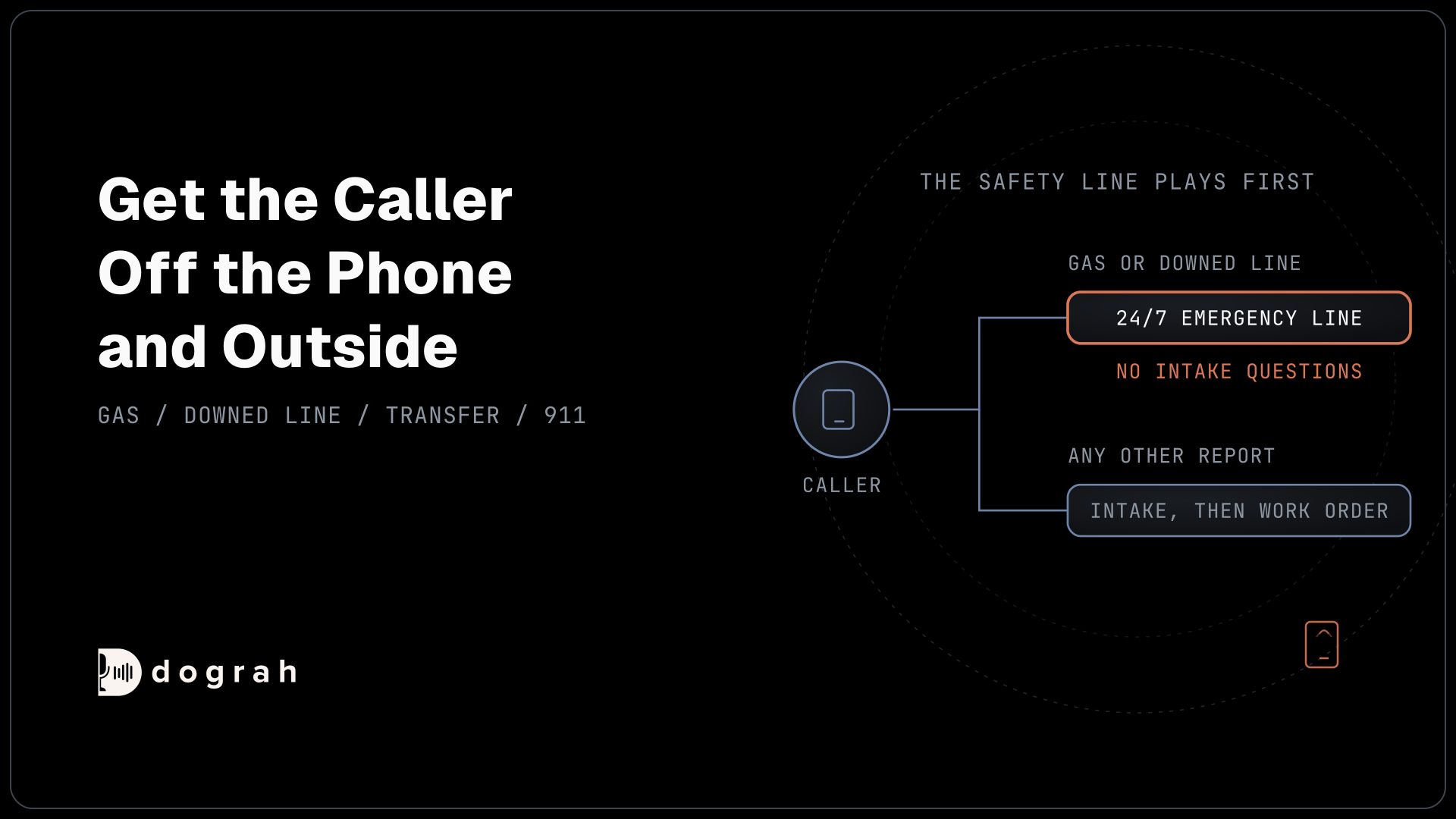
The agent settles routine returns and hands over anything the rules cannot answer. That covers disputes about the check's answer, refund requests outside policy, high-value items over a limit the store sets, and every answer marked "needs a person".
Damage in transit is a different case. A parcel that arrived broken is usually a claim against the carrier, which AI Voice Agents for Damaged and Lost Shipment Claims covers.
Transfer Call hands the caller over. It works on Twilio only and passes no summary by default, so the agent first writes the order, the item, the reason and the check's answer to the helpdesk through an HTTP API tool. If nobody answers within the 30-second default, the caller stays with the agent; tell it in the prompt to offer a callback and write the request through an HTTP API tool. For the rest of the support line, see AI voice agents for customer support in e-commerce.
Join the Dograh Community
Dograh is an OSS alternative to Vapi. Join our Slack community for queries, releases, best practices & community interactions.
Where the return goes next
The call ends with an RMA number, but the return does not. If the store collects items from the customer's door, booking that pickup is its own call, set out in AI Voice Agents for Return Pickup Scheduling.
Start small. Put the agent on overflow and after-hours return calls first, read a week of transcripts for answers the check did not give, and widen it once those are clean. Return calls carry names, phone numbers, addresses and order contents. Self-hosting keeps recordings and transcripts on your own servers, but the audio still reaches any model provider you use by API key, unless those models run on your servers too. Self-hosted Dograh has no per-minute platform fee (servers, model keys and phone minutes still cost); Dograh Cloud has a 1¢-a-minute platform fee.
Glossary
- Return merchandise authorization (RMA)
- The store's record that a return is approved, usually with a number the customer quotes on the parcel. The voice agent writes the return request; the store's eligibility check decides whether it becomes an RMA.
- Eligibility check
- The store's own rules for a return, run in its returns app, order system or a small service in front of it. It takes the order, item and reason and answers approved, exchange, store credit, declined or needs a person.
- Right of withdrawal
- The EU consumer right to cancel an online purchase within 14 days without giving a reason, with some exceptions. The UK has a similar right. The eligibility check, not the agent, applies it.
- Preset Parameter
- A value a Dograh HTTP API tool always sends, set by the builder rather than the AI. Sending workflow_run_id this way lets the order system ignore a duplicate return request.