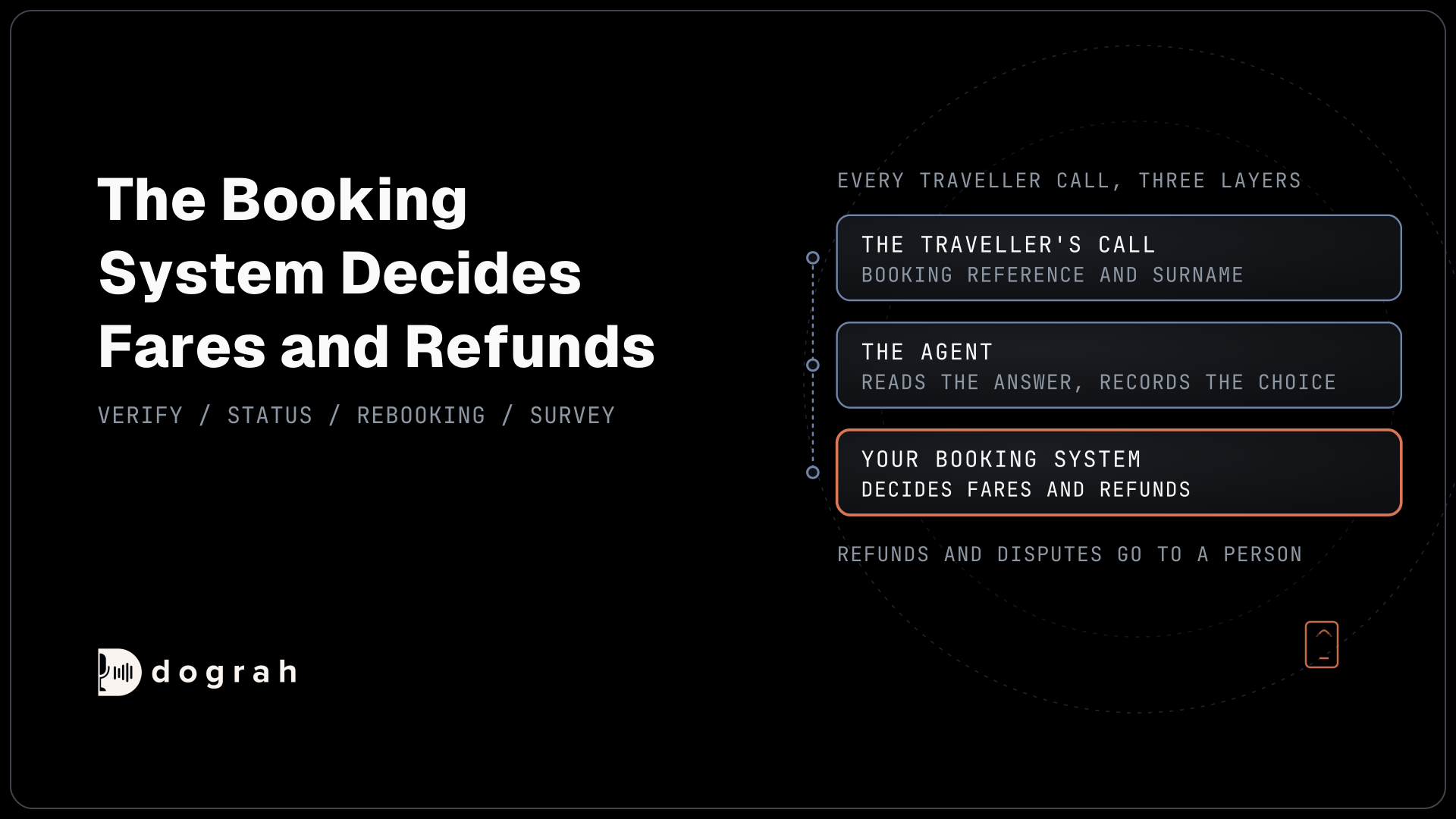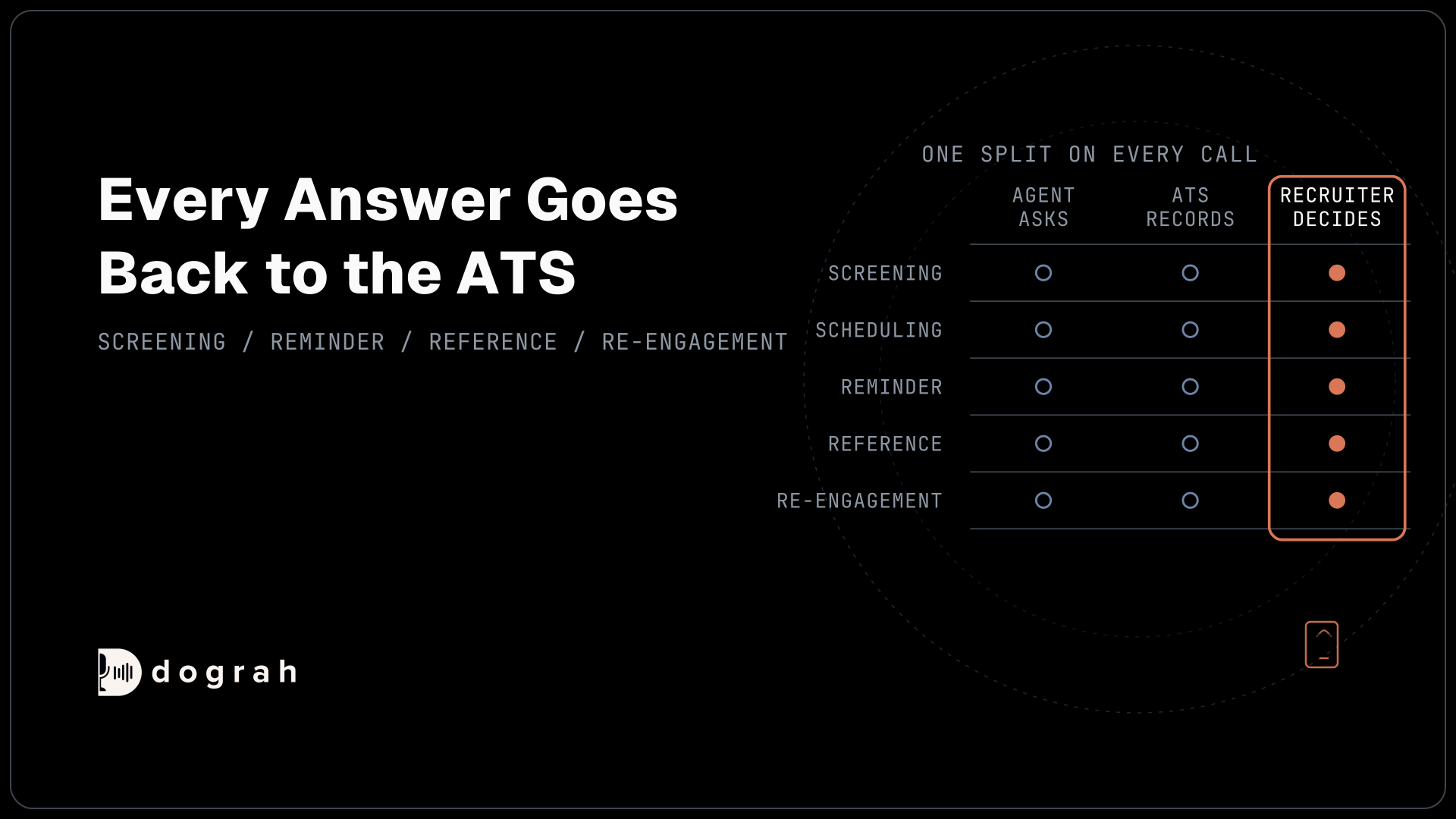

AI voice agents for staffing and recruitment are phone agents that screen applicants, book interviews, confirm interviews and first shifts, call referees and reach past candidates about new roles. They can say they are an automated assistant, and they record each answer as the person stated it in the applicant tracking system, where a recruiter makes every hiring decision.
Key Takeaways
- The agent asks and records. A recruiter makes every hiring decision.
- Where the law requires it, say it is an automated assistant first.
- The agent reads the applicant tracking system and writes every answer back to it.
Most of a recruiter's day goes on calls that ask the same questions. This guide maps the candidate calls a voice agent can take, in the order a candidate meets them, the rules that keep each safe, and how each one runs in Dograh, an open-source voice agent platform that reads and writes your applicant tracking system during the call. You can self-host it or run it on Dograh Cloud.
Why recruiters hand the phone to an agent
Recruiting is where HR teams already use AI most. In SHRM's State of AI in HR in 2026, drawn from more than 1,900 HR professionals, recruiting leads AI adoption at 27%, ahead of HR technology at 21%. Seven of the top ten AI use cases in HR sit in recruiting.
The volume is growing again. The American Staffing Association's Staffing Index put staffing jobs in the week of 7 to 13 September 2026 at 3.3% above the same week of 2025, and temporary and contract employment for the four weeks to 13 September was up 5.8%. More placements mean more calls per recruiter.
Timing is the other problem. Candidates apply in the evening; the recruiter calls back the next afternoon while the candidate is at work, and another agency makes an offer first. A voice agent can answer the screening line at 11 p.m., or call back within minutes when the form asked consent to call.
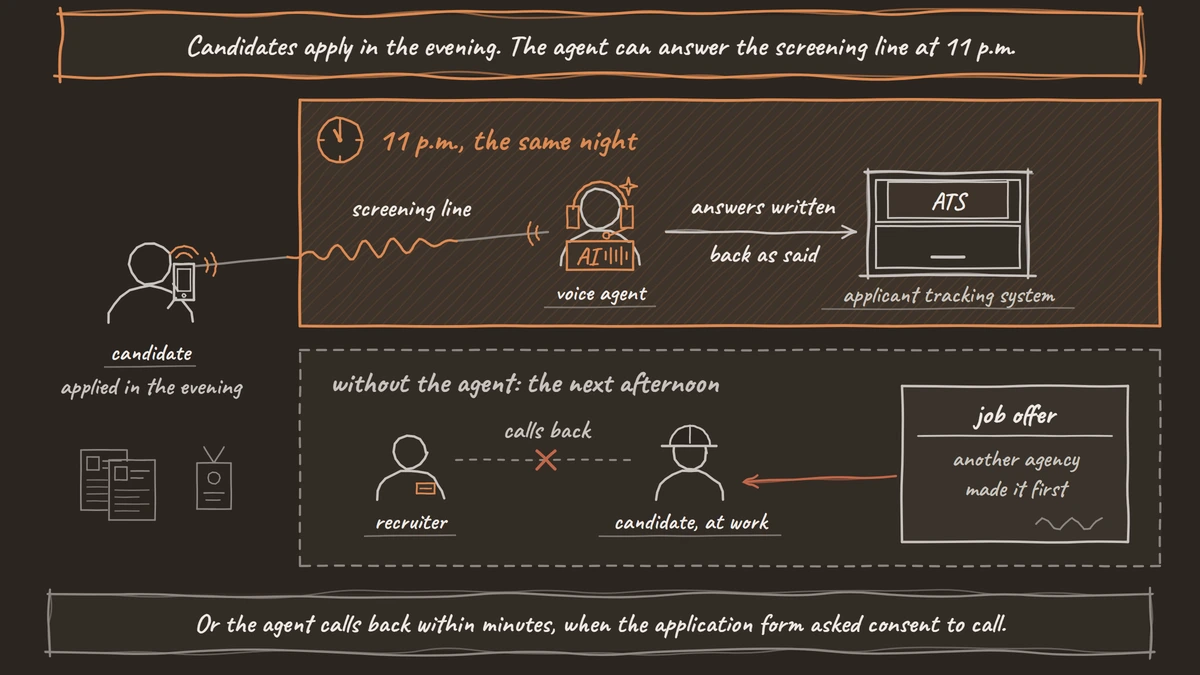
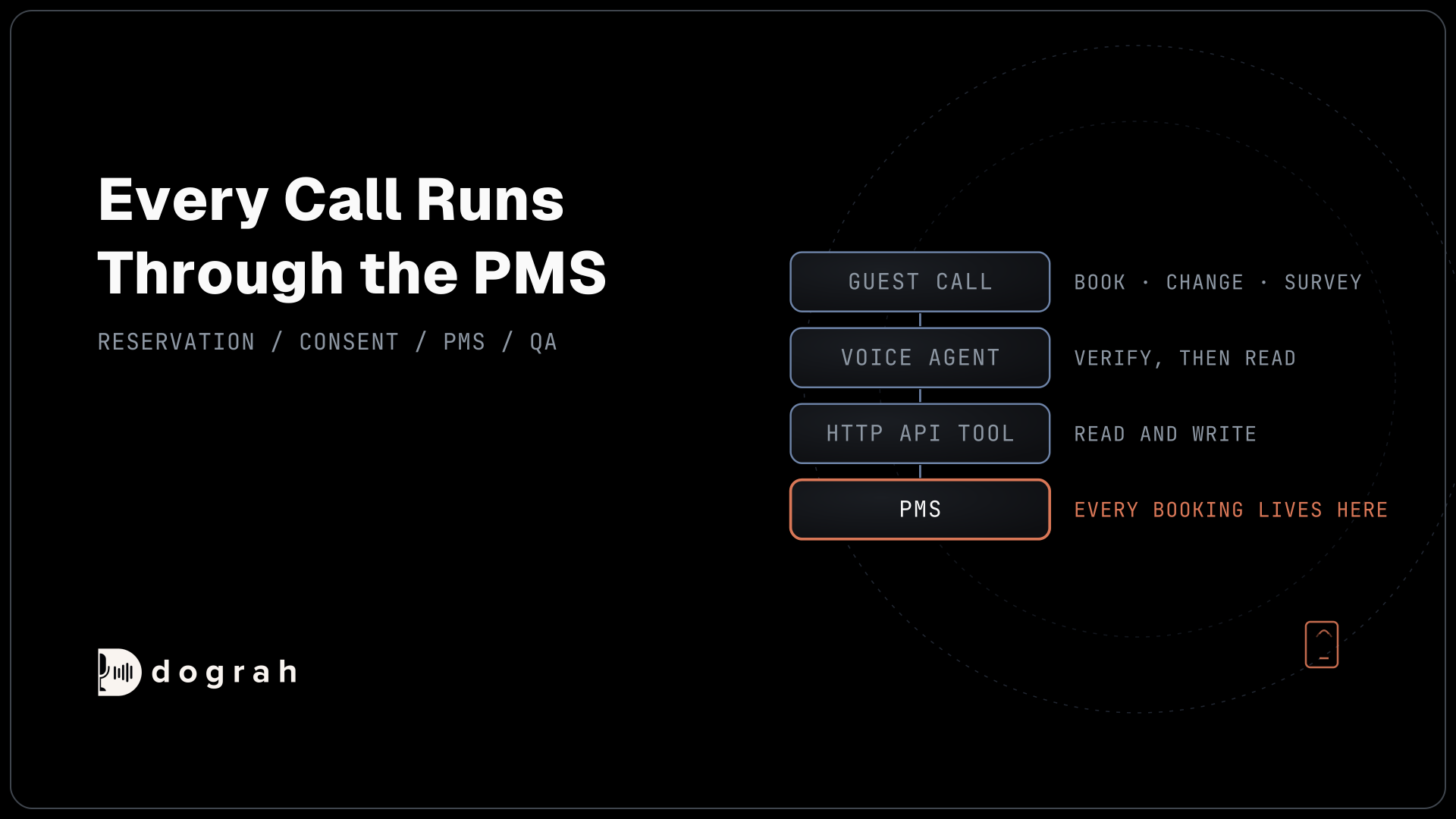
Dograh runs each of these calls as a flow you design. Dograh is the orchestration layer: it runs the call flow, tools and telephony, and you choose the speech and language models. Every call here follows one pattern: the agent reads the applicant tracking system (ATS) during the call, asks the recruiter's questions and writes what the candidate said back to the ATS.
AI Voice Agents for Delivery Driver Recruitment Screening already covers the screen a fleet runs for drivers, from licence class to working area, and its state rules.
Calls before the interview: screening and scheduling
The first two calls decide whether a candidate stays in your process, so most agencies start here.
The screening call comes first after an application. The agent asks the recruiter's knock-out questions, such as availability, location, right to work, licences or years of experience, and records each answer as the candidate stated it. It never scores or rejects anyone: the knock-out rule lives in the ATS, and a recruiter reviews every candidate the ATS holds back. AI voice agents for candidate screening shows how to write those questions and why the call gives no score.
The best field evidence so far also backs structured questions with a person making the decision. In a field experiment by Brian Jabarian and Luca Henkel, a recruitment firm in the Philippines received 70,884 applications for entry-level customer service jobs between March and June 2025, and eligible applicants were randomly assigned a human recruiter or an AI voice agent for the interview, with humans evaluating every interview and making every hiring decision. Applicants the agent interviewed were 12% more likely to get an offer and 18% more likely to start, which the authors credit to consistent questions.
Scheduling comes next. When the ATS advances a candidate, or a candidate calls in to book, the agent reads open interviewer slots through an HTTP API tool, offers a few, reads the chosen time and format back and writes the booking to the ATS or calendar. Dograh has no built-in calendar integration, so that tool calls the calendar's or the ATS's own API directly. A Preset Parameter named workflow_run_id lets the receiving system ignore a duplicate if a booking request is retried. Read-back and reschedules are covered in AI voice agents for interview scheduling.

Open Source Alternative to Vapi / Retell
Self-hosted voice agent platform — no per-minute fees
dograh-hq/dograh
Star on GitHub
Calls around the interview and the first shift
Once a time is booked, the next call confirms it, and for temps the first day on site.
The reminder call goes out the day before. After the verification step, the agent reads the time, place, format and what to bring from the ATS. A yes is recorded. A request to move goes back to the scheduling flow, which owns every rebooking.
Placed temps get a first-shift confirmation. The agent reads the site address, the start time, the person to ask for at the gate and any safety gear, then records whether the worker confirms. A "no", or no answer after the set retries, gives the recruiter the evening to find cover. The client employer's name can be confidential, so the agent says it only after verification.
Dograh has no SMS tool. If the worker wants the address by text, an HTTP API tool asks the agency's messaging provider to send it. Both calls are outbound, so the consent rules below apply. Our post on AI voice agents for candidate reminder and confirmation calls covers the call in full.
Calls after the interview: reference checks
A reference call reaches the referee, so it carries its own rules.
The call happens only after the candidate's written authorisation is on file. The ATS sends a referee's number to Dograh only once the authorisation is recorded, so the agent never decides whether it may call. The agent names the agency, never the client employer, and can say it is an automated assistant. It asks the recruiter's fixed questions, such as dates worked together and the role held, and records the answers as stated.
The agent never judges whether a reference is good. A referee who declines is recorded as declining, and anything unusual goes to the recruiter with the transcript. If your agency runs reference checks on behalf of a client employer, check with counsel whether the Fair Credit Reporting Act (FCRA) applies, since reports gathered by a third party can bring their own disclosure duties. The full design is in AI voice agents for reference-check calls.
Calls to past candidates: re-engagement and redeployment
Past candidates in the ATS are often the quickest next placement.
A re-engagement call asks two things about a new role: whether the candidate is interested and when they could start. It never re-screens. A candidate who says yes goes to a recruiter or to the screening flow, and one who says no is recorded with the reason they gave. Redeployment works the same way for contractors near the end of an assignment.
The call list is an ATS export uploaded to Campaigns as a CSV, or the ATS starts each call through the API Trigger, which API Triggers: Start a Voice Agent Call From Any System walks through. Campaigns retry busy or unanswered calls (up to 10 retries, 2 by default), but they have no per-person call cap. Enforce a limit in the export, for example one call per candidate every 90 days. When a candidate asks not to be called again, the agent writes that to the ATS during the call. See AI voice agents for candidate re-engagement for the flow.
Three rules every hiring call follows
Every call above runs on three rules, and the law in several places now expects them. This section is general information, not legal advice.
Say it is an automated assistant where required
If you want to tell candidates they're speaking with an automated assistant, or your location requires it by law, write it in the Greeting Text along with the agency's name; Dograh speaks it word for word: "Hello, this is Northside Staffing's automated assistant. This call is recorded." It plays before verification, so it names only the agency. Then the agent asks for the candidate by name and offers a recruiter callback to anyone who prefers a person.
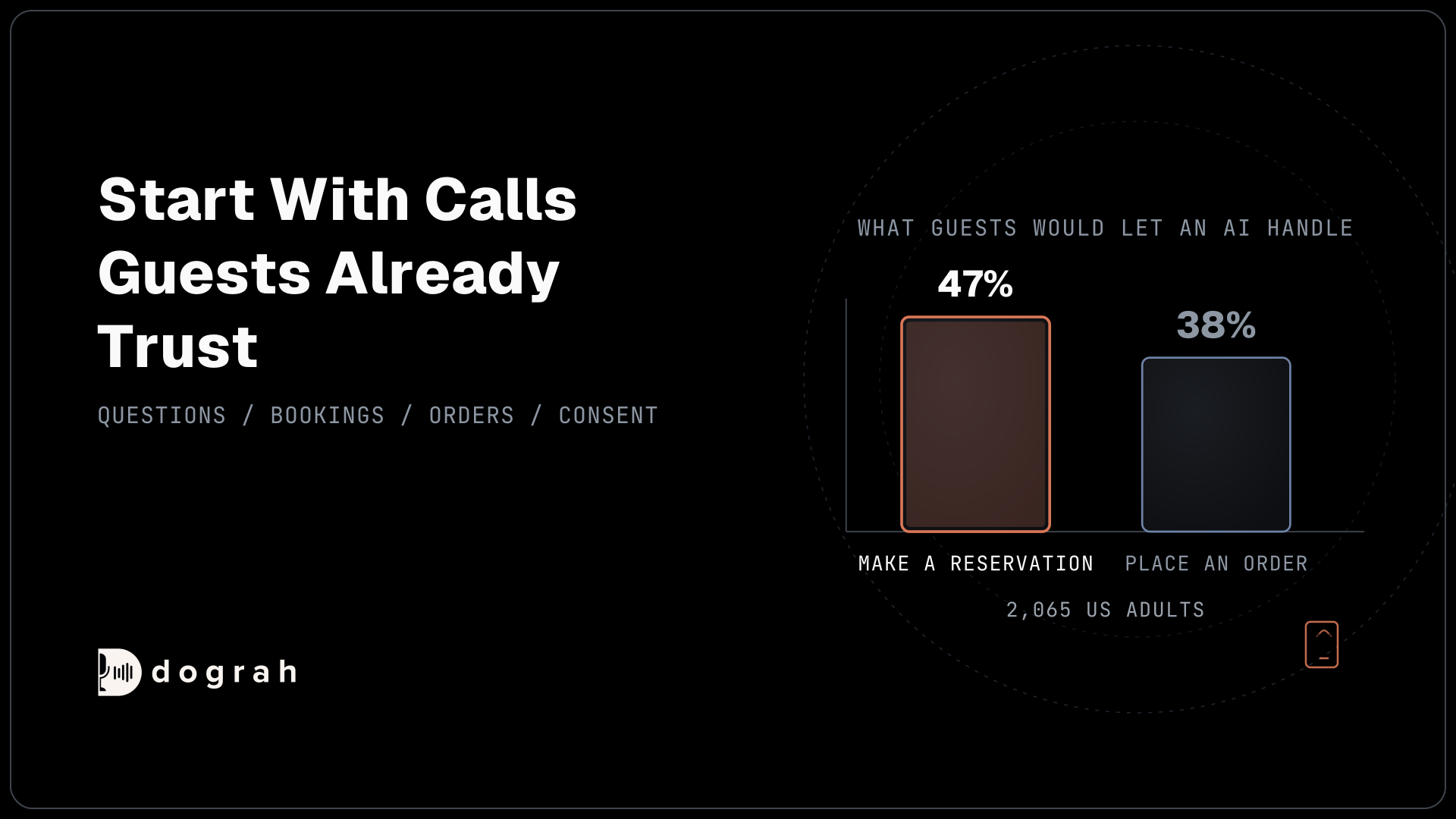
Candidates notice when it is skipped. In the Greenhouse 2026 Candidate AI Interview Report, a survey by a company that sells hiring software, 38% of US job seekers surveyed (1,200 of 2,950 across five countries) had walked away from a hiring process because it included an AI interview, and 70% were never clearly told up front that AI would be evaluating them. 46% wanted the option to request a human interview. Its "AI interview" also counts AI-scored video interviews, so read it as evidence about disclosure in general.
The law points the same way. Illinois has required employers to give notice when they use AI in recruitment and hiring since 1 January 2026. Colorado's SB26-189, whose duties start on 1 January 2027, treats employment as a consequential decision, and the Colorado bill summary describes "clear and conspicuous notice to consumers at the point of interaction with a covered ADMT". Where these apply, a fixed first sentence covers it on every call.
Record answers as the candidate said them
Each answer lands in an extraction variable, and because extraction is an AI step, the transcript and recording stay the exact record. After the call, a webhook sends the answers to the ATS with links to the recording and transcript. A temporary failure is retried automatically, up to five attempts.
Ask only for what the role needs. Illinois names zip codes as a proxy that may not be used in AI hiring decisions, so ask how far the candidate will travel, and use the application postcode only to confirm who you are speaking to.
A person makes the decision
The call outputs the candidate's answers and nothing that rates them, which keeps the agent clear of the heaviest rules. NYC Local Law 144 covers an automated employment decision tool, the kind of tool whose score or recommendation substantially assists a hiring decision. An employer may use one only if it has been "subject to a bias audit within one year of the use of the tool" and the audit information "is publicly available". Candidates must also get notice. Colorado adds a plain-language explanation within 30 days after an automated decision with an adverse outcome.
Generally, a call that asks and records, with the ATS applying the knock-out rule and a recruiter reviewing every candidate it holds back, keeps the agency on the simpler side of these rules. They differ by place and still change, so confirm your position with counsel.
Join the Dograh Community
Dograh is an OSS alternative to Vapi. Join our Slack community for queries, releases, best practices & community interactions.
Verify first, and get consent before you dial
Two checks come before any application detail is spoken: who is on the line, and whether you may call them.
Every call runs greet, verify, disclose. For staffing, the check is the candidate's name, the role they applied for and the email or postcode on the application. A phone number finds the record; it never proves who answered. Only then does the agent mention the client employer or pay rate. Referees hear the agency's name only.
Outbound calls need consent first. Under 47 CFR 64.1200, a call to a mobile number using an artificial or prerecorded voice generally needs "the prior express consent of the called party", and the Federal Communications Commission treats an AI-generated voice as an artificial voice. A call that "includes or introduces an advertisement" needs "the prior express written consent of the called party". The usual basis for candidate calls is an application form that collects the number and says a call will follow.
Whether a call about a new role counts as an advertisement is a question for counsel; the safe default for any re-engagement call the candidate did not ask for is written consent. Inbound screening lines avoid the question, because the candidate dials you. At voicemail, leave the agency's name and a callback number, never the role or the client. A spoken "stop calling me" is written to the ATS at once, since there is no keypad option. Confirm your own consent wording with counsel before the first outbound campaign.
How the agent works with your ATS
On an inbound call, Pre-Call Data Fetch, set to "Inbound calls only" at the bottom of the Start Call node, sends the caller's number to your endpoint when the call connects and loads the matching application. It finds the record; verification still runs. During the call, HTTP API tools read slots or write an opt-out. After it, the webhook writes the full outcome. Outbound calls start from Campaigns or the API Trigger.
When a candidate needs a person, Transfer Call puts them through to a recruiter. It works on Twilio only and passes no summary, so the agent writes details to the ATS first. If nobody answers within 30 seconds (the default), the candidate stays with the agent, which writes a callback request to the ATS through an HTTP API tool. To review quality, a QA node samples calls at a rate you set and tags each step. Automated QA for Voice Agents explains how to read the results.
Candidate recordings are employment records. Self-hosting Dograh keeps recordings and transcripts on the agency's own servers. The audio stays inside your infrastructure only when the speech and language models run on your servers too; with hosted model keys, the audio still reaches the model provider. Dograh has no retention setting, so your own policy decides how long records are kept, and recording can be switched off only server-wide. Self-hosted Dograh has no per-minute platform fee (servers, model keys and phone minutes still cost); Dograh Cloud has a 1¢-a-minute platform fee. A self-hosted install runs 10 concurrent calls by default, which you can raise. Our page on self-hosted voice agents for staffing agencies shows every candidate call running on your own servers.
Start with one inbound screening line on a real number, read the first week of transcripts with the recruiters who wrote the questions, and add outbound calls once the consent wording is settled.
Choosing a tool
Recruiting voice tools split into two groups: tools that ask and record, leaving the decision to a recruiter, and tools that score or rank candidates. Scoring is a real feature some buyers want, and it brings extra legal duties, such as a New York City bias audit. Best AI Voice Agents for Recruitment compares both groups on stated criteria, with every vendor claim taken from its own current page.
Each call above has its own deep dive:
- AI Voice Agents for Candidate Screening
- AI Voice Agents for Interview Scheduling
- AI Voice Agents for Candidate Reminder and Confirmation Calls
- AI Voice Agents for Reference-Check Calls
- AI Voice Agents for Candidate Re-engagement
- Best AI Voice Agents for Recruitment
Glossary
- Applicant tracking system (ATS)
- The hiring system that holds each application, its status and the recruiter's decisions. In a voice agent setup, the agent reads from it during the call and writes the candidate's answers back after it.
- Knock-out question
- A screening question whose answer, by the employer's own rule, can end an application, such as whether the candidate holds a required licence. The agent asks it and records the answer; the ATS applies the rule and a recruiter reviews the result.
- Automated employment decision tool
- NYC Local Law 144's term for a tool whose output, such as a score or recommendation, substantially assists or replaces a hiring decision. Using one in New York City requires a bias audit within a year of use and notice to candidates.
- Consequential decision
- Colorado's term, in SB26-189, for a decision about a person's access to areas such as employment or housing. Automated tools that make or shape one bring notice and explanation duties from 1 January 2027.