
AI voice agents for candidate reminder and confirmation calls phone candidates before an interview or a placed temp before a first shift. After a text goes unconfirmed, the agent verifies the person, reads the booking or shift details from the ATS, and records whether they confirm. Any change goes back to the scheduling flow.
Key Takeaways
- Text first. Call only when the booking or shift is still unconfirmed.
- The client employer's name comes only after the identity check.
- The reminder confirms. A change goes back to the scheduling flow.
This post is part of our guide to AI voice agents for staffing and recruitment. The guide's section on calls around the interview and the first shift describes the reminder that confirms a booking, passes any change back to scheduling, and confirms a placed temp's first day on site. This post covers both calls in Dograh, an open-source, self-hostable voice agent platform, from deciding who gets a call to what goes back to the applicant tracking system (ATS).
Which bookings need a call
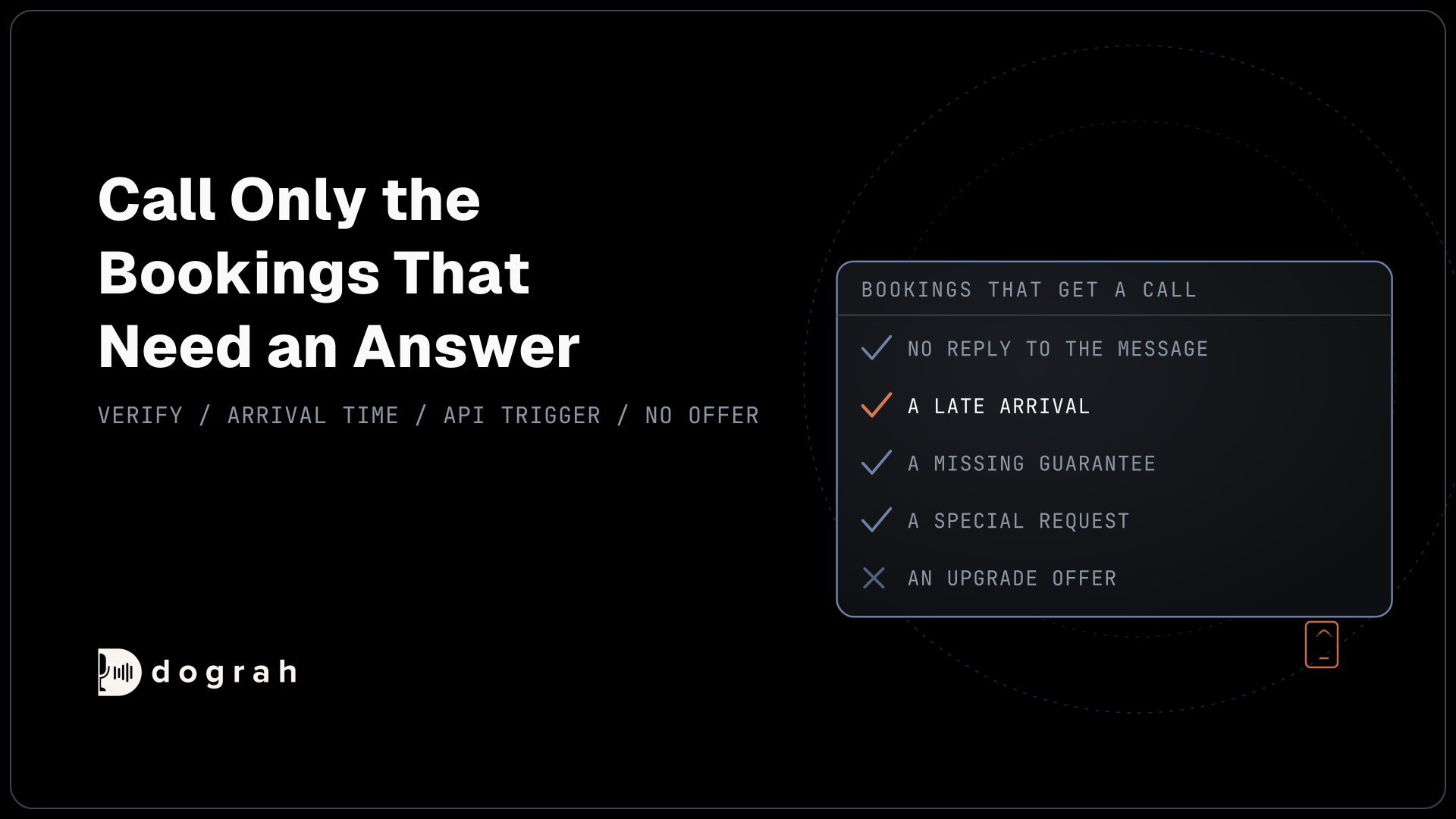
Most reminders should be a text, and a call earns its place only when the text has not done the job. Dograh has no SMS tool, so the text comes from your ATS or messaging platform with no voice agent involved.
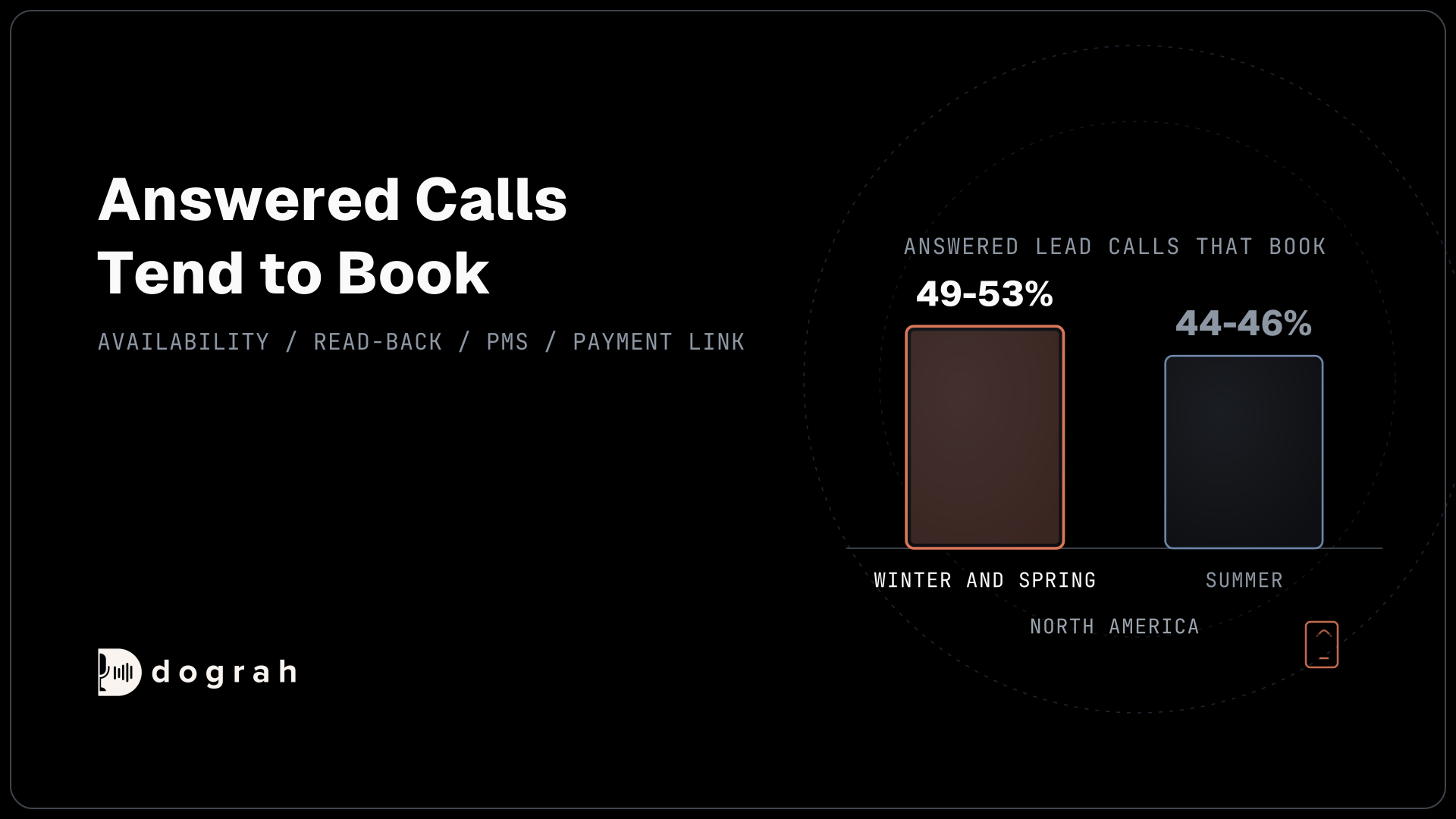
The call goes to bookings still unconfirmed after the text, with short-notice interviews first in line, and to first shifts nobody has confirmed. Short-notice bookings come first because that is where no-shows cluster. Talview analysed 93,783 scheduled interviews in a study published in December 2025. In the roughly 80,000 where it could tell how far ahead the booking was made, candidates showed up 72.0% of the time when the interview was booked less than 24 hours ahead, against 91.6% to 91.9% at 24 to 72 hours. Talview sells interview software and does not state the period it measured, so treat this as vendor data. It shows where the risk sits. It does not measure what a reminder changes.
The same pattern runs through other industries. Healthcare No-Show Reduction: Why AI Voice Agents Beat Reminders makes the case for a two-way call over a one-way message in clinics, and the logic carries over to interviews.
Consent before the first reminder call
A reminder is an outbound call with an AI voice, so consent comes before the first dial. This section is general information, not legal advice.
Under 47 CFR 64.1200, a call to a mobile number made "using an automatic telephone dialing system or an artificial or prerecorded voice" needs "the prior express consent of the called party", and the Federal Communications Commission (FCC) treats an AI-generated voice as an artificial voice. A candidate who gave a mobile number on an application that said calls about it would follow has generally given that consent for informational reminders.
The tier changes if the call "includes or introduces an advertisement". That needs "the prior express written consent of the called party". So the reminder sticks to the booking. A line about another open role belongs in a re-engagement call with its own consent, never in a reminder.
The same rule lets a candidate revoke consent "by using any reasonable method to clearly express a desire not to receive further calls or text messages". A spoken "stop calling me" is written to the ATS during the call and honoured on every later reminder. An FCC order in autumn 2026 changed how far a revocation reaches, so confirm the current scope, and your own consent wording, with counsel.
The interview reminder call
The reminder runs greet, verify, disclose, and only then reads out the booking.
If you want to tell candidates they're speaking with an automated assistant, or your location requires it by law, write it in the Greeting Text along with the agency's name, and nothing else, because it plays before verification: "Hello, this is Northside Staffing's automated assistant, with a reminder call. This call is recorded." The agent asks for the candidate by name, which finds the right person but does not prove who they are. The candidate then confirms the role they applied for and the email or postcode on the application.
After a match, the agent reads the booking from the ATS: the day and time with the time zone, the place or video link, who the candidate will meet and anything to bring, such as photo ID. Then it asks one question: keep the time, or move it?
A yes is recorded. A move is recorded too, with the times the candidate says they can do, and the reminder stops there. The rebooking belongs to the scheduling flow, which reads live slots and writes the new booking, as set out in AI voice agents for interview scheduling. The ATS starts that flow, so the reminder never books anything itself.
If the call reaches voicemail, the message names the agency and a callback number only. The role, the client employer, the site and the time are personal details, and a voicemail box proves nothing about who will hear it. Voicemail detection is configurable, so you choose whether the agent leaves that short message or hangs up.

Open Source Alternative to Vapi / Retell
Self-hosted voice agent platform — no per-minute fees
dograh-hq/dograh
Star on GitHub
First-shift calls for placed temps
A first-shift call confirms that a placed worker will turn up tomorrow, and it is the call no recruiter has time to make at 5 p.m. for forty starters.
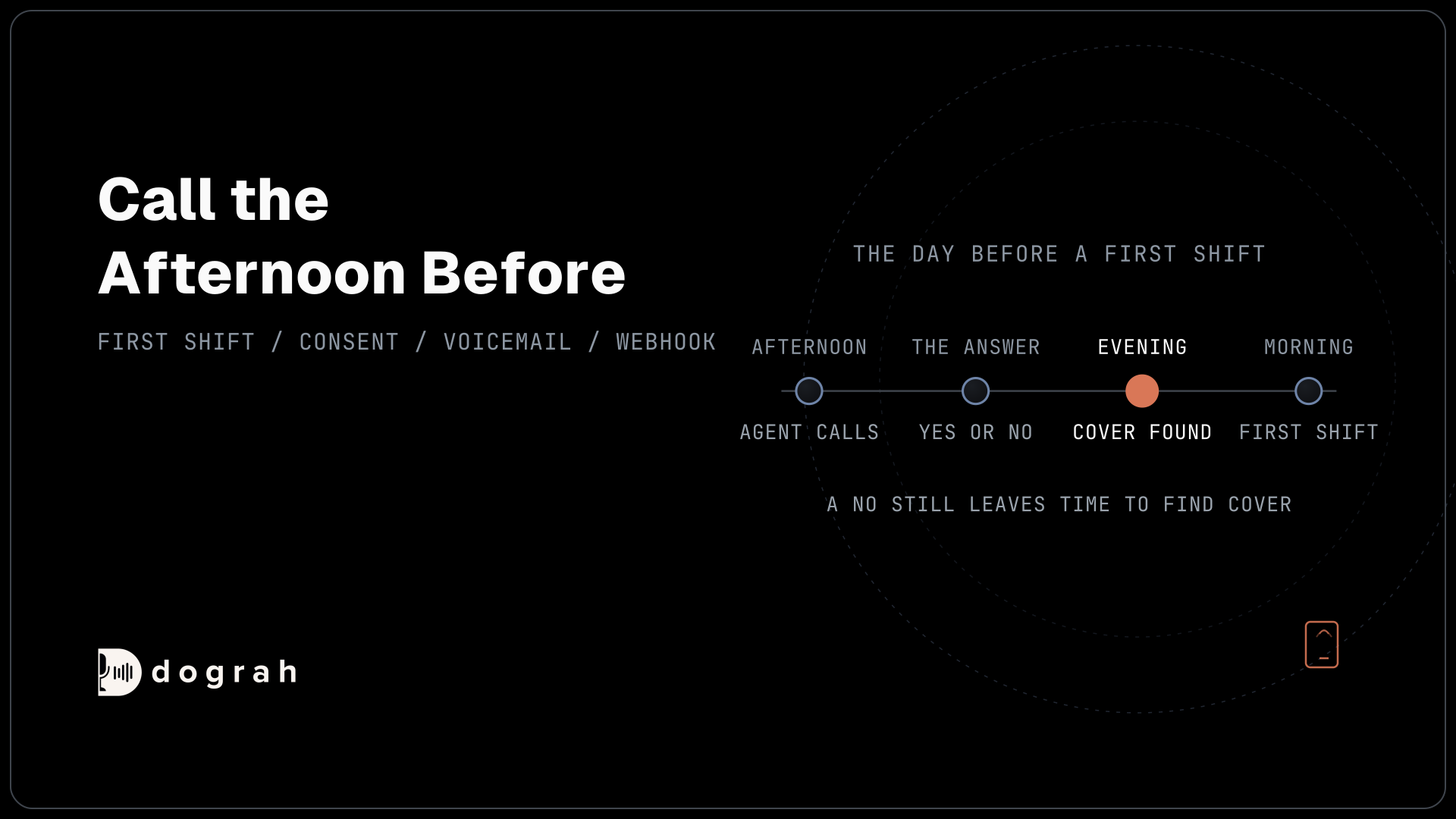
Make it the afternoon before, so a "no" still leaves the evening. The agent runs the same identity check. Only after it does the agent name the client employer, since the employer's name can be confidential. Then it reads the shift from the ATS job order: the site address, the start time, who to ask for on arrival and what to bring, such as safety boots or a hi-vis vest.
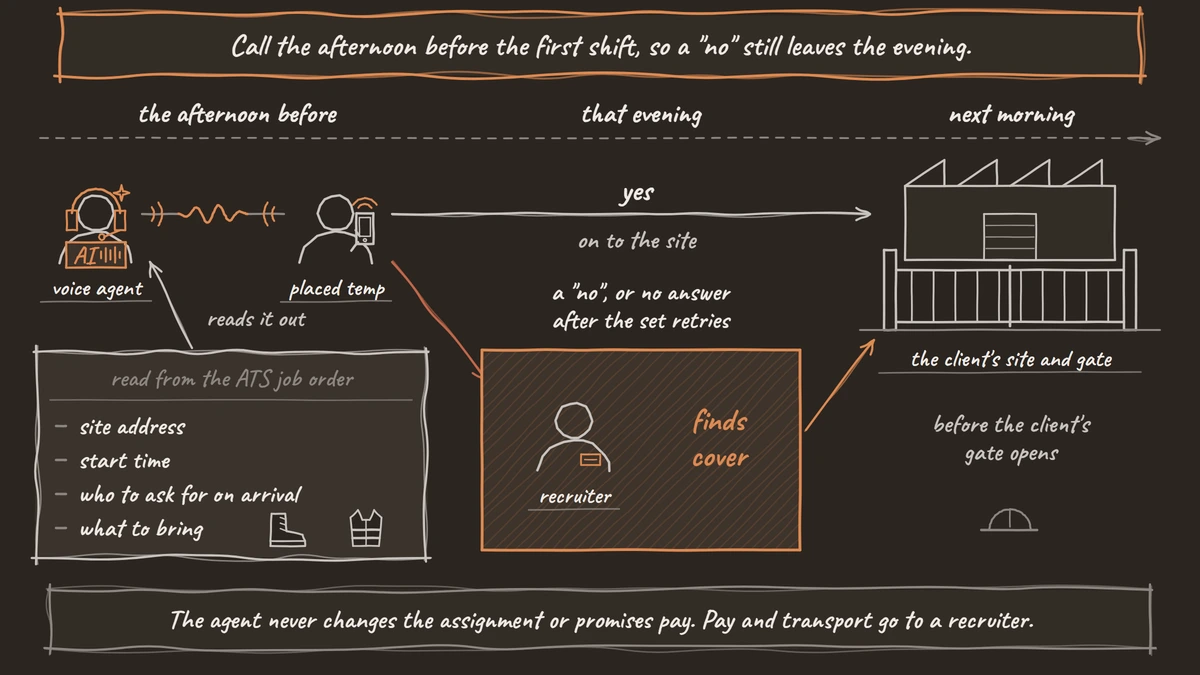
The worker's answer is recorded as they stated it, including any problem such as "I have no way to get there by 6". The agent never solves the problem by changing the assignment or promising anything about pay. Pay questions and transport problems go to a recruiter with the transcript.
A "no", or no answer after the set retries, is the signal that matters. It reaches the recruiter that evening, which leaves time to find cover before the client's gate opens. If the worker wants the address by text, an HTTP API tool asks the agency's own messaging provider to send it.
What gets written back
Every call ends with one outcome in the ATS, so a recruiter can act on the list without listening to a single recording.
A webhook sends the outcome when the call ends: confirmed, change requested with the times offered, cancelled with the reason as stated, opted out, or not reached. It carries links to the recording and transcript. A temporary failure is retried automatically, up to five attempts.
Calls start from a Campaigns upload of the day's list, or from the ATS itself through the API Trigger, as API Triggers: Start a Voice Agent Call From Any System shows. Campaigns retry calls that do not connect, up to 10 times (2 by default) and 30 seconds to an hour apart. Calling hours are set by weekday. They have no per-person call cap, so keep each booking on the list once and set retries low. A reminder that rings four times reads as pressure.
Join the Dograh Community
Dograh is an OSS alternative to Vapi. Join our Slack community for queries, releases, best practices & community interactions.
Where to start
Start with first-shift calls, where a missed confirmation costs a client a worker on the line the next morning.
Reminder calls carry names and shift sites. Self-hosting Dograh keeps recordings and transcripts on the agency's own servers, and the audio stays inside your infrastructure only when the speech and language models run there too. Dograh has no retention setting, so your own policy decides how long records are kept. Self-hosted Dograh has no per-minute platform fee (servers, model keys and phone minutes still cost); Dograh Cloud has a 1¢-a-minute platform fee.
Read the first week of "not coming" and "problem" outcomes with the recruiters who place those workers. They show where the job order is unclear before the shift does.
Glossary
- Prior express consent
- The consent tier under the Telephone Consumer Protection Act that generally covers an informational call made with an artificial voice to a mobile number, such as a reminder to a candidate who gave the number on an application.
- Prior express written consent
- The stricter tier needed when a call made with an artificial voice includes or introduces an advertisement. A reminder that mentions another open role can cross into it.
- First-shift call
- The call the afternoon before a placed temp's first day, which reads the site, start time, contact and what to bring after verification and records whether the worker confirms.
- Campaigns
- Dograh's way to call a list uploaded as a CSV, with retry settings and calling hours by weekday. It has no per-person call cap, so frequency limits live in the list.