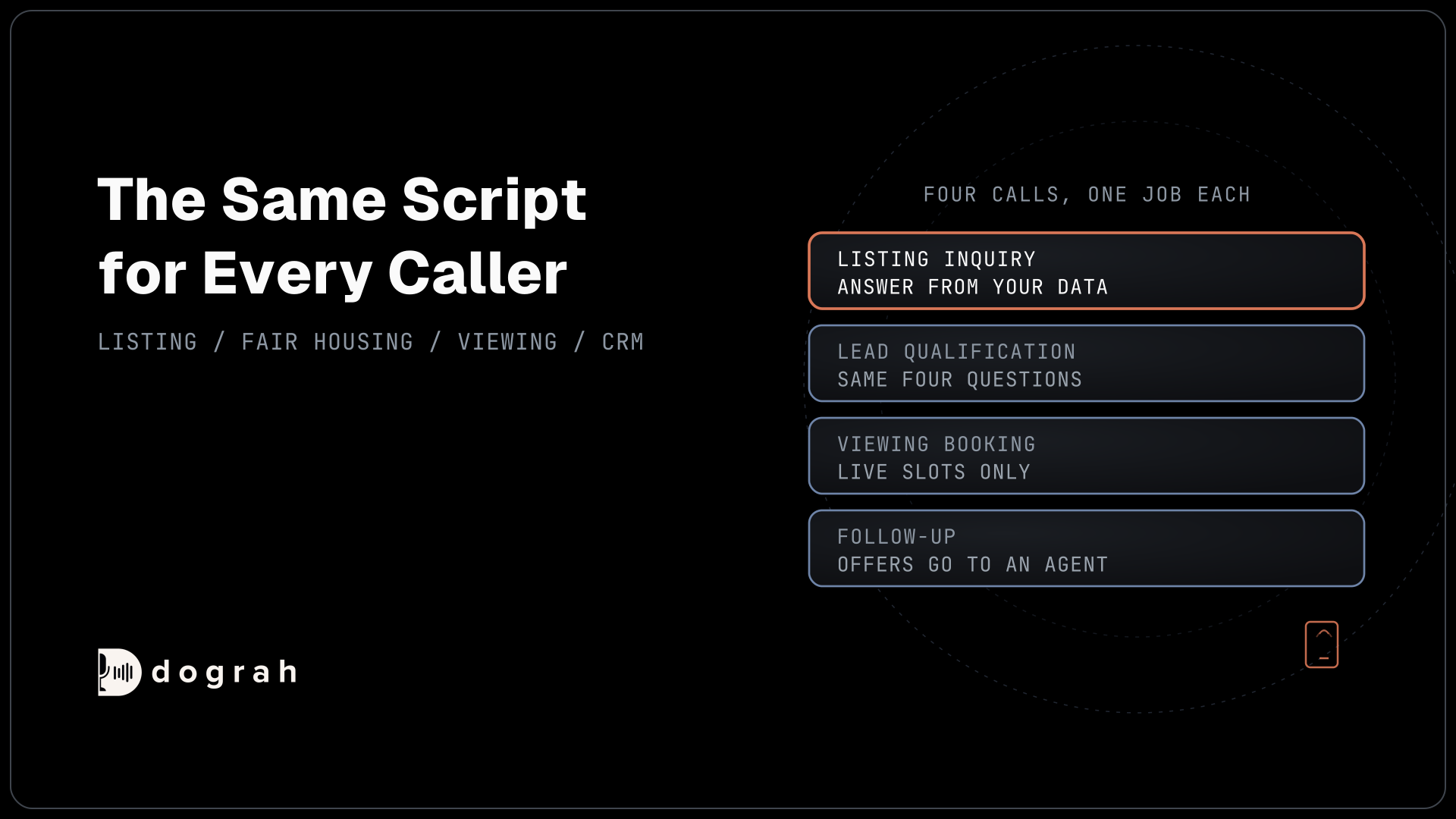

AI voice agents for real estate are phone agents that answer listing inquiries, qualify buyers, book viewings and follow up after viewings and valuations. They read listing facts from the agency's own listing feed or CRM, ask every caller the same questions and pass offers, pricing and negotiation to a human agent. Outbound calls need consent first.
Key Takeaways
- Listing facts come only from your own feed or CRM, never the model.
- Every caller gets the same questions and the same open viewing slots.
- Start with inbound calls; outbound lead calls need consent on record first.
Most calls to an agency are about a listing, a viewing or what happens next. This guide maps the calls a voice agent can take, in the order a buyer or seller meets them, and how each one runs in Dograh, an open-source voice agent platform that reads and writes your CRM during the call. You can self-host it or run it on Dograh Cloud.
The calls an agency can hand to a voice agent
Four kinds of call make up most agency phone traffic, each with one job for a voice agent. Agents still sit in almost every US home sale: the National Association of Realtors (NAR) 2025 Profile of Home Buyers and Sellers, covering sales from July 2024 to June 2025, found that 88% of buyers and 91% of sellers used an agent or broker.
| Call | When it happens | The agent's one job | What it hands on |
|---|---|---|---|
| Inbound property inquiry | A listing seen on a sign or portal | Answer from your listing data, record interest | A viewing, plus qualification if agreed |
| Lead qualification | A new web or portal lead (outbound, consent first), or an inbound caller | Ask budget, area, timeline and financing; record answers as stated | A booked viewing, or a ready buyer passed to an agent |
| Property-visit scheduling | A viewing is booked, moved or cancelled | Offer live slots, book one and read it back | The confirmed viewing, written to the calendar |
| Buyer and seller follow-up | After a viewing or valuation (outbound) | Record feedback and the next step | Offers, price talk and negotiation, to the agent |
Across all four, the agent never prices a home, comments on an offer, negotiates or decides whether a buyer is worth an agent's time.
Listing facts come from your data, never the model
The agent may only say what the agency's systems say about a listing. A model answering from memory will invent a parking space or a school catchment the caller cannot check, so every listing fact is a lookup.
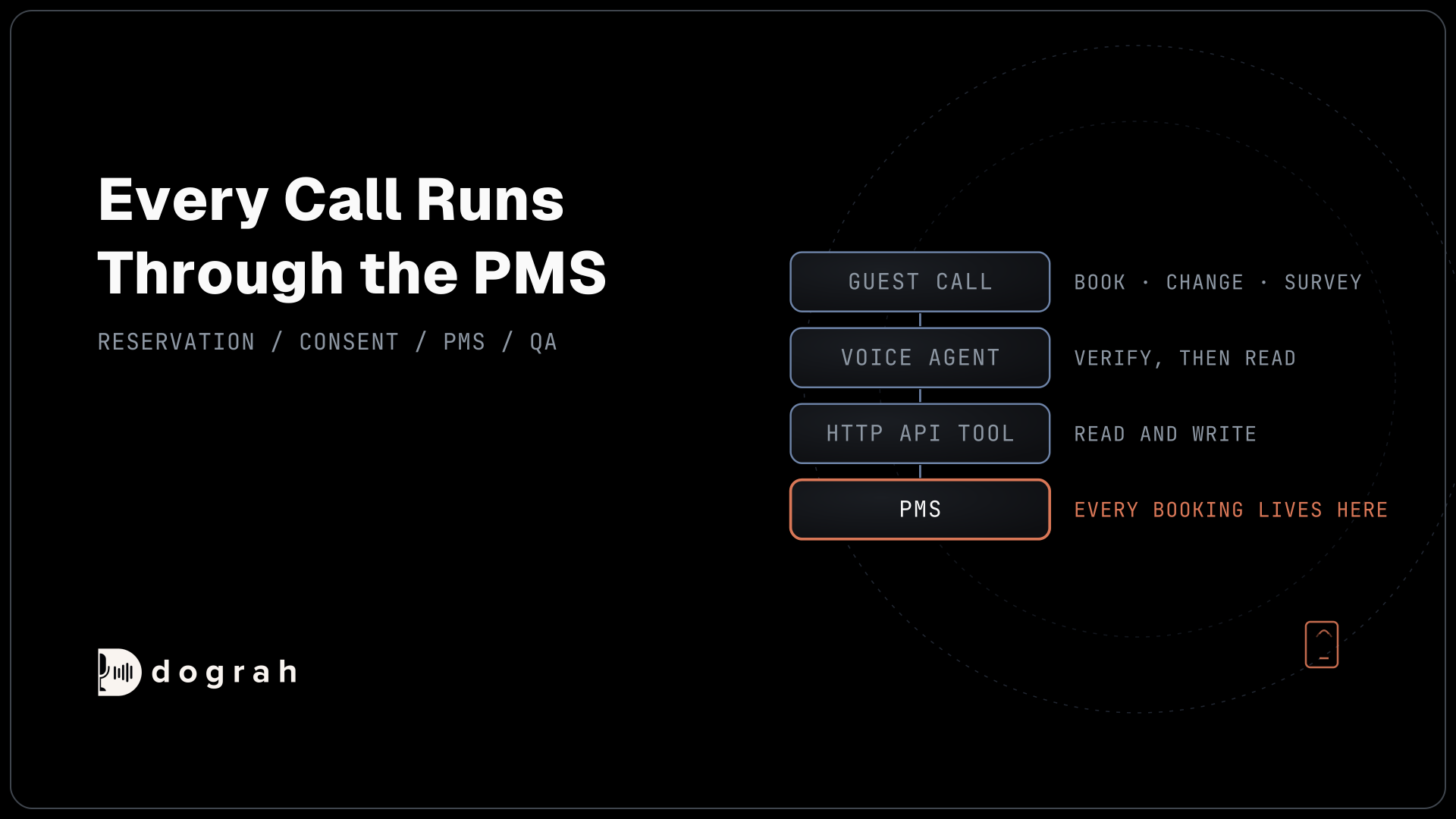
Dograh handles this with tools the agency controls. Dograh is the orchestration layer: it runs the call flow, tools and telephony, and the speech and language models are a separate layer you choose. During a call, an HTTP API tool asks the listing feed or customer relationship management (CRM) system for the named property's price, status, bedrooms and parking, and the agent reads them out. An empty field gets "an agent will confirm" and a callback request.
Stable documents such as brochures and fee schedules can go into the Knowledge Base. Price and availability never come from an uploaded file: a home that went under offer yesterday is still "available" in last week's PDF.
Pre-Call Data Fetch (bottom of the Start Call node, "Inbound calls only") sends the caller's number to your CRM when the call connects, to spot a repeat caller. A number finds a record but never proves who is calling, so a match alone never opens a client's own details.
Dograh has no built-in CRM or calendar integrations. Your systems connect through HTTP API tools, MCP tools, the Webhook node, Pre-Call Data Fetch or the API Trigger (n8n and similar tools connect through these), so the agent reads from your CRM and writes each answer back to it; our guide to Integrating Voice Agents With Your Stack covers the mechanics.
Self-hosting Dograh keeps recordings and transcripts on the agency's servers; caller audio stays inside your infrastructure only if the speech and language models run there too. With no retention setting, your own policy sets how long they are kept. Self-hosted Dograh has no per-minute platform fee (servers, model keys and phone minutes still cost); Dograh Cloud has a 1¢-a-minute platform fee. We built a dedicated landing page for self-hosted voice agents in real estate agencies covering the listing, qualification and viewing calls on your own servers.
Fair housing: the same questions and slots for every caller
A voice agent speaks for the agency, so the Fair Housing Act generally applies to it as to a human agent. This section is general information, not legal advice.
Section 3604 of the Fair Housing Act makes it unlawful to make any statement about the sale or rental of a dwelling "that indicates any preference, limitation, or discrimination based on race, color, religion, sex, handicap, familial status, or national origin". It also bars telling a person, on one of those grounds, that a dwelling "is not available for inspection, sale, or rental when such dwelling is in fact so available".
On a call, they generally become two script rules. Every caller gets the same questions in the same order: budget, area, timeline and financing, and nothing about family, faith, origin or disability. Every caller asking about a listing hears the same open viewing slots, read live from the calendar, so no caller is told a home is unavailable when it is open to the next.
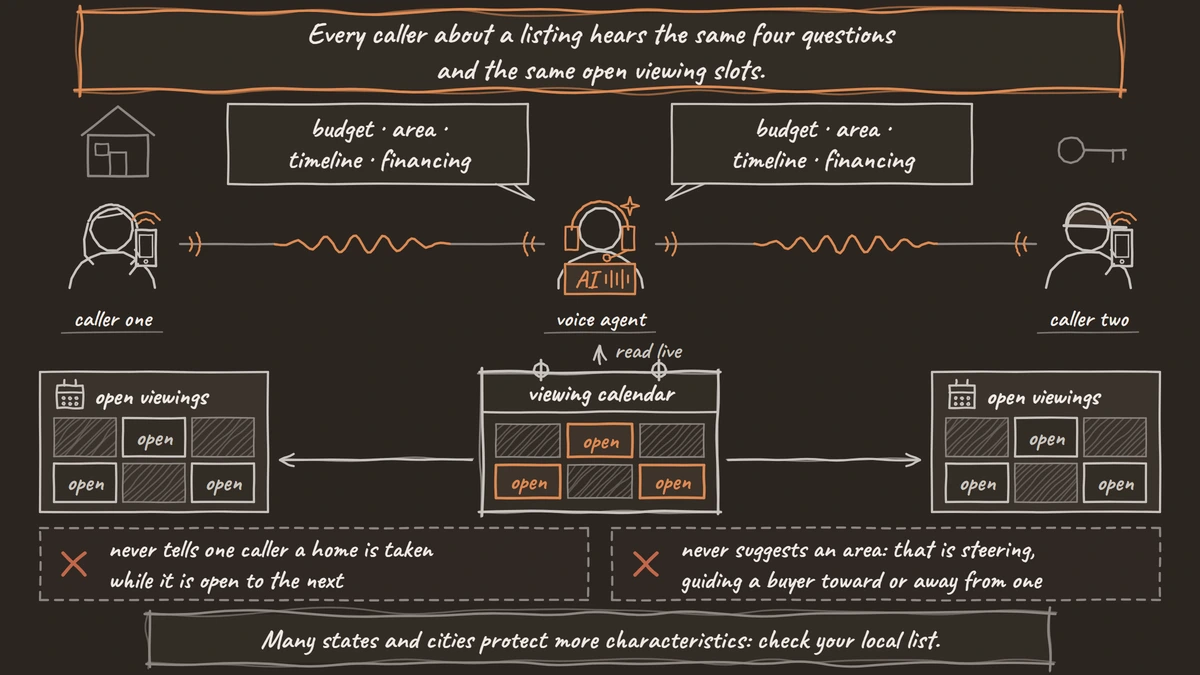
Area preferences are recorded as the caller states them; the agent never suggests an area or describes who lives in one. That is steering, and a model drifts into it easily when asked whether a street is "good for families". Instead, route those questions to a pathway whose Transition Speech plays one fixed reply word for word to every caller: the listing facts and an offer to pass the question to an agent (on a cascade agent; text Transition Speech does not play on speech-to-speech models). The model still picks the pathway from a written condition, so test it with real callers' phrasing. A QA node then reviews a sample of live calls; the transcripts it tags are your evidence if a script is questioned.
Many states and cities add protected characteristics, so check your local list and confirm scripts with fair housing counsel before launch.

Open Source Alternative to Vapi / Retell
Self-hosted voice agent platform — no per-minute fees
dograh-hq/dograh
Star on GitHub
Inbound property inquiries: answer from the listing
The first call to hand over is about a specific listing, often while agents are out on viewings. The Greeting Text names the agency. If you want to tell callers they're speaking with an automated assistant, or your location requires it by law, write it there too. Dograh plays it exactly as written. The agent asks for the address or listing reference, looks it up through an HTTP API tool and answers from the fields that come back; anything else becomes a callback request. No identity check is needed, because the agent shares nothing the public listing does not.
It also records the caller's name, number and interest, offers a viewing and, if the caller agrees, asks the qualification questions. See AI voice agents for inbound property inquiries for the lookup and what the agent passes on.
Agencies with a front desk can start from our guide to AI receptionists; after-hours calls are covered in AI Voice Agents for After-Hours Coverage.
Lead qualification: record the answers, leave the scoring to your rules
Qualification records answers; it never judges the buyer. Inbound callers reach it after their listing question. New web or portal leads reach it through the API Trigger, which your CRM fires when a lead arrives, but only once a consent record exists.
Everyone gets the same questions (budget range, area, move date and financing, such as a mortgage approval in principle), and each answer is recorded as stated. Variable extraction is an AI step, so the transcript and recording stay the exact record; the extracted fields go to the CRM by webhook.
Scoring stays in the CRM or the agency's rules; the agent never tells a caller they do not qualify. A ready buyer gets a viewing booked at once, or a transfer to an agent with the details written to your system first. Transfer Call works on Twilio only and passes no summary by default. If nobody answers within 30 seconds (the default), the agent keeps the caller and writes a callback request.
The questions and handover rules are in AI voice agents for real estate lead qualification.
Property-visit scheduling: book from live slots
The calendar is the one system the agent writes to mid-call, so it gets the strictest rules. Every slot comes from a live read of the agency's calendar or showing system, inside the showing window and notice period the seller sets for the listing.
The agent books the slot the caller picks through an HTTP API tool and reads back the date, time and address. Tools retry, so the booking tool carries a Preset Parameter named workflow_run_id with the value {{initial_context.workflow_run_id}}. Dograh adds no idempotency header of its own, so your calendar system uses that ID with the slot to ignore a duplicate booking.
Dograh has no SMS tool, so the confirmation comes from the agency's system, or an HTTP API tool calling its messaging endpoint. Before changing or cancelling a viewing, the agent verifies the caller: name plus the property address or email on file.
See our post on booking meetings during a call for the booking itself; showing windows, changes and cancellations are in AI voice agents for property-visit scheduling.
Join the Dograh Community
Dograh is an OSS alternative to Vapi. Join our Slack community for queries, releases, best practices & community interactions.
Outbound calls start with consent
Every outbound call needs a record that the person agreed. This section is general information, not legal advice.
In its February 2024 declaratory ruling, the Federal Communications Commission (FCC) confirmed that "the TCPA's restrictions on the use of 'artificial or prerecorded voice' encompass current AI technologies that generate human voices". So under the Telephone Consumer Protection Act (TCPA), an AI voice agent's call is generally an artificial-voice call. The FCC's rules at 47 CFR 64.1200 then bar an artificial-voice call to a residential line whose message "includes or introduces an advertisement or constitutes telemarketing", if made "without the prior express written consent of the called party". A call offering an agent's services to a buyer or seller is, in most cases, telemarketing, so it needs that consent.
HousingWire reported in January 2025 that Anywhere, the parent of Coldwell Banker, agreed to a $20 million TCPA class settlement covering nearly 300,000 class members, and adopted a formal Do Not Contact Manual.
In Dograh, consent lives in your CRM, and only leads with a consent record reach Campaigns (a CSV upload) or the API Trigger. The same rules require artificial-voice messages to "state clearly the identity of the business" at the beginning, so the Greeting Text names the agency. There is no keypad tool, so opt-outs are by voice: when a caller says "stop calling me", the agent writes it to the CRM at once so the number leaves every list. Campaigns sets calling hours by weekday but has no per-person call cap, so your list limits how often anyone is called, or you set retries to zero.
Confirm consent wording and calling rules with counsel before the first campaign.
Buyer and seller follow-up: collect feedback, leave the deal to the agent
After a viewing or valuation, the follow-up call collects what the person thought and wants next. It is outbound, so consent comes first.
This call is about a client's own viewing, valuation or sale, so the agent verifies first. The Greeting Text plays before verification, so it names the agency, never the property. Only after the same name-plus-address-or-email check does it mention the viewing on Saturday or last week's valuation.
A buyer is asked how the viewing went and what comes next, and a second viewing goes to the booking flow. A seller is asked about the valuation and whether they are ready to list. The agent never gives a figure or discusses an offer: those go to the agent, by transfer now or a callback request later.
Answers go to the CRM by webhook. Reactivating cold leads is a different call, outside this guide. The full flow is in AI voice agents for buyer and seller follow-up.
Building a real estate voice agent
The tutorial builds a Dograh agent that qualifies a lead and books a viewing, with HTTP API tools for the listing and slots and a webhook to the CRM.
Test in the browser first, with test values in the Variables tab (browser test calls have no inbound or outbound direction, so Pre-Call Data Fetch runs on them only in Always mode), then on a real number: most phone calls reach the agent as 8 kHz audio against 16 kHz in a browser demo, which changes what the speech model hears, especially street names. Transfers can only be tested on a real call.
The full build is in how to build a voice agent for real estate, and the test order in Testing Voice Agents Before You Go Live.
Spanish-speaking buyers, UK agencies and where to start
The last two posts change the language or country, not the calls. Spanish-speaking US buyers need the same four calls in Spanish, often switching to English mid-call. Greeting Text plays before the agent hears the caller's language, so for a bilingual line, write a short greeting in both. Speech-to-text on Multilingual (Auto-detect), with English and Spanish as Language Hints, follows the switch; the voice must speak Spanish. QA summaries come out in English by default. National origin is protected under the Fair Housing Act, so these callers should generally get the same questions and slots as everyone. See Spanish AI voice agents for real estate.
The TCPA and the Fair Housing Act are US law. UK marketing calls fall under the Privacy and Electronic Communications Regulations (PECR), and the ICO's guidance on telephone marketing says consent for automated marketing calls "must specifically cover automated calls". Call data stays in the UK only when Dograh is self-hosted in a UK data centre with the models there too. The UK version of each call is in AI voice agents for real estate in the UK.
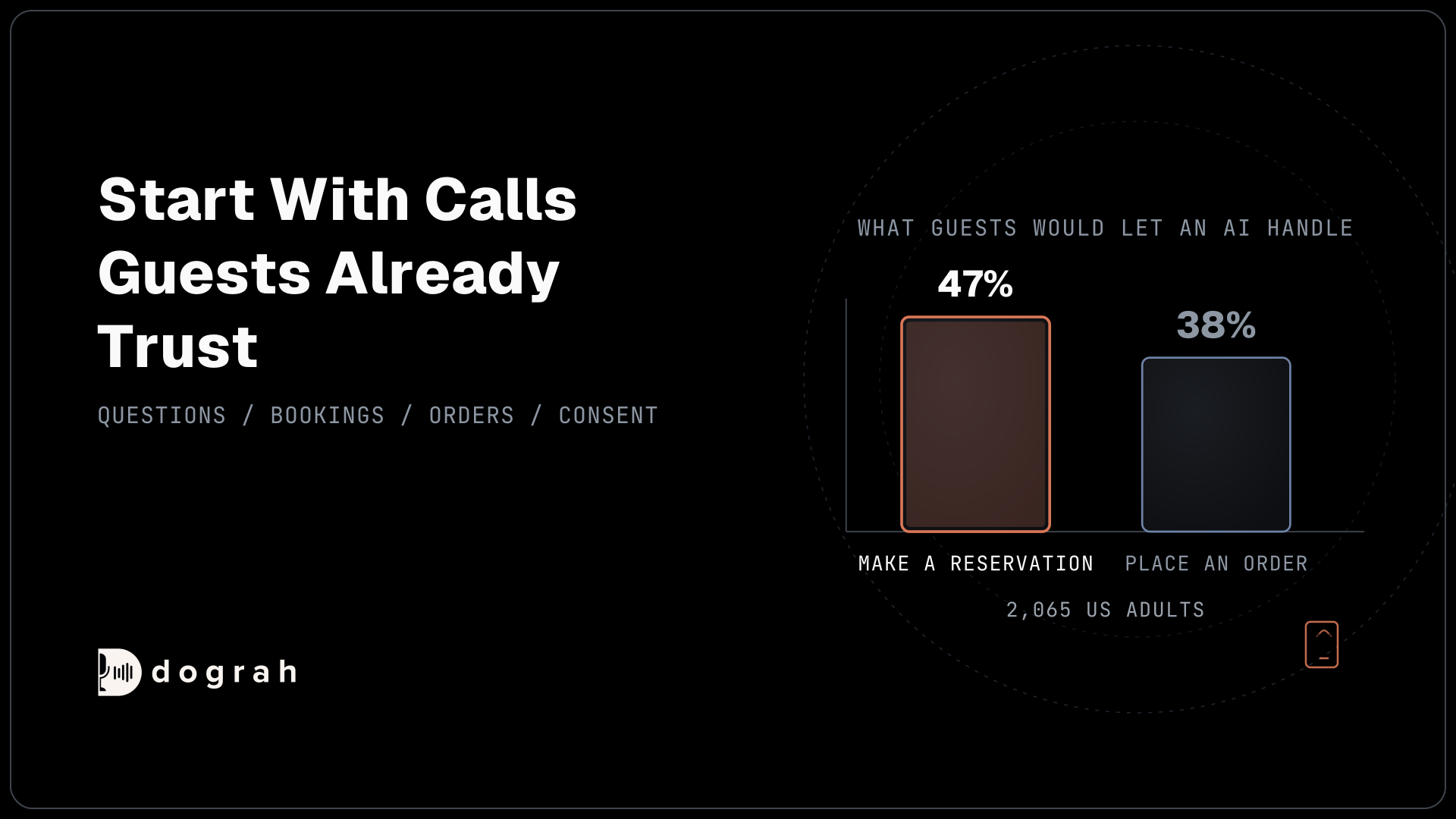
Start with the inquiry line: the caller rings you, it only reads your listings, it needs no consent records, and its transcripts show what callers ask. Run it on a real number, review a sample with QA, then add booking. Outbound qualification and follow-up come last, once every lead has a consent record you can produce.
Each call above has its own deep dive:
- AI Voice Agents for Inbound Property Inquiries
- AI Voice Agents for Real Estate Lead Qualification
- AI Voice Agents for Property-Visit Scheduling
- AI Voice Agents for Buyer and Seller Follow-up
- How to Build a Voice Agent for Real Estate
- Spanish AI Voice Agents for Real Estate
- AI Voice Agents for Real Estate (UK)
Glossary
- Steering
- Guiding a buyer toward or away from an area or a home because of a protected characteristic. A voice agent avoids it by recording area preferences as the caller states them and never suggesting or describing one.
- Prior express written consent
- A signed written agreement, defined in 47 CFR 64.1200(f)(9), that authorizes a seller to make telemarketing calls with an artificial or prerecorded voice to a named phone number. Under the FCC's 2024 ruling, an AI voice counts as an artificial voice.
- Pre-Call Data Fetch
- A setting at the bottom of Dograh's Start Call node that sends the caller and called numbers to your endpoint once the call connects. It finds a record before the agent speaks; it never proves who is calling.
- Showing window
- The days and times a seller allows viewings, plus the notice they need. A scheduling agent offers only live slots inside it, and the same slots to every caller.