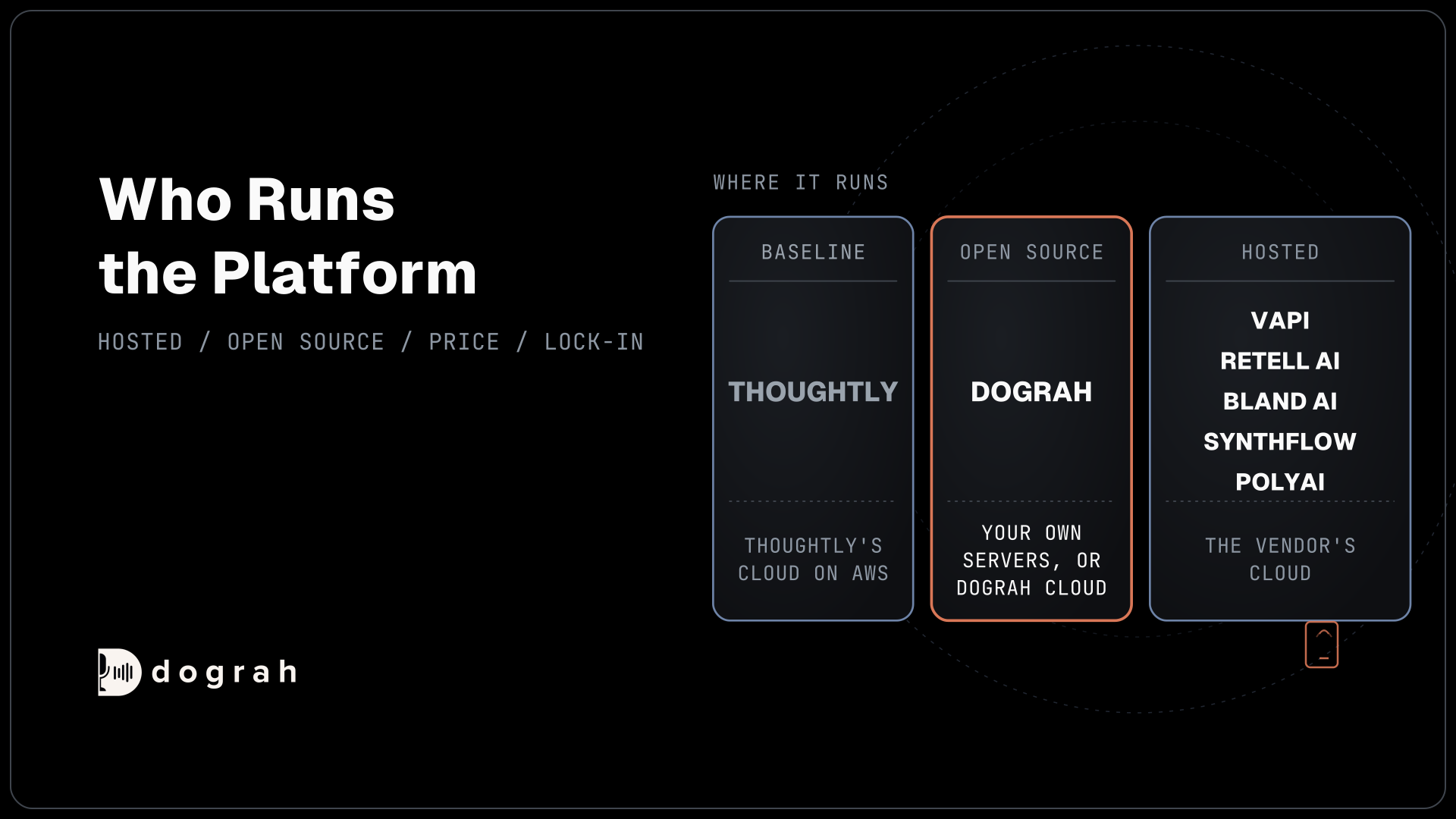

Thoughtly alternatives split by who runs the platform and who picks the models. Vapi, Retell AI, Bland AI and Synthflow are hosted voice agent platforms, and PolyAI sells managed customer service agents. Dograh, the open-source AI voice agent platform we build, lets your team choose every model, and you can self-host it or run it on Dograh Cloud.
Key Takeaways
- Thoughtly sells three plans through sales, with unlimited minutes inside a concurrent-call cap.
- Choosing your own language model on Thoughtly needs the Enterprise plan.
- Dograh is open source, with any model by your own key or on your servers.
This guide starts with what Thoughtly sells today and why teams look elsewhere, then compares the alternatives on hosting, models, phone numbers, price and lock-in in one table. After that come the open-source route, the hosted platforms, what Thoughtly costs, who should stay and what moving takes.
What Thoughtly sells today
Thoughtly sells a hosted platform for following up inbound leads. It is a RevOps platform: agents answer and call new leads, qualify them and book meetings, and the same agent can send texts and emails. Results go back to the CRM, with two-way sync for HubSpot, Salesforce and Zoho on every plan.
Agents are built in a visual editor, with nodes for speaking, transferring and ending a call. A Speak node can say a line exactly as written, which matters for openings and any wording you must get right. Phone numbers come from Thoughtly, or from your own Twilio or Telnyx account, which Thoughtly calls bring your own carrier (BYOC).
Everything runs on Thoughtly's cloud. Thoughtly runs on AWS in four regions, with a SOC 2 Type II report under NDA and compliance with the Health Insurance Portability and Accountability Act (HIPAA) with a business associate agreement (BAA). This guide compares phone agents, so Thoughtly's text and email channels sit outside the table.
Why teams look past Thoughtly
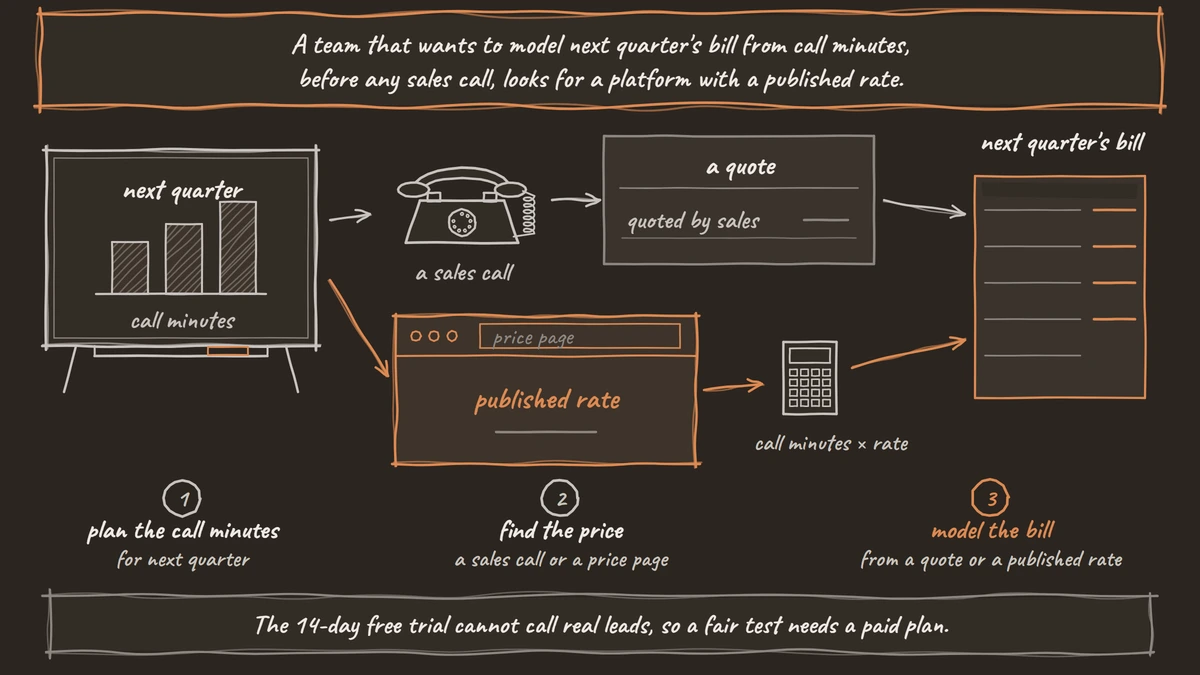
Most searches for an alternative to Thoughtly come down to owning more of the stack, above all the call data and the bill. The first reason is price. Thoughtly's three plans, Flex, Scale and Enterprise, are all bought through its sales team, and each gives unlimited minutes up to a cap on concurrent calls. That suits a team that is happy to buy from a quote. A team that wants to model next quarter's bill from call minutes, before any sales call, looks for a platform with a published rate.
The second is the model layer. Thoughtly offers GPT, Claude or Gemini as the model, and bringing your own model takes the Enterprise plan. Voices come from Thoughtly's library, including Cartesia voices, or from ElevenLabs with your own paid ElevenLabs key, which is limited on Flex. Teams that want a particular speech-to-text provider, or an open-weight model on their own servers, need a platform where that layer belongs to them.
The third is where the calls live. Data residency and dedicated infrastructure come on Enterprise, and every plan runs on Thoughtly's hosted service. Healthcare and finance teams that cannot send call audio to a third party look for something they can run inside their own network.
The fourth is lock-in. Agents live in Thoughtly's agent builder, and Thoughtly's Model Context Protocol (MCP) server can read agents and contacts but can never change them, and it is in limited availability. Moving an agent anywhere else means rebuilding it.
Thoughtly alternatives compared in one table
Five questions sort the field: where it runs, which models you can use, which phone numbers work, how you pay and how hard it is to leave. Latency is left out, because it depends on your models and phone path far more than on the platform, so measure it on your own calls.
| Product | Open source | Where it runs | Models you can use | Phone numbers | How you pay | Lock-in |
|---|---|---|---|---|---|---|
| Thoughtly (baseline) | No | Thoughtly's cloud on AWS. Data residency and dedicated infrastructure on Enterprise | GPT, Claude or Gemini. Your own model on Enterprise. Thoughtly voices, Cartesia included, or ElevenLabs with your own key | Numbers bought from Thoughtly on Flex and Enterprise, or imported from Twilio or Telnyx | Flex, Scale and Enterprise, quoted by sales. Unlimited minutes inside a concurrent-call cap | Agents live in Thoughtly's agent builder. Its MCP server only reads |
| Dograh | Yes, BSD-2-Clause | Your own servers with Docker Compose, Dograh Cloud, or on-prem and private cloud on Enterprise | Dograh's models, any supported provider with your own keys, open-weight models on your servers, or speech-to-speech models | Your own carrier: Twilio, Vonage, Plivo, Telnyx, Cloudonix, Exotel, Vobiz, Asterisk ARI or a SIP (Session Initiation Protocol) trunk. Inbound WhatsApp calls | Self-hosted: no per-minute platform fee. Dograh Cloud: 1¢/min platform fee. Servers, models and phone minutes still cost money | Open code. Agents can be created and edited through its MCP server or API |
| Vapi | No | Vapi's cloud. No on-premise option | Your own keys or a custom model for any part of the call | A free US number for inbound, numbers imported from carriers such as Twilio and Telnyx, or a SIP trunk | $0.05/min hosting, plus models and phone. HIPAA add-on $2,000/mo | Hosted only. Assistants are rebuilt to move |
| Retell AI | No | Retell's cloud, with a dedicated server add-on | A choice of language models, including OpenAI's realtime speech-to-speech | Retell numbers at $0.015/min, or a Twilio number connected through a SIP trunk | $0.07 to $0.31/min, from $0.055/min voice infrastructure | Hosted only. Agents can be read through Retell's API |
| Bland AI | No | Bland's cloud. On-prem or virtual private cloud on Enterprise | Bland's own models under one rate | Bland numbers, or your own carrier over SIP once Bland support switches it on | Start $0.14/min. Build $0.12/min plus $299/mo | Closed code, even on-prem |
| Synthflow | No | Synthflow's cloud, with US and EU regions | Synthflow's own model, with other models on Enterprise | Native telephony with carriers such as Twilio, Telnyx and Vonage. Your own SIP trunk on Enterprise | Annual enterprise agreement, priced by call volume and setup | Export to JSON leaves out actions and knowledge bases |
| PolyAI | No | PolyAI's cloud on AWS, with US, EU and UK regions | PolyAI's own Raven model | Your own carrier over SIP | Platform per minute, quoted by sales | Agents are built in PolyAI's Agent Studio |
Dograh is the only product here whose code is open, so it is the only one you can run on your own servers without a sales contract.
The list sticks to platforms for building phone agents. Thoughtly also compares itself with AI sales development rep (SDR) tools such as 11x and Artisan, which sell an AI sales rep instead of a platform you build calls on, so they are a different purchase.
Dograh: the open-source Thoughtly alternative
Dograh's code is open under BSD-2-Clause, and its GitHub repository holds the full platform. That covers the visual workflow builder, telephony, Campaigns for outbound lists, call traces and QA. You can run it on your own servers with Docker Compose, or use Dograh Cloud and leave the servers to us.
The model layer is the biggest change from Thoughtly. Dograh runs the call flow, tools and telephony as an orchestration layer, and the speech and language models are a layer you choose on your own. That can be Dograh's own models, your own keys for providers such as OpenAI, Google, Azure, Groq or AWS Bedrock (where the Claude models live), or an open-weight model behind an OpenAI-compatible endpoint on your own servers.
With your own key, you hold the contract and the bill, but the call audio still reaches that provider. Audio stays in-house only when the models run on your servers too, as our post on BYOK vs managed models explains.
Voices can mix recorded audio with generated speech. Record the lines your agent says most, insert each one into a prompt by typing @, and the agent plays the clip when it fits. When a caller asks something outside your recordings, the agent writes a reply and speaks it in a clone of the same voice. Our guide to mixing pre-recorded audio with TTS walks through the setup.
Every call leaves a trace. View Trace opens it in Langfuse, with the speech-to-text, AI and voice time for each turn and every tool the agent called. Dograh's QA scores each step of a call with its own tags, a 1 to 10 score, sentiment and a summary, on test calls from the editor as well as live calls. Thoughtly's Auto-QA and evals come on Scale and Enterprise.
Dograh works with the carrier you already use: Twilio, Vonage, Plivo, Telnyx, Cloudonix, Exotel, Vobiz or Asterisk ARI, and on Dograh Cloud a ready-made SIP connection takes your own SIP trunk. It also answers inbound WhatsApp voice calls. Transfer Call runs on Twilio, Telnyx, Plivo, Cloudonix and Asterisk ARI, dialling the destination first and connecting the caller only when someone answers.
Business systems connect through HTTP API tools during the call, Pre-Call Data Fetch before the agent speaks and the Webhook node after it, so your developers write each connection once against your CRM's API. Follow-up texts and emails go through your own messaging provider, which an HTTP API tool calls during the call. Self-hosting also puts the servers and updates on your team. A self-hosted install runs 10 calls at once by default, a limit you can raise.
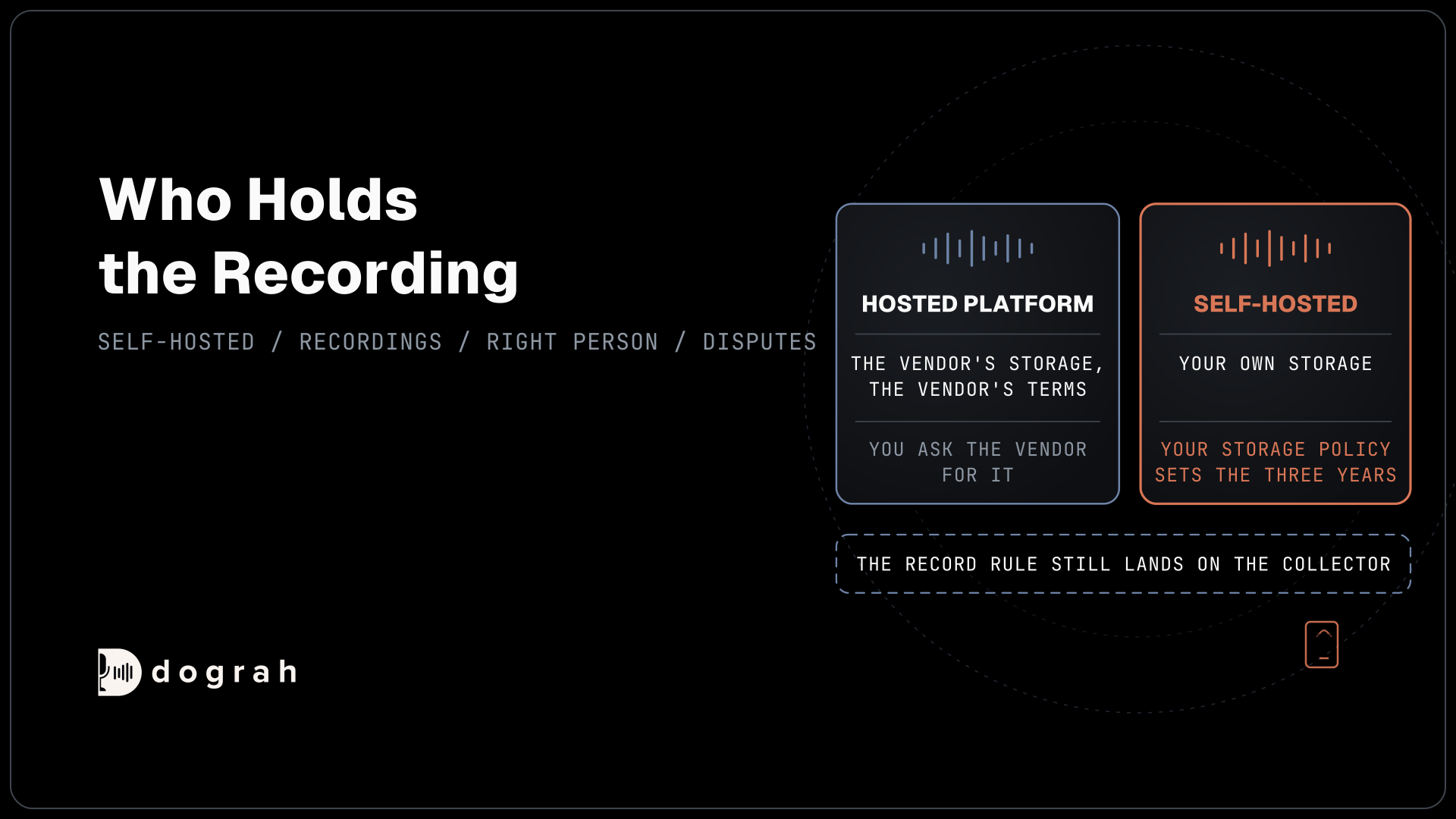
Self-hosted Dograh has no per-minute platform fee, but servers, model keys and phone minutes still cost money. Dograh Cloud charges a 1¢-a-minute platform fee. It includes 10 concurrent calls. Our head-to-head comparison with Thoughtly builds the same lead agent on both.

Open Source Alternative to Vapi / Retell
Self-hosted voice agent platform — no per-minute fees
dograh-hq/dograh
Star on GitHub
Hosted voice agent platforms
Hosted platforms run on the vendor's cloud, like Thoughtly. What changes is the unit you pay for and who picks the models.
Vapi is a developer platform with a $0.05-a-minute hosting fee, with models and phone billed on top, and a $2,000-a-month HIPAA add-on. You pick every model with your own keys. Agents are built as Assistants and Squads, closer to code than Thoughtly's editor, since Vapi retired its visual Workflows in August 2026. Our Vapi vs Thoughtly comparison gives a pick-this-if verdict for each.
Retell AI publishes $0.07 to $0.31 a minute for a full agent, starting with $0.055 for its voice infrastructure, and it has a visual Conversation Flow builder. Bland AI runs its own speech and language models under one rate: $0.14 a minute on Start, or $0.12 plus $299 a month on Build, with on-prem or virtual private cloud deployment on Enterprise.
Synthflow sells one annual enterprise agreement, priced by call volume and setup, with the build and launch scoped in the contract. PolyAI sells voice-first customer service agents on its own Raven model, priced per minute through sales. Thoughtly files PolyAI under customer service AI, a different buyer from a revenue team chasing inbound leads.
Each of these bills by the minute or by contract, and each keeps the platform closed. Our guide to Vapi alternatives compares the hosted platforms in more depth.
Open-source frameworks
LiveKit Agents (Apache-2.0) and Pipecat (BSD-2-Clause) are open-source frameworks for voice agents. Your developers write the agent in code and build the product around it, including phone wiring and call history.
Dograh is built on a fork of Pipecat. In our experience Pipecat is an excellent base, but production adds phone integrations, call history, QA on live calls and the call lifecycle, which is the part Dograh ships. If you are weighing a framework against a full platform, our roundup of the best open-source voice AI platforms compares them.
What Thoughtly costs
Thoughtly prices by plan instead of by minute. It sells three plans, Flex, Scale and Enterprise, each through its sales team, with voice minutes, texts and emails unlimited on every plan. The real limit is concurrent calls: 10 on Flex, 100 or more on Scale and a custom number on Enterprise. Usage above a plan's monthly allowances is billed at the end of each cycle.
Some costs sit next to the plan. Numbers bought from Thoughtly are charged for the full month, with no proration. Numbers you import from Twilio or Telnyx carry no Thoughtly charge, and your carrier bills you directly. The 14-day free trial cannot call real leads, so a fair test needs a paid plan.
A plan with unlimited minutes and a per-minute platform are different units, so compare them on your own peak concurrency and monthly minutes. Our breakdown of Thoughtly pricing works through one month's bill for a lead team, with the questions to ask sales.
When staying on Thoughtly makes sense
Thoughtly is the better fit for some teams, and the reasons are concrete. A revenue team whose job is inbound lead follow-up across calls, texts and email gets all three from one agent, with results written back to the CRM.
Its connectors need no engineers. Thoughtly connects to 24 tools, from HubSpot, Salesforce and Zoho CRM to Calendly, Cal.com, Slack, Zapier and Make, plus webhooks and a REST API. Scale adds Auto-QA and a SOC 2 Type II report on request, and Enterprise adds HIPAA with a BAA.
If buying through sales is fine and nobody on the team wants to run servers, those are good reasons to stay. Whichever way you lean, pilot it on your own call mix, busiest hour included, before you commit. Our Thoughtly review weighs the pros and cons in full.
Dograh takes a different route to the same jobs. It connects to your CRM and calendar through HTTP API tools written against their APIs, and texts and emails go out through your own provider. That is more setup, and in return the connection is code your team owns.
What moving off Thoughtly takes
Moving is a rebuild, done one number at a time while Thoughtly answers the rest. Neither side has an importer, so write down each agent's script, node prompts, outcomes and actions, and treat that as the spec. In Dograh, describe the use case and an AI drafts a starting workflow, or an AI assistant builds the agent through Dograh's MCP server, and your team then reviews each node. Our guide to migrating from Thoughtly lays out that rebuild, from workflows and HTTP API tools to bringing your own Twilio or Telnyx numbers.
Thoughtly's actions and native connectors become HTTP API tools, Pre-Call Data Fetch and the Webhook node. Lines set to Verbatim in a Speak node move into the Greeting Text on the Start Call node or into Transition Speech, which play as written. Inside a node, the AI writes its own words.
Numbers you imported from Twilio or Telnyx stay in your carrier account. Disconnecting that carrier in Thoughtly deletes the imported numbers from Thoughtly, but they remain with Twilio or Telnyx, ready to point at a Dograh agent. Saving an inbound workflow on a Twilio number in Dograh switches it over at once, so copy the number's current settings first. For numbers bought from Thoughtly, ask Thoughtly about porting. Whichever numbers you move, test each rebuilt agent on a real phone call first, because browser test calls cannot transfer.
Join the Dograh Community
Dograh is an OSS alternative to Vapi. Join our Slack community for queries, releases, best practices & community interactions.
Picking your Thoughtly alternative
Pick by the reason you started looking. If you want inbound lead follow-up with texts, email and CRM sync built in, and buying through sales is fine, Thoughtly still fits. Vapi, Retell AI and Bland AI sell hosted platforms billed by the minute, while Synthflow and PolyAI sell managed contracts. LiveKit Agents and Pipecat suit teams that want to write the agent in code.
If you want the platform's code, your own choice of models and calls on servers you control, Dograh answers the reasons most of these searches start with. Run it from GitHub with Docker Compose, or start on Dograh Cloud. Our post on AI voice agents for lead qualification covers the lead call itself.
Whichever you shortlist, judge it on whether it resolves the caller's question or hands over cleanly. In Verint's 2026 customer survey of 5,000 US consumers, 61% preferred a human agent, yet nearly 70% of them would use AI if it resolved their issue. Run the same script on a real phone line too, since most phone calls still reach the agent as 8 kHz audio, while a browser demo runs at 16 kHz.
Each part of this guide has its own deep dive:
- Dograh vs Thoughtly
- Vapi vs Thoughtly
- Thoughtly Pricing: Plans and What You Actually Pay
- Thoughtly Review: Pros and Cons
Glossary
- Concurrent calls
- The number of calls running at the same moment. Thoughtly's plans include unlimited minutes but cap concurrent calls at 10 on Flex and 100 or more on Scale, so your busiest hour decides the plan.
- Orchestration layer
- The part of a voice agent that runs the call flow, turn-taking, tool calls and telephony. The speech and language models are a separate layer, and in Dograh you choose them yourself.
- Bring your own key (BYOK)
- Using your own account with a model provider instead of the platform's. You hold the contract and the bill, but the call audio still goes to that provider.
- Bring your own carrier (BYOC)
- Connecting phone numbers from your own carrier account, such as Twilio or Telnyx, instead of buying them from the platform. The numbers stay in your account, so they can move to another platform later.