
AI cold calling works when the list is consented, the caller ID is a number you own, the opening names the business and offers a way to stop, and every outcome is measured. It gets you fined when AI-voice sales calls go out without prior express written consent, opt-outs are ignored or caller ID is faked.
Key Takeaways
- AI-voice sales calls need prior express written consent before the first dial.
- Damages run $500 per call, and up to $1,500 only when willful or knowing.
- Show a number you own, and measure outcomes per opening, not dials.
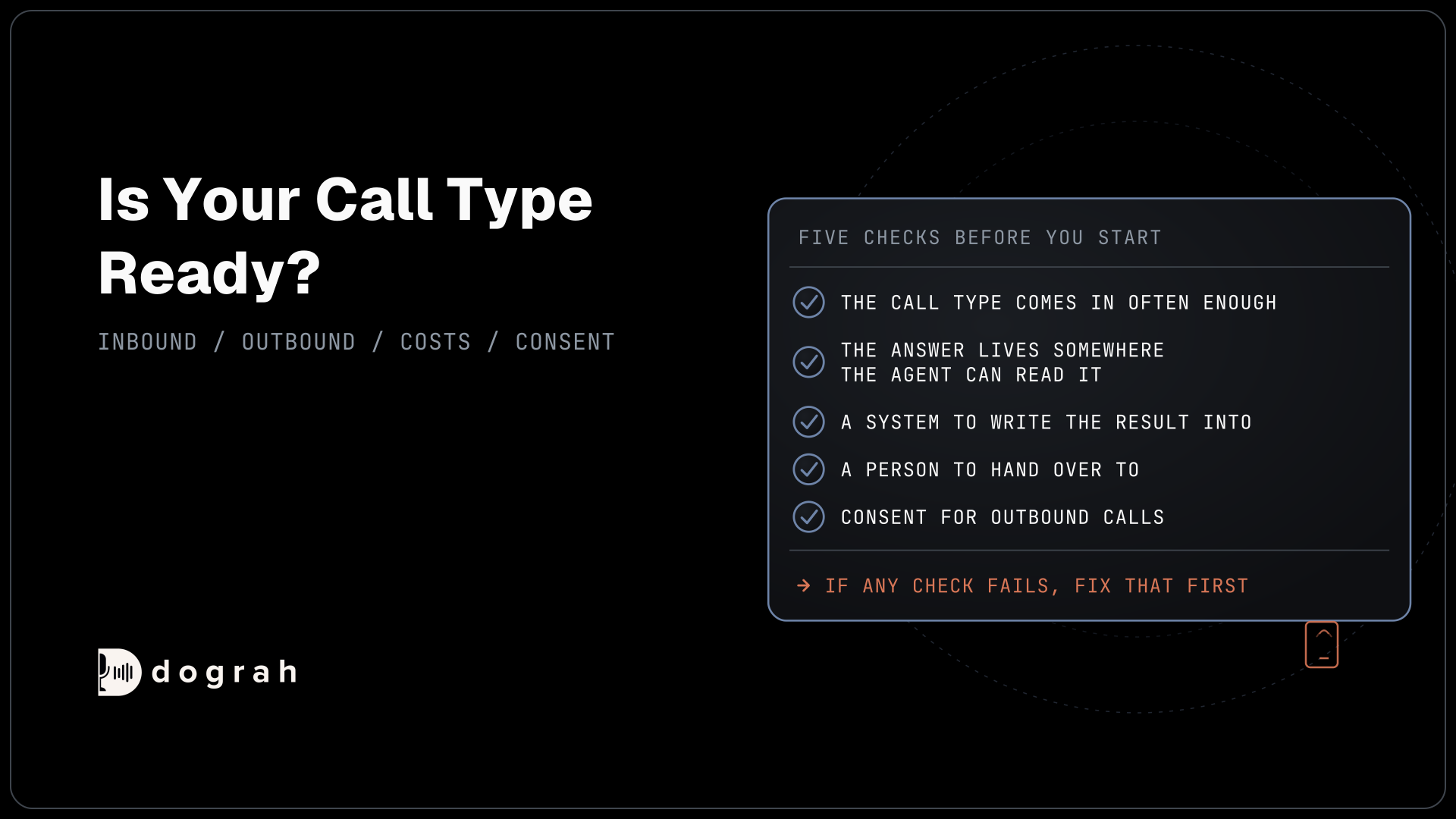
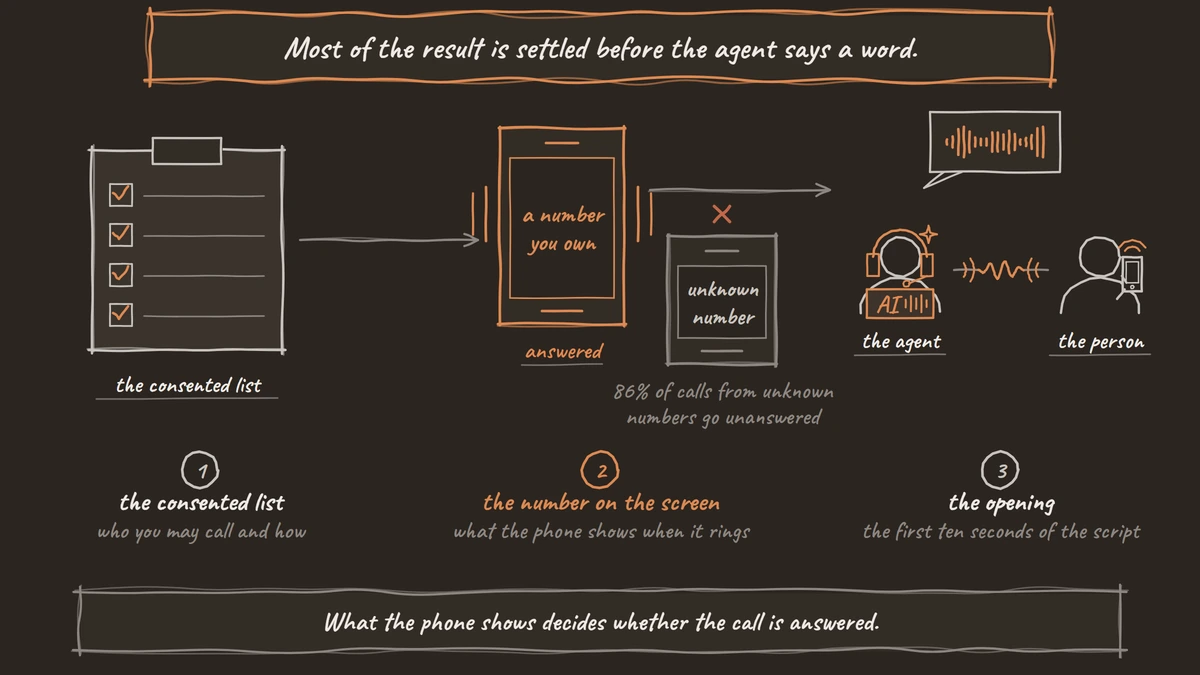
Most of what decides an AI cold call happens before the agent speaks, with the consented list and the number on the screen. This guide covers dialers and agents, consent, fines, caller ID, scripts and measurement. Each step is shown in Dograh, the open-source voice agent platform we build.
What works in AI cold calling now
People rarely pick up calls they do not recognise. Hiya's State of the Call 2026 report, from a caller ID company that surveyed over 12,000 consumers in six countries, found that 86% of calls from unknown numbers go unanswered. Most of the result is settled before the agent says a word.
The calls that do connect are few. Belkins' 2025 benchmarks, from more than 175,000 dials, put the connect rate at under one dial in ten, and our guide to AI voice agents for outbound sales works through what that means for meetings. An AI agent improves those odds by placing every call on a clean list, at the right hour, from a number people can trust, and by logging every outcome the same way.
So the order of work in this guide runs from the outside in. First, who you may call and how. Then what the phone shows when it rings. Then the first ten seconds of the script. Last, how you know whether any of it worked.
Dialers and voice agents do different jobs
"AI cold calling" covers two different products. A dialer places calls for human reps and connects a rep when someone answers. AI in a dialer writes notes, scores calls and suggests what to say, but a rep runs the conversation. Dialers carry their own rules on dropped calls, covered in our guide to AI dialers.
A voice agent holds the conversation itself. It speaks with a synthetic or recorded voice, listens, answers questions and decides what happens next, such as booking a meeting or handing the call to a rep. That makes it an artificial voice under US calling rules, which changes the consent you need before the call.
Many teams run both: agents on the first touch to find interest, reps on the call that follows. A good SDR still owns the complex deal. The agent takes the repetitive first calls, asks the same qualifying question every time and hands warm conversations to people, so reps spend their hours on calls that already have a reason to exist. When you compare products, check which kind each one is before you compare features. Our roundup of the best AI cold calling software splits them the same way.
Consent comes before the first dial
Under the Telephone Consumer Protection Act (TCPA), the Federal Communications Commission's 2024 ruling treats AI-generated voices as artificial voices. The FCC's calling rules then decide the consent. A call made to encourage a purchase is a sales call, and an artificial-voice sales call to a mobile or home line needs prior express written consent: a signed agreement, electronic signatures included, that names the number and the seller and is not a condition of buying anything.
A business relationship does not replace that consent, and work mobiles are not exempt. In practice, a cold list bought from a data vendor carries no consent for AI-voice sales calls. The outbound sales guide linked above covers what a valid consent record looks like and the calls you can make to existing customers.
Two court decisions in 2025 changed the ground. In Insurance Marketing Coalition v. FCC, the Eleventh Circuit struck down the FCC's planned "one-to-one" consent rule, so consent need only be clear and unmistakable. In McLaughlin Chiropractic v. McKesson, the Supreme Court held that courts decide what the TCPA means for themselves, without deferring to the FCC's reading. Both make written records matter more, since a court will read your consent language on its own terms.
What gets you fined
The money is counted per call. The TCPA itself lets a person sue for $500 for each unlawful call, and up to $1,500 if the court finds the violation willful or knowing. Some guides quote $1,500 per call as the starting point. That figure needs the willful or knowing finding. A thousand unconsented calls is still $500,000 before that question is asked.
The Federal Trade Commission enforces the Telemarketing Sales Rule (TSR) separately, and its civil penalty figures reach $53,088 per violation. States add their own laws. Florida's Telephone Solicitation Act requires prior express written consent for automated sales calls and allows $500 per violation, up to three times that if willful.
The everyday rules are where most callers slip. Sales calls run only between 8 a.m. and 9 p.m. in the called person's local time. Every list is checked against the National Do Not Call Registry, and you keep your own do-not-call list, honour a request within 10 business days and keep it for five years. A stop request made in any reasonable way counts. These rules generally apply to every sales call, AI or not, so treat this section as a map and confirm your consent language and calling plan with counsel before the first campaign.

Open Source Alternative to Vapi / Retell
Self-hosted voice agent platform — no per-minute fees
dograh-hq/dograh
Star on GitHub
Caller ID and spam labels
What the phone shows decides whether the call is answered. The Telemarketing Sales Rule requires telemarketers to transmit a caller ID number, which can be a customer-service number answered during business hours. Faking caller ID to defraud, cause harm or wrongly get something of value is unlawful under the TCPA, with fines of up to $10,000 per violation.
Carriers check numbers too. Under the FCC's STIR/SHAKEN requirement, carriers sign calls on their IP networks with an attestation of whether the caller is authorised to use the number shown. A call from a number your carrier knows you own gets the strongest attestation. A number you do not own may be refused or passed on with weaker attestation, and analytics firms that label calls as spam weigh that, along with complaints and calling patterns.
In Dograh, the numbers on a telephony configuration are the numbers used as caller ID for outbound calls, and one can be set as the Default caller ID. When a call names no number, it goes out on the Default caller ID. With no default set, one of the active numbers is picked. A campaign rotates across the pool, and if you run more calls at once than you have numbers, the campaign form warns that numbers may be reused on simultaneous calls.
Use the pool to spread volume across numbers you own and answer, not to hide who is calling. A number that rings back to a voicemail box nobody checks, or to nothing at all, draws complaints whatever the pool size.
A script that survives the first seconds
The opening carries the legal notices and the first impression at once. Put it in the Greeting Text on the Start Call node, which is spoken word for word: the business name, the reason for the call in one line, a callback number such as +1415555XXXX, and a question. Allow Greeting Interruption is on by default, so switch it off and the notice plays in full before the person speaks.
The opening can be a pre-recorded clip in a real person's voice, with text-to-speech handling the replies. A recorded sales message still needs the person's prior written agreement under the TSR, so a clip changes only the sound, and the consent rule stays the same. Our post on the first 15 seconds of AI outbound calls covers what keeps people on the line.
An artificial-voice sales call must also offer an automated way to opt out, which can be voice-activated. On a Dograh agent, the person says they want no more calls, the agent confirms, writes the request to your do-not-call list through an HTTP API tool and ends the call. An FCC order adopted in September 2026, in force from 25 November 2026, keeps the rule that one opt-out from a sales robocall stops all of that caller's future sales robocalls.
After the opening, keep the agent's job narrow, with one qualifying question and one offer of a next step. Fixed lines and prompt wording for each stage are in our AI cold call script templates.
Building and running the campaign
The full build, from a blank agent to a running campaign, is in how to build an AI cold calling agent in Dograh. The settings that matter most for cold lists sit on the campaign itself.
A campaign's Call Schedule runs on one time zone, so split a national list by time zone and give each part a window inside 8 a.m. to 9 p.m. local time. You set the retries (0 to 10) and which outcomes get another try. Two pacing settings protect a new list. Calls Started per Second defaults to 1, so a large file does not hit your carrier in one burst, and the Circuit Breaker, on by default, pauses the campaign if too many connected calls fail with a speech or model error in a short window, so a broken model key costs a handful of calls rather than a morning's list.
Voicemail handling is off by default. Once you set it to leave a message, one fixed message plays to every voicemail, so keep it to the business name and the callback number.
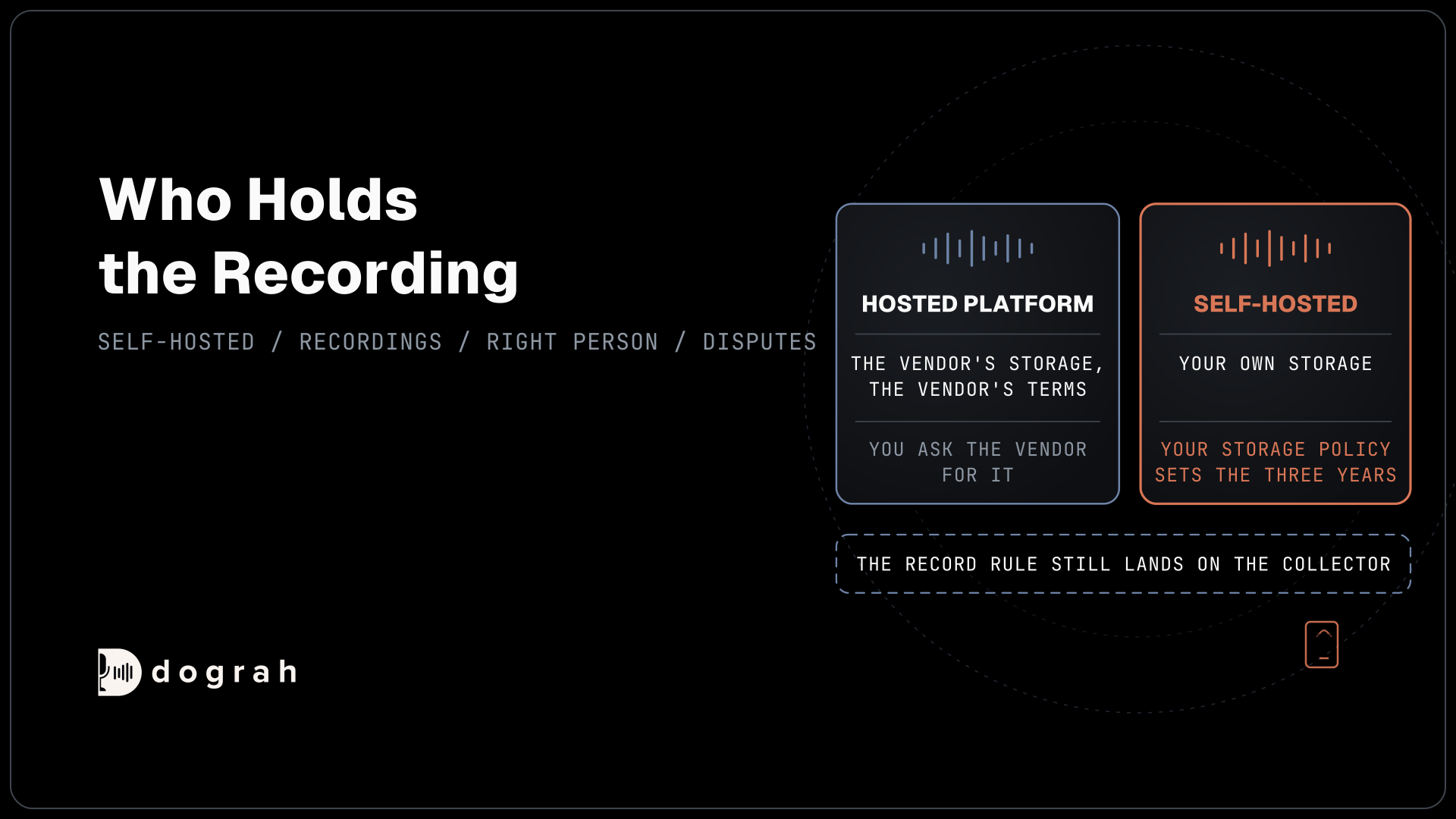
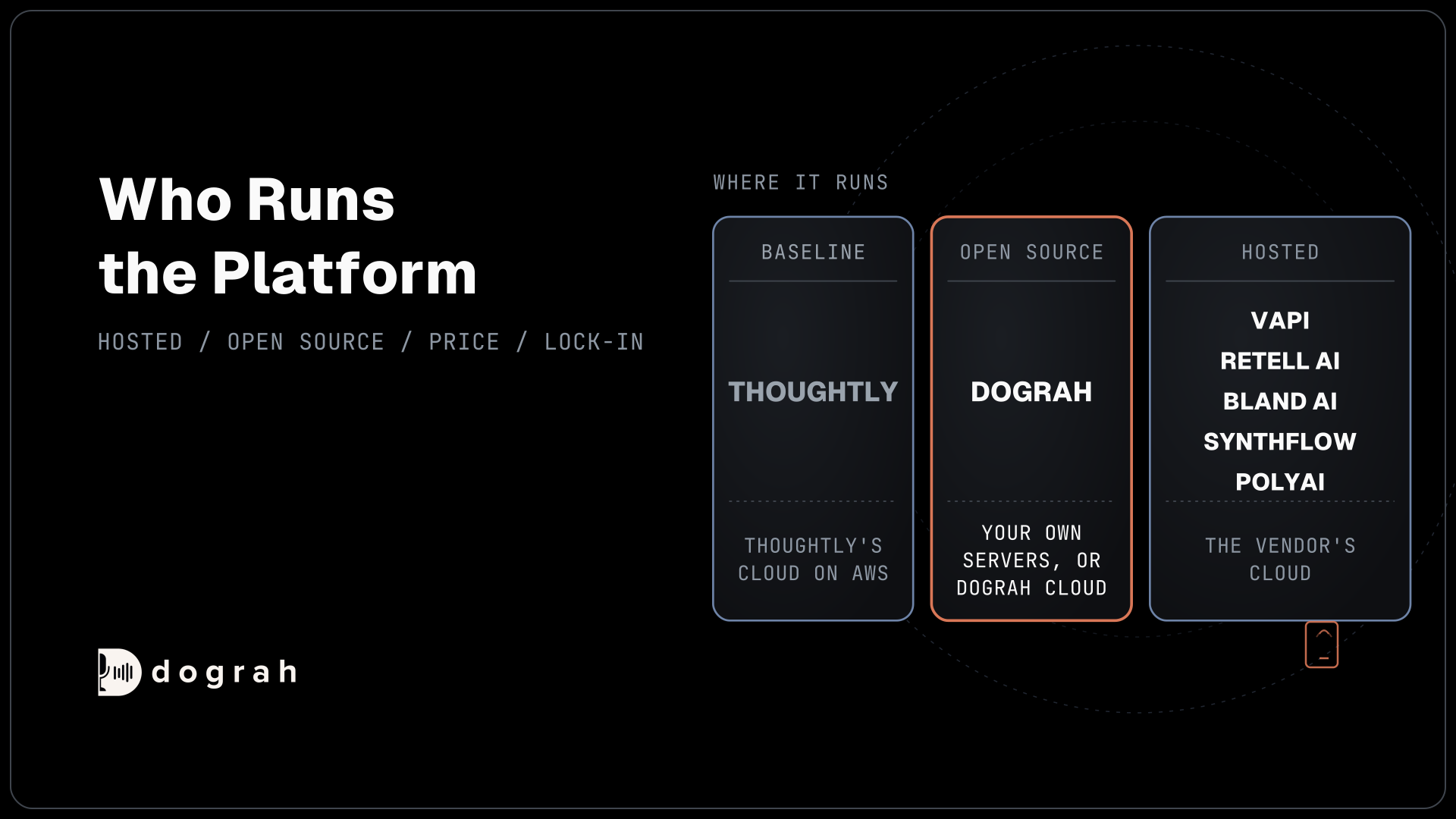
Where the stack runs matters for sales data too. Self-hosted, with your own model keys or open-source models, the recordings and transcripts stay on your servers as the record of what was said. Self-hosted Dograh has no per-minute platform fee, but servers, model keys and phone minutes still cost money. Dograh Cloud charges a 1¢-a-minute platform fee.
Join the Dograh Community
Dograh is an OSS alternative to Vapi. Join our Slack community for queries, releases, best practices & community interactions.
Measuring what the calls produce
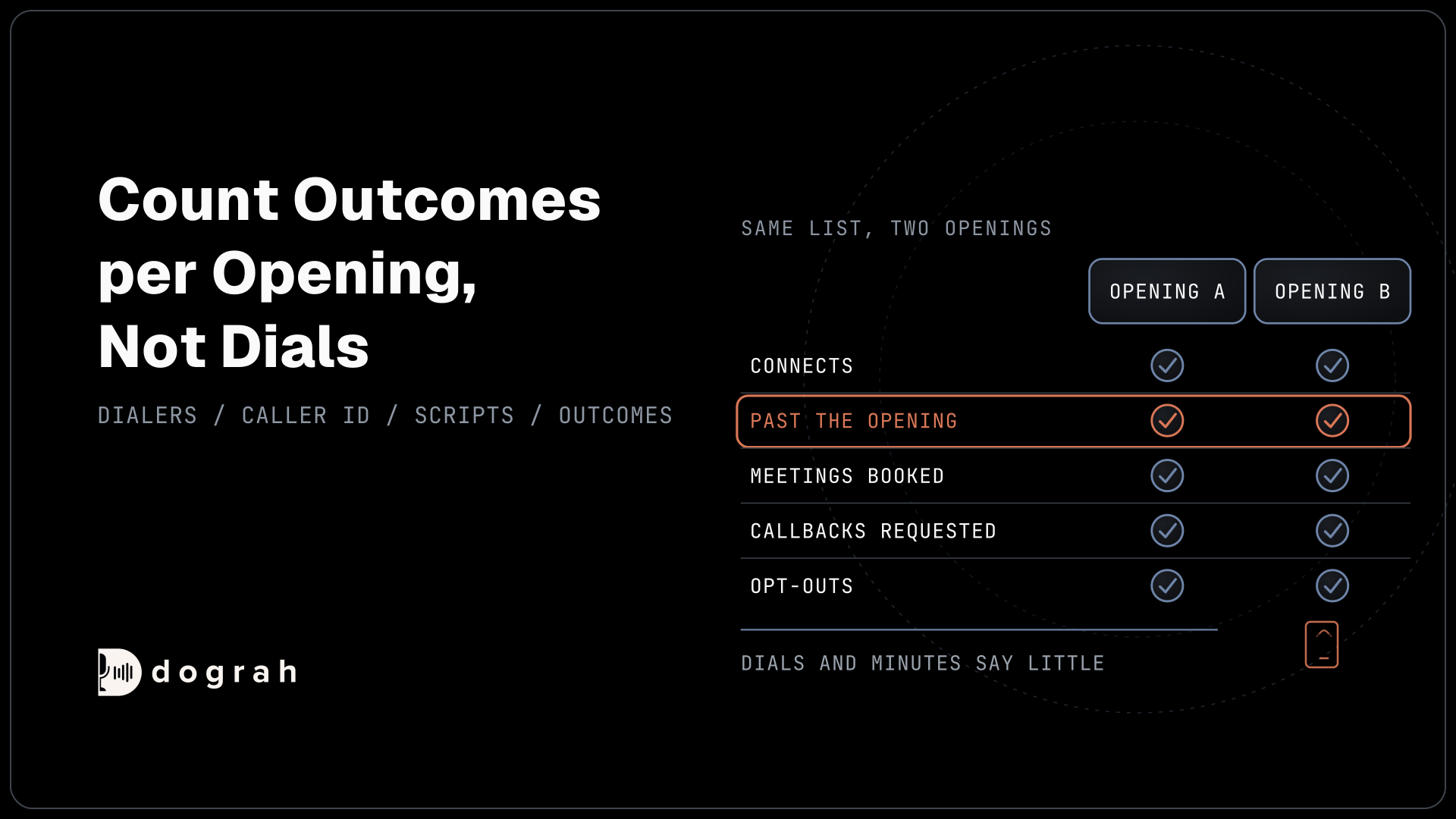
Dials and minutes say little. Count outcomes per opening instead: connects, conversations past the opening, meetings booked, callbacks requested and opt-outs.
Switch on call disposition extraction and every finished call gets one outcome from a list you set, starting from qualified, not_interested, wrong_number, voicemail_detected, do_not_call and callback_requested. Add codes such as meeting_booked, and map them to your CRM's codes so reports match. A rising do_not_call share is the earliest sign that a list or an opening is wrong.
To compare two openings, a campaign's traffic split sends set percentages of contacts to up to five agent-and-version pairs. Run two versions of the opening at 50% each on the same list and compare outcomes, as in our guide to A/B testing voice agent scripts.
Numbers tell you what happened, and transcripts tell you why. Set QA to review a sample of calls with checks such as whether the business name and callback number were heard in full and whether a stop request was honoured. Every call also keeps a full trace, so a complaint can be checked against exactly what the agent said.
Where to go next
Three posts take each part of this guide further:
- Best AI cold calling software compares voice agents and AI dialers.
- How to build an AI cold calling agent in Dograh walks through the build step by step.
- AI cold call script templates gives fixed lines and prompt wording for each stage.
Glossary
- Prior express written consent
- A signed agreement, electronic signatures included, naming the number and the seller, that lets a business place artificial-voice or prerecorded sales calls to that number. It cannot be a condition of buying anything.
- STIR/SHAKEN attestation
- A carrier's signed statement on a call about whether the caller is authorised to use the number shown. Calls from numbers you own get the strongest attestation.
- Default caller ID
- The number Dograh shows on an outbound call when the call names none. If no default is set, it picks one of the active numbers on the telephony configuration.
- Traffic split
- A campaign setting that sends set percentages of contacts to up to five agent-and-version pairs, so two openings can be compared on the same list.