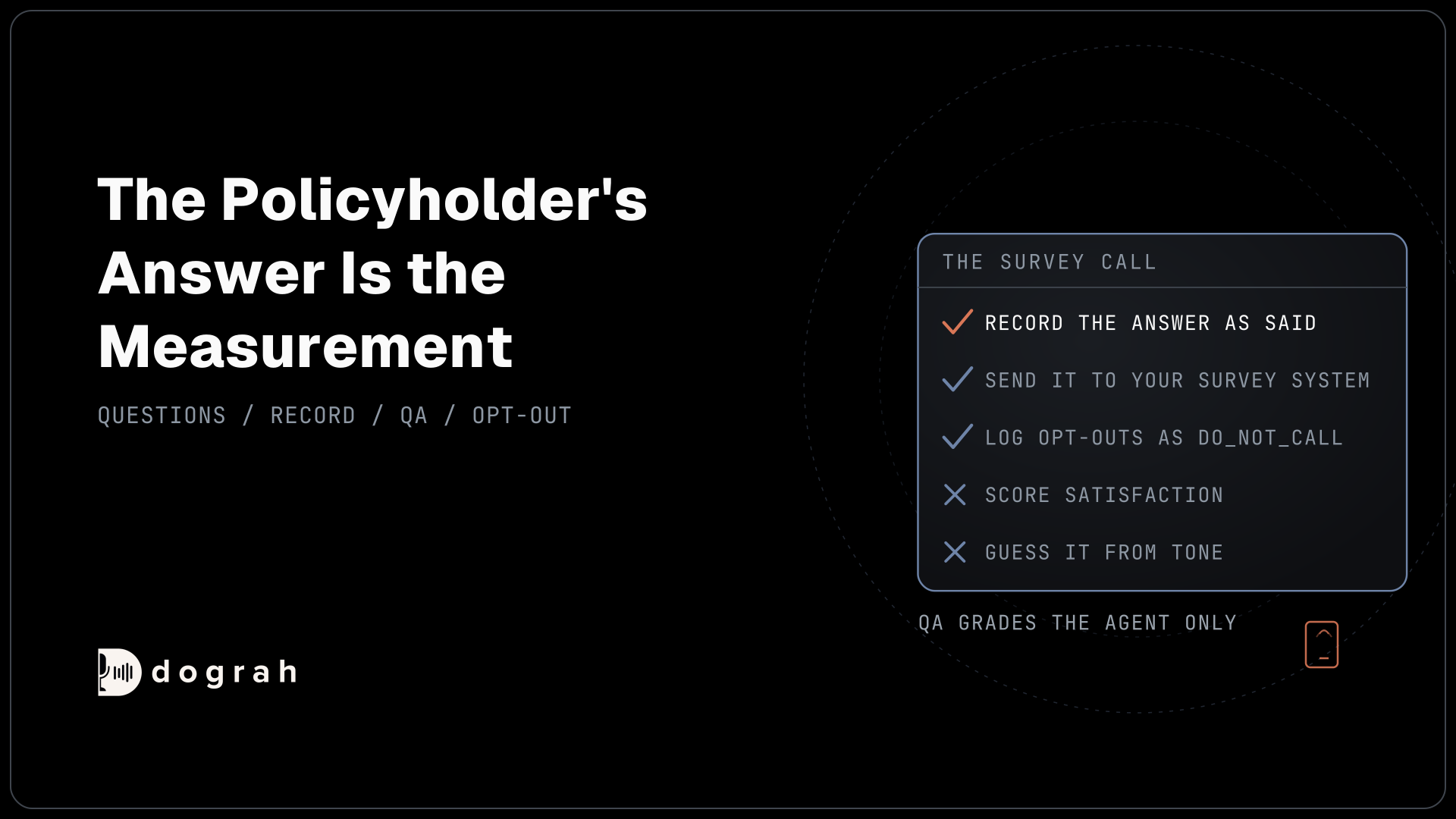

An AI voice agent for claims customer satisfaction (CSAT) surveys calls the policyholder after the claim closes and asks your fixed questions. It records each answer as the policyholder said it and sends it to the survey system you already run. It never scores or interprets satisfaction. That judgment stays with a person.
This post is part of our guide to AI Voice Agents for Insurance Claims.
Key Takeaways
- Record each answer as the policyholder said it. Never infer it from tone.
- A low rating usually traces to the payout, which the call cannot see.
- A "stop calling me" goes to your suppression list, never into survey data.
The survey is the last call in a claim, and the only one that asks the policyholder to judge everything before it. We build Dograh, an open-source voice agent platform, and this is how we would build that call.
Why the policyholder's own words matter here
A claims survey exists to hear what went wrong in the policyholder's words, because the cause is rarely visible from the outside.
J.D. Power's 2026 property claims study of 5,093 homeowners found claims satisfaction up 20 points, to 702 out of 1,000. Its director of insurance intelligence still pointed to "almost one in five customers indicating their experience was not great".
Most of that unhappiness comes from things the survey call never touched. In a June 2026 survey of 1,000 US adults by InvoiceCloud, only 15% of those surveyed received a claim payout within a week. Someone who waited two months for a payment, or disagreed with a valuation, will give a low rating to a perfectly polite survey call.
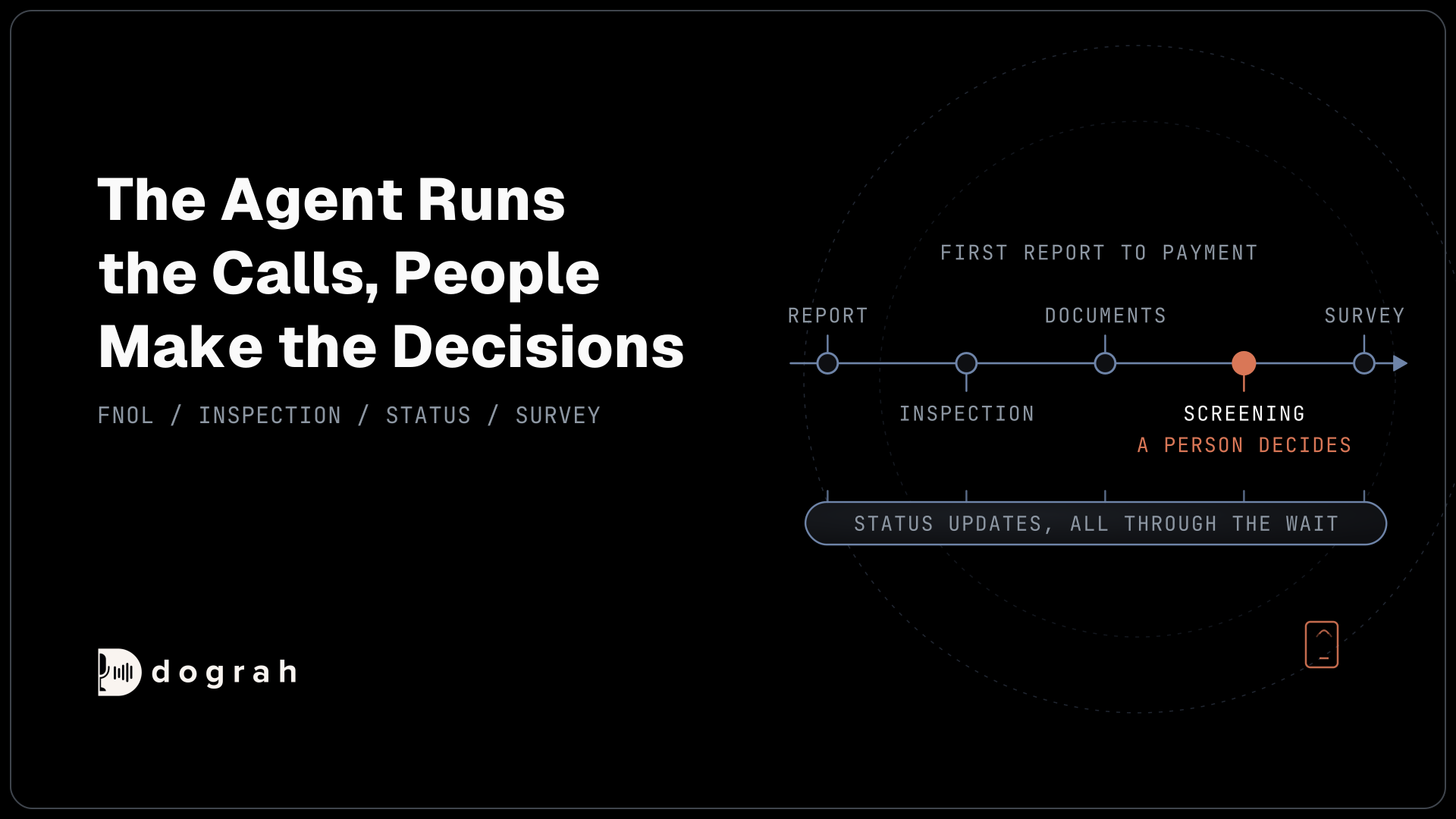
That is why the agent asks and records, and a person interprets. A sentiment label pinned on the wrong cause is worse than no label at all, because it looks like an answer and sends your team to fix the wrong thing. Much of the waiting can be eased earlier with status updates during the claim. The survey is where you learn whether that worked.
How the survey call runs, from claim record to survey system
The call opens already knowing the claim and ends with the answers in the system you already use.
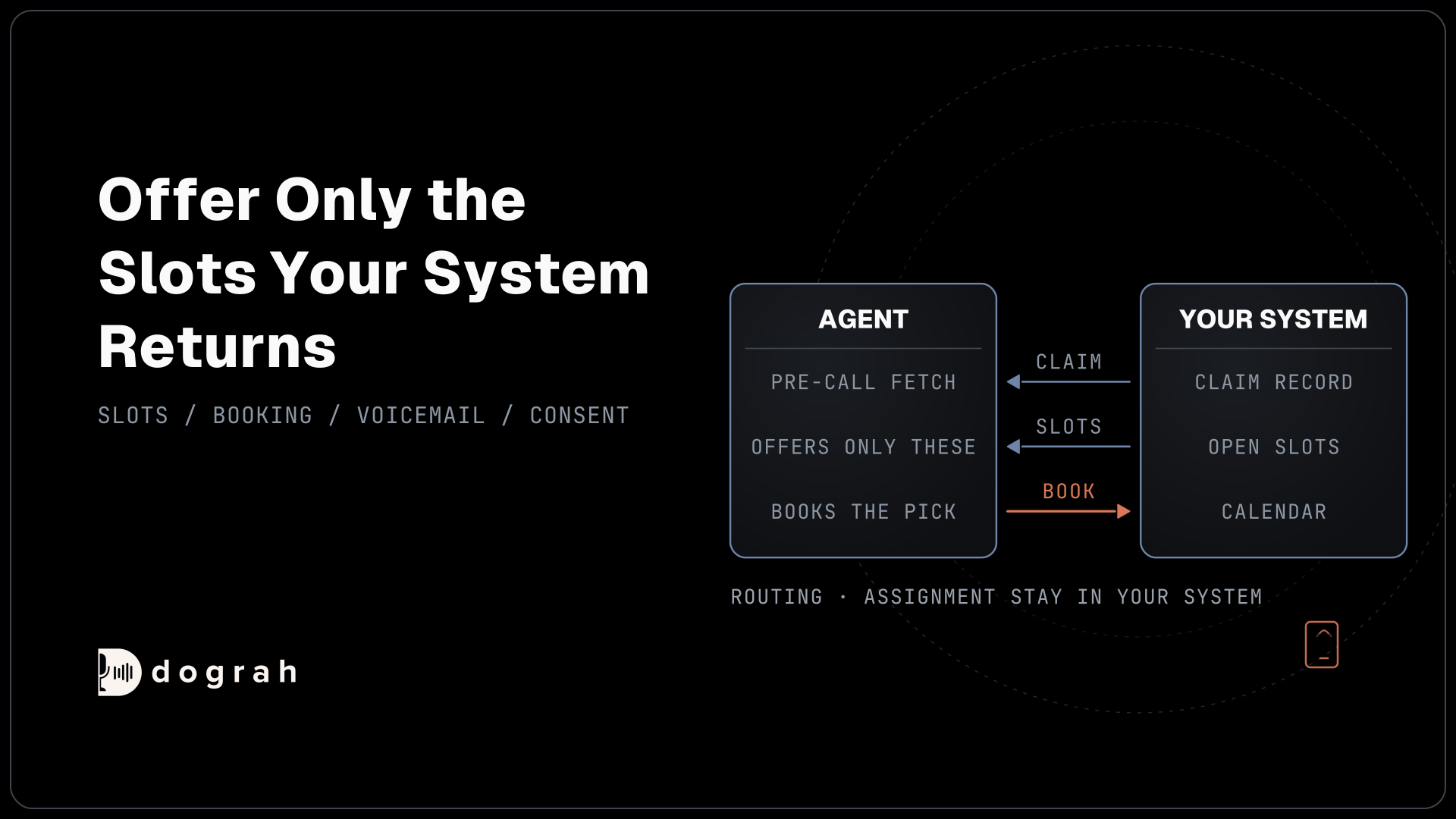
Before the agent says a word, pre-call fetch pulls the claim record from your claims system, such as the policyholder's name and the claim type. If you run the survey as a campaign, the same fields can ride in the CSV you upload. Either way, the agent never asks for details the file already holds.
The first sentence matters more than usual. A March 2025 Kantar survey of 1,033 US adults aged 18 to 64 found 72% never answer calls from numbers they don't recognize. The survey was commissioned by TNS, a company that sells branded calling, worth knowing given its stake in the answer. So keep the opening line fixed. It names the insurer and the claim, and it says the call is a short survey. A survey call should never ask for a policy number or a date of birth.
Your customer experience (CX) team writes the questions, and the set can change by claim type. A total-loss car and a burst pipe go wrong in different ways. In Dograh each question sits in its own node, which keeps them in order. For exact wording, put each question in the transition speech on the pathway into its node, so the agent asks it as written. A rating question records the number the policyholder picks. An open question, such as what could have gone better, records the explanation as they gave it. The agent may ask once whether they want to add anything, and it never suggests an answer.
Capturing the answer is an AI step. Variable extraction pulls each answer into a named field, such as claim_rating or improvement_comment. Treat that field as the answer as stated, and treat the transcript and recording as the word-for-word proof when anyone needs to check.
The answers then go to whatever survey system you already run. Dograh has no built-in connector for any survey platform, and it does not need one. An HTTP API tool can send each answer to your system's API during the call, or a webhook can send them all after the call ends, with links to the transcript and recording. The webhook does not retry a failed delivery by default, so have your survey system confirm what it received. The same setup works for survey calls beyond claims, such as feedback after a support case. Our page on survey calls with open-source voice AI shows how it runs for any team.

Open Source Alternative to Vapi / Retell
Self-hosted voice agent platform — no per-minute fees
dograh-hq/dograh
Star on GitHub
Why the agent never interprets satisfaction
The policyholder's answer is the measurement, so the agent records it and adds no reading of its own.
A popular approach in voice AI analytics goes the other way. It infers a satisfaction proxy from every call, mixing signals such as sentiment and whether the issue got resolved, and keeps real surveys only to calibrate the weights. In a claims survey it replaces the one thing you asked for, the policyholder's own answer, with a guess built from how they sounded.
How someone sounds and what they would answer often differ. A June 2026 preprint on 70,450 support conversations found that tone tracked customers' own 1-to-5 ratings only weakly, at a 0.36 correlation. Read it with care. It studies text chats on a fundraising platform rather than insurance calls, and its author's company sells AI conversation analysis. The paper also argues for an AI satisfaction estimate, so we lean only on that weak link to customers' own ratings.
Tone still has a job on the call. It can change how the agent treats a caller, so the agent slows down or offers a person. It never changes what the agent concludes about them. We hold the same line in claims fraud screening, where a nervous voice is never treated as evidence.
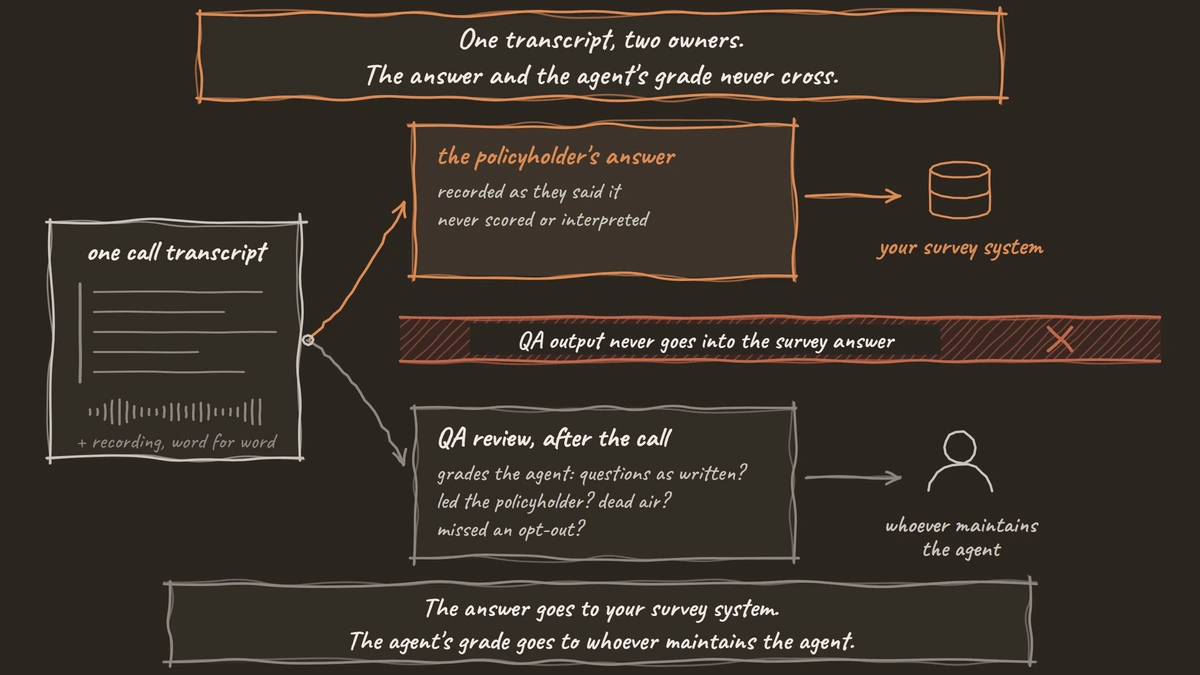
Dograh does produce a sentiment field, and it's a judgment of the agent's performance, not the caller's satisfaction. The quality assurance (QA) node runs after the call and "does not affect call behavior. It only measures it." Its default prompt returns issue tags, a 1-10 call quality score, an overall sentiment and a short summary, all meant to judge how the agent did.
For a survey agent, rewrite that prompt so it grades agent conduct only. Did it read each question as written, did it lead the policyholder, did it leave dead air, did it miss an opt-out. Never map QA output into the survey answer. The policyholder's answer goes to your survey system, and the agent's grade goes to whoever maintains the agent.
When the call needs a person
Some survey calls turn into complaints, and those go to a person.
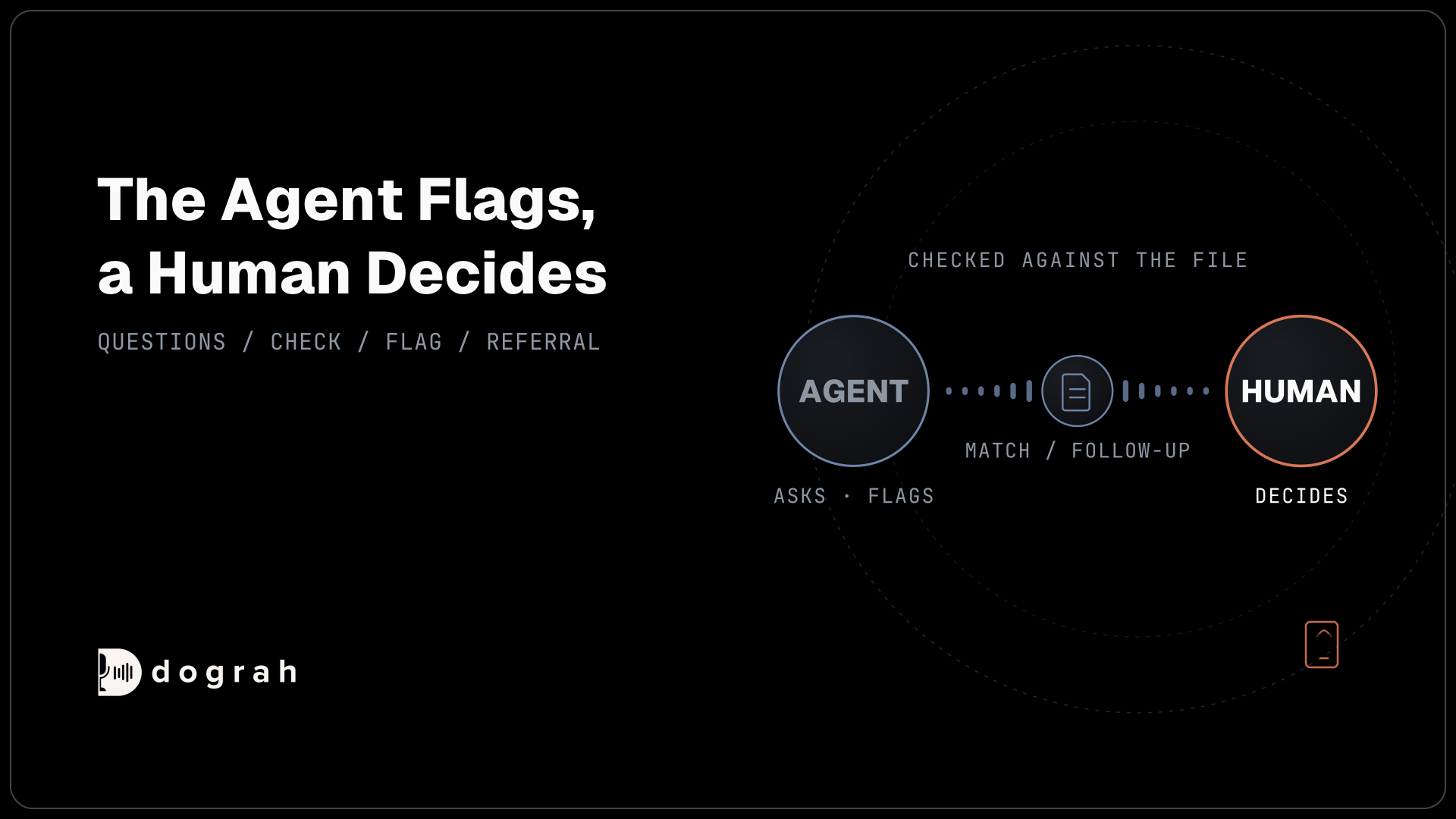
A policyholder may use the open question to dispute the payout, or may sound distressed about the loss itself. The agent should stop the survey there and offer to transfer the call to someone on your claims or complaints team. Dograh's call transfer is a blind transfer, so the person who picks up gets no summary or notes from Dograh. The agent should tell the caller they may need to explain the issue again.
If the policyholder would rather not wait, the agent records the outcome as callback_requested. The call's details reach the claim file separately, through the after-call webhook, and you should not assume they arrive before someone calls back. Whoever returns the call should check the file and the recording first.
The trigger is what the policyholder asked for, never an inferred mood. The survey record only notes that a complaint was raised.
Join the Dograh Community
Dograh is an OSS alternative to Vapi. Join our Slack community for queries, releases, best practices & community interactions.
Consent and the "stop calling me" answer
A survey call is outbound, so consent has to be settled before the first dial.
The Federal Communications Commission (FCC) ruled in 2024 that AI-generated voices count as "artificial" under the Telephone Consumer Protection Act (TCPA). In most cases, that means an outbound AI survey call needs the policyholder's prior express consent. Our post on claims document collection covers checking where that consent came from, and the survey call needs the same check.
The harder moment comes mid-call, when a policyholder says "stop calling me." That answer is a legal opt-out. Under 47 CFR 64.1200, a person may revoke consent "by using any reasonable method to clearly express a desire not to receive further calls," and the request must be honored "within a reasonable time not to exceed ten business days." The agent should end the survey politely and record the outcome as do_not_call, with the survey fields left empty. The webhook then sends that outcome to your suppression list.
That opt-out may reach further than the survey. A related FCC rule, now delayed to January 31, 2027, would generally let one opt-out stop a caller's other automated calls on unrelated matters, which could include claim-status and document reminders. So build the suppression list to cover every automated claim call from the start.
Treat this as informed commentary rather than a legal opinion, and confirm your own footing with counsel.
Survey recordings hold claim details and the policyholder's voice. If they must stay inside your own infrastructure, Dograh is open source and can run on your servers with open-weight models beside it. Start with the question set for each claim type and a short list of answers that should reach a person the same day.
Glossary
- Pre-call fetch
- A lookup Dograh runs before the agent speaks, pulling the claim record from your system so the call opens already knowing the claim.
- Variable extraction
- An AI step that pulls each spoken answer into a named field. The transcript and recording remain the word-for-word record.
- Suppression list
- The insurer's list of numbers that must not receive further automated calls, fed by every opt-out the agent records.
- Revoke-all rule
- A delayed FCC rule under which one opt-out could stop a caller's other automated calls on unrelated matters, not just the call type refused.