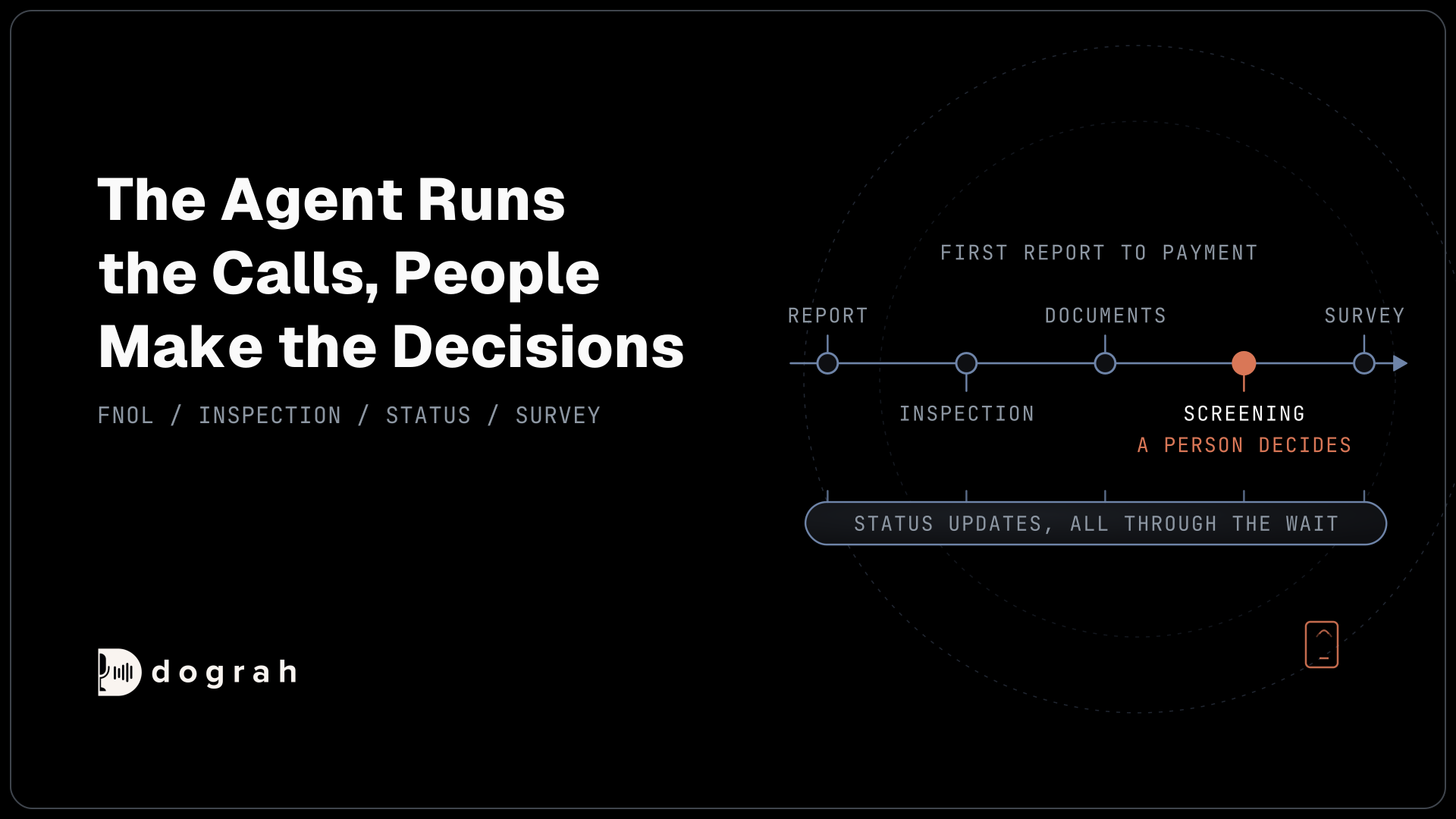

AI voice agents for insurance claims handle the phone calls a claim produces, from the first report of loss to the survey after it closes. Before each call, the agent pulls the claim record, so it does not ask for what the insurer already holds. Adjusters and claims handlers decide on payment, and investigators decide on fraud.
Key Takeaways
- A claim is about six calls over roughly 41 days, each with its own risk.
- The agent books and records. Adjusters and claims handlers decide on payment, and investigators decide on fraud.
- A shaken caller can get a slower pace or a person sooner. Their tone is never recorded as suspicion or unhappiness.
A claim is rarely settled in one phone call. We build Dograh, an open-source voice agent platform, and this guide walks through each call in a claim and where an AI voice agent fits in it.
A claim is about six calls spread over 41 days
From the first report to the final payment, a property claim takes about six weeks, and the phone rings at almost every step.
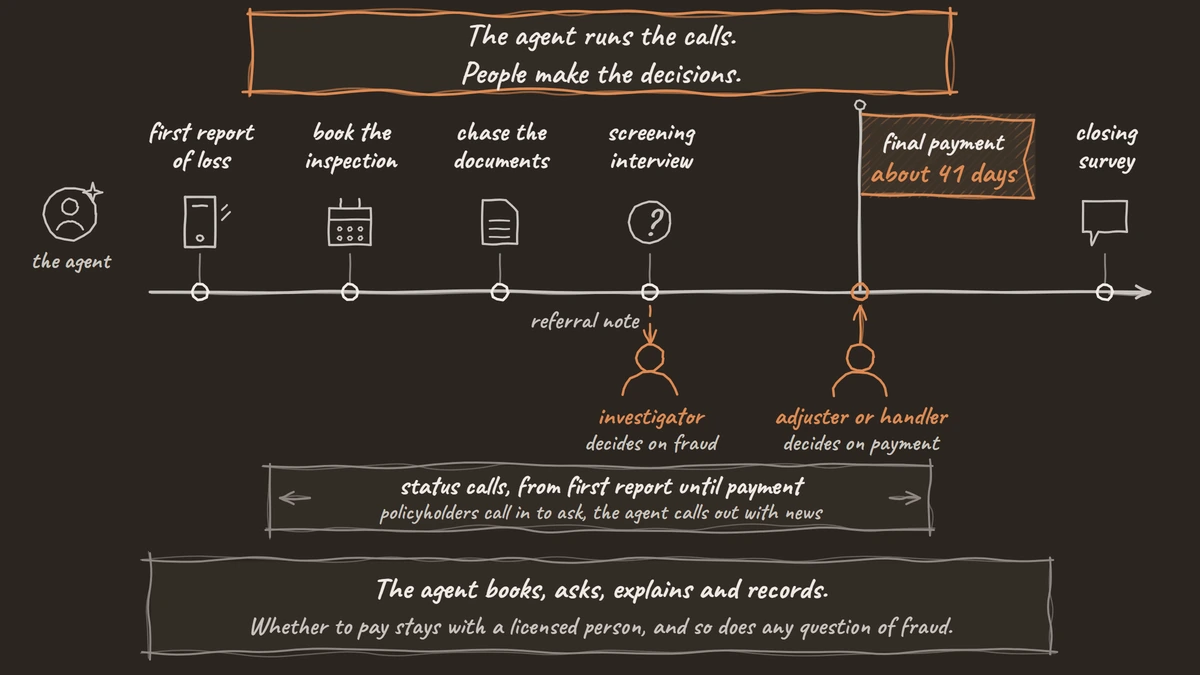
J.D. Power's 2026 property claims study of 5,093 homeowners claimants put the average time to final payment at about 41 days. Over that time a policyholder reports the loss, books an inspection, sends the documents the adjuster asks for, sometimes sits through a screening interview, and is asked about the experience at the end. Status calls fill every gap in between.
Many policyholders still want those calls by phone. In a June 2026 survey of 1,000 US adults, phone was the top preferred claims channel at 38%, just ahead of email at 36%. The same survey found 75% would be very likely to switch carriers after a slow claim.
Waiting is also what people complain about. Celent's analysis of 2025 complaint data from the National Association of Insurance Commissioners (NAIC) found that delays in claim handling made up 22% of all insurance complaints. Unsatisfactory settlements came in at 13% and denials at 12%. A claimant who hears nothing for two weeks picks up the phone, and if that call does not help, the next contact is often a complaint.
Each call in a claim has its own job and its own risk. The sections below follow them in the order they happen. Status updates get their own section too, because they run across the whole wait.
Four rules every claims call should follow
The calls do different jobs, but the same four rules keep each of them safe.
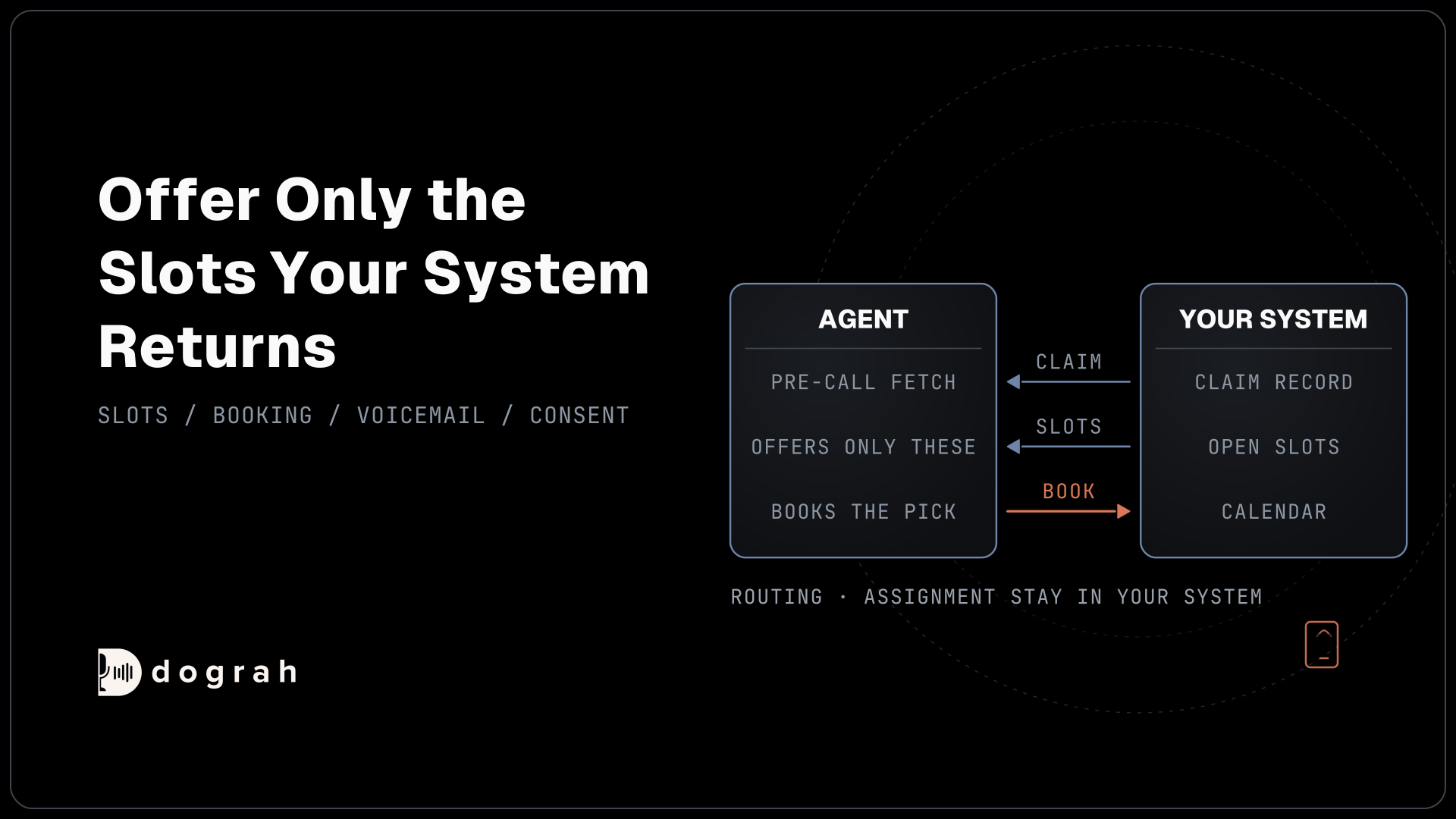
First, the agent knows the claim before it speaks. A claims call goes badly when the agent asks for things the insurer already holds. In Dograh, pre-call fetch pulls the claim record from your system before the agent says a word, and the caller hears ringing while it loads. If your system takes longer than 10 seconds, the call goes ahead without the data, so the flow needs a fallback for that case. On outbound calls, your system passes the claim details when it starts the call.
Second, the agent acts only through systems you already run. Booking a slot or checking a fact happens through a tool call to your own API, or through an MCP (Model Context Protocol) server. Dograh has no built-in calendar or survey connector, and it does not need one. If the request fails or times out, the agent is told it failed, so it never tells a caller something was booked when it was not. After the call, a webhook sends the answers the agent collected to your claims system, with links to the recording and transcript.
Third, people make the decisions. The agent can book, ask, explain and record. Whether to pay, and how much, stays with a licensed person, and so does any question of fraud. When a caller needs a person, the agent transfers the call. Dograh's transfer is a blind transfer, so the person who answers gets the call and nothing else from Dograh. They open the claim in their own system. The call's details reach the claim file separately, through the after-call webhook, and nothing guarantees they land before that person picks up.
Fourth, how a caller sounds can change the way the agent talks to them. It never goes on the record as a judgment about them. A caller who sounds shaken should get a slower pace and an earlier offer of a person. A caller who sounds nervous should never be marked as suspicious, or as unhappy, because of it. The rule holds whether distress shows up in what the caller says or in how they say it, and nothing in this guide depends on automatic tone detection.
These rules also make the build cheaper as you add calls. The claim lookup behind pre-call fetch can serve every call in this guide, and so can the tools and webhook that write back to your claims system. Each new call is mostly a new script on the same plumbing.
The first call: reporting the loss
First notice of loss (FNOL) is the call where a policyholder tells the insurer something went wrong, and it carries more personal data than any other call in the claim.
The agent confirms who is calling and which policy applies, takes down what happened, opens the claim record and reads back a claim number. In a few minutes it can hear about injuries and bank details from someone who may still be standing at the scene.
That changes how an AI voice agent for FNOL intake should be built. Questions come one at a time, at a slower pace than a sales call. Where state law requires every party to agree before a call is recorded, the disclosure has to play before any audio is stored, so it should be fixed text the model cannot reword, such as the Start Call greeting text. Dograh can attach tags to transcripts, which makes the calls holding medical detail or a distressed caller easy to find later.
Policyholders are growing more comfortable with AI at this moment when it clearly helps them. In an Insurity survey of more than 1,000 US adults, fielded in February 2026, 51% said they would feel confident filing a severe-weather claim if AI helped validate the loss, up from 38% a year earlier.

Open Source Alternative to Vapi / Retell
Self-hosted voice agent platform — no per-minute fees
dograh-hq/dograh
Star on GitHub
Booking the adjuster's inspection
Right after the first report, someone has to book the inspection, and in many states the clock is already running.
California's fair claims rules give an insurer 15 calendar days from notice of a claim to acknowledge it, to provide "reasonable assistance, including but not limited to, specifying the information the claimant must provide for proof of claim", and to "begin any necessary investigation of the claim" (10 CCR 2695.5(e)). Florida and Texas set their own deadlines, which we cover in the FAQ below. Generally, a missed visit pushes back the estimate and the payment, and it eats into that clock.
The adjuster's calendar is the scarce thing here, and the insurer's scheduling system owns it. An AI voice agent for adjuster appointment scheduling works as a voice on top of that system. Pre-call fetch pulls the claim and any existing appointment before the agent speaks. A tool call asks the scheduling system which slots are open, and the agent offers only those. It books the one the policyholder picks and writes it back. Dograh does not choose the adjuster or plan the route. That stays in your backend. When your system says a claim qualifies for a video inspection, the agent can offer that as well.
The call runs both ways. Policyholders call in to book or move a visit, and your system calls out to confirm one. Outbound calls often reach voicemail, so the call is marked as voicemail and your system decides when to try again.
Volume is the other reason this call gets automated. After the Eaton and Palisades fires, California's wildfire claims tracker counted 41,727 claims filed in Los Angeles County, with $25.2 billion paid, as of July 6, 2026. Behind most of those claims sits at least one inspection to book, and often one to move.
Booking the inspection is often the first outbound call in a claim, so consent matters here. The Federal Communications Commission (FCC) ruled in 2024 that AI-generated voices count as artificial voices under the Telephone Consumer Protection Act (TCPA). Generally, that means outbound AI calls need the policyholder's prior consent, and a request to stop calling must be honoured within 10 business days. Treat this as informed commentary, and confirm your own footing with counsel.
Chasing the documents a claim is waiting on
Once the adjuster knows what is missing, the claim waits on paperwork, and policyholders rarely hold it back on purpose.
They miss documents because nobody told them clearly which one was needed and why. A claims document collection call names the exact item, such as a police report or an itemized repair estimate, and says why the adjuster cannot decide without it. Pre-call fetch loads the list of missing items, so the agent never has to look it up mid-call.
Digital upload does not reach everyone yet. J.D. Power found that 49% of claimants submitted photos digitally, which leaves about half sending evidence some other way, or not at all.
The call talks about the document, and a secure upload link carries it. The agent announces the link before the text arrives, and never asks anyone to read a medical bill aloud, because that puts the bill into the recording. Follow-up calls need a cap well below the seven calls in seven days that Regulation F allows debt collectors. Insurers fall outside that rule, but it shows where the ceiling sits. The calls stop the moment the upload lands.
Screening calls on the claims that need one
Some claims get a second, structured call before anyone pays out, and on this call keeping people in charge matters most.
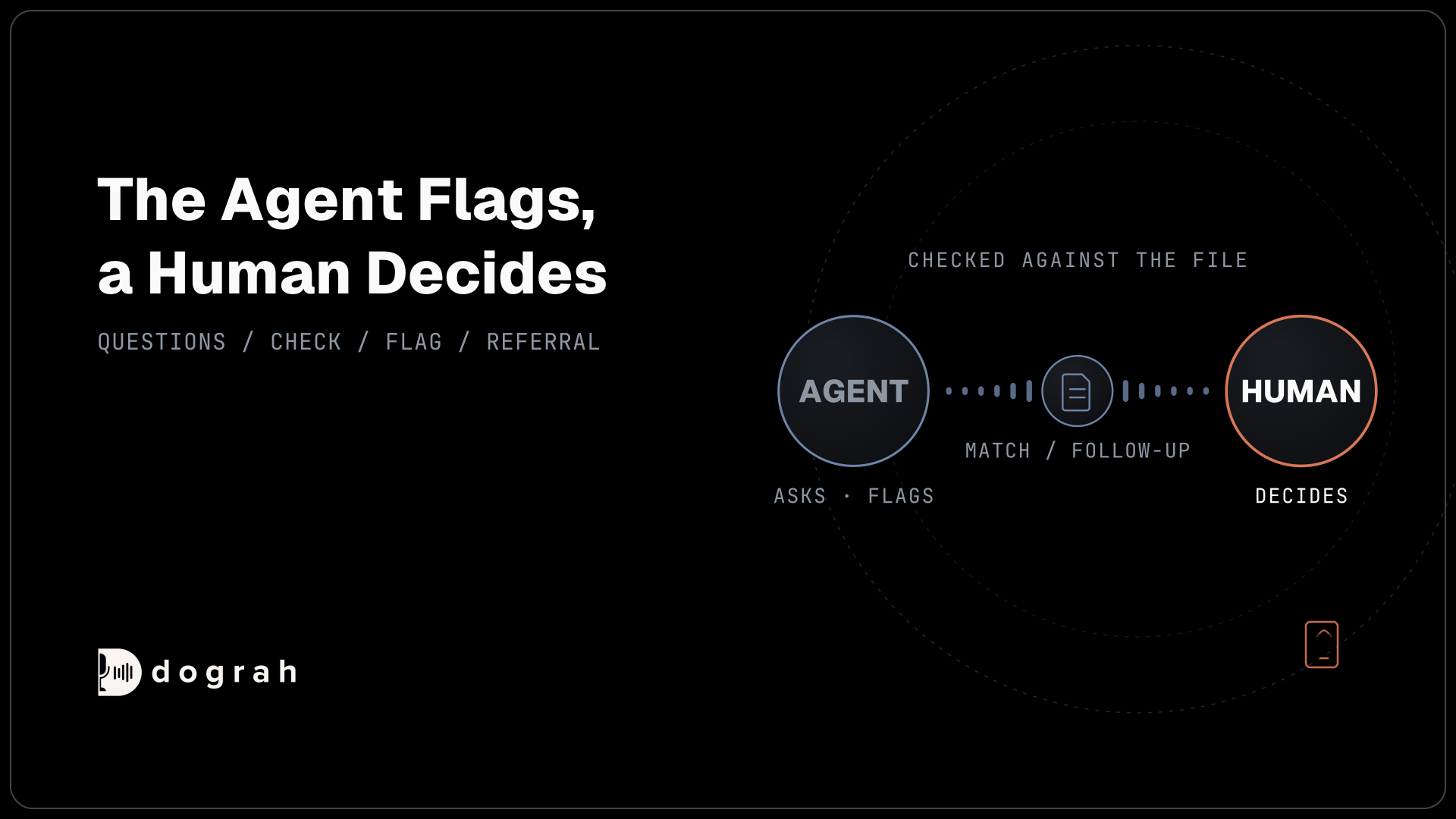
A claims fraud screening interview asks every claimant the same questions in the same order, so an answer that conflicts with the file stands out. The facts being checked stay out of the agent's prompt, because anything in the prompt can come out of the agent's mouth. A tool call sends each answer to the insurer's system, which replies only with a match or a request for one neutral follow-up. The agent never says fraud, and a nervous voice is never treated as evidence.
Regulators expect the human part. The NAIC model bulletin on insurers' use of AI names "claim administration and payment, and fraud detection" among the areas an insurer's AI program must cover. It asks insurers to weigh "the extent to which humans are involved in the final decision-making process." As of August 31, 2026, 25 states and the District of Columbia had adopted it. The agent's output is a referral note for an investigator in the special investigations unit (SIU), who decides what a mismatch means.
Status updates, all through the wait
Status calls run from the day after the first report until the payment lands, and they come in both directions.
The same J.D. Power study found 45% of claimants received updates digitally, so most got them some other way, or not at all. Our own view, from building these agents, is that promptness and empathy carry most of the weight on this call. An agent that picks up quickly and gives a straight answer about where the claim stands already builds trust.
Two things decide whether a claim status update call works. The first is verifying the caller before saying anything about the claim, by confirming details the file already holds instead of asking them to read out a policy number. The second is planning for a slow claims system, because a long silence makes callers think the line dropped. On outbound updates, pre-call fetch pulls the status before the call connects, so the agent already knows it when the call starts.
The best outbound update is short. It says what changed and roughly when the policyholder will hear again. A claimant who knows the next date will usually wait for it, and one who knows nothing will call, often more than once.
The survey after the claim closes
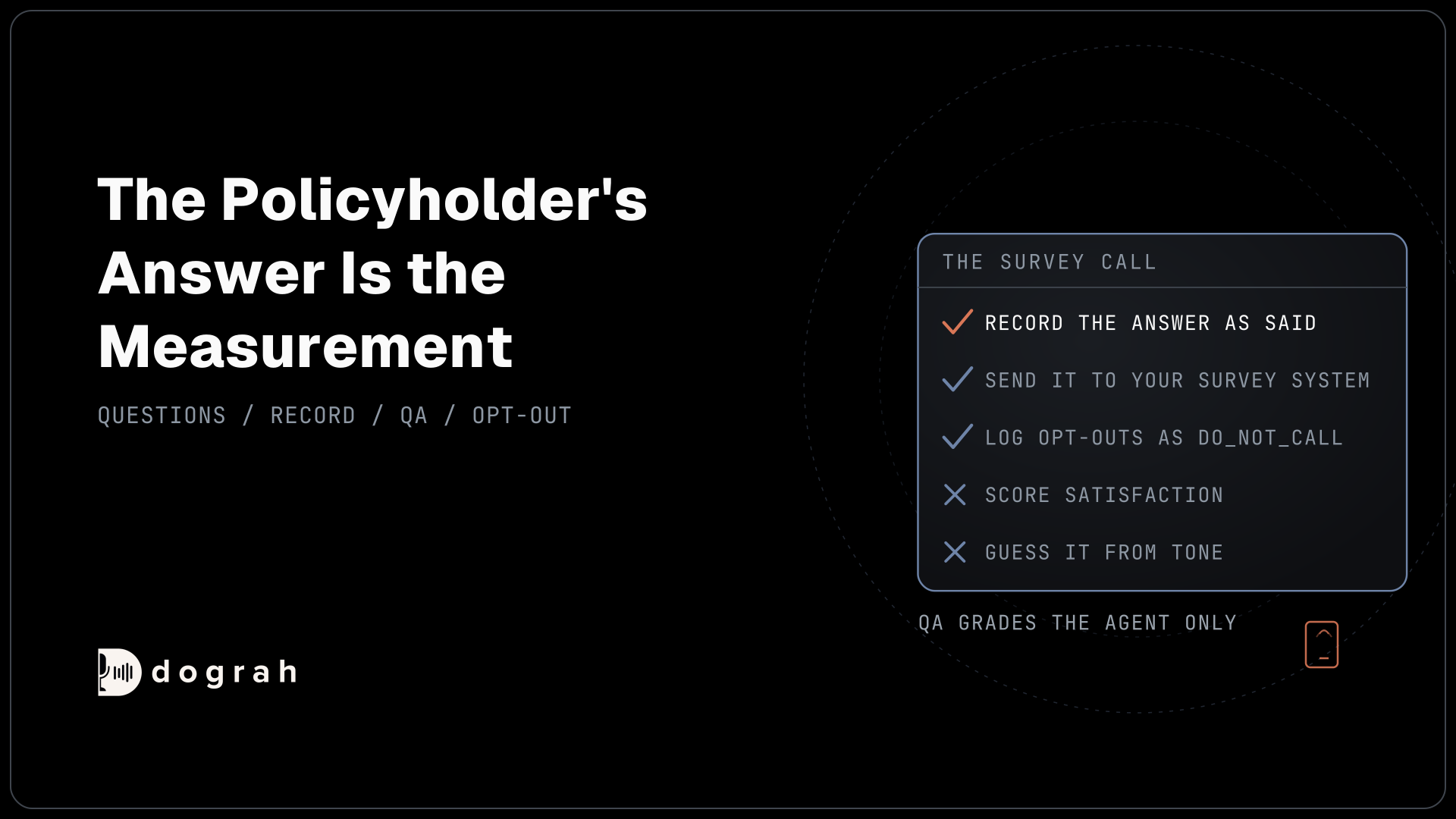
A claims customer satisfaction (CSAT) survey asks fixed questions once the claim is closed, and the agent's job is to record each answer as the policyholder said it.
The agent never scores or interprets satisfaction. A low answer usually comes from the payout or the valuation, and the survey call cannot see either. J.D. Power's study ranked fairness of the settlement as the top driver of satisfaction, ahead of trust and time to settle, which makes a sensible starting list of questions.
The answer goes to the insurer's survey system as stated, through a tool call or the after-call webhook. The transcript and recording are the word-for-word proof. If a policyholder raises a complaint or sounds distressed, the agent offers to transfer the call to a person.
Dograh's after-call quality assurance (QA) review can label a call's sentiment, and that label exists to judge the agent. It never goes into the survey answer. For a survey agent, set the QA review to grade the agent only, for example whether it read each question as written.
A policyholder who says "stop calling me" has opted out. That is a legal instruction, so the agent records it as do-not-call for the insurer's suppression list, and it never counts as survey data.
Join the Dograh Community
Dograh is an OSS alternative to Vapi. Join our Slack community for queries, releases, best practices & community interactions.
What a claims voice agent should promise
Claims voice AI is often sold on how much of the claim it can take over, while policyholders keep asking for people.
Pitches in this space quote autonomous resolution rates and cost cuts per call, often credited to large research firms with no link anyone can open.
People keep the decisions
The people filing claims want a human involved, and the evidence says so plainly.
KPMG's 2026 survey of 2,000 UK adults found 64% believe claims need to be primarily handled by humans. Only 36% would accept a fully automated claims process in return for lower premiums. That is a UK sample, but it points the same way as the NAIC bulletin.
So the promise we make is narrower. The agent runs the calls, and people make the decisions. Open source makes that promise easier to keep, because the call flow is code your team can read. Dograh also shows full call traces to whoever builds the agent, so when a regulator asks how a call went, you can show the path it took. We walk through reading one in how to read call traces to debug a voice agent.
When you compare platforms for claims work, four questions matter more than any resolution rate. Ask where the audio physically lives, and whether you can run the speech and language models yourself. Ask what comes with you if you leave, and who inside the vendor can read a transcript. Self-host an open-source platform like Dograh with open-weight models, and you can answer all four questions yourself.
Where claims audio should stay
Claims calls put health and money details into the same recording, so where that audio lives is a design decision.
We explain why voice data carries biometric risk in a separate post. Dograh is the orchestration layer. It runs the call flow and the tool calls, and the models that listen and speak are a separate layer you choose. Run Dograh on your own servers with open-weight speech and language models beside it, and neither the orchestration nor the audio leaves your infrastructure.
Bringing your own keys to a hosted model provider is a different arrangement. It moves the contract, and the audio still reaches the provider. Our page on self-hosted voice AI for insurance claims shows how that setup works for a claims team.
If you are starting out, pick the call that hurts most, often status updates or document chasing. Write down what the agent may say and decide on that call before anyone touches a prompt, and build from there.
Glossary
- Proof of loss
- The documents and statements a policyholder gives the insurer to support a claim. Several state deadlines, such as Florida's inspection clock, start counting from when it arrives.
- Blind transfer
- A call transfer where the person who answers receives only the call, with no summary or notes from the agent. They look up the claim in their own system.
- Pre-call fetch
- Pulling the claim record from the insurer's system before the agent speaks, so the agent already knows the claim when the call starts.
- Prior express consent
- The permission an insurer generally needs before placing AI-voice calls to a policyholder under the TCPA, often captured when the policy is sold.