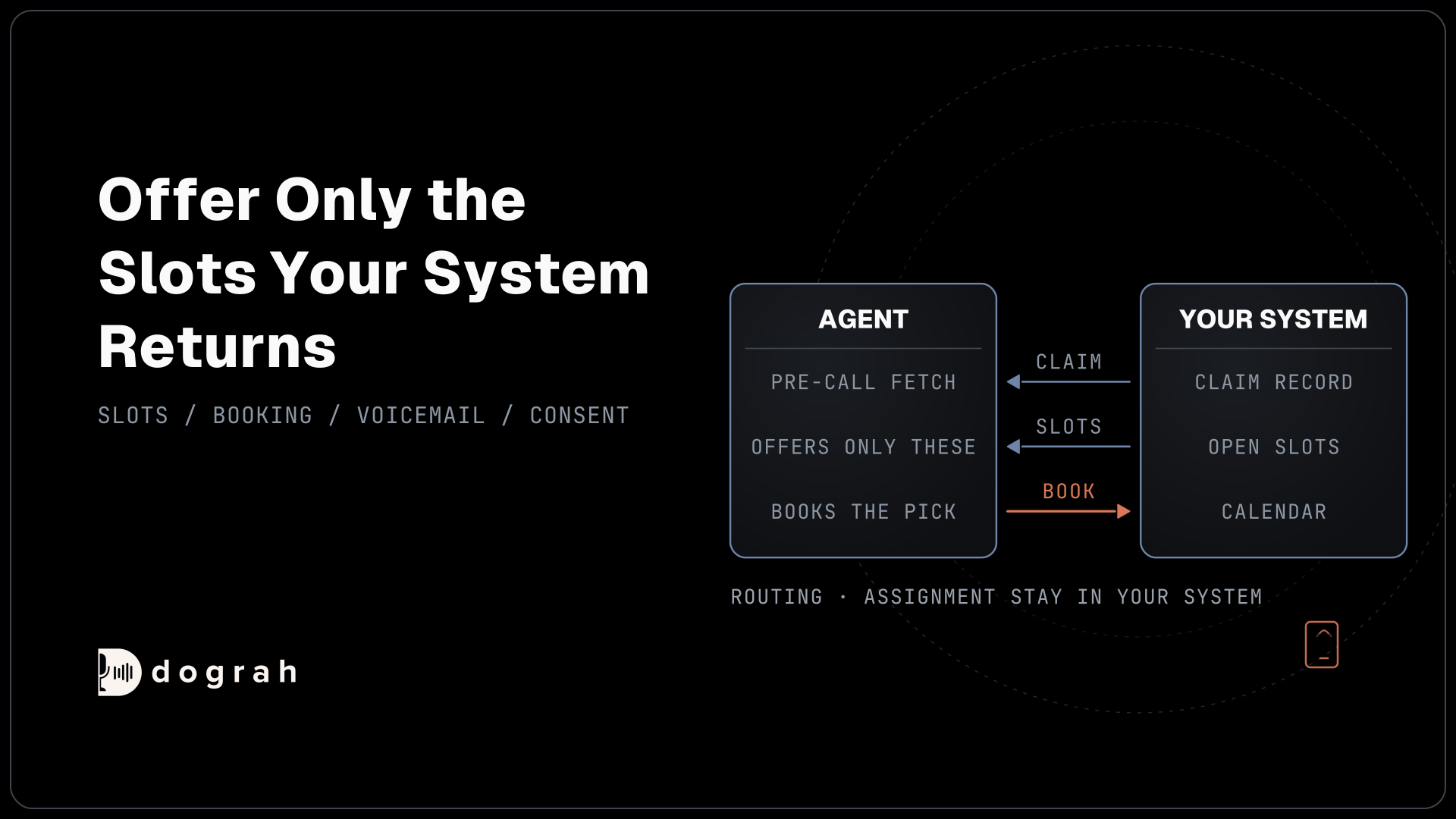

An AI voice agent for adjuster appointment scheduling books and moves claim inspections by phone. Before it speaks, it pulls the claim and any existing appointment. It then asks the insurer's own scheduling system which slots exist, offers only those, and books the one the policyholder picks. Routing and adjuster assignment stay in that system.
This post is part of our guide to AI Voice Agents for Insurance Claims.
Key Takeaways
- A missed inspection pushes the estimate and the payment back.
- The agent offers only slots your scheduling system returns.
- Outbound confirmation calls need prior consent and fast opt-out handling.
After a storm, the adjuster's calendar is the scarce thing, and every wasted visit is a claim that waits longer. We build Dograh, an open-source voice agent platform, and this post shows how to put a voice agent on the phone side of inspection scheduling while adjuster routing and assignment stay inside the system you already use.
Why a missed inspection slows the whole claim
A missed adjuster visit costs more than the adjuster's hour, because most of the claim waits on that visit.
An adjuster cannot write an estimate for damage nobody has seen. So when a policyholder misses the visit, or never heard it was booked, the estimate slips and the payment slips with it. In storm season, the next open slot can be days away. The booking usually happens right after first notice of loss (FNOL) intake, so this is the first place a new claim can stall.
Claimants notice speed. J.D. Power's 2026 U.S. Property Claims Satisfaction Study found satisfaction rose 20 points to 702. J.D. Power credited "a combination of faster repair and payment cycle times, along with enhanced digital capabilities" for the gain.
Most claimants still wait. In InvoiceCloud's June 2026 survey of 1,000 US adults, only 15% received their payout within a week of filing. Each missed visit adds days to a claim that is already slow.
Some states also put the inspection on a legal clock. Florida Statutes section 627.70131 says: "An insurer must conduct any such physical inspection within 30 days after its receipt of the proof-of-loss statements." Texas Insurance Code section 542.055 says that "Not later than the 15th day" after notice of a claim, the insurer shall "commence any investigation of the claim". Generally, a string of rescheduled visits in states like these is a compliance risk on top of a delay. Rules differ by state, so confirm your own deadlines with counsel.
How the agent books a slot it does not own
The insurer's scheduling system owns the adjuster's calendar, and the agent only asks it questions and books through it.
The call starts before the agent says a word. Dograh's pre-call fetch calls your endpoint and pulls the claim and any appointment already on it, matched by the caller's number on an inbound call. The agent knows the claim before it speaks, so the policyholder does not have to read out a claim number. It still greets the caller and confirms who they are, such as the postcode on the policy, before it names the claim or any appointment.
Next, an HTTP API tool asks your scheduling system which slots are open for that claim. The system returns two or three. The agent offers those and nothing else, in the policyholder's local time. If the response holds no slots, the agent has nothing to offer, and it says so.
When the policyholder picks a time, the agent calls your booking endpoint and sends the chosen slot as a tool parameter. The booking has to happen during the call. Answers Dograh gathers in a call are not visible to the agent's prompt until the call ends, so a slot cannot be noted down and booked later.
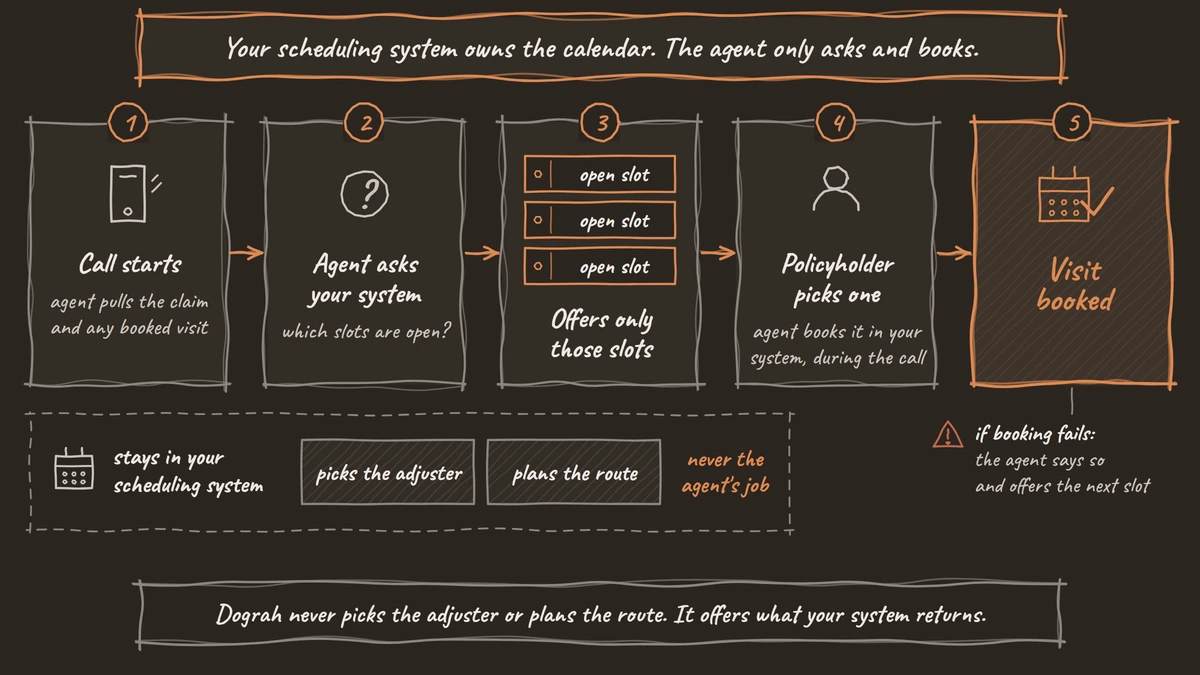
Your system's reply is the confirmation. If someone else took the slot a moment earlier, or the request times out, Dograh reports it to the agent as an error. The agent tells the policyholder and offers the next opening.
Not every claim needs someone at the door. If your system marks a claim as fit for a video inspection, the agent can offer that as well. Florida's statute already allows it: "An insurer may use electronic methods to investigate the loss", including "video conferencing between the adjuster and the policyholder." Which claims qualify is your system's rule, never the agent's.
Dograh has no built-in text messaging. To send a written confirmation, a second tool call goes to the text provider you already use. Your system can also send it once the after-call webhook reports the call outcome as booked.

Open Source Alternative to Vapi / Retell
Self-hosted voice agent platform — no per-minute fees
dograh-hq/dograh
Star on GitHub
One flow handles the call both ways
Policyholders call in to book or move a visit, and your system calls out to confirm one, and both run on the same flow.
Take the inbound case first. A policyholder sees the adjuster is coming Thursday and realizes they will be at work. They call, the pre-call fetch finds the claim, and the agent offers new slots. The agent calls your reschedule endpoint, and your system frees the old slot. Many of these callers also ask where the claim stands, and the same lookup supports claim status updates.
Outbound calls start in your system. It triggers the call through Dograh's API and passes the claim details in the request, so the agent knows the claim before it dials. The opening line should be the Start Call greeting text, so the model never paraphrases it. It names the insurer and asks for the policyholder by name; the claim comes up only once the agent has confirmed who answered.
Plan for voicemail. In Hiya's State of the Call 2026, fielded from December 2025 to January 2026, only 14% of consumers immediately answered a number they did not recognize, and 41% let the call go to voicemail. Dograh can detect voicemail on outbound calls and mark the call that way. Detection is off by default, so turn it on for this agent; it does not work with speech-to-speech models. Your scheduling system then decides when to try again. Calling from a number you can tie to the insurer's name may help more people pick up.
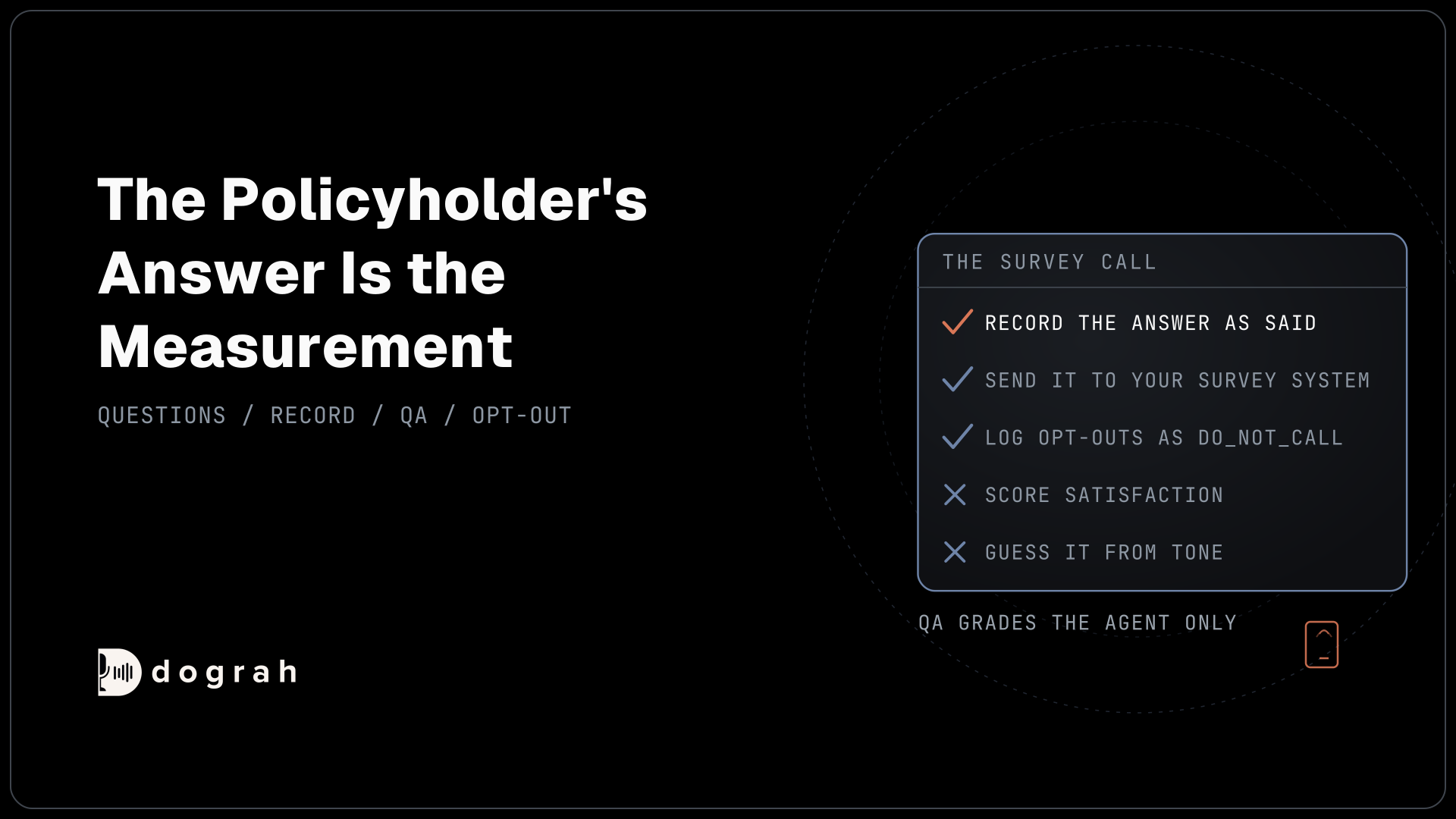
Consent comes before any of this. The FCC ruled in 2024 that AI-generated voices count as "artificial" under the Telephone Consumer Protection Act (TCPA), so outbound AI calls generally need the person's prior express consent. Since April 2025, the FCC's revocation rule says a revocation "must be honored within a reasonable time not to exceed ten business days from receipt of such request."
So a policyholder who says "stop calling me" on a scheduling call has, in most cases, revoked consent. The agent records the outcome as do not call (the do_not_call disposition, once you turn on call disposition extraction in the agent's General settings), and your system suppresses further automated calls. Treat this as informed commentary rather than a legal opinion, and confirm your own footing with counsel.
Join the Dograh Community
Dograh is an OSS alternative to Vapi. Join our Slack community for queries, releases, best practices & community interactions.
What stays in your scheduling system
Choosing the adjuster and planning the day's route are jobs for your scheduling engine, and a voice agent should not pretend to do them.
Field-service scheduling vendors sell engines that match adjusters to claims by skill and territory, and plan routes between visits. That logic belongs in the backend. These engines take bookings through portals and apps. The policyholder who phones in still needs something on the line that can book.
Dograh is that voice layer. Whatever your engine decides, the agent offers. If your system already accounts for travel time, the slots it returns will reflect it. That is a property of your backend. Dograh does no route optimization and never picks the adjuster.
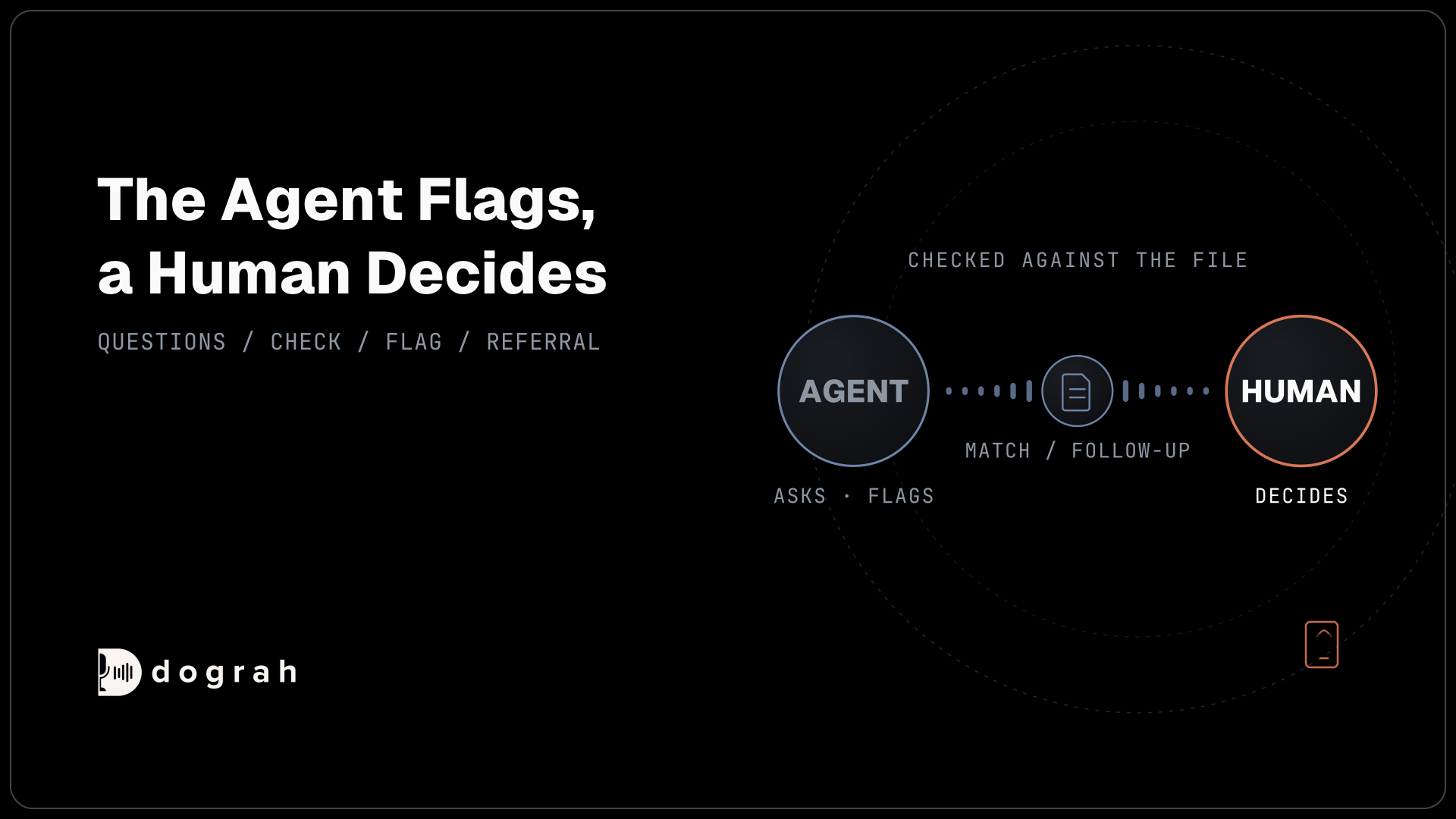
Many claims can skip the site visit with a video inspection. A complex structural loss, or a dispute over cause or scope, still needs a person on site. Those claims should not be self-scheduled at all.
For those calls, the agent transfers the call to a dispatcher. Dograh's transfer is a blind transfer, so the dispatcher who picks up receives nothing from Dograh and starts from the claim file. The call's transcript and outcome reach that file separately through the after-call webhook, with no promise it arrives before the dispatcher answers.
Tone has a place here too. Tone can change how the agent treats a caller, such as slowing down or offering a person, never what it concludes about them.
Keeping inspection calls on your own servers
A scheduling call carries more than a date, so where it runs matters.
To book a visit, the agent hears a home address and often when the house will be empty. A burglar would value that as much as an adjuster. Run Dograh on your own servers with open-weight speech and language models beside it, and neither the orchestration nor the audio leaves your infrastructure. Bringing your own keys to a hosted model provider moves the contract, and the audio still reaches the provider.
The build follows the same pattern as claims document collection. Your system starts the call, and tool calls reach the systems you already run.
Start with your scheduling API, before any prompt. Write down what the availability endpoint returns and which claims need a dispatcher. Then pick one claim type and build that flow first.
Glossary
- Proof of loss
- The policyholder's formal statement of what was lost or damaged and its value. In Florida, the 30-day inspection clock starts when the insurer receives it.
- Pre-call fetch
- A request Dograh makes to your system before the agent speaks, so the agent opens the call already knowing the claim and any booked visit.
- Blind transfer
- Handing a live call to a person without passing any summary or notes along with it. The person who answers starts from their own records.
- Call disposition
- The business outcome recorded for a call, such as booked, voicemail or do not call, which your system uses to decide what happens next.