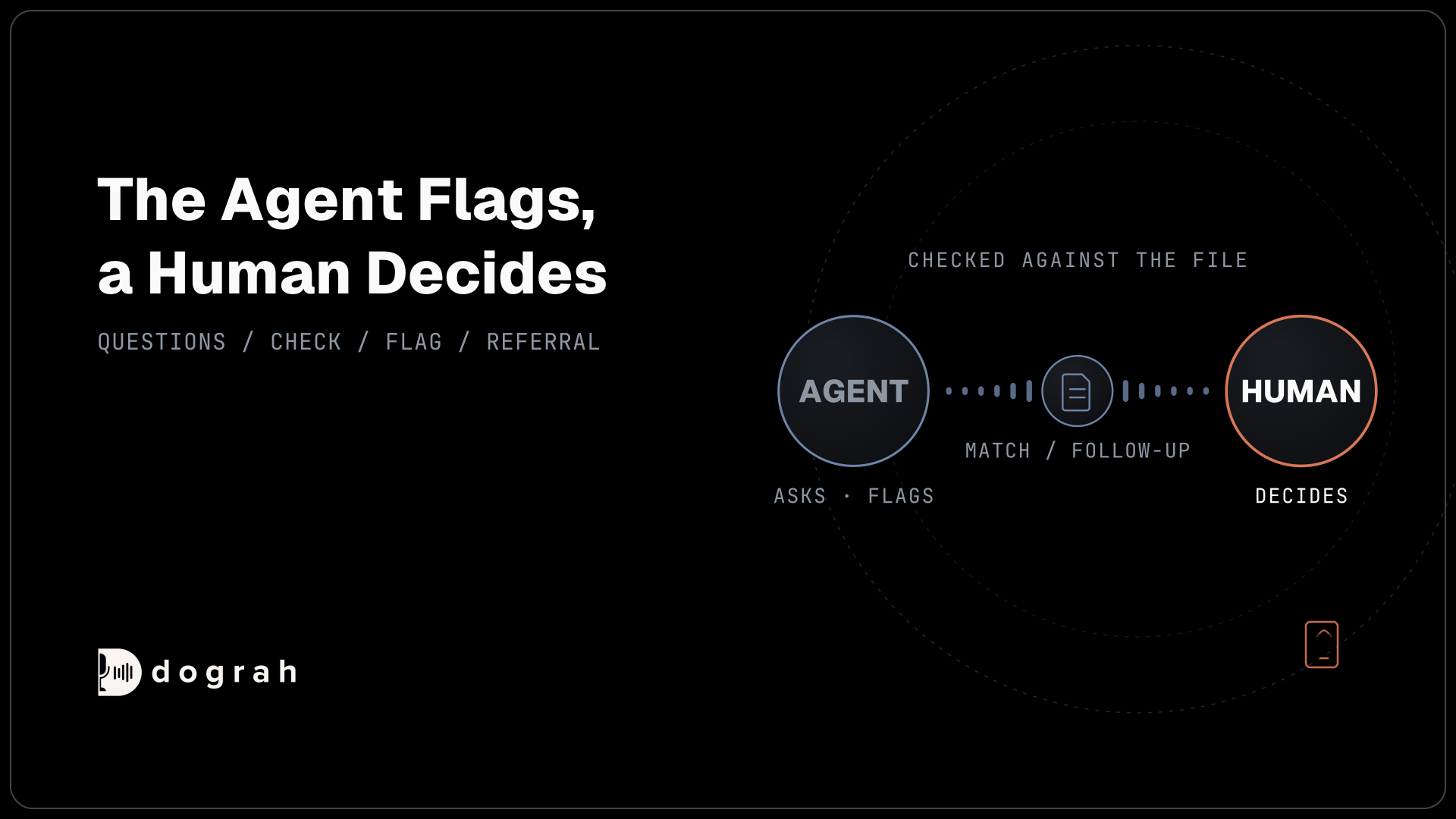

An AI voice agent for claims fraud screening in insurance runs the same structured interview with every claimant and records each answer word for word. A tool call checks answers against the claim file in your own system, so the agent can ask a neutral follow-up and flag a mismatch. Only a human investigator decides whether a claim is fraud.
Key Takeaways
- Ask every claimant the same questions, so conflicts with the file stand out.
- Keep claim-file facts out of the prompt, or the agent gives answers away.
- The agent flags mismatches. Only a human investigator can call it fraud.
An insurance claims fraud screening call has one job. It has to capture what the claimant says in a form an investigator can trust months later. We build Dograh, an open-source voice agent platform, and this post shows how to build that call so it catches mismatches without accusing anyone.
Why claims teams still screen by phone
Documents are getting easier to fake, which makes the claimant's own account more useful as a check.
A Verisk study published in March 2026 surveyed 1,000 US consumers and 300 claims professionals. 36% of the consumers said they would consider digitally altering a claim photo or document, even if it broke insurer rules. Among Gen Z, the figure was 55%.
Insurers see it too. In the same study, 66% of insurers said digital media fraud goes undetected often or very often, and only 32% were very confident they could identify a deepfake. A photo can be edited in seconds. A story told out loud and then checked against the file is much harder to keep straight.
The other half of that survey matters just as much. 36% of consumers worried that honest claims could be delayed or denied if they were wrongly flagged as suspicious. Most claimants are honest, and a screening call that makes them feel accused costs you more than it saves.
This call usually comes after the first report of loss. If you are still designing that first call, our post on first notice of loss (FNOL) intake covers it.
What a screening interview asks, and why the order never changes
A screening call is only useful if every claimant gets the same questions in the same order.
When 500 claimants answer the same question worded the same way, an odd answer stands out. When an adjuster improvises, the questions drift from call to call, and nobody can compare the answers later.
Your investigators should write the question set, because they know which details matter for each claim type. A common pattern opens by asking the claimant to describe what happened in their own words. The structured questions follow: when and where the loss happened, who was present, when the item was last seen, and any earlier claims.
In Dograh, we split the interview into nodes, one per question or small group, so the agent cannot skip ahead or blend two questions together. Each node's prompt carries the exact question to ask. We learned this in other regulated calls. Prompts leak by paraphrase, and a model will reword a question just enough to change what it asks.
Each answer is saved word for word through variable extraction, which you switch on in the Agent node. Give every variable a plain name, such as loss_location or last_seen_date, so the answers line up with fields in your claims system.
How the agent flags a mismatch without knowing the answer
The comparison happens in your claims system, never in the agent's prompt.
The tempting design is to load the claim file into the agent and let it compare as it goes. Avoid it. Anything in the prompt can come out of the agent's mouth, and a claimant who hears "so the loss was on the 12th?" has just been handed the answer.
Dograh keeps the two apart. Data you pass in before the call, called initial context, is available to the prompt. Answers the agent gathers during the call are not, and they reach your systems through a webhook after the call ends. So the check has to run somewhere else.
That somewhere is an HTTP API tool. When the claimant answers a checked question, the agent calls your claims endpoint with the answer. Your backend compares it with the file and sends back one of two results, a match or a request for a follow-up. The agent never sees the value on file.
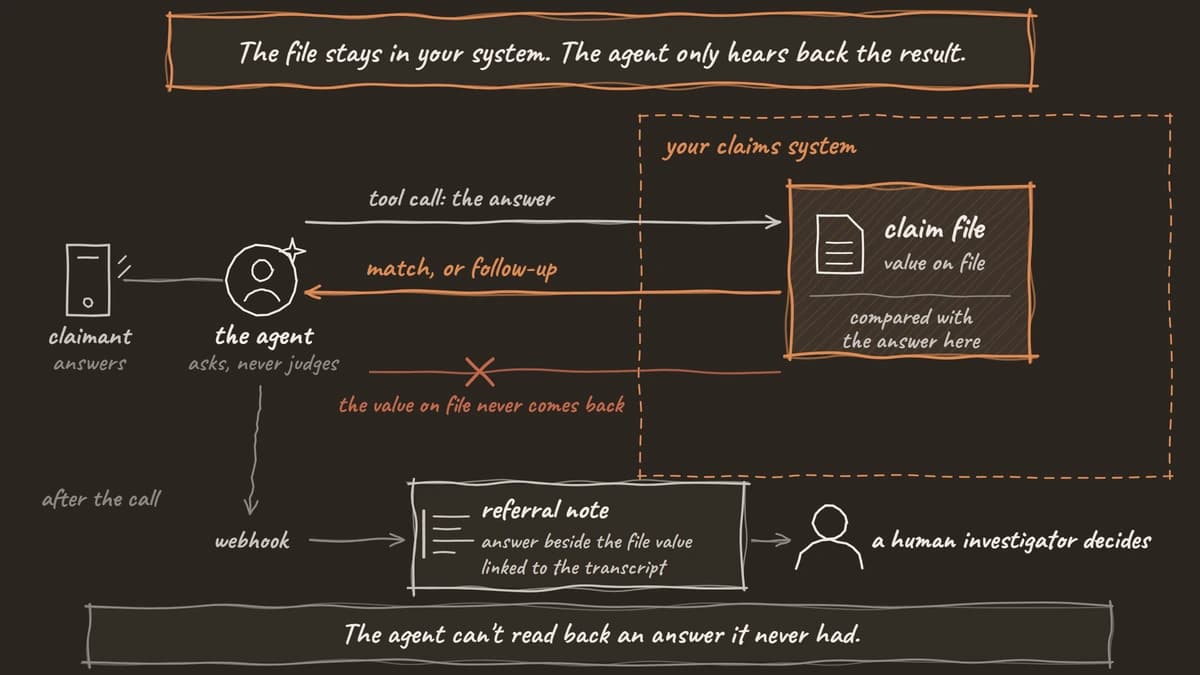
When the result is a follow-up, the agent asks one neutral question, such as asking the claimant to walk through the timing again. It never says the answers differ. If the tool call fails or times out, Dograh reports it to the agent as an error, so the interview carries on and the gap gets noted for review.
After the call, a webhook sends the extracted answers to your claims system, along with links to the transcript and recording. That is where the referral note gets built. It should quote the claimant's answer next to the value on file, with a link to the moment in the transcript.
Set a neutral outcome code on the call, such as referred_for_review, and tag the transcript so the call is easy to find at review. Reports and dashboards should never carry the word fraud against a claimant who has not been investigated.

Open Source Alternative to Vapi / Retell
Self-hosted voice agent platform — no per-minute fees
dograh-hq/dograh
Star on GitHub
What the agent must never say
The flag stays invisible to the caller, and the agent's wording has to protect that.
The agent should never say fraud or suspicious, and it should never hint that a payment is on hold. From the claimant's side, a screening call should feel like a thorough claims call and nothing more.
Closing lines need the same fixed wording as the questions. Claimants often ask at the end whether something is wrong with their claim. Write that answer once, word for word, and offer to transfer the call to a human adjuster, which Dograh supports through call transfer.
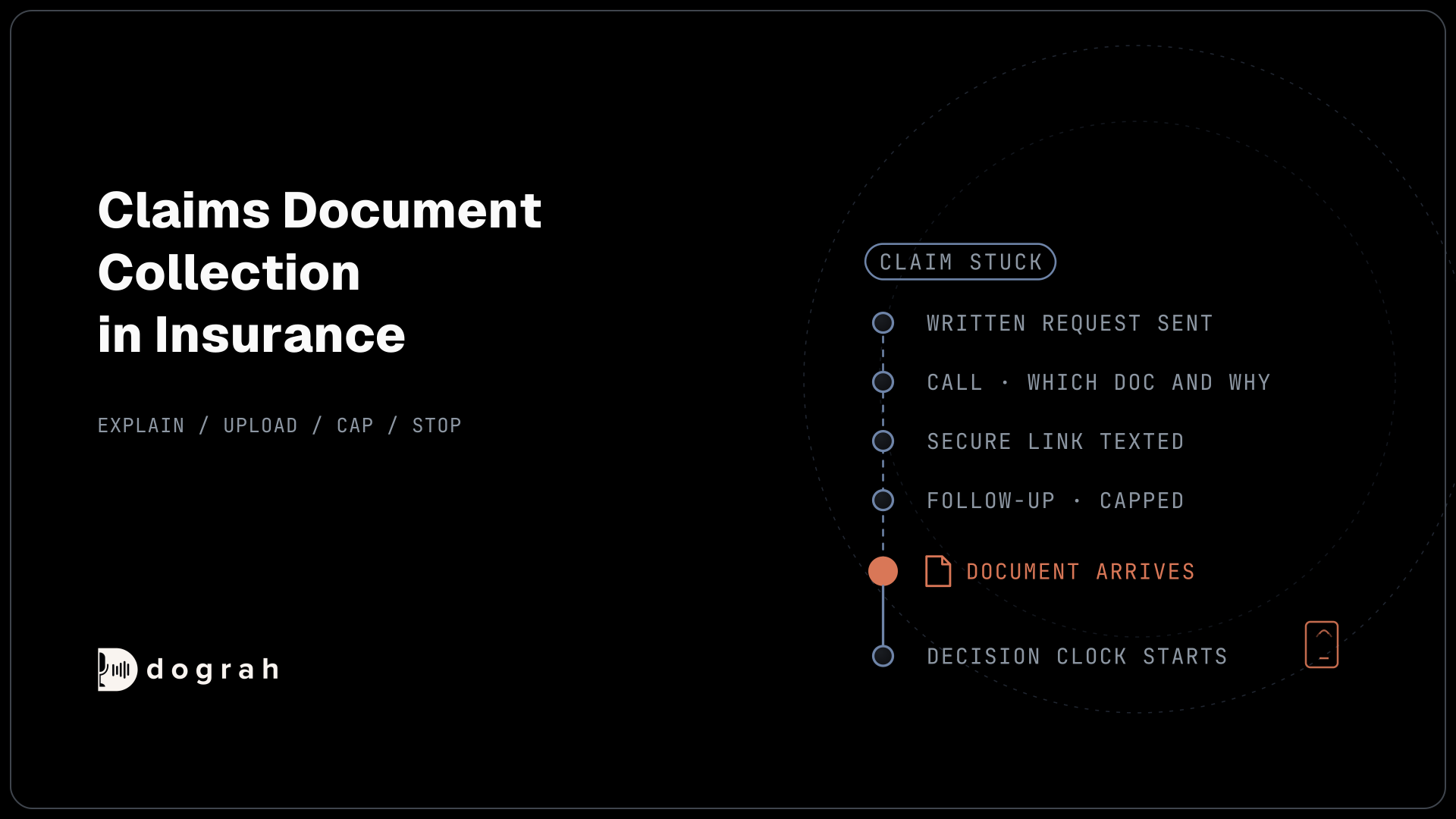
Keep documents out of the call as well. If the interview shows a missing receipt, send a secure upload link, as we cover in claims document collection.
This matters most for honest callers. Someone whose kitchen just flooded is already stressed, and a call that sounds like an interrogation will end in a complaint, however careful your rules are. The same care applies later, when that claimant calls to ask about the status of their claim.
Why a nervous voice is not evidence
Some voice analytics tools score stress and tone as fraud signals, and we think that measures the wrong thing.
The pitch is that pauses or a calm tone describing a stressful event can reveal a lie. Honest claimants produce both. People pause when they try to remember a date, and people sound flat after a bad week.
Even vendors selling these tools concede that tone is a weak signal on its own and can carry bias. A caller speaking a second language, or with a strong accent, gets scored against a baseline that was never built for them.
A mismatch between an answer and the file works differently. An investigator can check it line by line and explain it to a regulator. That is the only kind of flag we recommend building into a screening agent.
This is also where a closed platform hurts. If you cannot see why a call was flagged, you cannot defend the flag. Dograh shows full call traces to whoever builds the agent, so every step of the flow can be inspected after the fact.
Join the Dograh Community
Dograh is an OSS alternative to Vapi. Join our Slack community for queries, releases, best practices & community interactions.
A human decides, and regulators expect you to show it
Insurance regulators already treat AI in fraud detection as something the insurer must govern and explain.
The National Association of Insurance Commissioners (NAIC) publishes a model bulletin on insurers' use of AI that lists fraud detection and claim administration among the areas an insurer's AI program should cover. It asks insurers to weigh "the extent to which humans are involved in the final decision-making process."
It also says insurer actions must not break unfair claims settlement rules "regardless of the methods the Insurer used to determine or support its actions." In most cases, that means an automated flag gives no cover for a slow or unfair claim decision. As of August 31, 2026, 25 states and the District of Columbia had adopted the bulletin, according to NAIC's own map.
A screening agent fits this cleanly when its only output is a referral. The investigator reads the note and listens to the recording before making the call. The agent's job ends at "these two answers do not match." Whether a mismatch is an honest mistake or a material misrepresentation is exactly the judgment that belongs with that investigator.
Rules differ by state and by line of business. Treat this as informed commentary rather than a legal opinion, and confirm your own footing with counsel before a screening flow goes live.
Screening data that never leaves your servers
A screening call collects some of the most sensitive data a claims team holds.
One call can cover health details, money, family members and the claimant's own voice. We explain why voice data carries biometric risk in a separate post, and a recorded fraud interview is exactly that kind of data.
Dograh is the orchestration layer. It runs the call flow and the tool calls. The models that listen and speak are a separate layer you choose. Run Dograh on your own servers with open-weight speech and language models beside it, and neither the orchestration nor the audio ever leaves your infrastructure.
Bringing your own keys to a hosted model provider is a different arrangement. It moves the contract, and the audio still reaches the provider.
Self-hosting also lets your compliance team read the code that runs the interview. When a regulator asks how a flag was produced, you can show the flow and the transcript from systems you control.
If you are starting out, have your investigators write the questions and the mismatch rules before anyone touches a prompt. The agent is quick to build once those two lists exist.
Glossary
- Referral note
- The summary sent to a human investigator, quoting the claimant's answer next to the value on file and linking to that moment in the call.
- Initial context
- Data a voice agent receives before the call starts and can use in its prompt, as opposed to answers it collects during the call.
- Fixed utterance
- A line the voice agent speaks word for word every time instead of generating it, used where the exact wording carries weight.
- Material misrepresentation
- A false statement that would have changed the insurer's decision on a claim. Deciding whether one happened is the investigator's job.