
Dograh Blog
Voice AI insights from the Dograh team
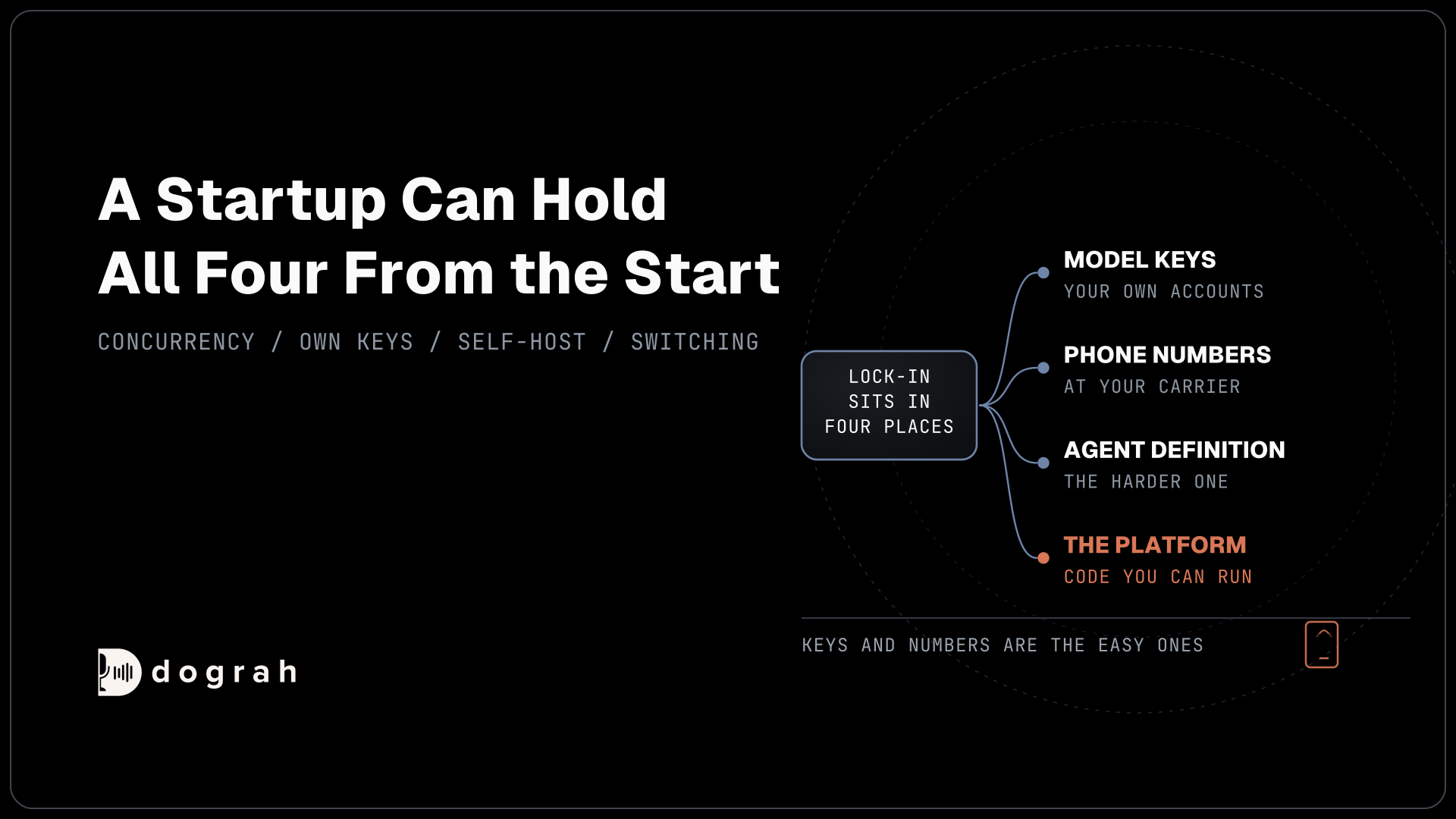
Voice AI for Startups: How to Launch a Phone Agent Without Lock-In
What a voice agent platform costs at ten times today's minutes, how concurrency and add-ons change the bill, and how to keep keys, numbers and agents portable from day one.
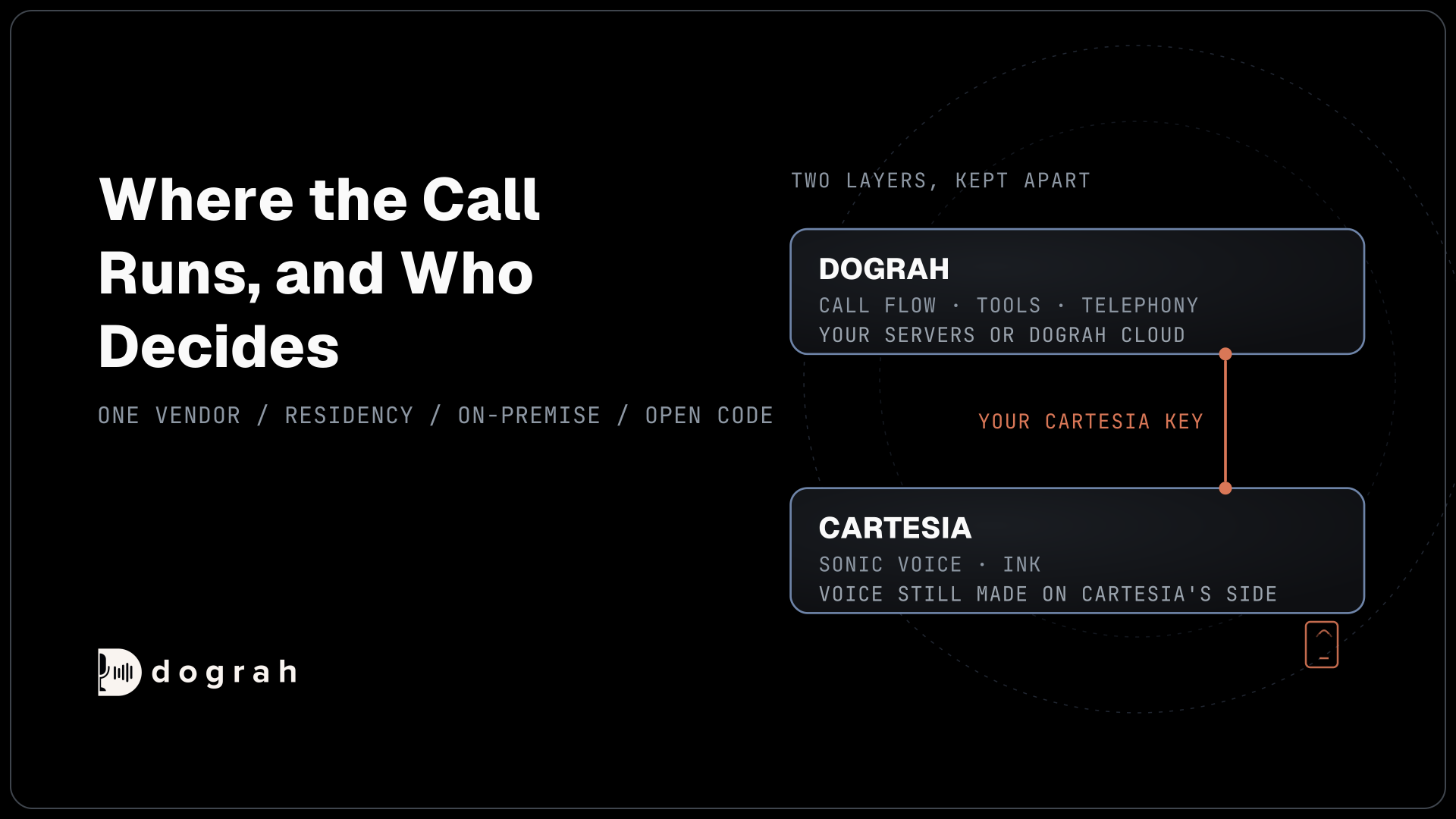
Cartesia Managed Agents: What It Is and Where Dograh Fits
Our read of Cartesia Managed Agents: what Cartesia launched, what it got right, where the calls run and who decides, what you can change later, and how Dograh offers the open-source shape of the same job while keeping Cartesia's voices with your own key.
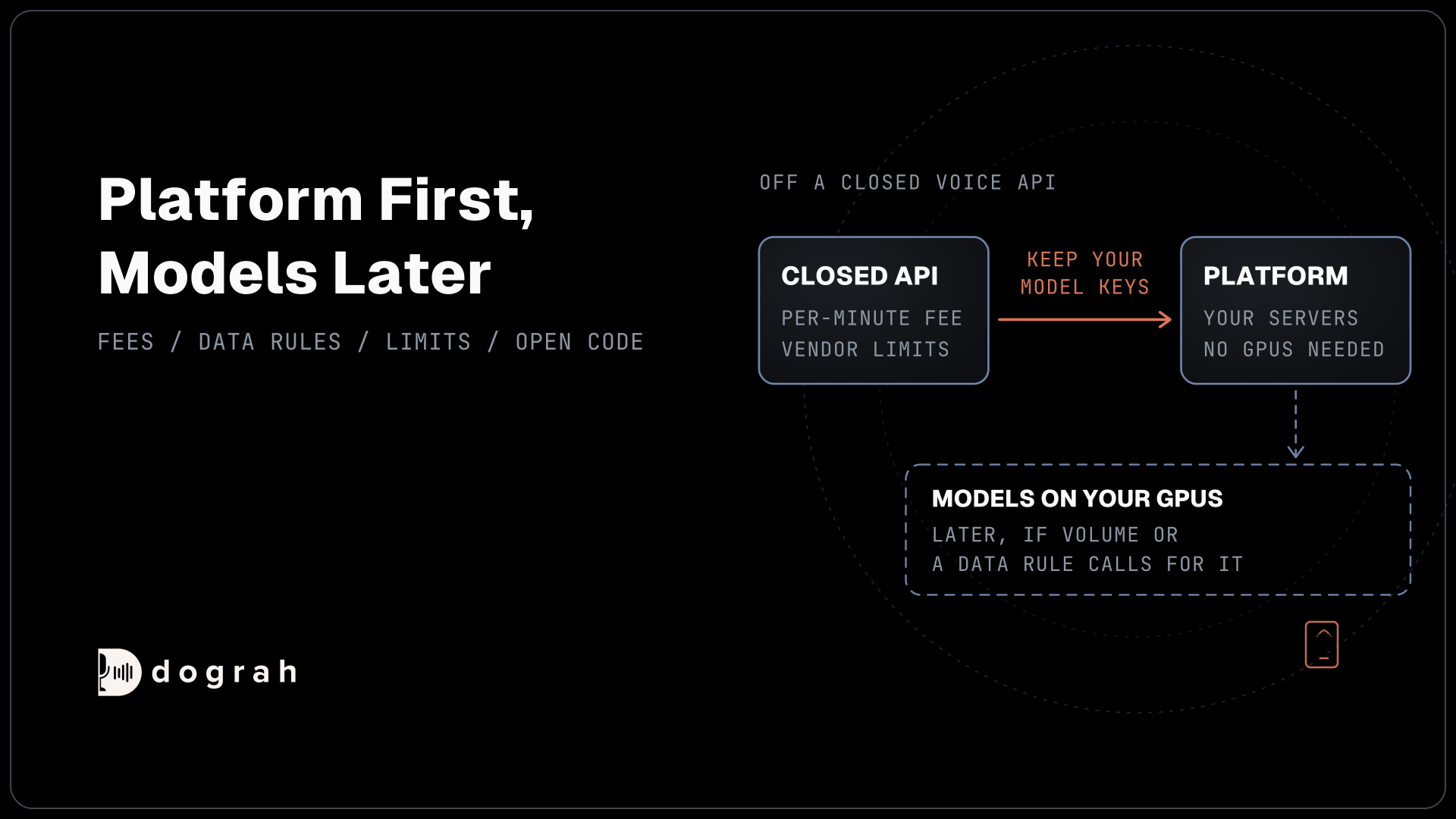
When to Move From a Closed Voice API to Self-Hosting: Four Signals
Four signals that it is time to move a voice agent from a closed voice API to a self-hosted platform, each as a test on your own numbers, and why the platform moves first and the models later.
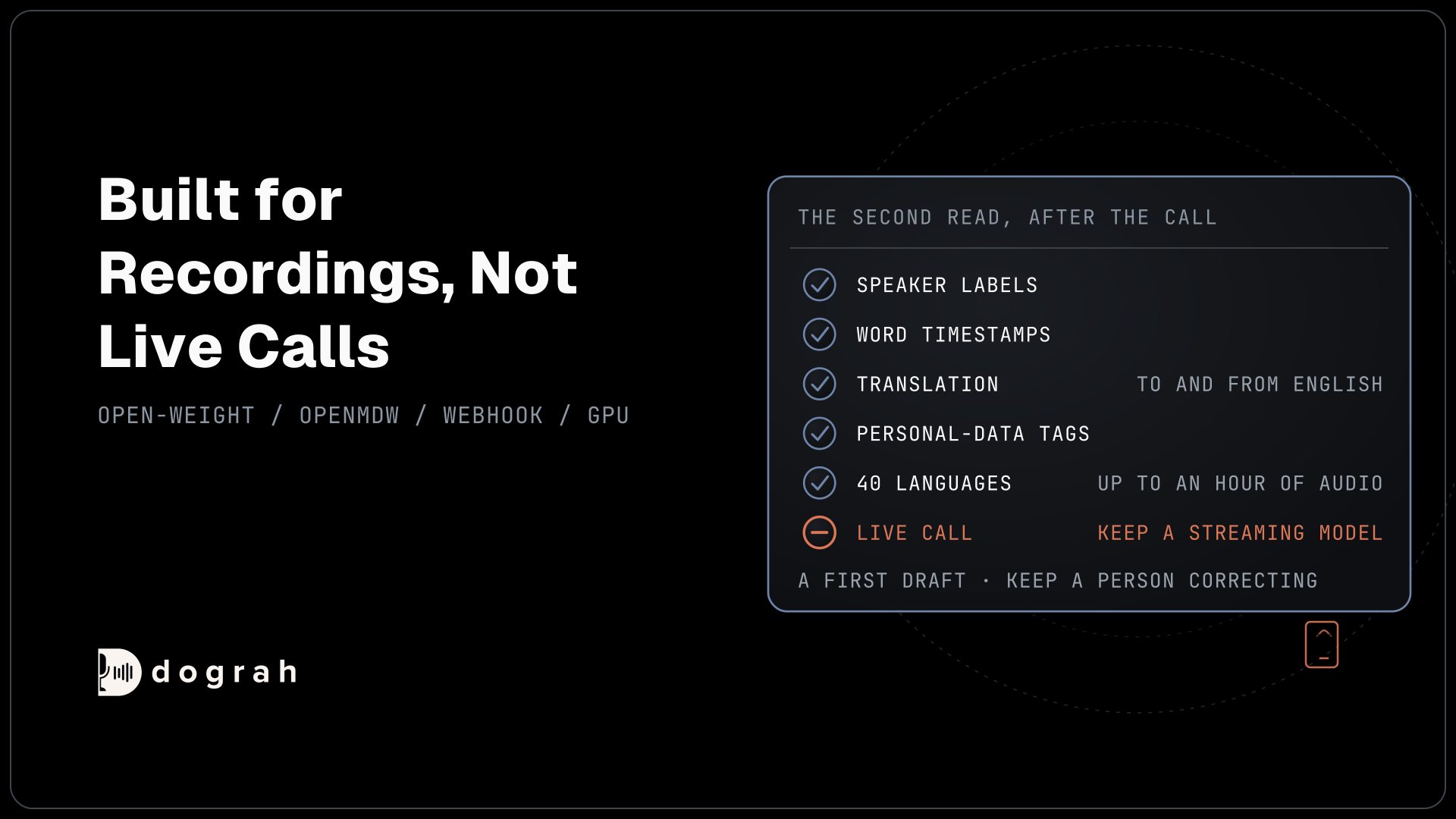
Nvidia Nemotron 3.5 Transcribe: What It Means for Voice Agents
What Nvidia's open-weight Nemotron 3.5 Transcribe does, why it is built for recordings rather than live calls, and how to run it on a voice agent's call recordings on your own servers.
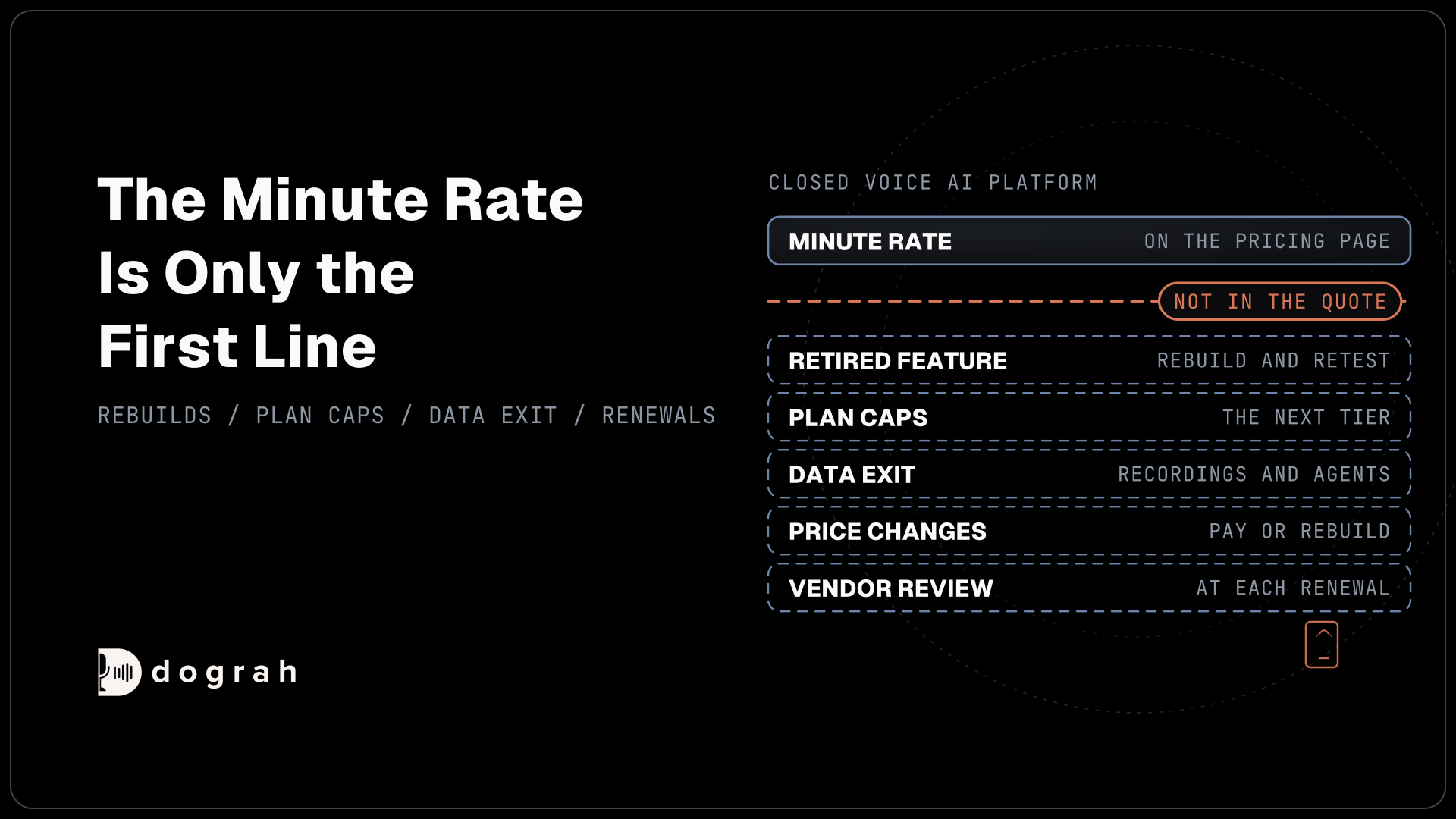
The Hidden Costs of Closed Voice AI Platforms: Beyond the Minute Rate
What a closed voice AI platform costs after the per-minute price: rebuilding agents when a feature is retired, plan caps that force an upgrade, getting call data out, price changes and vendor reviews, and where open source moves each cost.
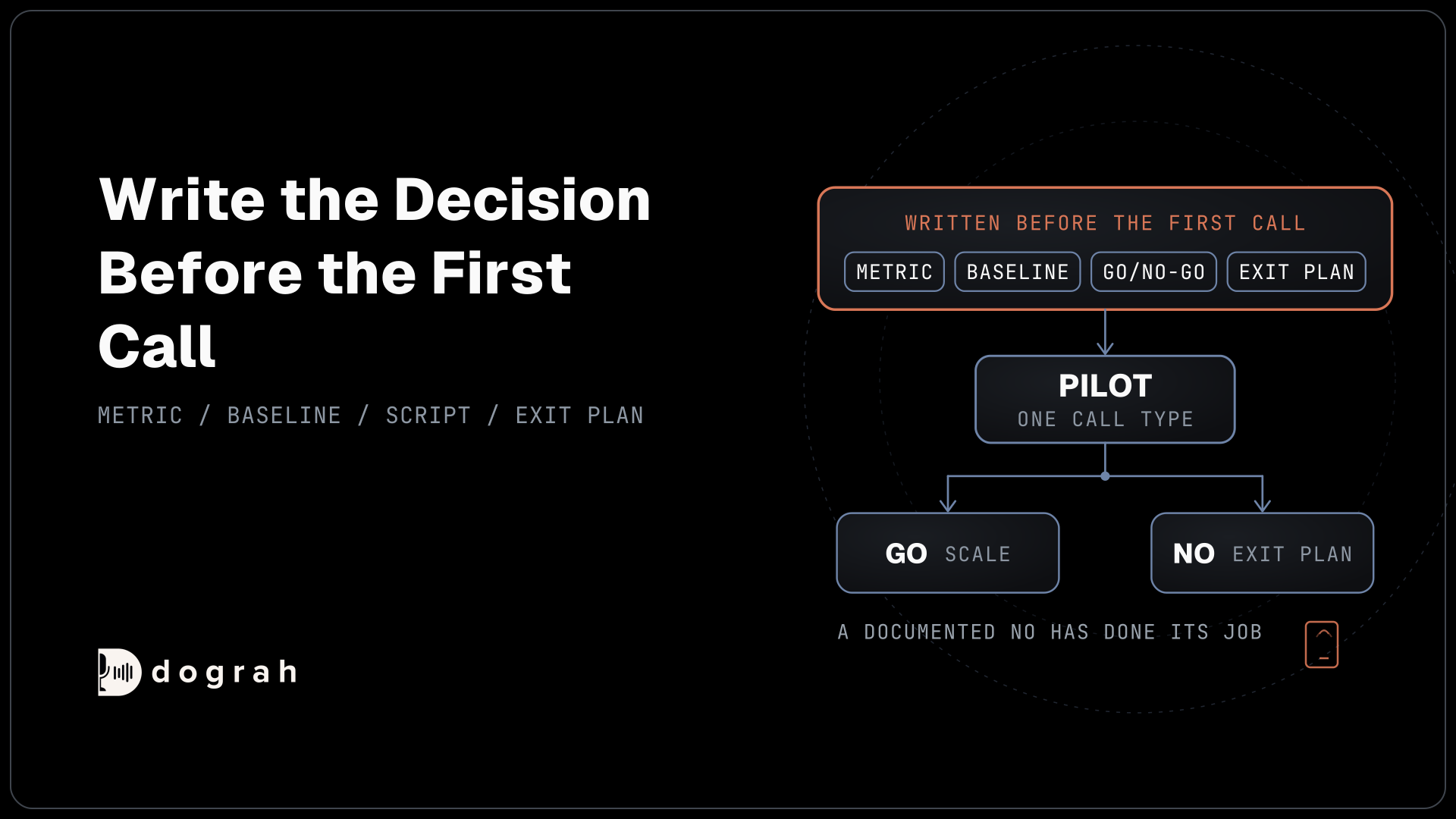
How to Run a Voice AI Pilot That Survives Procurement
How to run a voice AI pilot that procurement can sign off: write the metric, baseline and go/no-go line first, reuse the script your best callers already use, keep inbound scope narrow with transfers and callbacks, measure every call, and answer the exit and security questions early.
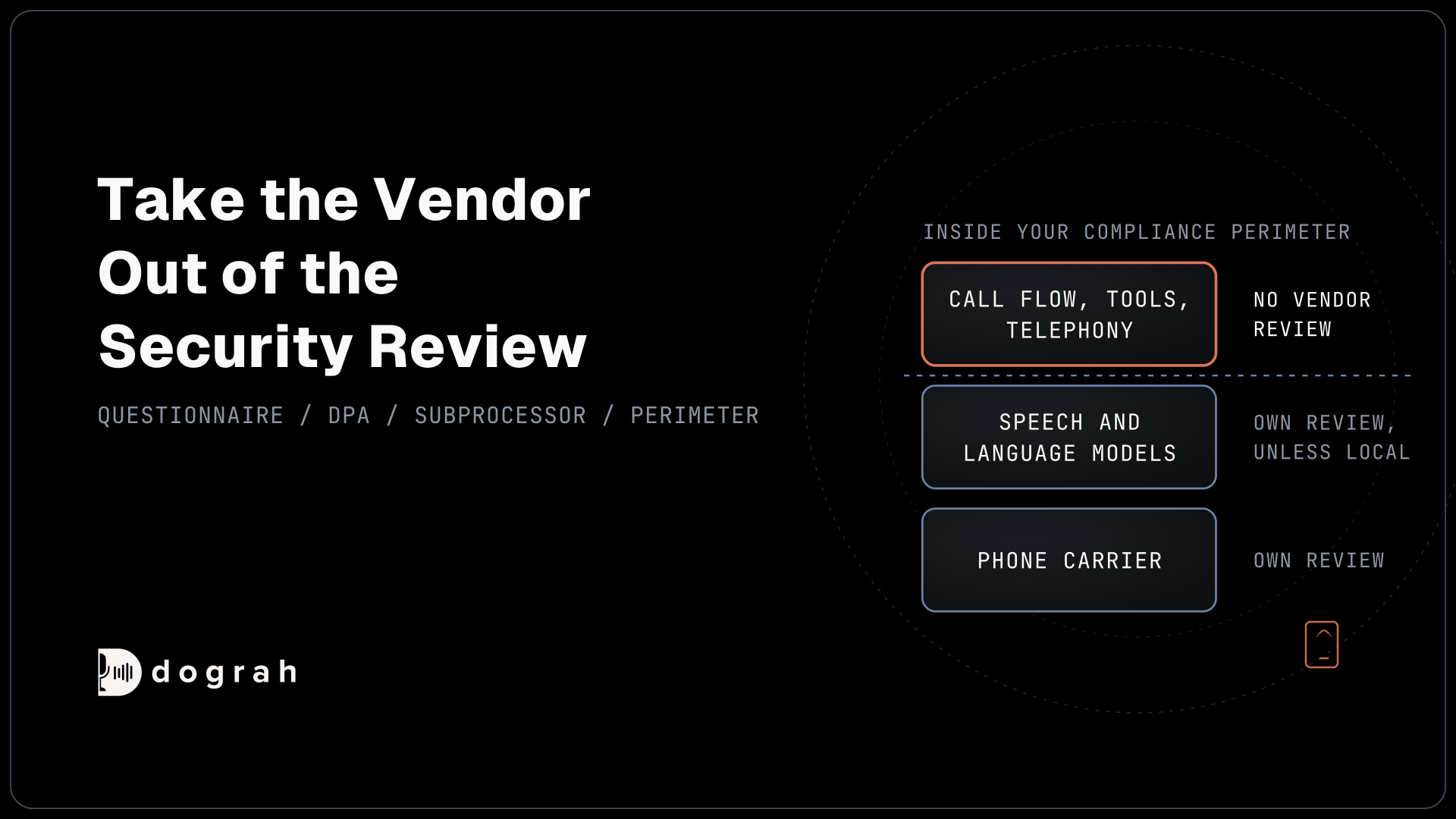
Why Procurement Stalls on Closed Voice AI, and How to Avoid It
Why buying a closed voice AI vendor stalls at the security review, which questionnaire rows fall away when you self-host an open-source platform inside your compliance perimeter, and what your team and your model providers still have to review.
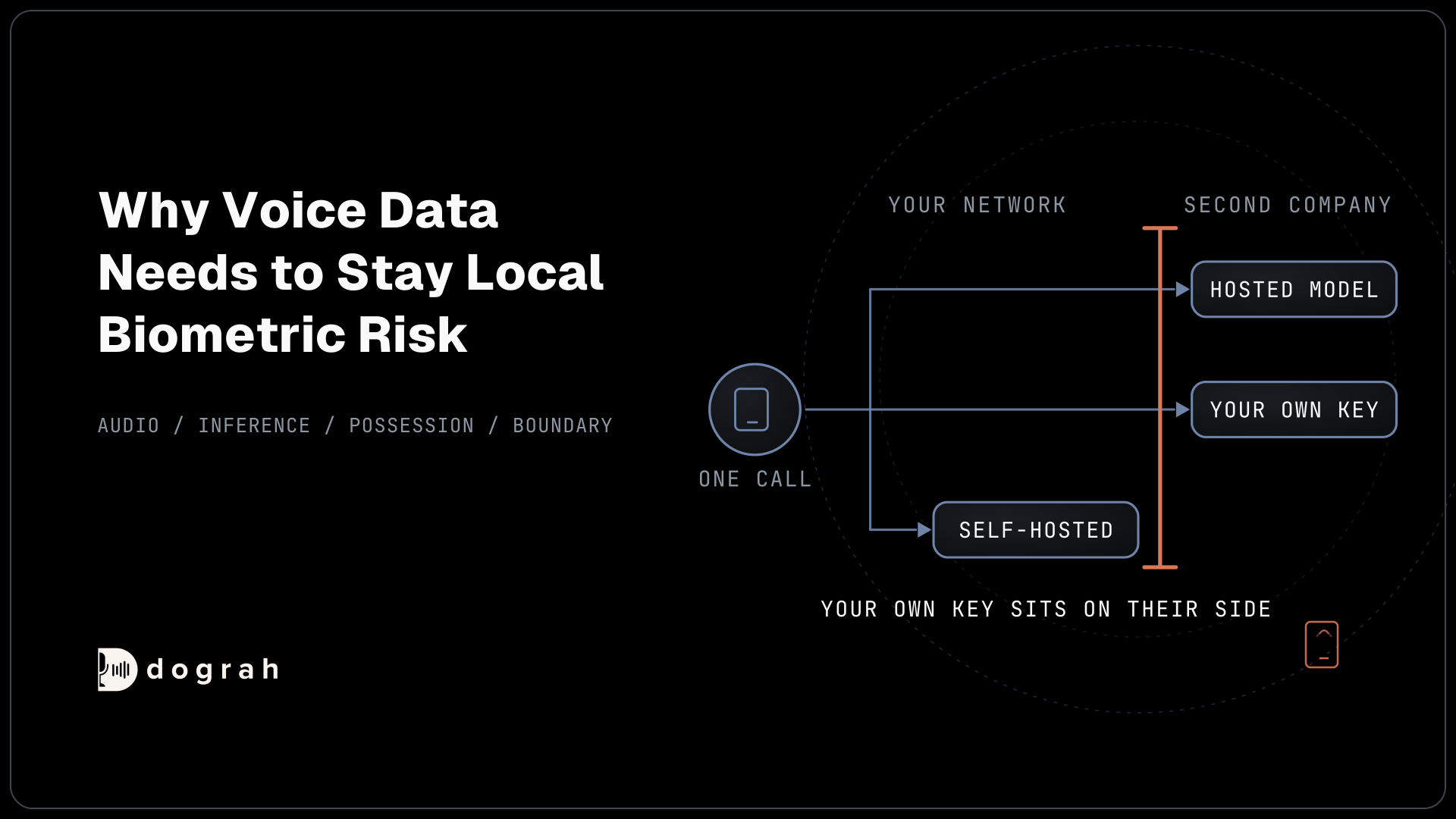
Why Voice Data Needs to Stay Local: Privacy, PII, and Biometric Risk
A phone call is ordinary personal data and a biometric identifier at the same time. What Illinois, the EDPB and the 2026 voiceprint filings mean for where your inference runs.

The First 15 Seconds Decide Everything in AI Outbound Calls
Prospects judge your AI voice in about 400ms and decide to stay in roughly 8 seconds. Here is how to win the first 15 seconds of an outbound call.

Automation vs Traditional Systems: The Real Cost Nobody Talks About
Traditional IVR loses 60-70% of callers. Voice AI fixes that but creates vendor lock-in. The real debate is ownership vs rental.