
AI voice agents for subscription renewal reminders call customers before an auto-renewal charges. After verifying the customer, they read the renewal date and price exactly as the billing system returns them. A plain notice is generally a service call; asking to renew or making an offer generally needs written consent. Cancellations are processed on the call, never stalled.
Key Takeaways
- A call that only states the date and price is generally informational.
- Asking to renew, or any offer, generally needs prior express written consent.
- When a customer says cancel, the agent processes it and makes no save offer.
This post is part of our guide to AI voice agents for SaaS and subscription businesses. The guide's section "Keeping them paying: failed payments and renewals" puts this call in one line: "The renewal reminder call is driven by a date." Here is that call in full, run in Dograh, an open-source, self-hostable voice agent platform.
Why call before a renewal charges
A renewal call earns its place before the charge, while the customer can still change or cancel without a refund request. Your billing system already sends the written renewal notice by email. The call is the second step, and it suits annual plans and larger accounts. For annual B2B plans, one workable schedule is a first call about 60 days before the date and a second about two weeks before, stopped as soon as the account renews or cancels.
In its March 2026 notice on subscription practices, the Federal Trade Commission (FTC) says complaints about negative option marketing, which includes auto-renewing plans, have "steadily risen from at least 33 per day in late 2020 to more than 90 per day in 2025." So the call makes the date, the price and the way to cancel plain before any charge.
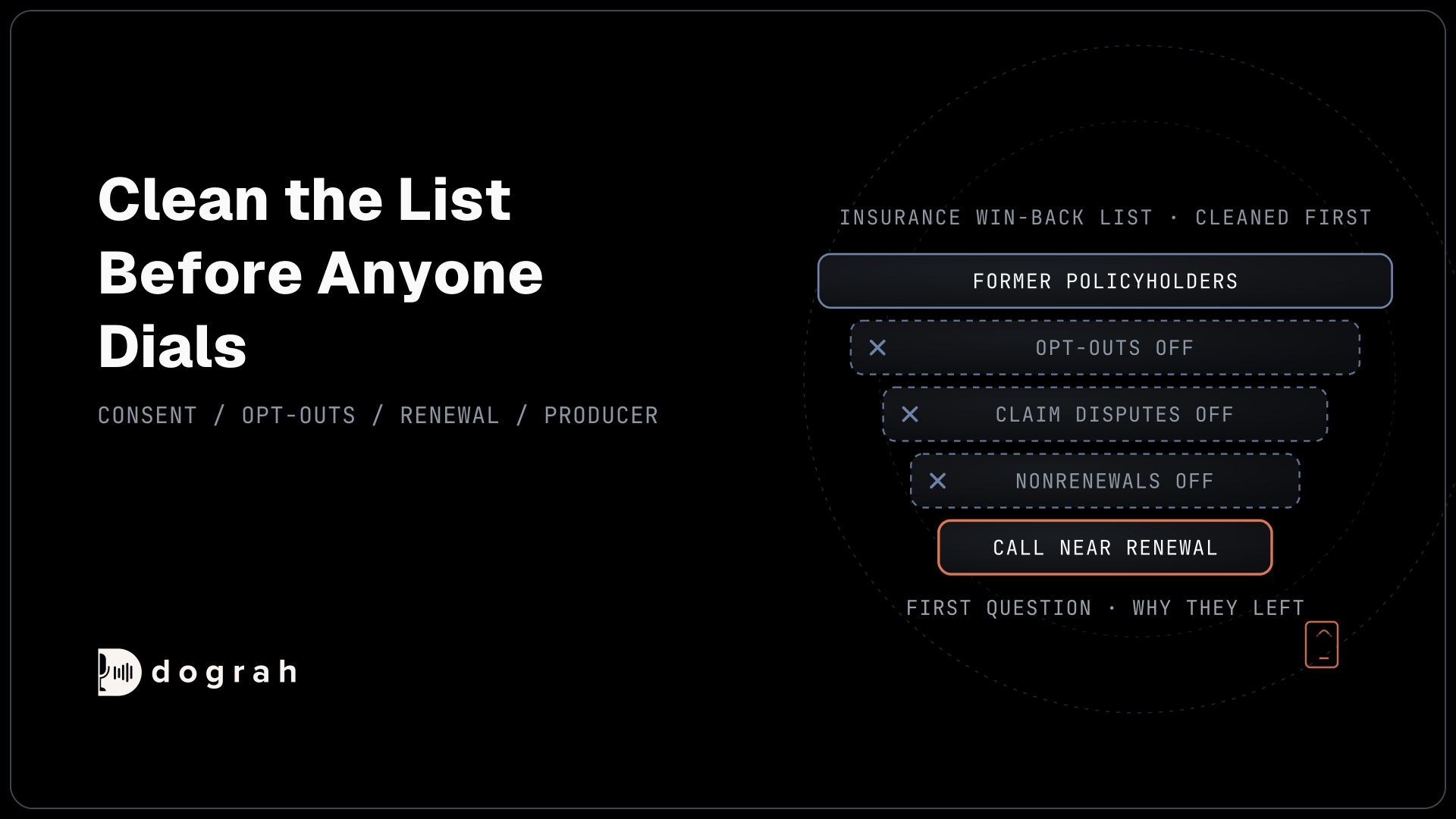
Your own system decides who gets called. It can start each call through the API Trigger when an account reaches its date, or upload a fresh list to a campaign each week. The same call in other industries is covered in AI voice agents for renewals and retention.
Notice or sales call: the consent line
Which consent a renewal call needs depends on whether it only informs or also asks. This section is general information, not legal advice.
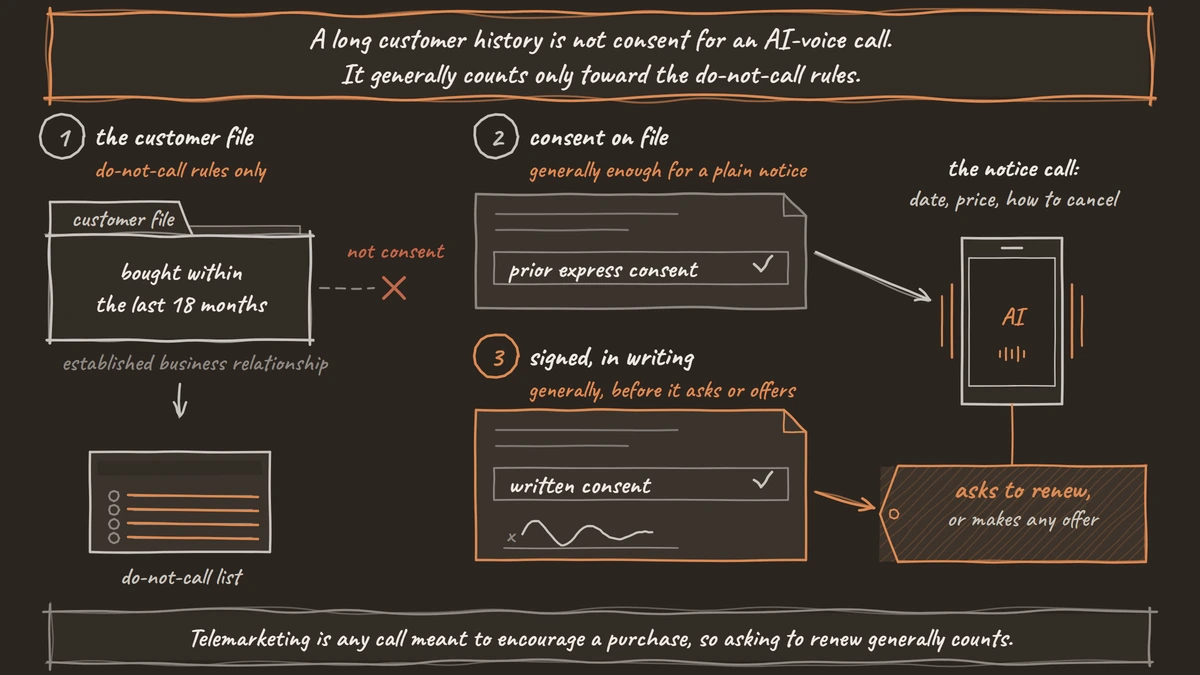
In its February 2024 declaratory ruling, the Federal Communications Commission (FCC) said calls using AI-generated voices "require the prior express consent of the called party to initiate such calls absent an emergency purpose or exemption." The rule at 47 CFR 64.1200 covers "any telephone call that includes or introduces an advertisement or constitutes telemarketing" and allows it with "the prior express written consent of the called party".
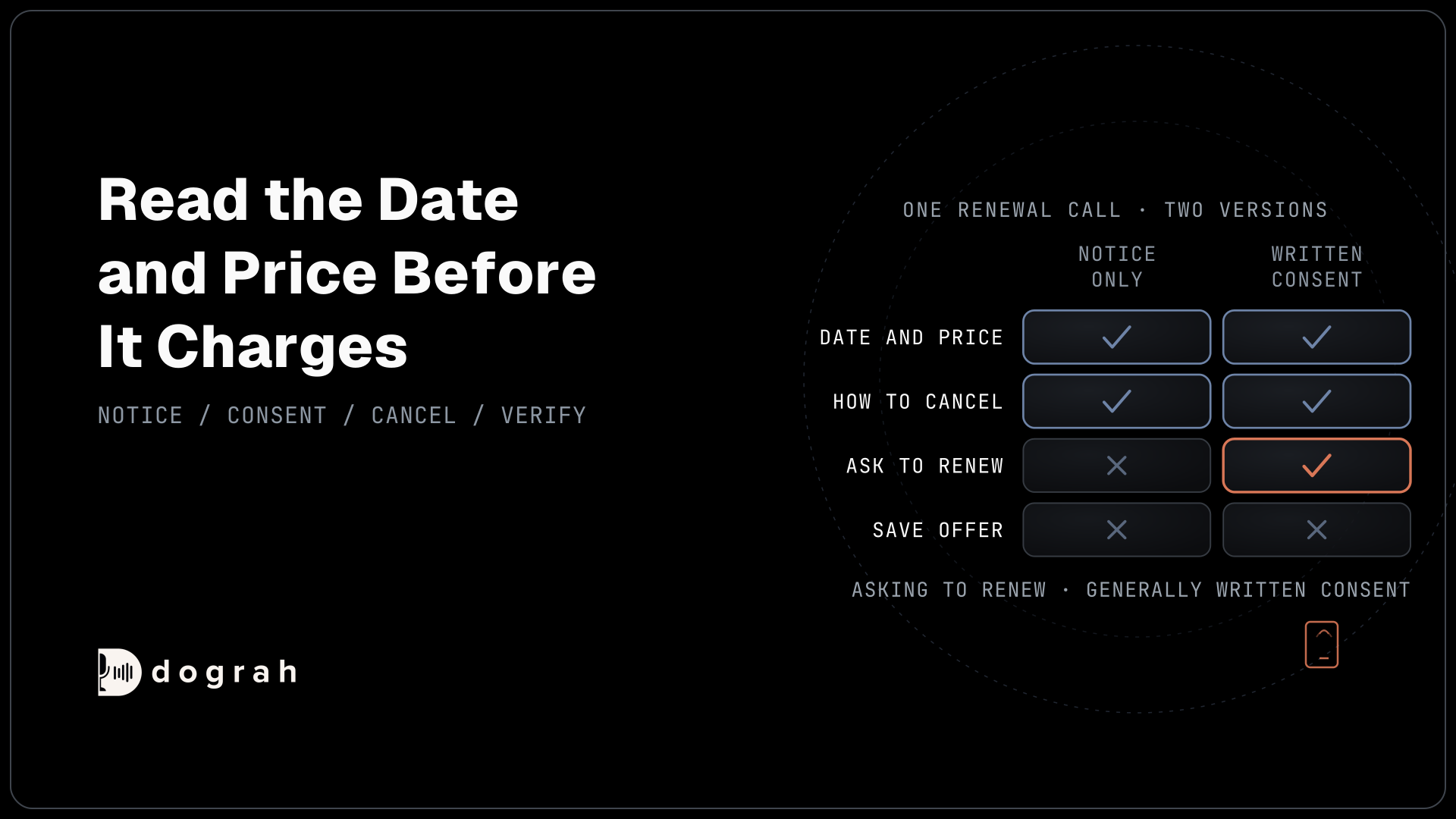
The same rule defines telemarketing as a call "for the purpose of encouraging the purchase or rental of, or investment in, property, goods, or services". Read together, a call that only states the renewal date, the price and how to change or cancel is generally informational and needs prior express consent. A call that asks the customer to renew, or makes any offer, such as a discount, a switch to annual billing or a bigger plan, generally needs prior express written consent.
A long customer history does not change this. The rule's 18-month established business relationship appears in the definition of "telephone solicitation", which "does not include a call or message ... To any person with whom the caller has an established business relationship". That definition drives the do-not-call rules; it is not consent for an AI-voice call. Confirm your position with counsel.

Open Source Alternative to Vapi / Retell
Self-hosted voice agent platform — no per-minute fees
dograh-hq/dograh
Star on GitHub
How the renewal call runs
The call follows greet, verify, then disclose, and every figure in it comes from your billing system.
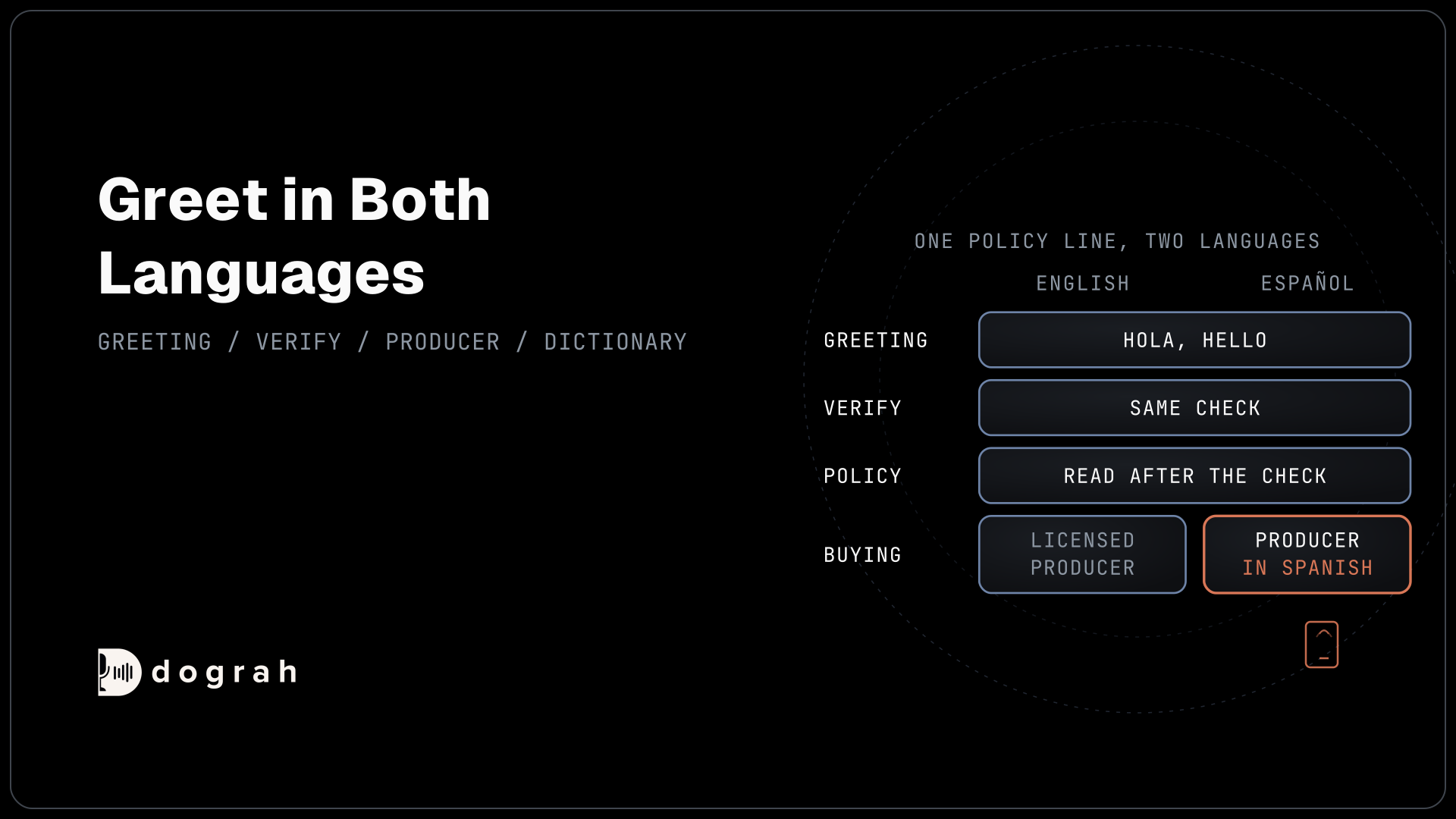
It opens with Greeting Text, the fixed line Dograh speaks word for word as the call connects, naming your company exactly. Recording starts as the call connects, so any recording notice goes first. A fixed greeting per contact, as text or a recorded clip, can come from the campaign file; contacts without one hear the agent's normal greeting. That greeting plays before anyone is verified, so it carries the company name and the contact's name only, never the plan or the price.
A phone number finds an account, but it does not prove who answered. Tell the agent in the prompt to ask for an approved check, such as the account email plus the number on the last invoice. On B2B accounts, tell it in the prompt that only a billing admin or the owner hears the price, and anyone else gets a callback request.
After the check, an HTTP API tool reads the plan, the renewal date and the price from your billing system, and the agent states only what comes back. If the price changes at renewal, it reads both the current and the new price as returned. Pre-Call Data Fetch can re-read the account's status when the call connects, so a customer who cancelled yesterday hears, once verified, that it is done. On outbound calls it runs after the person answers, and it never stops the call.
Build two versions of the agent. The notice version states the date and price, says how to change or cancel, and handles a change or a cancellation only if the customer asks for one. The second version is for contacts whose written consent is on record in your CRM: it may also ask whether they plan to renew and record the answer as stated. Voicemail handling is off by default; switch it on in the agent's Settings under Voicemail & Screening. "When voicemail is detected" then defaults to "Disconnect the call". If you choose "Leave a message", keep it to the company name and a callback number, never the price.
When the customer says cancel
A cancel request on a renewal call is processed on that call. This section is general information, not legal advice.
The Restore Online Shoppers' Confidence Act (ROSCA) requires a seller charging through a negative option online to provide "simple mechanisms for a consumer to stop recurring charges". There is no federal click-to-cancel rule in force. A federal appeals court vacated the FTC's 2024 amendments in 2025, and the FTC restored its older Negative Option Rule in February 2026. Many states also have automatic renewal laws with their own notice and cancellation rules.
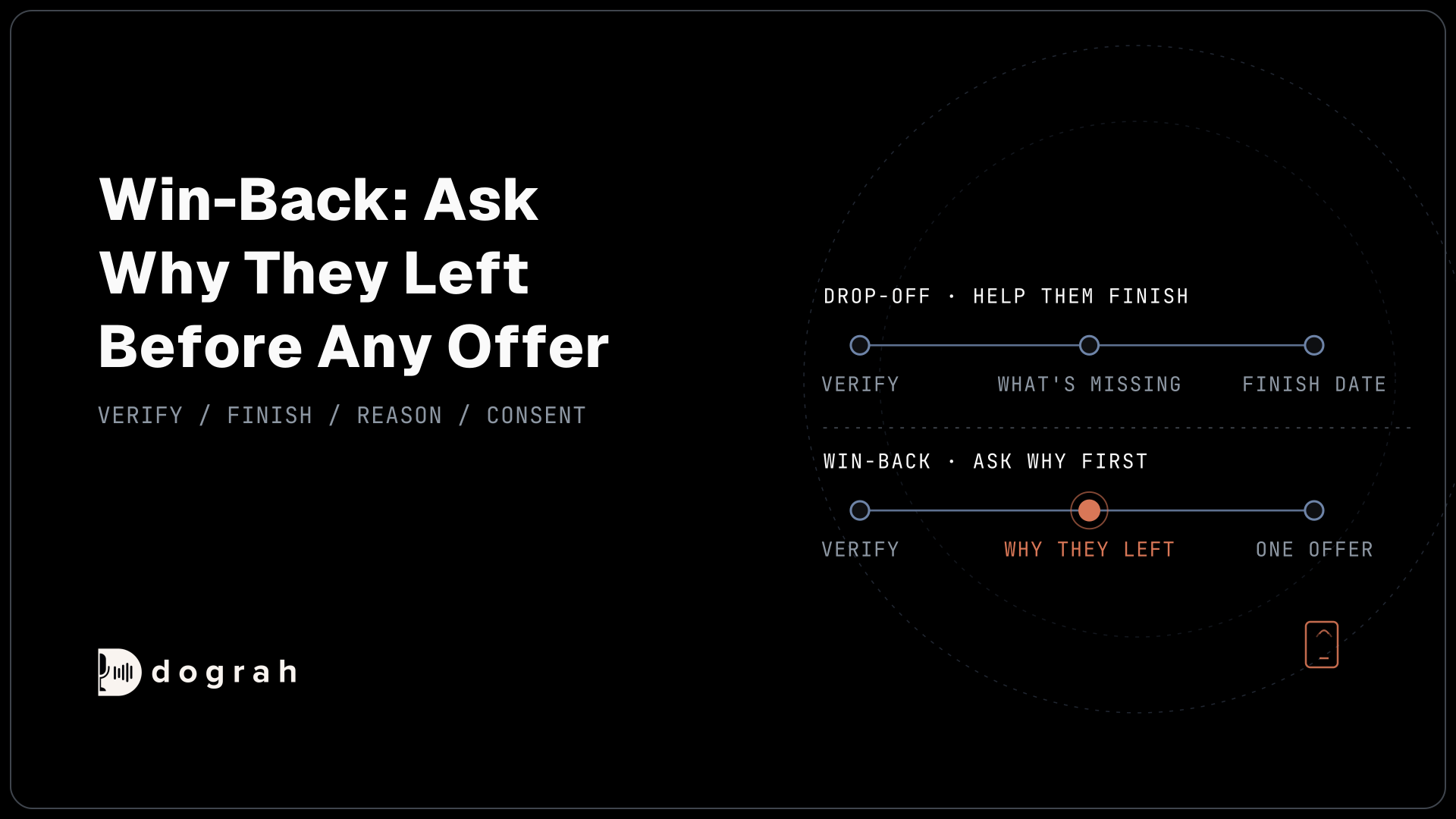
Tell the agent in the prompt what a cancel means: record it and process it through your billing system with an HTTP API tool, or hand it to a person who can, then read back the date the plan ends, as the billing system returns it. It never stalls the customer or makes a save offer. Once the cancellation is done, it may ask once why they left and record the answer as stated. The order matters, because a reason asked first can feel like a hurdle.
The account owner can follow up later, but a follow-up call that makes an offer is a sales call, with the written-consent rule above. Customers who call in to cancel are handled by AI voice agents for account and billing support in SaaS. Confirm your own position with counsel.
Price questions, opt-outs and the hand-off
Anything the agent cannot settle from the billing system goes to a person. Price questions, contract changes and multi-year terms go to the account owner. Transfer Call works on Twilio, Telnyx and Asterisk ARI. It passes no summary by default; on Twilio it can play a short spoken introduction to both people. Write the details to your system with an HTTP API tool before the transfer. If nobody answers, the caller stays with the agent; tell it in the prompt to offer a callback.
Dograh keeps no do-not-call list. When a caller opts out, an HTTP API tool writes it to your own list, and you remove those numbers before the next upload to Campaigns. The do_not_call call tag records the request but never blocks a later call. For lists that change daily, start calls with the API Trigger, so your system decides who is called.
The call never replaces a written renewal notice your contract or state law requires; your own system still sends that. Accounts that look quiet long before their date get a churn-risk check-in call instead. Property managers run the same notice-then-call order in lease renewal outreach.
Self-hosted Dograh has no per-minute platform fee (servers, model keys and phone minutes still cost); Dograh Cloud has a 1¢-a-minute platform fee.
Join the Dograh Community
Dograh is an OSS alternative to Vapi. Join our Slack community for queries, releases, best practices & community interactions.
Glossary
- Negative option
- A plan that keeps charging until the customer says stop, such as an auto-renewing subscription. ROSCA requires a simple way to stop the charges, so the agent processes every cancellation it hears.
- Prior express written consent
- Under the TCPA rules, a signed written agreement that lets a business make advertising or telemarketing calls with an artificial voice to a given number. A renewal call that asks the customer to renew, or makes any offer, generally needs it.
- Established business relationship
- In 47 CFR 64.1200, a purchase within the past 18 months or an inquiry within the past three months. It only narrows the do-not-call definition of telephone solicitation; it is not consent for an AI-voice call.
- ROSCA
- The Restore Online Shoppers' Confidence Act (15 U.S.C. 8403). A seller charging through an online negative option must disclose the terms, get the customer's express consent before charging and give a simple way to stop recurring charges.