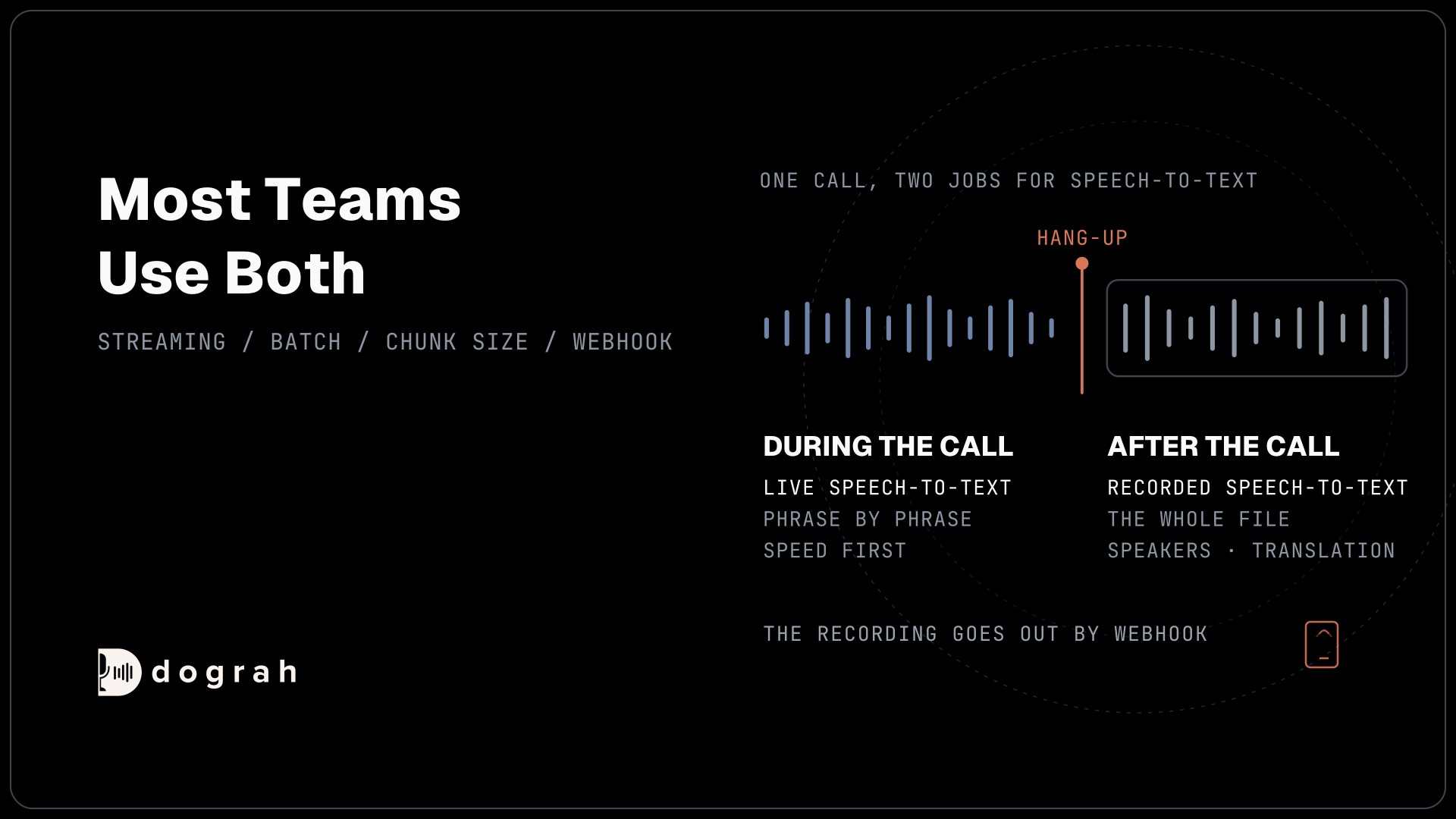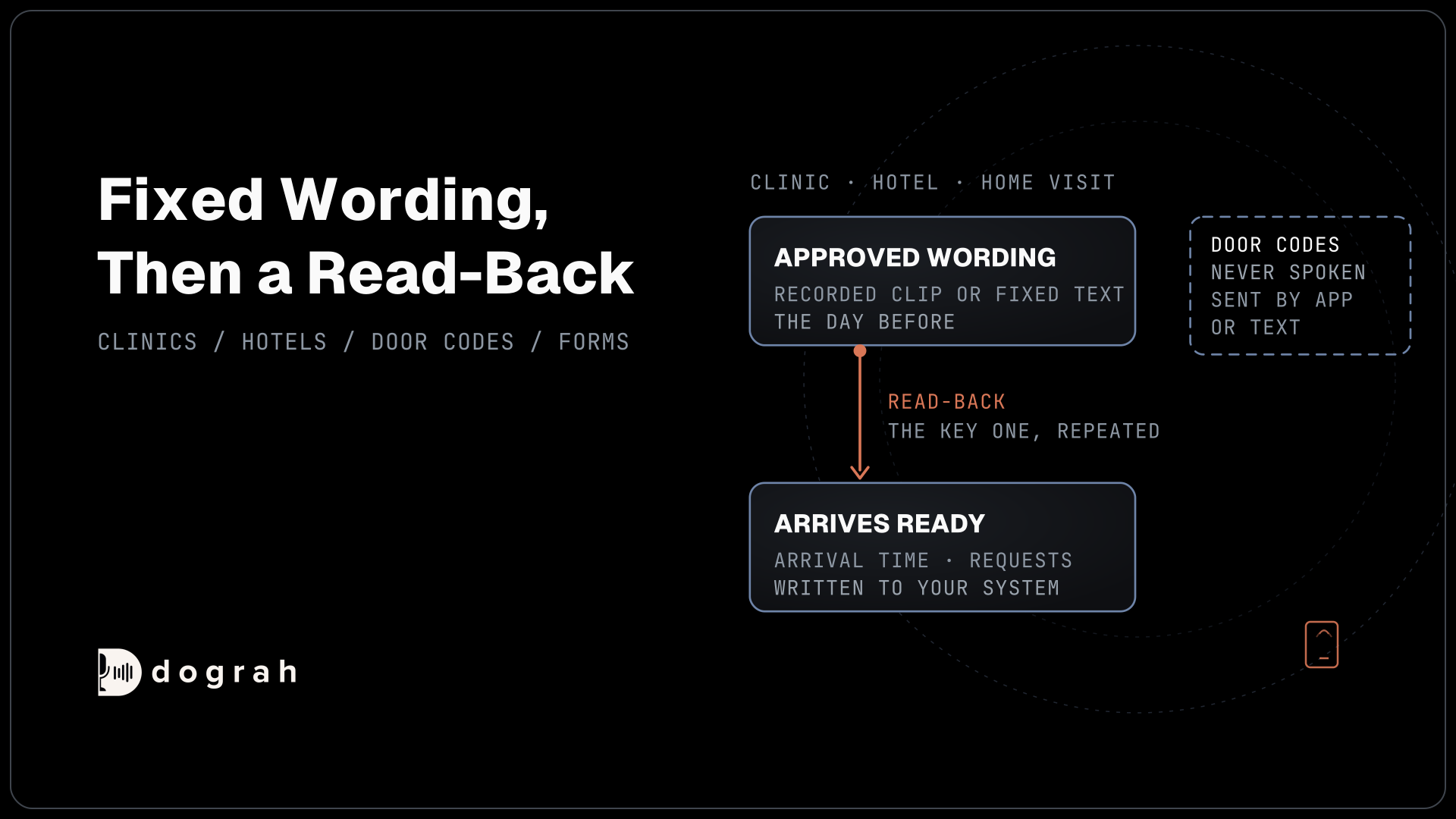

AI voice agents for pre-arrival and pre-visit prep call people a day or two before a stay or a visit. They give the instructions in approved wording, ask the person to repeat the key one back, and collect what the visit needs, such as arrival time and special requests. Door codes and forms never go over the call.
Key Takeaways
- A prep call settles what would stop the visit, which one more reminder can't.
- Instructions play as fixed words, and the person repeats the key one back.
- Door codes, Wi-Fi passwords and forms go by the business's own system.
A reminder tells someone when to show up, but it can't make sure they arrive ready. This guide covers fixed wording for key instructions, verifying people first, prep before clinic visits, hotel stays and home visits, secure links for forms and where call data stays in Dograh.
What a prep call does that a reminder doesn't
A reminder tells someone when the visit is. A prep call makes sure they can arrive ready, with the right things done and the right things in hand. The difference matters because reminders alone are not closing the gap. In an MGMA Stat poll with 190 responses from medical groups, 32% reported higher no-show rates than the year before. Those groups already send texts, make confirmation calls, charge no-show fees and run pre-check-in outreach. MGMA's own reading is that adding another reminder may not solve the problem when cost, transport, work or long booking lead times keep patients away.
So a prep call earns its place when it deals with what would stop the visit. A patient who doesn't know to stop eating at midnight gets cancelled on the day. A technician reaches a locked gate with nobody home. Both are fixed by a two-minute call the day before.
In our view, a good prep call gives the instructions in approved wording and asks the person to repeat the key one back. It also collects what the visit needs, such as an arrival time or a special request, and it never carries an offer. If you only need to confirm the time, a reminder call is enough, and AI voice agents for appointment reminders and confirmations covers that call.
Fixed wording for instructions that matter
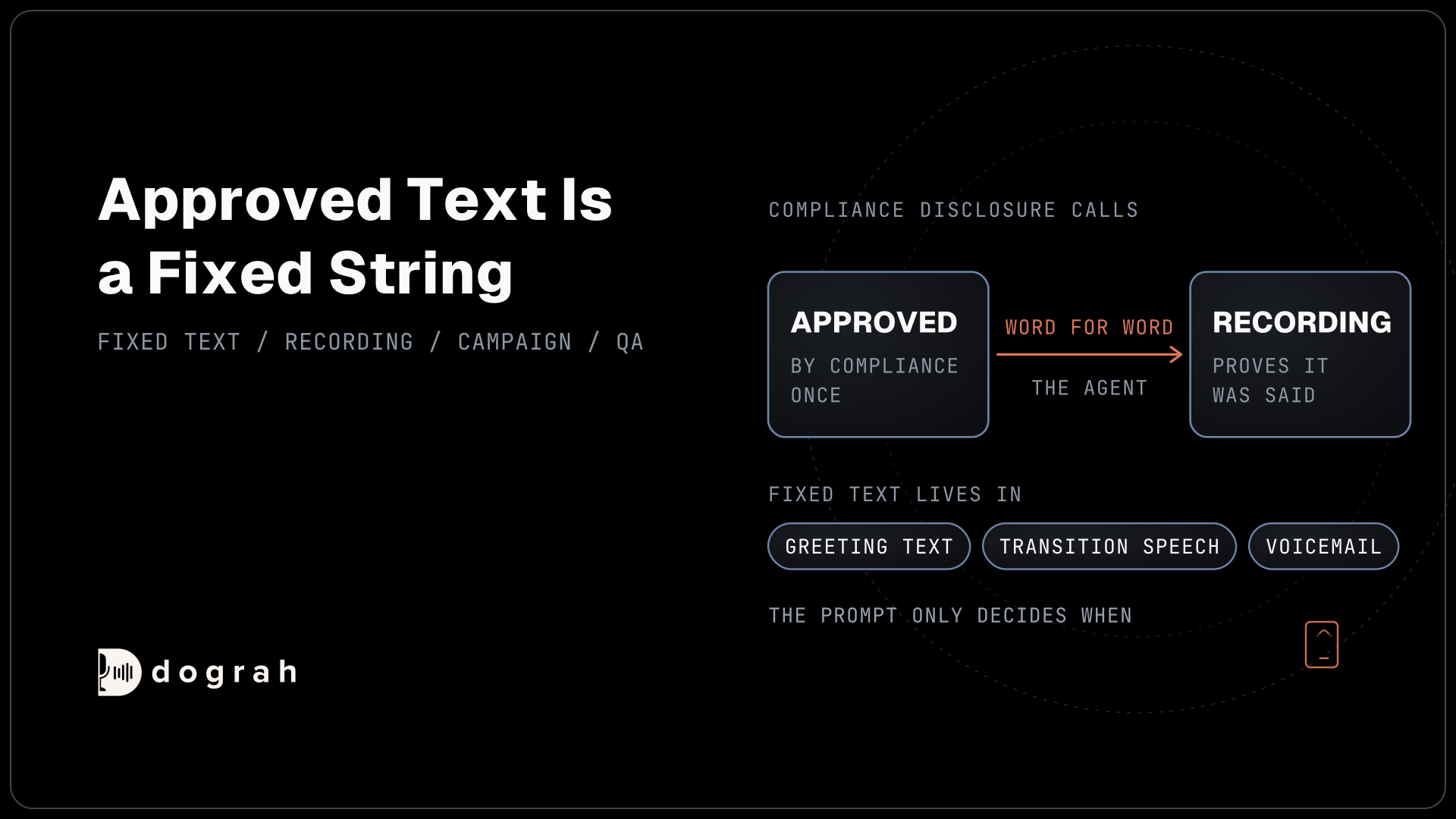
Instructions are only safe when the words are the ones your team approved. Inside a conversation step, the language model writes its own sentences, so a prompt cannot guarantee wording. Exact words hold only where Dograh plays fixed text or a recording: the Greeting Text, a pathway's Transition Speech, or a recorded clip.
That shapes how you build the call. Standing instructions, the ones every patient for a procedure hears, work best as a clip your staff record once, such as "Bring photo ID and your insurance card, and leave jewellery at home." Pre-recorded audio plays the clip itself, so nothing is paraphrased. Transition Speech plays with the caller muted, so it runs in full, but it cannot hold per-person values.
Personal values are different. The arrival time and the fasting cutoff change for each person, so they come from your system with the call, and the model speaks them. That is exactly why the call needs a read-back. The agent asks the patient to say the arrival time and the key instruction back, and records the answer as the patient stated it. The transcript and recording stay the exact record.
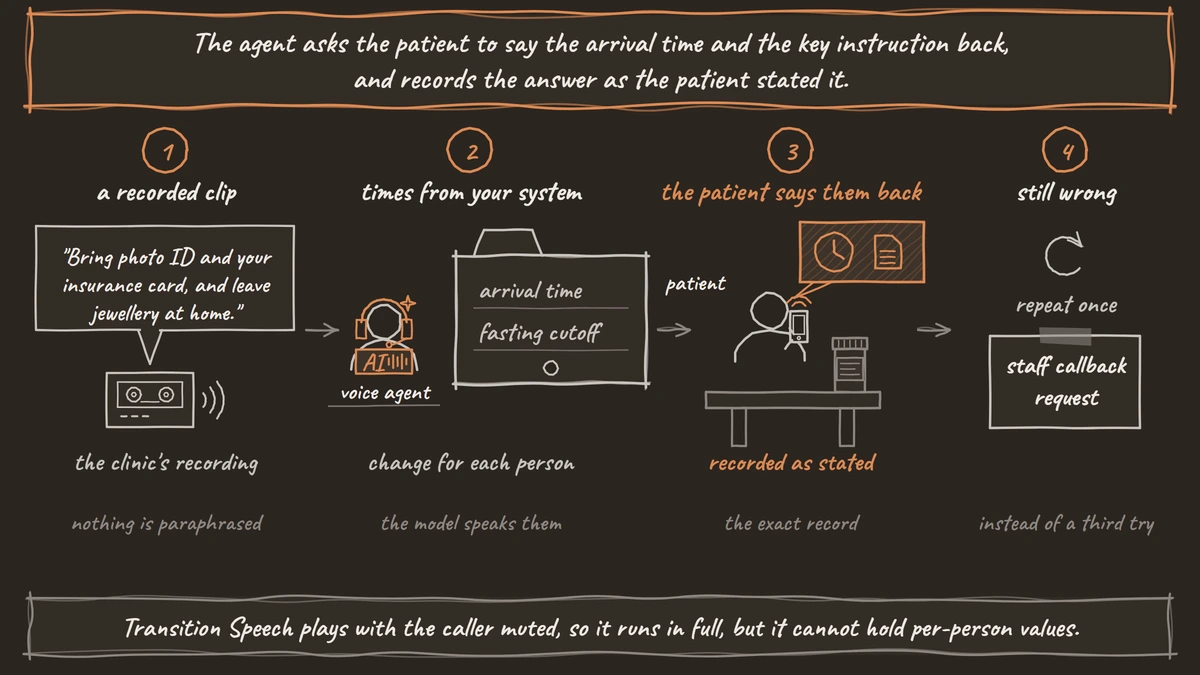
If the read-back is wrong, the prompt tells the agent to repeat the instruction once. If it is still wrong, the agent writes a staff callback request instead of a third try. AI voice agents for pre-op instructions walks through that call for surgery. On a speech-to-speech model, text transition lines don't play, so record any fixed line as a clip.
Verify first, and never read out an access code
Every prep call runs greet, verify, disclose, in that order. A phone number finds the record, but it does not prove who answered, and asking for someone by name only finds the right person.
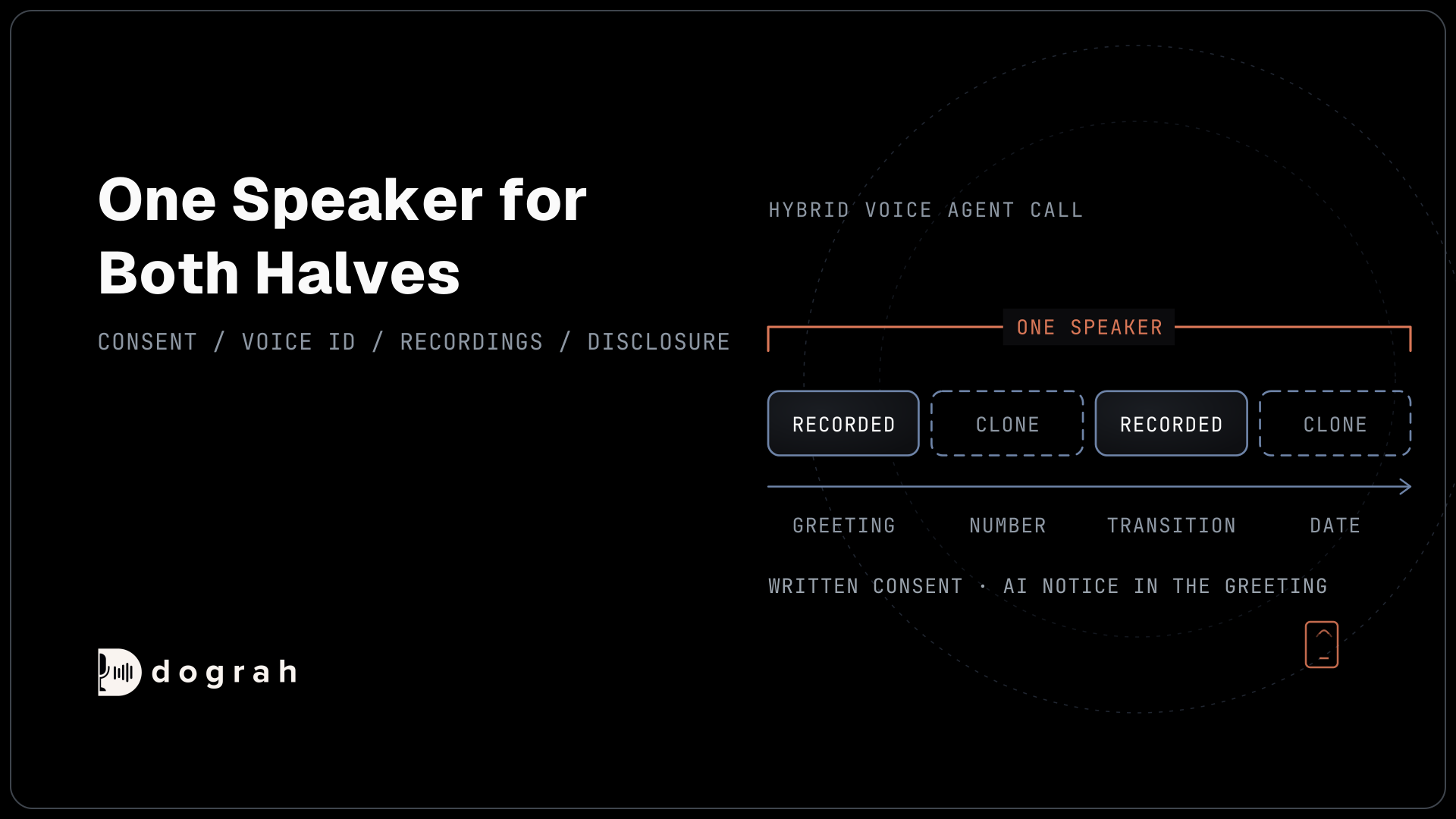
The Greeting Text names the business and asks for the person, with a fallback such as {{first_name | there}}. It plays before verification, so it names no appointment, procedure or booking. Some clinics and hotels want people told that an automated assistant is on the line, and some places require it by law, so add that sentence to the Greeting Text. Then turn off Allow Greeting Interruption on the Start Call node, which is on by default, so the full notice plays even if the person starts talking.
The check itself depends on the industry. A clinic asks for date of birth with a second item from the record. A hotel asks for the confirmation number and the surname on the booking. For patients, the Health Insurance Portability and Accountability Act (HIPAA) Privacy Rule expects a provider to verify the identity of anyone it doesn't know before sharing health information. A caller who fails the check hears nothing about the visit, and the agent logs a callback request instead.
Some outbound tools read a door code and the Wi-Fi password to whoever picks up. Our rule is stricter: access codes are never spoken on the call, even after verification. A speakerphone in a car carries the code to everyone in it, and the recording and transcript store every word. Instead, an HTTP API tool asks the property's own system to send the code through its app or by text to the number on the booking, on the schedule the property already uses.

Open Source Alternative to Vapi / Retell
Self-hosted voice agent platform — no per-minute fees
dograh-hq/dograh
Star on GitHub
Before a clinic visit or surgery
Clinic prep calls carry the highest stakes, because a missed instruction can cancel a procedure on the day. The common jobs are pre-operative instructions, pre-registration, what to bring, a ride home after sedation and, for video visits, a quick check that the link and device work. Our post on telehealth reminders and confirmations covers that tech check.
The instructions come from your scheduling or perioperative system for that patient, never from the model's idea of standard rules. The standing parts play as the clinic's recording, and the patient's own times are read back, as described above.
The agent never answers a clinical question. "Should I still take my blood pressure tablet that morning?" is a clinical decision, so the agent writes the question to your system and hands the call to the nurse line with Transfer Call. Transfers run on Twilio, Telnyx, Plivo, Cloudonix and Asterisk ARI. The nurse line rings first, and the patient joins only after a nurse answers. With Twilio, a short spoken introduction can play to both of them before they are connected.
No summary travels with the transfer by default, which is why the question goes into the record first. If nobody answers within the 30-second default, the patient stays with the agent, which offers a nurse callback and writes that request to your system.
If a patient describes something urgent, such as chest pain or trouble breathing, an emergency pathway plays one fixed line as Transition Speech or a recorded clip: "If this is a medical emergency, please call 911 now." In the UK the line names 999, and in Australia 000. Choosing that pathway is the model reading the condition you wrote, so test it with many phrasings and check in the transcripts that the line played.
Before a hotel or short-stay arrival
A pre-arrival call to a hotel guest collects what the desk needs before the guest walks in. The agent verifies the guest, confirms the dates and asks for an arrival time. It also asks about requests such as a cot, an accessible room, an early check-in or parking for a large vehicle.
The agent records each request as the guest stated it and never promises it, because only the hotel knows whether the room will be ready. An HTTP API tool writes the arrival time and requests to the property management system (PMS) before the call ends, so the night manager sees the 1 a.m. arrival in the system, not in a call note.
Guests still want people at the desk. In a Mews survey of 3,250 travellers, 58% preferred a human for check-in and the key. The prep call lets the desk spend check-in on the guest, not on questions that could have been answered the day before.
The call carries no offer, not even an upgrade. An offer turns a service call into a marketing call with stricter consent rules, so upgrades get their own call. For short-stay rentals, the door code rule above applies in full. If the booking itself still needs a decision, such as a missing guarantee or no reply to the confirmation message, AI voice agents for booking confirmations in hotels covers that call.
Before a home-service or field visit
A home-visit prep call makes sure the technician can get in and do the job. The agent confirms the arrival window from your field-service system, then asks who will be home, whether there are pets, where to park and how to reach the door.
Gate and lockbox codes follow the same rule as door codes, in reverse. The agent never asks for them on the call, because the recording would keep them. It tells the customer to add access notes through your booking link, which an HTTP API tool asks your system to send. Answers about pets, parking and the person at home go straight onto the job record, so the technician reads them before driving out.
If the window no longer works, the agent offers the open windows your system returns, or records a callback request when none fit. Home health visits follow the same pattern with clinical rules on top, and AI voice agents for home health visit coordination covers confirming that window.
Forms and documents go by secure link
Forms, insurance cards and ID documents never go over a prep call. Reading a medical history or a member ID aloud puts it in the recording, and a caller on a busy street will get half of it wrong anyway.
Instead, an HTTP API tool asks your own system to send a secure link by text or email while the person is still on the line. The text goes out through your own messaging provider. The agent says the link is on its way and what it's for, such as "a short form about your medicines, so the nurse can check it before you arrive."
The tool can play a short line when it starts, such as "One moment while I send that." If the person says the link never arrived, the agent writes a staff follow-up rather than reading the form out. The same rule covers card details for a deposit: your system sends its own payment link, and no card number is taken on the call.
Join the Dograh Community
Dograh is an OSS alternative to Vapi. Join our Slack community for queries, releases, best practices & community interactions.
Calling windows, time zones and consent
Prep calls run as a list from your system each day, so you set timing and consent up once. Campaigns take a CSV of tomorrow's visits, and extra columns, such as arrival_time or procedure_name, become variables the agent can use. To change the opening for one contact, add the greeting_override_type and greeting_override_text columns. Each campaign calls within one time zone's hours, so a group with sites in several zones splits tomorrow's visits by zone. Retries go from 0 to 10, with 2 by default, and there is no per-person call cap, so your own list enforces how often each person is called.
Voicemail handling is off by default. Once turned on, the agent either disconnects or leaves one message. That message names the business and a callback number and nothing about the visit.
In the US, the Telephone Consumer Protection Act (TCPA) covers calls made with an artificial voice, and the FCC's ruling FCC 24-17 confirmed that AI-generated voices count. The FCC's calling rules include a healthcare exemption for calls to a patient's mobile. It names hospital pre-registration instructions, pre-operative instructions and home healthcare instructions among its purposes. The call must state the provider's name and contact details at the start, should generally run a minute or less, is limited to one a day and three a week, carries no selling or billing, and must offer an easy opt-out.
A prep call that reads back several instructions often runs past a minute, so it generally rests on the consent the patient gave when sharing their number. Hotel and home-service prep calls are service calls, which need the person's prior express consent to call a mobile. Add any offer and the call becomes telemarketing, which needs prior express written consent. A person who asks to stop says so by voice, the agent writes it to your system, and your system removes the number from the next list. Confirm your own setup with counsel before the first campaign.
Where the call data stays
Prep calls carry health details, home addresses and travel plans, so decide where the audio and transcripts live before the first call. Dograh is self-hostable. Run it on your own servers and the call data never reaches us, so you need no business associate agreement (BAA) with Dograh.
The speech and language models sit in their own layer, chosen by you, while Dograh runs the call flow, the tools and the telephony. With your own keys (BYOK), patient audio still reaches those model providers, and they may need their own BAA. The audio stays in-house only with open-weight models on your own servers. The phone carrier may need a BAA too, depending on what it stores.
A self-hosted install sends anonymous usage telemetry by default. For patient calls, switch it off: set ENABLE_TELEMETRY=false and remove POSTHOG_API_KEY. A self-hosted team pays no per-minute platform fee, though servers, model keys and phone minutes still cost money, and Dograh Cloud adds a 1¢-a-minute platform fee.
What to measure, and where to start
Measure the prep call by whether people arrived ready, not by how many calls finished. Record the read-back result as a variable on every call, and track what share matched. Count arrival times and requests written to your system, transfers to the nurse line, and day-of cancellations and late arrivals against the months before.
Use the QA node to review calls step by step, with a prompt that flags any call where a clinical question got an answer or the read-back was skipped. Test on a real phone number before launch. Most phone calls reach the agent as 8 kHz audio, while a browser test runs at 16 kHz, so times and medicine names can sound different to the speech model.
Start where no clinical wording is at stake: hotel arrival calls or home-visit windows. Add clinic prep once your clinicians have approved the recorded instructions and the read-back questions.
Glossary
- Read-back
- The point in a prep call where the agent asks the person to repeat the key instruction or the arrival time. The answer is recorded as stated, so staff can see who understood and who needs a callback.
- Transition Speech
- Fixed text or a recorded clip that plays word for word when the call moves along a pathway, with the caller muted. It suits standing instructions and safety lines, but cannot hold per-person values.
- Healthcare exemption
- The part of the FCC's calling rules that allows certain healthcare calls to a patient's mobile, such as pre-operative instructions, within limits on length, frequency and content.
- Greet, verify, disclose
- The order every prep call follows: name the business, confirm who answered with an approved check, and only then share any detail about the visit.