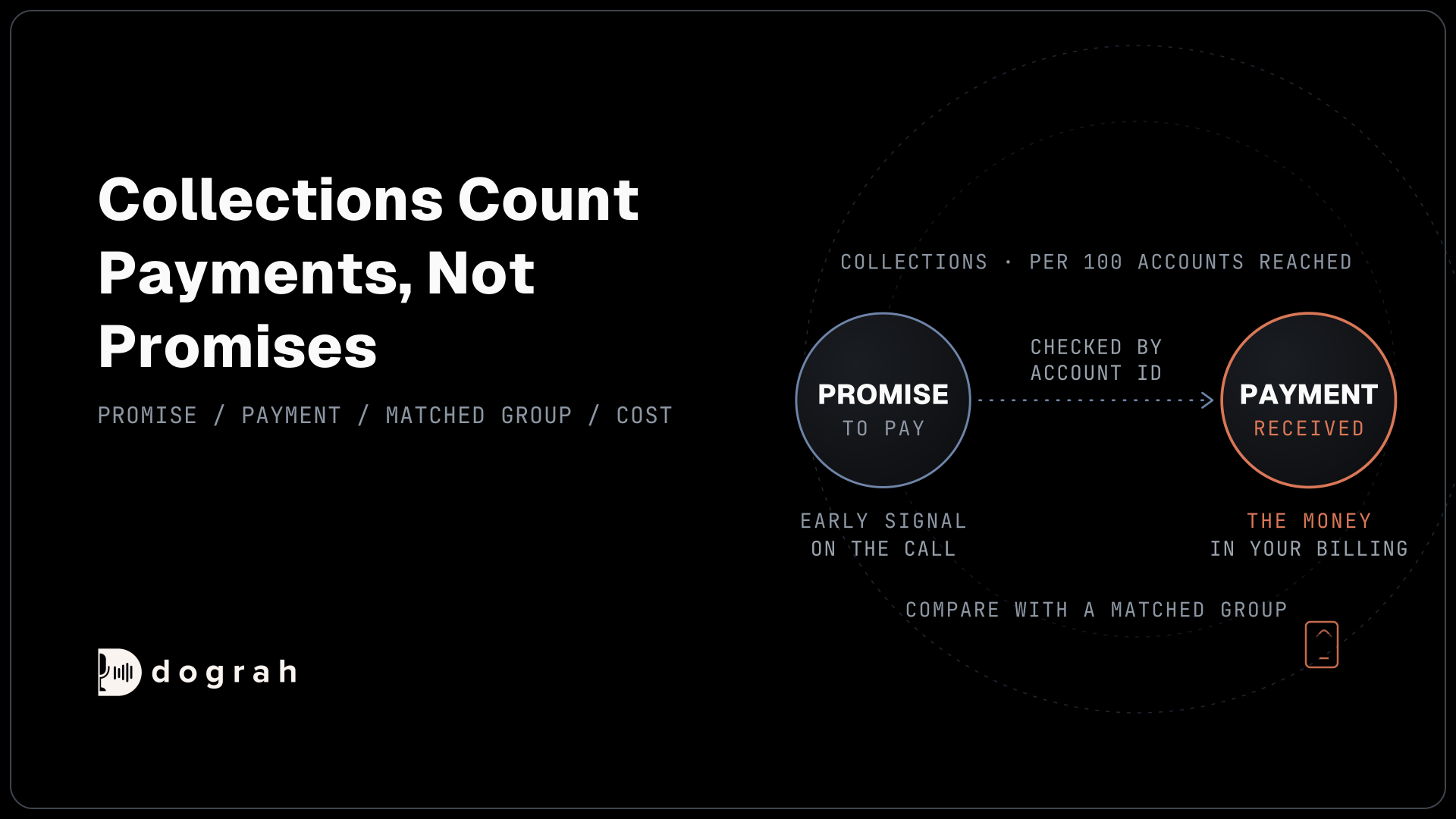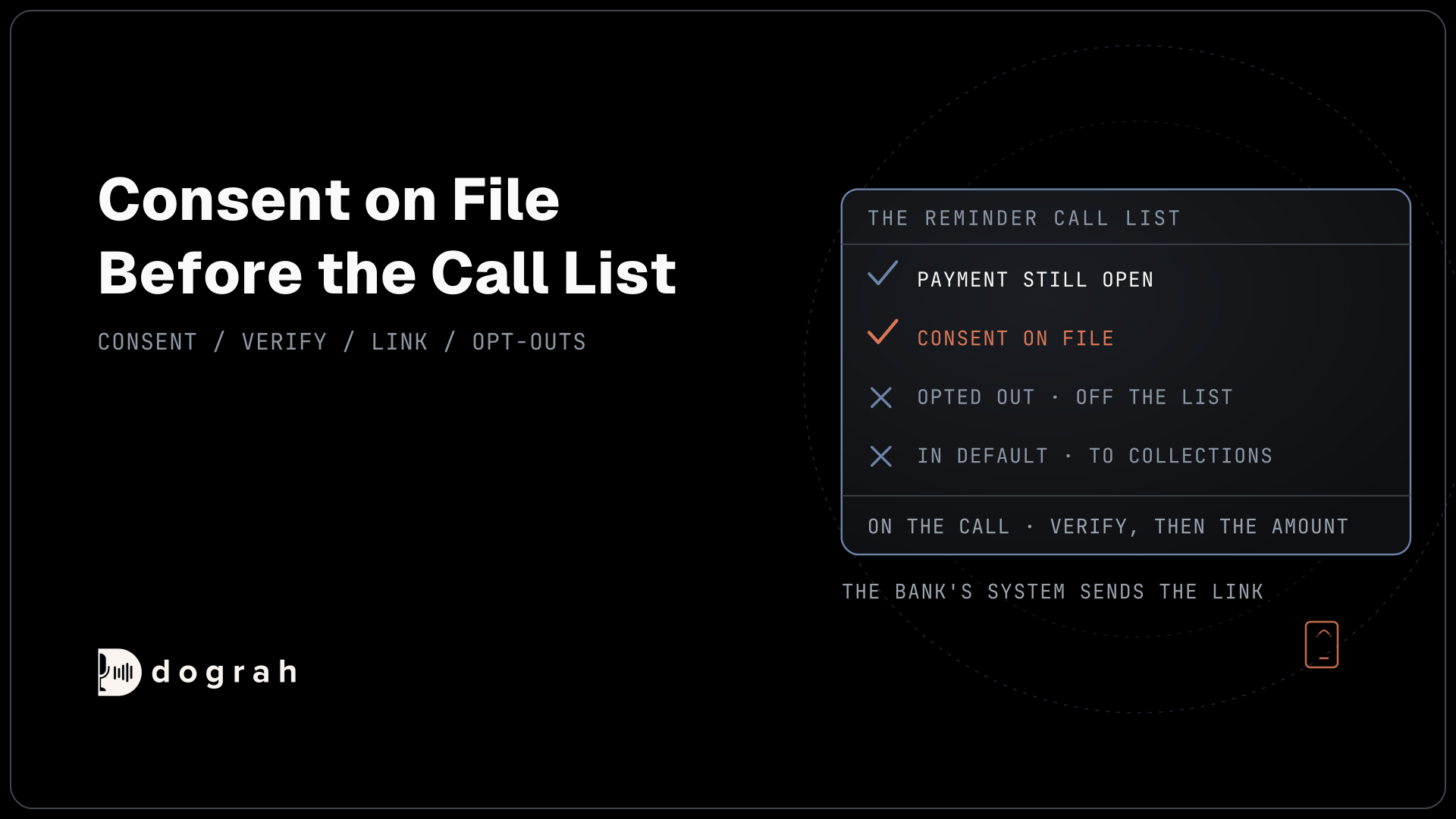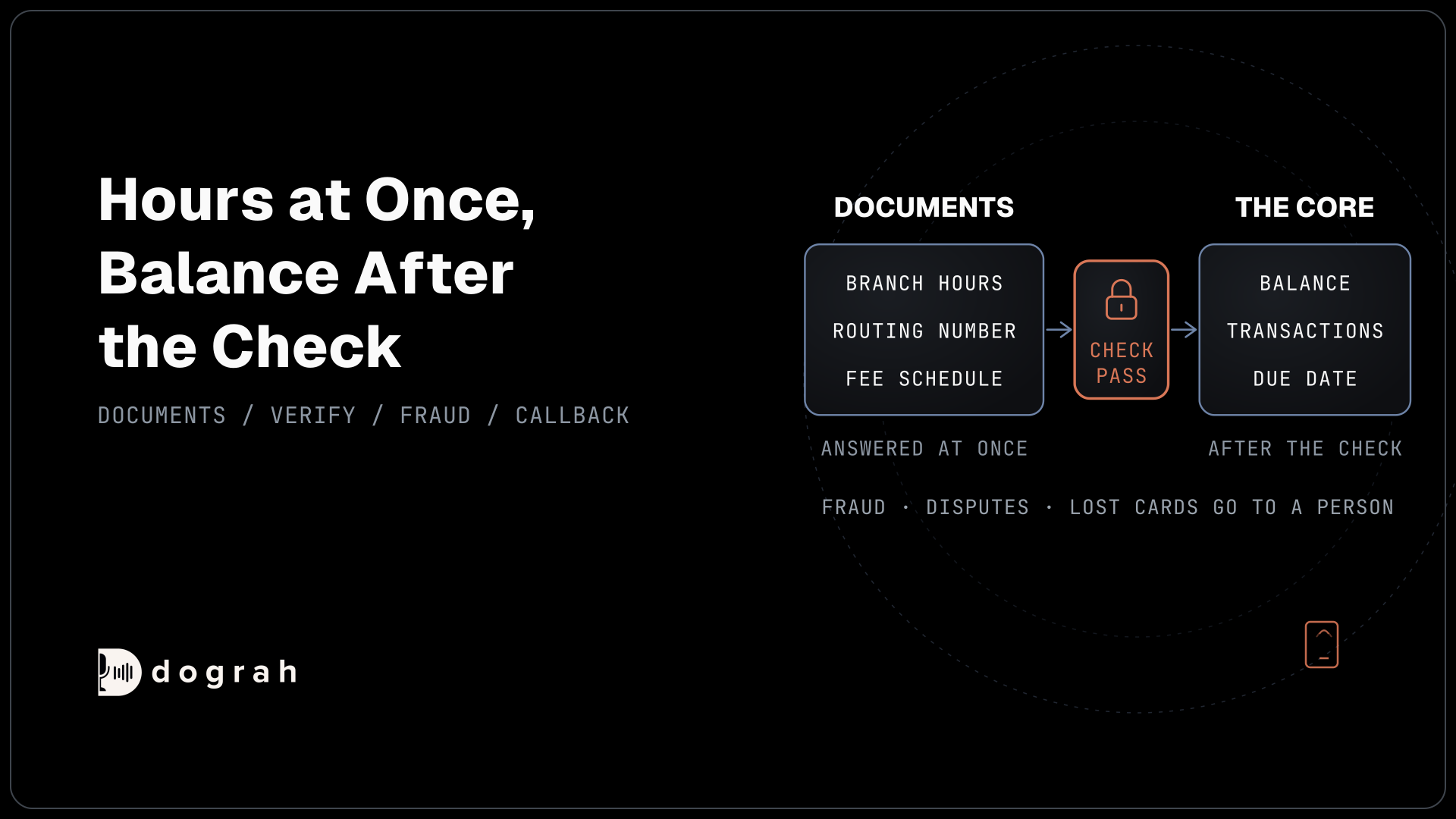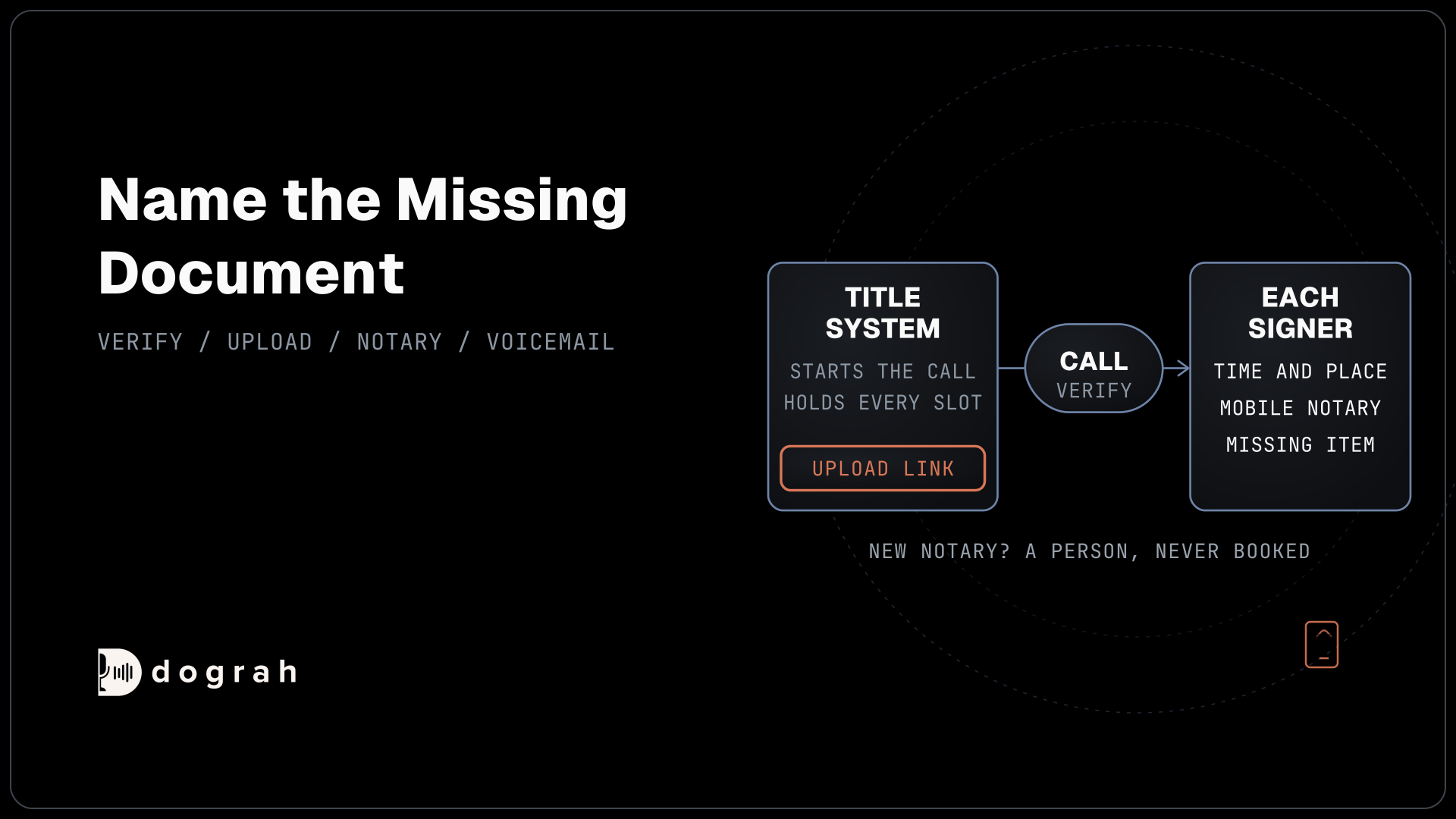

AI voice agents for closing coordination calls ring every party on the file before closing. After an approved check, the agent confirms the signers and when and where they sign, and names anything to bring or still missing. It books reschedules only from open slots. Requests to change the notary or sign by mail go to the escrow officer.
Key Takeaways
- The title office's system starts each call and holds every open slot.
- Name the missing document, and your own system sends the secure upload link.
- A seller asking for a different notary goes to a person, never booked.
This post is part of our guide to AI Voice Agents for Title & Escrow. Below, we cover who gets called, the call itself, missing items and reschedules. Then we set each one up in Dograh, the open-source AI voice agent platform we build.
Who the title office calls before closing
Coordination calls go to every party on the file, and your title production system decides who gets called and when. The buyer and seller hear about their own signing, and their agents and the lender's closer get status and changes. A mobile notary may get a call to confirm the appointment.
Many of these updates can go by text or email from your own system, and Dograh sends no texts itself. A call earns its place when the other person has to answer back, for example when the date or place changed, or a signer or document is still missing a few days out.
Start a call from your system the moment something changes. When a closing date is set or moves, your system calls the API Trigger with the party's number and file details, and the call starts at once.
For a daily round of calls, export the files closing in the next few days and upload them to Campaigns as a CSV. Each extra column, such as the signing time, becomes a variable the agent can use.
A campaign's calling hours run in one time zone, so split the list by time zone and run one campaign per zone. Retries run from 0 to 10, 2 by default. Campaigns have no per-person call cap, so your list decides how often anyone is called. A daily round of calls adds up in minutes. Self-hosted Dograh has no per-minute platform fee, though servers, model keys and phone minutes still cost money, and Dograh Cloud has a 1¢-a-minute platform fee.
How the call runs: verify, then the details
The call confirms who it is talking to before it says anything about the closing. It opens with Greeting Text naming the office, with a fallback for any variable, such as {{buyer_name | there}}, so a missing name is never spoken as a blank. If you want to tell callers they're speaking with an automated assistant, or your location requires it by law, say that there too.
Pre-Call Data Fetch can load the current file once the call connects, so a change made that morning is already there. The prompt keeps all of it unspoken until the check passes. The agent asks for an approved check your office sets, such as date of birth or a passcode from the opening documents. If it fails, or someone else picked up, the agent gives only the office's name and a callback request.
Only after the check does the agent read the signing time and place from your system, or the mobile notary's name and arrival window. It confirms each signer the file lists and asks whether all of them can attend. It then says what to bring, such as a government-issued photo ID plus anything your closing checklist names. Tell it in the prompt never to explain figures or state an amount to bring. The closer does that.
The office's wire line plays on every coordination call, as fixed words, exactly as the guide sets out. The lender's own reminder to the borrower is covered in AI voice agents for mortgage closing scheduling and reminders.

Open Source Alternative to Vapi / Retell
Self-hosted voice agent platform — no per-minute fees
dograh-hq/dograh
Star on GitHub
Missing items and the upload link
When a document is missing, the agent names it and says why the closing needs it, for example a trust certificate or a power of attorney. The agent never collects the document on the call.
During the call, an HTTP API tool asks your system to send its secure upload link by text or email. A second tool records what the caller said, such as the day they expect to upload it. The tool passes your system's whole response to the agent, so the endpoint it calls returns the open items and nothing about wiring or accounts.
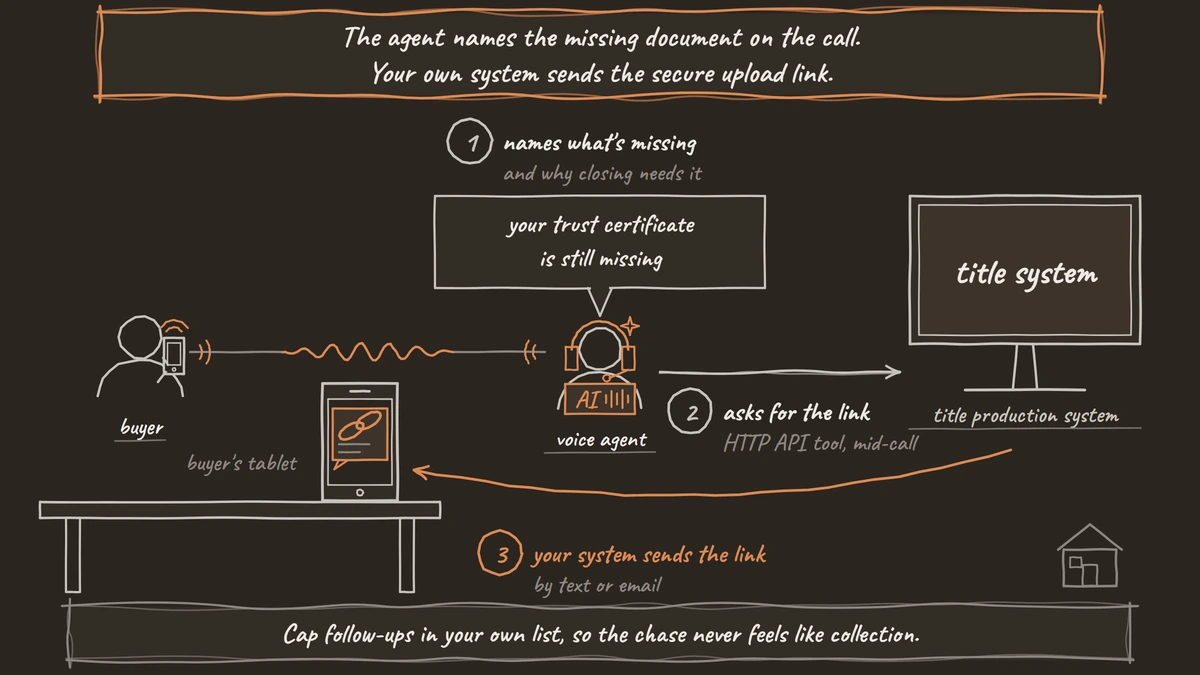
Cap follow-ups in your own list, so the chase never starts to feel like collection. Our post on loan document collection uses the same name-it, link-it pattern on the lender's side.
Reschedules and notary changes
The agent moves a signing only to a slot your system returns, and any change to how or where a seller signs goes to a person. For a reschedule, the HTTP API tool reads open slots, the agent offers two and reads the chosen one back, and a second tool writes it.
A booking can be sent twice, for example after a slow reply. Add a Preset Parameter named workflow_run_id with the value {{initial_context.workflow_run_id}} to the booking tool, and your system uses that ID, with the slot, to keep one booking.
The agent never picks a date on its own. On the loan side, Regulation Z's disclosure timing rule, which carries out the Truth in Lending Act, says the borrower must receive the Closing Disclosure at least three business days before closing, and some changes restart that wait. So the lender and your system clear a new date before the agent offers it.
Notary changes need more care. In ALTA's 2026 seller impersonation fraud study, 59% of title firms reported at least one seller impersonation attempt in 2025. The leading red flag was a seller who avoids meetings, calls or video, and requests for a mail-away signing with the seller's preferred notary were among the most common. So a seller who asks to sign by mail, or with a notary they pick, goes to a person. The agent records the request as stated and never books it, and it never accuses anyone.
Voicemail and handing over
Voicemail gets the office's name and a callback number, and nothing else. Voicemail handling is off by default. Turn it on in Settings and choose "Leave a message" under "When voicemail is detected". The signing time and address stay out, because anyone in the household can play the message.
A call about a party's own closing encourages no purchase, so under the Telephone Consumer Protection Act (TCPA) it is generally not telemarketing. The FCC's calling rules still require prior express consent for an AI-voice call to a mobile, which a party who gave their number for the transaction has generally given. A party who asks not to be called again comes off your own list, because Dograh keeps no do-not-call list, and counsel can confirm how these rules apply to your office.
Anything about wiring, and any request the agent cannot answer, goes to the escrow officer on the file. Transfer Call works on Twilio, Telnyx, Plivo, Cloudonix and Asterisk ARI. Dograh calls the destination first and connects the caller only when someone answers. On Twilio, it can play a short spoken introduction to both people before connecting them. It carries no summary by default, so the agent writes the details to your system first. If nobody answers within the 30-second default, the caller stays with the agent, which offers a callback. Our post on human handoff routing shows how to send each call to the officer on the file.
Join the Dograh Community
Dograh is an OSS alternative to Vapi. Join our Slack community for queries, releases, best practices & community interactions.
Glossary
- Mail-away signing
- A closing where documents are mailed to a signer to sign in front of a notary elsewhere. A seller asking for one with their preferred notary is a known seller impersonation red flag, so the agent hands the request to a person.
- Closing Disclosure
- The Regulation Z form with the loan's final terms, which the borrower must receive at least three business days before closing. Some changes restart the wait, so a new signing date is cleared by the lender and the office's system, never the agent.
- Secure upload link
- A link from the title office's own system where a party uploads a missing document. The agent names the document on the call and asks the system to send the link. The document never passes through the call.