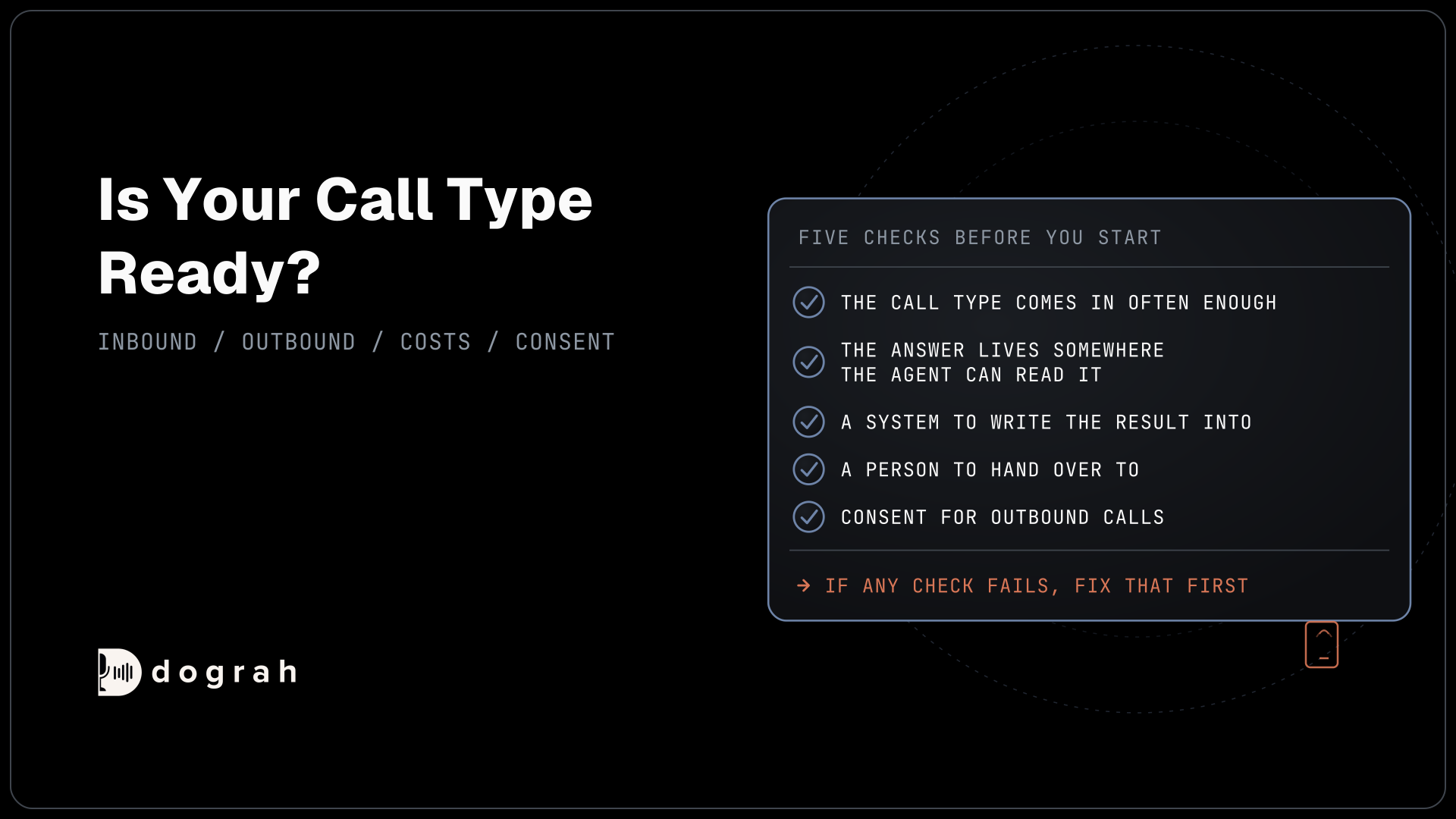

AI voice agents for BNPL (buy now, pay later) lenders place the short calls around each instalment, from a reminder before the payment is pulled to a catch-up call after a miss. They confirm identity before naming any amount and read every figure from the lender's own system. Hardship and disputes go to a person.
Key Takeaways
- One failed BNPL pull can cost the borrower a bank fee, so remind first.
- Pay-in-four plans generally sit outside federal credit-card rules, and states are writing their own.
- Self-host with open-source models so borrowers' spending data stays on your servers.
This guide follows a BNPL loan call by call: the rules, the identity check, the reminder, the catch-up plan, early collections and data storage. We show each borrower call working in Dograh, the open-source voice agent platform our team builds. You can self-host it or run it on Dograh Cloud.
Why BNPL calls are short and exact
A BNPL plan splits a purchase into small instalments, usually four, pulled from the borrower's card or bank account on fixed dates. Each pull is small, so one missed payment looks minor on the lender's books. For the borrower it rarely is.
The Federal Reserve's 2025 household survey found that 16% of US adults used BNPL in the past year, and 11% of those users had a BNPL payment trigger an overdraft or non-sufficient-funds fee from their bank. A pull that bounces costs the borrower at the bank first, and again if the lender adds a late fee.
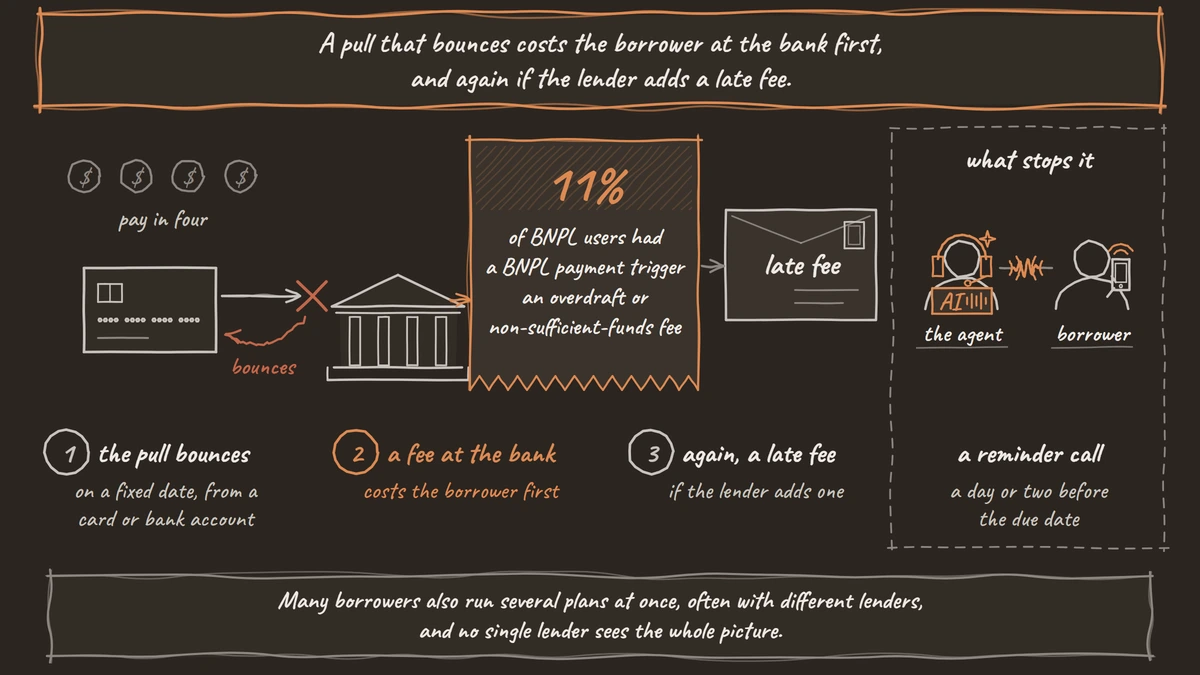
Many borrowers also run several plans at once, often with different lenders, and no single lender sees the whole picture. So a BNPL call should never try to do much. It confirms who it is speaking to, says one amount and one date, and records one answer. Every call in this guide keeps that shape.
The rules for BNPL calls, in plain words
Federal credit rules reach pay-in-four plans less than many lenders expect. In 2024 the Consumer Financial Protection Bureau (CFPB) issued an interpretive rule that treated BNPL accounts much like credit cards. In May 2025 it said it would not prioritise enforcing that rule, and days later it withdrew it in the Federal Register.
The Truth in Lending Act's Regulation Z defines a creditor by a finance charge, or by credit payable in more than four instalments. An interest-free plan with four or fewer payments therefore generally sits outside that definition, and most pay-in-four calls carry no credit-card disclosures.
Collection law turns on who is calling. The Fair Debt Collection Practices Act (FDCPA) covers people who collect debts owed to someone else, so first-party collection, a lender collecting its own instalments in its own name, is generally outside it. A name that suggests an outside collector brings the lender back in, which is why the opening line is a legal control. Our post on missed-payment recovery in BNPL walks through that name test.
Phone rules apply to every call. Under the Telephone Consumer Protection Act (TCPA), the FCC treats an AI-generated voice as an artificial voice, so an AI call to a mobile needs the borrower's prior express consent, usually the number they gave for the loan. The FCC's calling rules also expect the call to name the business at the start and give a callback number, and a stop request made in any reasonable way is honoured within 10 business days. Add an offer to a reminder and it becomes a sales call, which needs prior express written consent.
States are adding rules of their own. New York's Department of Financial Services has proposed rules for BNPL lenders that would license them and cap penalty fees at $8 unless the department approves a fee based on cost. A late fee would be allowed only if a written due-date notice went out at least 7 days before the due date. The proposal also limits a lender to two tries at taking the same payment from the same payment method without new authorisation, and stops it collecting an amount the borrower has disputed while the dispute is open. The rules are still proposed and would apply 180 days after adoption.
Massachusetts already limits creditors as well as agencies. Its debt collection regulations treat more than two calls a creditor starts about a debt in seven days, to the borrower's home or mobile, as unfair, and a call the borrower asked for does not count. These rules keep moving, so read this section as a map and confirm your calling plan with counsel before launch.
Verify the borrower before any amount
Every BNPL call runs greet, verify, then disclose. A phone number finds the account, but it does not prove who answered, and a flatmate should never learn about someone's purchases from your agent.
The greeting carries the lender's exact name and asks for the borrower by first name. In Dograh it goes in the Greeting Text on the Start Call node, which plays word for word, with a fallback such as {{first_name | there}} in case a name is missing. Allow Greeting Interruption is on by default, so switch it off and the lender's name plays in full.
Then the prompt asks for an approved check, such as a date of birth or the last digits of the account number, and the agent names the amount only once it passes. If the check fails, or someone else answers, the agent leaves the lender's name and a callback number and ends the call. Voicemail handling is off by default. Once set to Leave a message, it plays one fixed message, so keep that message to the same two details.
Identity calls at sign-up are a separate job with their own risks. Our post on KYC verification in BNPL covers them, including why collections stay off that call.

Open Source Alternative to Vapi / Retell
Self-hosted voice agent platform — no per-minute fees
dograh-hq/dograh
Star on GitHub
The reminder before the instalment is pulled
The reminder exists to stop a failed pull. It lands a day or two before the due date. After the identity check it confirms the amount and date and asks whether the money will be there.
Your system builds a daily list of instalments due soon and uploads it as a campaign, where each CSV column becomes a variable the agent can use. A campaign's calling hours run in one time zone, so split a national list by time zone and give each part its own window.
When the borrower asks to move the date, the agent does not decide. It writes the request to your system through an HTTP API tool, and your staff answer it under your rules. In New York, the proposed written due-date notice still goes out, because a call does not replace it. BNPL payment reminder calls with AI covers the timing, a short script and the hand-off to staff.
Reading the right amount for each borrower
A CSV is a snapshot from the morning it was built. A borrower who paid at lunch should hear thanks instead of a balance that is already gone.
Pre-Call Data Fetch, set to Outbound calls only on the Start Call node, sends your endpoint the caller and called numbers once the call connects. Your endpoint returns the current amount, due date and paid status, and the greeting waits for them while the borrower hears ringing. If the endpoint fails or times out, the call goes on with the values it already had, so keep the uploaded list fresh enough to fall back on.
The fixed lines can be pre-recorded clips in a real person's voice, with text-to-speech filling in the amount and date. Monthly loans follow the same pattern with larger amounts, and in India with stricter calling hours and many languages. AI loan payment reminder calls for fintech covers that lookup, the timing and the languages for EMI reminders.
After a missed payment, back on schedule
Most BNPL misses are a date that slipped or a card that expired. The first call after a miss is a recovery call in the lender's own name. It states the amount and date after verification and records a promise-to-pay date as the borrower gives it. Your system then sends its secure payment link by text or email, and the borrower pays on your own payment page, so no card number is spoken on the call.
When the borrower cannot pay the full instalment, the call becomes a catch-up plan. An HTTP API tool asks your system which options this borrower qualifies for, and the agent reads only those, never a date or fee it made up. Once the borrower picks one, the agent reads the new dates and amounts back, and a second tool writes the accepted plan. This matters in New York, where the proposed rules treat a fee to delay an instalment as interest.
Hardship and disputes go to a person, with no offer attached. Transfer Call works on Twilio, Telnyx, Plivo, Cloudonix and Asterisk ARI. Dograh calls your hardship team first and connects the borrower only when someone answers, so the agent writes the reason to your system before the transfer. AI voice agents for BNPL repayment plan setup walks through the options, the read-back and the hand-off.
Join the Dograh Community
Dograh is an OSS alternative to Vapi. Join our Slack community for queries, releases, best practices & community interactions.
Early collections at app-lender volume
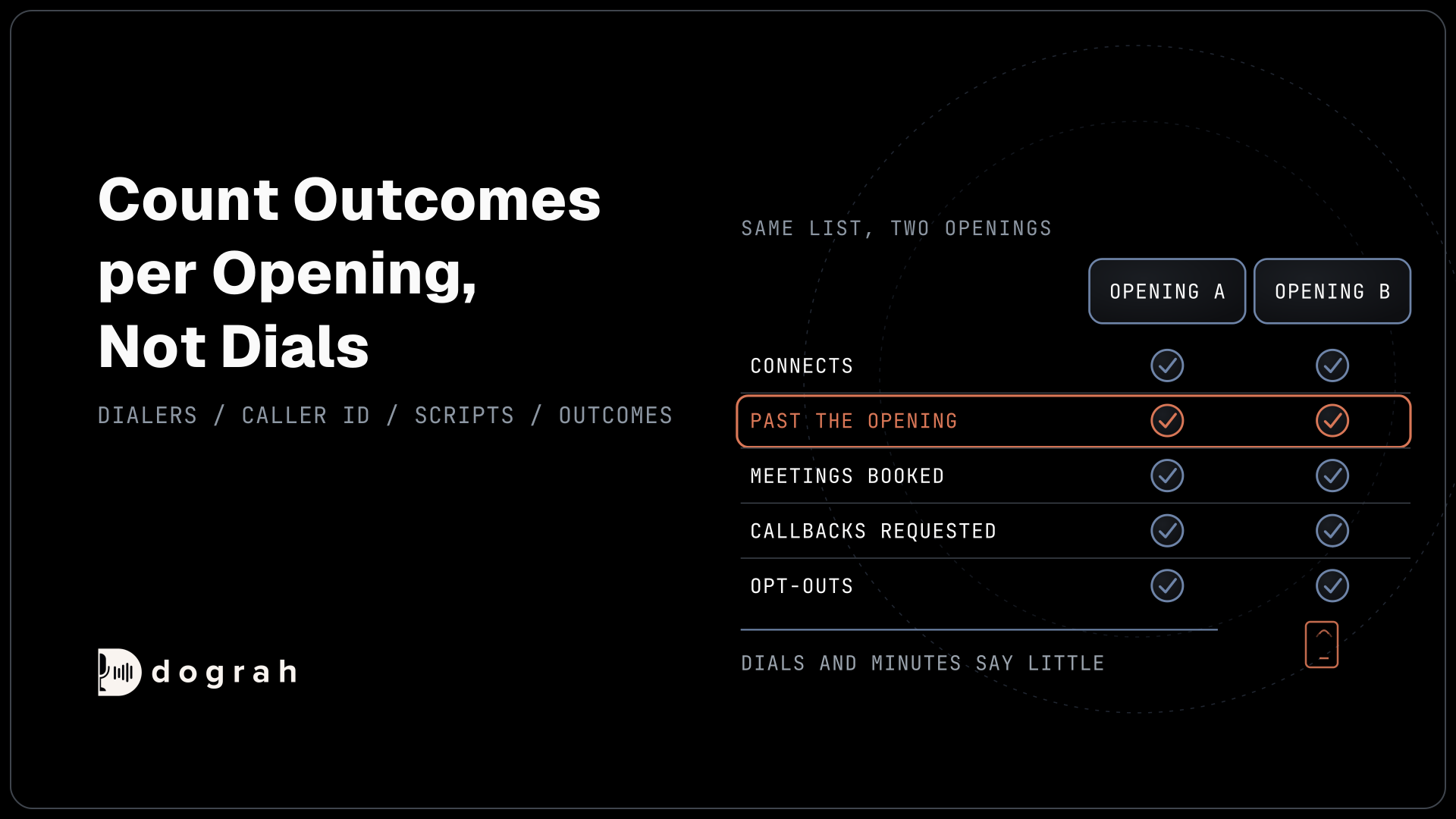
An app lender can have thousands of instalments go past due on the same day, so the call list is the real control. Run one campaign per delinquency stage, such as day one and day seven, each with its own agent and script.
You set the retries (0 to 10) and the delay between them, and choose whether a busy line, no answer or voicemail gets another try. Campaigns keep no running count per borrower across campaigns, so limits such as Massachusetts' two calls a week live in your own list. The Circuit Breaker, on by default for a new campaign, pauses the campaign when half the calls in a two-minute window fail inside Dograh.
After each call, a Webhook node sends the outcome to your loan management system, with a call disposition such as callback_requested or do_not_call, the promise-to-pay date and links to the recording and transcript. A temporary failure is retried automatically, up to five attempts. AI voice agents for debt collection in fintech covers the campaign design and the payload.
Once an account goes to an outside agency, the agency works under debt collection rules of its own. Our guide to AI debt collection software covers those calls.
Where BNPL spending data goes
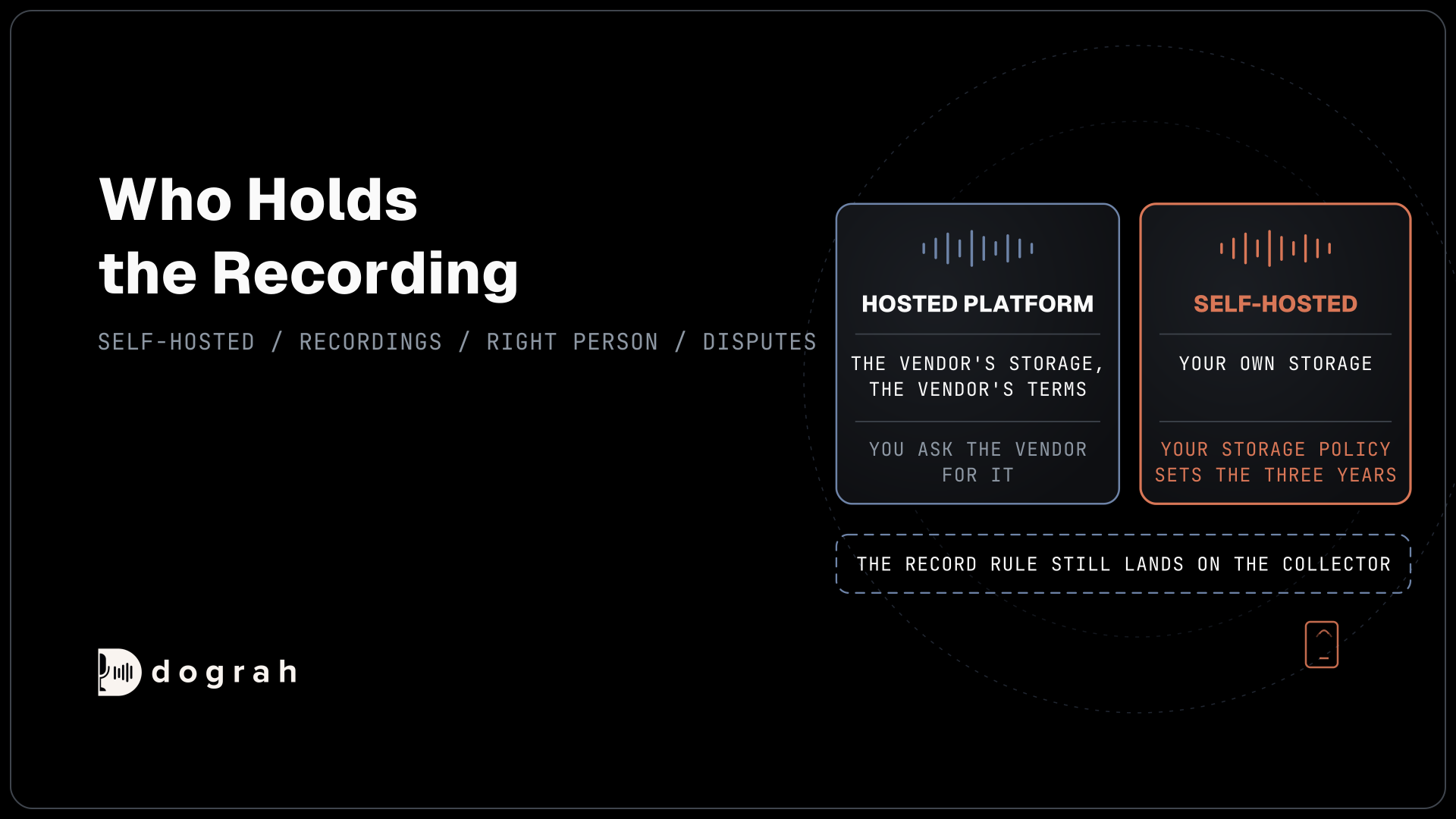
A BNPL record shows what someone bought and where, and when they started missing payments. We build these calls to be compliant by design for that reason, and we recommend self-hosting Dograh with open-source models so this data stays on your own servers. Lenders weighing this can read about self-hosted voice agents for BNPL lenders, where reminder, recovery and catch-up calls run in the lender's own name.
Two layers handle the call. Dograh is one of them, running the call flow, tools and telephony, while you pick the speech and language models that make up the other. Bringing your own keys changes whose contract covers the models, yet the borrower's voice still reaches that provider. The audio stays in-house only when open-weight speech and language models run on your servers too.
Self-hosted, the recordings and transcripts land in your own storage, and each call's View Trace opens the full trace when you need to see why the agent said something. Self-hosted Dograh has no per-minute platform fee, but servers, model keys and phone minutes still cost money. Dograh Cloud charges a 1¢-a-minute platform fee.
For lending calls beyond BNPL, from application to collection, see our guide to AI voice agents for fintech and lending. Win-back offers to past shoppers are sales calls with their own consent rules, covered in AI voice agents for win-back in BNPL.
Which BNPL call to automate first
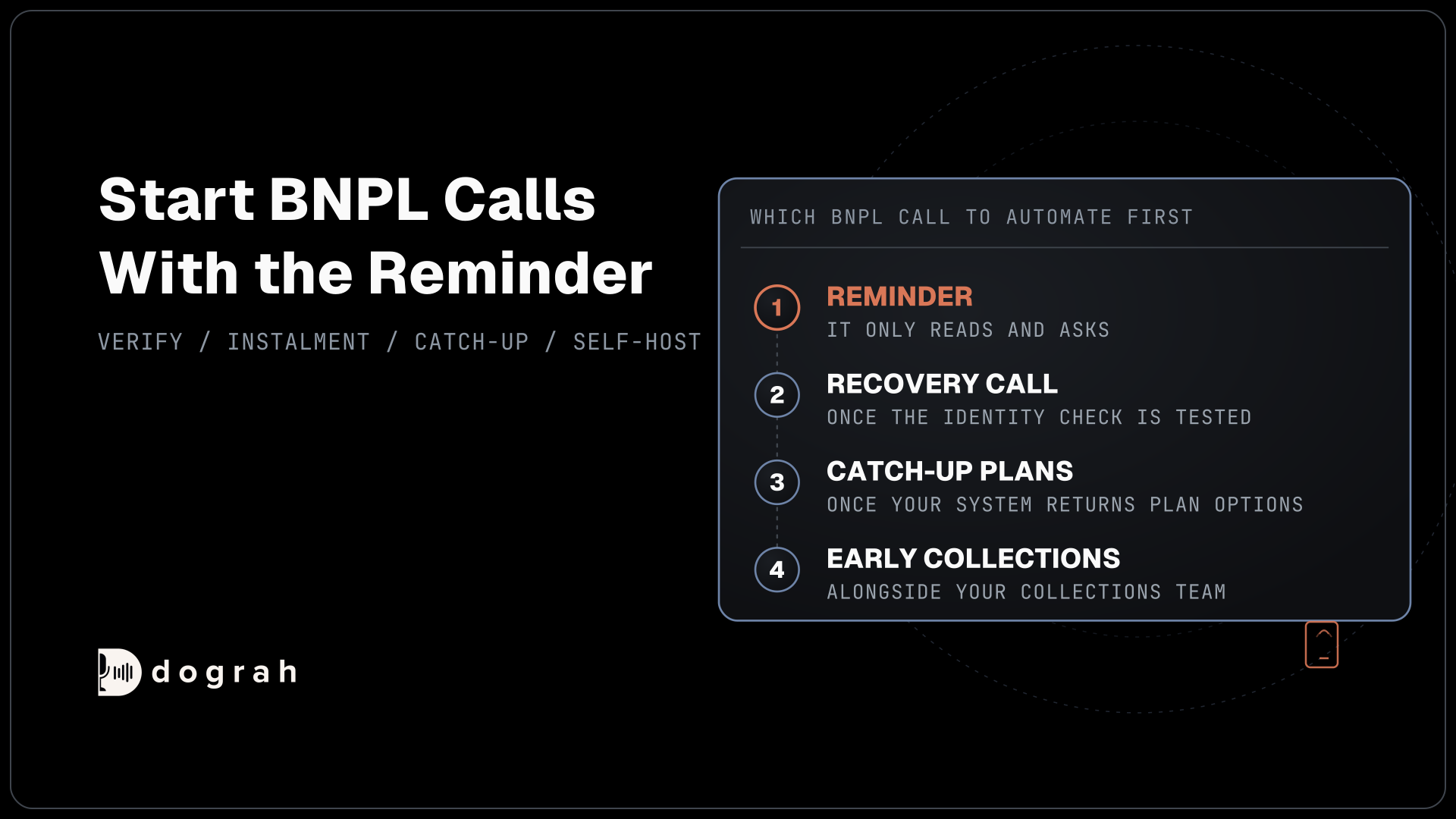
Start with the reminder, because it only reads and asks. Add the recovery call once your identity check is tested, then catch-up plans once your system returns plan options through an API. Early collections at volume come last, alongside your collections team.
Test every agent over a real phone line, since most phone calls reach the agent as 8 kHz audio while a browser test runs at 16 kHz. Once live, run QA on a random 5 to 10% sample of calls. Dograh's QA scores each step of the call, so a call where an amount came before the identity check shows up in review.
Each BNPL call above has its own deep dive:
- BNPL Payment Reminder Calls with AI
- AI Loan Payment Reminder Calls for Fintech
- AI Voice Agents for BNPL Repayment Plan Setup
- AI Voice Agents for Debt Collection in Fintech
Glossary
- Pay-in-four plan
- A BNPL plan that splits a purchase into four interest-free instalments, usually pulled from a card or bank account every two weeks. Plans like this generally fall outside Regulation Z's definition of a creditor.
- First-party collection
- A lender collecting its own instalments in its own name. It is generally outside the FDCPA, unless the lender uses a name that suggests an outside collector.
- Prior express consent
- Permission to be called at a number, usually given when the borrower shares that number for the loan. An AI-voice call to a mobile needs it, and an offer on the call needs written consent instead.
- Pre-Call Data Fetch
- A Start Call node setting in Dograh that asks the lender's system for fresh data once the call connects, such as today's amount due and whether it is already paid.