
An AI answering service for locksmiths answers lockout calls at any hour. It plays a fixed 911 line when a child is locked in a car, records location and ID answers and sends urgent jobs to the on-call locksmith. Dograh, the open-source AI voice agent platform, rings tonight's on-call number from your on-call schedule, on your servers or Dograh Cloud.
Key Takeaways
- A caller with a child locked in a car hears "call 911 now" first.
- The agent records ID answers, and the technician checks ID on site.
- Set the Dograh prompt to write the job through a tool before transferring.
A lockout call comes from someone standing outside a door, often late and stressed. The safety line comes first, then location and ID questions, honest phone prices and the technician alert. We finish with how Dograh rings the on-call locksmith at night and what happens when nobody answers.
What a locksmith answering service has to catch
A lockout caller will not wait until tomorrow for a callback. They are outside a house, a car or an office, and they ring the next locksmith if nobody picks up. A human answering service takes the message and pages the technician, billed by the minute. Specialty Answering Service's plans, for example, include 220 minutes for $269 a month, with each extra minute at $1.44.
A lockout also needs a few honest facts before a van leaves. The company has to know where the person is, what is locked and whether they will be able to show that the address or the car is theirs. A voice on the phone cannot check any of that. The agent records what the caller says, and only the technician standing at the door can look at a photo ID.
So the agent's job is the intake. The call should end with a job the technician can drive to, or with a booked window for rekeys, lock changes and safe openings that can wait. Our post on the AI answering service for electricians follows the same pattern for another trade on call at night, and our post on what a missed call costs in the trades works through the money side with your own numbers.
A child or pet locked in a car comes first
A child locked in a car is a 911 call, and the agent says so before it asks anything else. NHTSA's heatstroke advice tells anyone who sees a child alone in a vehicle to call 911 immediately and get help. Parked cars heat up fast, and the San Jose State count of child vehicular heatstroke deaths records 35 such deaths in 2025, against an average of 37 a year since 1998.
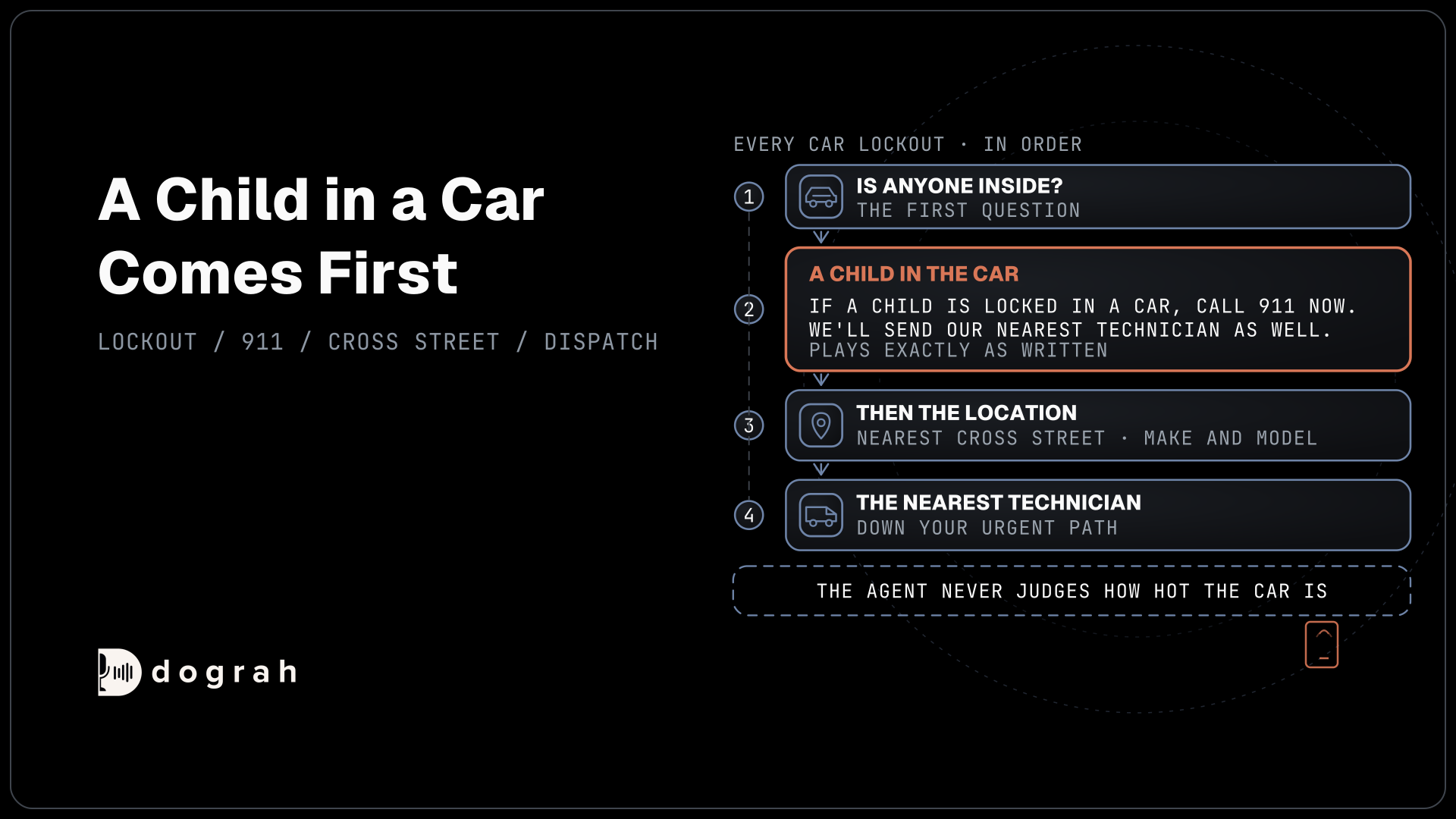
So the first question on every car lockout is whether anyone is inside. If the caller says a child is in the car, the agent plays a fixed line, "If a child is locked in a car, call 911 now. We'll send our nearest technician as well." It plays exactly as written, and the agent never offers to call 911 itself. It then takes the location quickly and sends the nearest technician down your urgent path.
Pets get a different line. The ASPCA tells people to call animal control or 911 right away when an animal is trapped in a hot car, so the agent says "If a pet is locked in a hot car, call 911 or your local animal control now. We'll send our nearest technician as well." A caller in danger at a house, from a fire or an intruder, hears "If you're in danger, get to safety and call 911."
The agent never judges how hot the car is or how long the child has been inside. That judgment belongs to 911 and to the technician on the way.
Location and ID questions before dispatch
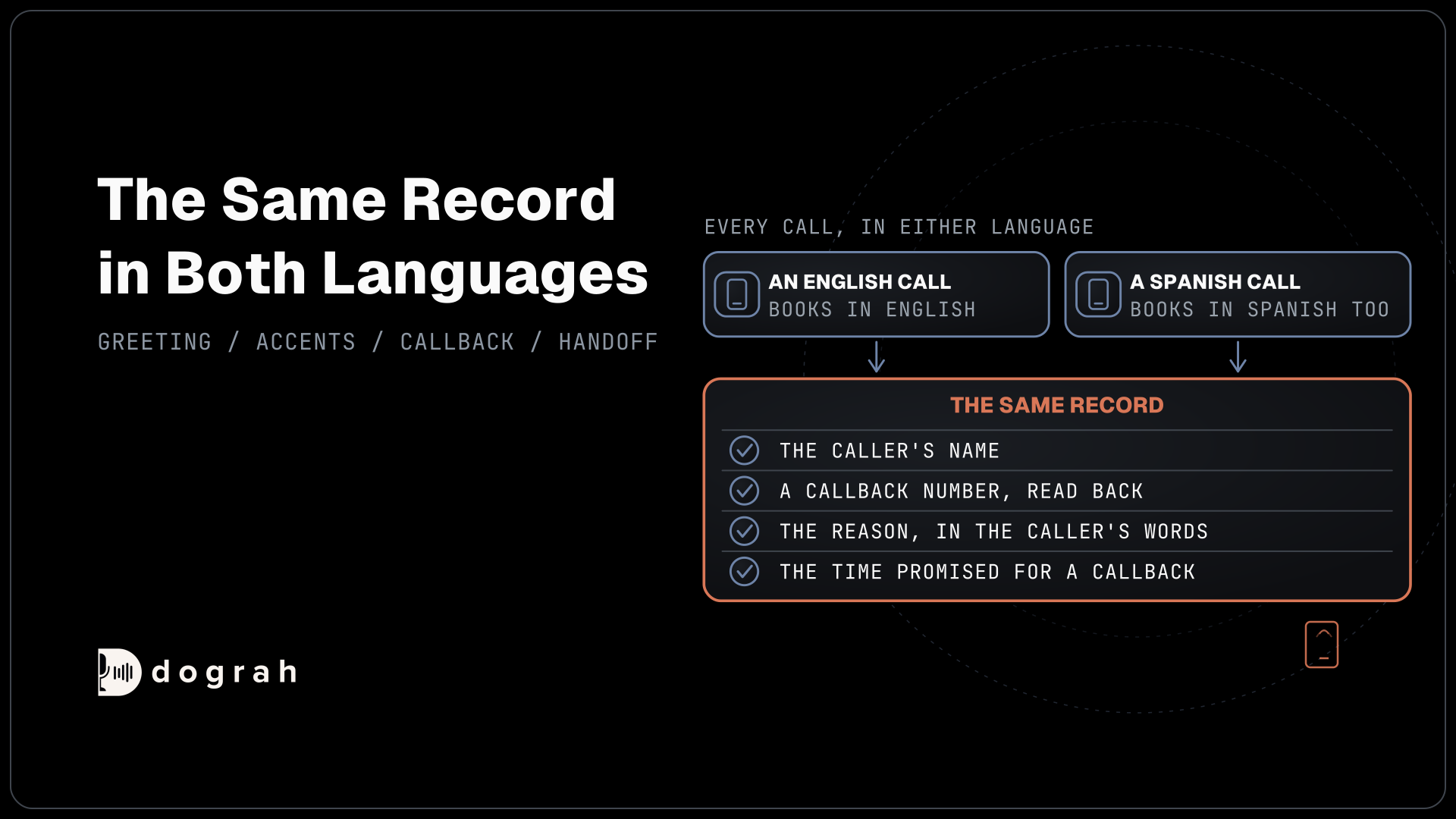
The agent needs enough to send the right technician to the right place, so it asks in a set order. It starts with what is locked, a home, a car, a business or a safe. Then it takes the exact address or, for a car, the nearest cross street, the make and model and a callback number. Variable extraction, an AI step, fills in each answer, and the Extraction Prompt can ask it to keep the caller's own words for a cross street. The call recording stays the exact record.
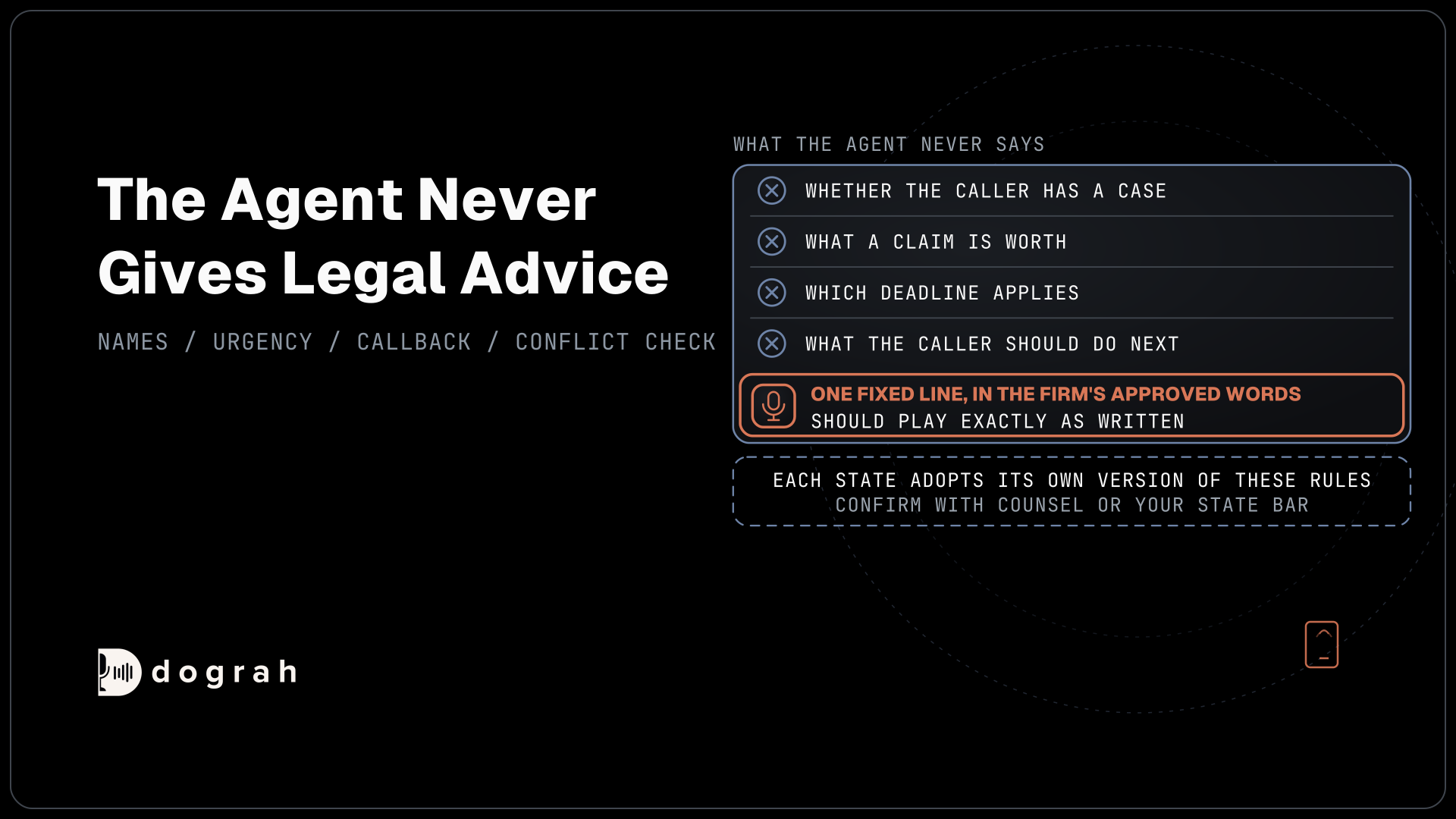
Then come the ID questions your company wrote. A typical one is "Will you have photo ID that shows this address, or the car's registration?" The agent records yes, no or not sure. It never decides whether the caller owns the property, because that is the technician's call at the door, made under your written policy before any work starts.
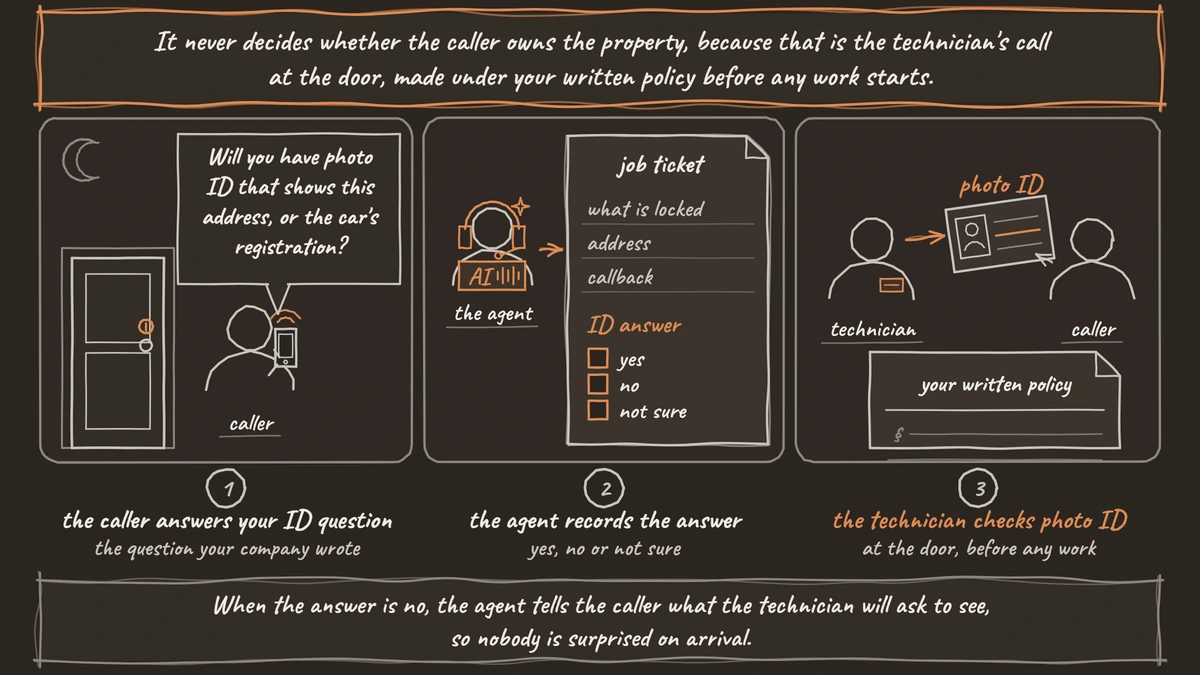
When the answer is no, the agent tells the caller what the technician will ask to see, so nobody is surprised on arrival. Some states also regulate who may do this work. Connecticut requires anyone doing locksmith work to register with its Department of Consumer Protection, a step that includes a criminal history check, as the state's locksmith scam warning explains. Rules differ by state, so confirm your licensing and ID duties with counsel.

Open Source Alternative to Vapi / Retell
Self-hosted voice agent platform — no per-minute fees
dograh-hq/dograh
Star on GitHub
Prices on the phone and what the agent never says
A phone price is where lockout scams start, so the agent quotes only what your company publishes. The same Connecticut warning describes scammers who quote a low price to open a lock, raise it on site and often ask for cash. It tells consumers to ask for the full price upfront, including service and travel costs. Your agent should sound like the opposite of that.
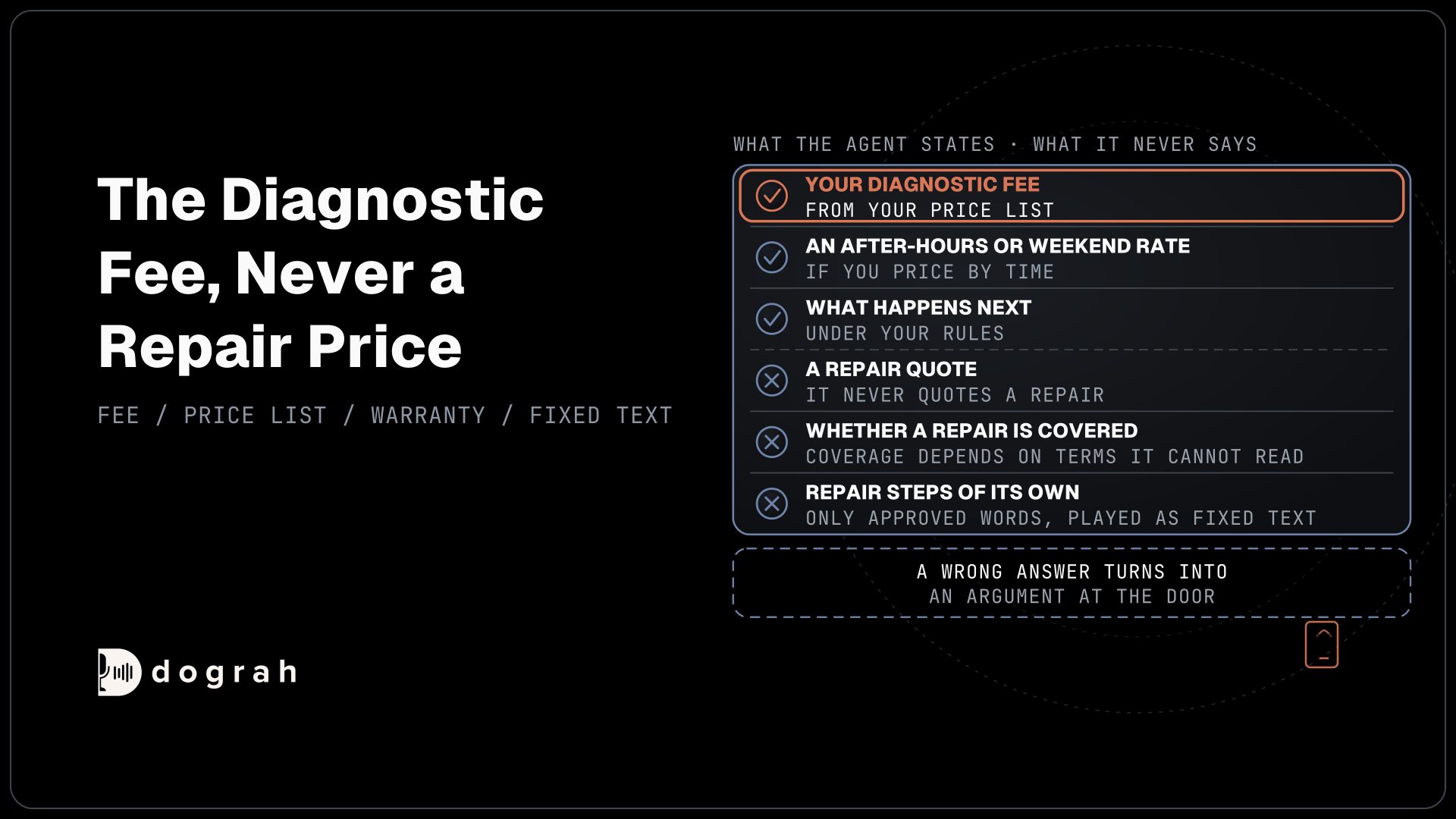
The agent states your company name at the start and reads the service call or call-out fee you publish, word for word from your list. It then says the technician confirms the full price on site before any work starts. It never guesses a total, offers a discount of its own or promises that a lock can be opened without drilling.
It also gives no entry advice. The agent never explains how to open a lock or a car door, or how to get past a smart lock, even when the caller sounds locked out of their own home. Anything past "the technician is on the way" is wording your company approved and set as fixed text.
Alerting the technician during the call
The technician should hear about the job while the caller is still talking to the agent. An HTTP API tool posts the address, the lock type and the ID answer to your dispatch system. Field service software such as ServiceTitan or Jobber signs apps in with short-lived OAuth tokens, so a small service or automation tool of your own usually sits between the agent and that system. A text to the technician goes out through your own messaging provider, called by the same kind of tool.
After the call, a Webhook node sends the full record with the recording and transcript links. A temporary failure is retried by itself, up to 5 attempts, so a short outage at 2 a.m. does not lose a lockout.
Urgent calls at night go to a person, and the on-call locksmith changes from night to night. So the destination comes from your on-call schedule, not a fixed number. Our post on AI call routing covers the routing choices in more depth. When the on-call person does not pick up, the caller needs a fallback your company wrote, and our garage door answering service post covers how to write and test it.
Join the Dograh Community
Dograh is an OSS alternative to Vapi. Join our Slack community for queries, releases, best practices & community interactions.
How this runs in Dograh
Urgent lockouts end in Transfer Call, which works on Twilio, Telnyx, Plivo, Cloudonix and Asterisk ARI. Set its destination source to Dynamic HTTP Resolver, and Dograh asks your scheduling system for tonight's number during the call. Dograh calls the destination first and connects the caller only when someone answers. No summary travels with a transfer by default, which is why the HTTP API tool writes the job first.
If nobody answers within the 30-second default, the caller stays with the agent. The prompt then has it take a callback request and page a backup locksmith through another HTTP API tool. A start message on that tool, and an update if it runs long, mean a caller outside a locked door never sits in silence. Voicemail is the gap at night. An on-call phone that rolls to voicemail counts as answered, so the caller lands in that voicemail and the fallback never runs. Ask everyone on the on-call schedule to turn voicemail off, or to set it to pick up later than the Transfer Timeout.
One agent can act differently by the hour. Built-in time variables such as {{current_time_America/Chicago}} let the prompt book windows during office hours and send urgent lockouts to the on-call person after 7 p.m. The child and pet lines sit on their own pathway as Transition Speech, which plays exactly as written. Choosing that pathway is the language model reading its written condition, so test it over a real phone with phrases like "my baby's in the back seat" and "the dog is locked in". Terms such as "rekey" and "transponder key" go in the agent's Dictionary.
You choose where the agent runs. Running Dograh on your own server means no per-minute platform fee. The server, the model keys and the phone minutes still cost money, and your team looks after the database and each upgrade. For support there is the open-source community, or custom SLAs on Enterprise. Locksmiths who would rather not run servers can use Dograh Cloud, which charges a 1¢-a-minute platform fee plus the cost of models and phone minutes.
Glossary
- Call-out fee
- The fixed charge a locksmith publishes for coming to the address. The agent reads it from your list, and the technician confirms the full price on site.
- Transponder key
- A car key with a chip that the car must recognize. The agent records the make and model so the technician comes ready for that car.
- Transition Speech
- Typed text or a recording that plays exactly as written when the call enters a pathway. The child and pet lines live here so they never change.
- Dynamic HTTP Resolver
- A Transfer Call setting where Dograh asks your system for the destination during the call, so tonight's on-call number comes from your on-call schedule.