
Cresta alternatives are divided into the AI Agent that answers calls alone and the assist, coaching and quality tools that help human agents. For the first job, Dograh is the open-source platform that ships ready to use and runs automated calls on your servers or Dograh Cloud. The second job stays with a suite or your own build.
Key Takeaways
- Open source replaces Cresta's AI Agent, the calls a machine finishes alone.
- Live guidance and coaching for human agents stay with a suite or your build.
- Moving calls to an AI agent shrinks the human volume an assist contract covers.
Open source covers only part of Cresta, because Cresta sells two jobs: automating calls and helping human agents. We sort its products by job and compare the options in one table, then show where Dograh fits, what stays with a suite and an example of both side by side.
Cresta's products, sorted by who is on the call
The quickest way to see what open source can replace is to ask who is talking to the customer in each Cresta product. Cresta's product range splits into two groups that way.
In the first group, a machine is on the call. The AI Agent automates conversations from start to finish on voice and chat, and Deputy Agent is a newer, long-running agent Cresta describes as built for customer experience operations. These products replace work a person would otherwise do.
In the second group, a person is on the call and Cresta helps them. Agentic Assist gives live guidance during the conversation, and Knowledge Agent answers the agent's questions from your knowledge base. Coach and Training Simulator work on skills between calls. Quality Management and Conversation Intelligence score and study conversations, human-handled ones included.
That split decides the rest of this post. Cresta is closed source and sold by contract, its one public price is a yearly Agent Assist commitment worked through in the example further down, and the vendor picks the models. An open-source voice agent platform does the first group's job with code you can read and models you choose. The second group is software for a team of people, and it stays with a suite. Our Dograh vs Cresta comparison puts both products in one table and covers where Cresta is stronger.
Cresta and the open-source options side by side
Open-source voice AI comes in two shapes, and only one of them is close to a product. A full platform gives you the call flow, the phone line, transfers and QA on day one. A framework gives you code to build those yourself. The table sets each option against Cresta's two jobs, with Cresta as the baseline and Dograh next. Dograh gets the next section.
| Option | What it is | Code and license | Replaces Cresta's AI Agent | Helps human agents |
|---|---|---|---|---|
| Cresta (baseline) | Contact center AI suite with an AI agent | Closed, by contract | It is the AI Agent | Yes: live assist, coaching, QA on human calls |
| Dograh | Full AI voice agent platform | BSD 2-Clause | Yes, for voice calls: builder, phone lines, tools, transfers, QA | Hands callers to people. Assist stays with a suite |
| Pipecat | Python framework for real-time voice agents | BSD 2-Clause | After you build the phone wiring, call records and QA | No |
| LiveKit Agents | Agent framework on LiveKit's media server | Apache 2.0 | After you build the product around it | No |
| Your own build for human calls | Open speech-to-text plus a language model scoring recordings | Your code | No | After-call scoring only, no live guidance |
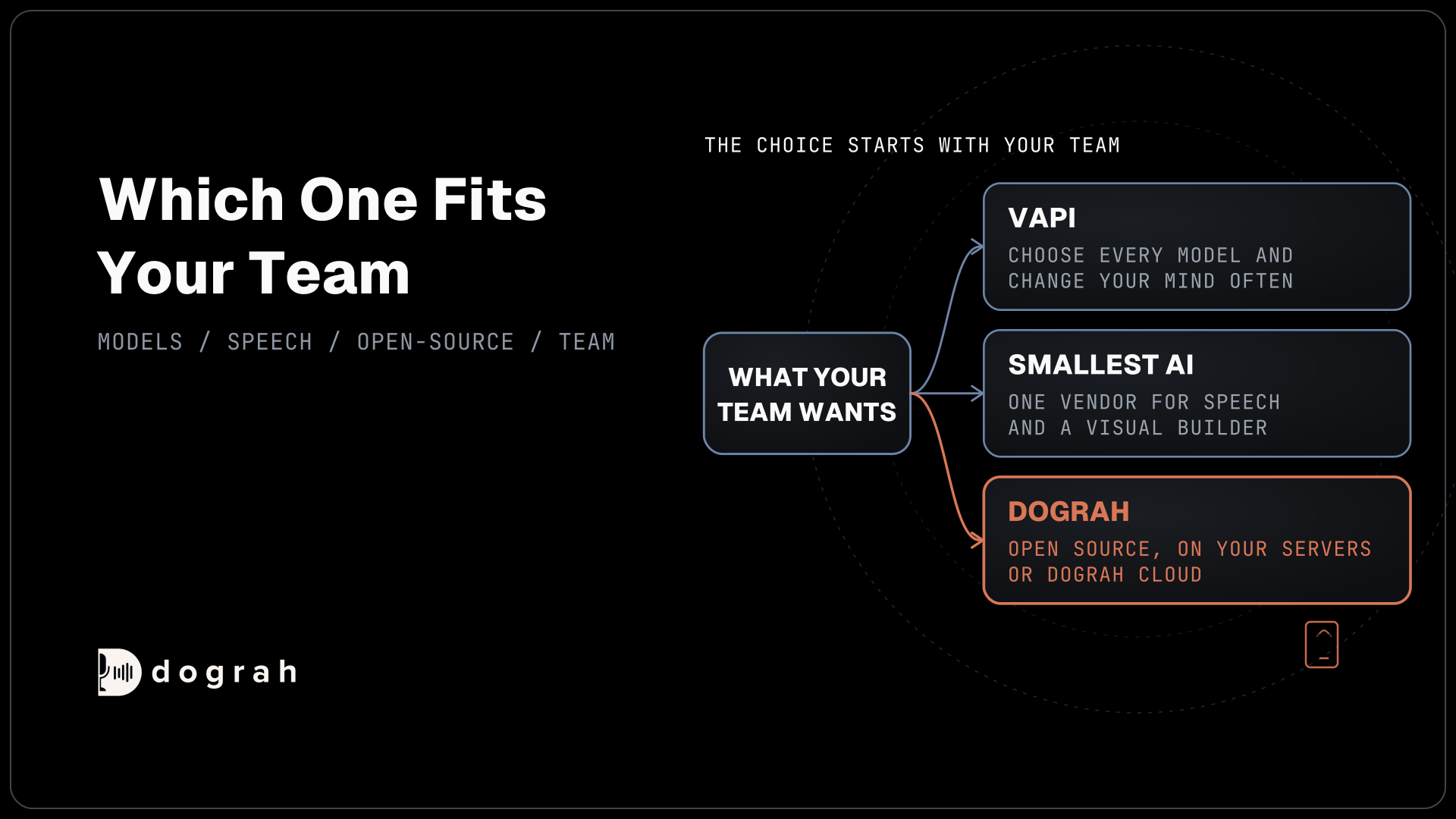
The table splits into two decisions. For the automated calls, choose between a platform and a framework. Pipecat and LiveKit Agents suit a team that wants to own every line of the agent and has engineers to build the phone wiring, call records and QA around it. Dograh itself is built on a fork of Pipecat. Our comparison of open-source voice AI frameworks covers both in detail.
For the human queue, the open route is a build of your own, and the realistic build is after-call scoring rather than live guidance, as the section on what stays with a suite explains further down. Decide that part separately.
What an open-source platform takes over: Dograh
An open-source voice agent platform takes over the calls an AI can finish alone, inbound and outbound, until the call ends or moves to a person. Dograh is one, under the BSD 2-Clause license, with a visual flow builder, telephony, call transfer, call history, and QA that grades every step of a call, on test calls and live ones.
The agent acts on your systems mid-call. Cresta's AI Agent offers secure function calling and MCP support, and Dograh has the same two routes, an HTTP API tool for any endpoint you own and an MCP tool for a Model Context Protocol server.
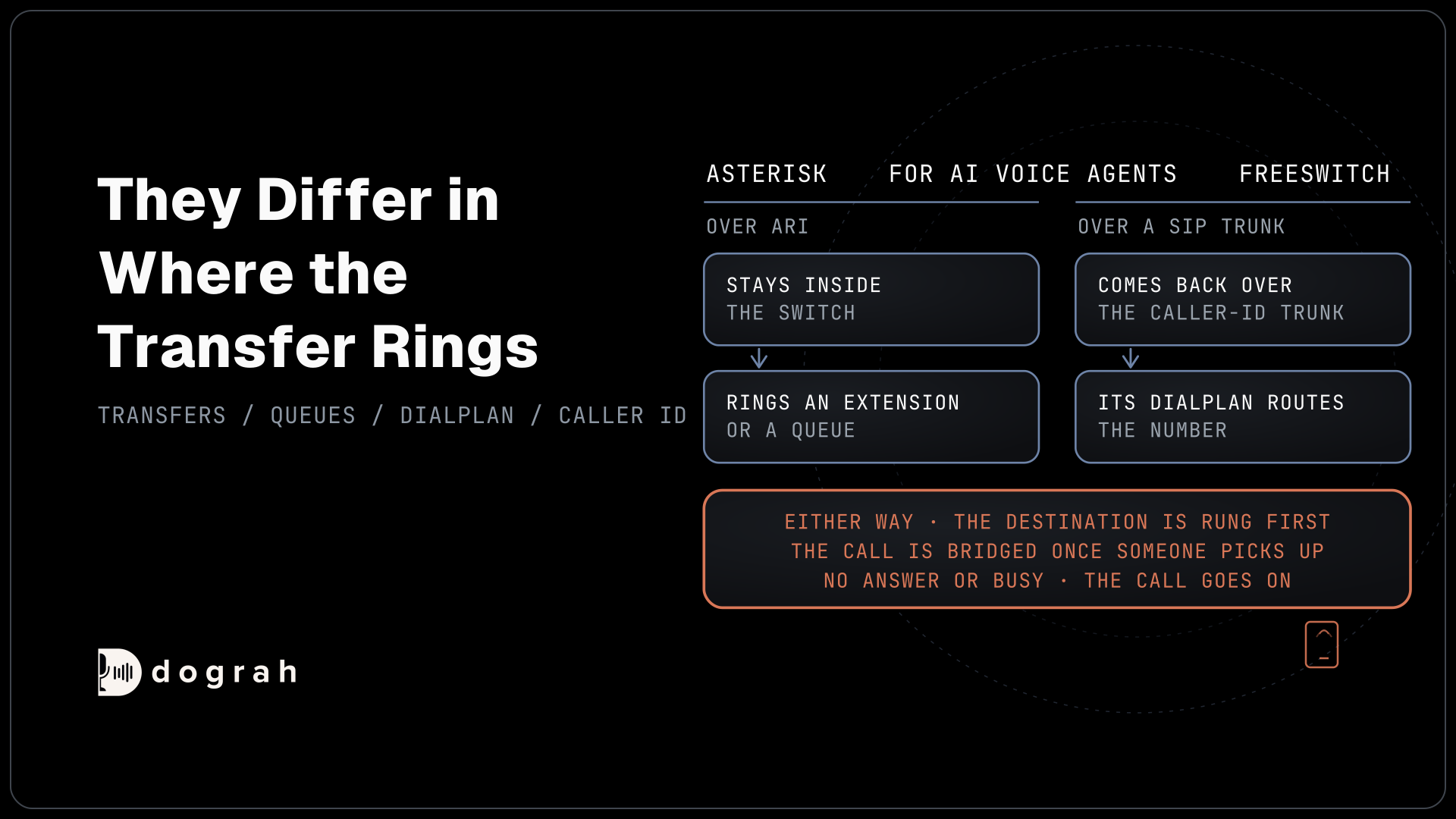
When a caller needs a person, Transfer Call works on Twilio, Telnyx, Plivo, Cloudonix and Asterisk ARI, and a failed or unanswered transfer returns to the agent as transfer_failed. Calls arrive through those carriers, Vonage or your own SIP trunk, and Asterisk ARI is also how Dograh reaches VICIdial, covered in the section on running an open agent beside your assist suite.
The QA step scores each step of test and live calls with a sample rate you set.
Self-hosting needs Docker Compose and a server with at least 8 GB of RAM and 4 vCPUs, and Enterprise brings on-prem deployment. Self-hosted Dograh has no per-minute platform fee, but servers, model keys and phone minutes still cost money. Dograh Cloud charges a 1¢-a-minute platform fee. The speech and language models are a separate layer you pick, and only open-weight models on your own servers keep the audio inside your network. A self-hosted install starts at 10 calls at once, and pay as you go on Cloud includes 10.
Self-hosting hands your team the server, the database and each upgrade, with community support on the open-source version and custom SLAs on Enterprise. Moving a call type over starts with rebuilding it as a flow, then test calls with QA on and a real phone call for transfers. If calls arrive on a Twilio number, saving an inbound workflow on it in Dograh moves the number over immediately, so note its Twilio settings first. Our guide to testing voice agents before you go live sets out the checks.
What stays with a suite
Everything that helps a person who is already on the call stays outside an open-source voice agent platform. That means live guidance on the agent's screen, a knowledge assistant answering staff questions, and coaching after the call. It also means a training simulator for new hires and QA programs that score every human-handled conversation against a form.
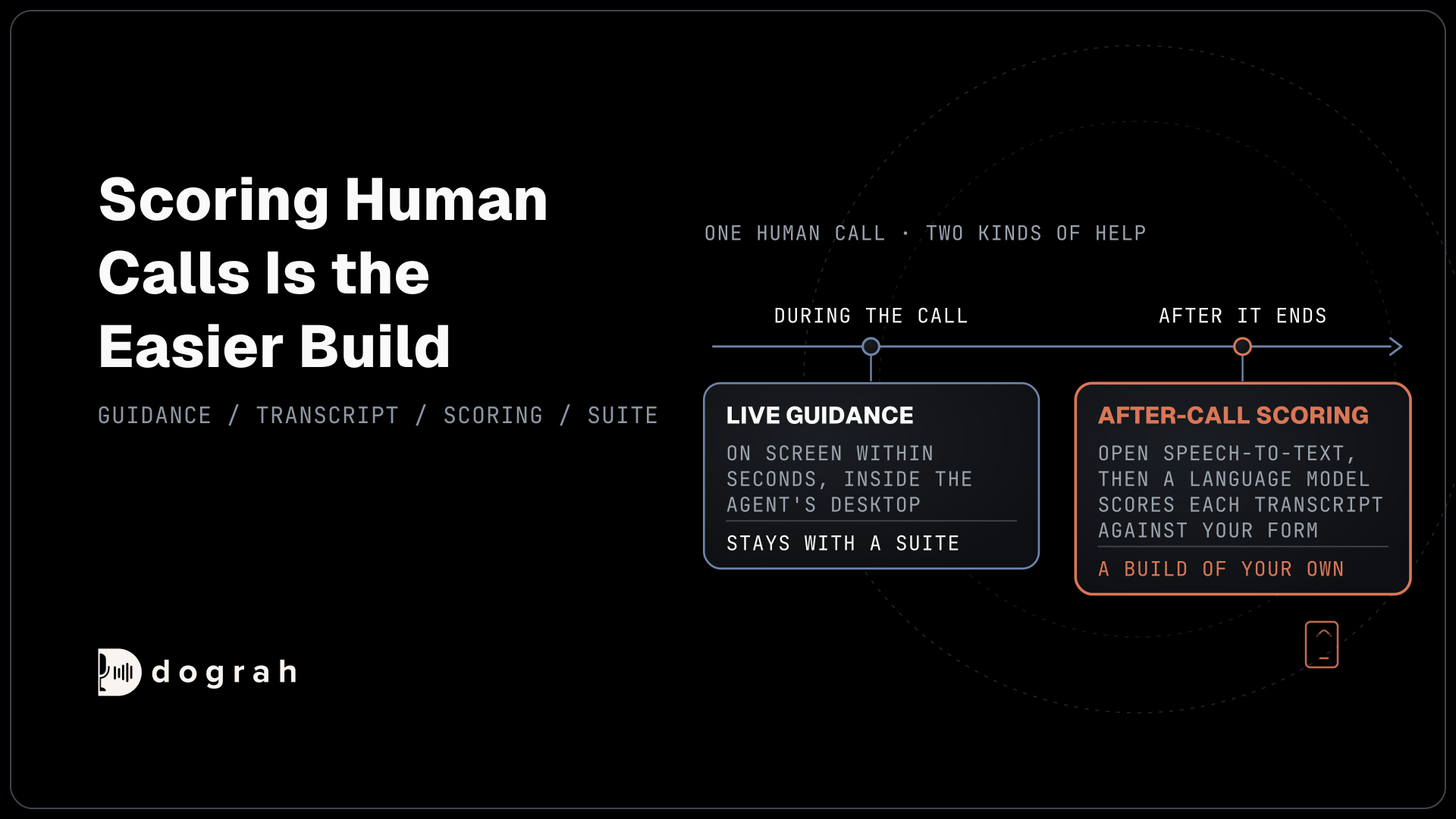
These jobs stay with a suite such as Cresta, or with a build of your own on open frameworks. Live guidance is hard to build well because it has to listen to a human call, decide what matters and put it on screen within seconds, inside the agent's desktop.
Scoring human calls after they end is the easier build. A team can transcribe recorded human calls with an open speech-to-text model and score each transcript with a language model against its own form. That is a project with its own servers and prompts, and our post on post-call analysis shows what to pull from transcripts once you have them.
Dograh's own QA covers the calls its agents run. If supervisors want one scorecard for staff and AI together, that is a reason to keep a suite for the human side.
An example: moving 30,000 of 100,000 calls
A worked example shows why the two jobs never share one price. Cresta's one public price is $150,000 a year for up to 100,000 Agent Assist voice calls, sold through AWS Marketplace, then $1.50 for each extra call. Our post on Cresta pricing works through what that means per call and per minute.
Take a contact center on that contract, handling 100,000 calls a year with a person on every one. Say 30,000 of them are routine, such as order status or appointment changes, and an AI agent could finish them alone.
On Dograh Cloud, 30,000 calls at an average of five minutes are 150,000 minutes. The platform fee is 150,000 x $0.01, so $1,500 for the year, plus your model and phone bills. Self-hosted, that line is zero, and servers, model keys and phone minutes still cost money.
The other 70,000 calls still have a person on them, and the assist contract still helps those people. Those subscriptions are non-cancellable and non-refundable for the period, so the change lands at the next renewal. That is the moment to size the assist commitment on the calls people still take, so move the first call types early enough that their handover rate is known well before that date.
Running an open agent beside your assist suite
Most contact centers that move automated calls to open source keep their human queue as it is. The open agent answers first and finishes the calls it can, and the rest move into the queue where the assist suite already runs.
The handover is a transfer to the queue's number. No summary travels with the call by default, so the agent writes the caller's details to your system through an HTTP API tool before it transfers. The person who picks up then sees the details in the same tools the assist suite reads.
If your contact center runs on VICIdial, the VICIdial integration goes further. Connected through Asterisk ARI, the agent can transfer the customer to a VICIdial in-group, update lead fields from what the caller said, and end the customer leg when the conversation is over.
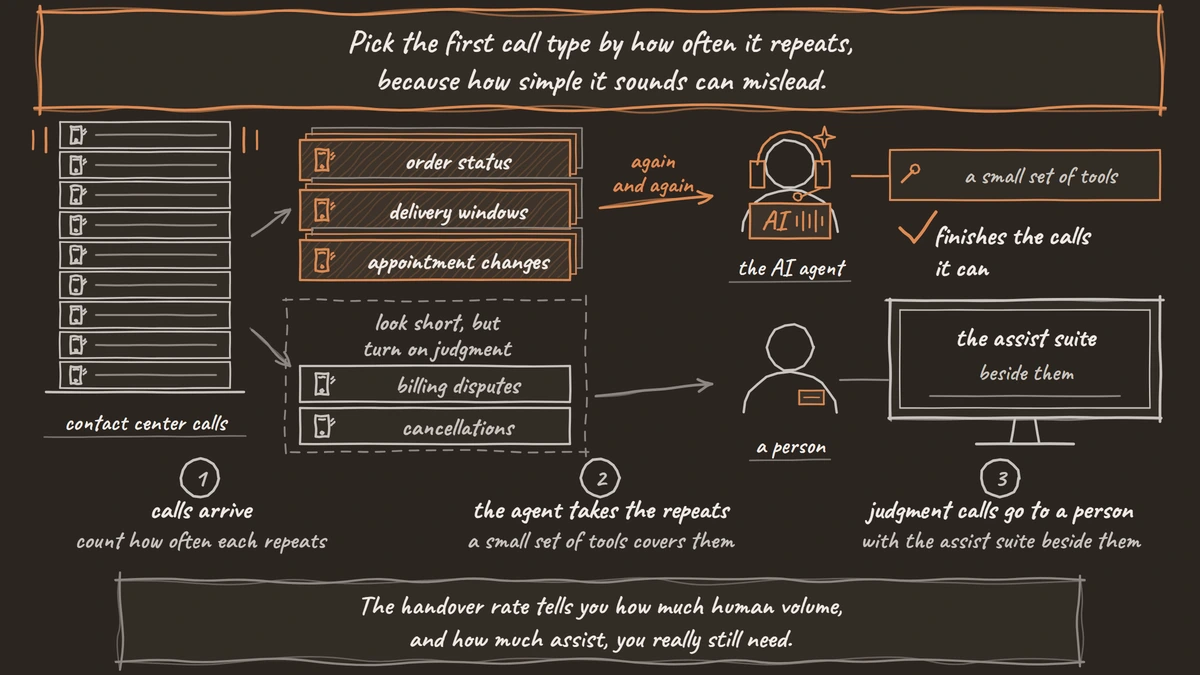
Start with one call type, measure how many the agent finishes and how many it hands over, then widen it. The handover rate tells you how much human volume, and how much assist, you really still need.
Pick the first call type by how often it repeats, because how simple it sounds can mislead. Order status, delivery windows and appointment changes come up again and again with the same few questions, so a small set of tools covers them. Billing disputes and cancellations look short but turn on judgment, and they belong with a person and the assist suite beside them. Keep QA sampling high on the open agent for the first weeks, then lower the sample rate once its scores settle.
Join the Dograh Community
Dograh is an OSS alternative to Vapi. Join our Slack community for queries, releases, best practices & community interactions.
Picking your Cresta alternative
If the part of Cresta you were buying is the AI Agent, Dograh fits: an open-source platform that answers and places those calls, runs on your servers or on Dograh Cloud, and hands callers to your people when they need one. If your team wants to own every line of code, Pipecat or LiveKit Agents give you a base to build on. If most of your calls need a person and the value is in helping them, keep a suite for that queue and size its next renewal on the calls people still take. Most contact centers end up running both, moving one call type at a time.
Glossary
- Agent assist
- Software that listens to a human agent's live call and puts guidance, answers or next steps on their screen. Cresta sells it as Agentic Assist, and it helps the person rather than replacing them.
- Handover rate
- The share of calls an AI agent passes to a person instead of finishing alone. It decides how much human volume, and how much assist, a contact center still needs.
- In-group
- A VICIdial inbound queue, where the next free human agent picks up. Dograh's VICIdial integration can transfer a caller into one from the agent.
- Assist commitment
- The number of Agent Assist calls a contract pays for in advance, used or not. Cresta's Marketplace contract commits to 100,000 a year.