
Kore.ai prices by quote, metered by session. Each session earns base units by its length, rounded up to your billing interval, plus voice minutes and model and tool use. For teams that want to own the platform, Dograh, the open-source AI voice agent platform, runs self-hosted with no per-minute platform fee, or on Dograh Cloud at a 1¢-a-minute platform fee.
Key Takeaways
- Kore.ai bills per session, and each session earns units by your plan's billing interval.
- Voice minutes, model calls and tool calls are added on top of session units.
- Ask for the interval, the duration basis and each module's price before you sign.
A Kore.ai quote is easier to read once you know the unit it counts. Below we explain how Kore.ai sells, how a session becomes billing units, what never bills and what sits on top, then a formula, the questions to ask and an open-source Dograh setup priced the same way.
How Kore.ai sells its platform
Kore.ai sells through its sales team, and each deal is priced by quote. Its site leads with "Get demo" and "Get proof", and Forward Deployed Engineers help take a project from proof to production. Our Kore.ai review covers the products themselves, so this post stays on how they are billed.
The clearest public view of the units is Kore.ai's AWS Marketplace listing for AI for Service, sold by Kore.ai Software India Private Limited. It is a 12-month contract with no refunds, delivered as software as a service on AWS. Each module is its own line priced per session, from the base AI for Service fee to Agent AI, Contact Center AI, Quality AI, Workforce Management and the Interaction Gateway with or without speech recognition and text-to-speech. Outbound alert tasks are counted per alert, and the rates themselves come in the offer Kore.ai makes you.
How a session turns into billing units
The session is the unit Kore.ai bills. Kore.ai defines a session as a conversation between an agent and a user, and the session lasts for the whole conversation, even when the user moves between agents. An idle timeout and a maximum session age close it, and their default values vary by plan.
Each billable session then earns base units. The base-unit rule is ceil(duration ÷ billing interval), which means the session length divided by the interval, rounded up to a whole unit. The billing interval is the block of session time one unit covers. It comes from your plan or a tenant override, so ask for your value.
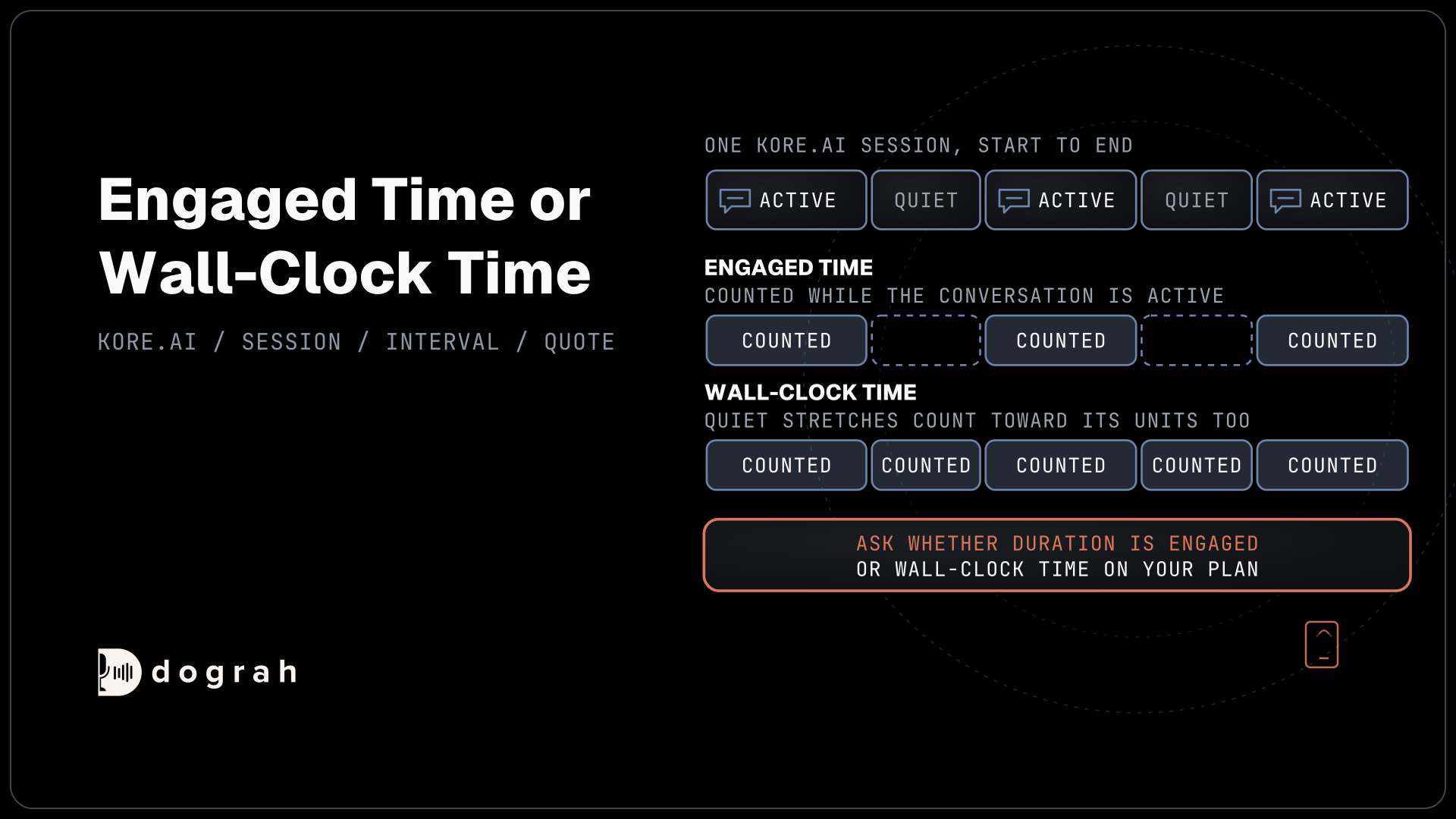
The duration basis matters as much as the interval. Your plan meters either engaged time, counted while the conversation is active, or wall-clock time. With wall-clock time, quiet stretches inside a session count toward its units too. Cognigy counts conversations by user inputs instead, and our Cognigy pricing post walks through that model.
What never reaches the bill
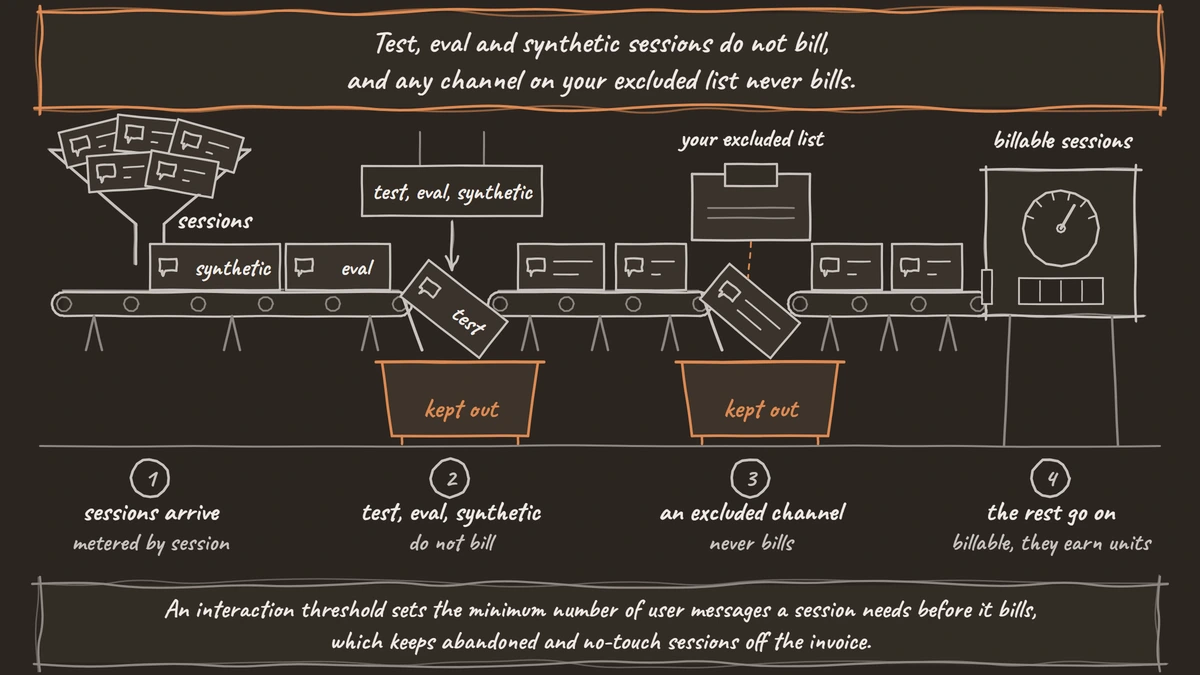
Several kinds of session are kept out of billing on purpose. Test, eval and synthetic sessions do not bill, and any channel on your excluded list never bills. An interaction threshold sets the minimum number of user messages a session needs before it bills, which keeps abandoned and no-touch sessions off the invoice.
Multi-agent conversations have their own setting. When one agent hands work to another, scope consolidation rolls the parent and its child agents into one scope, so the conversation counts once. That roll-up can also be set to report only, which groups the sessions in the dashboard without changing the bill. Ask which mode your contract uses, because it decides whether a multi-agent design costs more than a single agent.

Open Source Alternative to Vapi / Retell
Self-hosted voice agent platform — no per-minute fees
dograh-hq/dograh
Star on GitHub
Voice minutes, models and phone lines on top
A phone call costs more than its session units. Kore.ai adds LLM, tool and voice-minute add-ons on top of the base units, and it reports voice separately because voice is metered in minutes. So a voice agent bill has a session line for each module, a voice-minute line, and a line for model and tool use.
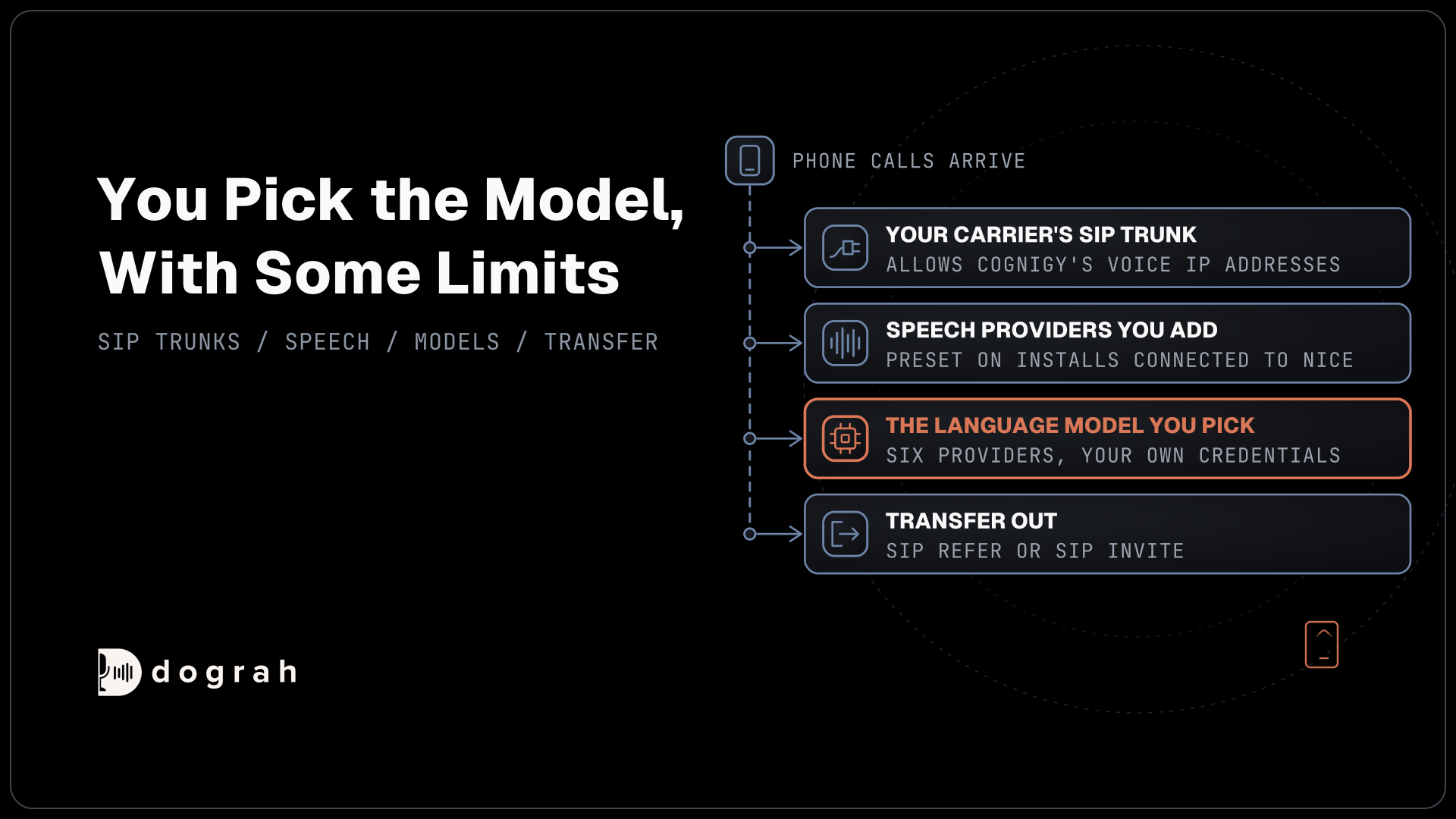
Models are set up at the workspace. Admins can enter per-token LLM price overrides, in US dollars by default, and add provider API keys, which Kore.ai stores encrypted. Consumption is reviewed under Account > Billing & Usage. Whether model calls on your contract run on Kore.ai's credits or on your own provider accounts is a question for the quote.
Phone lines come from two places. Kore.ai's Voice Gateway can buy a number through Twilio, or you bring your own SIP and your carrier routes the number, and either way the carrier minutes are a cost of their own. In realtime speech-to-speech mode with parallel transcription, the caller's audio goes to a speech-to-text provider and the speech-to-speech provider at once, and Kore.ai tells you to review usage and billing for both.
A formula for reading a Kore.ai quote
Kore.ai sets its rates in the offer, so this worked example uses letters in place of prices. Write I for your plan's billing interval and d for the length of one billable session, in the same time unit. That session earns ceil(d ÷ I) base units, and the month's bill builds up line by line.
| Line on the bill | How to work it out |
|---|---|
| Session units (U) | Add ceil(d ÷ I) across every billable session in the month |
| Platform and modules | U, or the session count, times the price your quote sets for each module |
| Voice | V voice minutes times the voice-minute rate |
| Models and tools | Model and tool use at the rate your contract sets |
| Phone | Numbers and carrier minutes, through Kore.ai's Twilio route or your own SIP provider |
In plain words, a session one second longer than one interval earns two units, so how long your calls run against I decides the count. Engaged time keeps quiet stretches out of d, and wall-clock time puts them in. Bring last month's spread of call lengths to the quote meeting, because an average hides the calls that tip into an extra unit.
Deployment choices and where call data goes
Kore.ai runs in three ways, and the quote should price the one you pick. Kore.ai offers multi-tenant SaaS on a public cloud, a dedicated single-tenant VPC and on-premises deployment, and its certifications include SOC 2 Type 2, PCI DSS and ISO/IEC 27001:2022. Ask what each option costs and what support comes with it.
All three run Kore.ai's closed code. Agents are written in ABL, Kore.ai's own Agent Blueprint Language, and call audio goes to the speech providers your admins configure, or to two of them in realtime mode. On-prem keeps the runtime inside your network, but the code stays Kore.ai's, so your security team reviews a contract and not the source. Our roundup of on-prem voice AI platforms covers the closed vendors that sign on-prem deals.
Join the Dograh Community
Dograh is an OSS alternative to Vapi. Join our Slack community for queries, releases, best practices & community interactions.
Questions to ask in a Kore.ai quote
Start with the units. Ask which modules the quote includes and the price of each, and whether each module is priced per session, as on AWS Marketplace, or per billing unit. Ask what billing interval your plan sets, whether duration is engaged or wall-clock time, what your interaction threshold is and which channels are excluded. Ask too whether scope consolidation changes the bill or only the report.
Then ask about the lines on top. Ask what a voice minute costs and whether that price covers speech-to-text and text-to-speech or only the gateway. Ask whether model and tool calls are billed by Kore.ai or on your own provider accounts, and at what rate. Ask whether agent-facing modules such as Agent AI and Quality AI are priced per session or per seat.
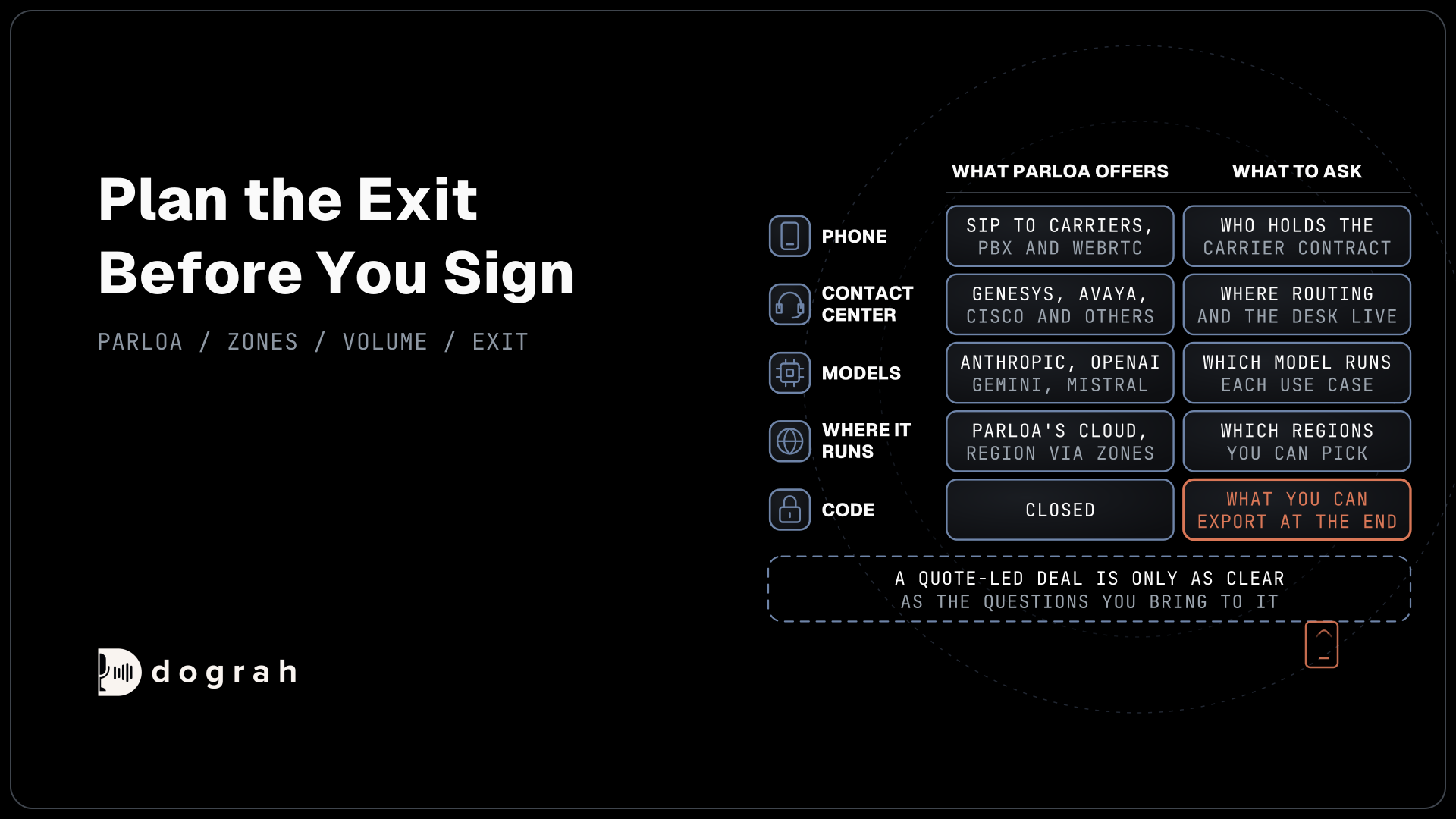
Finish with the contract and the exit. Ask about the term, any minimum commitment and overage, since the Marketplace contract runs 12 months with no refunds. Ask whether numbers bought through the Twilio route can be ported out, and what you can export at the end, including agents written in ABL, recordings and conversation data. To see what else is on the market and what it costs, our guide to Kore.ai alternatives prices the options at one volume.
Where Dograh fits: open code you host and price
Dograh takes the other route, with the whole platform in its GitHub repository under the BSD 2-Clause license. You can self-host it with Docker Compose on a server with at least 8 GB of RAM and 4 vCPUs, or run it on Dograh Cloud. The Enterprise plan adds on-prem deployment inside your own data perimeter.
It works as the orchestration layer that runs the call flow, tools and telephony, and you pick the speech-to-text, LLM and voice provider for each agent. That can be Dograh's own models, your keys with a provider you already pay, or open-weight models served on your own machines. Bring your own key moves the contract to you while the audio still reaches that provider, so call audio stays inside your network only when the models run there too. Agents download as a JSON file from the editor, and completed runs export as a CSV report.
The bill has fewer lines to decode. Self-hosted Dograh has no per-minute platform fee, but servers, model keys and phone minutes still cost money. Dograh Cloud charges a 1¢-a-minute platform fee, so 15,000 call minutes in a month come to a $150 platform fee before models and phone. Self-hosted installs run 10 calls at once by default, a setting you can raise, and the Cloud pay-as-you-go plan includes 10, with more on request. Running it yourself means the server, the database and every upgrade are your team's, the open-source edition is supported by the community in Slack, and custom SLAs come with the Enterprise plan.
Glossary
- Session
- Kore.ai's billable unit, one conversation between an agent and a user. It stays open when the user moves between agents and closes on the idle timeout or maximum session age.
- Billing interval
- The block of session time that one Kore.ai billing unit covers. A session earns its length divided by the interval, rounded up, so the interval in your plan sets the unit count.
- Interaction threshold
- The minimum number of user messages a Kore.ai session needs before it bills. It keeps abandoned and no-touch sessions off the invoice.
- Platform fee
- The amount a voice agent platform charges to run the call, excluding the models and the phone line. Self-hosted Dograh has none. Dograh Cloud charges a 1¢-a-minute fee.