
Cognigy pricing is set by quote, per billable conversation, which covers up to 50 user inputs in 24 hours. On NiCE CXone, each 10 minutes of a voice call counts as one conversation, and default AI models now sit inside that price. Teams that want to own the platform can run open-source Dograh, which publishes its per-minute rate.
Key Takeaways
- Cognigy prices each deal by quote, billed per conversation of up to 50 inputs.
- On NiCE CXone, a 12-minute voice call counts as two conversations.
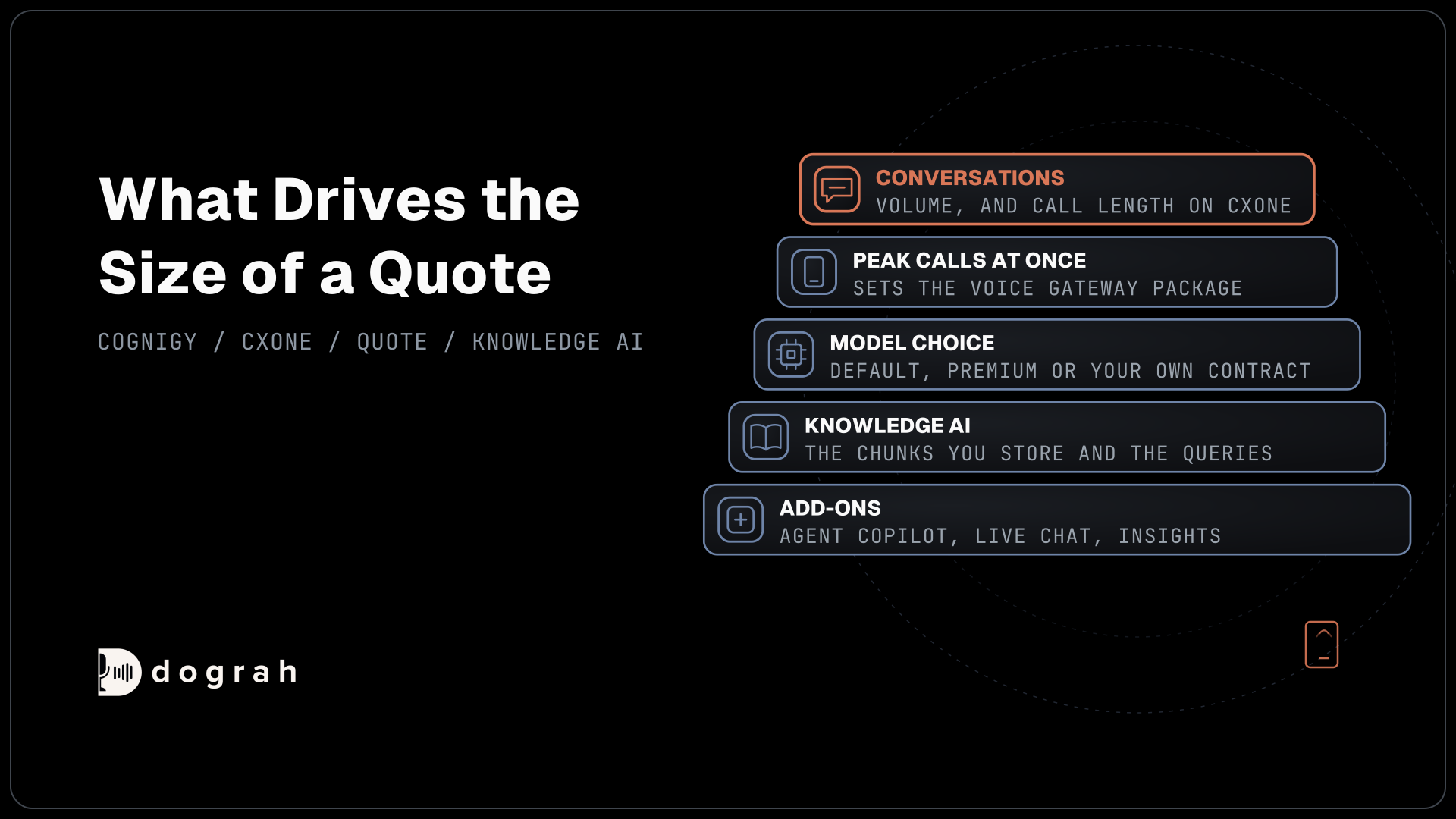
- Voice lines, models, Knowledge AI and add-ons each change the size of a quote.
Cognigy prices each deal by quote, so the useful work is understanding what gets counted. We explain the billing units, what changed after NiCE bought Cognigy, what drives the cost and what to ask in a quote, then where Dograh fits as the open-source option with published rates.
How Cognigy bills a billable conversation
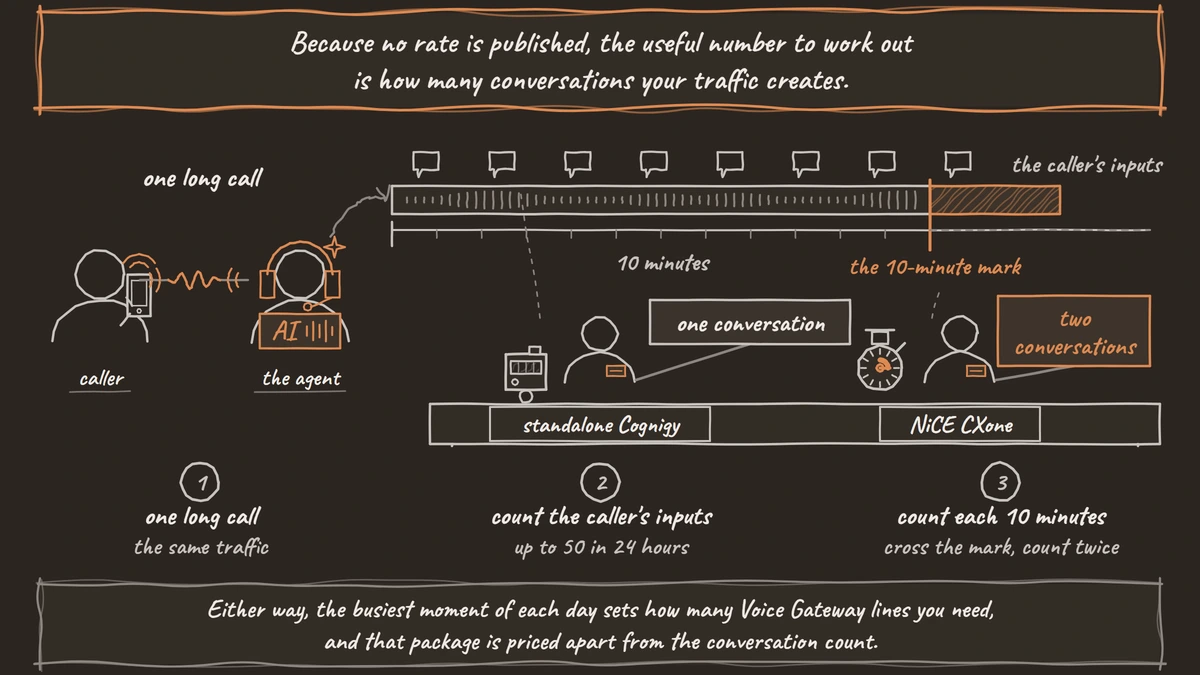
Cognigy prices each deal by quote through its sales team, and what it does publish is the unit. Cognigy defines a billable conversation as up to 50 user inputs within a 24-hour period, so a caller who speaks 12 times in one call uses one conversation, and a long exchange past 50 inputs starts a second.
Voice adds a second meter. Voice Gateway customers buy packages of concurrent lines, reporting tracks the busiest moment of each day, and use above the package counts as overage for that day. Knowledge AI is billed by the chunks you store, which have a hard limit, and the queries you run, which can go into overage. Endpoint transformers that run without starting a flow also add a billable conversation for every 50 runs.
What changed after NiCE bought Cognigy
NiCE closed its purchase on 8 September 2025 and now sells Cognigy two ways, inside NiCE CXone and as a product of its own. The CXone version counts differently. Digital channels count up to 50 end-user messages in 24 hours as one conversation, and voice counts each 10 minutes of a call as one conversation.
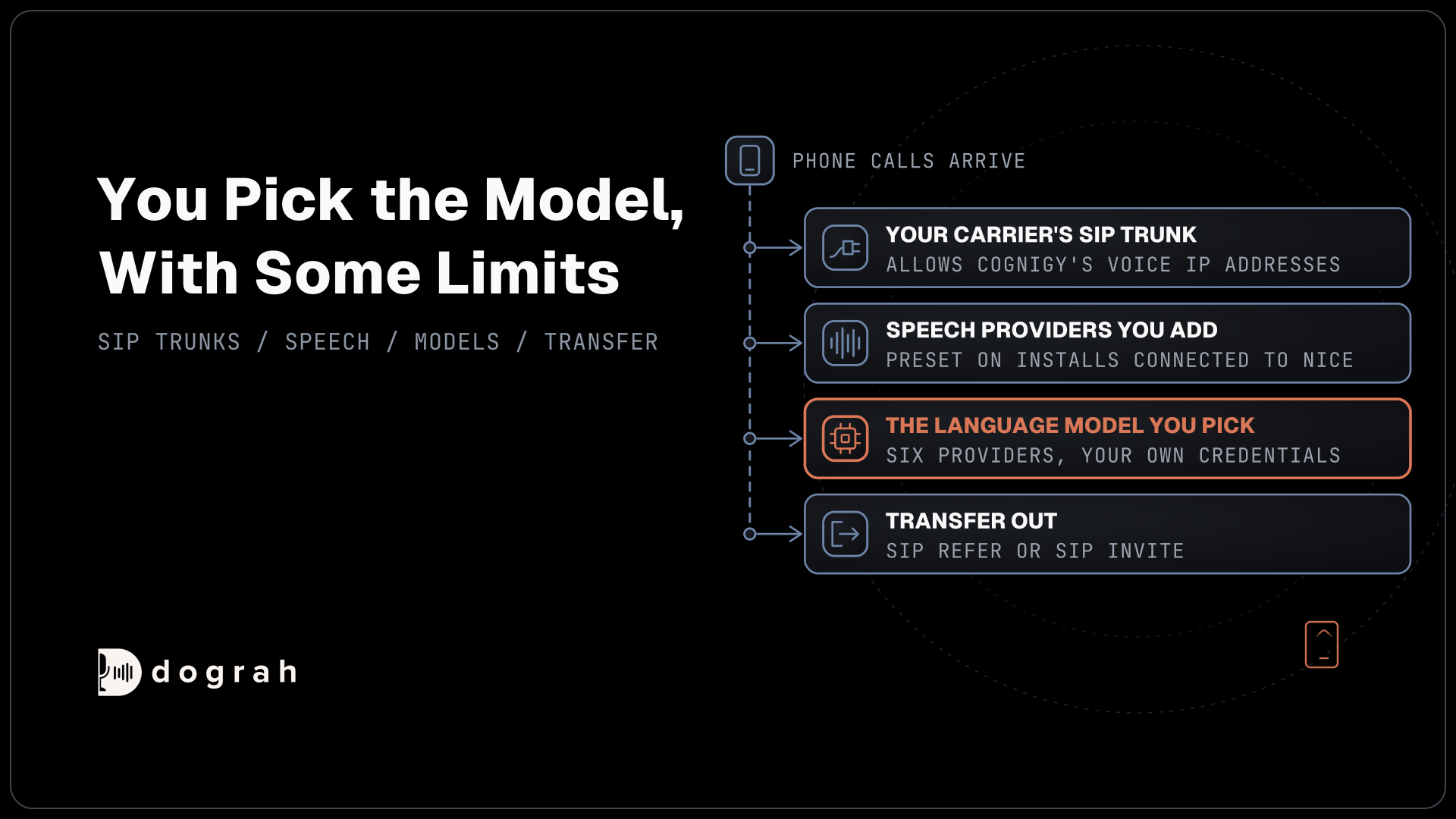
On 12 November 2026 NiCE launched the next generation of NiCE Cognigy. It says default AI models are included in the conversation price, with no separate model contract, and premium third-party models can be added with usage-based billing. The included models require a new SKU and work only on installs connected to NiCE CXone, set up through your customer success manager.
Deployment narrowed too. Cognigy no longer offers on-premises installs to new customers, so a new buyer prices Cognigy SaaS or CXone, while existing on-prem installs keep running and receiving updates. NiCE says everything already in production keeps running unchanged. Our Cognigy review covers the product side of these changes.
Counting a month of calls, an example
Because no rate is published, the useful number to work out is how many conversations your traffic creates. As an example, take a line that handles 10,000 calls in a month, where 8,500 calls run 10 minutes or less and 1,500 run between 11 and 20 minutes, and no call passes 50 caller inputs.
| Calls | Length | Standalone Cognigy | NiCE CXone Cognigy |
|---|---|---|---|
| 8,500 | Up to 10 minutes | 8,500 conversations | 8,500 conversations |
| 1,500 | 11 to 20 minutes | 1,500 conversations | 1,500 x 2 = 3,000 conversations |
| 10,000 | Total | 10,000 conversations | 11,500 conversations |
The same traffic counts 15% higher on CXone, because long calls cross the 10-minute mark. On standalone Cognigy, length matters only if a call passes 50 caller inputs. Either way, the busiest moment of each day sets how many Voice Gateway lines you need, and that package is priced apart from the conversation count.
What drives the size of a Cognigy quote
Conversation volume comes first, and on CXone so does call length. After that, the peak number of calls at the same time decides the Voice Gateway package, and a busy Monday morning matters more than a quiet month.
Model choice is next. Default models are now in the conversation price on CXone installs with the new SKU, premium third-party models add usage billing, and your own model contracts move that cost to a separate bill. Premium speech from Deepgram and ElevenLabs is billed by usage as well.
Knowledge AI storage and queries add their own lines. Cognigy also sells Agent Copilot, Live Chat, Insights and a Simulator for testing, so ask which of them the quote includes.
Questions to ask in a Cognigy quote
Cognigy's free-trial link leads to a NiCE Cognigy trial signup, and trial environments run in Europe and the US. Ask sales how long the trial lasts and what it limits before you build on it. Then take these questions into the quote.
- What is the price per billable conversation, and is there a monthly or yearly minimum?
- Are voice calls counted by user inputs or by 10-minute blocks on this contract?
- How many concurrent Voice Gateway lines does the package include, and what is the overage rate?
- Does the contract include the new SKU for included models, and which models does it cover?
- What do premium models and premium speech cost per unit?
- What are the Knowledge AI chunk and query limits?
- Which add-ons are in the price, and which are extra?
- How long is the contract, and how does the price change at renewal?
- Which SaaS region will store our data?
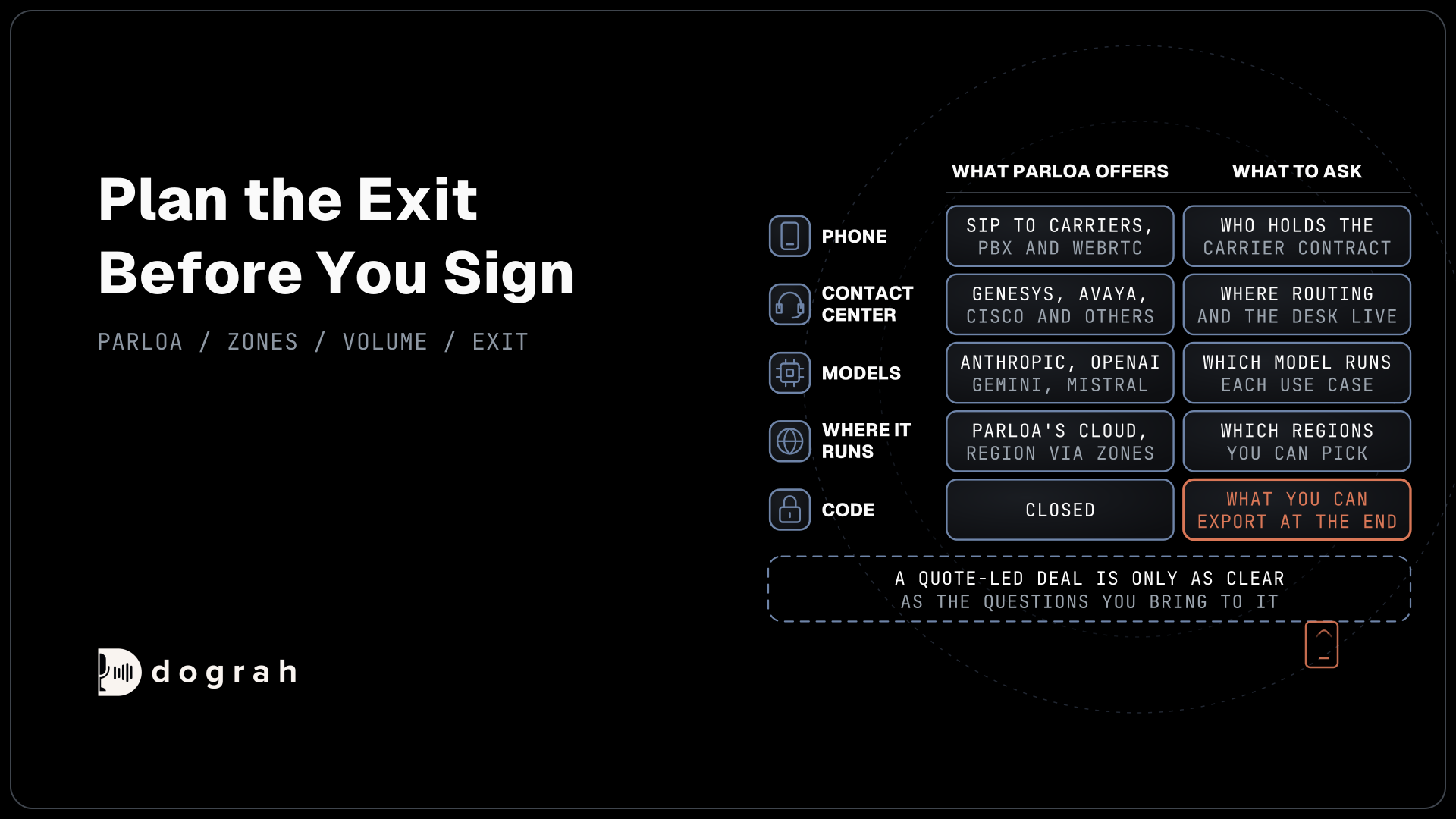
- What can we export when the contract ends?
Closed code and call data in the price
A Cognigy quote buys access to a closed, licensed platform. Calls run in the SaaS or CXone region you choose, and caller audio goes to whichever speech providers are set up. The quote decides the region, so ask for it in writing.
The exit is part of the price too. Cognigy snapshots are encrypted and work only in Cognigy, and they leave out logs and analytics, so conversation data comes out through a read-only OData endpoint. If you want options that avoid this, our roundup of Cognigy alternatives groups them by why teams leave.
Where Dograh fits
Dograh is an open-source voice agent platform under BSD 2-Clause, so you can read the code and run it yourself. You can self-host it with Docker Compose on one server with 8 GB of RAM and 4 vCPUs, run it on Dograh Cloud, or take on-prem and private-cloud deployment on the Enterprise plan. You pick the speech, language and voice models for each agent.
The rates are public. Self-hosted Dograh has no per-minute platform fee, but servers, model keys and phone minutes still cost money. Dograh Cloud charges a 1¢-a-minute platform fee and includes 10 concurrent calls, with more on request. As an example, 10,000 calls of four minutes is 40,000 minutes, or a $400 platform fee at that rate before models and phone time. Self-hosting means your team runs the server, the database and the upgrades, with community support on open source and custom SLAs on Enterprise.
Dograh is voice-first, with a web chat widget, while Cognigy also covers messaging channels and tools for human agents. Our Dograh vs Cognigy comparison sets the two side by side.

Open Source Alternative to Vapi / Retell
Self-hosted voice agent platform — no per-minute fees
dograh-hq/dograh
Star on GitHub
Glossary
- Billable conversation
- Cognigy's charging unit, which holds up to 50 user inputs over 24 hours. On NiCE CXone, each 10 minutes of a voice call counts as one conversation instead.
- Concurrent line
- One phone call the Voice Gateway can carry at a time. Cognigy sells lines in packages, and the busiest moment of a day decides any overage.
- Overage
- Use above what a package includes, billed on top. Cognigy applies it to concurrent voice lines per day and to Knowledge AI queries.
- SKU
- A product line item on a contract. Cognigy's included models need a new SKU, so a contract without it does not get them.