
Dograh and Replicant differ in who builds and runs the agent. Replicant is a closed, managed program, where its delivery team builds agents for voice, chat and SMS under an agreed business outcome. Open-source Dograh suits teams that want to build and change the agent themselves, on their own servers or on Dograh Cloud.
Key Takeaways
- Replicant's delivery team builds the agents, and your staff can edit scripts.
- Replicant ships ready connectors for Genesys, NICE, Five9 and Amazon Connect.
- An open platform moves the build, the servers and the call data to your team.
Replicant sells a managed program as much as software, while Dograh is an open-source platform that your own team builds on. The real choice is who builds and changes the agent, so this post starts there and then shows what that means for your contact center, your call data and your monthly bill. The last section covers when Dograh fits.
Dograh vs Replicant at a glance
Replicant builds and runs automation for large contact centers, and Dograh gives a team the platform to build its own voice agents. Each row below asks both products the same question, and the sections after it explain the rows that change a decision.
| Row | Replicant | Dograh |
|---|---|---|
| What you buy | A managed program with a delivery team and an agreed business outcome | Open-source software you run, or Dograh Cloud |
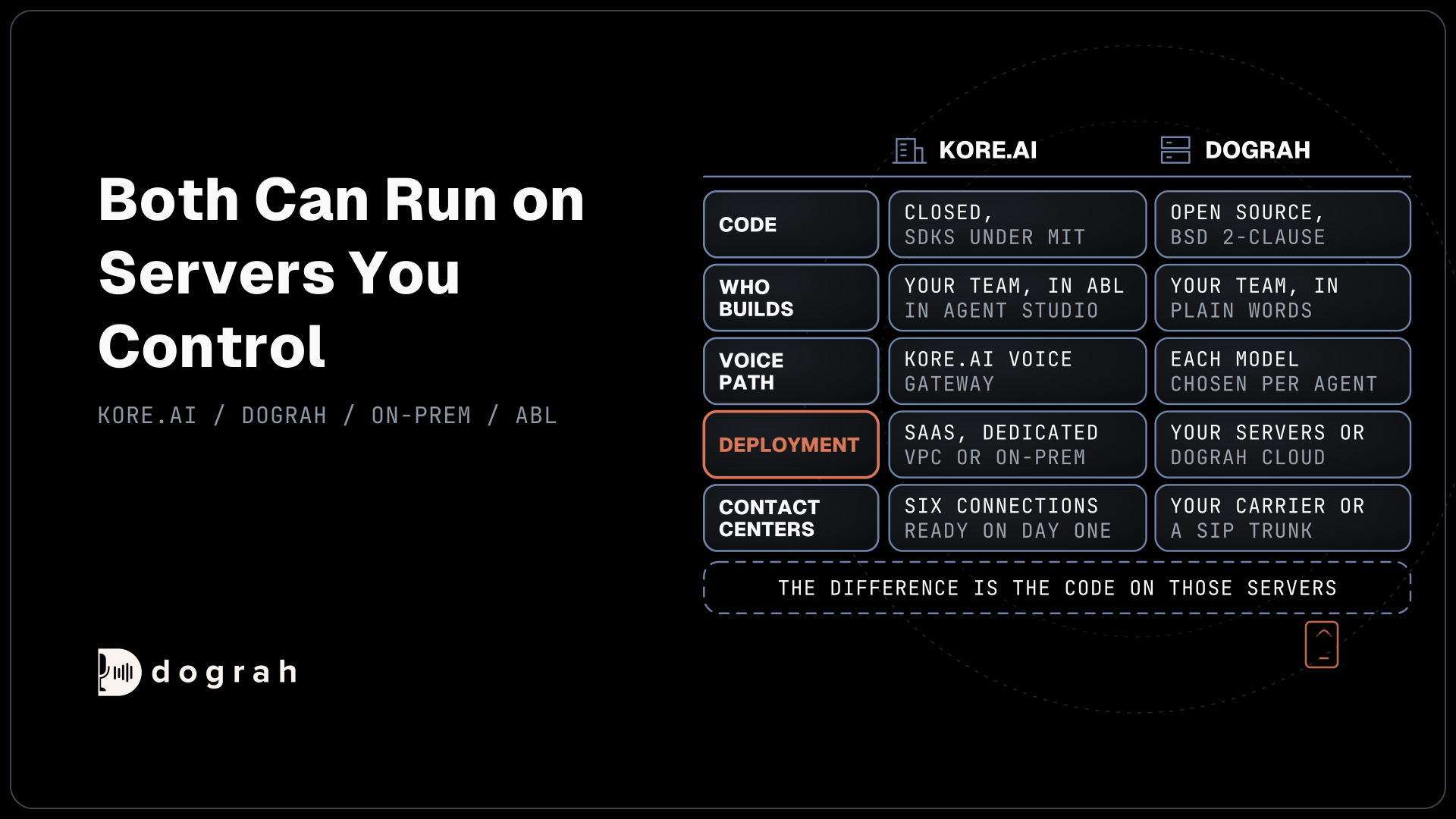
| Code | Closed | Open source under BSD 2-Clause |
| Who builds the agent | Replicant's Delivery and Implementation team, with point-and-click script edits for your staff | Your team, in the Agent Builder, on the canvas or through the MCP server |
| Channels | Voice, chat and SMS | Phone and browser voice, a web chat widget and inbound WhatsApp voice calls |
| Languages | Over 30 languages and dialects | Set by the speech-to-text and voice you pick for each agent |
| Models | Multiple fine-tuned LLMs chosen by Replicant | Dograh's own, your keys or open-weight models, picked per agent |
| Contact center and CRM | Genesys, Talkdesk, Ujet, NICE inContact, Five9, Amazon Connect, 8x8, Salesforce, Zendesk, ServiceNow and more | Your carrier or SIP trunk, Asterisk ARI, Transfer Call and HTTP API tools |
| Deployment | Run by Replicant | Your servers with Docker Compose, Dograh Cloud, or on-prem on Enterprise |
| Call data | Never retained, reused or used for training, with default redaction | Your own Postgres and storage when self-hosted |
| Compliance | SOC 2 Type 2, PCI DSS and HIPAA, independently validated | Self-hosted, no BAA with Dograh is needed |
| Cost shape | Pay-as-you-go in a quoted contract, month-to-month or multi-year | Self-hosted, no per-minute platform fee. Dograh Cloud, 1¢/min platform fee |
Who builds and changes the agent
This row matters most, because it decides who your team calls when a script needs to change. Replicant's Conversation Automation is built by "a team of experienced Delivery & Implementation experts", and its pricing includes a dedicated team for initial success and continuous improvement. Your staff can update conversations with point-and-click script editing.
Buyers see the trade from the other side. A Capterra reviewer quoted in eesel's roundup of Replicant alternatives put it plainly, "Changes are in the hands of the Replicant team only." For a support team without engineers to spare, a vendor that owns the build is the product. For a team that wants to test a change this afternoon, it is a queue.
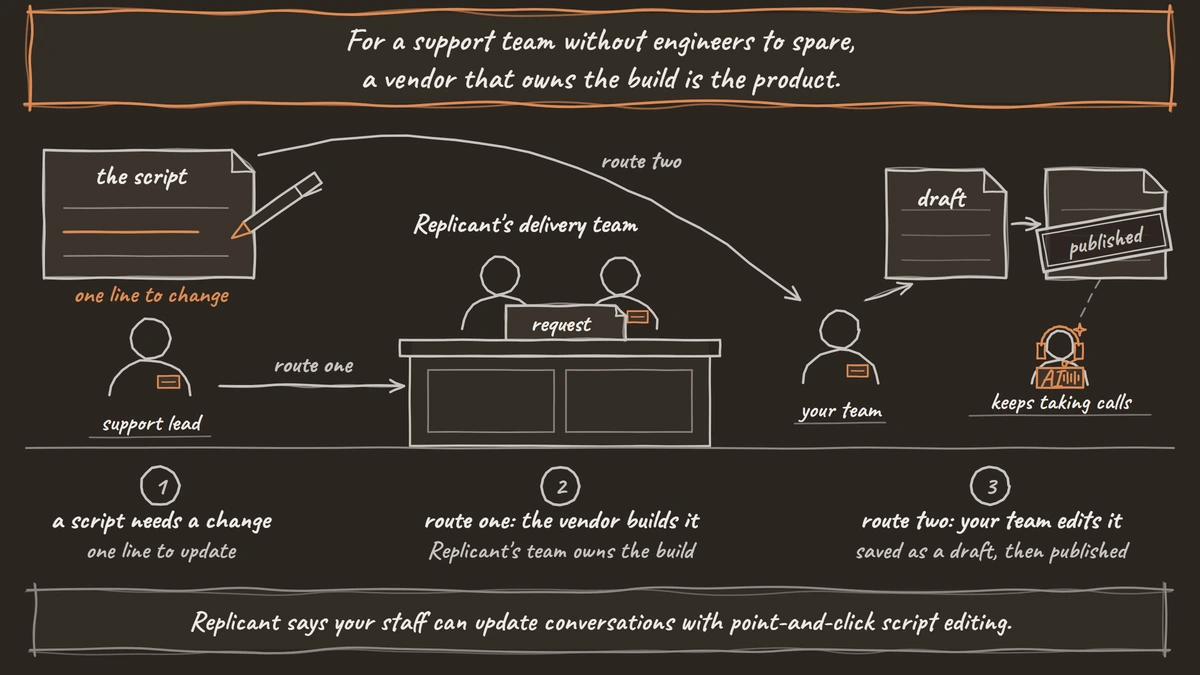
On the open side, your own team builds the agent. You describe the call on the "Create an agent" page, approve the "Your agent requirements" card, and "Test agent" publishes version 1. Later edits in the Builder tab save as a draft while the published version keeps taking calls, the canvas stays open for hand changes, and the MCP server lets an AI assistant create and edit agents. On your own install, the Agent Builder needs a Dograh Service Key, while hand edits on the canvas need none.
Voice, chat and SMS on each side
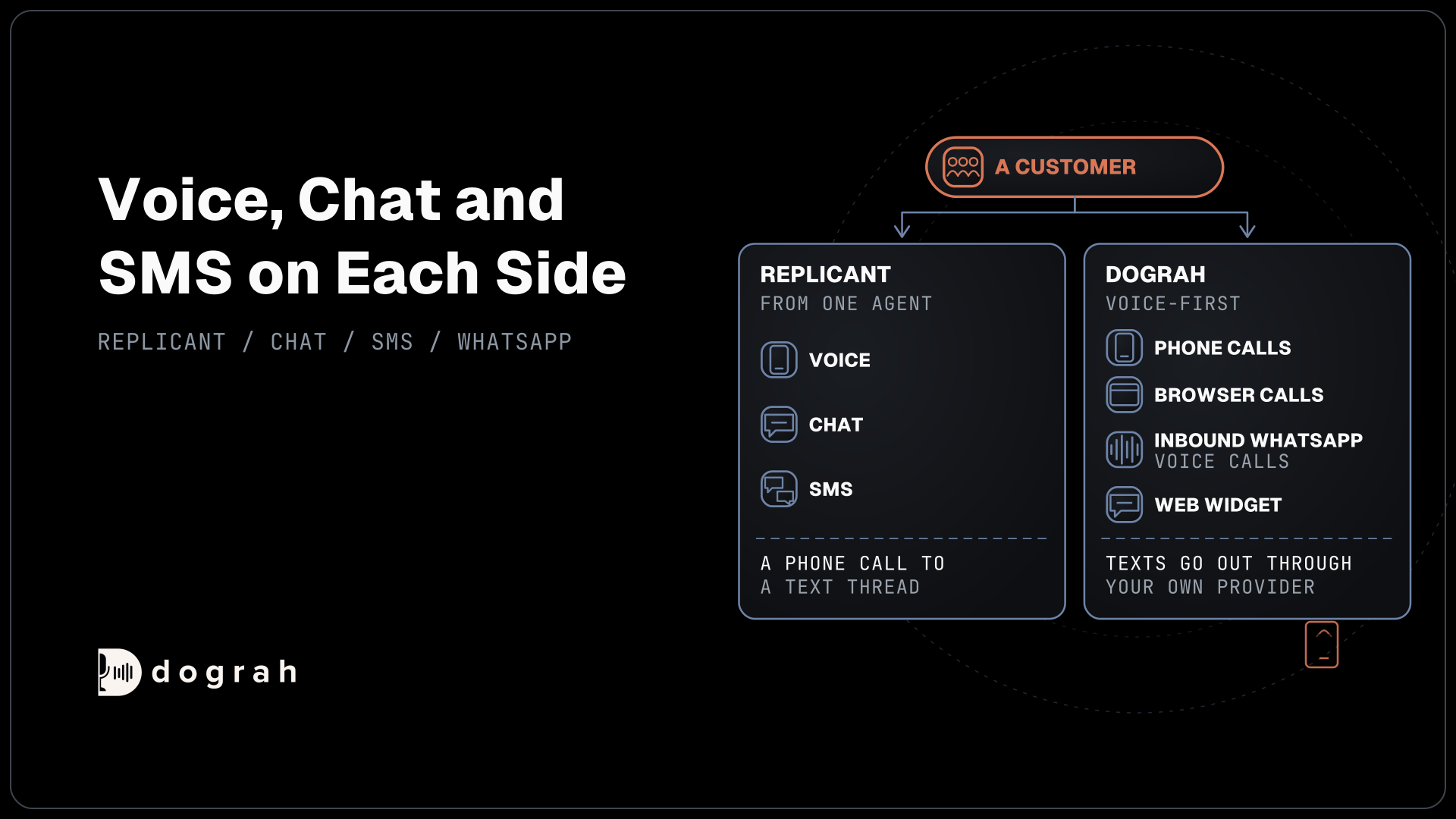
Replicant covers more channels from one agent. Its agents answer by voice, chat and SMS, in over 30 languages and dialects, so one program can carry a customer from a phone call to a text thread.
Dograh is voice-first. Agents answer phone calls, browser calls and inbound WhatsApp voice calls, and the website widget can run as voice or as a typed chat panel. Callers answer by voice, and texts go out through your own provider via an HTTP API tool. Languages follow the speech-to-text and voice you pick for each agent, with a Multilingual (Auto-detect) setting in the agent's Model tab.

Open Source Alternative to Vapi / Retell
Self-hosted voice agent platform — no per-minute fees
dograh-hq/dograh
Star on GitHub
How each reaches your contact center
Replicant comes with named connections. Its integration list covers Genesys, Talkdesk, Ujet, NICE inContact, Five9, Amazon Connect and 8x8 among contact center platforms, Salesforce, Zendesk, ServiceNow, Kustomer and Gladly among CRMs, and Cisco, Telnyx, Spectrum and Avaya for telephony, and the list is not exhaustive. A team on one of those keeps its routing and reporting as they are.
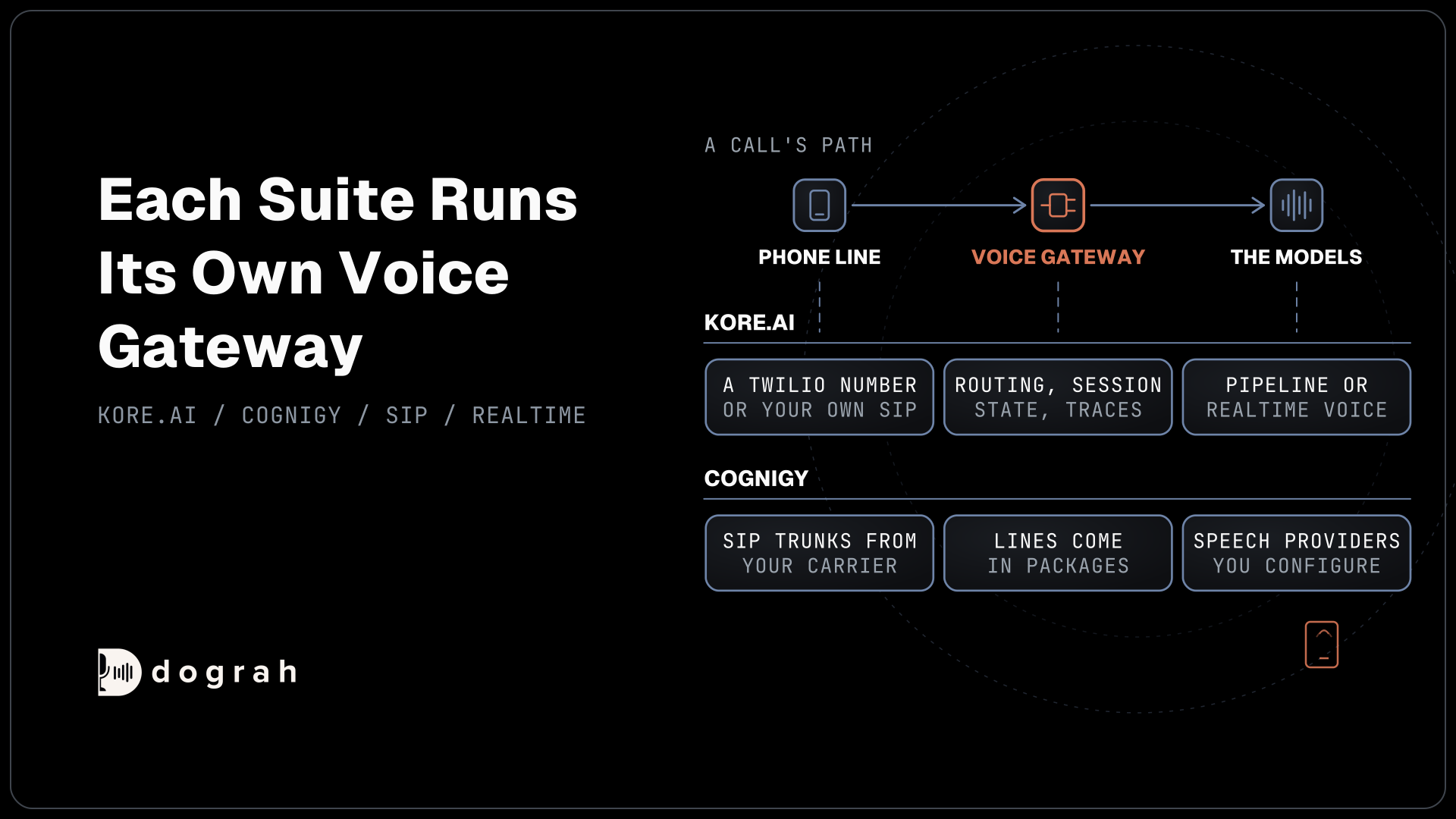
Dograh reaches a contact center through the phone line. Calls arrive over Twilio, Telnyx, Plivo, Vonage, Exotel, Vobiz or Cloudonix, or from an existing PBX through Asterisk ARI, so Telnyx and Twilio show up on both sides. For handoffs, Transfer Call supports Twilio, Telnyx, Plivo, Cloudonix and Asterisk ARI. Dograh calls the destination first and connects the caller only when someone answers, and if the line is busy, nobody answers or the attempt fails, the call returns to the agent and carries on.
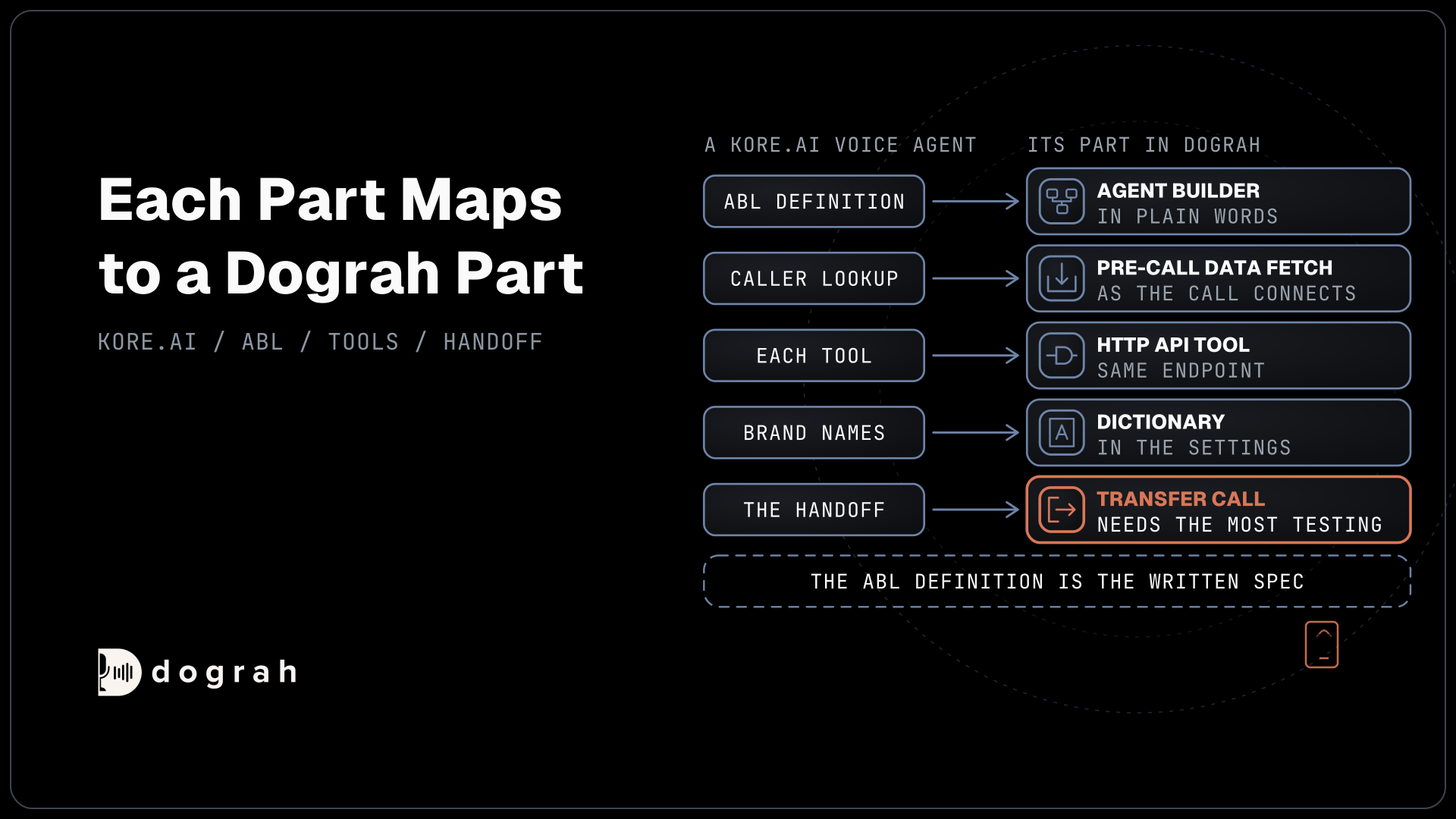
Business systems connect through HTTP API tools and MCP tools during the call, Pre-Call Data Fetch as it connects, and a Webhook node after it ends. The agent can write a note to the CRM before it transfers, so the person who answers sees the details in their own system.
Where call data sits
Replicant runs the platform for you, and its security record is strong. Independent auditors have validated its SOC 2 Type 2, PCI DSS and HIPAA certifications, according to its security page, which also promises "Customer data is never retained, reused, or used for training" and redacts personal and payment data from transcripts, analytics and QA by default. Ask in the contract where your calls are processed and how long records are kept. Our Replicant review covers the rest of its security list.
Self-hosted Dograh keeps runs and transcripts in your Postgres database and recordings in MinIO storage, until your team deletes them. You can self-host it with Docker Compose on one server with 8 GB of RAM and 4 vCPUs. Self-hosting also means no BAA with Dograh is needed, while model providers and the phone carrier may need one, depending on what they store.
The audio follows the models. With bring your own key (BYOK), the model contracts are yours, but the audio still travels to each provider. Open-weight models on your own machines keep the audio inside your network for the whole call.
How each prices a month
Replicant prices each deal by quote. Its page describes pay-as-you-go pricing under month-to-month or multi-year terms, with an agreed-upon business outcome for performance evaluation and a dedicated team. Our post on Replicant pricing reads each of those lines and lists the questions for the quote.
The open side prints its rate, and the hosting choice sets the bill. Self-hosted Dograh has no per-minute platform fee, though servers, model keys and phone minutes still cost money. A self-hosted install runs 10 calls at once by default, a limit you can raise, and the server, the database and the upgrades become your team's job, with support through the open-source community and custom SLAs on Enterprise. Dograh Cloud handles the hosting for a 1¢-a-minute platform fee and includes 10 concurrent calls, with more on request.
Where Replicant wins
Replicant is the stronger pick for a large support team that wants the program built and run for it. Its delivery team designs, builds and tunes the agents, and the contract ties the work to an agreed business outcome, so the vendor is judged against a target you set together. Replicant reports more than 200 deployments, and it has helped enterprises automate customer conversations since 2017.
It also covers more ground out of the box. One agent handles voice, chat and SMS in over 30 languages, its listed connectors reach seven contact center platforms and five CRMs, and Conversation Intelligence scores human and AI conversations for QA and coaching. Independently validated SOC 2 Type 2, PCI DSS and HIPAA, with redaction on by default, shorten a security review. If that is your shape, Replicant fits better.
Join the Dograh Community
Dograh is an OSS alternative to Vapi. Join our Slack community for queries, releases, best practices & community interactions.
When Dograh fits
Dograh fits when voice is the main channel and you want to own the agent and the platform. That means changing scripts yourself the same day, reading the code, choosing every model in the call path and keeping recordings on servers you run.
To test the fit, start one agent on Dograh Cloud or a Docker Compose install and route one queue's overflow or after-hours line to it through your own carrier. Point Transfer Call at a test queue number and try the handoff over a real phone call, since browser test calls cannot transfer. If you want more options first, our roundup of Replicant alternatives covers the field.
Glossary
- Managed program
- A purchase where the vendor's team designs, builds and tunes the agents for you, usually under a contract with agreed targets. Changes beyond simple edits go through that team.
- Contact center platform
- The cloud software that routes calls and chats to human agents, such as Genesys, Five9 or Amazon Connect, often called contact center as a service (CCaaS).
- SIP trunk
- A phone connection that carries calls over the internet between a carrier and a phone system or voice platform. It lets an agent sit beside an existing contact center.
- Bring your own key (BYOK)
- Running the platform on your own model provider accounts. The contracts and bills are yours, and the call audio still reaches those providers.