
The best voice AI with human handoff waits for a person to answer, briefs that person, and keeps the caller when nobody picks up. Synthflow, Bland and Retell AI offer modes that wait, while some end the call on no answer. Open-source Dograh, which you can self-host or run on Dograh Cloud, connects the caller only once someone answers.
Key Takeaways
- Dograh rings the destination first and keeps the caller with the agent on no answer.
- On Vapi, the spoken handoff modes work on Twilio numbers only.
- Some platforms end the call when a cold transfer goes unanswered.
A voice agent's handoff to a person is the moment a caller decides whether the call went well. We compare seven platforms on four questions from each vendor's transfer docs, starting with what happens when nobody answers, then we talk about how to pick one for your phone line.
What to check in a voice AI handoff
Buyers already put handoff near the top of the list. In RingCentral's voice AI report, 70% of enterprises said voice AI is acceptable only with strong guardrails, verified accuracy and human handoff, against 42% of mid-sized and 41% of small businesses. A handoff that drops the caller undoes the rest of the call.
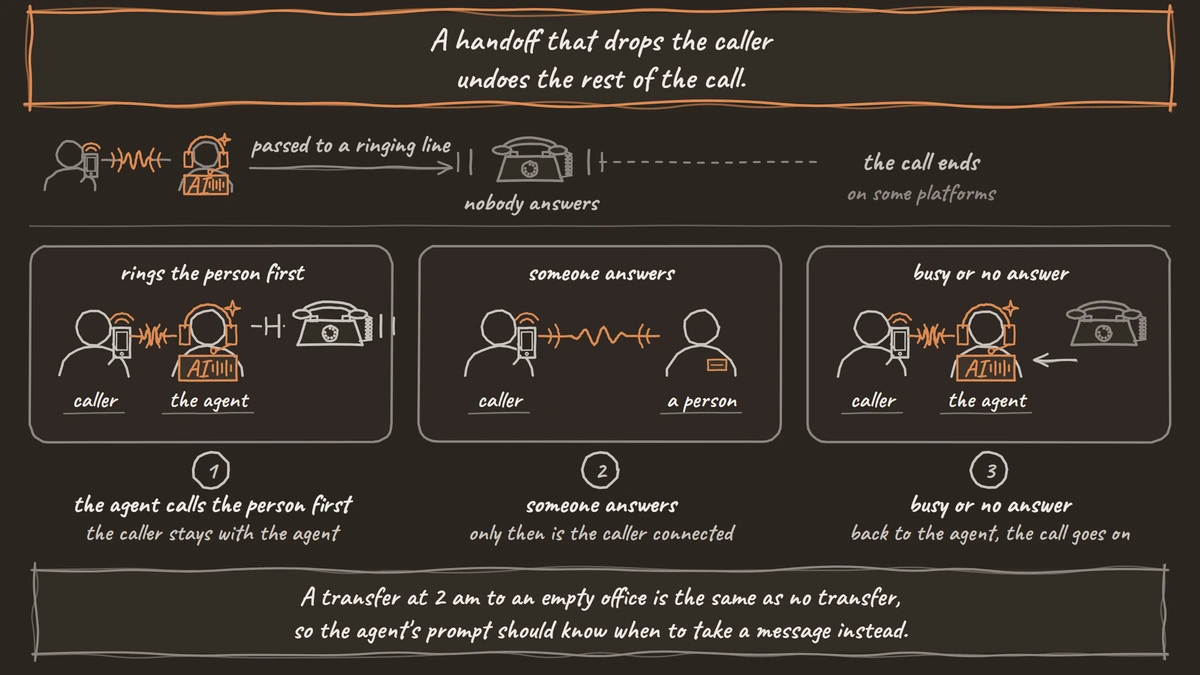
Four questions separate the platforms. The first is whether the agent waits for someone to answer before it lets go of the caller, and the second is what the person who answers hears or receives. The third is what happens when nobody answers or the line is busy, and the last is which carriers the better mode needs. Our call transfer and human handoff guide explains the transfer types in plain words, so this list sticks to how each vendor handles those four questions.
Voice AI human handoff compared
Every cell comes from each vendor's transfer docs. Where those docs are silent, the cell says so.
| Platform | Waits for an answer | What the person hears or gets | When nobody answers | Carrier limits |
|---|---|---|---|---|
| Dograh | Yes, calls the destination first | Optional spoken introduction on Twilio, notes written to your system beforehand | Caller stays with the agent | Twilio, Telnyx, Plivo, Cloudonix, Asterisk ARI |
| Vapi | Not by default, an experimental mode holds the caller | Spoken message or summary on Twilio, summary SIP header on Vapi numbers and SIP | Call ends on Twilio, Telnyx and Vonage, fallback plan on Vapi numbers and SIP | Spoken modes Twilio only |
| Retell AI | In whisper and agentic modes | Private whisper, three-way message, or an AI agent that briefs them | Ring duration, agentic cancel returns the caller | Phone calls only, caller ID depends on provider |
| Synthflow | Yes, with Human Detection | Message or AI summary | Warm mode retries or falls back, cold transfer ends the call | Original caller ID on Synthflow numbers only |
| Bland AI | Yes, in the Enterprise warm option | Briefing, then a merge announcement both hear | Hold timeout, then a fallback message or the pathway continues | Warm option on Enterprise |
| ElevenLabs Agents | In Twilio's warm conference | Summary for the operator in warm mode | Not stated in the docs | SIP, Twilio and Exotel each have their own modes |
| PolyAI | Only with SIP INVITE | Context in SIP headers, Handoff API and Conversations API | No visibility with REFER or BYE | Twilio locked to REFER |
Dograh: the caller joins once someone answers
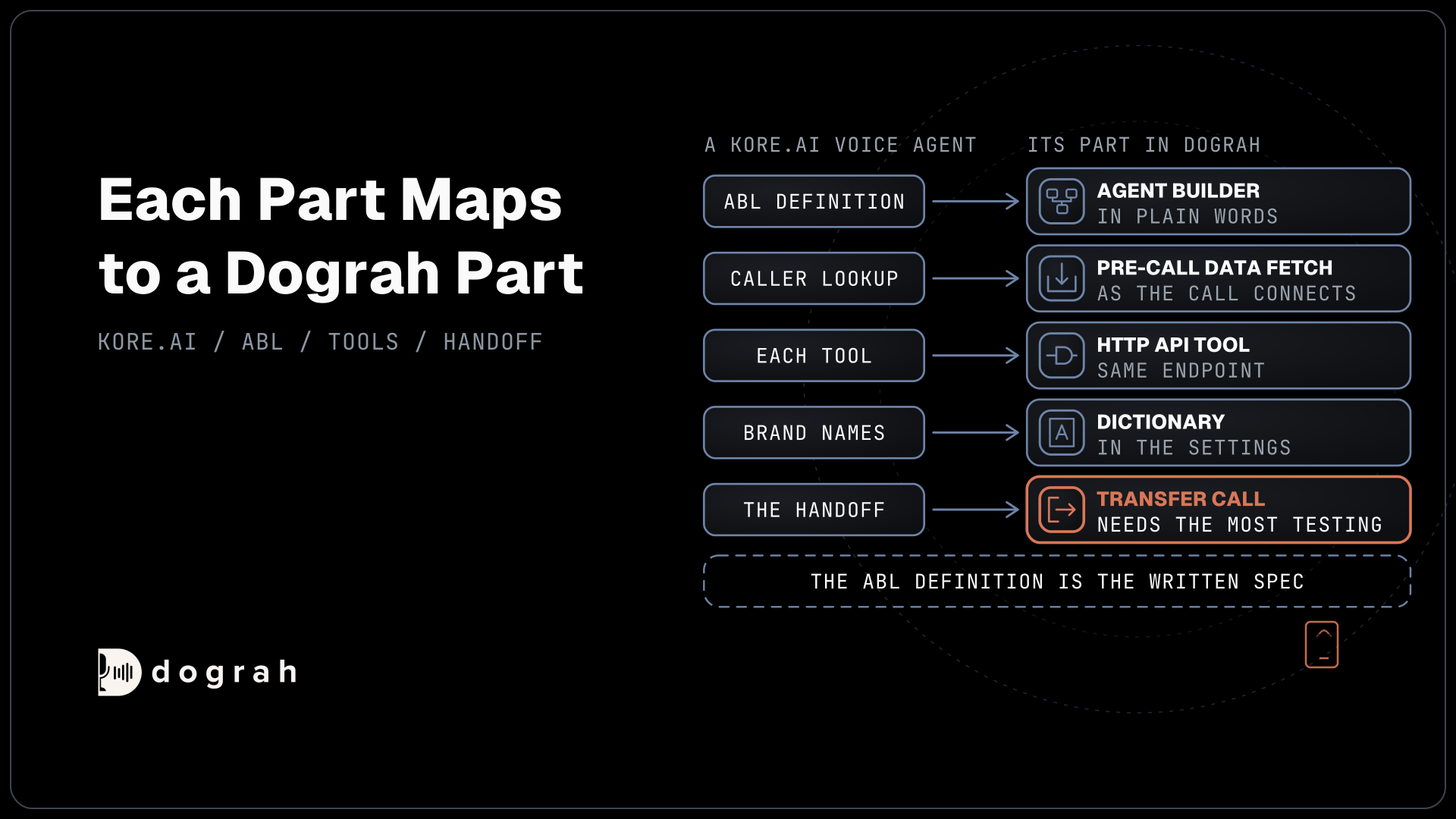
Dograh calls the destination first and connects the caller only when someone answers. Transfer Call works on Twilio, Telnyx, Plivo, Cloudonix and Asterisk ARI, and the Transfer Timeout runs from 5 to 120 seconds, 30 by default. If the line is busy or nobody picks up in that time, the agent is told the transfer failed and the caller stays on the call with it. The prompt can then take a message or book a callback.
What the person hears is your choice. On Twilio, an optional spoken introduction of up to 25 words plays to both people before they are connected, and it is off by default. Call notes reach staff when an HTTP API tool writes them into your helpdesk or CRM before the transfer. The destination can be a fixed number, a SIP endpoint such as PJSIP/1234 on Asterisk, a template filled from the call, or a number your own endpoint returns through the Dynamic HTTP Resolver.
Transfer Call runs on real phone calls, so test every transfer that way. Call Disposition After Successful Transfer records an outcome only when the person actually answered, so reports separate real handoffs from failed attempts. On Exotel, Vobiz, Vonage and WhatsApp, the agent books a callback request through an HTTP API tool instead.
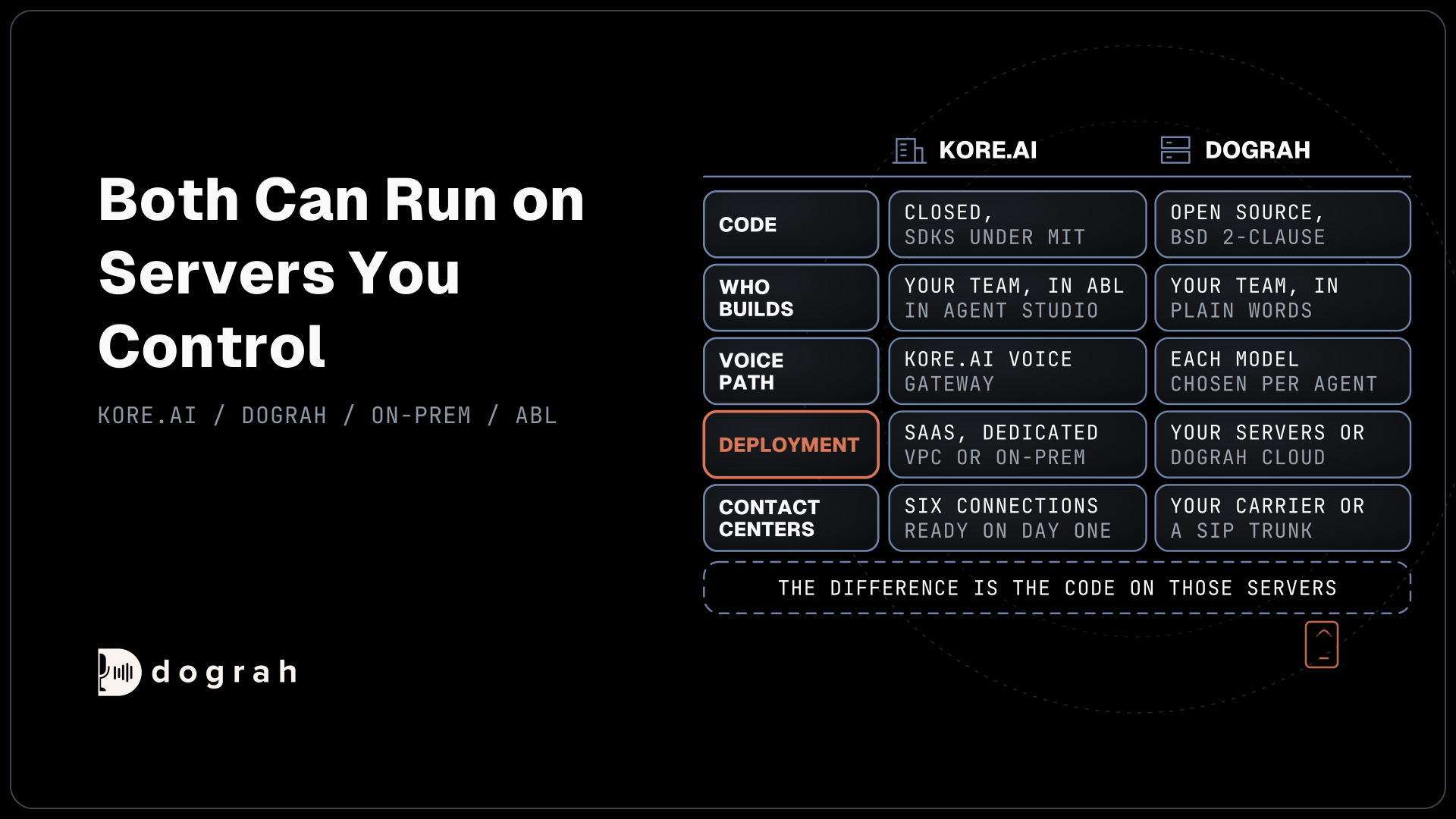
The code is open source under BSD 2-Clause, and your carrier bills the transferred leg as a normal outbound call. Running Dograh yourself means no per-minute platform fee. You can self-host it with Docker Compose. You still pay for servers, model keys and phone minutes, and your team looks after the database and upgrades. Support comes from the open-source community, and Enterprise adds custom SLAs. If you would rather not host it, Dograh Cloud runs it for a 1 cent a minute platform fee.

Open Source Alternative to Vapi / Retell
Self-hosted voice agent platform — no per-minute fees
dograh-hq/dograh
Star on GitHub
Vapi and Retell AI: modes that depend on the carrier
Vapi's transfer docs make a blind transfer the default, which connects the caller without speaking to the destination. Modes that speak a message or a generated summary to the person are Twilio only, and other providers transfer without the message. On Twilio, Telnyx and Vonage, a busy or unanswered blind transfer ends the call. On Vapi numbers and SIP trunks, the caller comes back to the assistant only if a fallback plan is set, and a summary can travel in a SIP header. The person receives no transcript or variables on a blind transfer.
Retell AI's transfer docs offer three modes. A cold transfer drops the agent right away. A whisper message is spoken privately to the person while the caller cannot hear it, and a three-way message is heard by both. The agentic mode sends a separate AI agent to talk to whoever answers, and it can bridge the call or cancel, in which case the caller returns to the main agent. Transfers run on phone calls only, and caller ID override depends on which provider the number came from.
Synthflow and Bland: waiting for a live person
Synthflow and Bland both build their better mode around waiting for a real person. Synthflow's transfer docs describe Human Detection, which waits for a live human to answer before playing the message or summary, with a timeout from 30 seconds to 30 minutes. Failed attempts are labeled by cause, such as timeout, phone menu or voicemail, and the caller hears that the recipient failed or declined to answer. The warm mode can retry or fall back. A cold transfer cannot, and an unanswered one ends the call.
Bland uses a standard transfer by default. Its warm option briefs the person first while the caller hears hold music, then plays a merge announcement both people hear, with optional live translation. The hold timeout runs from 30 to 3,600 seconds, after which a fallback message plays or the pathway continues. That option needs an Enterprise account, and Bland bills transfer minutes at $0.05 on Start and $0.04 on Build.
ElevenLabs Agents and PolyAI
ElevenLabs Agents sets different modes for each provider. On SIP, it offers a cold conference or a SIP REFER. On Twilio, it offers a cold blind transfer or a warm conference where the operator gets a summary of the situation, and Exotel is listed too. Transfers run on phone calls only. The docs do not say what the caller hears when nobody answers, so test that case before you rely on it.
PolyAI's handoff docs default to SIP REFER, after which PolyAI drops from the call. SIP INVITE keeps PolyAI on and bridges the call, and SIP BYE ends its leg. Context travels in custom SIP headers, a Handoff API for screen pops and the Conversations API. With REFER or BYE, PolyAI cannot see whether the destination answered or went to voicemail, and Twilio handoffs are locked to REFER. That suits contact centers with their own queue software, which takes over once the call lands.
Join the Dograh Community
Dograh is an OSS alternative to Vapi. Join our Slack community for queries, releases, best practices & community interactions.
What the person who answers should get
Some vendors argue the person should get the full transcript on screen as the call connects. That is a fair aim, and it depends on your systems more than on the voice platform. A summary in a SIP header only helps if your phone system shows SIP headers to staff, and a Handoff API only helps if someone builds the screen pop.
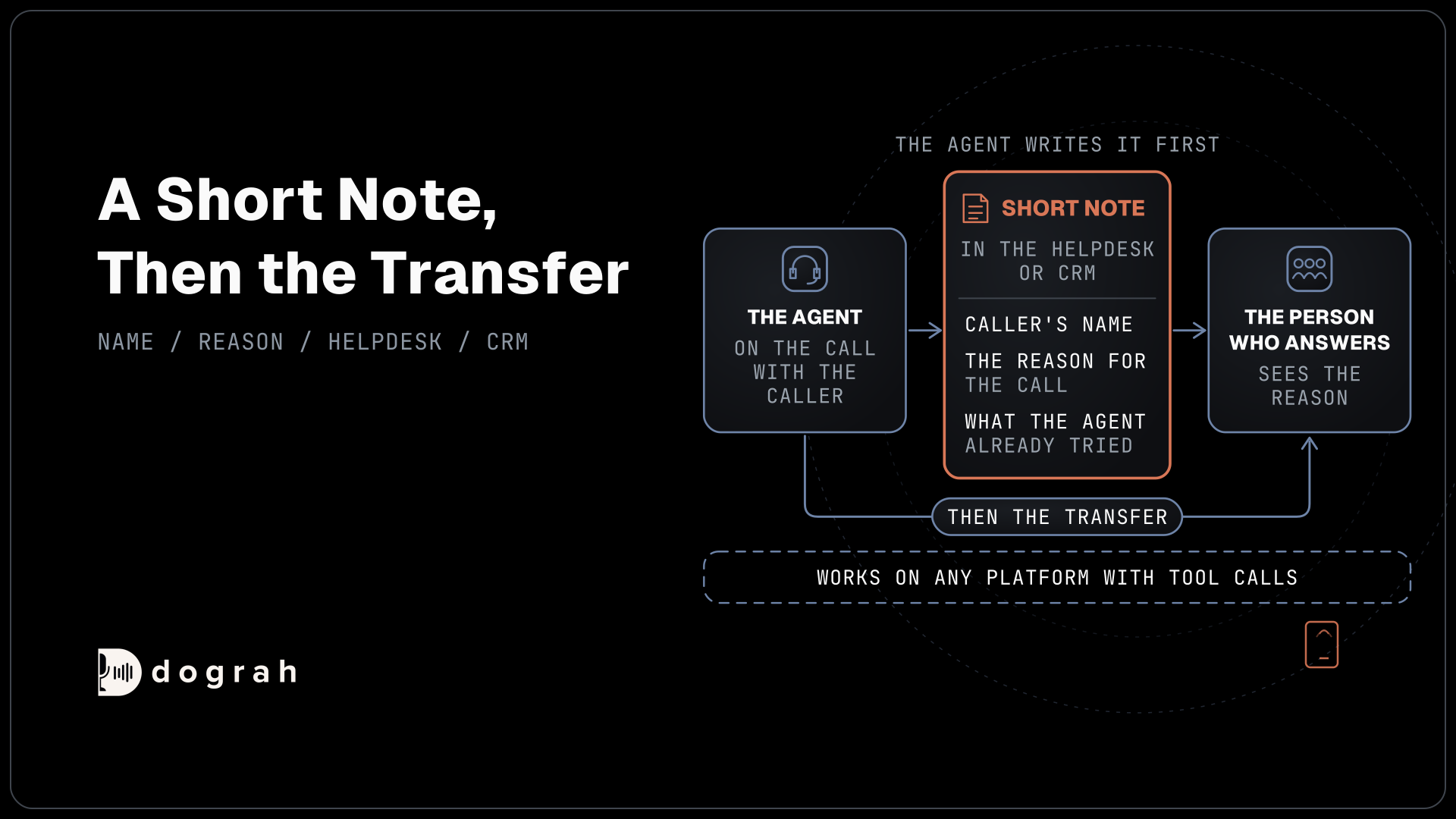
The simplest pattern works on any platform with tool calls. The agent writes a short note into the helpdesk or CRM, then transfers, so the person sees the reason before or as they pick up. Our post on writing notes before the transfer covers the fields worth sending. Keep it short, the caller's name, the reason for the call and what the agent already tried.
Picking a platform for human handoff
Start with your carrier, since it rules out modes on several platforms. Vapi's spoken modes need Twilio, PolyAI's Twilio route is locked to REFER, and Dograh's Transfer Call runs on Twilio, Telnyx, Plivo, Cloudonix and Asterisk ARI. If you are not sure which carriers fit your country, the telephony overview lists how each one connects.
Then decide what should happen when nobody answers, since that is where callers get lost. Pick a mode that waits for a person and gives the caller a way back, whether that is a return to the agent or a booked callback. Write down the hours your team picks up, too. A transfer at 2 am to an empty office is the same as no transfer, so the agent's prompt should know when to take a message instead.
Run the same three test calls on every platform you shortlist. One where the person answers, one where the line rings out, and one where it is busy. Listen to what the caller hears in each case and check what the person who answered could see. Those three calls tell you more than any feature table, including this one.
For a front desk, our guide to AI receptionist call transfer walks through the setup step by step. If you want the caller to stay with the agent until someone answers, on your own carrier, start with Dograh. For the wider choice of agent, our list of AI phone agents sorts the options by the job on the line.
Glossary
- Cold transfer
- A transfer where the agent hands the caller to a number and leaves straight away. On several platforms an unanswered cold transfer ends the call.
- SIP REFER
- A SIP message that asks the phone network to move the caller to another number. The agent drops off, and on some platforms it cannot see whether anyone answered.
- Whisper message
- A short message spoken only to the person who answers, before the caller joins. The caller does not hear it.
- Transfer timeout
- How long the platform rings the destination before treating the transfer as unanswered. In Dograh it runs from 5 to 120 seconds, 30 by default.