
AI voice agents for resident support answer calls from current residents. Building questions such as parking, packages, guest rules and amenity hours come from the property's own documents. Balances, lease dates, renewal offers and open work orders are read from the property management system only after verification. Accommodation requests, disputes, legal notices and payment arrangements go to a person.
Key Takeaways
- Policy answers come from your documents, never the model's general knowledge.
- Account details only after an approved check; never ask for a PIN.
- Accommodation requests are logged as stated and sent to a person.
This post is part of our guide to AI voice agents for property management and leasing. The guide's section "Living there: resident questions and maintenance requests" sums up this call in one line: it answers general questions from the property's own documents and account questions only after verification. Here is that line in full, run in Dograh, an open-source, self-hostable voice agent platform.
What residents call about
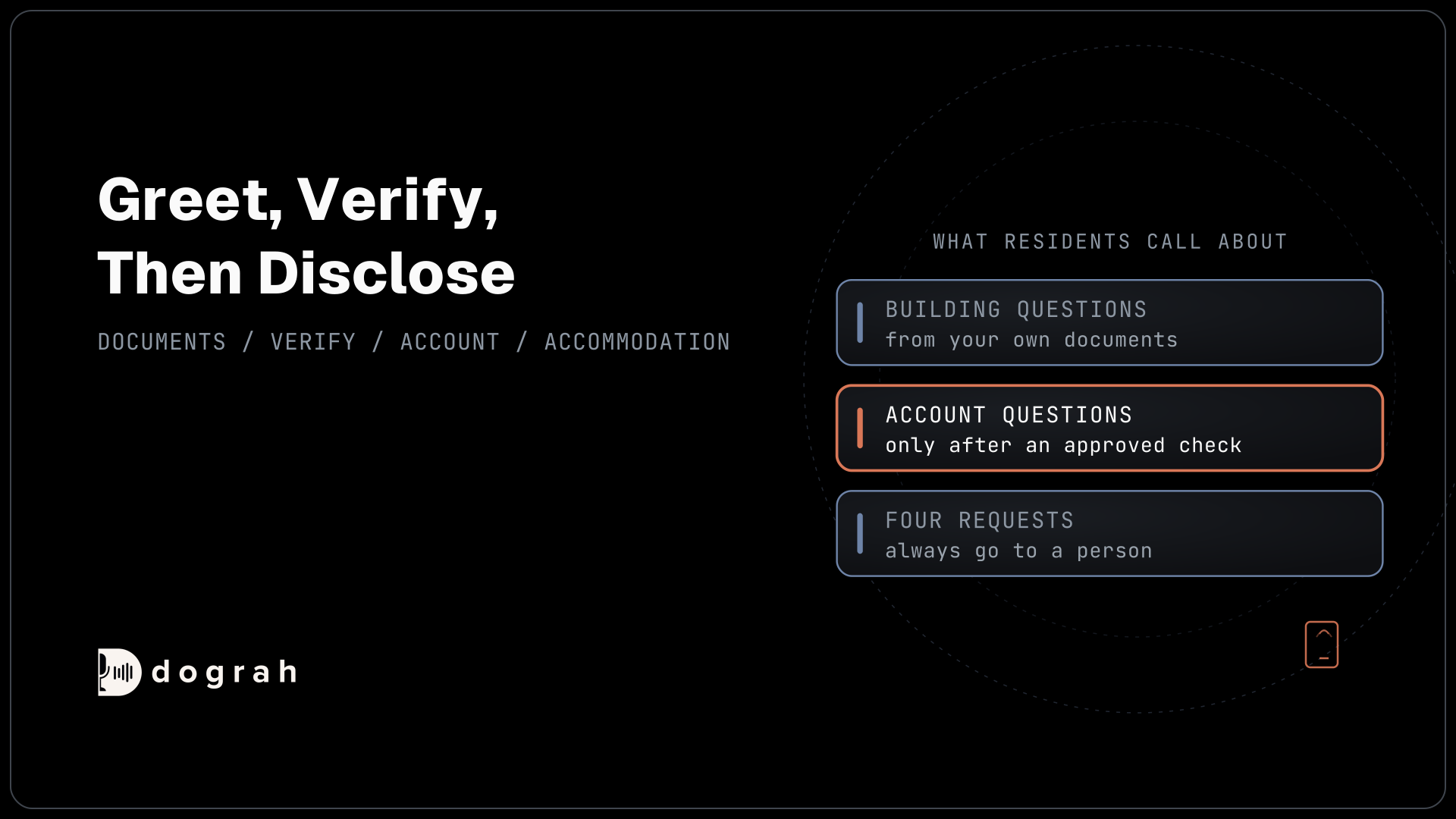
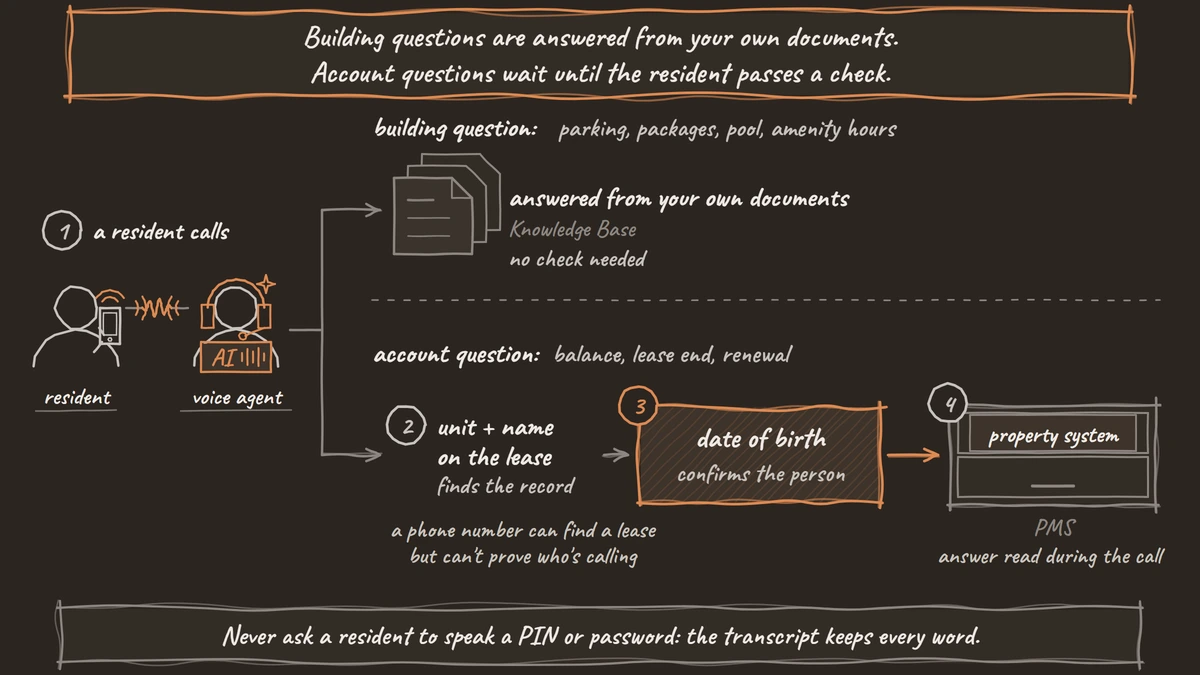
Residents call with two kinds of question. Some are about the building: office hours, parking, packages, guest rules, the pool. Others are about their own account: what they owe, when the lease ends, what the renewal offer is, whether a repair is booked. The first kind is public to anyone who lives there. The second is personal, so it waits for verification.
These everyday answers matter more than they look. AppFolio's 2026 Renter Preferences Report, a survey of 3,002 US renters in January and February 2026, found that satisfied residents are 72% more likely to renew, and residents satisfied with their move-in are 31% more likely to plan to renew. A line that answers quickly and correctly at 8 pm is part of that satisfaction.
Repairs are a separate call with its own safety rules, so the support line hands them to the maintenance flow.
General questions come from your own documents
The agent answers building questions from documents you give it, never from general knowledge. Upload the house rules, the parking policy, the package room process and the amenity hours to the Knowledge Base, under "Files" in Dograh (page heading "Knowledge Base Files"). Then select them on the agent's node under "Knowledge Base Documents". It accepts PDF, DOCX, DOC, TXT and JSON files up to 5 MB each. Chunked Search needs an embedding key; Full Document does not.
When the documents do not answer a question, the agent says so and offers to pass it on, instead of guessing. That is the bar to test against: ask it ten questions your documents cannot answer and read the transcripts. Our post on patient support lines applies the same rule in healthcare.
A portfolio can run on one line. Several phone numbers can point at the same agent, and Pre-Call Data Fetch receives the dialled number as to_number. Your endpoint returns that property's name, office hours, key policies and maintenance number, so the Greeting Text names the right building. If you want to tell residents they're speaking with an automated assistant, or your location requires it by law, write that in the Greeting Text along with the property's name.
Account questions only after verification
Every account answer runs greet, verify, then disclose. A phone number can find a lease, but it does not prove who is calling; a roommate or a stranger can ring from any phone. So the agent first asks for the unit and the name on the lease, which finds the record. Then it asks for an approved check, such as date of birth or the last digits of the account number, which confirms the person.
Never ask a resident to speak a password or a PIN. Transcripts keep everything said, and there is no redaction, so a spoken secret ends up stored.
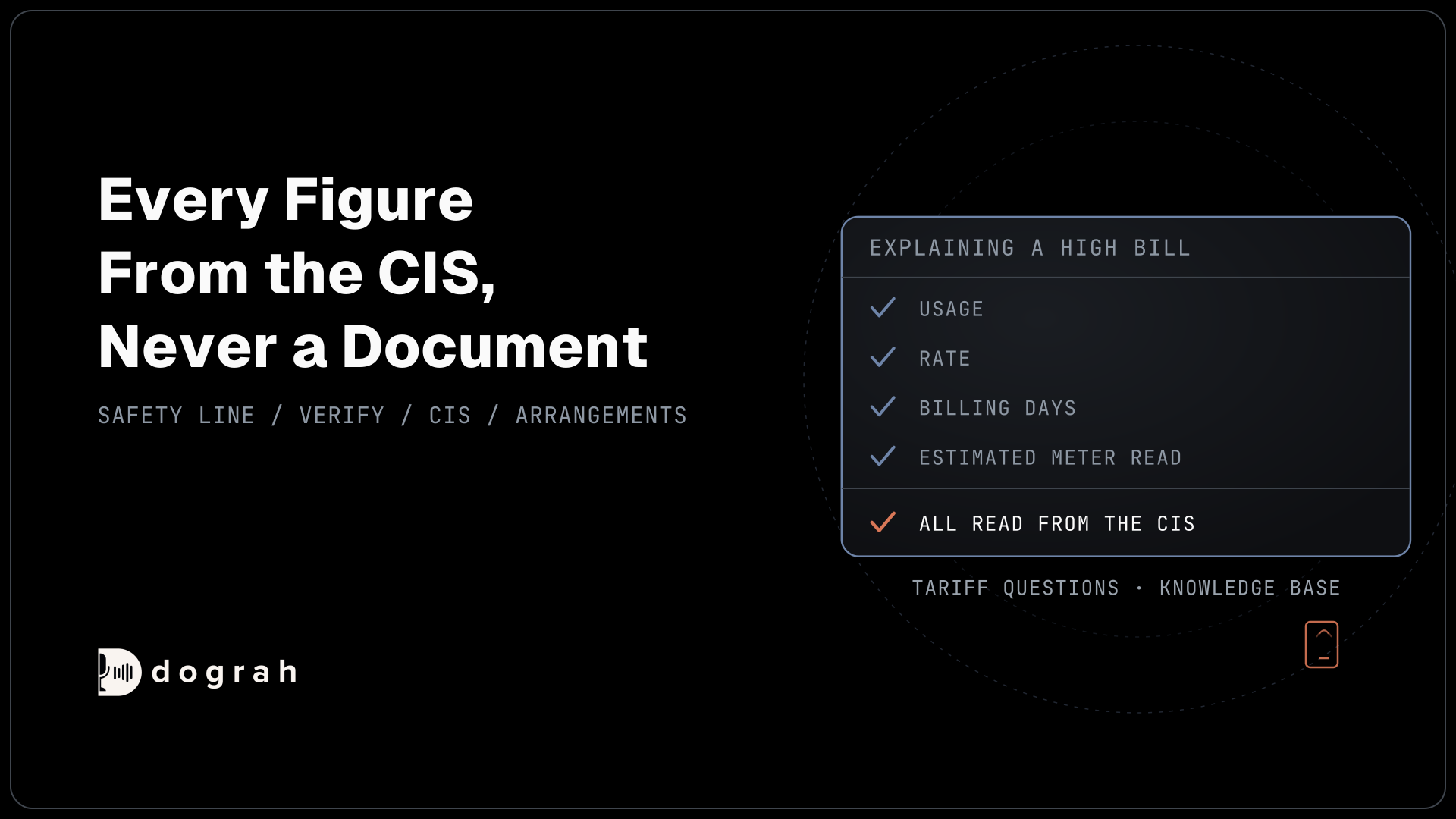
Once the resident passes, an HTTP API tool reads the answer live from the property management system (PMS): the balance, the lease end date, the renewal offer or the status of an open work order. Pre-Call Data Fetch can load the account as the call connects, and the caller hears ringing while it runs; write the prompt so the agent uses none of it (nothing from it is spoken) until the check passes. If the check fails, the agent offers the office's hours and a callback. Our post on student support shows the same verify-first pattern for student records.

Open Source Alternative to Vapi / Retell
Self-hosted voice agent platform — no per-minute fees
dograh-hq/dograh
Star on GitHub
Four requests always go to a person
Some calls need a decision, and the agent makes none. Four requests always go to a person, with the details written to your system first.
The first is a reasonable accommodation request. This part is general information, not legal advice. Section 3604(f)(3)(B) of the Fair Housing Act counts as discrimination "a refusal to make reasonable accommodations in rules, policies, practices, or services, when such accommodations may be necessary to afford such person equal opportunity to use and enjoy a dwelling." The joint statement from HUD and the Department of Justice on reasonable accommodations adds that the Act "does not require that a request be made in a particular manner or at a particular time," and that "a reasonable accommodation request can be made orally or in writing."
So the call itself can be the request. A resident asking to keep an assistance animal under a no-pets rule, or for a reserved parking space near the door, gets no answer from policy. The agent writes the request to your system as stated and says a person will follow up. Confirm your own process with counsel.
The other three are a dispute or a complaint about a neighbour, anything about an eviction or a legal notice, and a request for a payment arrangement. The agent records each as stated and passes it on without comment.
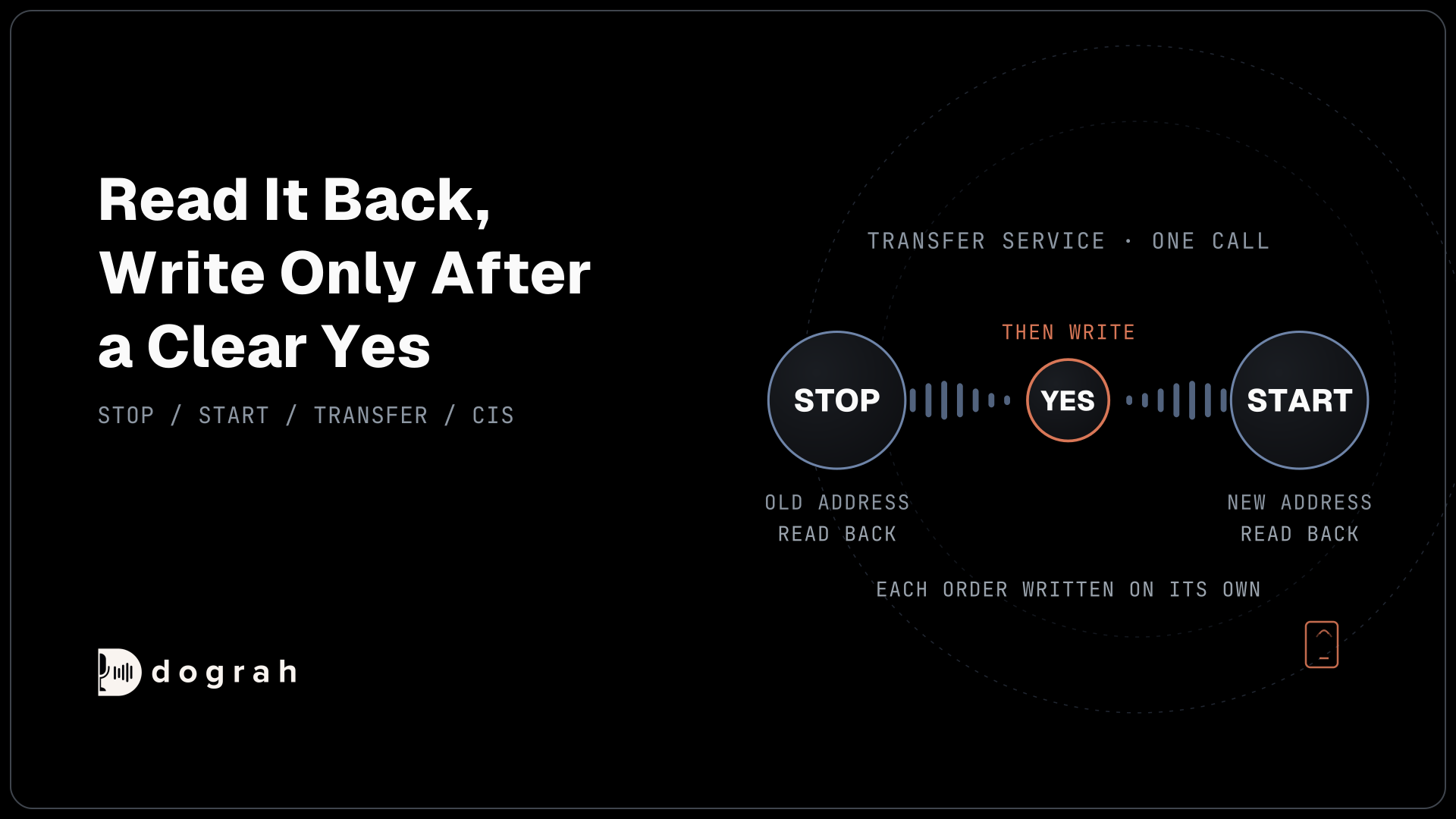
Transfer Call hands the resident to the office during staffed hours. It works on Twilio only and passes no summary by default, so the agent writes the details first. If nobody answers within the 30-second default, the resident stays with the agent; tell it in the prompt to offer a callback and write the request through an HTTP API tool.
Beyond the basics: languages and repairs
Many properties serve residents in more than one language. In the agent's Model tab, set speech-to-text to Multilingual (Auto-detect) and tick the Language hints you need (available with Dograh's own models or Deepgram Flux), such as English and Spanish. Greeting Text plays before Dograh can hear the caller's language, so write it in both, for example "Hola, hello". Store translated policy documents in the Knowledge Base too.
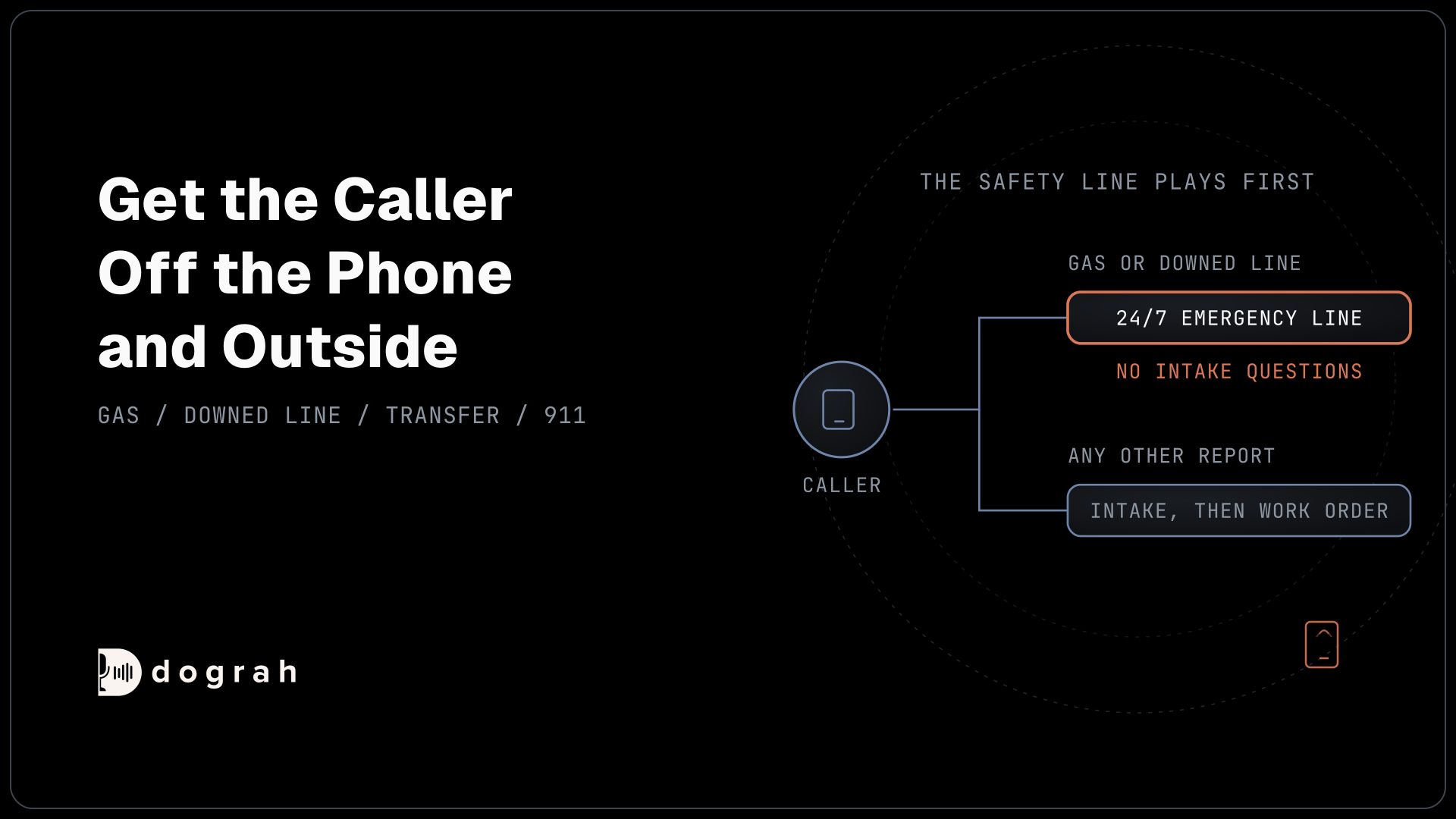
A resident reporting a leak goes to the flow in AI voice agents for maintenance-request intake, where a gas smell gets one fixed safety line. Outbound calls about rent due are a separate campaign, covered in AI voice agents for rent reminders.
Start with general questions only, then switch on account answers once verification is tested on a real phone line. Self-hosting keeps recordings and transcripts on your own servers; the audio stays in-house only when the speech and language models run there too. Self-hosted Dograh has no per-minute platform fee (servers, model keys and phone minutes still cost); Dograh Cloud has a 1¢-a-minute platform fee.
Join the Dograh Community
Dograh is an OSS alternative to Vapi. Join our Slack community for queries, releases, best practices & community interactions.
Glossary
- Knowledge Base
- The documents a Dograh agent answers from, such as house rules and parking policy, uploaded under Files and selected on the node. The resident support agent answers building questions only from these.
- Approved check
- A question that confirms who is calling, such as date of birth or the last digits of the account number. A phone number or a name only finds the record; the approved check confirms the person before any account detail is shared.
- Reasonable accommodation
- A change to a rule, policy or service that a person with a disability may need, such as an assistance animal under a no-pets rule. A request can be made by phone, so the agent records it and sends it to a person.
- Account question
- A question about one resident's own lease or money, such as a balance, lease end date, renewal offer or open work order. The agent answers it only after the approved check passes, reading the answer live from the PMS.