
AI voice agents for rental tour scheduling book unit tours from the leasing calendar during the call. They offer the tour types the property allows and the same open slots to every caller, read the booking back, write it to the property management system, verify before moving a booked tour and never read out access codes.
Key Takeaways
- Offer only the slots the leasing calendar returns, the same for every caller.
- Verify the caller before naming or changing a booked tour.
- Self-guided access codes come from the tour system, never the call.
This post is part of our guide to AI voice agents for property management and leasing. The guide's section "Prospects: leasing inquiries and rental tours" sums up this call in one line: book a unit tour from the leasing calendar and write it to the PMS. Here is that call in full, run in Dograh, an open-source, self-hostable voice agent platform.
Rental tours are a different booking from sale viewings
A rental tour is booked by a leasing office for a unit it manages, so the office owns the calendar and the rules. There is no seller to ask and no listing agent to approve the time. The office decides which tour types each community offers, such as agent-led or self-guided, and which units can be shown.
That makes it a different call from a sale viewing, where a seller's showing windows and notice period decide what can be booked. Our post on property-visit scheduling covers the sale side. Here the record is the property management system (PMS) and its leasing calendar.
Most tour calls follow an inquiry. A prospect asks about price and availability, then wants to see the unit; AI voice agents for leasing inquiries covers that first part and hands the booking to this flow.
Booking from the leasing calendar
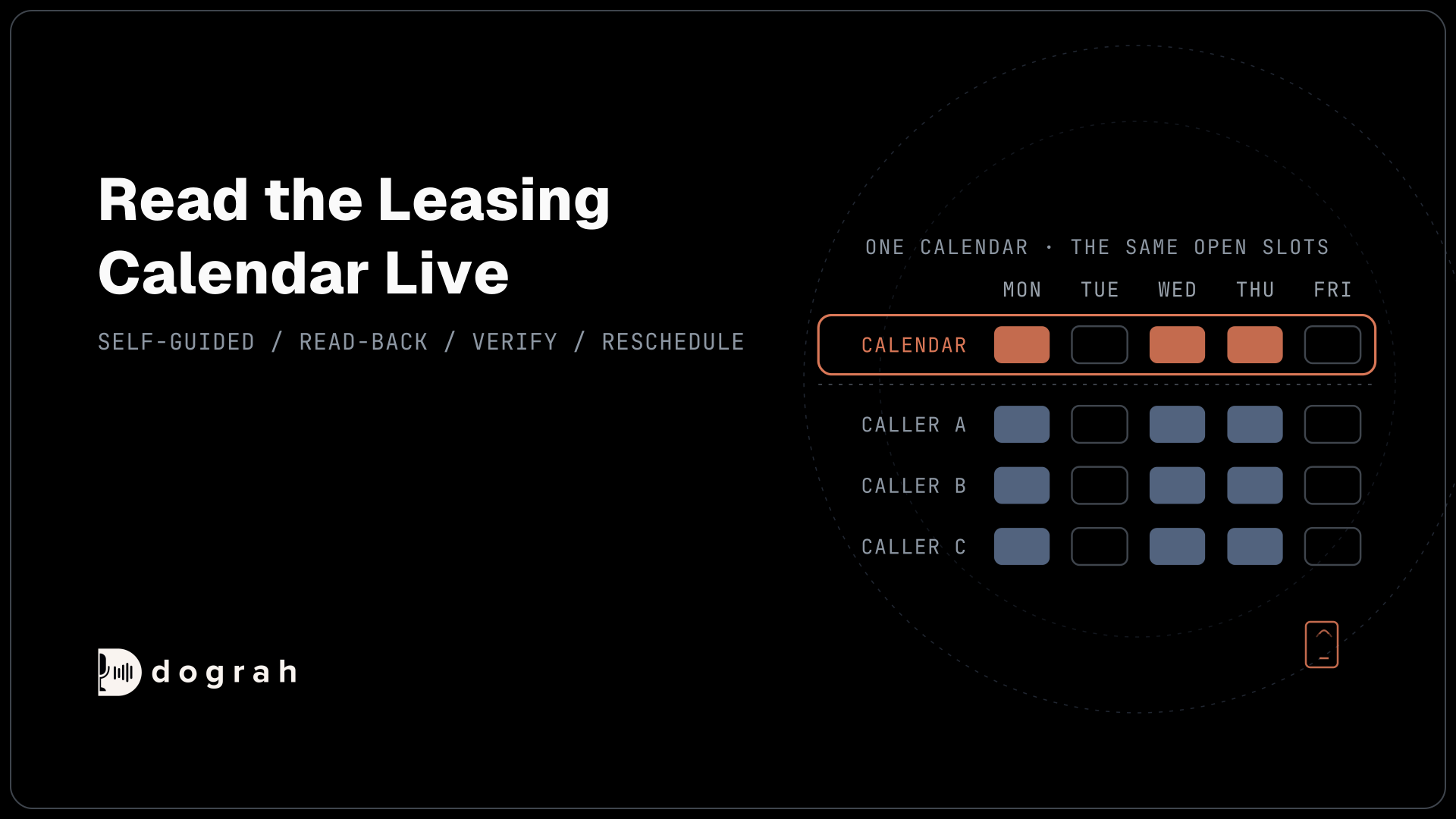
The agent books only what the leasing calendar shows as open, in the order the call runs. An HTTP API tool sends the community, unit, tour type and preferred day to the PMS or tour system and gets back open slots. The agent offers the soonest ones first, because a tour booked while the prospect is still looking is more likely to happen, and it never invents a time.
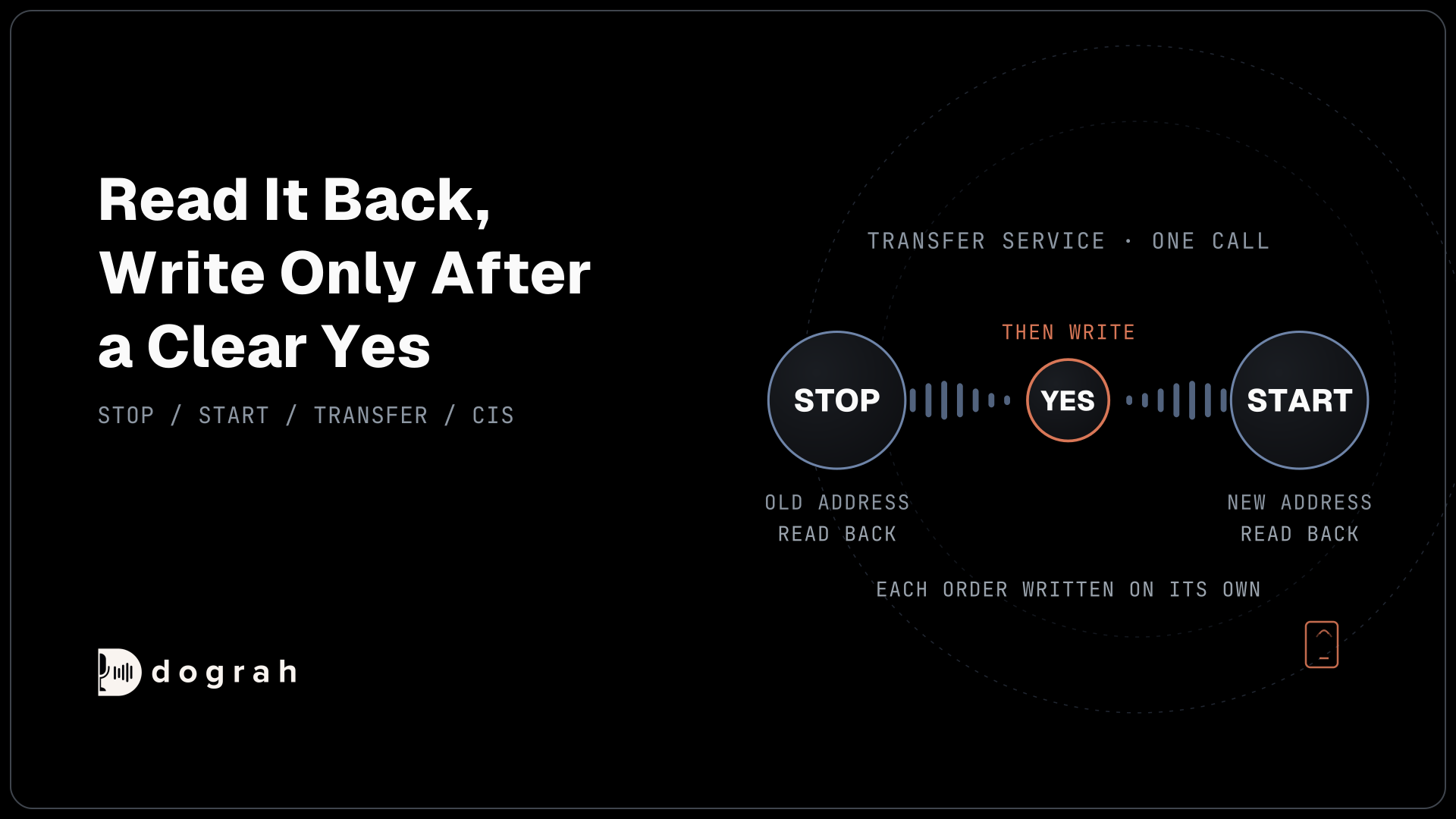
Before writing anything, the agent does a read-back of the day, time, tour type and the unit's address. The prospect confirms or corrects it. Then a second HTTP API tool writes the tour and returns a confirmation, which the agent reads out. To stop a retried request from booking twice, add a Preset Parameter named workflow_run_id with the value {{initial_context.workflow_run_id}}; Dograh adds no idempotency header itself, so the tour system uses that ID to ignore a duplicate.
Dograh has no built-in Calendly or calendar integration, so the booking always goes through an HTTP API tool against your calendar or PMS. Our post on booking meetings mid-call walks through the same read-then-write pattern.
Reading the calendar live also matters under fair housing law. This part is general information, not legal advice. Section 3604(d) of the Fair Housing Act makes it unlawful to represent to any person, because of a protected characteristic, "that any dwelling is not available for inspection, sale, or rental when such dwelling is in fact so available." An agent that offers whatever the calendar returns gives every caller the same slots. Confirm your own position with counsel.
Self-guided tours keep the code off the call
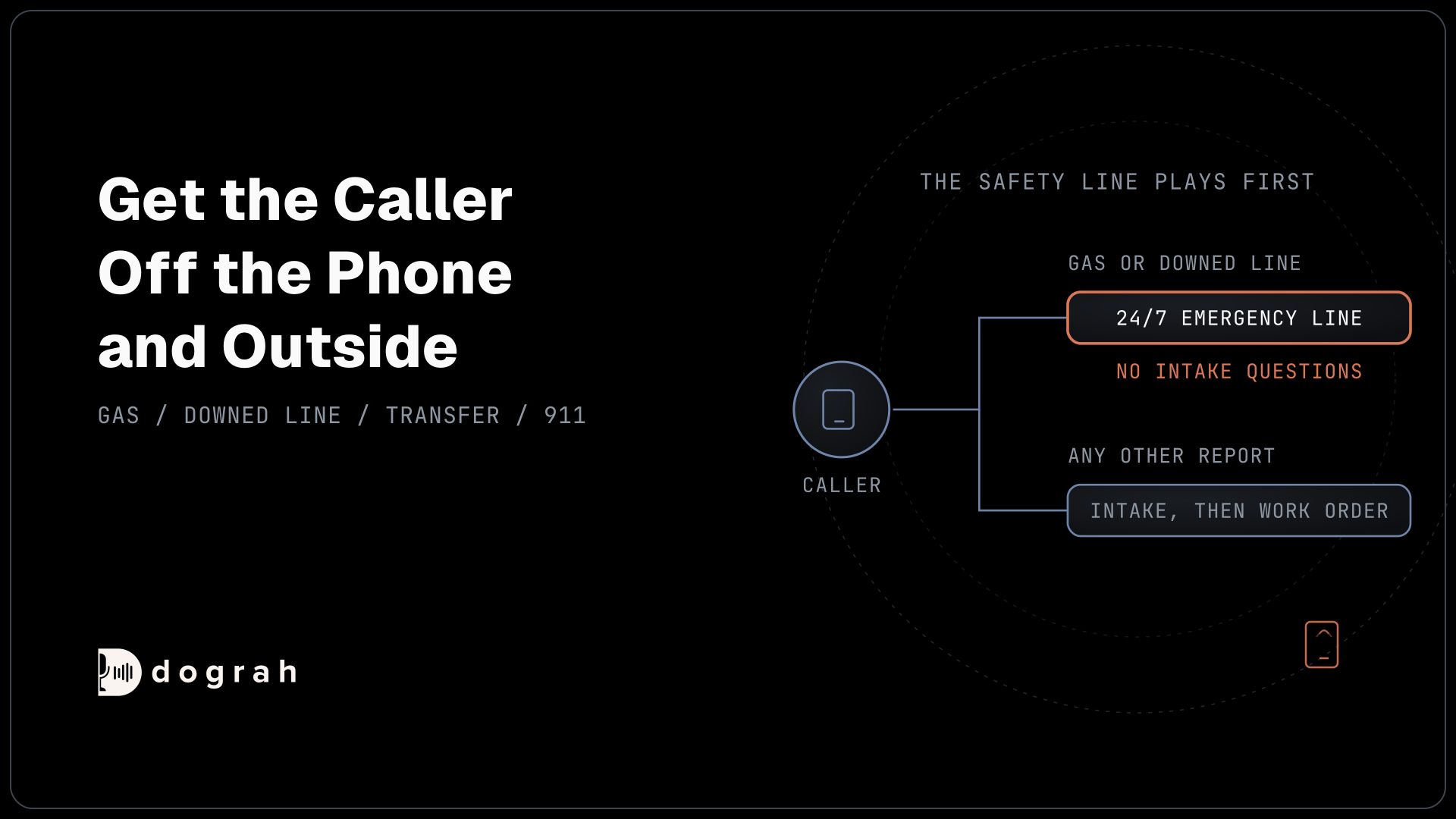
A self-guided tour lets the prospect walk the unit alone, and the access step belongs to the tour system, not the voice agent. The agent books the slot like any other. The tour system then runs its own identity check and releases the code or digital key, usually by text or in its app.
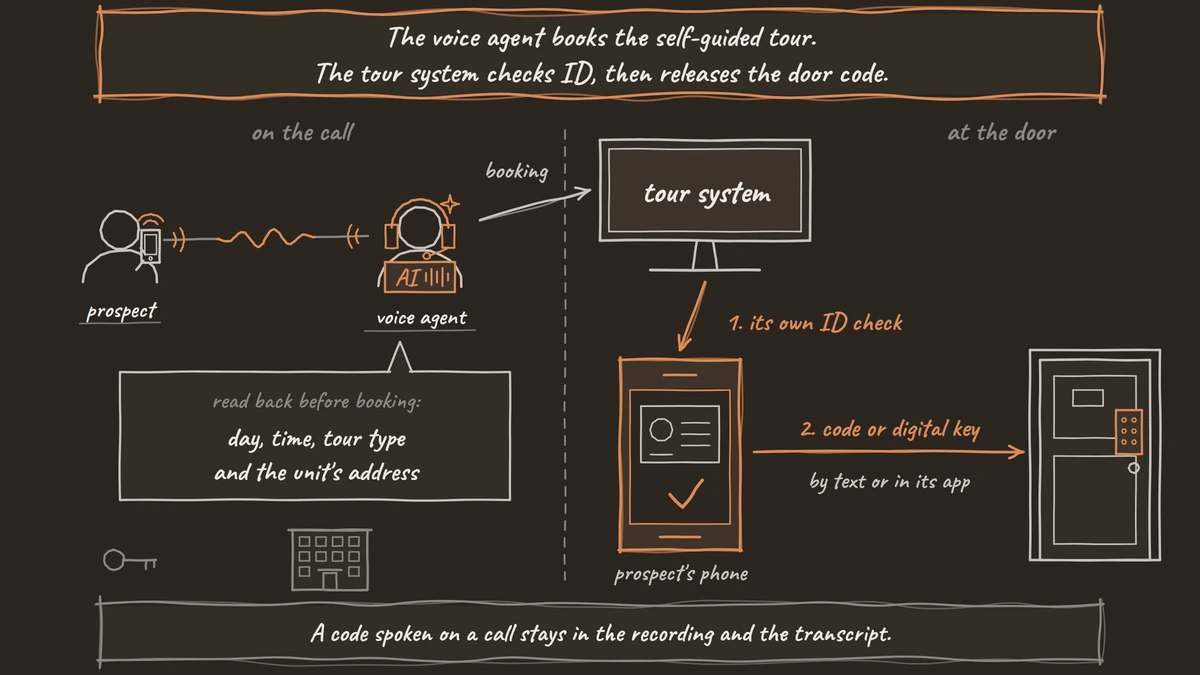
The agent never reads out a lockbox code or a door code. Anyone can ring the line and give a name, and a code spoken on a call sits in the recording and transcript. Fraud is a real concern: in AppFolio's 2026 Property Management Benchmark Report, 56% of property managers reported facing application fraud in the last year. Identity checks belong in a tool built for them.

Open Source Alternative to Vapi / Retell
Self-hosted voice agent platform — no per-minute fees
dograh-hq/dograh
Star on GitHub
Confirming and changing a tour
Most confirmations need no call at all. The PMS or tour system already sends its own confirmation text, since Dograh has no SMS tool. A call is worth it for the tour with no reply, or a prospect who asked to be called.
Your system can start that call through the API Trigger, which dials at once. For a batch of next-day tours, upload a list to Campaigns. Calling hours use one time zone per campaign, so split lists by time zone. In agent Settings, voicemail handling is set to "Disconnect the call" by default or "Leave a message"; a short message with the office number is usually enough.
Outbound calls need consent. In its February 2024 declaratory ruling, the Federal Communications Commission (FCC) confirmed that the limits of the Telephone Consumer Protection Act (TCPA) on artificial voices "encompass current AI technologies that generate human voices." So generally ask for consent to calls when the tour is booked, and keep it in your own records. Keep the call about the tour only. Adding an offer, such as a move-in special, generally makes it a marketing call with stricter consent rules. This is general information, not legal advice. Confirm your position with counsel before the first outbound campaign.
Before it names or changes a booked tour, the agent verifies the caller. The name on the booking only finds it, so the agent also asks for an approved check, such as the booking reference sent with the confirmation. A reschedule reads new open slots and reads the new time back before writing it; a cancellation frees the slot in the calendar. Our post on healthcare no-show reduction explains why a call that asks for a decision beats a reminder that only informs.
When a person takes the tour call
The agent books standard tours, and anything that needs a decision goes to a person. A prospect who needs an accessible route or another change because of a disability is asking for an accommodation, which a person handles. Group tours and complaints go to staff as well.
Transfer Call hands the caller over. It works on Twilio only and passes no summary by default, so the agent writes the guest card and the request to your system first. If nobody answers within the 30-second default, the caller stays with the agent; tell it in the prompt to offer a callback and write the request through an HTTP API tool.
Self-hosted Dograh has no per-minute platform fee (servers, model keys and phone minutes still cost); Dograh Cloud has a 1¢-a-minute platform fee.
Join the Dograh Community
Dograh is an OSS alternative to Vapi. Join our Slack community for queries, releases, best practices & community interactions.
Glossary
- Leasing calendar
- The schedule of open tour slots a leasing office keeps for each community or unit, usually inside the PMS or a tour system. The voice agent reads it during the call and writes each booking back to it.
- Self-guided tour
- A tour where the prospect enters and views the unit alone, after the tour system checks their identity and releases a code or digital key. The voice agent books the slot but never handles the code.
- Section 3604(d)
- The part of the Fair Housing Act that bars telling anyone, on a protected basis, that a home is not available to see or rent when it is. Offering every caller the slots the calendar returns keeps the agent on the right side of it.
- Read-back
- The step where the agent repeats the tour's day, time, type and address before booking it, so a wrong slot is caught on the call instead of at the door.