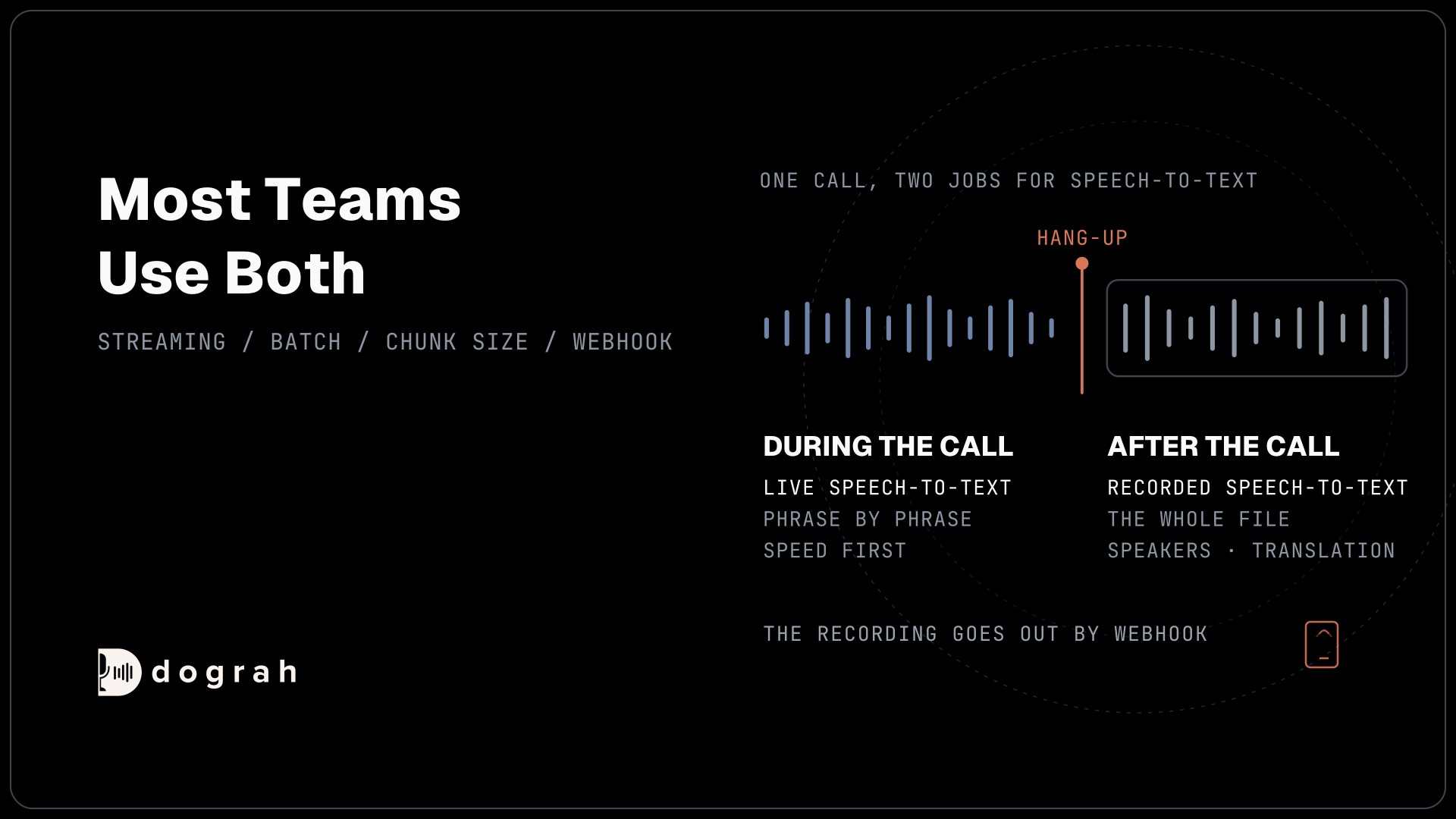

AI voice agents for referral and advocacy outreach call customers after a closed job or a finished renewal, thank them and ask for a review or a referral in the same words every time. Review asks carry no reward. A referral ask is generally a marketing call, so with an AI voice it needs the customer's prior written consent.
Key Takeaways
- Your system picks who gets the call, never the agent's read of their mood.
- Every customer hears the same review ask, with no reward attached.
- A referral ask with an AI voice generally needs prior express written consent.
Ask for reviews only from customers who sound happy, and a friendly thank-you call turns into review gating. This guide covers the four calls your system can trigger, the consent each needs, review and referral asks, B2B references, how the call runs in Dograh and how to measure each ask.
Four calls, one trigger
Advocacy outreach is a small family of calls, and each one starts from an event in your own system. The simplest is a thank-you after a job or a renewal. Then come the asks: a public review, a referral to a friend, or, for B2B companies, a reference call or a case study.
"After a good outcome" means an event your system records, such as a job closed and invoiced or a renewal completed. It never means the agent deciding who sounds happy. Everyone in that group gets the call, and everyone hears the same words. That rule protects you twice. It keeps the review ask fair, and it stops a call from turning into a sales pitch for the customers the agent happens to like.
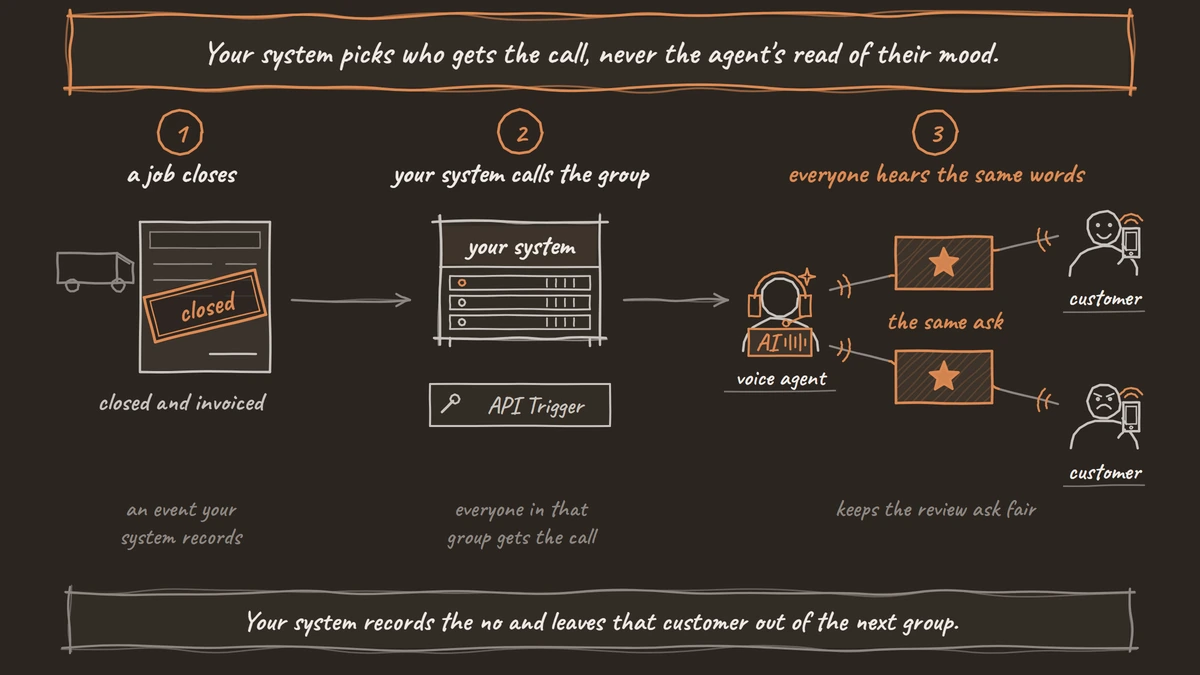
In Dograh, your system starts each call through the API Trigger when the event happens, or you upload the group as a campaign file. Each column in the file, such as the customer's first name or the job type, becomes a variable the agent can use.
The trigger should also wait for the right moment. A thank-you call the day the technician leaves feels natural. A referral ask the same afternoon can feel pushy. Set the delay in your own scheduler or in the campaign's calling hours.
Ask once, then respect the answer. A customer who said no to a referral ask should not hear it again next month. Your system records the no and leaves that customer out of the next group.
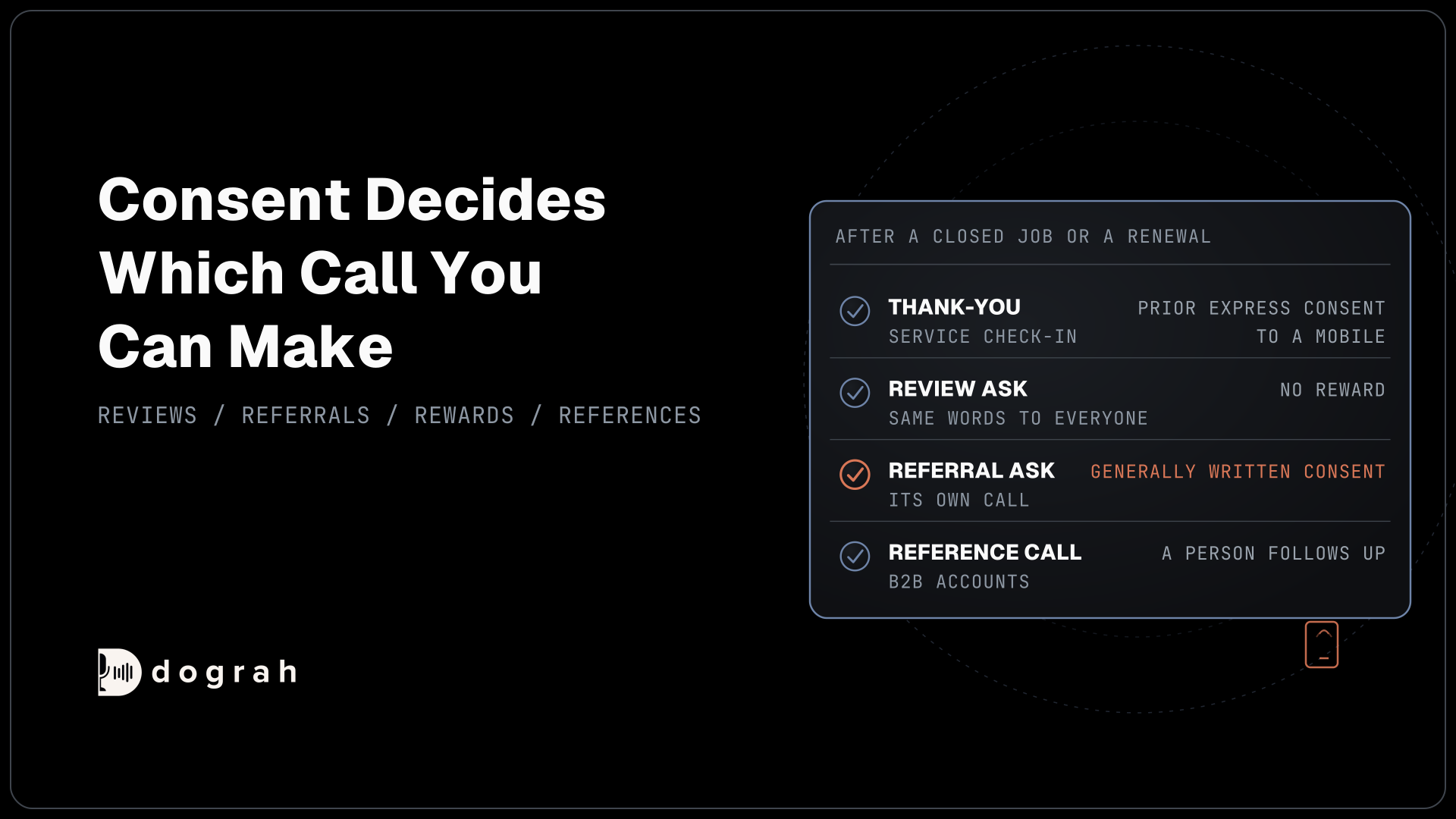
Consent decides which call you can make
The consent rule depends on what the call asks for, and the referral ask carries the highest bar. The FCC's 2024 ruling on AI-generated voices settled that an AI voice is an artificial voice under the Telephone Consumer Protection Act (TCPA). That puts every advocacy call in this guide inside the TCPA's artificial-voice rules.
The FCC's calling and consent rules require prior express written consent for an artificial-voice call that includes an advertisement or counts as telemarketing, meaning a call meant to encourage someone to buy goods or services. A call asking customers to recommend you to friends is generally a marketing call by that test, because its purpose is more sales. So with an AI voice, it needs the customer's signed consent on file before the first dial.
An existing customer relationship does not replace that consent. The rules define an established business relationship, based on a purchase in the last 18 months or an inquiry in the last three. It only matters for telephone solicitation and do-not-call lists. It does not cover an artificial-voice marketing call.
A pure service check-in, asking how the visit went, is a different call. To a mobile, it needs the customer's prior express consent, the lower bar. A review ask with no reward attached can share that check-in call, since it is generally not a marketing call. The referral ask cannot. Make it a separate call, placed only to customers whose written consent you hold, because folding it into the check-in turns the whole call into a marketing call.
B2B calls get the same treatment, because the rule follows the line you call. Healthcare providers have their own rules on marketing to patients, so leave patients out of referral campaigns, and confirm your own setup with counsel before the first campaign.
Reviews: ask everyone, reward no one
A review ask goes to every customer in the group, in the same words, with no reward of any kind. Google's review policy says merchants may not "selectively solicit positive reviews from customers" and may not offer incentives "in exchange for posting any review". Asking only the customers you expect to be happy is called review gating.
The law points the same way. The FTC's Consumer Review Rule makes it unfair or deceptive to offer payment or other incentives for reviews that express a particular sentiment, and it bars suppressing reviews through threats or misleading displays. The stakes are real: in warning letters sent to 10 companies in December 2025, the FTC pointed to civil penalties of up to $53,088 per violation.
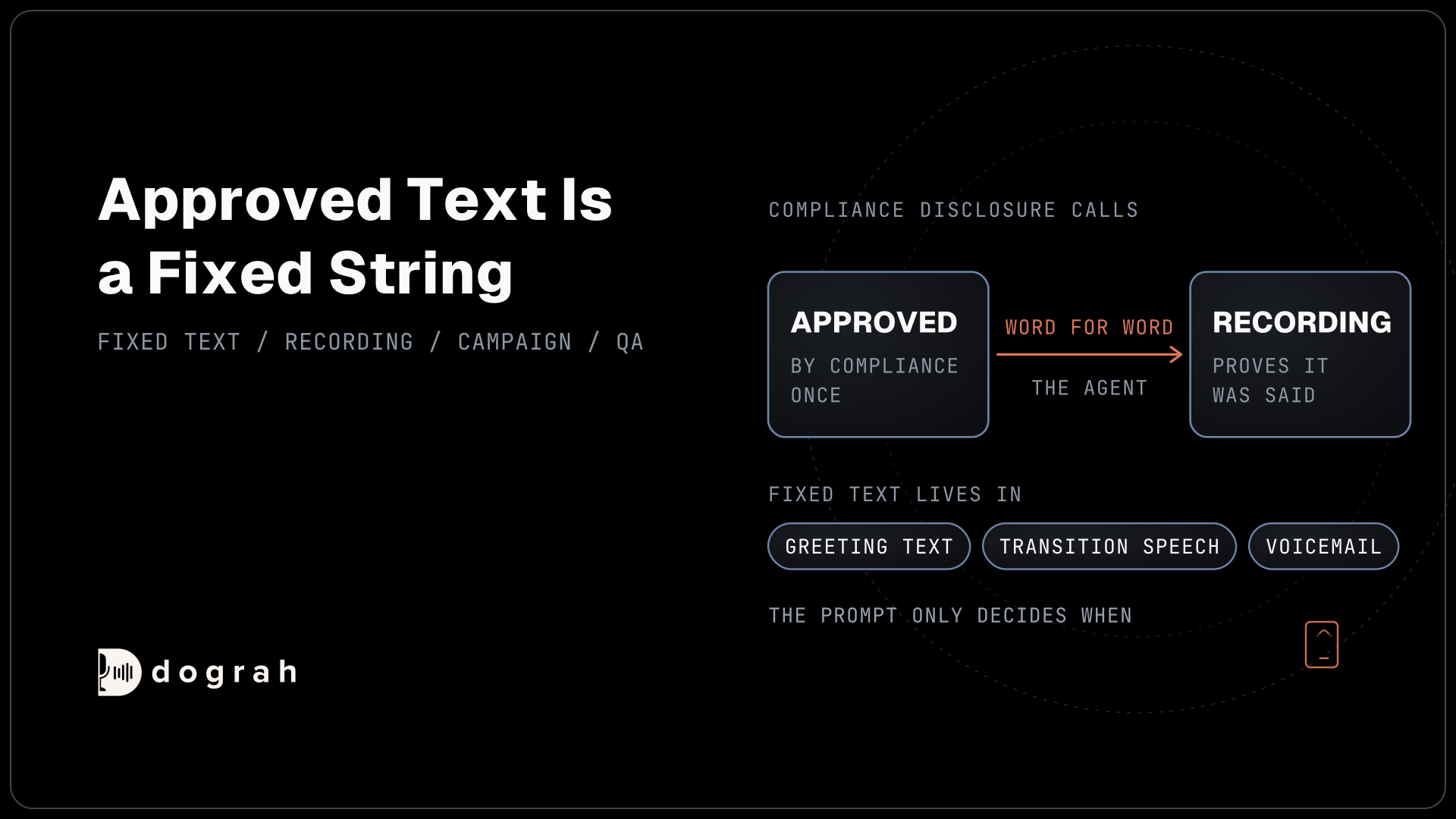
The ask itself should never change. Inside a step, the language model writes its own words and can drift into "if you were happy with us", which turns a fair ask into gating. Put the ask in fixed text, such as a pathway's Transition Speech, so every customer hears the same sentence. On a yes, the agent asks your own messaging provider to text the review link.
Sometimes the ask is where a problem first comes out. The agent records the complaint as the customer stated it and passes it to your service team, and the customer is never told to skip the review. AI voice agents for review requests in home services walks through that call in full, from trigger to complaint.
Referral asks, rewards and the friend
A referral ask is the customer's word on your behalf, so the call has to be honest about rewards. Many programs pay the referrer, often with an account credit or a gift card. Under the FTC's Endorsement Guides, a payment or free product creates a material connection that must be disclosed clearly when the audience would not expect it.
In practice, the agent says plainly that the program offers a reward and points the customer to the program terms. The share link your system sends can carry the disclosure, so the friend sees it too. A reward is never tied to leaving a review, and the two asks never share a sentence.
The friend is the part most often handled badly. The agent never collects a friend's phone number in order to call them. The customer's yes does not give consent for someone else. Instead, the agent offers to text the customer a share link, through an HTTP API tool that asks your own messaging provider to send it, and the friend reaches out if they choose.
If the friend later agrees to hear from you, that is a new sales conversation with its own consent check. AI voice agents for outbound sales and cold calling covers those calls. If the customer agrees that you can mention their name, the agent records that permission as stated, and your system holds it.

Open Source Alternative to Vapi / Retell
Self-hosted voice agent platform — no per-minute fees
dograh-hq/dograh
Star on GitHub
References and case studies in B2B
B2B advocacy asks for more than a sentence on a review site, so a person stays in charge of it. A reference call with a prospect or a case study takes the customer's time and needs an account manager's judgement about who to ask and when.
The agent's part is small and useful. After a renewal or a project milestone, it thanks the customer and asks whether they would be open to taking a reference call or joining a case study. It records the answer as stated, along with the best contact and any limits, such as "not before our launch". Your system passes that note to the account manager, who follows up personally.
The agent never promises a discount for saying yes, and it never schedules a call with a prospect. The consent rules from earlier still apply, so a direct dial or a mobile number on a business account is handled like a consumer's phone.
Watch how often one account is asked. Reference requests bunch up on your happiest customers, so your system should log each request and give a customer a rest after they take a reference call.
How the call runs in Dograh
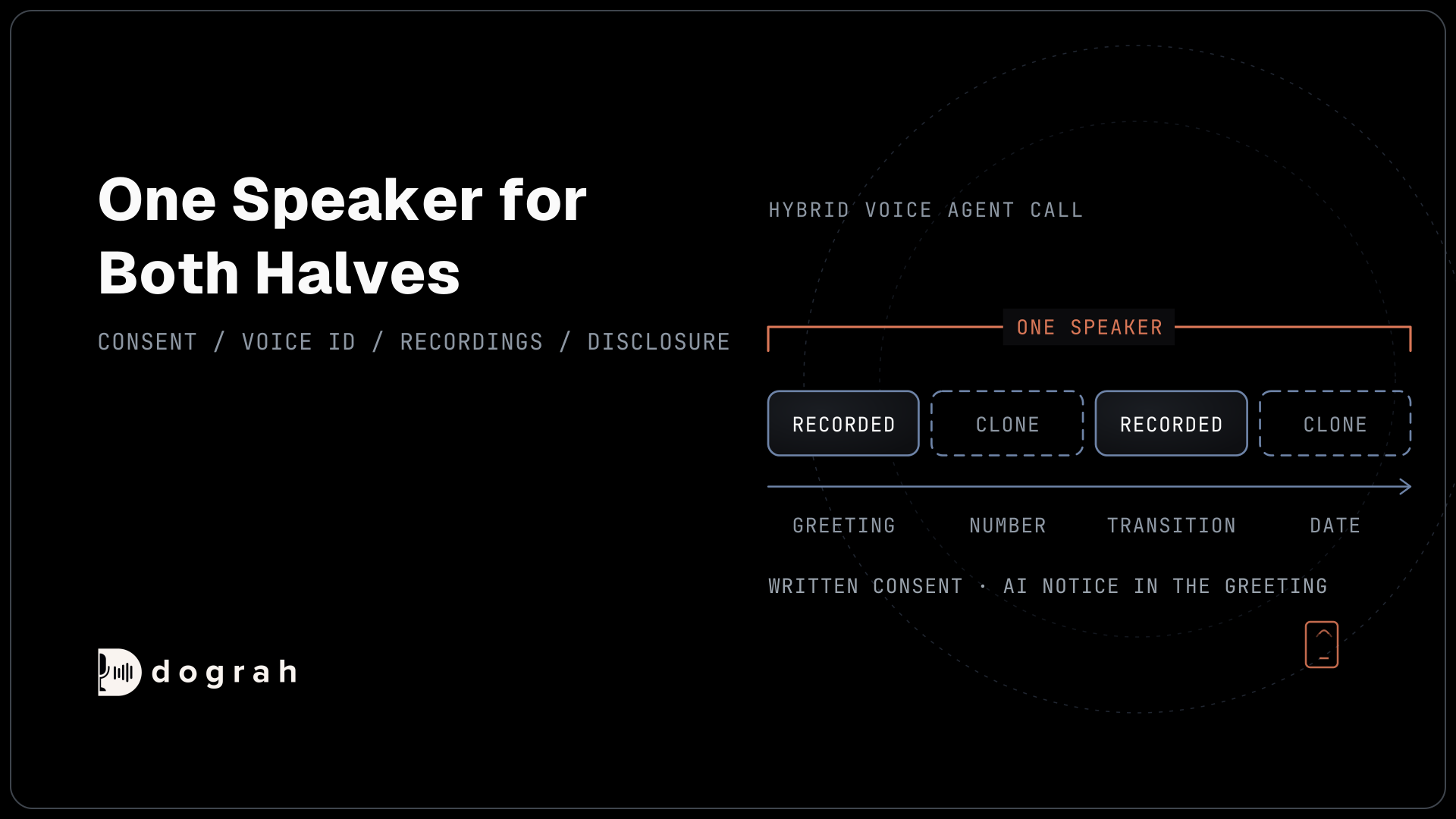
The call is short and runs the same way every time. The Greeting Text plays word for word and names the business. A customer can also hear there that an automated assistant is calling, which you may choose to say or a local law may require. A notice in the greeting should play in full, so switch off Allow Greeting Interruption on the Start Call node.
The agent asks for the customer by name, but a name finds the person and does not verify them. Before it mentions the job or the renewal, it asks for a check your business approves, such as the service address on the account. Then it thanks the customer and makes the ask in fixed text. If the customer is busy, the agent offers to call another time and records the time they gave, rather than rushing the ask.
Answers are recorded as the customer stated them, with the transcript and recording as the exact record. A Webhook node at the end of the call sends them to your CRM, where your team sees every yes and every complaint. Our page on the open-source review and referral call agent shows the whole call, from the fixed ask to the logged opt-out.
A customer who says "stop calling me" is heard. The agent takes the request by voice and writes it to your CRM, which leaves that number off the next list. The call itself also carries a do_not_call outcome in Dograh, so exporting those calls gives you a second list of numbers to drop before the next campaign. Calling hours follow one time zone per campaign, so customers in other zones go in their own campaign.
Every customer in the group gets a call, so minutes follow your job count. On your own servers, Dograh adds no per-minute platform fee, though you still pay for servers, model keys and phone minutes, and Dograh Cloud bills a 1¢-a-minute platform fee. The survey call that can come before any ask is in AI voice agents for NPS and CSAT surveys.
Join the Dograh Community
Dograh is an OSS alternative to Vapi. Join our Slack community for queries, releases, best practices & community interactions.
Check every call for gating and rewards
You prove the calls stay clean from the transcripts, because a prompt alone cannot guarantee it. Dograh's QA node reviews each call after it ends. Replace its System Prompt with instructions that flag any call where the agent tied a reward to a review or asked only whether the customer was happy. Add a flag for a referral ask made on a check-in call.
Keep the Sample Rate at 100% for this check, so every call is reviewed. A person reads each flagged call the same week and fixes the agent before the next batch. Automated QA for voice agents covers how to set up those checks.
What to measure
Measure each ask separately, because they succeed and fail for different reasons. For reviews, track how many customers said yes and how many reviews appeared, per group. For referrals, follow each yes through to the share link and then to any booking it produced, all in your CRM. Watch opt-outs as well, since a rising opt-out rate means the timing or the words need work.
Count the problems the calls surface too, and how fast your team fixes them. A review call that finds an unhappy customer and gets the problem solved is doing its job, even when no review follows.
Change one thing at a time. Run the new ask on half of a group and the old one on the other half, so you compare them on real calls. Read a sample of transcripts from both before you decide, because a higher yes rate means nothing if the new words drifted toward gating.
Glossary
- Review gating
- Asking only customers you expect to be happy for a public review, or steering unhappy ones away. Google's policy bars it, so every customer in the group hears the same review ask.
- Established business relationship (EBR)
- A link formed by a purchase in the last 18 months or an inquiry in the last three. It matters for telephone solicitation and do-not-call lists, and it does not replace written consent for an AI-voice marketing call.
- Material connection
- A tie between the person recommending you and your business, such as a referral reward, that the audience would not expect. The FTC's Endorsement Guides say it must be disclosed clearly.
- Prior express written consent
- A signed agreement, electronic signatures included, that allows marketing calls with an artificial or AI voice to a named number. A referral ask by an AI voice agent generally needs it.