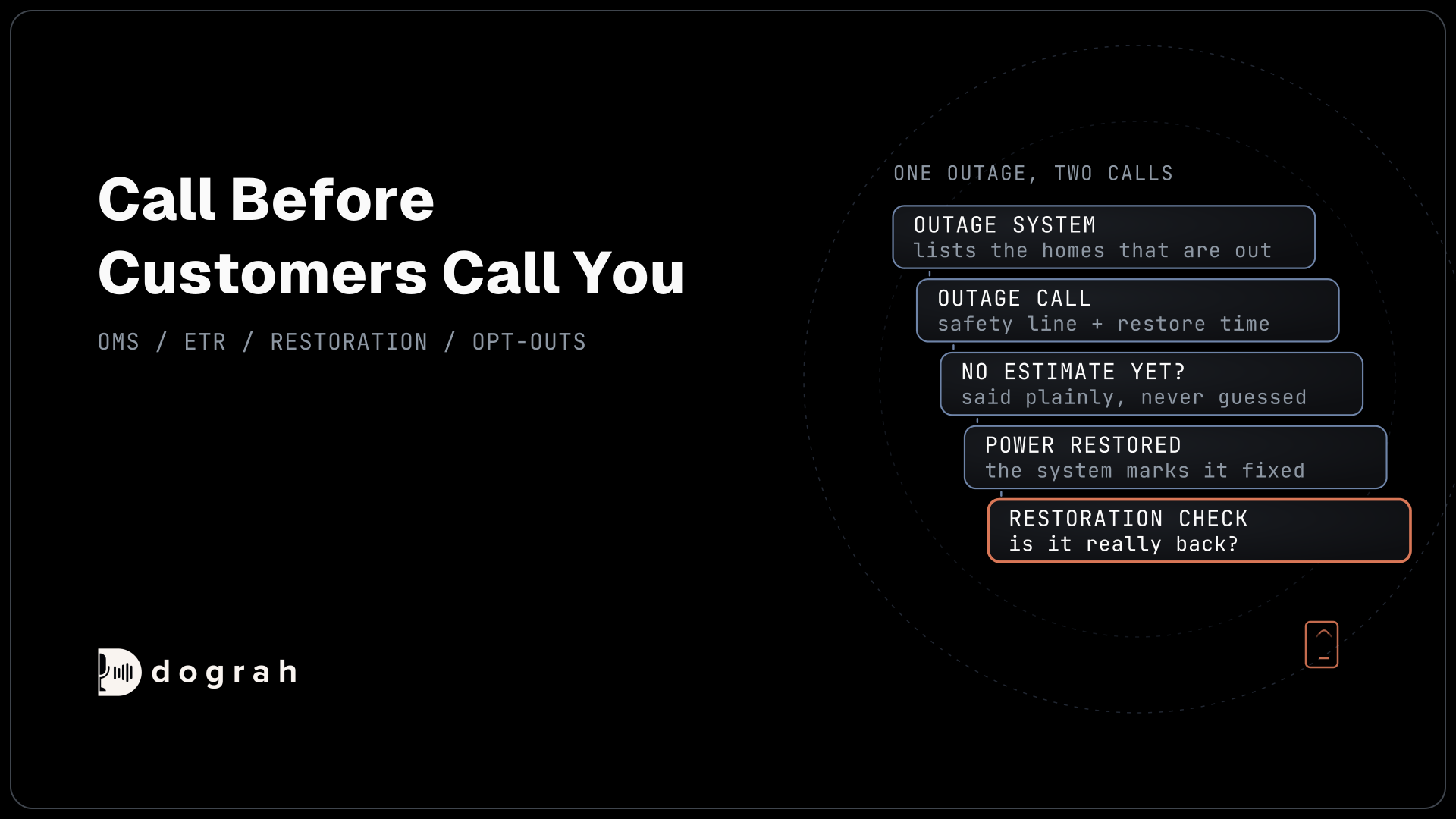

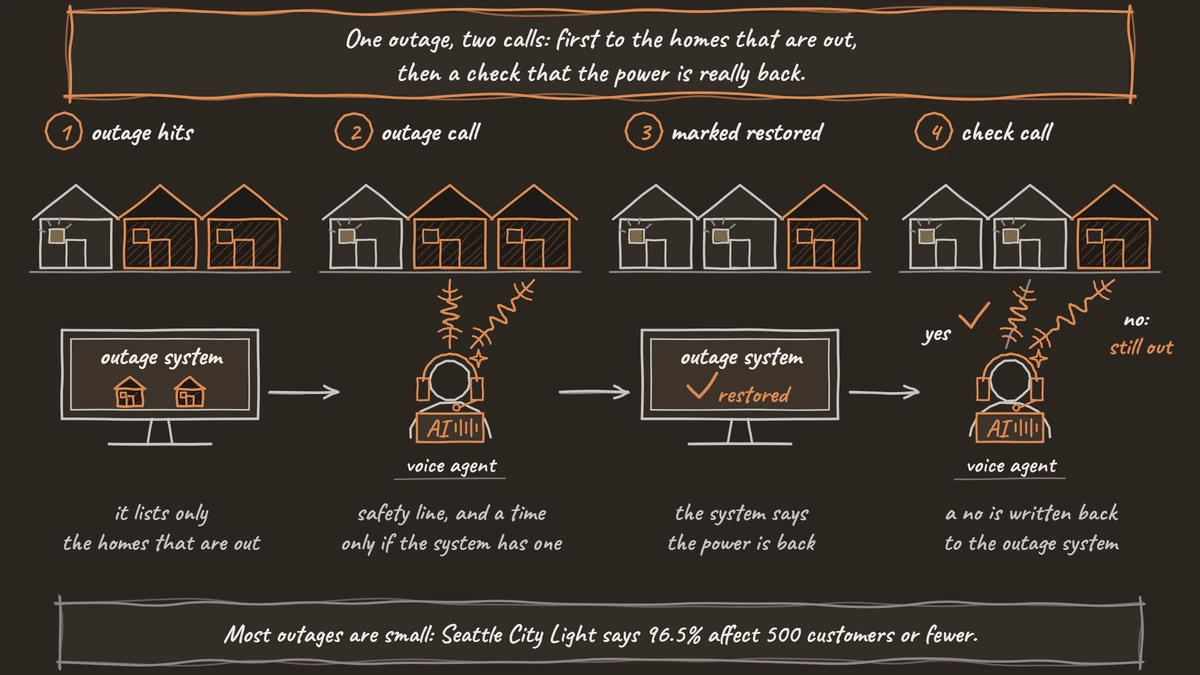
AI voice agents for outage notifications call the customers an outage management system lists as affected. They read the estimated restoration time from that system, or say there is none yet, and repeat a fixed safety line about downed wires and gas. Once power returns, a second call asks whether it is really back.
Key Takeaways
- Call only the customers the outage system lists as affected.
- State a restoration time only when the outage system returns one.
- The "is your power back?" check is a call the FCC itself names.
This post is part of our guide to AI voice agents for utilities and energy. In the guide's section "Outbound calls and the FCC consent line", the outage part sets one rule: an outage call goes only to the addresses the outage management system (OMS) lists as affected, and it states a restoration time only if the OMS has one. Here is that call and the restoration check after it, run on Dograh, an open-source, self-hostable voice agent platform.
Why call before customers call you
Outages were common in 2025, and timely information about them is measurably worth giving. J.D. Power's Utilities Outlook 2026 found that 55% of US customers had a power outage in 2025, and that utilities giving timely outage information scored 52 points higher on its 1,000-point scale.
Many customers hear nothing at all. In J.D. Power research reported by T&D World in July 2026, only 41% of electric utility customers recalled receiving any communication from their provider.
Most outages are also small. When Seattle City Light launched outage notifications in January 2026, its pilot covered outages affecting 500 customers or fewer, which it said were "96.5% of all outages". A region-wide message misses the point. Each outage needs its own short list.
Who gets a call, and when
The OMS knows which addresses are out, so it builds the call list for each outage. For each affected customer, the OMS starts a call through the API Trigger, which our post on API Triggers explains. Or your system uploads the list as a Campaigns list through Dograh's API and starts it there.
Texts and emails from the utility's own system reach most customers faster, and Dograh sends no texts itself. A call earns its place for customers with no mobile number on file and for households with a medical-equipment flag, if your utility keeps one. The restoration check is a call too.
Size the list to your capacity. Self-hosted Dograh and the Dograh Cloud Pay as you go plan both run 10 concurrent calls by default, and a large outage list takes hours at 10 calls at a time. You can raise the self-hosted limit, or contact Dograh for more on Cloud. Calls at night wake people up, so restoration checks wait for the campaign's calling hours, set by weekday in one time zone per campaign, and the utility's own texts cover the night.
What the agent says, and where each word comes from
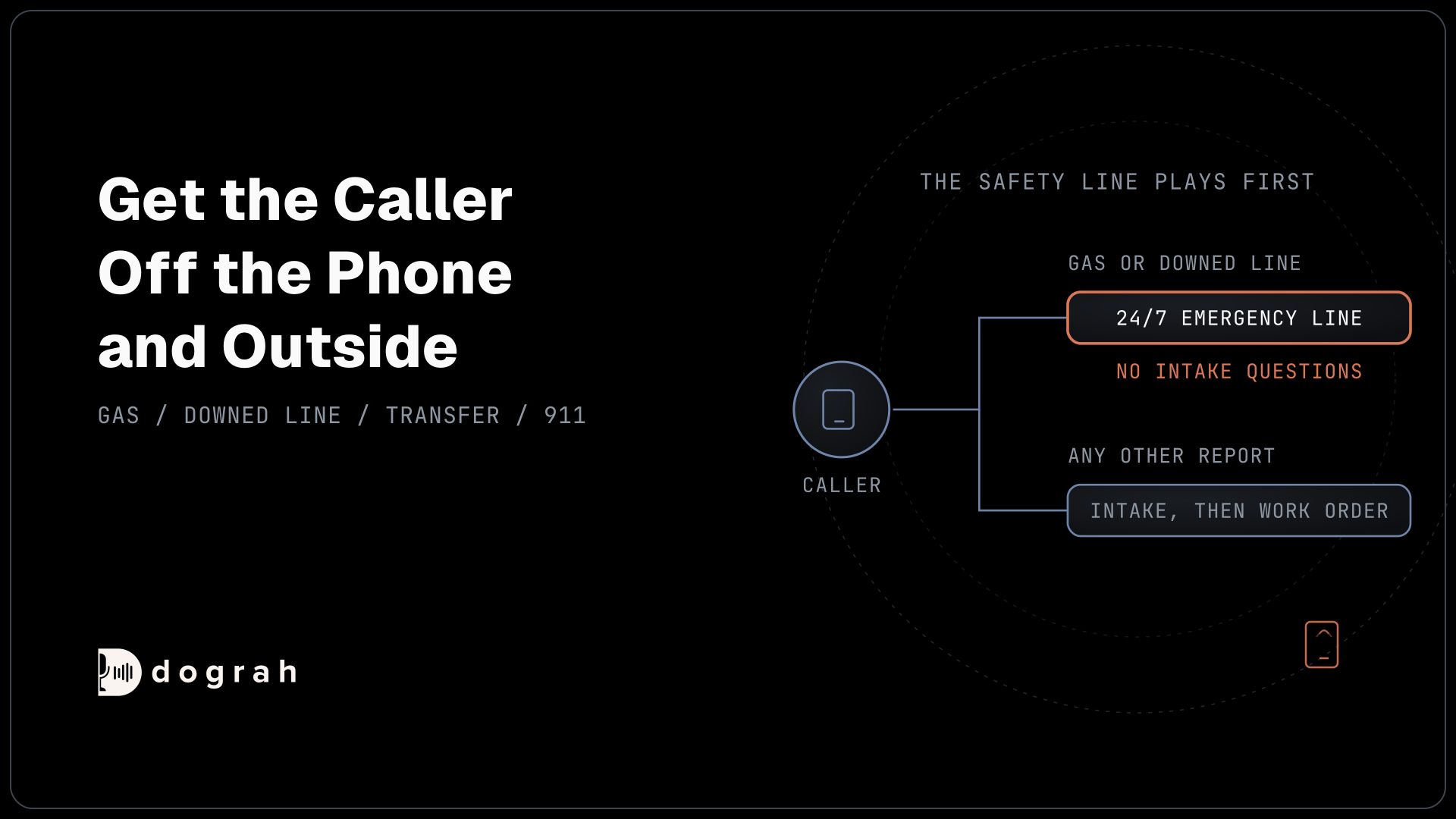
Every outage call carries a fixed safety line and a restoration time from the OMS, or none. The call opens with Greeting Text, fixed words that name the utility and carry the safety line: stay away from downed wires, and if you smell gas, leave and call 911 from a safe place. LG&E and KU tell customers never to text to report a gas leak or downed line; AI voice agents for emergency intake in utilities covers the call that follows.
The outage details change per customer, so they arrive as variables, from the API Trigger's initial context or from Pre-Call Data Fetch set to Outbound calls only. Set a variable fallback in the greeting, such as {{etr | not yet available}}, or a missing value is read aloud as the raw placeholder. Transition Speech cannot hold per-customer variables, so the details stay in the greeting or the node.
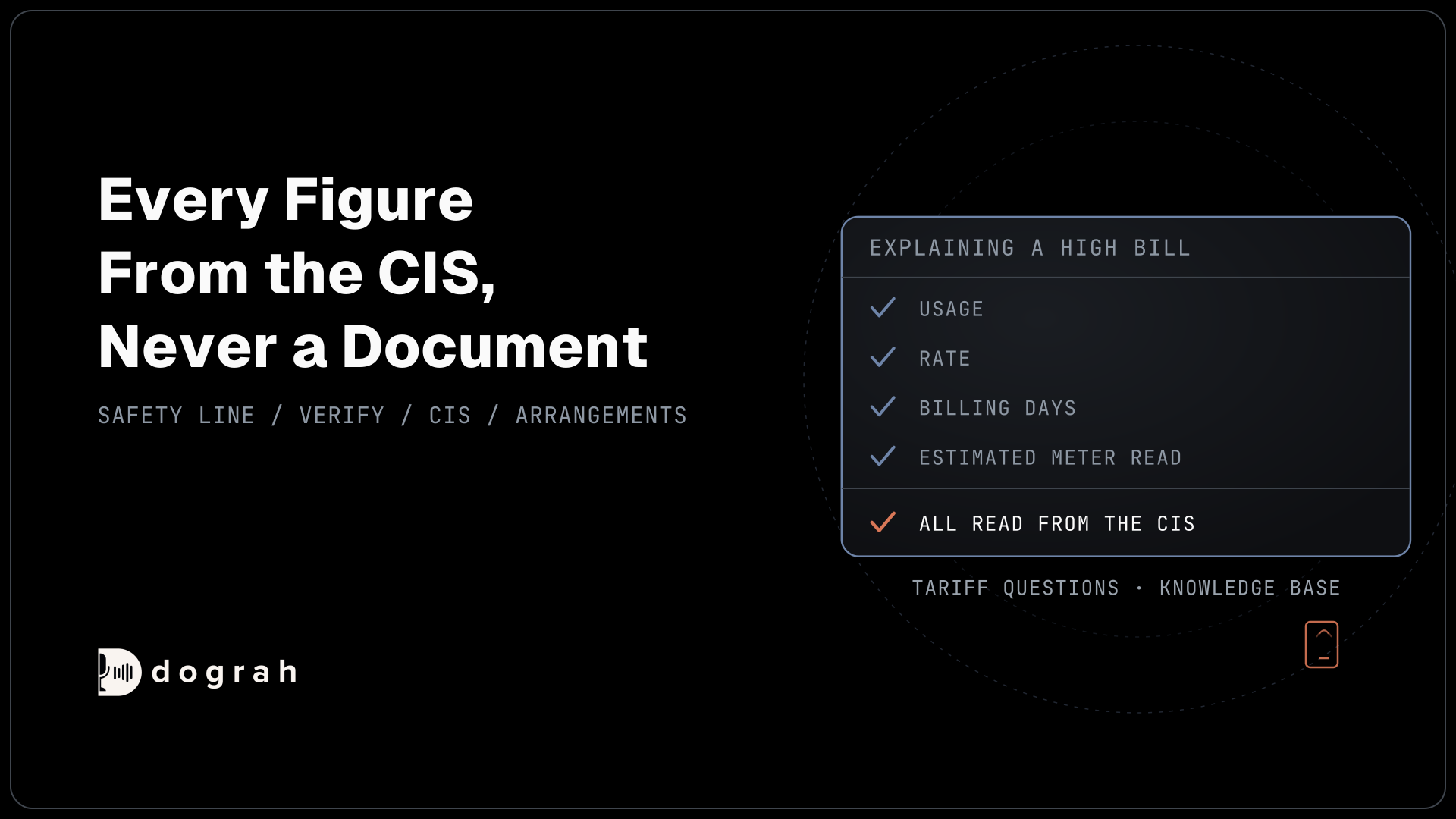
The agent states the estimated time of restoration (ETR) only as the OMS returned it. When the OMS has no estimate, the agent says so and never guesses. It also names no address or account detail before verification. It says the utility knows of an outage affecting the customer's service, and if the customer asks about their own account, it verifies them first.

Open Source Alternative to Vapi / Retell
Self-hosted voice agent platform — no per-minute fees
dograh-hq/dograh
Star on GitHub
The restoration check
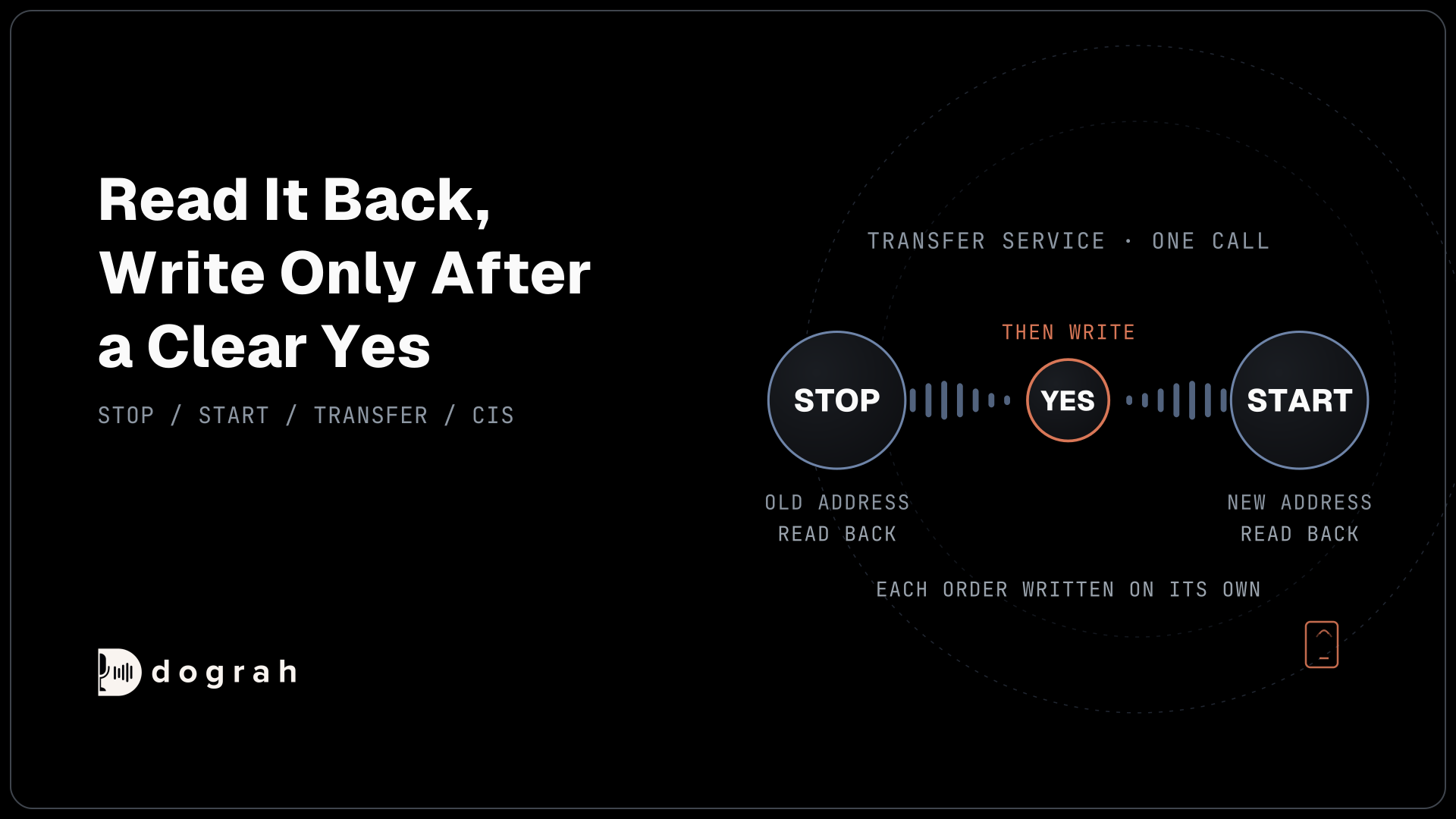
Once the OMS marks an outage restored, a second call asks the customer whether power is really back. The FCC's 2016 ruling lists this kind of call by name: calls that "ask for confirmation of service restoration or information about lack of service". LG&E and KU send a confirmation once power is restored, and Seattle City Light sends a second notice.
The agent asks one question and records the answer as the customer stated it. A yes closes the call. A no means this house may sit on a separate fault, so an HTTP API tool writes "still out" to the OMS during the call, and the agent gives the restoration time only if the OMS returns a new one. After the call, a Webhook node sends every answer to your system and retries a temporary failure automatically.
Consent and opt-outs
Outage and restoration calls generally sit inside the consent customers gave with their number. This is general information, not legal advice. In FCC 16-88, the FCC says customers who give a utility their wireless number have consented to messages closely related to the service, including calls that "warn about planned or unplanned service outages; provide updates about service outages or service restoration".
Customers can still opt out: consumers "may revoke consent in any reasonable manner". Dograh keeps no do-not-call list of its own, so an HTTP API tool writes a spoken opt-out to the utility's own list, and those numbers leave the next outage list. Keep offers off these calls entirely. Confirm your own position with counsel.
Join the Dograh Community
Dograh is an OSS alternative to Vapi. Join our Slack community for queries, releases, best practices & community interactions.
Storms, inbound surges and where to start
A storm also floods the inbound line. When the concurrency limit is full, Dograh rejects a new inbound call at once, and on Twilio the caller hears a fixed message that the account has reached its concurrent call limit. Calling the affected customers first means fewer of them need to call in. Load-test both directions before storm season, as How to Test, Monitor, and Scale AI Voice Agents in Production describes.
Start with restoration checks on small outages, where the list is short and the question is simple. Our post on AI voice agents for government status updates shows the same status-call pattern in both directions.
Self-hosted Dograh has no per-minute platform fee (servers, model keys and phone minutes still cost); Dograh Cloud has a 1¢-a-minute platform fee.
Glossary
- Outage management system (OMS)
- The system that tracks which addresses are without power and when crews expect to restore it. It builds the outage call list and supplies the restoration time the agent reads.
- Estimated time of restoration (ETR)
- The time the utility expects power back at an address. The agent states it only when the OMS returns one and otherwise says there is no estimate yet.
- Restoration check
- A follow-up call after an outage is marked fixed, asking whether power is really back. A no is written back to the OMS during the call.
- Variable fallback
- A default value inside a Dograh template variable, such as {{etr | not yet available}}. Without one, a missing value is read aloud as the raw placeholder.