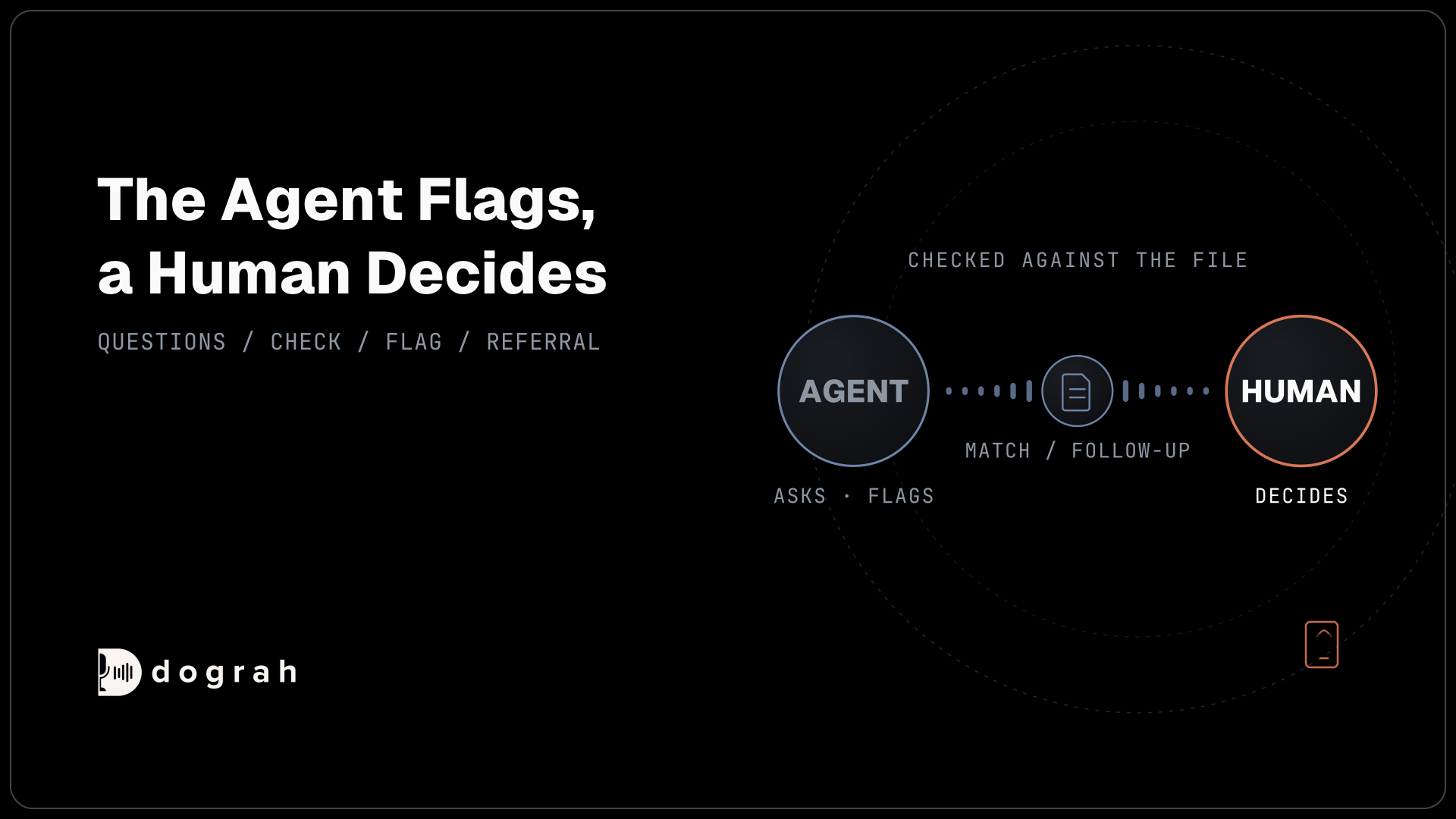


An AI voice agent answers a citizen's status call, confirms who they are, and pulls their live case or refund record from agency systems before it speaks. It reads back the current stage in plain language, in the caller's own language, and passes anything unusual like an appeal to a human.
Key Takeaways
- Pre-call fetch reads a citizen's live case or refund record before the agent speaks.
- One agent covers inbound status questions and proactive outbound update calls.
- Self-hosting keeps citizen case data inside the agency's own infrastructure and country.
This post is part of our guide to AI Voice Agents for Government & Public Services.
Most people do not call a government office to make conversation. They call because a form went in weeks ago and nothing has come back, and the online tracker either times out or shows the word processing with no date attached. That gap between filing something and hearing back is the fuel behind the highest-volume, lowest-value calls any agency handles, and it is exactly the work a voice agent should take off human staff. For most residents the phone is still the channel they reach for when the portal has failed them, which is why this is the call worth fixing first.
The call your agency gets most is a status question
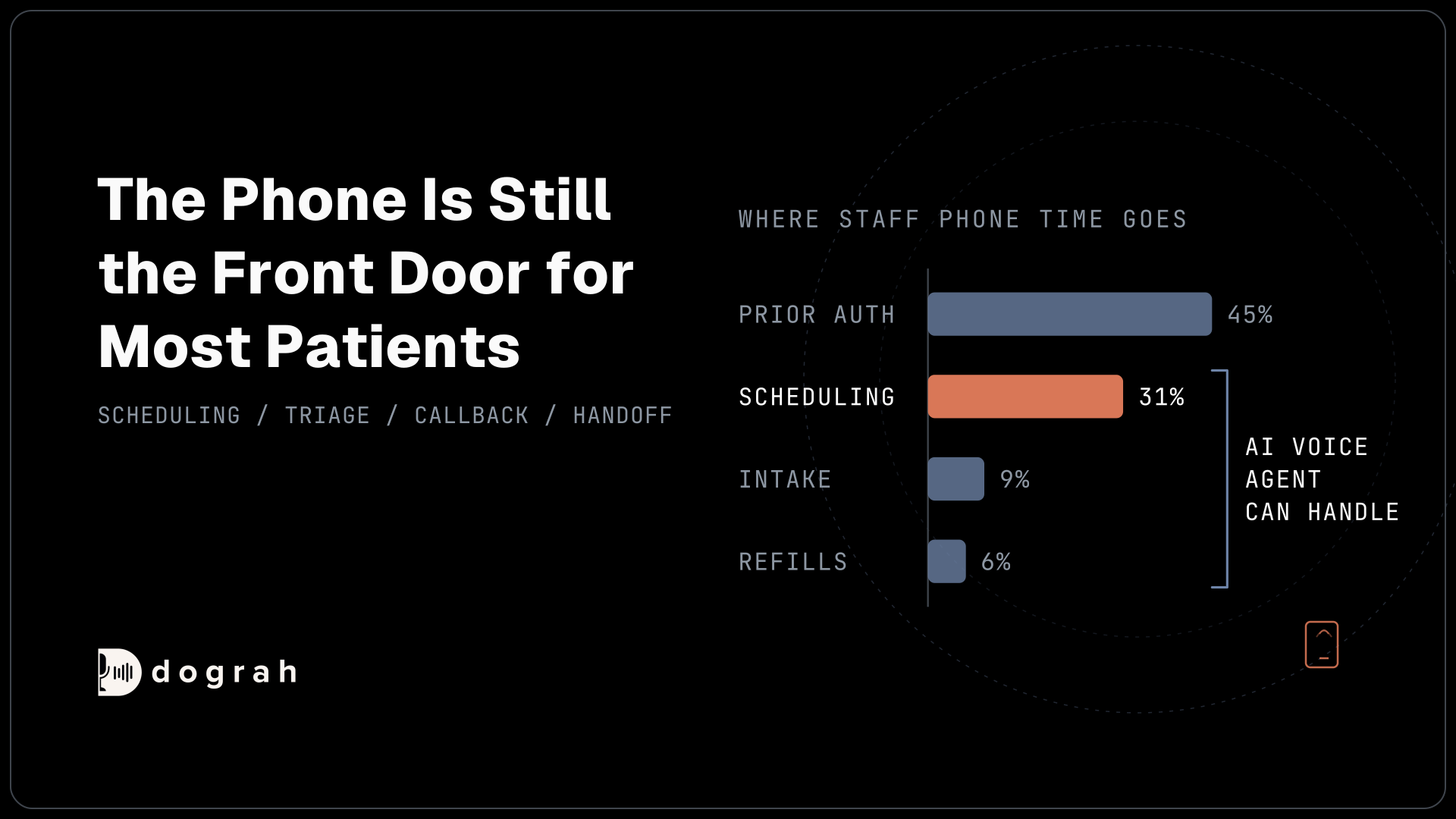
The single largest source of repeat government call volume is a citizen asking where their thing is. In fiscal year 2025 the IRS Where's My Refund tool logged nearly 417 million lookups, and its representatives still answered about 18.6 million refund calls on top of that. People check the website, get a vague status, and pick up the phone anyway. The immigration side shows the same pressure in a more structural form, because USCIS closed FY2025 with 11.6 million pending cases, more than triple the level of a decade earlier, and at current processing rates it would take close to 14 months to clear even if no new filings arrived. Each of those pending cases is a person who might call to ask what is happening with it. The same pattern runs through permits, licenses, benefit renewals, and appeals. The question rarely changes, the answer lives in a system the front-line phone staff cannot always reach fast, and the caller often hangs up no better informed than before. That is not an edge case. It is the busiest hour of the busiest line, repeated across every program an agency runs.
Pre-call fetch gives the agent the answer before it speaks
The feature that turns a status line from irritating into genuinely useful is pulling the live record before the conversation starts. Pre-call fetch means that the instant a call connects, the agent looks the caller up by phone number or reference ID and loads their current case or refund record, so by the time it says hello it already holds the current stage and the next step. That is the whole difference between an agent that reads a menu and points you back to a portal and one that tells you your renewal cleared review on Tuesday and should post within five business days. Before it reads anything sensitive, the agent verifies identity, so the wrong person cannot phone in and hear someone else's file. What makes all of this work at scale is the data plumbing governments have quietly finished building. Deloitte counts more than 100 countries now running data-exchange platforms as of December 2025, the interoperable layer that lets one service reach a record held by another. The same report points to Portugal's Gov.pt assistant, which spans over 2,300 services with process tracking, and to Spain's My Citizen Folder, where residents follow their applications across agencies. A voice agent sitting on that plumbing does not guess at an answer. It reads the real one.
One agent covers inbound questions and outbound updates
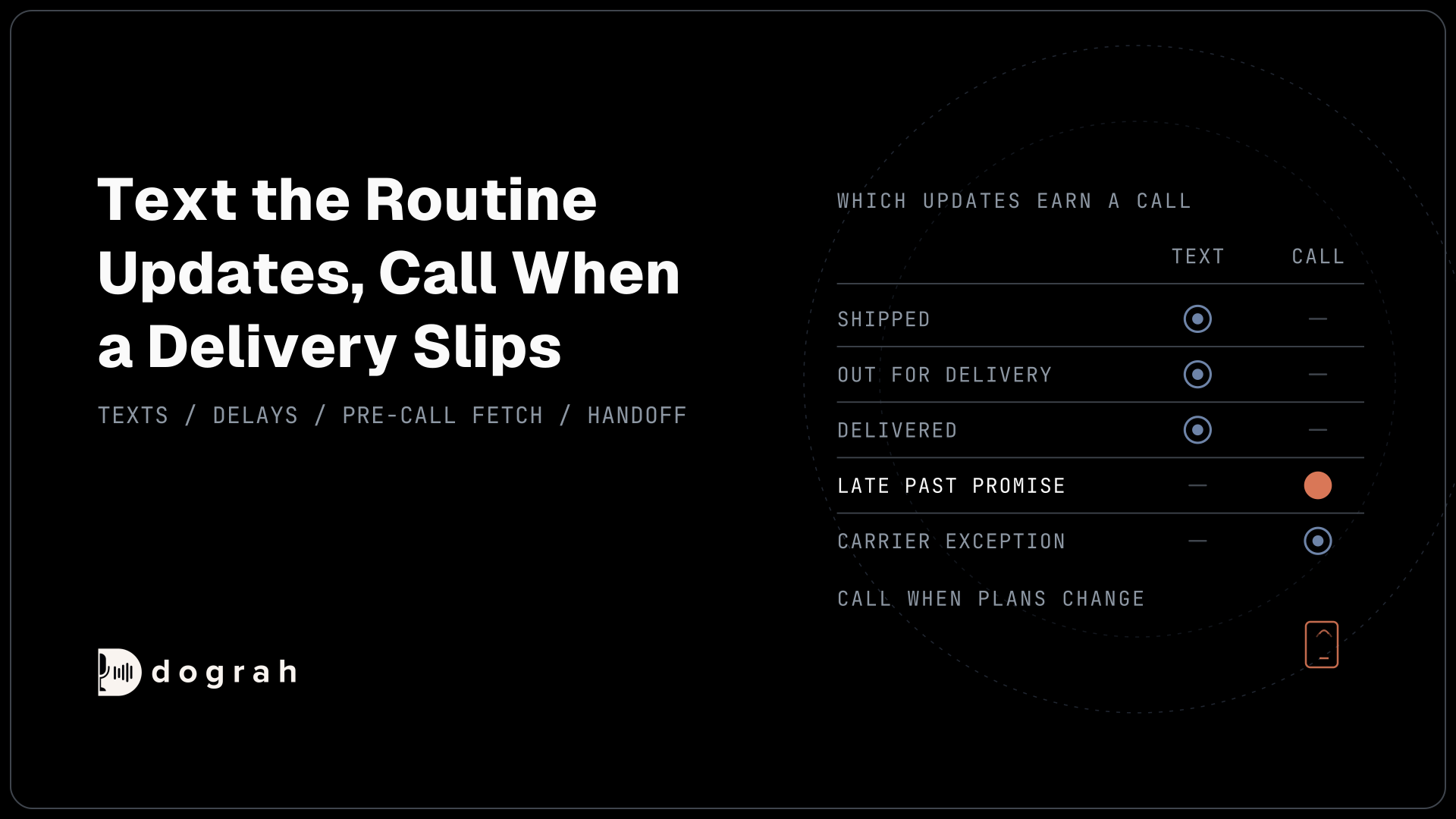
A status agent earns its budget on the calls that come in and on the calls it stops from ever coming in. Inbound is the obvious half. A resident dials the hotline, the agent verifies them, fetches the record, and reads back where things stand at two in the morning with no hold queue in the way. The outbound half is where the volume actually falls. When a permit is approved or a document is missing, the agent can call the applicant first, which removes the reason they would have called you next week. Proactive updates also catch trouble early, so a benefit renewal does not quietly lapse because someone never opened the letter. The economics of the outbound half are simple, because a two-minute call that prevents three inbound ones is the cheapest deflection an agency can buy. This pairs well with an agent that can book the follow-up appointment on the same call, and it lives inside the broader inbound citizen helpline most agencies are already staffing. One agent, wired once to the record system, works both directions without a second build.

Open Source Alternative to Vapi / Retell
Self-hosted voice agent platform — no per-minute fees
dograh-hq/dograh
Star on GitHub
Answering the routine calls frees the queue and the staff
When the routine status calls get handled automatically, wait times drop and case workers stop reading tracking numbers down the phone. The Social Security Administration is the clearest public proof of this, having cut average wait on its national line from 28 minutes to 15 minutes between FY2024 and FY2025 while serving 65 percent more callers, and it now resolves close to 90 percent of calls through self-service or callbacks, with nearly 30 percent handled instantly by technology. Independent sizing puts the deflectable share of routine government calls, the status checks and simple eligibility questions, at roughly 30 to 40 percent of inbound volume. That is the load a status agent lifts off human staff so they can spend their hours on cases that genuinely need judgment. Adoption has already crossed from pilot to standard practice, with most government organizations now using AI in some form heading into 2026, so for most agencies the open question is the terms of automation rather than the idea of it. The harder calls still reach a person. When someone wants to appeal or is plainly upset, the agent hands them to a human along with the record it already fetched, so the citizen never has to start the conversation over from their reference number.
Join the Dograh Community
Dograh is an OSS alternative to Vapi. Join our Slack community for queries, releases, best practices & community interactions.
A status hotline should run on infrastructure you control
Status calls run on the most sensitive records an agency holds, so the way the system is deployed matters as much as how the voice sounds. A hotline that answers refund and case questions is reading citizen financial and identity data out loud thousands of times a day, which is a strong reason to keep the whole stack on infrastructure the agency owns rather than sending call audio and case data to a vendor's cloud. Self-hosting keeps that data resident and auditable, the same reason on-prem tends to win in regulated settings.
Pre-call fetch is what makes those stakes concrete. Every lookup the agent runs pulls a live citizen record, the real refund status or benefit stage rather than a masked copy, so genuine personal data moves through every call. When the whole stack is self-hosted, that data stays inside the agency's own infrastructure and inside the country it belongs to, with no cross-border transfer to a third-party SaaS cloud. For an agency bound by data-residency rules, that is the line between a system it can legally run and one it cannot.
Two more criteria separate a serious buyer from an impulse pilot. Watch the pricing model first, because a per-minute platform fee that looks harmless in a demo turns punishing at 417-million-lookup scale, and status calls are pure volume. Check language coverage second, since equitable phone access for residents who do not speak English is frequently a legal obligation rather than a courtesy. This is the ground Dograh is built for. It is an open-source, self-hostable voice stack that fetches the live record before it speaks and hands off to a human on demand, and it runs in 70-plus languages with no per-minute platform fee on the sustained load a status line generates. Wire it to the record system once, and the most repetitive call your agency takes becomes the one it stops having to answer.
Glossary
- Pre-call fetch
- A lookup the agent runs the instant a call connects, pulling the caller's live case or refund record from agency systems so it can state the current status instead of reading a generic menu.
- Digital public infrastructure (DPI)
- The shared layer of digital identity and data-exchange platforms that lets one government service securely read a record held by another, which is what makes cross-agency status lookups possible over the phone.
- Call deflection
- The share of incoming calls resolved without a human, such as automated status checks and confirmations, which frees staff for the cases that need real judgment.
- Warm transfer
- Handing a caller to a human agent along with the context the voice agent already gathered, so the citizen does not have to repeat their reference number or re-explain the issue.