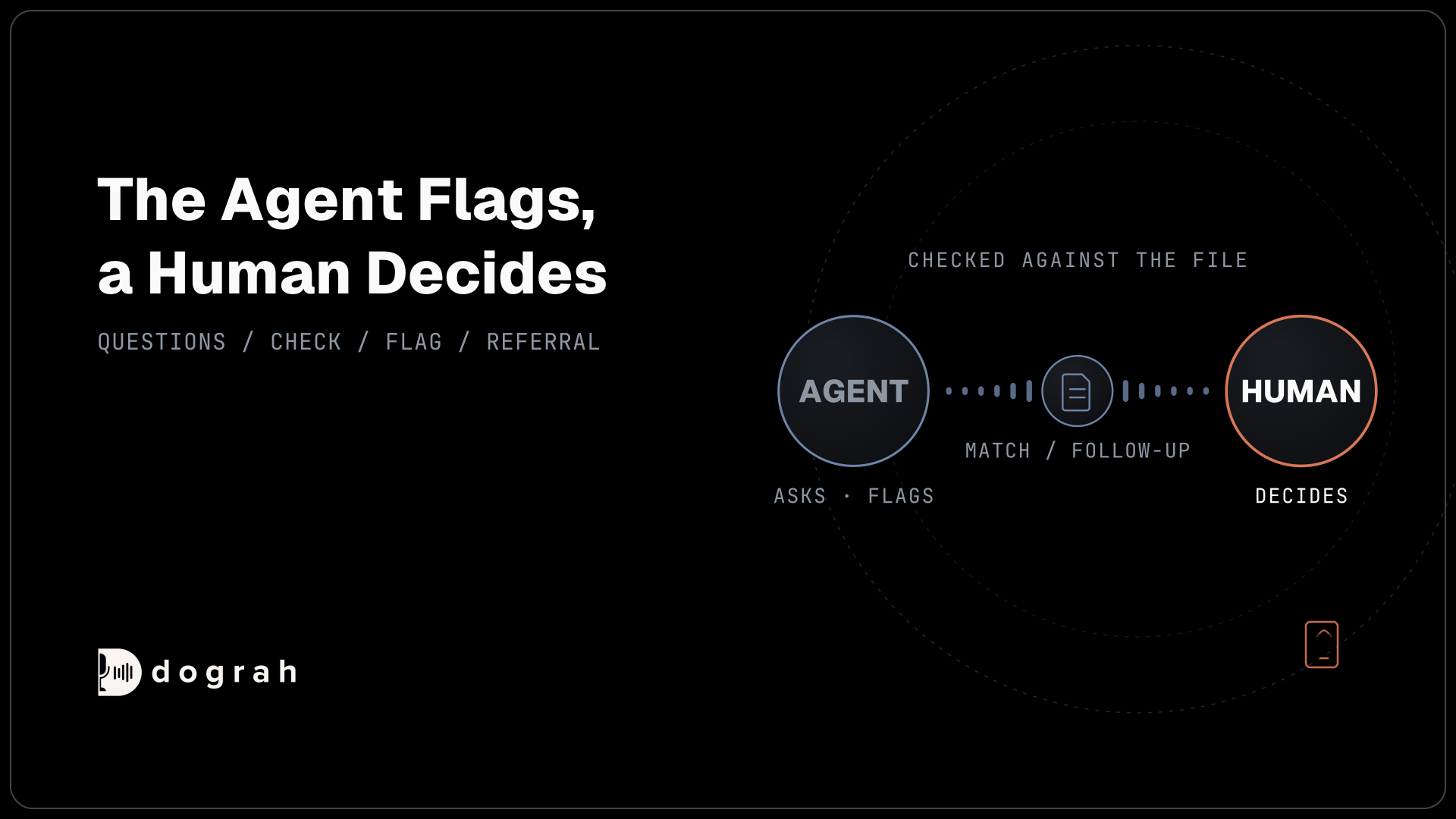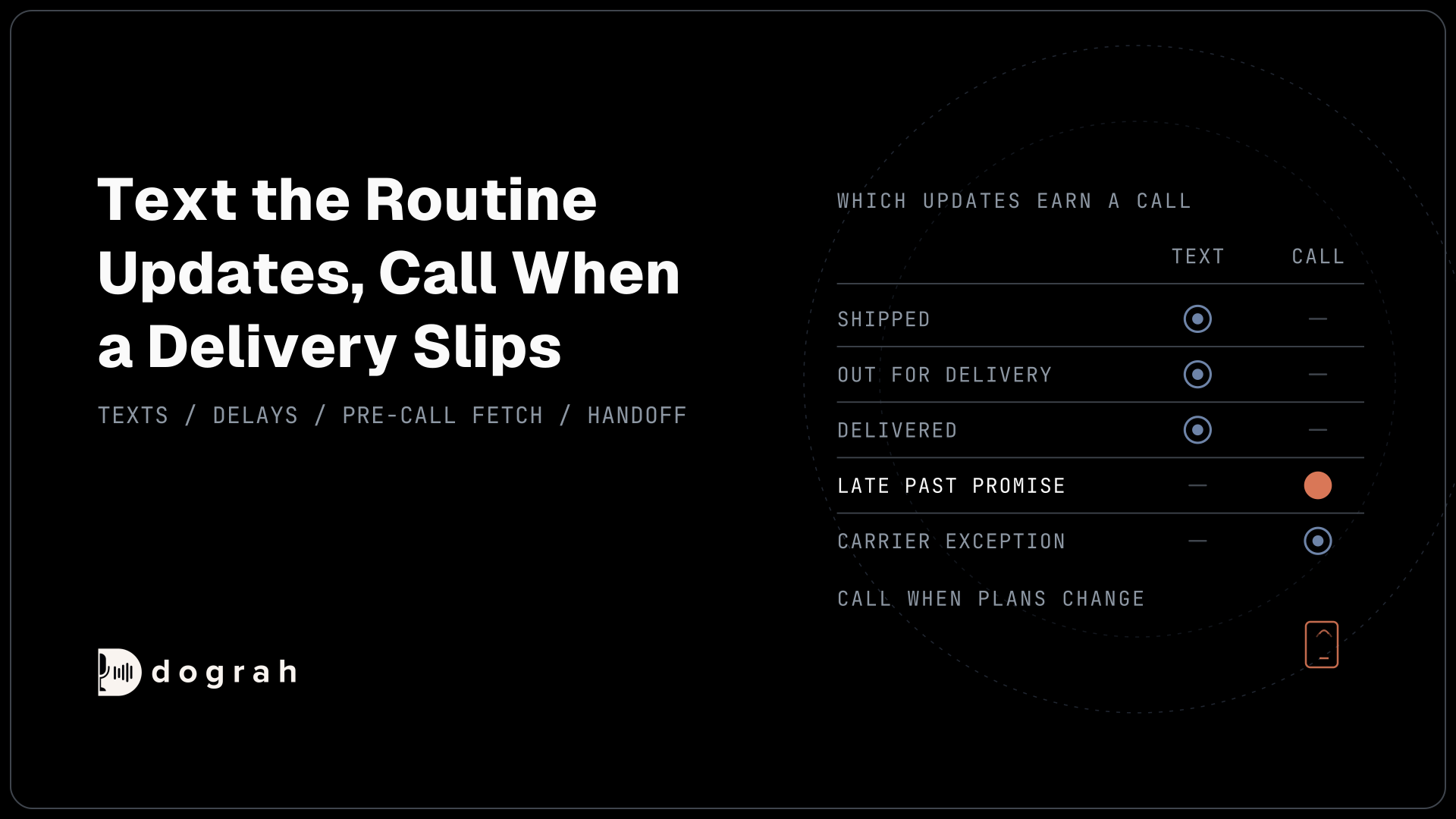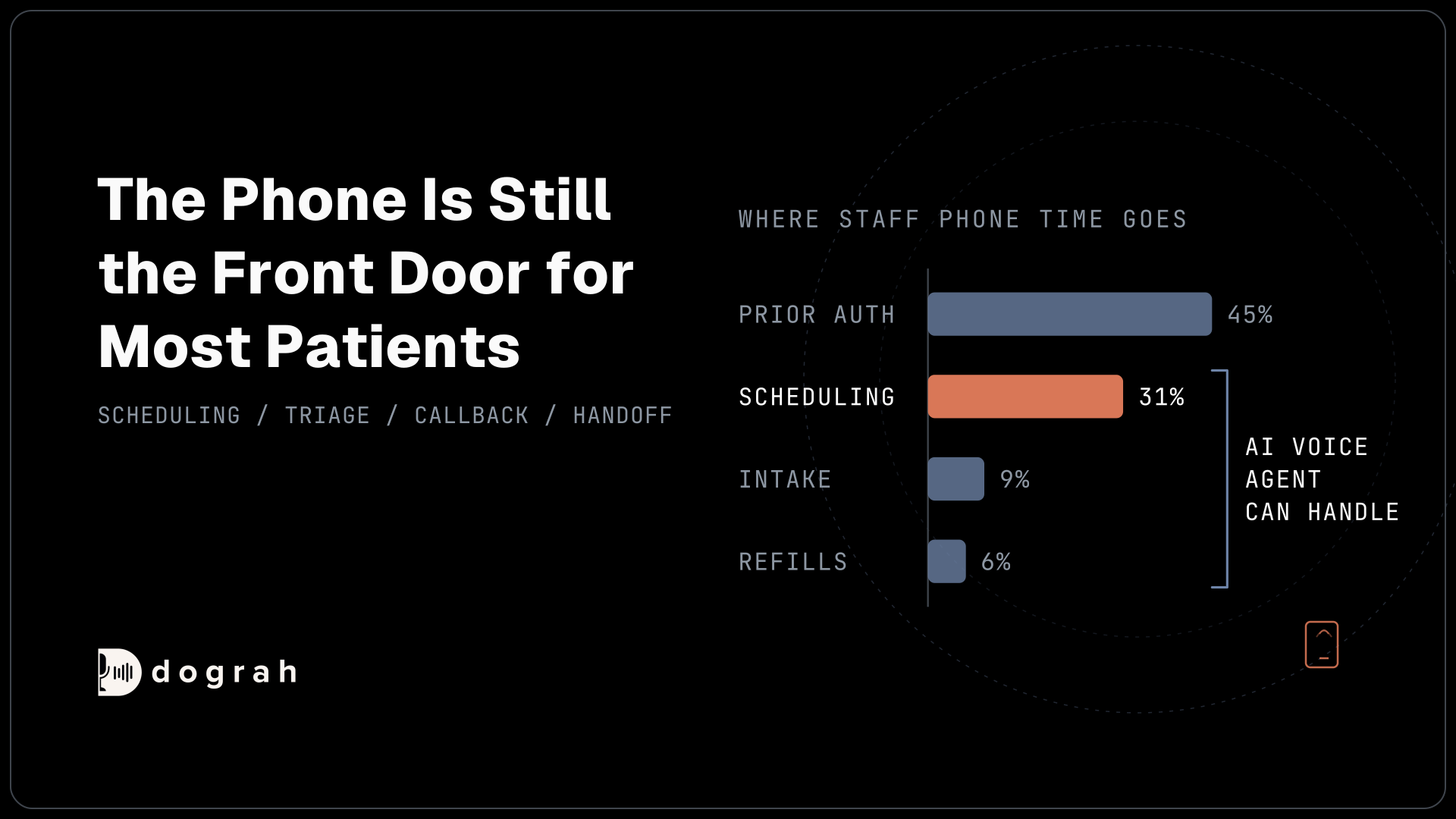


An AI voice agent answers a citizen helpline the moment it rings, with no hold queue, at any hour. It understands the caller's request in 70-plus languages, slows its speech for elderly callers, pulls the relevant record, and hands off to a human staffer whenever a need falls outside what it can resolve.
Key Takeaways
- Answer citizen calls on the first ring, with no hold queue.
- Serve 70+ languages and slow the pace for elderly callers.
- Self-host to keep citizen recordings and transcripts inside the country.
This post is part of our guide to AI Voice Agents for Government & Public Services.
The citizen who calls, then waits
The phone is still the front door to government, and the line behind that door keeps getting longer.
The Social Security Administration served 68 million callers on its National 800 Number in FY2025, a 65% jump over the year before. The averages hide the worst of it. The agency's own inspector general found callers who stayed on the line waited 59 minutes on average, against the 15.9 minutes SSA reported publicly, and those who took a callback waited an hour and 51 minutes for it. That is one agency. Multiply it across benefits offices, 211 community lines, permit desks, and utility-assistance hotlines, and you get the everyday reality of the citizen phone channel.
Most of these calls are not complicated. Someone wants a status, a form, an appointment, or directions to a nearby office. Volume plus staffing gaps turns a two-minute question into a forty-minute ordeal, and after 5pm the line often goes dark. An inbound AI voice agent changes that math by answering on the first ring, at any hour. There is no queue because there is no single operator to wait for. The agent picks up and listens, then either resolves the request or routes it to someone who can. Demand keeps climbing, too. The 211 network made 19 million referrals in 2025, a million more than the year before, with housing, utilities, and food the three largest categories.
Slowing down for the caller who speaks slowly
On a helpline, patience matters more than speed.
An older caller often speaks in a slower cadence, pausing mid-sentence to find a word before the next prompt. A default voice agent runs right over that pause, because its silence timeout is tuned for a hurried sales call. On a citizen line, that behavior is a failure. Fixing it takes two capabilities working together.
Default text-to-speech tends to read at a clip that outpaces older ears. Comprehension for many elderly listeners sits well below that default rate, so the agent should slow its delivery and lengthen the gaps between prompts when it hears a slower speaker. It can also read back what it understood before moving on, which the old touch-tone menu never bothered to do.
Barge-in lets a caller interrupt the agent and be heard right away, and its mirror image matters just as much. The agent has to yield the instant the caller starts speaking, then wait out a long pause instead of assuming the person is finished. Independent evaluation work on voice agents in 2025 treats this turn-taking as a baseline requirement, with production agents answering in about a second and GPT-4o reaching roughly 320 milliseconds of voice-to-voice latency. That is fast enough to feel responsive without steamrolling someone who is still thinking. On Dograh you set the no-speech timeout and pacing per workflow, so the elderly-caller flow can breathe while a routine lookup stays brisk.
Answering in the caller's own language, at any hour
A helpline that only works in English, and only during business hours, quietly excludes the people who need it most.
About 26 million people in the United States are limited English proficient, roughly 8% of residents aged five and older, and for many of them a government service stays out of reach when the phone tree only speaks English. The demand for language help is not marginal. New York State alone provided interpretation in more than 157 languages across 583,793 encounters in a single year, up 13%. A voice agent that covers 70-plus languages answers those callers directly, with no three-way interpreter call and no callback.
The after-hours gap is just as real. Older residents lean on the phone as their main channel, and about 85% of adults 65 and older were expected to own a smartphone by 2025, yet many still prefer to call rather than tap through a portal. When the office closes, an inbound agent keeps taking those calls, captures each request, and has it ready for staff in the morning. For a question like "where is my application," the agent can pull the live record and read back a real answer instead of a website address, an approach we go deeper on in AI voice agents for government status updates.

Open Source Alternative to Vapi / Retell
Self-hosted voice agent platform — no per-minute fees
dograh-hq/dograh
Star on GitHub
When the right answer is a human
The measure of a good helpline agent is how gracefully it gives up.
No automation resolves every citizen need, and pretending otherwise is how you lose people's trust. In 2025, 211 in Greater Kansas City fielded 347,839 contacts and met 90% of them with a referral, while 7.1% of callers had an unmet need concentrated in rental assistance and utility bills. Those are exactly the calls that should reach a person fast.
A helpline agent earns its place by knowing its limits. When a caller is distressed or asks for a human, or when the request falls outside the agent's scripted scope, it should warm-transfer to a live staffer and pass along everything it has already collected so the citizen never repeats themselves. If no one is available, it should take a clean voicemail with the caller's callback details rather than dead-end the call. That escalation discipline is what separates a non-emergency intake line from a dispatch system, which we cover in AI voice agents for emergency and incident intake.
Join the Dograh Community
Dograh is an OSS alternative to Vapi. Join our Slack community for queries, releases, best practices & community interactions.
What to look for in a helpline voice agent
If you are evaluating tools for a citizen line, a few criteria separate a real fit from a demo that falls apart at scale.
Start with language coverage, because language-access obligations do not bend to a vendor's roadmap. You want native support for dozens of languages out of the box, not a paid add-on billed per language. Look hard at the handoff path next. An agent that cannot transfer to a human, with context attached, is a liability on a line where real needs surface every day.
Then weigh where the data lives. Citizen calls carry sensitive personal information, and a helpline running through a hosted platform ships that audio and those transcripts to a third party by default. A self-hostable agent keeps the recordings and the personal data inside your own environment, which is often the difference between a project that clears review and one that stalls in it.
Self-hosting is what makes that boundary firm. Because Dograh is open source and runs on the agency's own infrastructure, every helpline recording and transcript, including the calls from vulnerable and elderly residents who share the most sensitive details, stays inside the agency's own systems and inside the country. Nothing crosses a border into a third-party SaaS the way it would with a hosted vendor, so the residency questions that so often stall a public-sector review answer themselves. We make the fuller case for that model in why on-prem will win enterprise voice AI.
Finally, do the arithmetic on price. Helplines run at high sustained volume, and most hosted platforms charge a per-minute fee on top of the underlying model costs. At the call counts a public line handles, that meter runs hard. Dograh is self-hostable with no per-minute platform fee, so a busy line does not become a runaway invoice, and because it is open you can bring your own speech and language models to push the per-call cost down further.
The citizen phone line is not going away, and the volume behind it is only rising. The agencies that get ahead of it will treat the first ring as the whole job, picking up in the caller's own language and at their pace, and knowing exactly when to pass the call to a person. That is a solvable problem today, and you do not have to rent it by the minute.
Glossary
- Barge-in
- The ability for a caller to interrupt the agent mid-sentence and be understood right away. On a helpline it also means the agent yields the moment the caller speaks and waits out long pauses instead of talking over a slow answer.
- Voice activity detection (VAD)
- The server-side logic that decides when a caller has started and stopped speaking. Raising its no-speech timeout gives elderly callers room to finish a thought before the agent responds.
- Limited English proficiency (LEP)
- A designation for people who speak English less than very well. Language-access rules require agencies to serve limited-English-proficient residents, which makes multilingual coverage a compliance need rather than a nicety.
- Warm handoff
- A transfer where the agent passes the caller to a human along with the context it already gathered, so the person does not restart the conversation from the beginning.