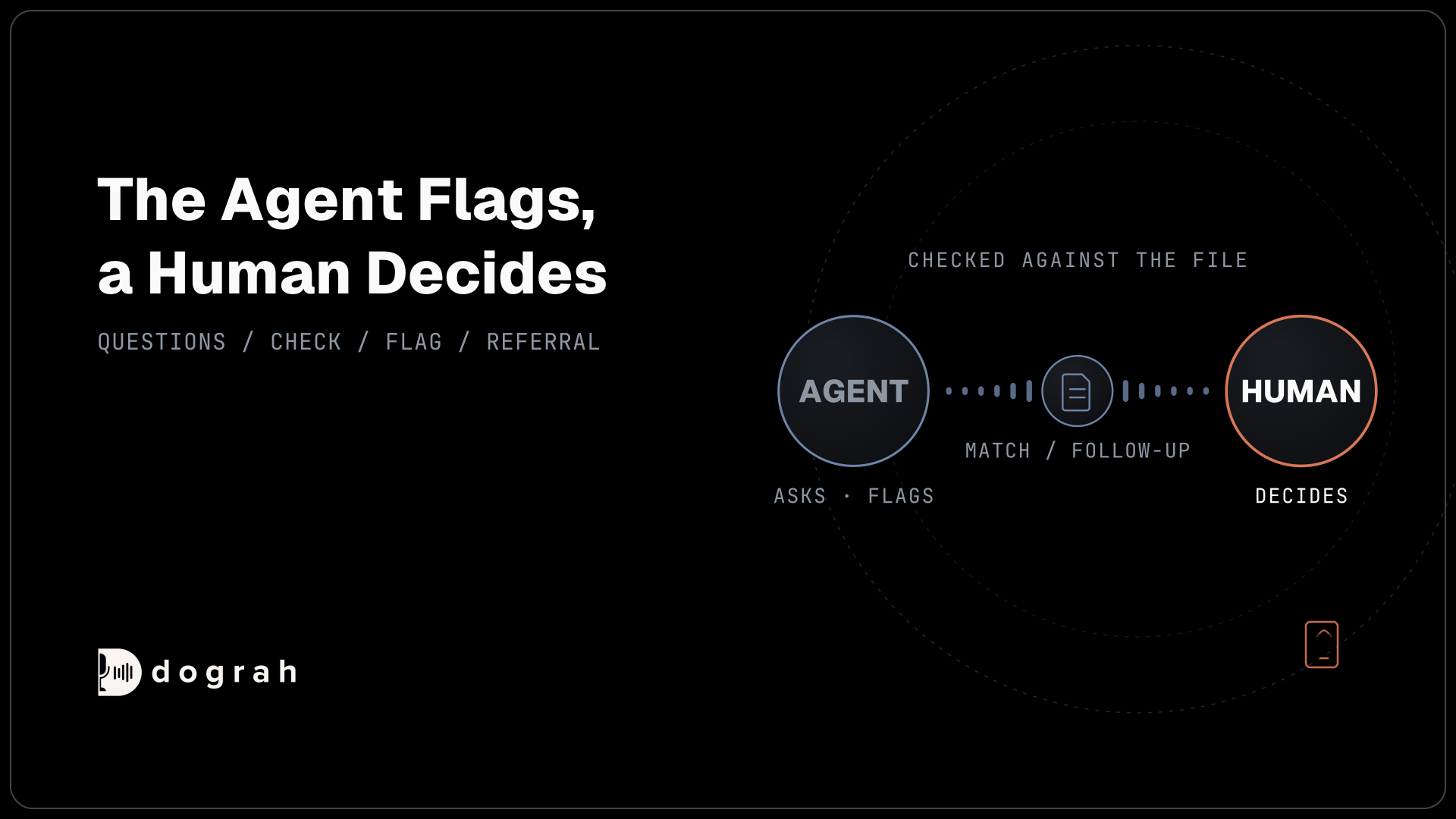


AI voice agents handle the non-emergency side of government intake. They answer 311 and administrative lines, capture structured incident details, sort calls by urgency, and soak up surges. Anything life-threatening gets warm-transferred to a human call-taker or 911 within seconds. They support dispatchers and never replace them.
Key Takeaways
- AI handles non-emergency 311 intake only; live emergencies warm-transfer to humans and 911.
- Structured extraction turns each call into a routed incident record automatically.
- Self-hosting keeps CJIS-regulated call data in the agency's own gov-cloud.
This post is part of our guide to AI Voice Agents for Government & Public Services.
Every public-safety leader I talk to walks in with the same fear about voice AI, and it is the right fear. They picture a bot picking up a call from someone whose house is on fire. So let me put the boundary up front. The job for an AI voice agent in government is the non-emergency queue and the administrative overflow that never should have reached a 911 seat in the first place. Live emergencies stay with trained people, every time. Everything that follows lives on the other side of that line, in the large pile of calls that feel urgent to a resident but are not a matter of life and death.
The non-emergency calls are burying the emergency line
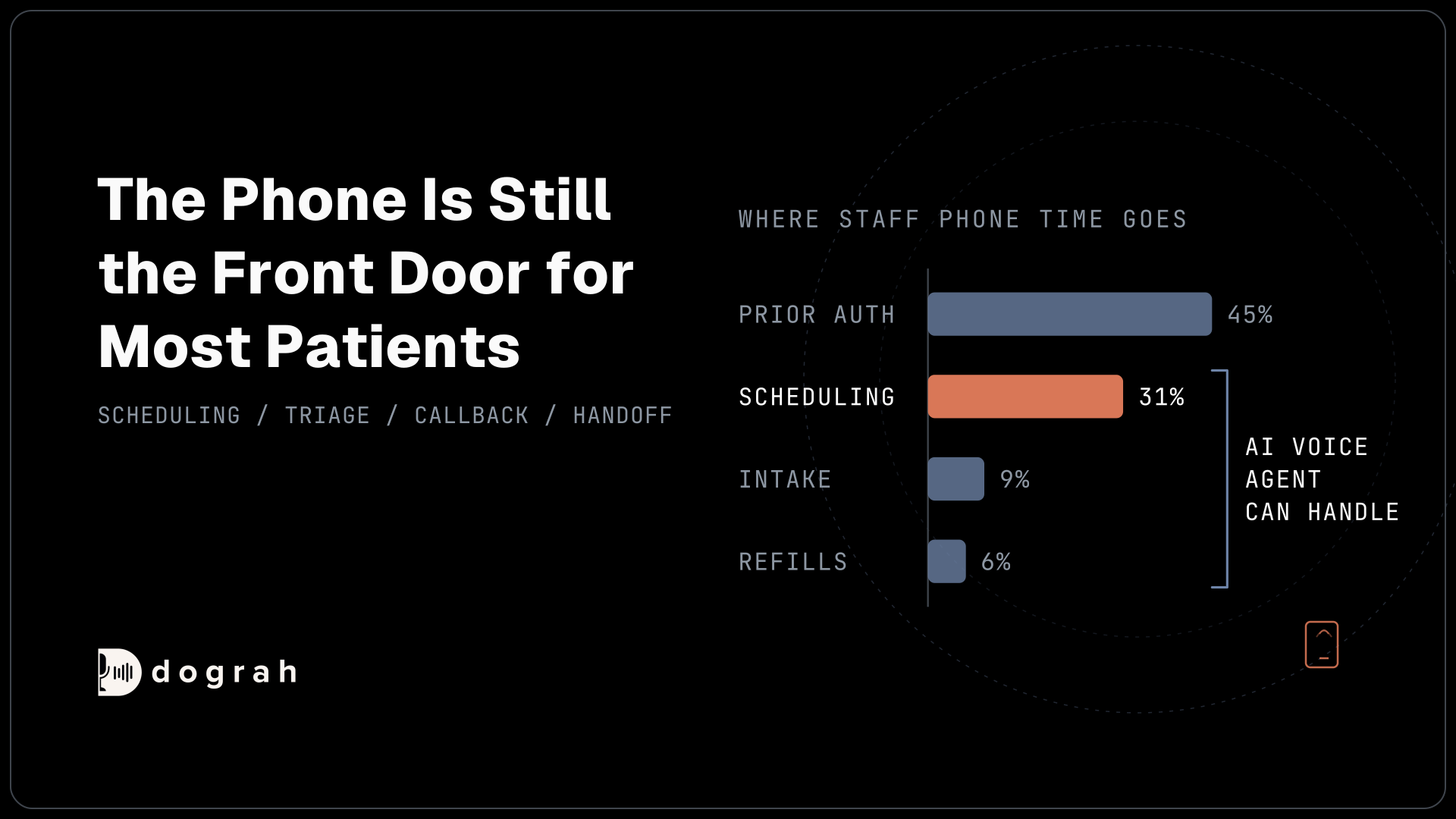
The staffing math is brutal, and it is getting worse. In 2025, roughly 23% of 911 calls to the Columbia-Richland center in South Carolina went unanswered, close to 84,400 abandoned calls, with people hanging up after an average 24-second wait while the center carried a 21.5% vacancy rate. The part that should sting: nearly 60% of that center's calls were non-emergencies, sitting in the same queue as cardiac arrests and car wrecks. When a resident calls to ask about a towed car and a stroke victim gets a busy tone behind them, the queue itself has become the danger. Most of that non-emergency traffic is routine anyway, a noise complaint or a question about a permit deadline, and none of it needs a trained dispatcher to resolve. This is not one unlucky county. Industry research from the national 911 number association found 74% of centers still reported vacant positions in 2025. You cannot hire your way out of that fast enough, and the non-emergency load is the part you were never supposed to be paying trained telecommunicators to carry.
Draw the line before you write a single prompt
Decide what the agent will never do before you decide what it will do. The federal framing is a clean starting point. The NTIA's 2025 analysis of AI in 911 operations describes the safe pattern in plain terms: the agent answers a non-emergency call, gathers the caller's location and the nature of the complaint, then passes structured data to a human when a person needs to be in the loop. That is the whole design. An AI voice agent for government should own non-emergency 311 intake, structured incident capture, first-pass triage by urgency, and surge absorption, then warm-transfer to a human call-taker or 911 the instant a caller says anything time-critical. It does not make dispatch decisions on life-threatening calls. It does not hold someone in a phone menu while a fire spreads. When the agent hears a keyword or a stress signal that reads as danger, the call routes to a person mid-sentence, with the transcript and captured fields already attached so the caller never starts over. Get that boundary wrong and nothing else you build matters.
Structured intake turns a call into a record you can act on
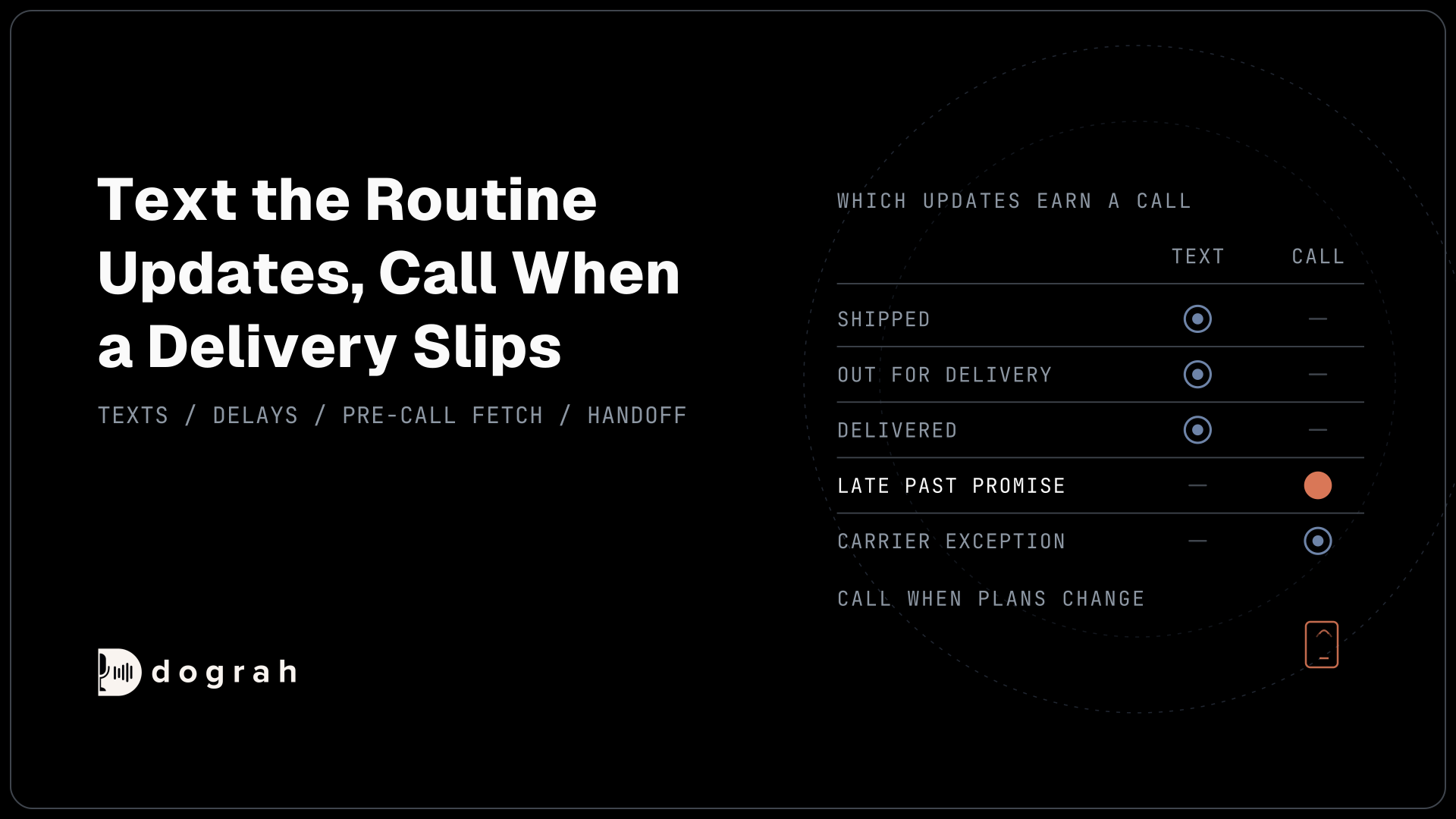
Answering the phone is the easy part of intake. The real work is capturing clean data the moment someone speaks. A human call-taker types a free-text note that another person has to read and re-key later. An AI agent fills fields instead. It pulls the address, the incident type, a callback number, and a short description into a structured record while the caller is still talking, then routes that record to public works or animal control without a second call. Because urgency gets captured as a field too, the system triages on the way in, flagging a gas-odor report for faster human review while a routine parking question drops straight into the right work queue. Arlington County's public-safety communications team saw what that offload is worth: its AI redirected around 300 administrative calls a day and saved telecommunicators 9.12 hours a day, logging 104,250 workflow interactions over a year, while average call length dropped from 129.3 to 105.2 seconds. Structured extraction pays off downstream too. The same fields that route a pothole report can later answer the resident who calls back to check where their report stands, so that follow-up never lands on a live agent either.

Open Source Alternative to Vapi / Retell
Self-hosted voice agent platform — no per-minute fees
dograh-hq/dograh
Star on GitHub
Surge is the real test, and it is coming more often
Staffing for a normal Tuesday means you are under water on the worst day of the year. Call volume does not arrive evenly. During the January 2025 Los Angeles County wildfires, the county fire department handled 42,335 dispatched incidents in a single month and took 4,594 inbound 911 calls in one day as fires forced more than 200,000 evacuations. No center staffs for that, and you cannot hire a telecommunicator for an afternoon. Elastic overflow capacity is the one thing software does that headcount cannot. When 400 people call in ten minutes to report the same downed line, the agent can take all 400, capture each report, tell callers what is already known, and keep the human seats free for the calls that actually need a human. Federal pilots confirm the diversion volume is real, with one PSAP program logging more than 74,000 workflow interactions and redirecting roughly 285 calls a day. It also holds its script steady across every one of those calls, in whatever language the caller speaks, so the hundredth report of the night is captured as cleanly as the first. Most surge traffic is frightened people who want information, and a well-run non-emergency intake line can give it to them without ever touching a 911 seat.
Join the Dograh Community
Dograh is an OSS alternative to Vapi. Join our Slack community for queries, releases, best practices & community interactions.
How to buy voice AI for a line the public depends on
Buying for public safety is a different exercise than buying a chatbot for a marketing site. The record you capture is regulated criminal-justice data, and the line has to keep working at 3 a.m. during a storm. Two criteria should dominate the decision. First, data sovereignty. Incident data that falls under CJIS or state privacy rules cannot sit in a black-box cloud you do not control. A self-hostable, open-source stack lets an agency keep call audio and extracted records inside its own gov-cloud or on-prem environment, where security staff can audit it line by line instead of trusting a vendor's word. The cost of getting this wrong is concrete: the average U.S. data breach reached $10.22 million in 2025, and unsanctioned "shadow AI" added about $670,000 per breach, per IBM's 2025 reporting.
Residency is the other half of sovereignty. When you self-host, the incident records and CJIS-regulated call audio stay inside the agency's own gov-cloud and inside the country, with no copy crossing a border into a third-party SaaS tenant you cannot see. For criminal-justice data that CJIS treats as restricted, keeping every byte on infrastructure the agency owns is the difference between a clean audit and a finding.
Second, economics that survive a surge. Per-minute platform fees punish exactly the high-volume days when you lean on the system hardest. A model with no per-minute platform fee, where you bring your own speech and language models, keeps a bad-weather week from turning into a budget event. If you are weighing hosted against on-prem for regulated call data, the tradeoffs run deeper than price.
Maryland is already treating this as infrastructure rather than an experiment. A state work group recommended the first statewide AI-enabled 311 system to pull non-emergency load off 911, starting with chatbots and expanding to voice, with multilingual support and live-agent escalation written into the mandate. The direction is set. The agencies that come out ahead will keep the boundary clean, letting AI own non-emergency intake while every real emergency still reaches a person, and they will own their data the whole way through.
Glossary
- PSAP
- Public Safety Answering Point, the call center that answers 911 and, in many jurisdictions, the non-emergency lines too. It is the operator seat an AI intake agent is meant to offload, not occupy.
- Warm transfer
- Handing a live call to a human with the transcript and captured fields already attached, so the caller does not repeat their story from the beginning when a person takes over.
- Structured variable extraction
- Pulling named fields such as address, incident type, and callback number out of natural speech into a record that a downstream system can route automatically, instead of a free-text note someone has to re-read.
- CJIS compliance
- FBI Criminal Justice Information Services security rules that govern how criminal-justice-adjacent data, including some incident records, must be stored and accessed. It is a leading reason agencies require self-hosting.