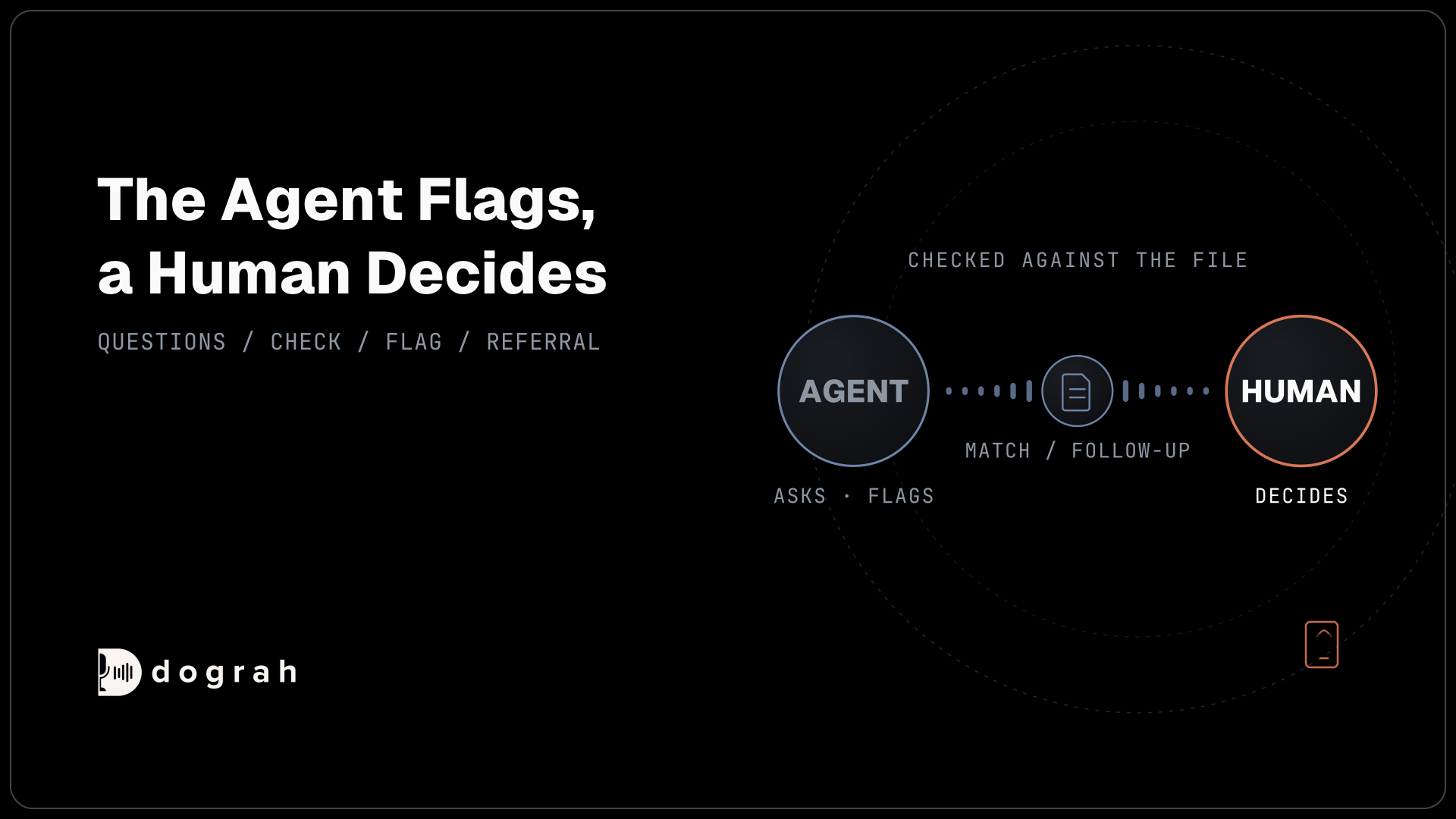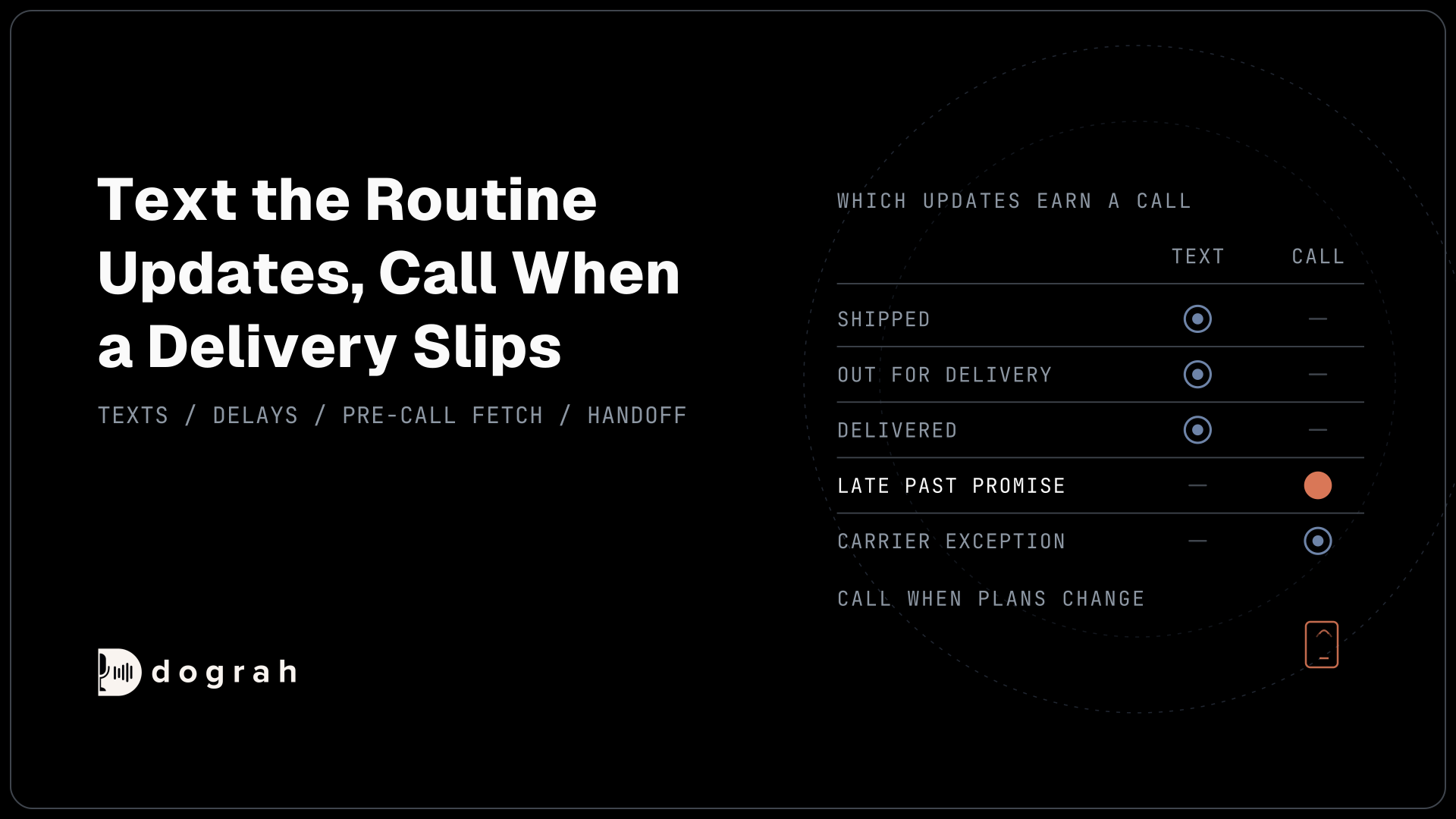


AI voice agents handle government service scheduling by answering the phone around the clock, pulling the caller's DMV or case record before it speaks, offering open appointment slots from a live calendar, booking or rescheduling in one call, and placing confirmation and reminder calls that cut no-shows. Complex cases transfer to a human.
Key Takeaways
- AI voice agents answer government scheduling calls 24/7 and book slots instantly.
- Confirmation and reminder calls cut no-shows and backfill cancellations from the queue.
- Self-hosting keeps citizen records on agency infrastructure, inside your own country.
This post is part of our guide to AI Voice Agents for Government & Public Services.
The phone line is where government scheduling breaks down
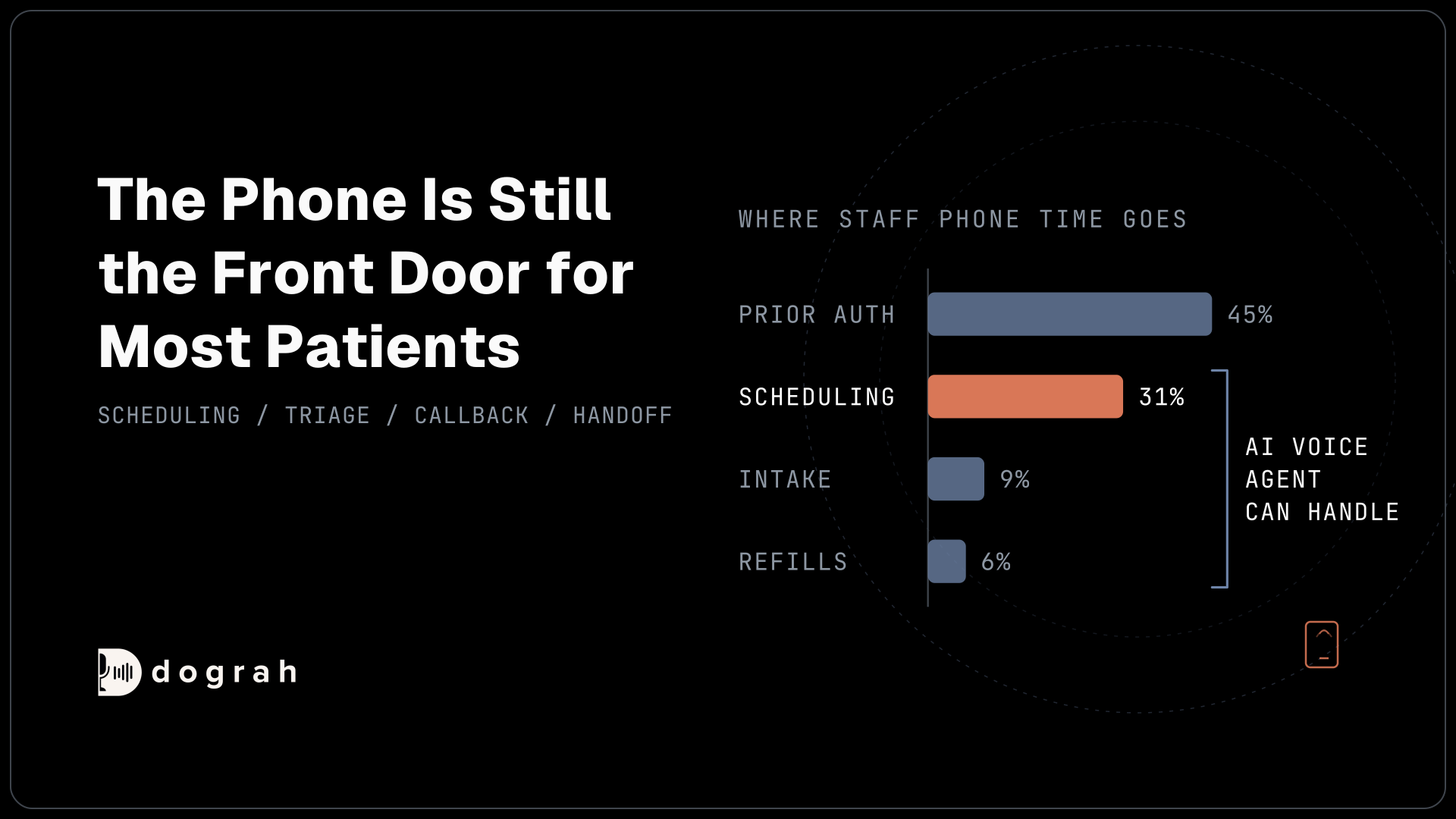
Most citizens still book government appointments by phone, and the phone is the channel agencies have starved the longest. At the Social Security Administration, the average wait to reach a representative ran 1 hour 38 minutes in fiscal 2025, with the agency fielding roughly 390,000 calls a day and answering fewer than half of them. That is not a website problem. It is a queue that forms every morning on a line staffed by people.
The staffing math is not going to rescue it. The federal workforce shrank by about 256,000 employees, more than 11 percent, between December 2024 and January 2026, so the same shrinking team is being asked to answer more calls.
A voice agent will not add headcount. What it does is move the routine booking off the queue. It answers on the first ring at 2 a.m. or during a Monday rush, and it handles the part of the job that is pure repetition, finding an open slot and writing the booking down. A lot of that demand shows up outside business hours, when nobody is on the line at all, so those calls either hit a dead end or never get made.
What a voice agent actually does on a scheduling call
A scheduling call has a predictable shape, and that predictability is what a voice agent is good at. Someone dials the DMV or the permit office. Before the agent says a word, a pre-call fetch pulls that caller's live record by phone number or case ID, so it already knows the license renewal is due or the inspection is still pending. It reads the open times from the office calendar, then holds and confirms the slot the caller picks. If the caller answers in Spanish or Vietnamese, it switches language and keeps going, since the same agent covers 70+ languages.
Rescheduling is where the phone still beats the web form for a lot of people. A citizen who needs to move a Thursday inspection can say so in plain language, and the agent finds the next opening and confirms the change while they are still on the line, releasing the old slot back into the calendar. There is no login to recover and no form that times out at step four, which is exactly the friction that pushes people to call in the first place.
A fair share of these calls are status questions wearing a scheduling costume, people who really want to know where their application stands before they commit to a visit. The same record lookup answers that too. And when a request runs past routine booking, a contested penalty or an appeal, the agent warm-transfers to a human staffer with the context already attached, so the citizen does not start over.
Cutting no-shows with confirmation and reminder calls
The booking is only half the value. The reminder call is where agencies get their capacity back. A missed road test or inspection slot is time that cannot be resold on short notice, and it stacks the backlog for everyone behind it. An empty examiner chair on a Tuesday afternoon is payroll spent on nobody, and in a backlog that runs weeks long, every wasted slot is a citizen who waits longer for the next one. An outbound agent calls the day before to confirm the citizen is still coming, and offers to rebook on the spot if they are not.
The effect is measurable. A 2026 systematic review and meta-analysis put telephone reminders at a risk ratio of 1.11 for attendance versus no reminder, with SMS reminders at 1.14. When someone cancels, that released slot can be offered to the next citizen in line, so a cancellation turns into a filled appointment instead of a hole in the schedule. The same outbound machinery that confirms an appointment also runs benefit renewal and payment reminder calls, so one deployment covers both jobs instead of one.

Open Source Alternative to Vapi / Retell
Self-hosted voice agent platform — no per-minute fees
dograh-hq/dograh
Star on GitHub
This already runs at national scale
Government appointment scheduling by AI already runs in production at the country level, well past the pilot stage. Portugal's Gov.pt portal launched a generative-AI assistant in 2025 that covers more than 2,300 services, including multilingual guidance and appointment scheduling for citizens. For a county clerk or a state licensing office, the hard part is already solved somewhere else. What is left is wiring the agent to the systems you already run.
What makes that possible is unglamorous plumbing. The same Deloitte analysis notes that more than 100 countries now run data-exchange platforms of the kind that let an agent pull a case record before it books, rather than reading from a blank form. The trend is visible at the US counter too. North Carolina's DMV put estimated wait times and live office capacity online in March 2026, a signal that agencies are racing to make scheduling and wait transparency self-service.
Join the Dograh Community
Dograh is an OSS alternative to Vapi. Join our Slack community for queries, releases, best practices & community interactions.
What to look for before you buy
Once you accept that a voice agent belongs on the scheduling line, the real decision is what you are willing to route your citizens' data through. Appointment calls carry license numbers and case files, and that data should not leave your infrastructure to reach a vendor's cloud. A self-hostable, open-source stack keeps records on your own servers or government cloud, and because the code is open, your security team can audit exactly what it does. Open source also changes the procurement conversation, since your team can read the code before it touches a single citizen record and run it in your own environment with your own models for speech and language, so no part of the stack is a black box you have to trust on faith.
Where the data physically sits matters as much as who can read it. Self-hosting keeps citizen identity and appointment records inside the agency's own infrastructure, and inside your own country, so scheduling data never crosses a border to reach a third-party SaaS provider's servers. For a public agency bound by national data-residency laws, that is often the difference between a system it can run and one it legally cannot.
Cost is the other trap. Per-minute platform fees punish the high-volume scheduling loads that agencies run all day, so a platform that charges for infrastructure instead of per minute matters more at government scale than at a startup's. Multilingual coverage is not optional either, given that roughly 26 million Americans are limited-English-proficient and many services are legally required to reach them. And the integration has to be real, a pre-call fetch that reaches your existing systems and a human transfer that lands on an actual staffer. This is the same reason regulated industries lean toward on-premise voice AI, where compliance requires keeping data in-house.
If your agency is drowning in scheduling calls, start with the one office line that hurts most and measure its no-show rate before and after. The reminder effect is documented and the record-fetch plumbing already exists in most agencies, so the phone line is the obvious place to start. Put the agent where the queue is longest and let it earn the next deployment.
Glossary
- Pre-call fetch
- Pulling a citizen's live record, such as a renewal date or case status, from agency systems by phone number or case ID before the agent speaks, so it can confirm details instead of making the caller repeat them.
- No-show rate
- The share of booked appointments where the citizen never arrives. In government scheduling it wastes limited examiner or counter capacity that cannot be resold on short notice.
- Warm transfer
- Handing a live call to a human staffer along with the context the agent already collected, so the citizen does not restart the conversation. Used for appeals and edge cases outside routine booking.
- Data residency
- The requirement that citizen data stays within a specific jurisdiction or on agency-controlled infrastructure. Self-hosting satisfies it because the voice stack runs on your own servers instead of a vendor's cloud.