
AI voice agents for flight-status updates answer "is my flight on time?" calls and place delay alerts when the operations system logs a change. Status by flight number is public, so it needs no check, but anything about the caller's own booking does. The agent reads status live and calls only travellers who chose calls.
Key Takeaways
- Status by flight number is public; the caller's booking is not.
- The operations system starts each alert call through the API Trigger.
- Send a text first, and call when the traveller must decide something.
This post is part of our guide to AI voice agents for airlines and travel. The guide's flight-status section sets the rule this post builds on: status calls tell and answer, read live from the operations system and never guessed. Here both directions of that call are built on Dograh, an open-source, self-hostable voice agent platform, up to the moment a cancellation turns the call into rebooking.
The phone line is part of the US status rule
In the US, answering status questions by phone is a duty, so the status line is the first job to give a voice agent. This is general information, not legal advice. Under 14 CFR 259.8(a), a covered carrier must give ticketed passengers and the public information about a change in the status of a flight "within 30 minutes after the carrier becomes aware" of it.
The rule counts a cancellation, a diversion or a delay of 30 minutes or more within seven days of the flight as a change. At a minimum the information goes at the gate, on the website "and via the carrier's telephone reservation system upon inquiry by any person". Travellers who subscribe to notices get them "by whatever means the carrier offers that the subscriber chooses", so an outbound call is owed to those who chose calls.
Those calls come in waves. US reporting carriers cancelled 2.25% of their flights from January to July 2026, against 1.65% in the same months of 2025, according to the Bureau of Transportation Statistics. Every one of those cancellations sets off status calls at the same moment.
Inbound: public status first, then the booking
A status question about a flight number needs no verification, and a question about the caller's own trip does. The US rule itself says the phone line answers "any person", so "is flight 214 to Denver on time?" gets an answer straight away. "Am I still booked on it?" is about a person, and the agent asks for the booking reference and the surname first.
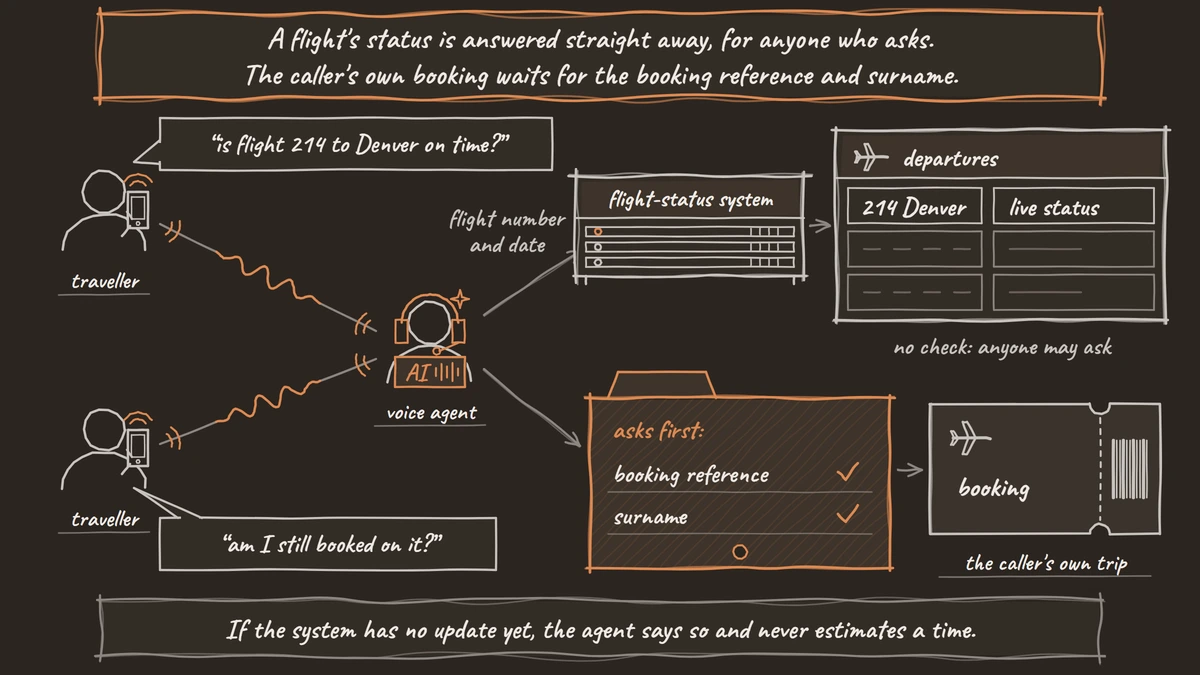
That split keeps the line fast for the common question and safe for the private one. The Greeting Text names the airline. If you want to tell callers they're speaking with an automated assistant, or your location requires it by law, write that there too. The agent then asks what the caller needs. It never names a flight or a passenger in the greeting.
The answer always comes from a live lookup. During the call, an HTTP API tool sends the flight number and date to the operations or flight-status system and reads back the status it returns, including any new time or gate. While that lookup runs, the tool's Messages setting plays a short line, so the caller hears something rather than silence. If the system has no update yet, the agent says so and never estimates a time on its own.

Open Source Alternative to Vapi / Retell
Self-hosted voice agent platform — no per-minute fees
dograh-hq/dograh
Star on GitHub
Outbound: the operations system starts the alert
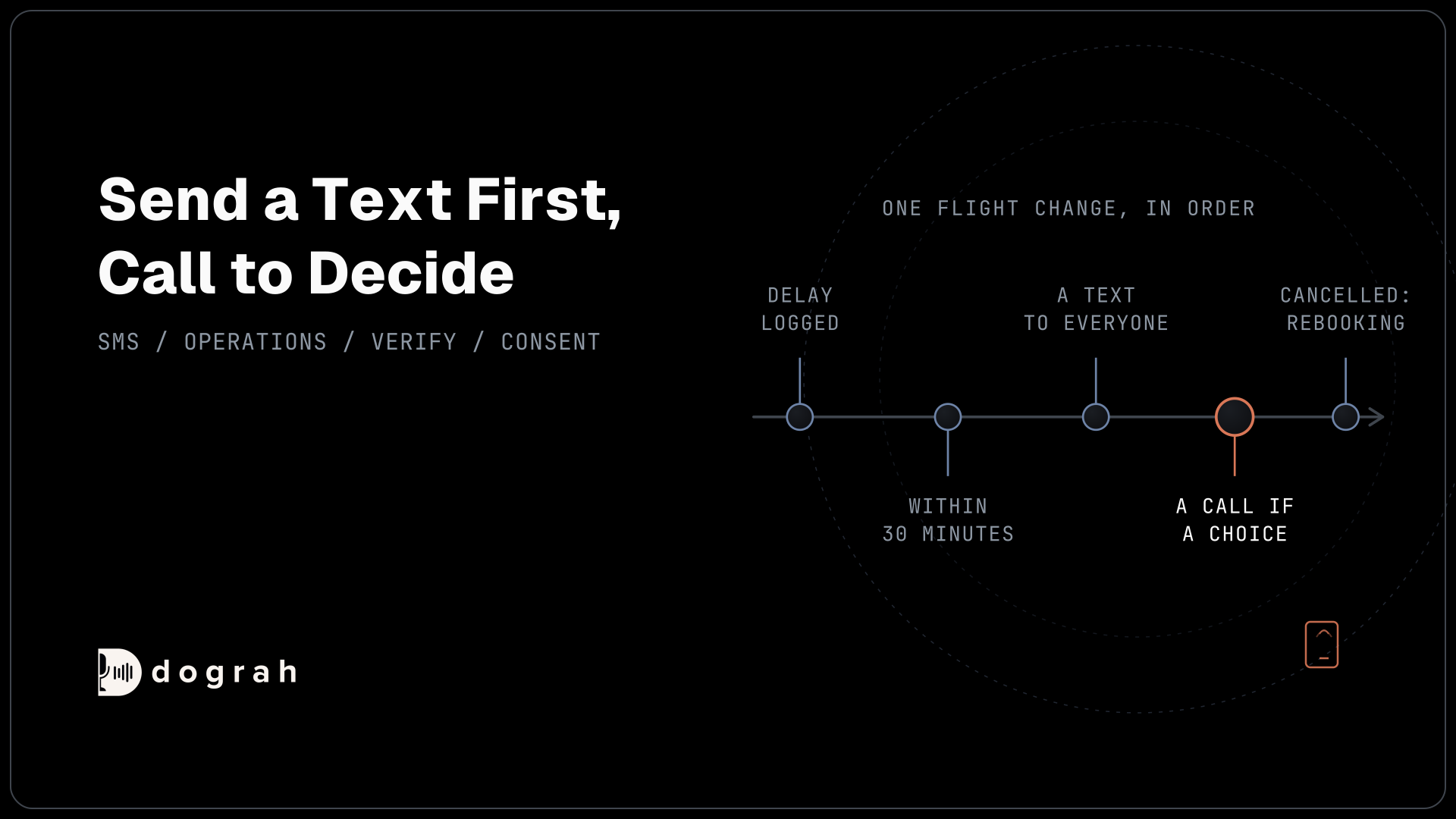
An alert call starts in the operations system, never in the agent. When the system logs a delay or a gate change for a booking whose traveller chose calls, it calls Dograh's API Trigger with the booking and the new time, and the agent places the call. API Triggers: Start a Voice Agent Call From Any System shows how that request is built.
Most travellers want a text first. In research for the UK Civil Aviation Authority, carried out by Yonder Consulting from February to April 2025, 64% of passengers named SMS as their preferred channel for the first notice of a delay. 45% were dissatisfied with how the disruption was first communicated, and 56% wanted more frequent communication. A plain delay notice is therefore a text from the airline's own messaging system, since Dograh has no SMS tool. A call earns its place when the traveller has to decide something, such as a delay that puts a connection at risk. The same rule for deliveries is argued in AI Voice Agents for Delivery Delay and Exception Alerts.
An outbound call still runs greet, verify, disclose. The person who answers may not be the traveller, so after naming the airline, the agent asks for the traveller by name. It confirms the booking reference and surname before it names the flight. A traveller without the reference to hand hears only that there is an update on their booking and where to find it in the airline's app or messages. The agent then records the answer to its one question as the traveller stated it.
Consent before the first alert call
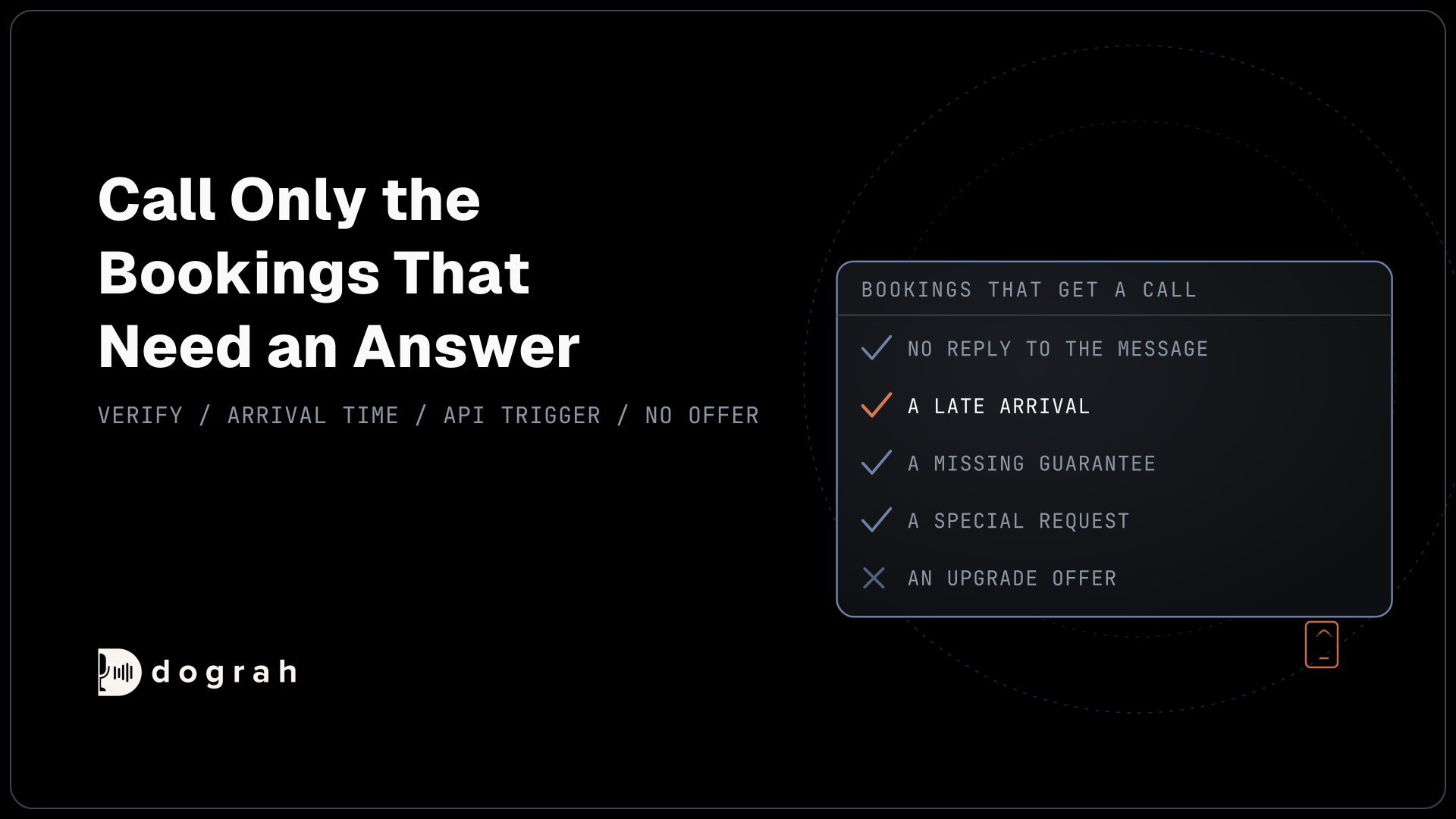
An alert call to a mobile number generally needs consent, and an offer inside it raises the bar. This is general information, not legal advice. The Federal Communications Commission (FCC) treats an AI-generated voice as an artificial voice, and under 47 CFR 64.1200 such a call generally needs "the prior express consent of the called party". A call that "includes or introduces an advertisement" needs "prior express written consent".
The exemptions in 64.1200(a)(9) cover narrow groups of calls, such as package-delivery and healthcare notices, and airline alerts are not among them. Generally, then, consent is the basis for every alert call, so call only travellers who chose calls and keep offers such as upgrades out of the alert. A traveller may also revoke consent "by using any reasonable method", so a spoken "stop calling me" is recorded and written back to the airline's contact preferences. Confirm your own position with counsel before the first alert goes out.
Join the Dograh Community
Dograh is an OSS alternative to Vapi. Join our Slack community for queries, releases, best practices & community interactions.
When a cancellation turns the call into rebooking
A status call tells and answers, and it stops being a status call the moment the traveller has to choose a new flight. When the system returns "cancelled" with alternatives to offer, the agent takes a pathway into the rebooking flow, or the operations system starts a separate rebooking call. The options themselves belong to that flow, covered in AI Voice Agents for Rebooking.
Scheduled calls before departure, such as check-in or document reminders, are a different job with their own timing, set out in AI Voice Agents for Travel Reminders. Status calls start from an operational change, and reminders start from the calendar.
Where the status line starts
Start with the inbound line. It only reads, and flight-number questions need no verification. Test it on a real phone number rather than a browser call, because most phone calls still reach the agent as 8 kHz audio, while a browser demo runs at 16 kHz. Run quality assurance (QA) on a sample of live calls with the QA node's Sample Rate, then add outbound alerts for travellers who chose calls.
A status call can still carry a name and an itinerary. Self-hosting Dograh puts the call platform on your own servers, and the traveller's audio stays inside your infrastructure only when the speech and language models run there too. Self-hosted Dograh has no per-minute platform fee (servers, any paid model keys and phone minutes still cost), and Dograh Cloud has a 1¢-a-minute platform fee.
Glossary
- Change in the status of a flight
- Under 14 CFR 259.8, at a minimum a cancellation, a diversion or a delay of 30 minutes or more that happens within seven days of the flight. Carriers must share it within 30 minutes of learning about it.
- API Trigger
- A Dograh URL that another system, such as an airline's operations system, calls to start an outbound call, passing the booking and the new time the agent needs.
- Messages setting
- The short line an HTTP API tool in Dograh plays while its lookup runs, set on the tool's own page, so the caller hears something during the wait for the status system.
- Prior express consent
- The consent US rules generally require before a call to a mobile number that uses an artificial voice, which includes an AI voice. A call that includes an advertisement needs prior express written consent.