
AI voice agents for first-party collections call customers after a missed payment, in the lender's own name, offering the payment options the lender set. A creditor collecting in its own name is generally outside the Fair Debt Collection Practices Act, so the opening line stays fixed. State laws can still apply, and late accounts move to an agency.
Key Takeaways
- Put the lender's own name in fixed Greeting Text, never model-written words.
- California and Massachusetts rules can reach creditors collecting their own debts.
- Your system decides when an account goes to an agency, after the call.
This post is part of our guide to AI debt collection software for agencies, where creditors collecting their own debts get separate rules. Below, we cover early calls, the name rule, state laws, phone rules and placement, and show how each part runs in Dograh, the open-source AI voice agent platform we build.
Why early calls keep the customer
An early call after a missed payment is still a customer service call, and it should sound like one. The New York Fed's household debt report found 4.7% of household debt in some stage of delinquency in the second quarter of 2026. Moves into early delinquency were steady for credit cards and up slightly for auto loans and mortgages. Most of those customers are worth keeping, and a quick call does more for that than a letter.
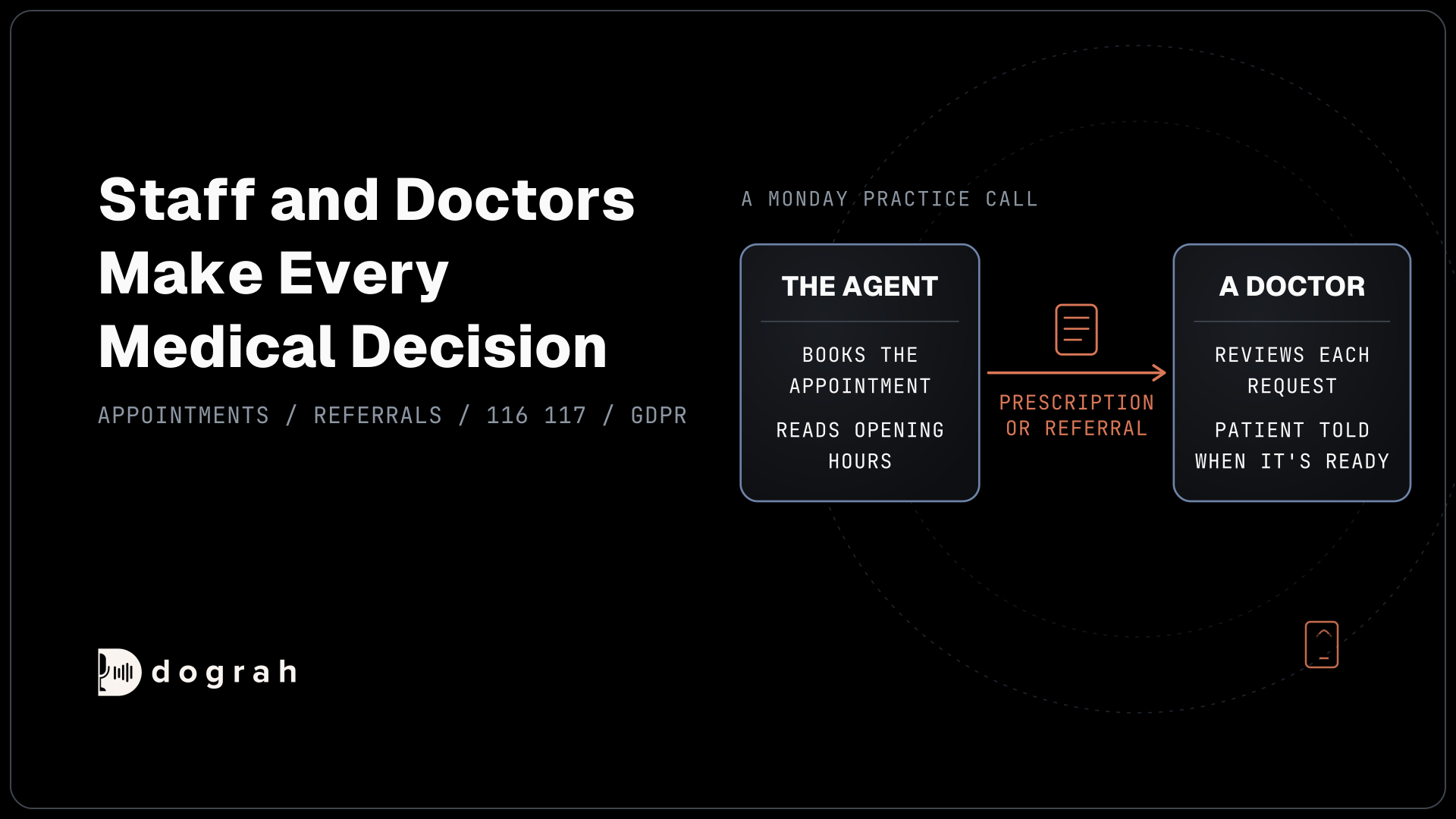
The call itself is short. The agent names the lender, confirms the person with an approved check, states the missed amount and offers the plans the lender set. If they want to pay, an HTTP API tool asks the lender's payment provider to send its secure link. Pre-recorded audio lets the fixed lines play in a real staff member's voice, with text-to-speech covering the rest, so the call sounds like the lender's own team.
A friendly tone helps, but tone is not the rule set. A creditor's own calls still fall under phone rules and state collection laws, and the name rule below decides the federal side. Our post on payment and bill reminders covers calls before the due date. This one starts after a payment is missed.
The name rule and the fixed opening
The name in the first line decides which federal rules apply. The Fair Debt Collection Practices Act (FDCPA) covers anyone collecting debts owed to someone else. A lender's own staff collecting in the lender's name fall outside it. A creditor that uses a name suggesting a third party is collecting is pulled back in, with every rule an agency follows.
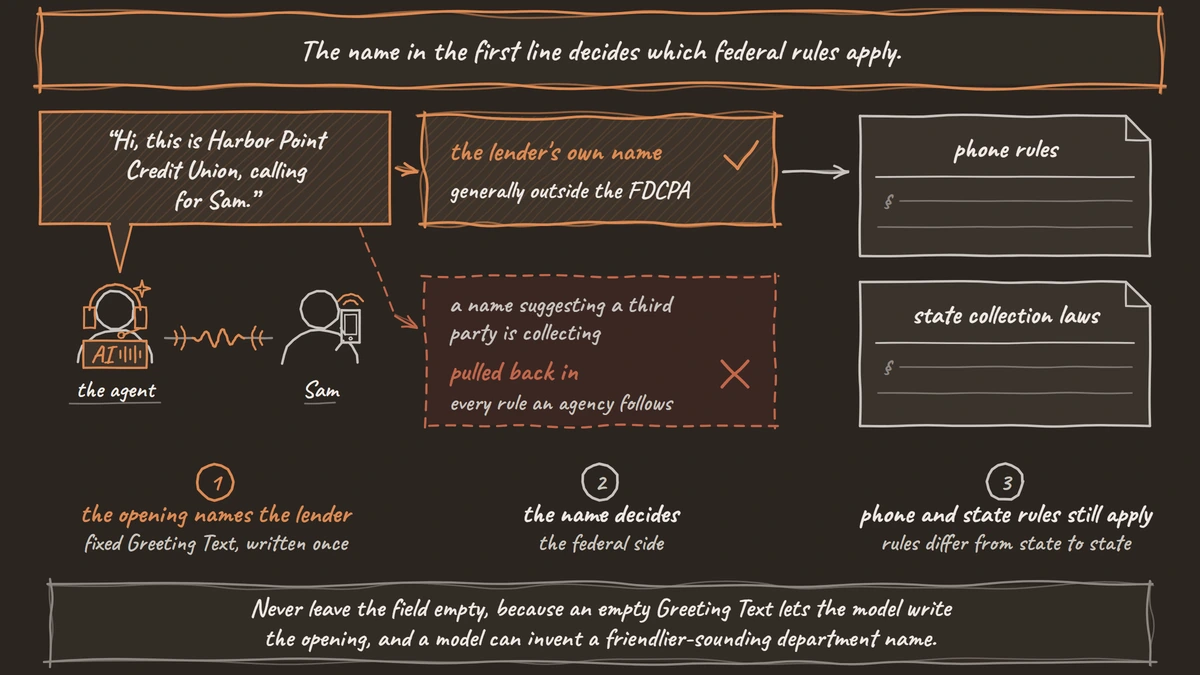
That makes the opening line a legal control. It belongs in fixed Greeting Text on the Start Call node, written once and approved, such as "Hi, this is Harbor Point Credit Union, calling for Sam." Never leave the field empty, because an empty Greeting Text lets the model write the opening, and a model can invent a friendlier-sounding department name. Switch off Allow Greeting Interruption, which is on by default, so the lender's name always plays in full.
QA then checks the rest of the call. Add a check to the QA System Prompt that flags any call where the agent described itself under another name. Our post on missed-payment recovery in BNPL walks through the name test in more depth.

Open Source Alternative to Vapi / Retell
Self-hosted voice agent platform — no per-minute fees
dograh-hq/dograh
Star on GitHub
State laws that reach creditors
Federal scope is only half the picture, because some states cover creditors directly. California's Rosenthal Fair Debt Collection Practices Act defines a debt collector to include anyone who regularly collects debts on its own behalf, so it can cover a lender collecting its own accounts.
Massachusetts treats it as unfair for a creditor to start more than two calls, texts or recorded messages about each debt in a seven-day period to a person's home, mobile or personal number. A call the person asked for does not count.
A Dograh campaign stops calling a contact once a call is answered, but it does not count calls across campaigns, so a limit like that lives in your own list. You set the retries (0 to 10), and your system drops a customer from the next upload once they reach the count for their state. Rules differ from state to state, so confirm which apply to your customers with counsel before you scale the calls.
Phone rules still apply
The Telephone Consumer Protection Act (TCPA) covers a creditor's AI calls the same way it covers an agency's. An AI voice counts as an artificial voice, so calls to mobile numbers need the customer's prior express consent, and the call names the business at the start.
For collection calls, the FCC has addressed where that consent comes from. In a ruling on creditor collection calls, it said calls to a mobile number the customer gave the creditor in connection with the debt, for example on the credit application, are made with prior express consent, and that the creditor must prove that consent. Keep the record of where each number came from.
Join the Dograh Community
Dograh is an OSS alternative to Vapi. Join our Slack community for queries, releases, best practices & community interactions.
When to pass an account to an agency
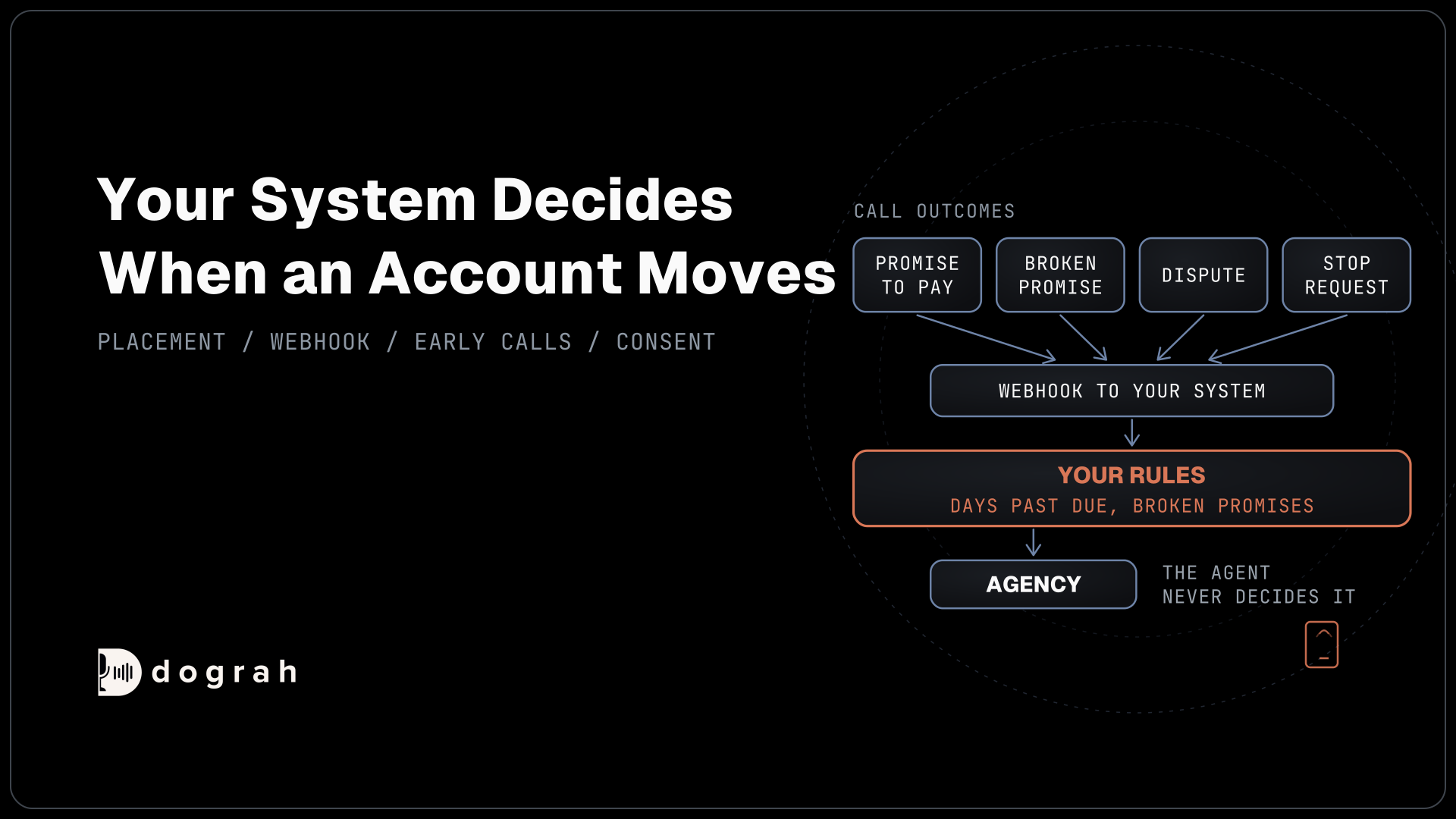
Placement is a decision your system makes from the outcomes, after the call. The agent never decides it. A Webhook node posts each call's outcome to the lender's system when the call ends: a promise to pay with its date and amount, a broken promise, a dispute or a request to stop calling. Your own rules, such as days past due or the number of broken promises, then move the account.
Everything changes for the customer on that day. The agency is a debt collector under the FDCPA. It calls under its own true name and sends validation information in its first communication or within five days. Its calls open with the debt collector notice once the right person is confirmed. AI voice agents for third-party collections covers what the agency does from there.
Before you place an account, close the in-house side cleanly. Stop the lender's own campaigns for that customer, and send the agency the call history so it can see what was promised and when.
Glossary
- First-party collections
- A creditor collecting its own accounts in its own name, usually soon after a missed payment and before any agency is involved.
- Name rule
- The FDCPA line that brings a creditor under the Act when it collects using a name suggesting a third party is collecting. It makes the opening line a legal control.
- Placement
- Handing a past-due account to a collection agency. From that day the agency's federal duties apply, including the validation notice within five days.
- Greeting Text
- The fixed opening on the Start Call node, spoken word for word. If it is left empty, the model writes the opening instead.