
Voiceflow vs Pipecat is a hosted visual builder against an open-source code framework. Voiceflow runs agents for chat and phone in its own cloud. Pipecat is free Python code your engineers run and build around. For a builder on open code, Dograh, the open-source AI voice agent platform, runs on a Pipecat fork, on your servers or Dograh Cloud.
Key Takeaways
- Numbers bought in Voiceflow now dial out by API, and are US or Canadian only.
- Pipecat's WebSocket phone routes have no built-in transfers, while Daily PSTN and SIP do.
- Pipecat costs nothing as code, and Pipecat Cloud bills from $0.01 an active minute.
Voiceflow and Pipecat both build voice agents, but different people do the building. We compare them in one table, then on who builds the agent, where it runs and where data sits, what each leaves you to wire up, and cost, before ending with open-source Dograh on a Pipecat fork.
Voiceflow vs Pipecat in one table
Voiceflow is a product you configure, and Pipecat is a framework you build on. The rows below line them up on the questions that decide a phone agent project.
| Voiceflow | Pipecat | |
|---|---|---|
| What it is | Hosted agent platform for voice and chat, built in a visual Studio | Open-source Python framework for real-time voice and multimodal agents |
| Code and license | Closed, all hosted on Voiceflow | BSD-2-Clause, maintained by Daily and the community |
| Who builds | Conversation designers and ops on a canvas, or a fully managed rollout | Python engineers, with Pipecat Flows for structured calls |
| Where it runs | Voiceflow's cloud, private cloud on Enterprise | Your servers, or Pipecat Cloud from Daily |
| Phone numbers | US and Canadian numbers bought in Voiceflow, or your Twilio, Vonage, Telnyx or SIP | Serializers for Twilio, Telnyx, Plivo, Exotel, Vonage and Genesys, plus Daily PSTN and SIP |
| Outbound calls | Through the API, on Voiceflow numbers or connected ones | Your code starts each call through the carrier |
| Handing a call to a person | Call forward to a phone number or SIP address | Built in on Daily PSTN and SIP, basic carrier call control on WebSocket routes |
| Models | Major LLM providers or your own model, speech provider per environment | More than 150 services on your own keys |
| What you still wire up | Integrations and prompts inside Voiceflow's limits | The product layer, from a prompt screen to call history and QA |
| Price shape | Monthly plan fee, seats, add-ons and credits | Framework free, Pipecat Cloud from $0.01 an active minute |
The rows that move a decision are who builds, where it runs and what is left to wire up. The sections below take them one at a time.
Who builds the agent
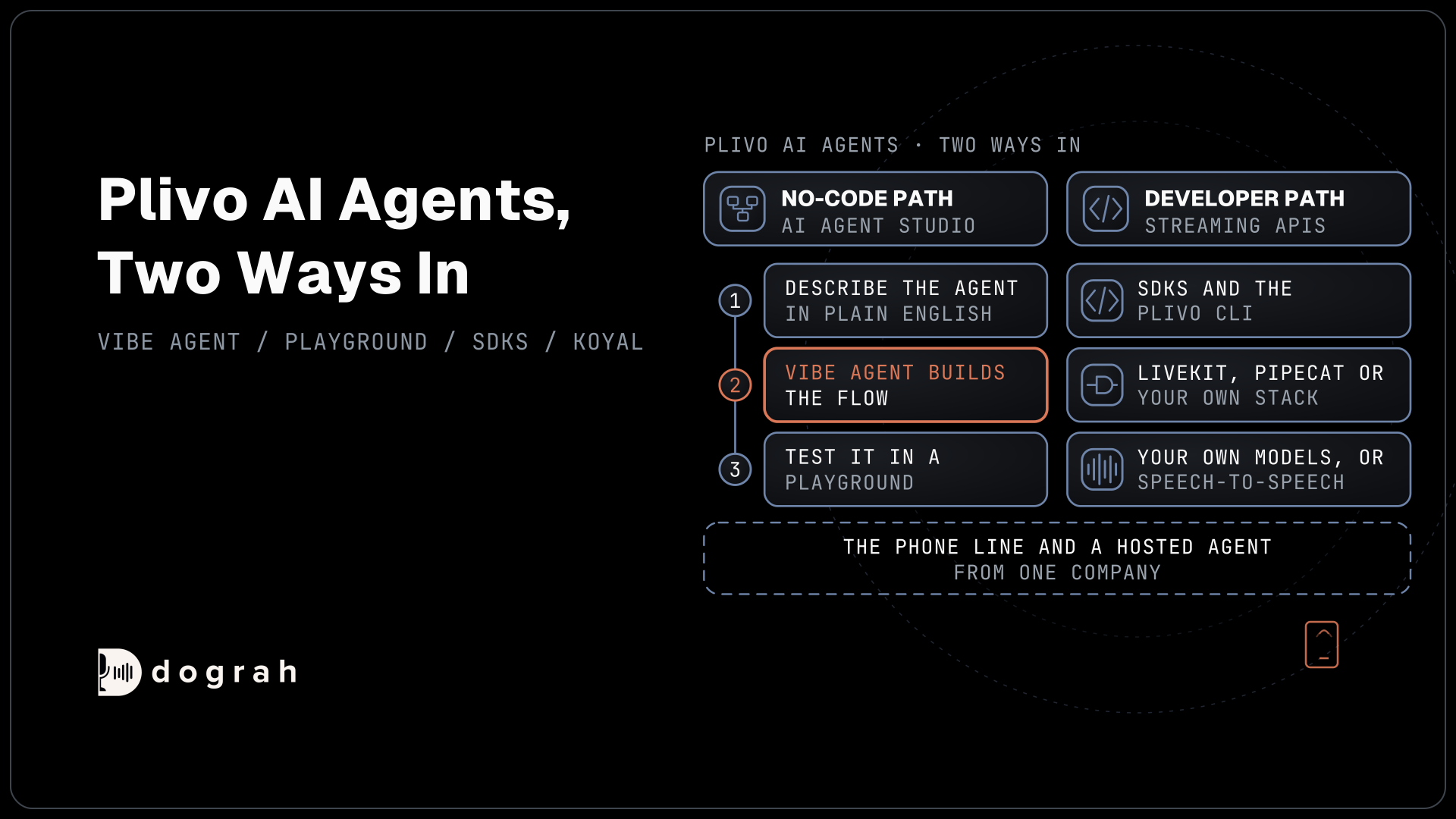
The biggest difference is the person at the keyboard. On Voiceflow, conversation designers and operations staff lay out the agent on a canvas in the Studio, test it in the browser and publish it, with no Python involved. Businesses can also pick a fully managed rollout, where Voiceflow's team does the build, as an option next to self-serve.
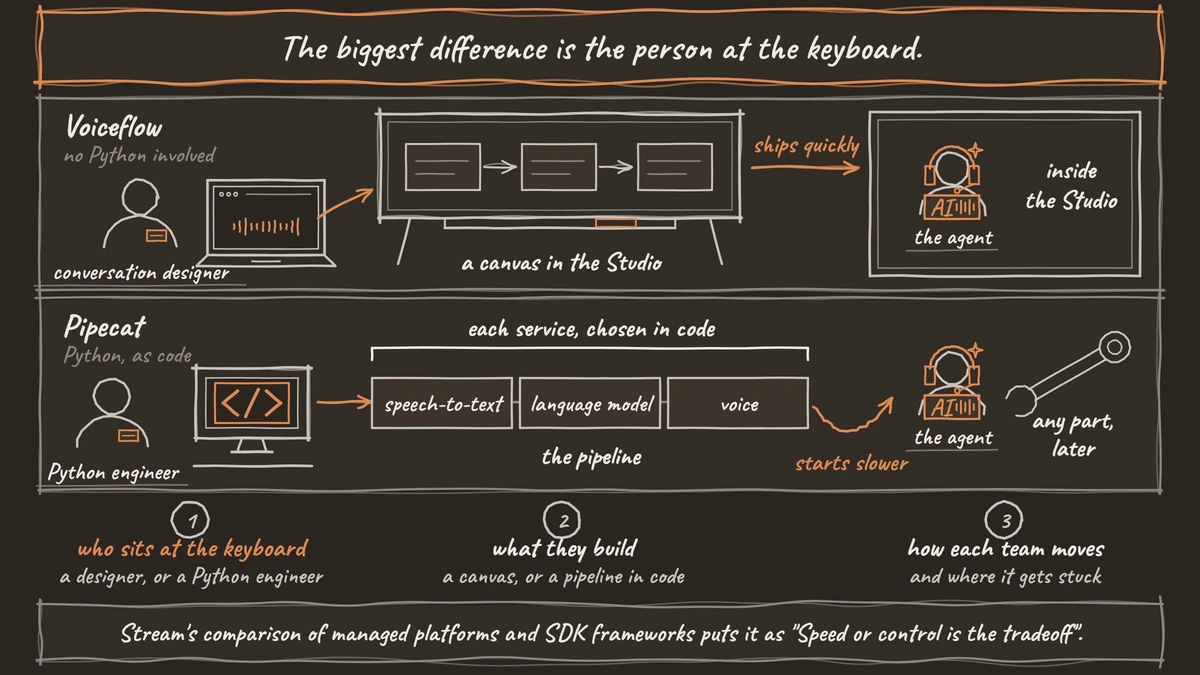
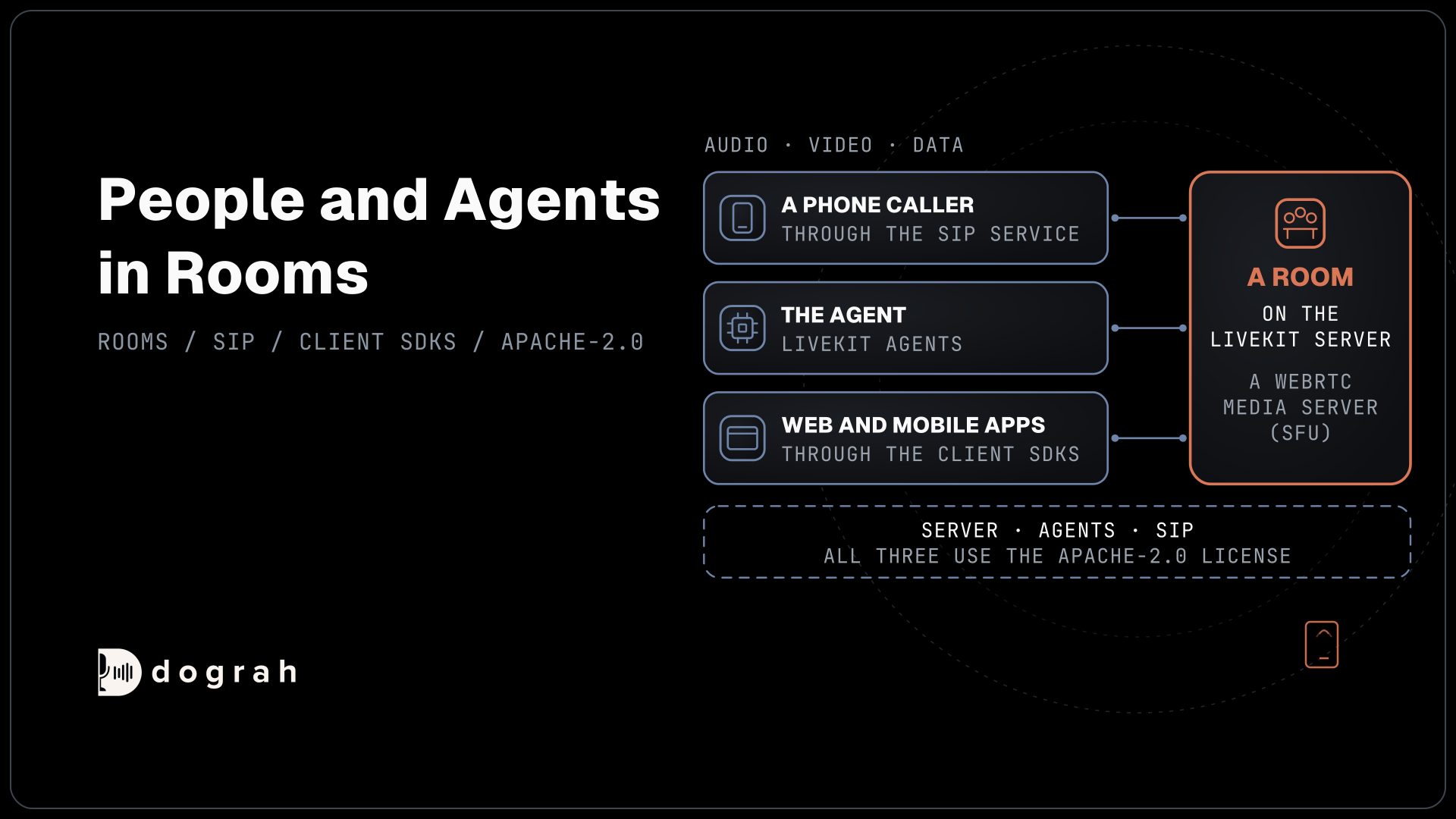
On Pipecat, a Python engineer writes the agent as code. The engineer chooses each service, composes the pipeline and shapes the call with Pipecat Flows, which splits a conversation into nodes with their own prompts and functions. Our explainer on what Pipecat is covers pipelines, frames and transports in full.
That changes how fast each team moves and where it gets stuck. Stream's comparison of managed platforms and SDK frameworks puts it as "Speed or control is the tradeoff", with a managed agent working in hours and a framework taking days to weeks. A designer on Voiceflow ships quickly and then works inside what the Studio exposes. A Pipecat engineer starts slower and can change any part of the pipeline later.
It also changes who owns the agent after launch. A Voiceflow agent can be edited by the support or operations team that runs the calls. A Pipecat agent goes back to engineering for every prompt change unless the team builds an editing screen of its own.
Where each runs and where call data sits
Voiceflow keeps everything in its own cloud, "All hosted on Voiceflow" in its own words, and Enterprise plans add private cloud hosting. It lists SOC 2 Type II, ISO/IEC 27001:2022 and GDPR compliance and says it supports HIPAA-compliant deployments, with buyers asked to confirm business associate agreement (BAA) terms with its security team. That settles many security reviews without servers of your own. Confirm with counsel which agreements your calls need.
Pipecat runs wherever you deploy it. Pipecat's GitHub repo carries the BSD-2-Clause license, so you can run the code in your own data center, your cloud account or a laptop. Call audio goes to that machine and to the model providers you call, and the compliance work, from your cloud host to your speech vendor, is yours to arrange.
Daily also hosts Pipecat for teams that want no servers. Pipecat Cloud runs agents in Daily regions in the US, Europe and India, and Pipecat Enterprise runs them in a cluster in your own VPC while Daily runs the control plane. Self-hosting with your own carrier connection keeps both Voiceflow and Daily out of the call path.

Open Source Alternative to Vapi / Retell
Self-hosted voice agent platform — no per-minute fees
dograh-hq/dograh
Star on GitHub
Phone numbers and handing calls to a person
Voiceflow sells numbers and also connects the ones you have. Numbers bought in Voiceflow are US or Canadian only, and you can also bring a Twilio, Vonage or Telnyx number, Voiceflow SIP or your own SIP. Its own numbers now support API calling, so they can dial out through the API, though they have no Studio test call panel.
To hand a caller to a person, Voiceflow forwards the call to a phone number or a SIP address. No operator briefing comes with the forward, so whoever answers starts without the details the agent gathered unless your system shows them.
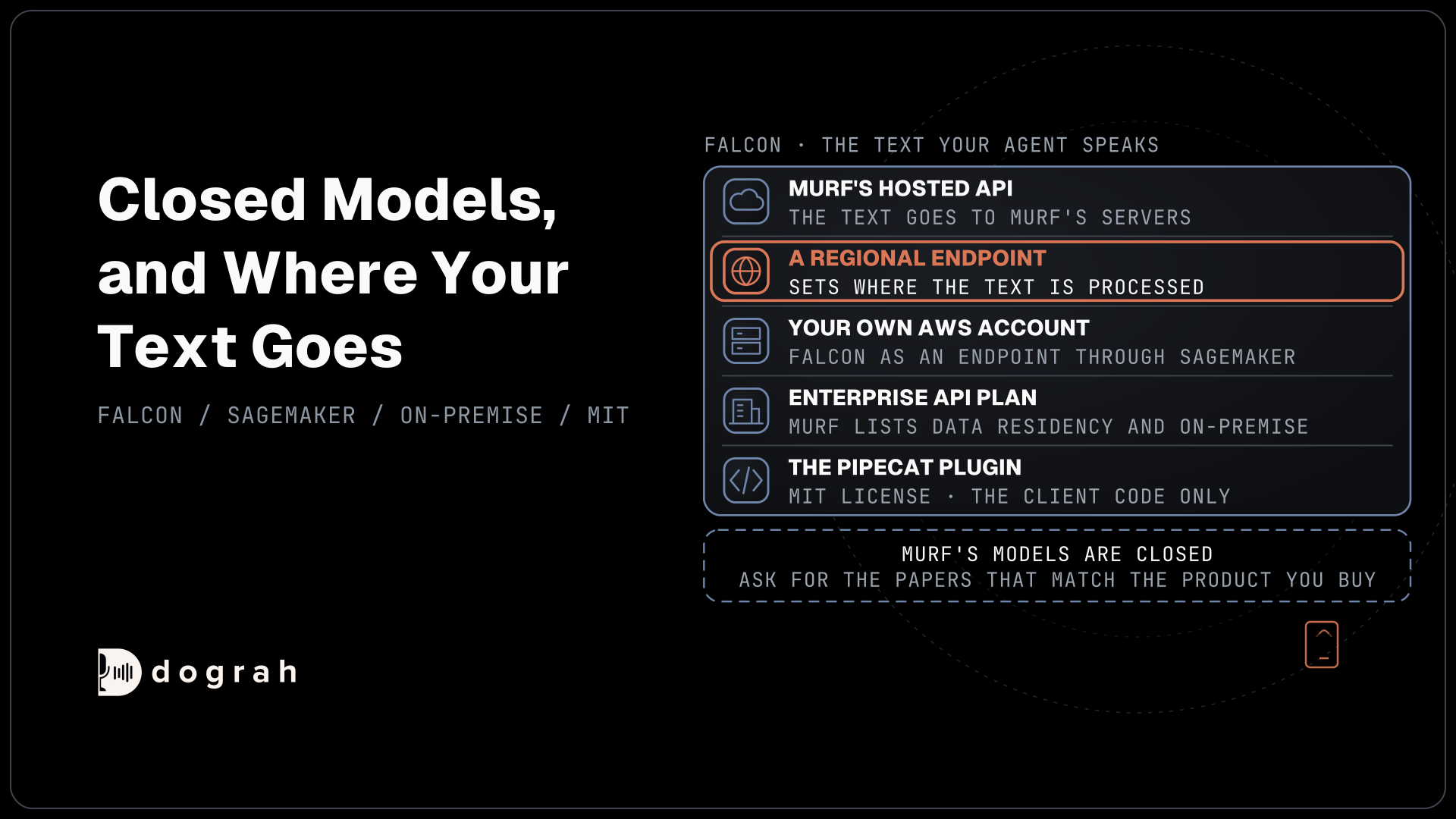
Pipecat reaches carriers through serializers for Twilio, Telnyx, Plivo, Exotel, Vonage and Genesys. Pipecat's telephony guide says its WebSocket routes for Twilio, Telnyx, Plivo and Exotel have "no advanced call center features like transfers or reconnects". Call control on those routes stays basic and sits with the carrier. Daily PSTN and SIP support transfers, and on Pipecat Cloud a SIP Refer transfer costs $0.20 each.
Pipecat also added a native SIP transport in a recent release, which answers dial-in calls, places dial-out calls and passes calls on with SIP REFER. Your code still decides when to transfer, where to send the caller and what happens when nobody answers.
What you still wire up on each
On Voiceflow, most of the wiring is done and the limits are Voiceflow's. You connect your systems through its integrations and API steps, write prompts in the Studio and pick models from its list or bring your own. Calls run in a Voice project and chat or SMS in a Chat project on the same platform, where a voice-first Pipecat build would have to add chat separately.
On Pipecat, the pipeline is the start of the work. After the first call works, someone still has to build a screen where non-developers edit prompts, call lists with calling hours and retries, stored transcripts and recordings, and QA on live calls. Our comparison of Dograh vs Pipecat goes through that list item by item.
Scale is the other part a framework leaves to you. WebRTC.ventures, an agency that builds custom stacks, warns that "A voice agent that handles 10 concurrent calls flawlessly can disintegrate at 100", because load shows bottlenecks that functional tests hide. On Voiceflow, concurrency is a plan limit you can raise with an add-on. On Pipecat, it is your servers and your load tests.
Cost shape, plan and credits or hosting minutes
Voiceflow bills a plan plus usage. The bill is a monthly plan fee, optional add-ons such as editor seats and phone numbers, and credit-based usage, with one Voiceflow phone number per workspace included. Business plans are priced on request, and Enterprise adds custom credit allotments. Our breakdown of Voiceflow pricing covers the plans and the credit table.
Pipecat costs nothing as code. You pay the model providers on your own keys, your carrier for phone minutes and your servers. If Daily hosts the bot, Pipecat Cloud charges $0.01, $0.02 or $0.03 per active minute by agent size, with Daily PSTN calls at $0.018 a minute. Our guide to Pipecat Cloud pricing works through a month.
The line that rarely shows on either bill is engineering time. Voiceflow's fees buy a finished product that a non-developer runs. Pipecat's low platform line leaves the product to your engineers, so their time belongs in the budget too. Price both against your own call volume and team.
Where Voiceflow wins and where Pipecat wins
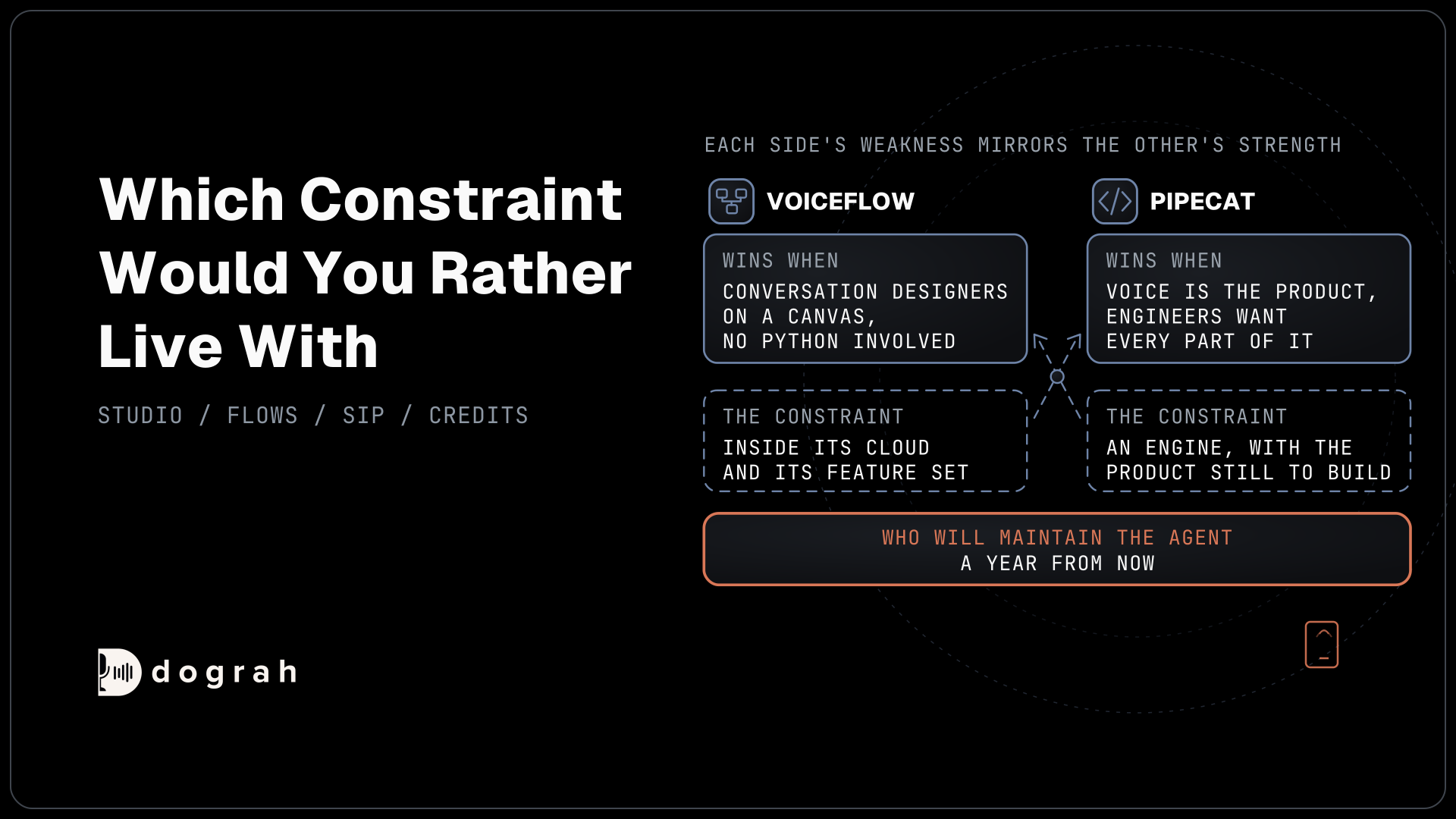
Voiceflow wins when the people who own the conversation do not write code. Chat and phone agents sit on one platform, the numbers dial out without a trunk, a managed rollout is there if you want it, and the compliance paperwork already exists. WebRTC.ventures calls managed platforms "excellent for validating that voice AI works for your use case", and many teams stay on them for good.
Pipecat wins when voice is the product and your engineers want every part of it. The code is open, any of more than 150 services can plug in, the data stays where you run it, and there is no platform fee when you host it yourself. Stream's view is that "SDK frameworks are the right call when voice is core to your product".
Each side's weakness mirrors the other's strength. Voiceflow keeps you inside its cloud and its feature set, and Pipecat hands you an engine with the product still to build. Most teams can tell which constraint they would rather live with after one look at who will maintain the agent a year from now.
Join the Dograh Community
Dograh is an OSS alternative to Vapi. Join our Slack community for queries, releases, best practices & community interactions.
Dograh sits between Voiceflow and Pipecat
Dograh, the open-source AI voice agent platform, sits between the two. It runs on a fork of Pipecat that follows upstream releases, so every call goes through the same open pipeline, and it adds the product around it. Agents are built on a visual workflow builder, a canvas of nodes and pathways. Dograh Cloud adds a conversational Agent Builder as a second starting point, drafting a new agent from your description.
The phone and record-keeping parts come built in. Dograh connects to Twilio, Telnyx, Plivo, Vonage, Exotel, Vobiz, Cloudonix, Asterisk ARI and WhatsApp, and Transfer Call works on Twilio, Telnyx, Plivo, Cloudonix and Asterisk ARI. It calls the destination first and connects the caller only when someone answers. Agent Runs keeps each call's transcript and recording, and a QA node reviews each call's transcript node by node after it ends.
The code is under the BSD 2-Clause license. Self-hosting runs through a Docker Compose install on a server with at least 8 GB of RAM and 4 vCPUs, and on-premise or private-cloud deployment with data residency comes with the Enterprise plan.
A self-hosted install carries no per-minute platform fee, so the bill is your servers, model keys and phone minutes. The database and upgrades become your team's job, backed by the open-source community or a custom SLA on Enterprise. Teams that would rather not run servers can use Dograh Cloud, which charges a 1¢-a-minute platform fee with models and phone minutes on top.
Glossary
- Studio
- Voiceflow's visual workspace where designers lay out an agent's conversation, test it in the browser and publish it to chat or phone.
- Credits
- Voiceflow's usage unit, drawn down by model use and phone minutes on top of the monthly plan fee, with custom allotments on Enterprise.
- WebSocket route
- A Pipecat phone connection where the carrier streams call audio to the bot over a WebSocket. On the Twilio, Telnyx, Plivo and Exotel routes, call control stays basic and sits with the carrier.
- Active minute
- The unit Pipecat Cloud bills, a minute in which an agent instance is running, from $0.01 on the smallest agent size. Models and phone time are billed separately.