
Sierra suits large consumer brands that want one managed agent across chat, voice and other channels, priced per agreed outcome and built with Sierra's engineers. It started in chat, and voice is now its biggest channel. For phone-first teams that want to own the platform, Dograh, the open-source AI voice agent platform, runs self-hosted or on Dograh Cloud.
Key Takeaways
- Sierra started in chat, and it now says it handles more calls than chats.
- Agent Studio changes now wait in sessions until someone on your team merges them.
- You pay per agreed outcome, and most unresolved or escalated conversations cost nothing.
Sierra changed quickly this fall, so a review has to judge the product as it stands. We cover its voice agent, the rebuilt Agent Studio, Accelerators, what reviewers say, pricing and data, the questions to ask, who it fits and how open-source Dograh serves phone-first teams.
Sierra's voice agent today
Sierra began as a chat agent, but the phone is now where most of its conversations happen. A year after launch, Sierra said in its voice anniversary post that it handles more phone calls than chats, so judging it as a chat product with voice added would miss where it is today.
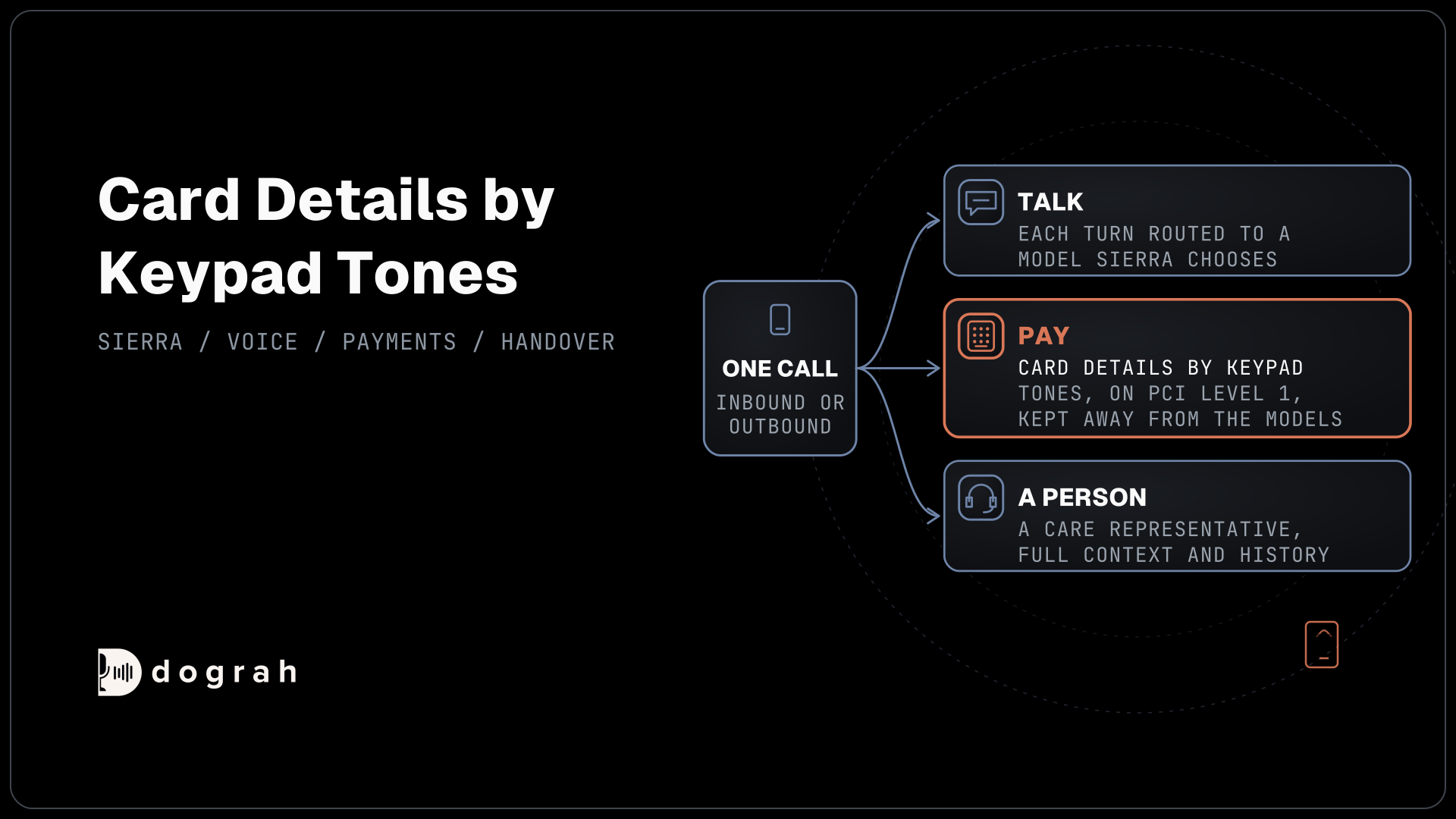
Sierra's voice page covers inbound and outbound calls in over 55 languages, with mid-conversation language switching. Every turn is routed to the model Sierra judges best for speed and quality, and teams validate the agent with voice simulations before launch. When a caller needs a person, the agent hands over to a care representative "with full context and history".
Payments are the standout for consumer brands. Callers enter card details by keypad tones (DTMF), and Sierra collects them on Level 1 PCI compliant infrastructure kept away from the language models. For a bank, a telecom or a retailer taking payments by phone, that removes a hard compliance job from the team.
Agent Studio now runs on Ghostwriter
Sierra rebuilt Agent Studio around Ghostwriter, its AI assistant for building agents. In Sierra's post on the redesign, Ghostwriter takes over what used to be spread across Explorer, Sierra Assistant and other specialized agents, so a builder no longer needs to know which tool does which job.
The bigger change is how edits ship. Work happens in sessions, which hold the conversation with Ghostwriter and the changes it makes, and changes stay in the session until someone on the team reviews and merges them. Release governance adds required approvals and controlled rollouts, so nothing reaches customers until the team says so. Related agents can also sit in one project and be tested and released together.
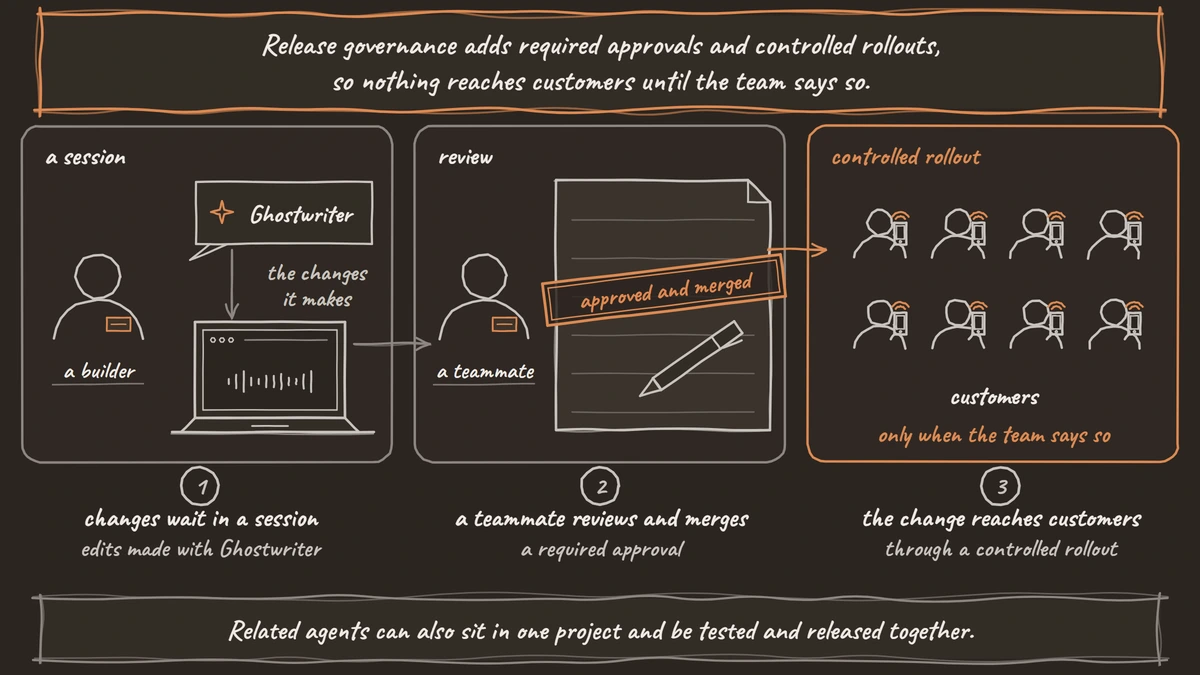
This matters because the most common complaint about Sierra was that changes needed Sierra's own team. Sessions and merges put more of that work in the customer's hands, though the platform itself is still Sierra's to change.
Accelerators and the Anon deal
Sierra is also selling more of the workflow ready-made. Sierra's Accelerators are packages added to an agent, prebuilt workflows with basic integrations and guardrails that Sierra maintains and the customer controls. Examples include transaction search and dispute status for banks, scheduling and patient authentication for healthcare, retention and billing for telecom, and quoting and first notice of loss for insurers. Ghostwriter then tailors each one to the business.
The same week, Sierra bought Anon, whose technology lets agents use websites that have no API, signing in, moving between pages and filling in forms. Sierra plans to use it for Horizon, its agents that follow a customer goal over days or weeks. Both moves point the same way, toward more of the work done by Sierra's packages and less built from scratch.

Open Source Alternative to Vapi / Retell
Self-hosted voice agent platform — no per-minute fees
dograh-hq/dograh
Star on GitHub
What reviewers praise and criticize
Independent hands-on reviews of Sierra are rare, so user reviews are the best outside signal. Reviewers on G2 praise a clean interface, natural conversations and a guided implementation with Sierra's customer success team. They criticize a learning curve, cost that is hard to judge before signing, and limited self-service editing, with changes often routed through Sierra. Some also mention the agent losing context in long conversations.
Read those complaints against the timeline. Most reviews predate the November redesign, and sessions with review and merge answer part of the editing complaint. The cost complaint is about the pricing model, which the next section covers.
Pricing, models and where calls go
Sierra uses outcome-based pricing, charging per agreed outcome, such as a resolved conversation or a saved cancellation, and in most cases an unresolved or escalated conversation costs nothing. Routing or greeter calls can instead be priced per conversation. Our post on Sierra pricing covers the contract in full.
The model layer is Sierra's to run. It routes each turn to a model it chooses and picks voices per persona, and the platform code is closed and hosted. That is convenient until your security team asks which provider heard a given call, an argument our guide to Sierra alternatives works through. Sierra lists SOC 2, HIPAA, GDPR, PCI DSS Level 1 Service Provider, ISO 27001 and ISO 42001 among its standards, so the certification side is strong.
Join the Dograh Community
Dograh is an OSS alternative to Vapi. Join our Slack community for queries, releases, best practices & community interactions.
Questions a phone-first buyer should ask
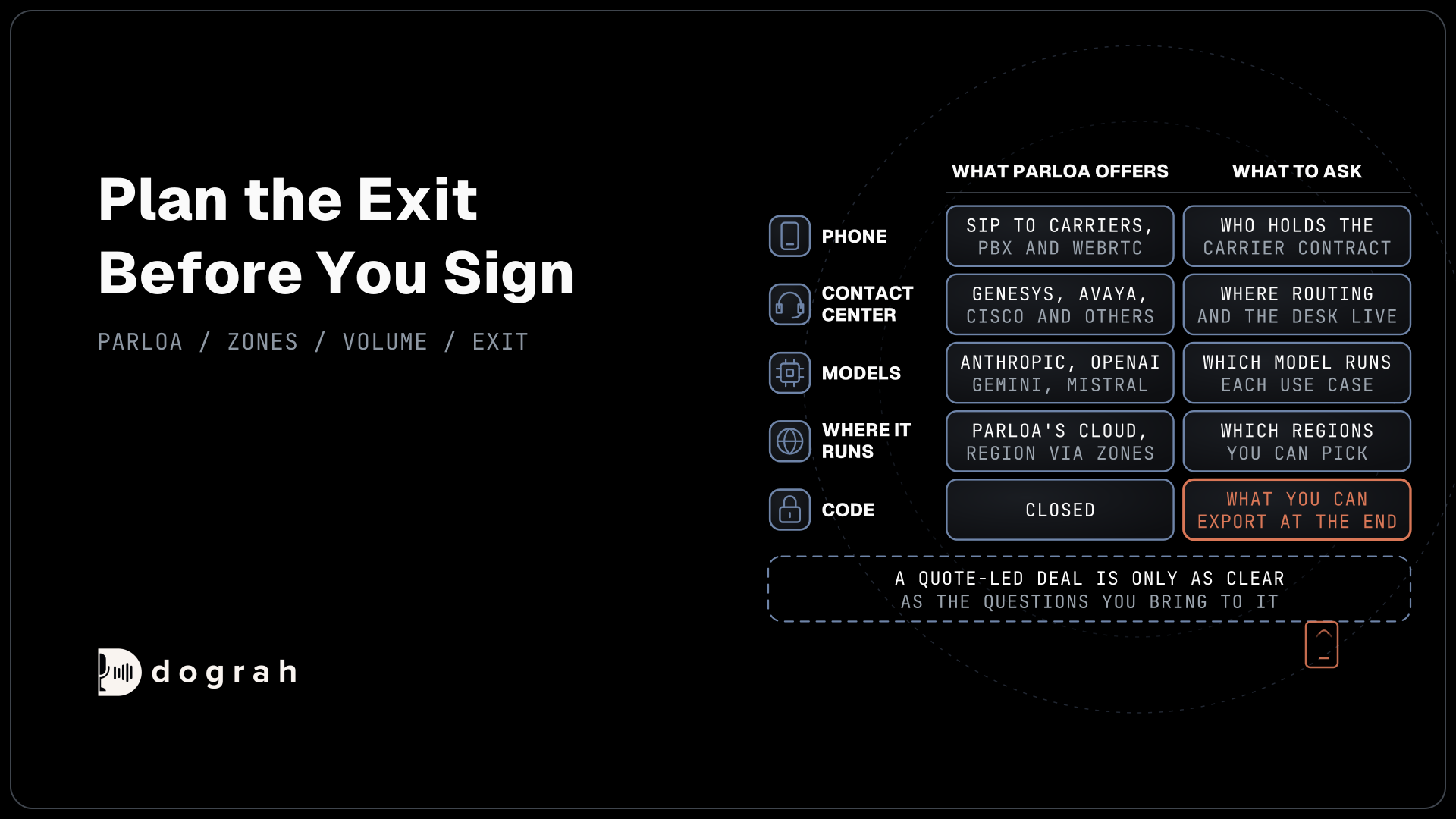
A phone-first team should bring its own questions to the demo. Ask which carriers and contact center systems Sierra connects to for your calls. Ask which language models and voice providers hear your calls, and where the audio is processed and stored. Ask how a resolved call is defined in your contract, and which calls fall under per-conversation pricing. Then ask who on your team can merge changes, how fast a fix can ship, and what you can export if you leave.
Who Sierra fits
Sierra fits a large consumer brand that wants one managed agent across chat, email, SMS, WhatsApp, voice and ChatGPT, with Sierra's engineers alongside. It suits buyers who prefer paying for outcomes over minutes, and teams taking card payments by phone who want PCI handled by the vendor.
It fits less well a phone-first team that wants to choose its carrier, models and voices, a team that needs the code or on-prem hosting, and a finance team that forecasts by call minutes. For a row-by-row view of those trade-offs, see Dograh vs Sierra.
Where Dograh fits
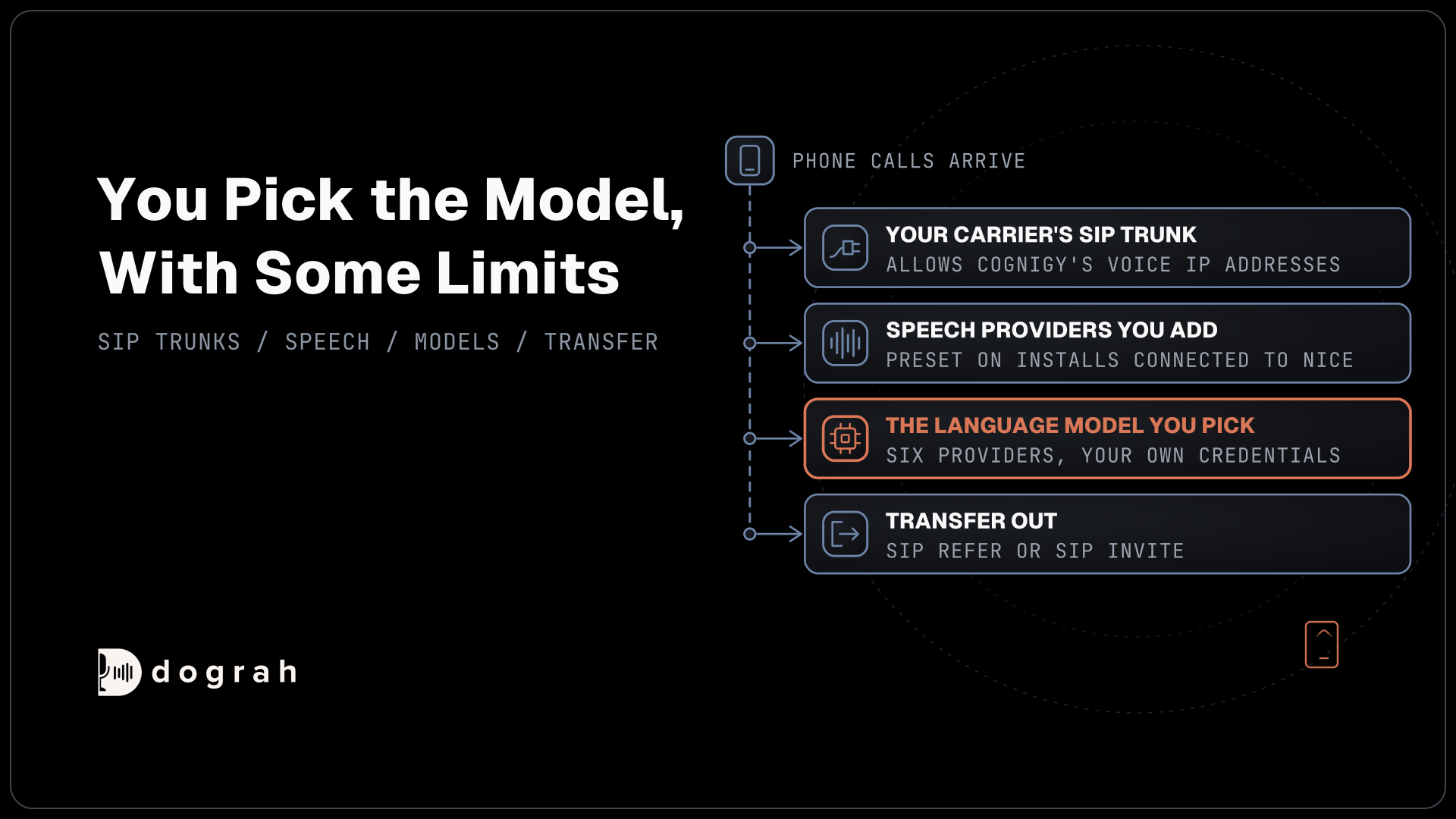
Dograh, the open-source AI voice agent platform, is built for the phone side of Sierra's job. Calls run over Twilio, Telnyx, Plivo, Vonage, Exotel, Vobiz, Cloudonix or Asterisk ARI, and inbound WhatsApp calls are answered too. Transfer Call on Twilio, Telnyx, Plivo, Cloudonix and Asterisk ARI rings the care team first and connects the caller only when someone answers, and if nobody does, the caller stays with the agent. An HTTP API tool can write the caller's details to your system before the handover. For payments, the same tool asks your payment provider to send its secure link, so the agent never takes card numbers.
You choose the speech-to-text, language model and voice for each agent. Dograh is the orchestration layer that runs the call flow, tools and telephony, and the models are a separate layer filled by Dograh's own models, your own keys with a provider, or open-weight models on your own servers. With your own key the audio still reaches that provider, so it stays in-house only when the models run on your machines.
Building follows a review step much like Sierra's sessions. A new agent starts in the Agent Builder from a plain description, and later edits made in the Builder tab or on the canvas save as a draft while the published version stays live until you publish. The QA step then scores every step of test and live calls, and View Trace shows the speech-to-text, AI and voice time for each turn.
Where it runs is your choice, and so is the bill. You can self-host it with Docker Compose, run it on Dograh Cloud, or deploy on-prem on the Enterprise plan. Self-hosted, it has no per-minute platform fee, but servers, model keys and phone minutes still cost money. Dograh Cloud charges a 1¢-a-minute platform fee. If you run it yourself, the server, the database and every upgrade belong to your team, backed by community support on the open-source version or custom SLAs on Enterprise.
Glossary
- Outcome-based pricing
- Paying a vendor when its agent completes an agreed result, such as a resolved conversation, instead of per minute or per seat. Sierra prices this way, with routing calls per conversation.
- Release governance
- Rules that require approvals and staged rollouts before an agent change reaches customers. Sierra added it to Agent Studio alongside sessions that wait for review and merge.
- DTMF
- Dual-tone multi-frequency, the tones a phone keypad sends. Sierra collects card numbers this way on PCI Level 1 infrastructure, so callers never say them aloud.
- Orchestration layer
- The part of a voice agent in charge of the call flow, turn-taking, tool calls and phone connection. Speech and language models live in a separate layer that can be swapped.