
Parloa pricing is consumption-based, per minute for voice and per interaction for chat, with rates set by how complex each use case is. You commit to a volume package, and Parloa's team sets the rates in each deal. For teams that want to run the platform themselves, Dograh is an open-source alternative, self-hosted or on Dograh Cloud.
Key Takeaways
- Parloa charges per voice minute and per chat interaction, priced by use-case complexity.
- One volume commitment covers every use case, and new ones need no new contract.
- Ask what the contact center, carrier and partners add beyond Parloa's rate.
Parloa explains in public how it bills, and the rate itself comes from its team. This post walks through the units, what raises a use case's rate, volume commitments, costs outside Parloa, an example month and the quote questions, then where open-source Dograh fits on cost.
How Parloa prices voice and chat
Parloa uses consumption-based pricing, per minute for voice and per interaction for chat. It also says "You won't be forced into standard plans" and that each pricing model is built around your specific deployment. So there is no tier to pick from a list. Parloa's team models the expected cost of your use cases with you and then sets a plan with defined rates and commitments.
That makes the price a result of the deal rather than a number you can look up in advance. What you can know before the first call is how the bill is built, which the rest of this post covers. For what the platform does beyond pricing, from building agents to where data is kept, our Parloa review covers the product.
What makes one use case cost more
The rate per minute is not the same for every call. Parloa says "Rates reflect the complexity of each use case" and that more sophisticated automation "prices in the reasoning, context, and coordination required." An agent that answers an opening-hours question from one source does less work per minute than one that checks a caller's identity, reads a policy and changes a booking across two systems, so expect the second use case to carry the higher rate.
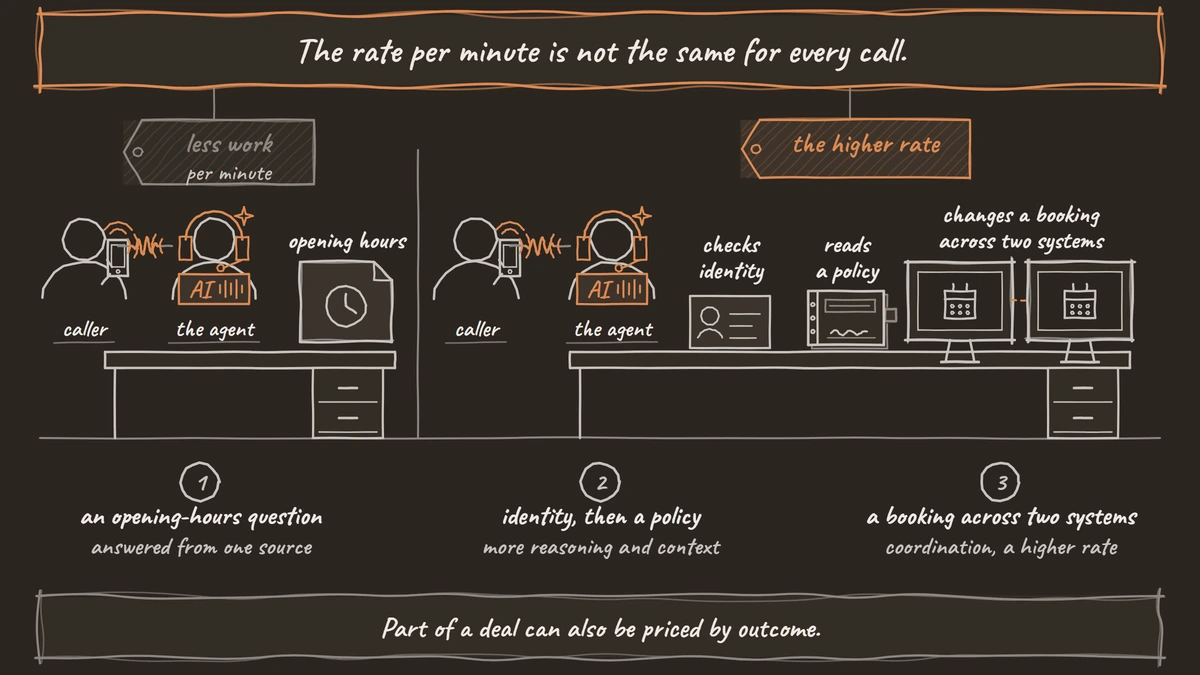
Part of a deal can also be priced by outcome. Parloa supports outcome-based pricing "when it makes sense", which means paying for a result such as a resolved request instead of for every minute. Our Sierra pricing post sets out how outcome pricing and per-minute pricing behave on the same calls. Parloa adds that as agents get faster, costs drop automatically with no contract renegotiation, which follows from billing by the minute.
Volume packages and commitments
The commitment sits at the level of the whole deal. You select a volume package based on expected needs, commit to it once and apply it across the use cases you prioritize. A team running order-status calls and claims calls draws both from the same package rather than signing two contracts.
Adding use cases later follows the same rule. Parloa says every new use case follows the same complexity-based logic with no need for new contracts, so a third agent for billing questions joins the existing package at its own complexity rate. That is a different unit from conversation-based billing, which our Parloa vs Cognigy comparison explains with call-length examples.
Costs outside the Parloa rate
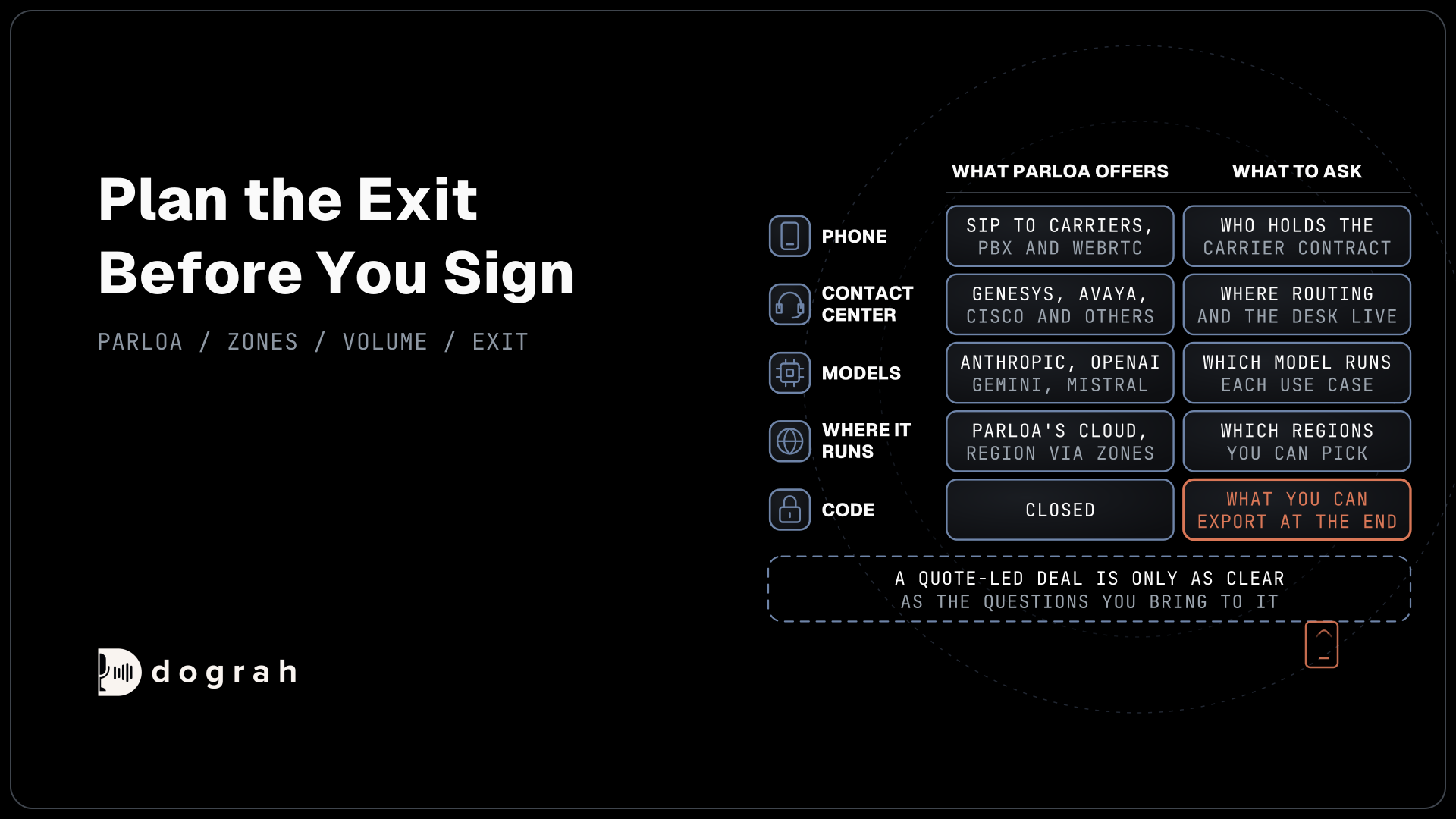
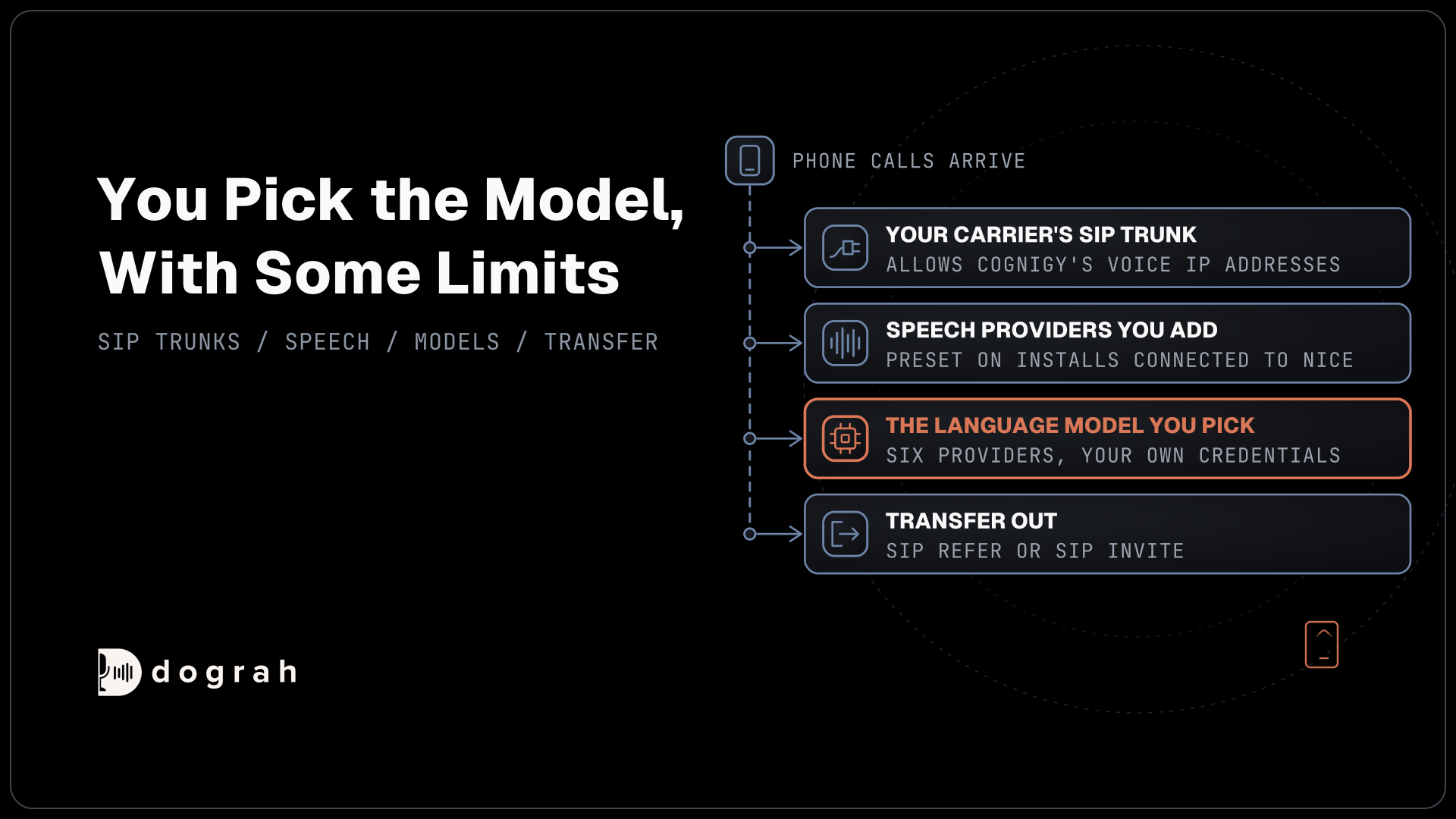
Parloa sells the AI agent layer, and it connects to the systems around it rather than replacing them. Calls arrive over SIP from your carrier, contact center, PBX or WebRTC, and Parloa lists connectors for Genesys, Five9, Avaya, Amazon Connect and Cisco, plus Salesforce, SAP, Zendesk and ServiceNow.
Each of those can carry its own bill, so ask about them in the same conversation as the Parloa rate. Your contact-center license still covers routing and human agents, your carrier still charges for the phone minutes, and a large rollout may run with a partner such as McKinsey, Deloitte Canada, TELUS Digital or Thoughtworks. The full cost of a Parloa agent is the Parloa rate plus whichever of these your setup needs.

Open Source Alternative to Vapi / Retell
Self-hosted voice agent platform — no per-minute fees
dograh-hq/dograh
Star on GitHub
An example month by Parloa's logic
Here is an example with no rates attached, since those come from the quote. A company runs two voice use cases and one chat use case in a month. Order-status calls take 18,000 minutes and claims calls take 12,000 minutes, for 30,000 voice minutes in all, and the chat agent handles 8,000 interactions.
By Parloa's logic, that month's bill is 18,000 minutes at the order-status rate, plus 12,000 minutes at the claims rate, plus 8,000 interactions at the chat rate. The claims rate is likely the higher of the two voice rates, since claims calls need more reasoning and more systems. All of it is drawn from the committed volume package, so the question to settle is how much of the package the month uses and what happens above it.
What to ask in a Parloa quote
Start with the rates. Ask for the rate per minute for each use case on your list, what puts a use case in a higher complexity band, and which use cases could be priced by outcome and how an outcome is counted. Ask how the drop in cost as agents get faster is measured and when it shows up on the bill.
Then cover the commitment. Ask how large the volume package is, how long the term runs, what happens to unused minutes at the end of it, and how minutes above the package are charged. Ask whether a Zones region, extra languages, a specific model or redaction changes the rate, and what a partner rollout adds on top.
Finish with service and exit terms. Ask for the uptime commitment and support terms in writing. Ask in what form transcripts, recordings and agent definitions come out if you leave, and how long that export stays available after the contract ends.
Join the Dograh Community
Dograh is an OSS alternative to Vapi. Join our Slack community for queries, releases, best practices & community interactions.
What the price buys, and what stays closed
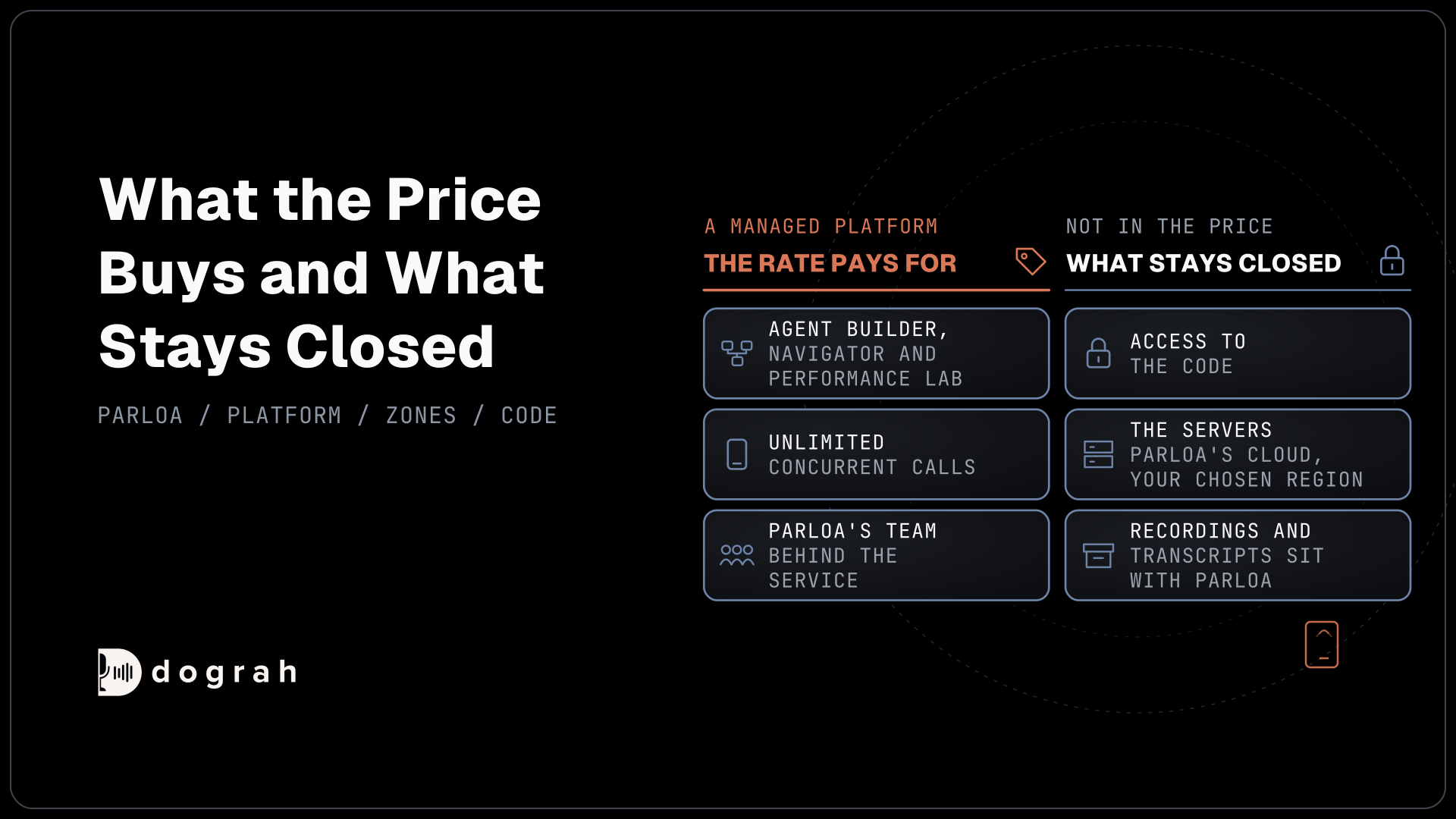
The rate pays for a managed platform. That covers Agent Builder, Navigator, Performance Lab and Parloa Lens for building, testing and reviewing agents, along with unlimited concurrent calls, over 140 languages and variants, and Parloa's team behind the service. Parloa's security controls add real-time redaction of personal details and a separate non-LLM process for card data. Its certifications include ISO 27001, SOC 2, PCI DSS and HIPAA, and it covers GDPR, DORA and the EU AI Act too.
What the price does not buy is access to the code or the servers. The platform is closed, and it runs in Parloa's cloud, in the legal region you choose with Parloa Zones. Parloa's trust center lists hosting with a major cloud provider and names subprocessors including Google, Twilio, Datadog, MongoDB and Microsoft. Call recordings and transcripts sit with Parloa, and a security review rests on documents and audit reports rather than code you can read.
Where Dograh fits on cost
Dograh is an open-source AI voice agent platform under the BSD 2-Clause license, and it publishes its platform fee. You can run it on your own servers with the Docker install, use the hosted cloud service, or take on-premise and private-cloud deployment on the Enterprise plan. It runs the call flow, tools and telephony as the orchestration layer, and each agent's speech and language models are a separate layer you choose.
Where it runs decides what you pay. Self-hosted Dograh has no per-minute platform fee, but servers, model keys and phone minutes still cost money. Dograh Cloud charges a 1¢-a-minute platform fee. For the 30,000 voice minutes in the example month, that fee is $300, with models and phone minutes on top. On your own servers, the machines, the database and every upgrade are your team's job, with community support for the open-source version and custom SLAs on Enterprise.
The contact center stays where it is in this setup too. Transfer Call hands callers to a queue's number, and Dograh calls the destination first and connects the caller only when someone answers, so a busy, failed or unanswered attempt returns the call to the agent. Business systems connect through HTTP API tools, where Parloa ships ready connectors. Our list of Parloa alternatives prices the other options on a shared monthly volume.
Glossary
- Consumption-based pricing
- Billing by usage rather than by seat or plan. Parloa counts minutes for voice and interactions for chat.
- Volume package
- A committed amount of usage bought at agreed rates. Parloa applies one package across all the use cases a customer chooses.
- Outcome-based pricing
- Paying for a result, such as a resolved request, instead of for the time an agent spends. Parloa supports it for parts of a deal where it fits.
- Parloa Zones
- Parloa's data residency setting, which holds transcripts, personal details, logs and the services that handle them inside a legal region the customer chooses.