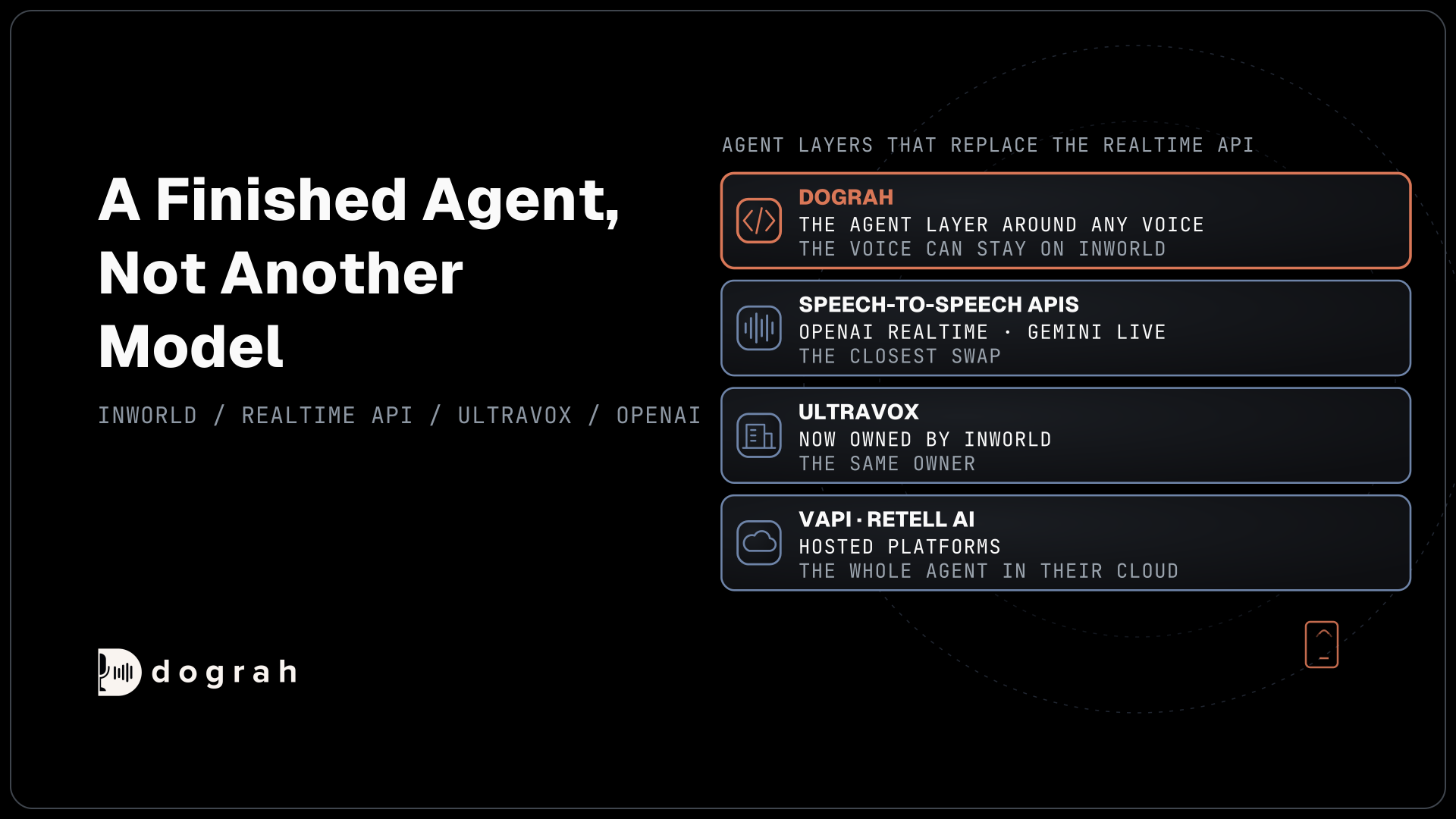

Open-source Pipecat alternatives are divided into platforms built around the framework and other frameworks you assemble yourself. For teams that want phone calls, call history and QA ready on day one, Dograh is the open-source platform, running on a Pipecat fork, self-hosted or on Dograh Cloud. LiveKit Agents and TEN Framework are the other frameworks.
Key Takeaways
- Pipecat is BSD-2-Clause and ships a new release every few weeks.
- Dograh runs on a Pipecat fork and adds phone wiring, transfers and QA.
- Pipecat lists no transfers on its WebSocket carrier route, only on SIP and Daily.
Pipecat is already open source, so the real choice is between a framework you assemble and a platform built around it. We compare the open options in one table, then we talk about how Dograh runs on a Pipecat fork, what you still build yourself and what moving takes.
Open-source Pipecat alternatives in one table
Every row here is open source, so the table compares how much arrives ready. Pipecat is the baseline, a BSD-2-Clause Python framework that shipped v1.16.0 on 12 November 2026 after three releases in October. Hosted APIs such as Vapi and Retell AI are closed, so they are left out.
| Option | License | What you get | Phone calls and transfers | Outbound lists | Call history and QA | Where it runs |
|---|---|---|---|---|---|---|
| Pipecat (baseline) | BSD-2-Clause | A Python framework for the voice pipeline | Serializers for many carriers. Transfers over SIP or Daily, not over the WebSocket route | You build them | You build them | Your servers, Pipecat Cloud, or Pipecat Enterprise in your VPC |
| Dograh | BSD 2-Clause, on a Pipecat fork | A full platform with the Agent Builder, canvas, tools and Knowledge Base | Twilio, Telnyx, Plivo, Vonage, Exotel, Vobiz, Cloudonix and Asterisk ARI. Transfer Call on Twilio, Telnyx, Plivo, Cloudonix and Asterisk ARI | Campaigns with retries and calling hours | Transcripts, recordings, View Trace and a QA node | Your servers with Docker Compose, Dograh Cloud, or on-prem on Enterprise |
| LiveKit Agents | Apache-2.0, turn detector under the LiveKit Model License | A framework built around media rooms | Native SIP | You build them | You build them | Your servers or LiveKit Cloud |
| TEN Framework | Apache 2.0 with additional restrictions | A graph-based framework with a visual designer | SIP examples | You build them | You build them | Your servers |
Dograh: a platform on a Pipecat fork
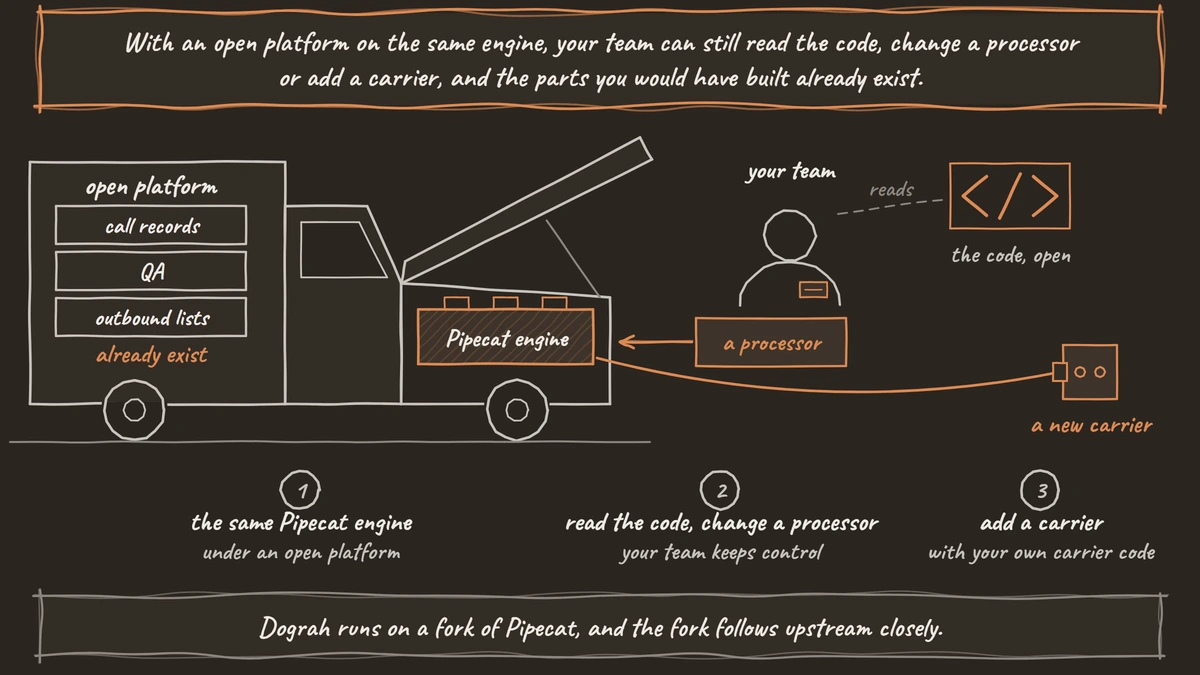
Dograh runs on a fork of Pipecat, and the fork follows upstream closely. The fork lives at dograh-hq/pipecat under the same BSD-2-Clause license, and it comes into the platform's code as a git submodule. Pipecat shipped v1.16.0 on 12 November 2026, the fork merged it on 14 November, and Dograh's main branch took it the next day. The platform's image installs Pipecat straight from that submodule.
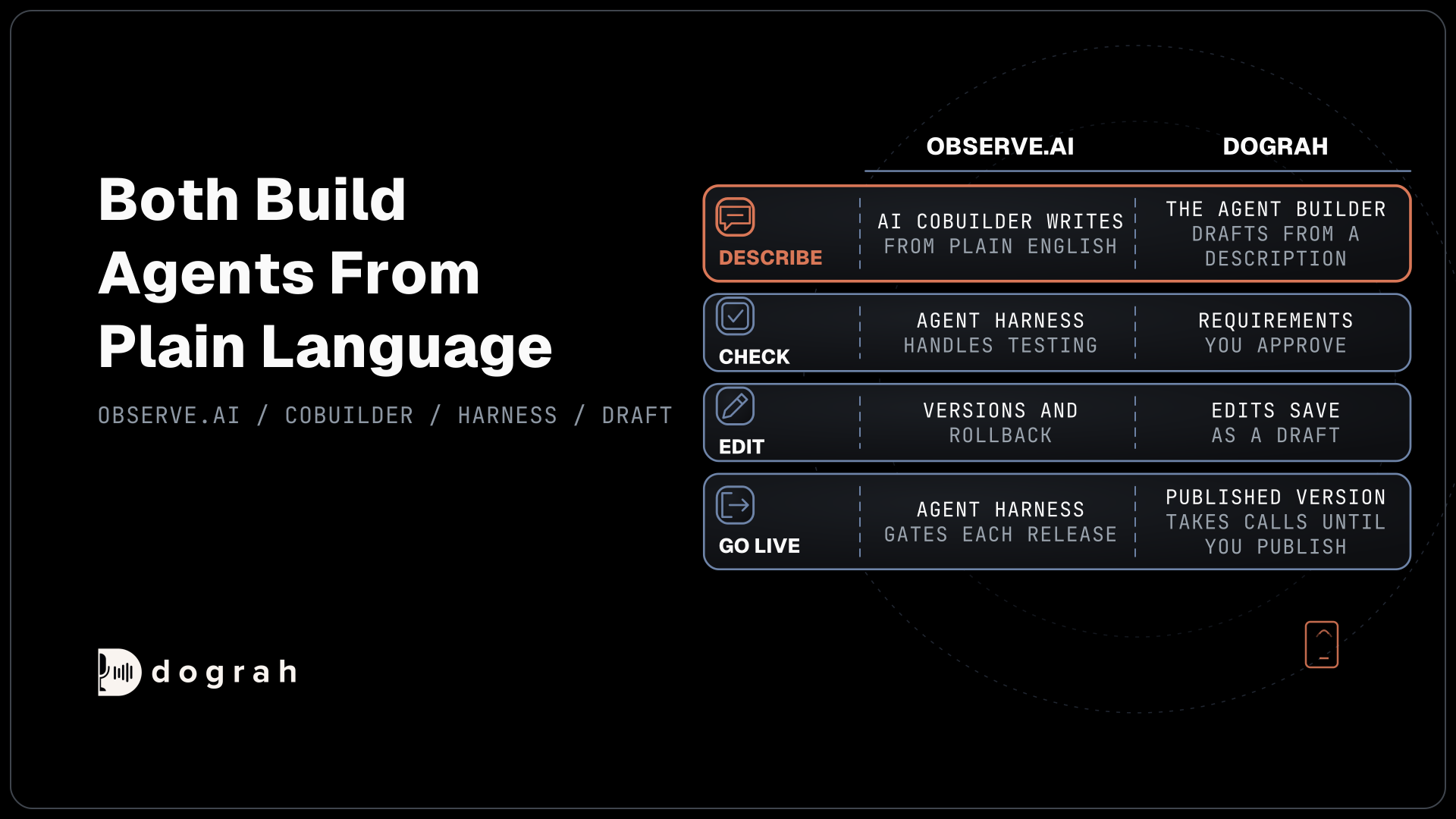
On top of the engine sits what a phone team needs to run calls without writing the plumbing. New agents start in the Agent Builder, where you describe the agent and approve the "Your agent requirements" card before it builds, with a canvas for hand edits. Each agent takes its own speech-to-text, language model and voice, from Dograh's models, your own keys or open-weight models on your servers.
Phone calls and call records are part of the platform. Dograh connects to Twilio, Telnyx, Plivo, Vonage, Exotel, Vobiz, Cloudonix and Asterisk ARI through its own provider code. On Twilio, Telnyx, Plivo, Cloudonix and Asterisk ARI, Transfer Call dials the destination first and connects the caller only when someone answers. Every call keeps its transcript and recording, View Trace shows the speech-to-text, AI and voice time per turn, a QA node scores each step, and Campaigns run outbound lists with retries and calling hours.
The open code means the bill stays readable too. When you host Dograh yourself with Docker Compose, no per-minute platform fee sits on top of the calls. You still cover servers, model keys and phone minutes, and keeping the database and upgrades in shape is your team's job. Support runs through the open-source community, with custom SLAs on Enterprise, and teams that want no servers at all can use Dograh Cloud, which runs it for a 1¢-a-minute platform fee with 10 calls at once included.

Open Source Alternative to Vapi / Retell
Self-hosted voice agent platform — no per-minute fees
dograh-hq/dograh
Star on GitHub
What you still build around Pipecat
Pipecat runs the voice pipeline well, and production calls need more around it. The phone line is the first piece. Pipecat's telephony guide calls its WebSocket route for Twilio, Telnyx, Plivo and Exotel best for simple workflows and quick prototypes, with no advanced call center features like transfers or reconnects. For transfers, Pipecat points to a SIP transfer or Daily's phone service instead.
Then comes everything after the call. A team on bare Pipecat stores transcripts and recordings itself, writes QA for live calls, and builds outbound lists with calling hours and retries. It also builds a way for people who do not write Python to change a prompt, and a way to switch models without a redeploy. Our post on Dograh vs Pipecat lists each piece in full.
The usual case for a framework is control, since a managed platform decides things for you. That holds for closed platforms. With an open platform on the same engine, your team can still read the code, change a processor or add a carrier, and the parts you would have built already exist.
Other open frameworks: LiveKit Agents and TEN
LiveKit Agents is the closest like-for-like swap for Pipecat. It is Apache-2.0, its turn-detection models sit under a separate LiveKit Model License, and an agent joins a media room, with SIP built in. Our post on LiveKit vs Pipecat compares the two in depth.
TEN Framework builds agents as graphs in a visual designer, and its terms are Apache 2.0 with additional restrictions, so read the license before you ship a product on it. Our comparison of open-source voice AI frameworks covers TEN's terms and its Agora focus. Vocode, an earlier MIT library, has had no code pushed since November 2024.
Each of these frameworks leaves the same list of work as Pipecat. You still wire the carrier, store the calls, write QA and build the outbound side. If you are open to closed hosted APIs too, our roundup of Pipecat alternatives covers Vapi and Retell AI.
Join the Dograh Community
Dograh is an OSS alternative to Vapi. Join our Slack community for queries, releases, best practices & community interactions.
When staying on Pipecat makes sense
Pipecat alone is the better pick when the voice agent is part of your own product. If you are building your own interface, running over WebRTC or mobile instead of the phone network, or mixing video and other media into the conversation, a framework gives you room that a call platform does not need to offer.
It also fits teams that want every upstream release the day it ships, and teams with the engineers to own the plumbing for years. If running the servers is the problem, Daily offers Pipecat Cloud and Pipecat Enterprise. Cloud runs agents in Daily-hosted regions in the US, Europe and India, and Enterprise runs them in a Kubernetes cluster in your own VPC while Daily runs the control plane.
What moving off Pipecat takes
A move to Dograh keeps the engine, so less changes than in a framework swap. Processors and custom services written against Pipecat follow the same ideas inside Dograh. A team with its own carrier code can add a custom telephony provider, which builds a Pipecat FastAPIWebsocketTransport and usually re-exports a Pipecat frame serializer.
The prompts move into Agent nodes on the canvas, or you describe the agent to the Agent Builder and let it draft the flow for review. Tools become HTTP API or MCP tools, and post-call results go out through the Webhook node. Our page on how to migrate from Pipecat to Dograh sets out the steps in order.
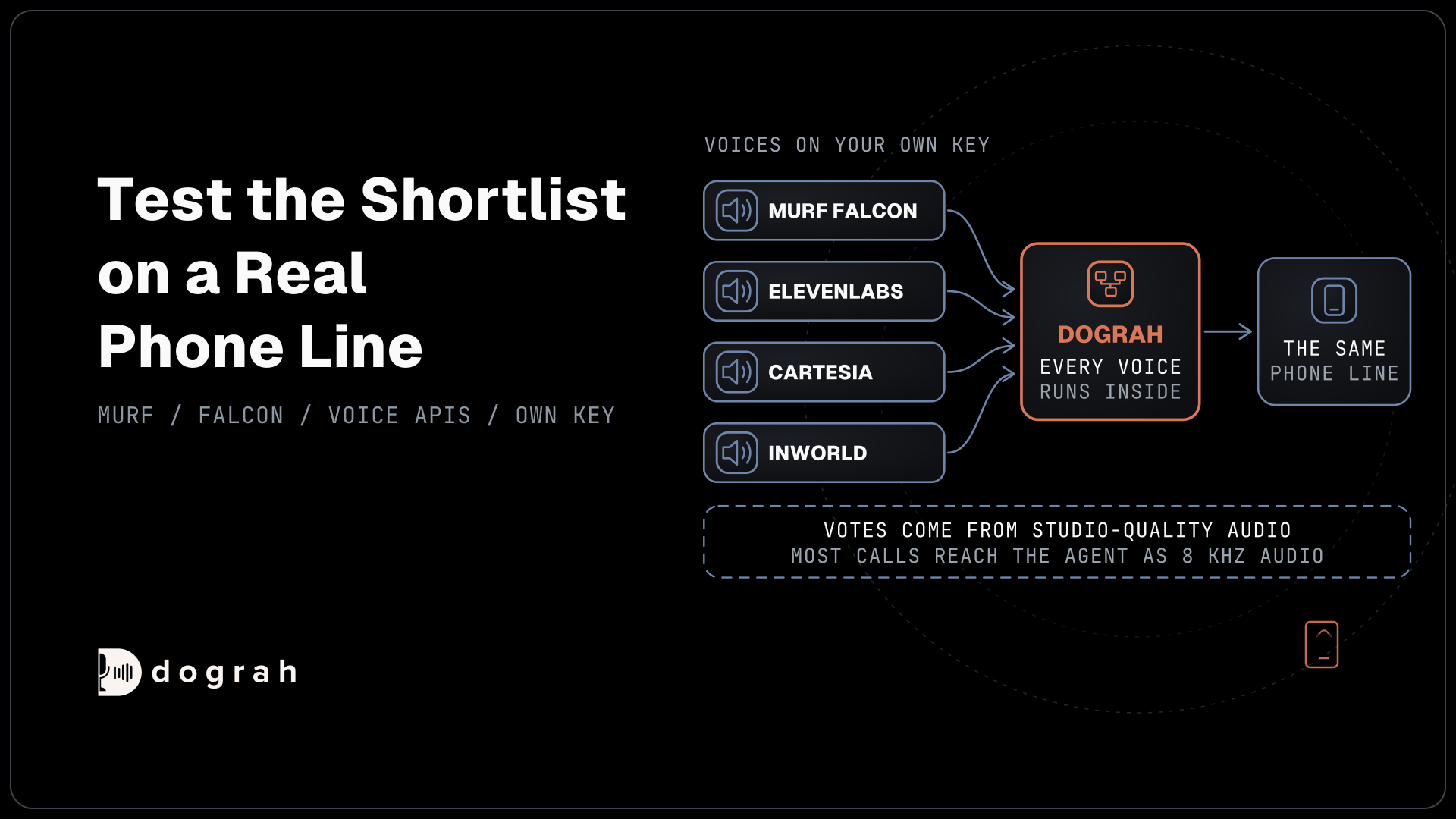
Model accounts carry over as they are. Most speech, language and voice providers a Pipecat team uses, from Deepgram and Cartesia to ElevenLabs and OpenAI, are built into Dograh too. Each runs on your own key, set up once under Providers and Models in the sidebar and then picked per agent in the editor's Model tab.
Two habits change after the move. When a Dograh upgrade moves the Pipecat submodule, run git submodule update --init --recursive before rebuilding. And test every transfer over a real phone call, since a browser test call cannot run Transfer Call.
Picking your open-source Pipecat alternative
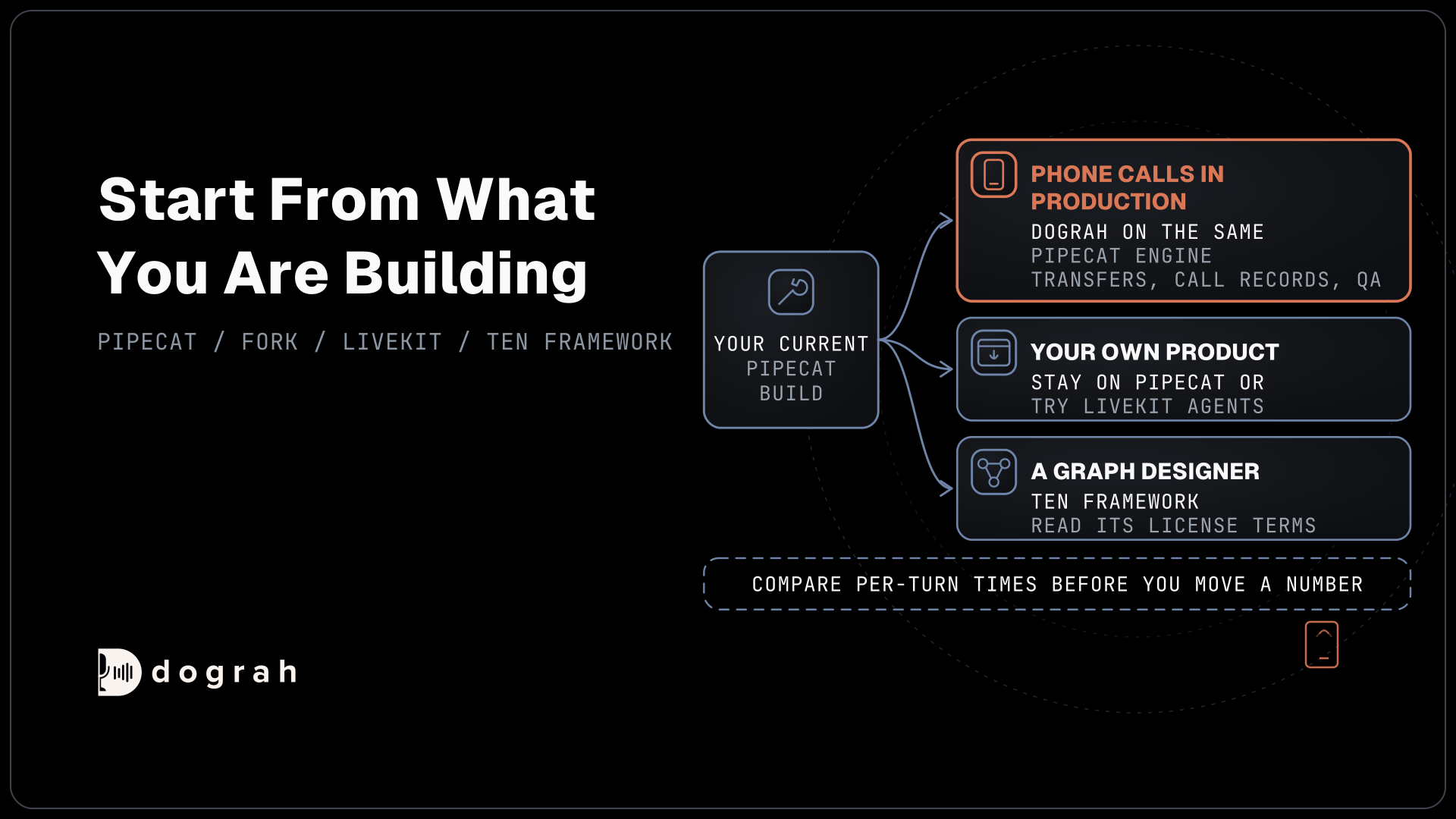
Start from what you are building. If the voice agent lives inside your own product, stay on Pipecat or try LiveKit Agents, and plan for the plumbing. If you want a graph designer and can accept its license terms, look at TEN Framework.
If what you need is phone calls in production, with transfers, call records, QA and outbound lists ready, start with Dograh on the same Pipecat engine. Run one real call flow on it next to your current Pipecat build, and compare the per-turn times in View Trace before you move a number.
Glossary
- Fork
- A copy of an open-source project kept as its own repository. Dograh's fork of Pipecat merges upstream releases and adds its own changes.
- Git submodule
- A repository pinned inside another one at a set commit. Dograh pins its Pipecat fork this way, so upgrades move the pin.
- Frame serializer
- Pipecat code that turns a carrier's audio messages into pipeline frames and back. Carrier integrations, including Dograh's custom ones, rely on it.
- SIP transfer
- Handing a live call to another number at the signaling level. Pipecat lists transfers on SIP and Daily, not on its WebSocket route.